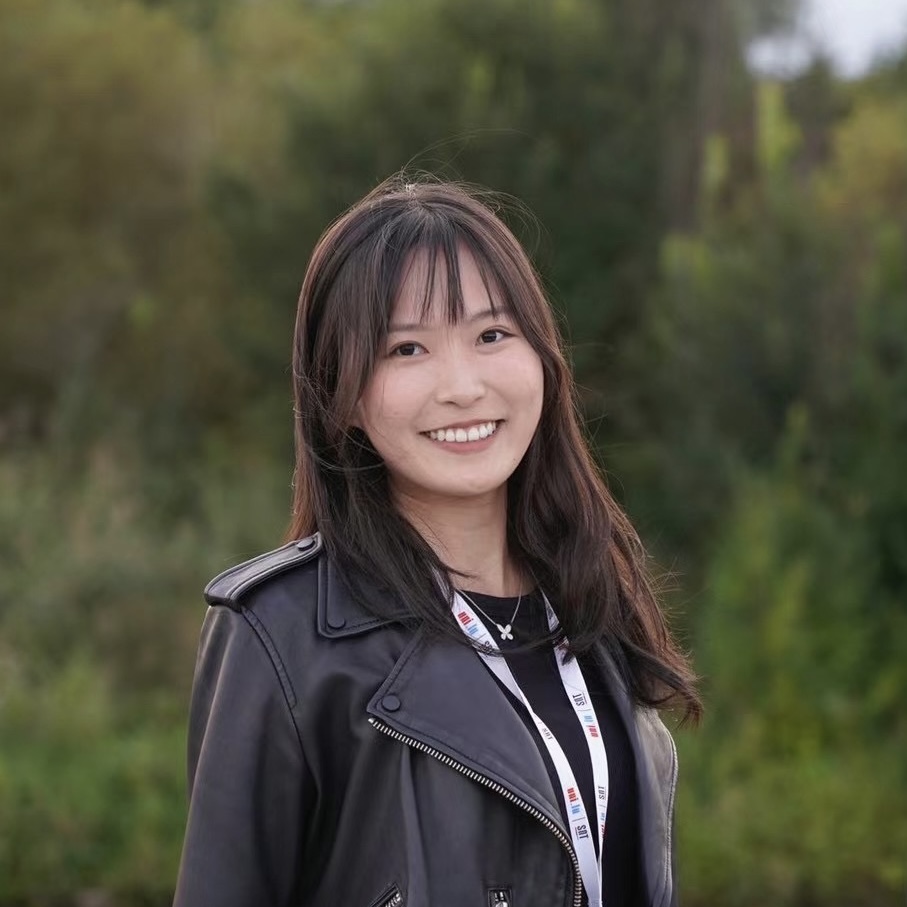
Professor Walter Timo de Vries is a faculty member at the Technical University of Munich (TUM) , holding the Chair of Land Management and Land Development within the Department of Aerospace and Geodesy, TUM School of Engineering and Design . His research focuses on intelligent and responsible land management , urban and rural development , spatial justice , and the development of a Human Geodesy framework. A graduate of TU Delft (1988) and Rotterdam (PhD), he has led international projects across Asia, Africa, and South America. At TUM, he directs the Master's and PhD Programs in Land Management , serves as Dean of Geodesy , and leads TUM.Africa . Member of the German Geodetic Commission Member of the Bavarian Academy for Rural Development Academic Coordinator of TUM SEED Center Research Interests span responsible land governance , land tenure security , land consolidation , and geospatial methods for sustainable development. His recent work examines the Water-Energy-Food Nexus and digital twins in collaborative planning. He has supervised over 20 PhD and Master’s students on topics like spatial justice , nomic pastoral tenure , and smart land use . Publications address blockchain in land administration , spatial inequalities , and land policy reforms across global contexts.
Ozgur S. Oguz is an Assistant Professor at Bilkent University , Faculty of Computer Engineering, and the lead of the Learning for Intelligent Robotic Agents (LiRA) Lab . His research focuses on enhancing autonomous agents' capabilities in learning, reasoning, and planning, particularly for robotics applications. Education : PhD in Computer Science from TU Munich , studies at University of British Columbia (UBC) and Koç University , postdoctoral work at University of Stuttgart and Max Planck Institute for Intelligent Systems . His research explores algorithms for autonomous decision-making, with emphasis on deep learning , reinforcement learning , and robotics . Recent work includes diffusion-based reinforcement learning , hindsight experience prioritization , and hybrid manipulation planning , often addressing challenges in sequential task execution and tactile-based control. Key trends in his publications revolve around robotic manipulation , motion planning , and human-robot interaction . He has contributed to conferences like NeurIPS , ICRA , IROS , and journals such as IEEE TRO and Scientific Reports .
Ken B. Johnson, MD, MS is a Professor in the Department of Anesthesiology at the University of Utah School of Medicine, where he has served on faculty since completing residency in 1999. His clinical expertise spans regional anesthesia, acute pain management, processed electroencephalogram monitoring, and neuromuscular blockade monitoring. His research program focuses on: Genetics and epigenetics of pain pathways Clinical pharmacology of anesthetic agents Medical device development for monitoring and simulation Simulation-based experiential learning for all medical trainees Analysis of his 15 most recent publications reveals dominant themes in pharmacokinetic-pharmacodynamic modeling (40% of works), opioid-related pain management (30%), and innovative monitoring techniques (20%). His work consistently bridges basic science with clinical applications, particularly in trauma scenarios and perioperative optimization. Professional recognition includes: Editorial board membership for Anesthesia and Analgesia Leadership in American Society of Anesthesiologists Simulation Education Role as standardized oral board examiner for American Board of Anesthesiology Dr. Johnson's educational leadership extends to curriculum development for medical students through faculty, with emphasis on simulation-based training for airway management and crisis response. His collaborative research spans multiple departments including Orthopedics and Pharmacology, with recent focus on genetic determinants of pain response in joint replacement patients.
Eleni Stai is an Assistant Professor at the School of Electrical and Computer Engineering, National Technical University of Athens (NTUA), affiliated with the Division of Communication, Electronic and Information Engineering. She holds advanced degrees in Electrical Engineering, Mathematics, and Applied Mathematical Sciences from NTUA and the National and Kapodistrian University of Athens. Her academic credentials include: Diploma in Electrical and Computer Engineering, NTUA (2009) B.Sc. in Mathematics, National and Kapodistrian University of Athens (2013) M.Sc. in Applied Mathematical Sciences, NTUA (2014) Ph.D. in Electrical Engineering, NTUA (2015) Dr. Stai's research integrates advanced optimization techniques with communications networks and energy systems. She develops stochastic and deterministic optimization frameworks for network resource allocation, data analytics on complex topologies, and smart-grid control applications. Her work bridges theoretical foundations with practical implementations in energy-harvesting networks, network slicing, and reinforcement learning for distributed systems. Analysis of her recent publications reveals dominant research thrusts in AI-driven network management (particularly O-RAN and network slicing), energy-integrated communications, and optimization of energy communities. A significant portion of her work addresses the convergence of 5G/6G networking with power systems, emphasizing real-time control and sustainability. Her scientific contributions have been recognized through prestigious awards: Chorafas Foundation Best Ph.D. Thesis award Thomaidis Foundation Best M.Sc. Thesis award Best Paper Award at ICT 2016 Best Presenter Award at IEEE ENERGYCON 2022 Dr. Stai serves on technical program committees for major international conferences and has co-authored the book "Evolutionary Dynamics of Complex Communications Networks". She teaches undergraduate courses in Queuing Systems, Computer Networks, and Social Network Analysis, reflecting her expertise in network theory and applications. Her research trajectory demonstrates continuous evolution from fundamental network optimization to AI-enhanced solutions for next-generation communication-energy systems. Her work builds upon her postdoctoral experience at EPFL (2016-2020) and ETH Zurich (2020-2023), where she developed advanced frameworks for communications networks and energy systems.
Mila N. Koeva is a Vice Dean Research and senior Associate Professor at the University of Twente's Faculty of Geo-Information Science and Earth Observation (ITC), Department of Urban and Regional Planning and Geo-Information Management. Her research focuses on 3D modeling and Digital Twins for land management and urban planning, integrating geospatial technologies, UAV data, and AI/ML methods. PhD in architectural photogrammetry MSc in Engineering (Geodesy) Research Themes: Digital Twinning for urban ecosystems AI-driven cadastral boundary extraction 3D modeling with LiDAR and satellite data Global partnerships in Rwanda, Kenya, and Ethiopia Interoperability standards for local digital twins Scientific Contributions: Geospatial World Innovation Award 2021 Copernicus Masters Competition (3rd place 2016) Editorial roles in Photogrammetric Records and MDPI journals Keynote speaker at 3D GeoInfo, GI Forum, and FIG events Her educational impact includes developing courses, lecturing, and supervising students whose work has received top awards in The Netherlands and international competitions.
John Valasek is a Professor in the Department of Aerospace Engineering at Texas A&M University, holding the Drs. L. Diane '88 and John E. Hurtado '91 Professorship. He directs the Vehicle Systems & Control Laboratory (VSCL) and serves as Site Director for the NSF Center for Autonomous Air Mobility and Sensing (CAAMS) and the FAA Center for General Aviation Research (PEGASAS). His research focuses on autonomous control systems, UAV navigation, and cybersecurity for aerospace vehicles. Valasek earned his Ph.D., M.S., and B.S. in Aerospace Engineering from the University of Kansas (1995) and California State Polytechnic University (1986). Education: Ph.D., Aerospace Engineering, University of Kansas - 1995 M.S., Aerospace Engineering, University of Kansas - 1990 B.S., Aerospace Engineering, California State Polytechnic University - 1986 Research Interests: Autonomous systems, nonlinear control, vision-based navigation, UAV control, bio-nano materials control, and aerospace systems engineering. Key Contributions: Over 100 invited lectures/seminars, leadership in NSF-funded research centers, and development of advanced control algorithms for aerospace systems. Notable publications include work on reinforcement learning for autonomous systems and real-time system identification for UAS. Awards: John Leland Atwood Award (2015) McElmurry Outstanding Teaching Award (2001, 2004, 2014) Engineering Hall of Fame inductee (2019) Advising & Grants: Advised over 60 graduate students, including recent NSF GRFP winner Evelyn Madewell. PI on multi-million-dollar grants, including the NSF CAAMS project and Air Force-funded research on autonomous systems. Labs & Teams: Directs the Vehicle Systems & Control Laboratory (VSCL), focusing on low-cost attritable aircraft technology and autonomy. Collaborates with industry partners like Stratolaunch and VectorNav through CAAMS initiatives.
Professor Laurence Jacquet is a distinguished economist at University of Cergy-Pontoise, where he leads research at THEMA (Théorie Economique, Modélisation et Applications). He maintains a prominent international profile as a Distinguished CESifo Affiliate and CESifo Research Network Fellow, contributing to Munich-based research initiatives in public economics. His research program centers on optimal taxation theory with specialized focus on multidimensional heterogeneity, labor market responses, and production regulation. Professor Jacquet investigates how tax systems interact with behavioral elasticities across income types, addressing fundamental questions about redistribution efficiency and policy design in contexts of rising inequality and demographic change. His methodological approach combines advanced mechanism design with practical fiscal policy applications. Analysis of his 12 CESifo Working Papers (2010-2025) reveals evolving research trajectories: early work established foundations in optimal income taxation with heterogeneous agents, while recent publications increasingly incorporate production-side considerations and regulatory frameworks. The consistent thread across his publication history is rigorous theoretical modeling of tax systems that account for both extensive and intensive margin responses in labor and capital markets. Professor Jacquet actively supervises graduate researchers through THEMA, a CNRS-affiliated research center fostering interdisciplinary economic modeling. His CESifo affiliation provides students with exceptional access to European policy networks and collaborative opportunities with leading public finance scholars across the continent. Current research priorities include analyzing tax reforms in contexts of international competition and designing transfer programs with optimal monitoring mechanisms. As director of THEMA research activities in public economics, Professor Jacquet oversees projects examining the trade-offs between equity and efficiency in modern tax systems. The center's work particularly addresses challenges posed by intangible capital, cross-border migration, and aging populations through sophisticated theoretical frameworks that inform real-world policy design.
Professor Simon Robinson is a faculty member in the School of Mathematics and Computer Science at Swansea University, holding a position as a Professor of Computer Science. He serves as the Head of the Future Interaction Technologies (FIT) Lab and Director of the MSc year for the EPSRC Centre for Doctoral Training in Enhancing Human Interaction and Collaboration with Data-Driven Systems. His research focuses on devices and interactions designed for emergent users in low-connectivity regions, emphasizing participatory design and co-creation with underserved communities. Current projects include the EPSRC-funded UnMute initiative, which aims to empower marginalized language speakers through spoken language technologies. Key affiliations include leadership roles in the FIT Lab and the EPSRC CDT, alongside contributions to projects like Rethinking Public Technology in a Post-COVID Era, PV Interfaces, and Scaling the Rural Enterprise. His work spans ubiquitous computing, deformable devices, and inclusive interaction design for global south communities. Research interests center on Human-Computer Interaction (HCI), with a focus on low-resource settings. Recent work addresses speech technologies for unwritten languages, trust in human-robot interactions, and sustainable self-powered interfaces. His lab explores innovations like Light-In-Light-Out (Li-Lo) displays and community-driven smart materials (PV-Pix). Professor Robinson has supervised numerous PhD students across topics including AI ethics, predictive maintenance, and human-centric NLP. He teaches modules like Introduction to HCI and contributes to the Human-Centred Big Data and AI Dissertation program. His work integrates grants from EPSRC and collaborative projects with international partners, reflecting a commitment to socially impactful technology. Labs & Teams: Director of the FIT Lab, active in the EPSRC CDT, and collaborator in interdisciplinary teams focusing on rural technology, assistive AI, and sustainable interfaces.
Min Peng is a Professor at Wuhan University's School of Computer Science. His research focuses on artificial intelligence, machine learning, natural language processing, and knowledge graphs. He has collaborated extensively with institutions like Hefei University of Technology and the University of Chinese Academy of Sciences. His work bridges theoretical advancements in AI with practical applications in finance, social media analysis, and network optimization. Recent contributions include neural-symbolic reasoning frameworks, contrastive learning for knowledge graphs, and financial benchmarking with large language models. Research interests emphasize scalable machine learning models for complex reasoning tasks, explainable AI, and domain-specific applications in finance and social networks. Over 100 publications span venues like WWW, ACL, and NeurIPS, highlighting interdisciplinary impact. Notable projects include SymAgent (neural-symbolic agent frameworks), PIXIU (financial LLM benchmark), and DTC (commonsense machine comprehension). Key technical trends include integrating large language models with structured data, temporal knowledge graph reasoning, and transfer learning across domains. His work often addresses real-world challenges in data efficiency, interpretability, and cross-domain scalability. Current efforts explore financial LLMs, agent-based reasoning systems, and multimodal applications. While no specific grants or awards are listed in the provided data, his prolific publication record indicates sustained research excellence. Collaboration networks include teams in computer science, electrical engineering, and finance disciplines.
Dr. Martin Lange is part of the Project Group Ecological Epidemiology within the Department of Ecological Modelling at the Helmholtz Centre for Environmental Research (UFZ). His research focuses on computational epidemiology, particularly in wildlife and livestock systems. Key areas include disease transmission dynamics, surveillance strategies, and the development of predictive models for infectious diseases like African Swine Fever (ASF) and Bovine Viral Diarrhea Virus (BVDV). Affiliations: UFZ, Department of Ecological Modelling; EcoEpi research group. Education: PhD in Veterinary Epidemiology (2013, TU Bergakademie Freiberg). Research interests span ecological epidemiology, wildlife disease control, and the application of agent-based and individual-based models to understand pathogen spread. Notable contributions include modeling ASF in wild boar populations and BVDV eradication strategies in Ireland. Awards: Received the 2018 UFZ-Wissenstransferpreis (shared with H.H. Thulke) and the Konrad-Bögel-Nachwuchsförderpreis for his doctoral work on eco-epidemiology of wild boar diseases. Also recognized at the DACh Epidemiologietagung 2011. Publications: Over 50 peer-reviewed articles since 2006, emphasizing interdisciplinary approaches to disease modeling and environmental systems. Recent work includes digital twin frameworks for biodiversity monitoring and Python-based model coupling tools like FINAM. Labs/Teams: Active in the EcoEpi group and contributes to projects like BioDT (Biodiversity Digital Twin) and CauSES (Causation in Social-Ecological Systems).
Lingming Zhang is an Associate Professor at the Department of Computer Science, University of Illinois Urbana-Champaign, affiliated with the Grainger College of Engineering. His research focuses on the intersection of Software Engineering, Programming Languages, and Machine Learning, with a particular emphasis on automated program repair, compiler testing, and large language model (LLM) applications in software engineering. He has published over 100 papers, achieving an h-index of 50+, and holds an ACM Distinguished Member status. Research Interests: LLM-based software testing, repair, and synthesis Fuzzing of deep-learning libraries and compilers Open-source code LLMs (e.g., StarCoder2, Magicoder) with over 1M downloads Automated program repair systems (e.g., AlphaRepair, ChatRepair, Agentless) Recent Contributions: Developed TitanFuzz for coverage-guided compiler fuzzing Released Agentless , an LLM-based coding tool adopted by OpenAI and DeepSeek Proposed SWE-RL to enhance LLM reasoning via reinforcement learning Service Roles: Program Co-Chair for ASE 2025 and LLM4Code 2025 Associate Chair for OOPSLA 2024 and Area Chair for ICSE 2025/2026 Recipient of NSF CAREER Award and ACM SIGSOFT Early Career Award Lab/Teams: Develops open-source tools like UniAPR for efficient patch validation Active in releasing industry-adopted LLM-based software engineering tools
Haohan Wang serves as Assistant Professor at the School of Information Sciences, University of Illinois Urbana-Champaign, with additional appointments as Affiliate at the Carl R. Woese Institute for Genomic Biology and Assistant Professor at the National Center for Supercomputing Applications (NCSA). His interdisciplinary work bridges machine learning, genomics, and AI security, focusing on trustworthy systems for biomedical applications and foundational AI research. Wang's research centers on robust and secure artificial intelligence, with emphasis on large language model vulnerabilities (jailbreaking, safety evaluation), federated learning personalization, and genomic data analysis. He develops techniques for privacy-preserving dataset distillation, confounding factor correction in genome-wide studies, and multi-agent frameworks for scientific discovery. His fingerprint highlights expertise in Machine Learning (94%), Linear Mixed Models (87%), and Confounding Factor Correction (41%), reflecting his focus on methodological rigor in complex data environments. Analysis of his 2025 publications reveals dominant trends in AI security (jailbreak evaluation frameworks like GuardVal, adversarial attacks such as InfoFlood), biomedical AI (transcriptomic analysis, wearable data privacy), and foundational methods (federated learning optimization, synthetic data generation). These works consistently address real-world challenges in model trustworthiness while advancing computational techniques for genomics and healthcare. Through NCSA's high-performance computing resources and the Institute for Genomic Biology's collaborative ecosystem, Wang integrates supercomputing capabilities with biological research to tackle data-intensive problems in disease modeling and AI safety testing, as evidenced by media coverage of his team's AI security testing methods.
Srinivas Sridhar is a University Distinguished Professor of Physics, Biomedical Engineering, and Chemical Engineering at Northeastern University, with a secondary appointment as Lecturer on Radiation Oncology at Harvard Medical School. He previously served as Vice Provost for Research at Northeastern University (2004–2008), overseeing its research portfolio. As an elected Fellow of the American Physical Society and the American Institute of Medical and Biological Engineering, his research spans nanomedicine, neurotechnology, drug delivery, and quantitative MRI, with over 450 publications and patents. He founded the Nanomedicine Innovation Center and directs major NIH/NSF programs like CaNCURE and IGERT, focusing on undergraduate and graduate training in nanomedicine, particularly for underrepresented communities. His research interests include Nanomedicine Neurotechnology Quantitative MRI Drug Delivery Systems Metamaterials and Nanophotonics Quantum Chaos Superconductivity . Recent work involves machine learning-enhanced diagnostics for glaucoma, engineered nanoparticles for BRCA-deficient cancers, and portable neuro-ophthalmic devices. His publications from 2025–2017 reflect interdisciplinary applications in oncology, neurology, and materials science, with a focus on therapeutic and diagnostic innovation. Scientific accolades include the 2016 Biomedical Engineering Society Diversity Award University Distinguished Professorship . As an educator and entrepreneur, he has trained over 120 researchers, developed first-of-their-kind nanomedicine courses, and founded companies commercializing technologies like QUTE-CE MRI. His lab leads projects on cancer nanomedicine, quantitative imaging, and nanoscale magnetism, supported by grants from NIH, NSF, DoD, and private foundations.
Yintong Huo is a tenure-track Assistant Professor in the Department of Computer Science at Singapore Management University (SMU), School of Computing and Information Systems. He joined SMU in early 2024 after completing his PhD at The Chinese University of Hong Kong (CUHK) under Prof. Michael R. Lyu. His academic journey includes a Bachelor's degree from the University of Electronic Science and Technology of China. Education: PhD in Computer Science and Engineering, The Chinese University of Hong Kong (2024) Bachelor's degree, University of Electronic Science and Technology of China Huo's research focuses on intelligent software engineering , particularly empowering AI models (especially LLMs) for software development, testing, and operations. His work spans AI4SE, LLM4SE, AIOps, code intelligence, and multimodal software engineering . Two flagship projects define his current research: LogPAI - an open-source AI platform for automated log analysis adopted by leading tech companies, and WebPAI - a multimodal intelligence project for automatic webpage development. His research addresses critical challenges in software reliability, log analysis, and UI code generation through innovative applications of AI. His recent publications reveal a strong trend toward multimodal approaches in software engineering , combining vision and language models for UI code generation, and increasingly sophisticated applications of LLMs for log analysis and software reliability. Huo's work demonstrates exceptional impact, with multiple papers accepted at top-tier venues including ASE, ICSE, and FSE with high acceptance rates (e.g., 9.5% for ASE'25). Scientific Awards: ICSE Distinguished Reviewer Award (2025) ISSRE Distinguished Reviewer Award (2024) IEEE Open Software Services Award (2022, for LogPAI with 3k+ GitHub stars and 70k+ downloads) ACM SIGSOFT CAPS Travel Grants (ASE'23, ICSE'24, FSE'24) Nomination for Best Teaching Assistant Award (2022) National Scholarship (2019) Huo actively mentors students at multiple levels, currently supervising PhD students Shi Ying Chang and Dan Huang (co-supervised with Prof. David Lo), research engineer Minxing Wang, and visiting students including Shiwen Shan. His undergraduate mentee Truong Hai Dang will intern at Apple Inc. He maintains strong industry connections, with his LogPAI project adopted by world-leading tech companies. Huo serves on program committees for major conferences including ASE'25, ICSE'26, and FSE'26, and is recruiting fully-funded PhD students and research assistants for projects in AI4SE and multimodal software engineering. Huo leads the LogPAI and WebPAI research initiatives, which have evolved into substantial open-source projects with significant industry adoption. His team focuses on practical applications of AI in software engineering, with particular emphasis on reliability and usability in real-world systems. The research environment benefits from SMU's strong position in software engineering research, where the university ranks No. 2 globally in Software Engineering according to CSRankings (2020-2025).
Dr. Mike Seymour is a Senior Lecturer at the University of Sydney Business School, specializing in Human-Computer Interaction (HCI), Digital Humans, and AI ethics. He holds a BSc, MBA, and PhD from the University of Sydney. His research focuses on photorealistic digital faces for immersive interfaces, blockchain socio-technical systems, and agile project management in creative industries. Dr. Seymour is a member of the Sydney Nano Institute and leads the Motus Lab. He has published in top journals like *Harvard Business Review*, *Communications of the ACM*, and *Information Systems Research*. His current projects include ARC-funded research on digital humans for anti-racism initiatives and adaptive AI for brain injury patients. He has received awards such as the SOAR Prize and ECR Researcher of the Year. His teaching spans CX, UX, and project management courses (e.g., INFS2040, INFS3080). Media engagements include ABC News, Sky News, and *The Australian Financial Review* for commentary on AI ethics and film industry trends. Education: BSc (University of Sydney) MBA (University of Sydney) PhD (University of Sydney) Research Themes: Real-time photorealistic avatars Deepfake ethics Agile methodologies in VFX Grants: A$450K ARC DP25 grant for anti-racism digital humans Earned $200K in industry partnerships (e.g., Epic Games) Labs/Teams: Leads the Motus Lab and collaborates with the Digital Human Research Group.