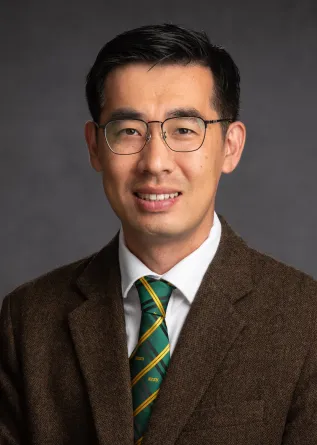
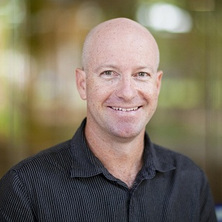
Amber Marshall is a Researcher at QUT's Digital Media Research Centre, specializing in digital inclusion, rural telecommunications, and disaster resilience. Her work focuses on marginalized communities in Australia, particularly Indigenous families and farming households in remote regions. She leads interdisciplinary projects addressing infrastructure gaps and policy failures in Northern Australia, advocating for equitable access to digital resources. Key contributions include evaluations of state library programs, critiques of agricultural technology adoption barriers, and frameworks for digital skill development in the Outback. Her early research explored virtual environments like Second Life, analyzing how users navigate digital spaces. Education: PhD in Business Administration from University of Queensland (2016) Affiliations: Queensland University of Technology, CRC Developing Northern Australia, Australia Post Research interests span digital divides, gendered technology use, and policy interventions. Recent work emphasizes connecting Indigenous families in the Gulf region and analyzing how digital capabilities influence disaster preparedness. Her findings inform government inquiries into rural connectivity and VET education systems.
Lusine Aramyan serves as a Researcher at Wageningen School of Social Sciences (WASS) within Wageningen University & Research, specializing in Sustainable Value Chains. Her work bridges agricultural economics, food systems analysis, and sustainability transitions with significant focus on global food waste reduction strategies. Her research interests concentrate on food waste reduction across supply chains, particularly examining contract farming models for leafy vegetables in Iran and biobased packaging adoption within circular economies. Aramyan investigates systemic barriers in sustainable transitions, including corporate power dynamics in recycling systems and socio-economic factors influencing agricultural waste in developing regions. Her work combines quantitative system dynamics modeling with qualitative stakeholder analysis to develop practical interventions for food loss prevention. Scientific contributions include: 91 research outputs comprising 29 articles, 36 reports, and 16 conference papers Key projects: Kentucky Horti-AgTech Knowledge System (2021-2022), ACCTiVate (2017-2019), and REFRESH_H2020 Matching (2015-2016) Extensive consultancy work on food loss and waste with organizations including the European Commission Aramyan maintains active research collaborations across multiple continents, with significant work in Iran and the Netherlands. Her fingerprint analysis reveals strong expertise in food waste (100%), supply chain management (75%), and food waste reduction (52%), with notable geographic focus on Iran (75%) and Kentucky (50%). Current research examines corporate power dynamics in biobased packaging adoption and system-level interventions for postharvest loss prevention.
Greg Falzon is an Associate Professor of Precision Agriculture Systems at Flinders University's College of Science and Engineering. His work focuses on advancing agricultural technology through artificial intelligence, data science, and machine learning to address food security challenges. He holds a PhD in Biomedical Image Analysis from the University of New England (2011) and has a strong record in industry-funded research, including over $26 million in grants. Notable projects include the e-Technology Hub for pest management and the Wild Dog Alert System. His research spans agriculture sectors like cotton, dairy, grains, and livestock, with global impacts. Awards include the 2020 Australian Academy of Technology & Engineering ICM Agrifood Award and the 2016 President’s Medal from the Australian Society of Sugar Cane Technologists. Falzon teaches courses in Artificial Intelligence, Data Science, and Statistics, and actively mentors students in these fields. Key contributions include innovative systems for wildlife monitoring (e.g., Sentinel Bait Station), livestock vocalization detection, and automated cattle counting. His work emphasizes interdisciplinary approaches, combining computational, biological, and physical sciences for tangible agricultural outcomes.
Dr. Xin Sun serves as Associate Professor and inaugural Endowed Chair/Director of the Peltier Institute for Advancement in Agricultural Technology at North Dakota State University's College of Engineering, Department of Agricultural and Biosystems Engineering. His research integrates artificial intelligence, field robotics, and remote sensing to transform data-driven decision-making in agriculture. Education: Nanjing Agricultural University (2013) Yantai University (2007) His primary research spans precision agriculture, field robotics, AI/ML, and hyperspectral imaging, with specialized focus on edge-AI deployment for low-connectivity farms, multi-sensor data fusion, human-robot interaction in agricultural systems, and resilient solutions for tribal/underserved farming communities. His work bridges cutting-edge science with practical field applications through technology transfer initiatives. Analysis of 2024-2025 publications reveals dominant trends in AI-driven weed management (using UAVs/UGVs), crop stress detection, soil moisture prediction, and hyperspectral applications, emphasizing real-world deployment on resource-constrained edge devices. Awards: 2024 NDSU Agriculture and Extension Faculty/Staff Award: Larson/Yaggie Excellence in Research Award 2023 NDSU College of Engineering Early Researcher Award Secured >$23M in competitive funding (>$5M as PI) for projects including autonomous weed control systems, soybean disease identification, and resilient crop production. Mentors students through PAG courses (115, 115L, 215, 315, 496) and directs the Peltier Institute's interdisciplinary team developing field-deployable agtech solutions with strong grower engagement.
Jochen Hemming is a Researcher at Wageningen Plant Research , part of Wageningen University & Research . His work focuses on robotics and automation for agricultural and horticultural applications, utilizing deep learning, computer vision , and sensor systems to advance precision farming technologies. Research Interests: AI in agriculture, robotic harvesting/pruning, amodal segmentation, sensor fusion for plant detection, digital twins for agricultural robotics. Projects: TrimBot2020 (pruning robot), PeMaTo (pest monitoring), SMP25015 (digital AgTech), Robs4Crops (multi-task robots). Advising: Co-promotor for Barth R.'s PhD on sweet-pepper harvesting vision systems. Labs/Teams: Collaborates with Greenhouse Horticulture Business Unit and European consortia like Aqua IMPACT and Robs4Crops.
Elaine Sedenberg is a Lecturer at the University of California, Berkeley’s School of Information, where she teaches Applied Behavioral Economics. She concurrently serves as Strategic Advisor to the President for Global Affairs at Meta, focusing on Policy, Communications, and Governance. She is an Affiliate at Harvard University’s Berkman Klein Center for Internet & Society and sits on the Berkeley Center for Long-Term Cybersecurity (CLTC) External Advisory Committee. Her research challenges linear innovation theory, exploring intersections of research strategy, practice, and data policies in modern firms. Education includes a PhD from UC Berkeley’s School of Information (dissertation: 'Information-intensive innovation: the changing role of the private firm in the research ecosystem through the study of biosensed data') and a B.S. in Biochemistry from the University of Texas at Austin (highest honors, Dean's Honored Graduate). Elaine previously co-directed the Center for Technology, Society & Policy (CTSP) and held a Science Policy Research Fellowship at the Science and Technology Policy Institute (STPI). She has been awarded the NSF Graduate Research Fellowship and received additional grants for her research. Professional contributions include advising Attorney Generals on digital policy through Harvard Law’s AgTech Forum and co-authoring work on digital accountability mechanisms like 'poison cabinets' for content moderation transparency.
Yvette Everingham is a Professor in Data Science and Director of the Agriculture, Technology and Adoption Centre (AgTAC) at James Cook University (JCU). She holds additional roles such as former Associate Dean of Graduate Research Studies at JCU and Focus Area Chair for Weather and Climate Services for Agriculture at the World Meteorological Organization. Her research focuses on multi-model data fusion, STEM education strategies, and agtech solutions to enhance agricultural profitability and environmental sustainability under climate challenges. Yvette’s work integrates machine learning, remote sensing, and IoT technologies to address precision agriculture and climate resilience. She has pioneered tools like the i-RAT decision support system and the Hybrid Transformer Network for soil moisture estimation. Her contributions to sugarcane research include optimizing nitrogen management and improving irrigation practices, supported by seasonal climate forecasting. Awards: Office for Learning and Teaching Citation (2014) JCU Citation for Student Learning (2014) Sugar Research and Development Award (2008) Research & Grants: Over 50 publications span climate modeling, agricultural decision support systems, and wildlife tourism sustainability. She has advised students on projects involving smart irrigation systems and machine learning applications in agriculture.
Yuan Shi is a PartTime Lecturer in the Finance Division at Sauder School of Business, University of British Columbia. She specializes in early-stage venture capital with focus areas in climate, food, and agtech. Previously serving as Director of Creative Destruction Lab - Vancouver, she maintains an advisory role and actively mentors startups. As a first-generation immigrant and woman of colour in STEM/finance, she leads social entrepreneurship initiatives supporting underrepresented communities across Canada, Mexico, Cuba, China, and Spain. Her research examines venture capital ecosystems, sustainable agriculture technology, and inclusive entrepreneurship models. She develops frameworks for climate tech investment and community-based economic development.
Jeremy Crow is an Associate Professor at Monash Business School and Head of Innovation at Next – Reece Group. He specializes in entrepreneurship, innovation, and technology ventures. Previously, he served as Head of New Ventures at Superseed, focusing on building products and businesses in the built environment. His work spans kidtech, agtech, and govtech through co-founded ventures. Jeremy leads the postgraduate unit Creativity and Entrepreneurship (BEX5411) and is a delivery partner for the Fastrack programme, emphasizing hands-on problem-solving and venture development. His approach combines academic rigor with industry application, fostering innovation across multiple sectors. Jeremy’s professional roles highlight his dual focus on academia and industry leadership. Beyond Monash, he actively contributes to corporate innovation through his current role at Reece Group and past leadership at Superseed. He prioritizes actionable outcomes and team-driven growth in his projects and teaching. Though no formal grants or awards are listed, his career trajectory underscores recognition for entrepreneurial impact and innovation in emerging technologies.
Professor Darren Martin FTSE is a Professor in the School of Chemical Engineering at the University of Queensland, Faculty of Engineering, Architecture and Information Technology. He serves as an Affiliate of both the ARC Training Centre for Bioplastics and Biocomposites and the Australian Research Council Centre of Excellence for Green Electrochemical Transformation. His work sits at the nexus of fundamental materials science, safe biomaterials and nanomaterials, and scalable advanced manufacturing, with significant commercialization outcomes spanning over two decades. Professor Martin holds a Bachelor (Honours) of Applied Science and a Doctor of Philosophy, both from the University of Technology Sydney. His educational background has provided the foundation for his extensive research career in materials science and engineering. Professor Martin's research focuses on three key areas: efficient biomass conversion into advanced materials using green chemistry, polymer nanocomposites, and biological interactions with nanomaterials. His work combines green solvents and high throughput processes like twin screw extrusion and high energy ball milling to upcycle crop residues and organic waste. He also investigates nanofiller toxicity, safety and occupational hygiene, as well as biomedical nanocomposites biocompatibility and durability. His research has significant implications for sustainable materials development and environmental protection. His recent publications demonstrate a strong focus on sustainable materials derived from biomass, particularly sorghum and spinifex grasses. The research spans applications in energy storage, CO2 electrochemical conversion, soil water maintenance, and advanced coatings. There's a clear trend toward developing environmentally friendly materials that can replace traditional petroleum-based products while maintaining or enhancing performance characteristics. Professor Martin has received numerous awards for his research and commercialization efforts: 2020 - UTS Chancellor's Award (top Alumni from UTS) 2020 - UTS Alumni Award for Excellence - Faculty of Science 2016 & 2019 - UQ Partners in Research Excellence Awards 2015 - State finalist in Telstra Business Awards 2010 - UQ Faculty Commercialisation Award 2007 - iLab Prize at QLD Enterprise Awards 2019 - UQ Teams Leadership Award 2019 - Business Higher Education Round Table Award Professor Martin has successfully supervised over 40 PhD students across various projects related to polymer nanocomposites, biomass conversion, and sustainable materials. His research has attracted significant funding, including current grants for sustainable alternatives to synthetic superabsorbent polymers, development of sprayable biodegradable mulch, and the ARC Centre of Excellence for Green Electrochemical Transformation of Carbon Dioxide. Professor Martin leads research groups focused on translational materials science, with strong connections to industry partners including Advanta Seeds, GSA Innovation, and Cardia Bioplastics. His team has developed innovative green solvolysis platforms that avoid strong acids and bases, with applications across biocomposites, AgTech, and CO2 electrochemical conversion.
John Reid is a Research Professor at the University of Illinois Urbana-Champaign, affiliated with the Grainger College of Engineering's Computer Science and Agricultural and Biological Engineering departments. He serves as Executive Director of the Center for Digital Agriculture and contributes to innovation leadership through roles like Chair of CIGR's Working Group on Circular Bioeconomy Systems. Agricultural Robotics and Automation Precision Farming Technologies Machine Vision and Sensor Fusion His research focuses on translating academic innovation into practical AgTech solutions , with keywords spanning automation, embodied AI in agriculture, and circular bioeconomy. Recent work addresses autonomous vehicle navigation, 3D field mapping, and sensor-driven decision-making systems. Article trends show a 40-year legacy in vision-based guidance systems and control algorithms for agricultural machinery, evolving from early computer vision studies to modern applications of AI in tractor navigation and bioeconomy systems. Key subfields include crop stress detection, stereo disparity imaging, and genetic algorithm optimization. Scientific Awards National Academy of Engineering (2019) iAABE Fellow (2024) ASABE Fellow (2004) John Deere Fellow (2017) University Scholar (1995-1997) Reid's career combines 14 years in academia (1986-2000) with 19 years in industry leadership at John Deere and Brunswick Corporation. He holds 30+ patents in autonomous vehicle systems and has advised on international AgTech policy, including Congressional briefings and EU project CERBERUS.
Nick Brozovic serves as Director of Policy for the Daugherty Water for Food Global Institute and Professor in the Department of Agricultural Economics at the University of Nebraska-Lincoln. With over twenty years of international experience, he bridges academic research, policy development, and entrepreneurial initiatives to address critical water-agriculture challenges across nonprofit, for-profit, and governmental sectors. Education: Ph.D. in Agricultural and Resource Economics, University of California, Berkeley (2002) M.S. in Agricultural and Resource Economics, University of California, Berkeley (2000) M.S. in Geological Sciences, University of Southern California (1996) B.A. in Geology, Oxford University (1993) Research Focus: Brozovic's work integrates hydrological, economic, and social dimensions to advance sustainable water management. His expertise spans groundwater policy design, irrigation technology economics, and natural resource governance—with documented fieldwork supporting smallholder irrigation entrepreneurs in Sub-Saharan Africa and South Asia. Key projects examine solar-powered groundwater systems, aquifer depletion impacts, and water-energy-food nexus dynamics in agricultural contexts. Publication Trends: Recent articles (2020-2024) reveal three dominant themes: (1) groundwater sustainability under climate stress, (2) economic valuation of irrigation water, and (3) institutional innovations for water markets. His research increasingly employs remote sensing and hydrologic-economic modeling to quantify trade-offs in water allocation policies, particularly within the US High Plains Aquifer region. Scientific Awards: No awards were documented in the provided sources. Mentorship & Collaboration: Brozovic oversees student interns and postdoctoral researchers while convening cross-sector partnerships involving multinational corporations, NGOs, and government agencies. His leadership extends to agtech incubators and corporate strategy consulting, with recent initiatives targeting water-risk mitigation for agricultural investors. Institutional Role: As core leadership of the Daugherty Water for Food Global Institute, he drives strategic initiatives connecting Nebraska's agricultural hub to global water-security challenges through policy-relevant research and entrepreneurial ecosystem development.
Steve Ciesinski serves as a Lecturer in Management at Stanford Graduate School of Business, where he teaches courses focused on global entrepreneurship and venture creation in developing economies. With over 13 years of teaching experience at Stanford, he specializes in helping students understand the challenges and opportunities of scaling ventures across international borders. His academic work is deeply informed by his extensive industry experience as former president of SRI International and executive roles at multiple technology firms. Ciesinski earned his undergraduate degree from Union College with a double major in Electrical Engineering and Modern Languages, followed by an MBA from Stanford University. His educational background bridges technical and business disciplines, providing him with a unique perspective on technology commercialization. His research focuses on entrepreneurship in emerging markets, with particular emphasis on global expansion strategies, regulatory challenges across different jurisdictions, talent acquisition in developing economies, and the intersection of technology and business growth. He investigates how ventures can successfully navigate cultural differences, regulatory frameworks, and market dynamics when expanding from local to regional or global scale. Ciesinski's case studies reveal consistent themes in emerging market entrepreneurship: the critical importance of regulatory understanding, the need for cultural agility when entering new markets, the challenges of talent acquisition in resource-constrained environments, and the innovative business models that arise when addressing unmet needs in developing economies. His work shows how ventures must adapt product-market fit for different cultural contexts and how regulatory environments can make or break expansion efforts. As an active angel investor and board member for Silicon Valley-based companies, Ciesinski brings practical investment experience to his academic work. He advises numerous early-stage ventures, particularly those focused on emerging market opportunities, and participates in the Stanford Seed program which supports entrepreneurs in Africa, Indonesia, and South Asia. His professional activities extend to the Kalele Foundation, which he co-founded with his wife to provide character and self-esteem development for disadvantaged children. Ciesinski maintains strong connections with multiple educational institutions, having served as past Chairman of the Board of Trustees for Union College and as past chairman of The President's Cabinet at California Polytechnic State University. He also participates in advisory boards at Stanford University, bridging his academic and industry expertise.
Dr. Matthew Elliott is an Associate Professor and Extension Specialist in Agribusiness at the Ness School of Management and Economics, South Dakota State University (SDSU). He teaches Advanced Agribusiness courses and conducts research on agricultural institutions, cooperatives, and policy. His work integrates predictive analytics and precision agriculture to address risk management and market dynamics in farming. Education: B.S. in Agribusiness, California Polytechnic State University (2001) M.S. and Ph.D. in Agricultural and Applied Economics, University of Missouri, Columbia (2001-2007) Dr. Elliott’s research focuses on agricultural cooperatives, contracts between farms and cooperatives, and public policy impacts on agricultural institutions. He emphasizes data-driven approaches to analyze risk, land assessment, and precision agriculture. His grants include USDA-NIFA Hatch Project funding for studying agricultural institutions and South Dakota Department of Revenue-supported land productivity assessment research. His publications span cooperative strategy frameworks, cooperative risk analysis, and AI applications in agricultural forecasting. Notable works include co-editing the Edward Elgar Handbook on Cooperatives and Mutuals (2022) and analyzing meandering water impacts in South Dakota’s Prairie Pothole Region. Awards: Best Journal Article in Agricultural Resources and Economic Review (2017) Extension Roles: State agribusiness specialist, providing consulting on land policy and precision agriculture platforms. He advises on cooperative mergers, agricultural contracts, and data analytics tools for education and extension programs, including pandemic-era digital initiatives like the Cooperative Director Foundations Program.
Dr. Satyanarayan Dev is an Associate Professor at Florida A&M University's College of Agriculture and Food Sciences, specializing in Biological Systems Engineering. He holds an adjunct appointment at the FAMU-FSU Joint College of Engineering in Chemical and Biomedical Engineering. His interdisciplinary work spans Agtech, bioenergy, food safety, and nutraceuticals, with a focus on sustainable technologies and equipment design for food and bioprocessing. Key projects include LiDAR drones for environmental monitoring, microwave-assisted biomass conversion, and biosensors for defense applications. His research emphasizes innovative solutions such as electromagnetic processing for food safety, sustainable refrigeration systems, and non-conventional drying techniques. Dr. Dev’s contributions have led to awards including the AE50 Most Innovative Product of the Year (2019), Young Engineer of the Year (2018), and recognition in Marquis Who’s Who (2020). His work bridges engineering and agriculture, addressing challenges in food security, bioenergy, and environmental sustainability. Dr. Dev’s publications span topics like microwave pasteurization, electrolyzed water for food safety, and computational modeling in food processing. His research also explores space applications, including in-situ resource utilization and robotic plant tending in remote habitats. He collaborates widely, advancing both theoretical and applied aspects of biological systems engineering.