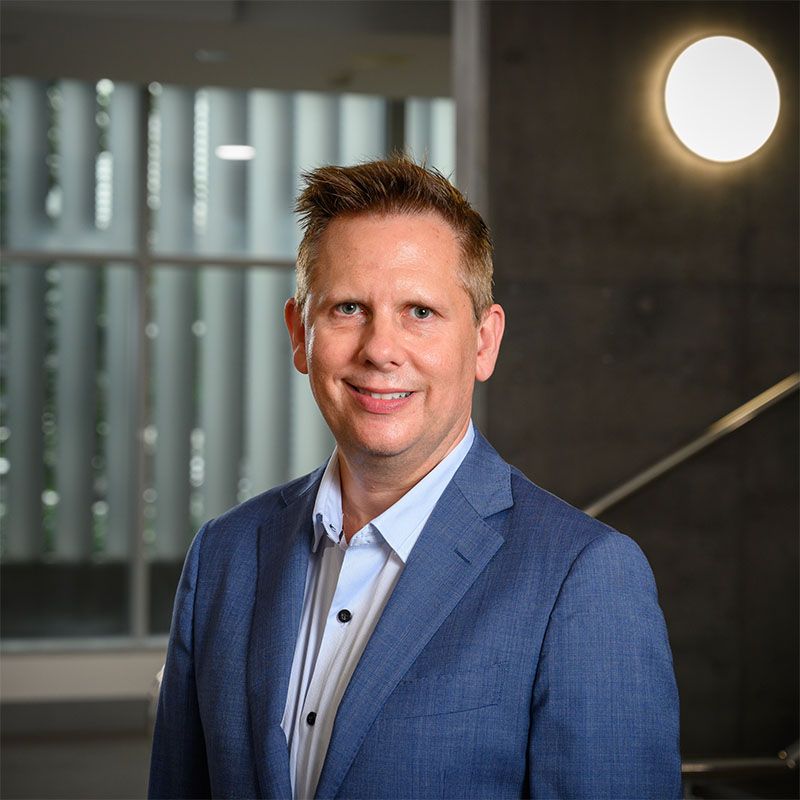
Jussi Nikander is a Senior University Lecturer at Aalto University in the Built Environment domain. His work spans geoinformatics, agricultural technology, and computational data analysis. Research Interests: He specializes in geospatial data systems, cybersecurity for agricultural networks, educational technology in GIS instruction, and optimization of forestry operations. His interdisciplinary approach bridges computer science with environmental and agricultural sciences. Recent Trends: Recent publications focus on open geospatial data security, self-assessment tools in education, and agricultural knowledge processing architectures. His work often addresses practical challenges in precision agriculture and timber logistics. Projects: Notably involved in developing the Geoportti self-assessment platform and the Cropinfra data collection system for ISO 11783-compliant farm equipment.
Dr. Amber Marshall is a Lecturer in the Department of Management at Griffith University, affiliated with Griffith Asia Institute and the Centre for Work, Organisation and Wellbeing. Her research focuses on digital inclusion, rural development, and digital AgTech, employing ethnographic methods to address connectivity challenges in remote and underserved communities. She leads projects like the ARC Discovery-funded study on public libraries' role in rural Australia and collaborates with organizations such as Queensland Government and Australia Post. Dr. Marshall holds a PhD from the University of Queensland (Business School), a Master's in Communication, and a Bachelor's in Creative Industries. Her work bridges management, communication sciences, and socio-technical perspectives, emphasizing actionable outcomes for stakeholders. Key research interests include digital skills development, rural telecommunications infrastructure, Indigenous community inclusion, and disaster resilience. She has secured significant grants, including an ARC Linkage project on digital inclusion in low-income families. Her teaching covers ethics, sustainability, globalization, and corporate social responsibility. Dr. Marshall supervises doctoral and masters students on topics like digital tools in regional libraries, financial inclusion, and migrant experiences with digital health technologies. She actively contributes to policy discussions through submissions on connectivity, disaster warnings, and digital inclusion plans.
Karolina Muhrman is an Associate Professor and Docent at Linköping University's Department of Behavioural Sciences and Learning, specifically within the Division of Education and Adult Learning. She serves as an organization leader for Agtech Sweden, an innovation environment focused on agricultural technology. Her primary teaching roles include the Vocational Teacher Program, Folk High School Teacher Program, and Subject Teacher Program 7-9. She also supervises degree projects in mathematics didactics and special education. Her research focuses on mathematics education in vocational programs, school development, and the marketization of adult education. Key projects include studying the integration of mathematics and vocational teaching, evaluating school development initiatives (#jagmed project), and analyzing procurement systems in municipal adult education funded by the Swedish Research Council. Current collaborations include work with Peter Frejd (Department of Mathematics) and a multidisciplinary team on adult education marketization. Her recent publications (2023-2024) emphasize adult education policy, quality discourses, and the role of study/career counselling in Sweden's educational landscape. She actively participates in national initiatives like the knowledge hub for agricultural digitalization. Professional roles include leadership in Agtech Sweden, involvement in Elmia Lantbruk exhibitions, and contributions to Linköping University's strategic educational and research goals.
Dr. Yujuan Li is a Research Fellow in Plant Biosecurity affiliated with the Faculty of Science and Technology. She holds a PhD in Ecology from Fudan University (2008) and a Bachelor of Science in Plant Pathology from Yangtzeu University (2003). Her research focuses on nematology, plant pathology, and biosecurity, with emphasis on crop protection, soil health, and sustainable agricultural practices. Key areas include investigating plant-parasitic nematodes' ecological impacts, developing biocontrol agents using nematode-trapping fungi, and converting agricultural waste into high-value products. She collaborates with industry stakeholders to bridge research and practical applications, promoting environmental and economic sustainability in Australian agriculture. Education: PhD in Ecology, Fudan University (2003–2008) Bachelor of Science in Plant Pathology, Yangtzeu University (1999–2003) Research Interests: Ecological impacts of plant-parasitic nematodes (PPNs) Biocontrol using fungi like Arthrobotrys oligospora Sustainable agricultural waste conversion Biosecurity measures for pest management Recent work highlights biochar-fertilizer synergies for crop yield, nitrogen application timing in sweetpotato, and organic amendments against Meloidogyne spp. Her projects address pest distribution in northern Australia and involve horticultural crops like ginger and cotton. Advising & Grants: Registered to supervise postgraduate research Leading the 'Understanding current and future distribution of parasitic plant nematodes in northern Australia' project (2023–2025) Labs/Teams: Collaborates with AgTech companies, farmers, and government agencies through interdisciplinary projects.
Krystle Turner is an academic affiliated with Queensland University of Technology (QUT), holding roles in the Faculty of Business & Law and the Faculty of Creative Industries, Education & Social Justice. She is primarily associated with the School of Management and School of Communication. Her research focuses on rural education dynamics, digital divides in agricultural technology adoption, and the sociocultural factors influencing student decisions in regional communities. Turner has published extensively in peer-reviewed journals such as Australian Educational Researcher and Information, Communication and Society , and presented keynote addresses at conferences like the 400M Agrifood Innovation Forum. Her work often bridges educational policy and digital technology, exploring how rural students’ career aspirations intersect with access to digital media. Turner’s studies on AgTech adoption highlight evolving challenges from digital divides to data divides in farming communities. She collaborates with institutions like the QUT Digital Media Research Centre and has contributed to interdisciplinary projects addressing technology access and equity. Turner’s research themes include rural-urban disparities in technology adoption, family and community influences on educational choices, and creative arts programs for widening university participation. No scientific awards are explicitly listed in the provided texts, though her contributions to rural education and AgTech adoption are notable.
Patrick Struebi is a social entrepreneur and academic at Fordham University's Gabelli School of Business, where he teaches social entrepreneurship and leads the Fordham Foundry incubator. He founded the Fairtrasa Group, a pioneering social enterprise that supports marginalized smallholder farmers through organic and fair trade practices, impacting over 60,000 lives. Education: Bachelor’s in Certified Accounting from Swiss Academy of Cert. Accountants Affiliation: Adjunct Professor at Fordham University (since 2016), Social Entrepreneur in Residence at Yale Entrepreneurial Institute (2013-2017) His research focuses on systemic social innovation, cross-sector collaboration, and scaling social enterprises globally. His work bridges business and development to address poverty and environmental degradation through ethical supply chain models. Key trends in his publications include sustainable agriculture, fair trade systems, climate-resilient farming, and metrics for measuring social impact in value chains. His academic output emphasizes actionable frameworks for integrating social and environmental goals into business practices. Sustainable Development Goals (SDGs), Fairtrade certifications, and regenerative agriculture are central to his academic contributions. He advocates for eliminating intermediaries in food supply chains to maximize farmer benefits and ecosystem restoration. Scientific Awards: Ashoka Fellow Endeavor High-Impact Entrepreneur Yale World Fellow Multiple Social Entrepreneur of the Year awards (Schwab, abc*, Univision, Visionaris) As a thought leader, he lectures globally at institutions like Harvard, Yale, and the World Economic Forum, while co-developing AgTech platforms such as Blooom to expand farmer impact.
Trina Myers is an Adjunct Professor in the Department of Information Technology at James Cook University (JCU). She currently serves as President of the Australian Council of Deans of ICT (ACDICT), advocating for ICT education and research in Australian universities. Her research focuses on semantic technologies, AI-driven systems, IoT applications, and interdisciplinary projects spanning environmental science, health, agriculture, and business. Research Projects : Semantic enablement of IoT for water conservation Data-driven virtual reality environments AI-based text mining for web information extraction Genetic algorithms for mining sector roster modeling Grants & Funding : Researchers in Business Grant ($100,000) - 2014-2015 JCU Rising Star Grant ($14,950) - 2014-2016 ACDICT Teaching & Learning Award ($15,000) - 2013 Community Engagement : Hosts the Young ICT Explorers Event with SAP and CSIRO to engage school students in technology projects. Runs the IT@JCU Design Sprint , a prominent industry collaboration event addressing disaster management and sustainability challenges. Partners with Glencore for paid student internships.
Catherine Keske is a Professor in the School of Engineering at the University of California-Merced, specializing in the Management of Complex Systems with a focus on agricultural/resource economics. She leads convergence research on biochar, precision agriculture IoT, and circular bioeconomy models for vulnerable ecosystems. Her research integrates: Economic valuation of ecosystem services Biochar production from agricultural/forest biomass IoT adoption barriers in farming Wildfire impact on water/carbon cycles Waste-to-resource systems in northern communities Recent publications analyze forest restoration benefits, social media-based recreation economics, and decentralized desalination. She directs NSF-funded IoT4Ag center projects and advises PhD candidates in Environmental Systems and Complex Systems Management.
Professor Carol Richards is a sociologist specialising in sustainable food systems, holding dual roles as Deputy Program Leader (Sustainable Agrifood Systems) and Professor at QUT's School of Management within the Faculty of Business & Law. Her work integrates societal, economic, and environmental dimensions to address food security, digital agriculture, and governance challenges. She holds a PhD (2007) and two Bachelor of Arts degrees in Sociology from the University of Queensland, including a First-Class Honours degree awarded the John Western Prize. Research focuses include food system shocks from climate events and market speculation, digital agriculture's implications for farmer livelihoods, and the privatization of food governance. Notable projects include a $256k ARC grant studying horticultural sector shocks (2023–) and a $719k Food Agility CRC grant developing a circular food economy prototype. She has contributed to policy reforms through submissions to Senate inquiries and the Food and Grocery Code of Conduct review. Key Projects: Digital Circular Food Economy, Meat Supply Chain Waste Mapping, AgTech Adoption Barriers Awards: John Western Prize for Honours Sociology (2001) Her grants total over $975k, addressing systemic food waste, climate resilience, and supply chain equity. She is actively involved in civil society, serving as Vice-President of the Australian Food Sovereignty Alliance. Research spans 30+ peer-reviewed publications, emphasizing interdisciplinary approaches to food systems' socio-technical transitions.
Associate Professor Ivan Lee is affiliated with the University of South Australia's STEM division at Mawson Lakes Campus. He actively supervises research degrees and contributes to interdisciplinary research intersecting computer science, food safety, and smart materials. Research Interests: Specializes in machine learning applications for hyperspectral imaging in food contamination detection Develops novel graph learning algorithms for real-time driver fatigue monitoring Investigates eco-friendly synthesis techniques for graphene-based nanomaterials Advances intelligent sensing systems for structural health monitoring Publications Trends: Recent work focuses on spatio-temporal graph modeling, multi-objective optimization algorithms, and applying deep learning to food safety challenges like aflatoxin detection. His research spans computer vision, IoT systems, and sustainable materials. Supervision: Currently serves as a research degree supervisor at University of South Australia. No scientific awards mentioned in available records.
Ana Beatriz Lopes de Sousa Jabbour is a Professor of Supply Chain Management for Sustainable Development at EM Normandie since 2021. She holds a PhD from the Federal University of São Carlos (Brazil, 2009) and a Livre Docência (HDR) from UNESP (2016). Her research focuses on sustainability in supply chains, circular economy, and the integration of digital technologies like Industry 4.0. She has held academic roles across Brazil, France, the UK, and Scotland. Key research areas include green supply chain management, blockchain applications, and the human aspects of sustainability transitions. She has been recognized as a Clarivate Highly Cited Researcher (2022) and among Stanford’s top 2% global scientists since 2020. Teaching includes courses on Sustainable Supply Chain Management and Integrating the Supply Chain. Her work bridges theory and practice, addressing challenges in emerging economies and institutional voids. Education: PhD in Production Engineering & Management (2009), UFSCar, Brazil Livre Docência (HDR) in Management (2016), UNESP, Brazil Her recent publications emphasize circular economy strategies, digital technologies in supply chains, and ethical business practices. She actively contributes to international conferences and has authored/co-authored books on sustainability management and academic writing. Key awards include the prestigious Clarivate and Stanford recognitions, reflecting her impactful research in sustainability and operations.
Katharine Legun is an Associate Professor in the Knowledge, Technology and Innovation Group at Wageningen University & Research. She specializes in environmental sociology, agricultural politics, and the socio-material dynamics of food systems. Her work explores how technologies, plants, and social structures interact to shape agricultural practices and food justice. She holds a PhD from the University of Wisconsin-Madison (2013) and previously worked at the University of Otago in New Zealand. Key Projects: "Plants and Power": Examines botany, social power, and AI in food systems. "Food Security Intelligence": A global initiative addressing data justice in food security. "MaaraTech": Investigates decision automation in orchards and vineyards. Research Interests: Focuses on more-than-human relations, plant breeding technologies, data justice, and the politics of care in agriculture. She advocates for equitable and sustainable agricultural systems through interdisciplinary collaboration. Professional Roles: President of the International Sociological Association's Research Committee on the Sociology of Agriculture and Food (ISA RC-40). Co-editor of the Cambridge Handbook of Environmental Sociology (2020). Grants & Funding: Supported by the National Science Foundation, Social Sciences and Humanities Research Council of Canada, and New Zealand Ministry of Business. Labs/Teams: Active in the Wageningen Global Sustainability Program and contributes to the Biological Economies research network.
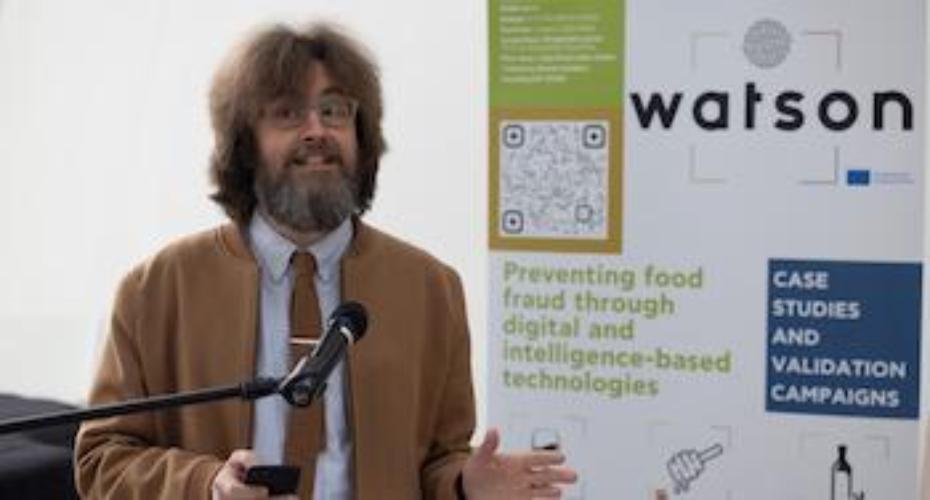
Dr. Dimitrios Argyropoulos is an Assistant Professor at University College Dublin's School of Biosystems and Food Engineering, leading the Digital AgTech Lab. He holds a PhD in Agricultural Engineering from the University of Hohenheim, Germany. His roles include Programme Director of the MSc in Digital Technology for Sustainable Agriculture and Principal Investigator in EU-funded projects like WATSON (€11M Horizon Europe initiative addressing food authenticity and traceability). Education: BSc in Biosystems Engineering (Agricultural Machinery & Irrigation) from Greece, MSc in Environmental Protection & Agricultural Food Production from Germany’s University of Hohenheim, followed by a PhD in Agricultural Engineering. Postdoctoral research at Hohenheim focused on renewable energy systems and post-harvest technology. Research interests center on sustainable agri-food systems, digitization (IoT, AI, hyperspectral imaging), and precision agriculture. Key projects include Farmtopia (democratizing digital farming for small farms), Mushnomics (AI for mushroom growth monitoring), and SpectroFood (hyperspectral tech for food quality). Over 100 peer-reviewed articles span machine learning in agriculture, robotic harvesting systems, and gamification in farming education. Professional activities include roles as Associate Editor for Smart Agricultural Technology and Computers and Electronics in Agriculture , and leadership in EU projects like SMARTCHAIN and GOOD. He co-ordinates IEEE AgriFood Electronics conferences and chairs sessions on precision agriculture.
Dr. Joseph Sweeney is an Assistant Professor and Ad Astra Fellow at the School of Biosystems and Food Engineering, University College Dublin (UCD). He holds a multidisciplinary background with degrees in Industrial Microbiology (BSc), Computer Science (MSc), and Biosystems Engineering (PhD), all from UCD. His research focuses on integrating biotechnology, digital agriculture, and sustainable biorefinery systems to address environmental challenges in agriculture. Sweeney is the Co-PI of the first Irish-led Climate Action Life Programme project (LIFE farm4more), which develops green biorefinery technologies to mitigate climate change in agriculture. His work emphasizes applied, market-oriented research, including the development of E. coli-based biosensor platforms for bioprocess monitoring, for which he won the NovaUCD Invention of the Year Award 2023. Education BSc Industrial Microbiology, University College Dublin MSc Computer Science, University College Dublin PhD Biosystems Engineering, University College Dublin Research Interests Dr. Sweeney’s research spans digital agriculture, agritech innovation, green chemicals/energy production, and biosensor technologies. He leads projects on biorefinery optimization, microbial engineering for bioseparations, and sustainable feedstock utilization. His biosensor platforms enable real-time monitoring of anaerobic digestion and bioprocess parameters, enhancing industrial bioprocessing efficiency. Grants & Awards Recipient of NovaUCD Invention of the Year Award 2023 Principal Investigator for Horizon 2020-funded AgRefine project Co-PI of LIFE farm4more (Climate Action Life Programme) Teaching & Supervision Coordinates modules in AgTech programming, biosystems engineering, and renewable energy systems. Supervises multiple PhD students in biorefinery systems, microbial engineering, and sustainable agriculture. Labs & Collaborations Active in UCD’s Agri-Food and Biosystems Engineering research groups. Collaborates with industry partners on biorefinery pilot projects and biosensor commercialization.
Dr. Camille Buhl is a Senior Lecturer in Plant Protection at the School of Agriculture, Food and Wine within the Faculty of Sciences, Engineering and Technology at the University of Adelaide. Her work focuses on understanding insect movement and collective behavior through interdisciplinary approaches combining experimental biology, computational modeling, and robotics. Research Interests: Buhl's research explores movement ecology, collective animal behavior, and their applications to agriculture and pest control. Key areas include locust collective movement modeling, termite nest construction mechanisms, and social insect nutrition dynamics. She employs cutting-edge technologies like drones, radar tracking, and machine learning for field monitoring. Current Projects: Her team develops robotic systems for pest detection, simulates locust band migrations using CUDA-based models, and investigates termite nest architecture evolution through computed tomography and mathematical biology. Collaborations include the Plant Accelerator, SARDI Entomology, and ECMS researchers. Grants & Supervision: Buhl is eligible to supervise Masters and PhD candidates focusing on animal behavior, computational ecology, and AgTech applications. Her work bridges ecological theory with practical agricultural solutions, emphasizing sustainable pest management strategies. Labs & Facilities: Active in the University of Adelaide's AgTech ecosystem, she utilizes advanced robotics labs and field stations for experimental work. Her research integrates field robotics, mathematical modeling, and nutritional ecology to address global challenges in sustainable agriculture.