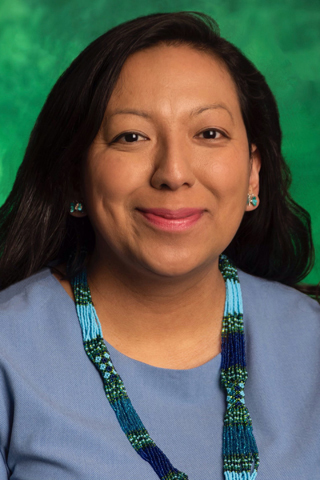
Jennifer Gómez Menjívar is Professor and Director of the M.A. in Media Industries and Critical Cultural Studies at the University of North Texas. Her research examines historical and ethno-linguistic movements influencing text production, circulation, and reception across print media, screen cultures, and digital communities. With over 18 years of teaching experience, she previously held positions at international organizations including the UNECE and UNDP. Her scholarly interests span media linguistics, film adaptation, digital activism, hemispheric animation histories, Indigenous sovereignty media, and Spanish-language media. Her publications demonstrate interdisciplinary work bridging media studies, cultural history, and postcolonial theory. Her extensive publication record includes books such as Tropical Tongues: Language Ideologies, Endangerment, and Minority Languages in Belize (2018) and Black in Print: Plotting the Coordinates of Blackness in Central America (2023), as well as co-edited volumes on Indigenous technology and hemispheric Blackness. She received a Senior Research Fellowship at Freie University Berlin for her upcoming work on Indigenous sovereignty media. Gómez Menjívar teaches courses including Introduction to Graduate Studies in Media Arts, Women in Film, and Global Media. She also mentors students in critical media analysis and serves as faculty advisor for media research projects.
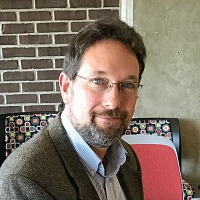
Leo J. Garofalo is the Virginia Eason Weinmann '51 Professor of History at Connecticut College, where he joined in 2002. He coordinates the Social Justice and Sustainability Pathway and co-directs the Mellon Mays Undergraduate Fellowship program. His scholarship focuses on colonial Latin America with emphasis on racial dynamics and cultural exchange. Education: B.A. in History and Hispanic Studies from Brown University M.A. from Boston College Ph.D. from University of Wisconsin at Madison Research Focus: Garofalo investigates the intersection of African and Indigenous cultures in colonial Peru, examining how marketplaces, taverns, and religious practices shaped Afro-Andean identities. His current work traces West African diaspora routes to the Andes and analyzes Afro-Iberian influences on witchcraft traditions. He utilizes Inquisition records and Spanish imperial archives to reconstruct transatlantic cultural networks. Awards: Virginia Eason Weinmann '51 Professorship (endowed chair) Social Science Research Council Grant Fulbright-Hays Research Grant Academic Leadership: Garofalo has organized campus events featuring Afro-Peruvian performers (Negrura Peruana) and activists like former Colombian Governor Luis Murillo. In 2010, he co-led a Study Away Teach Away program in Oaxaca, Mexico, examining immigration and indigenous rights movements.
Juan Eduardo Wolf is an Associate Professor of Ethnomusicology at the University of Oregon's School of Music and Dance. He holds a PhD in Folklore and Ethnomusicology from Indiana University (2013), alongside degrees in Chemical Engineering and Art Studio from prestigious institutions. His research focuses on music-dance traditions of Afro-descendant and Indigenous communities in Latin America and the Caribbean, exploring decolonial methodologies and cultural equity. He directs the Latin American Studies Program and coordinates the World Music Series, which hosts global music performances. His awards include grants from UO's Center for Latin American and Latinx Studies (2018) and Global Oregon (2018). Wolf teaches courses like Decolonizing Music, Music in World Cultures, and directs World Music Ensembles focusing on Andean and Puerto Rican traditions. His research examines how marginalized groups use music-dance to resist colonial legacies, with fieldwork in Chile, Puerto Rico, and Bolivia. He is a core faculty member in Folklore and Public Culture Programs and advises on Latinx Studies initiatives. Notable publications include Styling Blackness in Chile (2019), analyzing Afro-Chilean music-dance, and Un Tumbe Ch’ixi (2021), integrating Afro-descendant ideas into Andean methodologies. His work challenges colonial frameworks and advocates for socially just music science practices. He performs as a percussionist/guitarist in global ensembles and mentors students through experiential learning.
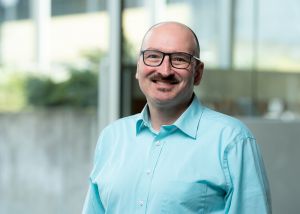
Prof. Dr. Ute Fendler holds the Chair of Romance Literature and Comparative Studies with Special Emphasis on Africa at the University of Bayreuth. Her academic journey includes a 2006 Habilitation and 1992 PhD from Saarland University, with research spanning Francophone African literatures , intermedial phenomena , and postcolonial cinematic analysis . She coordinates the Bayreuth Academy of Advanced African Studies as Vice-Director and serves on multiple editorial boards. 2006-Present: Professor at University of Bayreuth 2011-2015: Director of Institute for African Studies 2015-Present: Vice-Director of Bayreuth Academy of Advanced African Studies Her research interrogates urban ecotonal spaces through African music videos, transnational cinematic flows in African and Afro-Asian contexts, and mediated memory practices . Recent publications explore post-apocalyptic storytelling and decolonial aesthetics in music videos and films. Scientific contributions include: 2025: Staging Atmosphere: Urban Ecotonal Spaces in African Music Videos (Brill) 2024: Co-edited Asia-Africa: Multifaceted Engagement (Palgrave Macmillan) 2022: Animating the Future: Superheroes in Africa (Brill) 2020: Ghosts as Mediators: Memory and Hauntology (iwalewabooks) 2019: K-Pop Fandom in Germany (Korea University Press) She received the Faculty Enrichment Award from the Canadian Embassy in 2005 and serves on multiple academic committees including the University Library Commission (2007-2016).
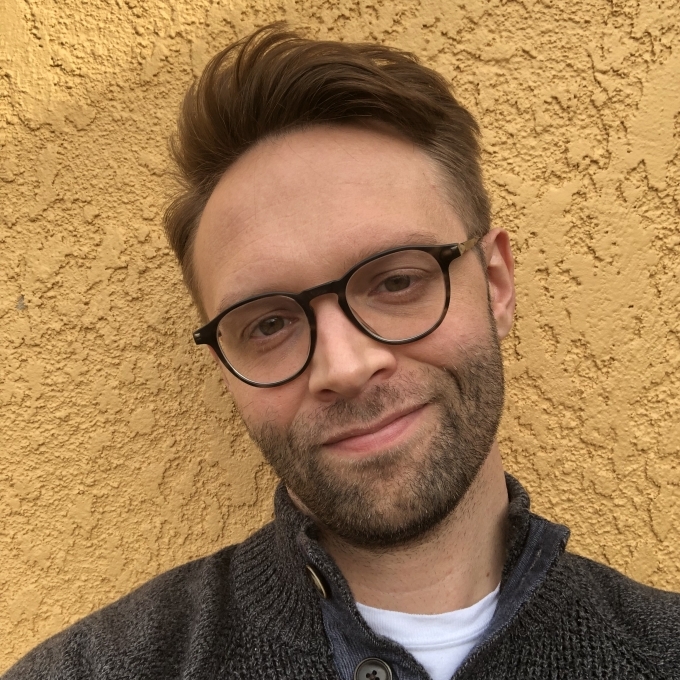
Charlie Geyer serves as Assistant Professor of Hispanic Studies at Davidson College, specializing in hemispheric border studies through comparative analysis of Latin American and Latinx literatures and cultures. His educational credentials include: Ph.D. and M.A. from Vanderbilt University B.A. from Emory University Geyer's research centers on the politics and aesthetics of bordering practices across the Americas, examining how literature, performance, and visual arts engage with geographic and social borders related to race, class, gender, sexuality, and citizenship. His current book project "Disturbing Beauty: Border Crossing in Latin American and Latinx Imaginaries" identifies an aesthetic practice that challenges violent border enforcement while proposing new political arrangements for border coexistence. His scholarly publications appear in Revista de Estudios Hispánicos, CENTRO: Journal, Chasqui, The Comparatist, and Afro-Hispanic Review. Geyer teaches specialized courses including "Border Crossing in the Latinx Americas," "Queer Crossings: Latin and Latinx Americas," and "Beauty and Marginality in Contemporary Latin America," following prior appointments at University of Arizona and Ball State University.
Ana Paulina Lee is an Assistant Professor of Writing and Digital Humanities in the Comparative Literature, English, and Creative Writing Department at the American University of Paris. She joined AUP in 2025 after teaching Latin American literature and culture at Columbia University for eight years and serving as a Mellon Postdoctoral Fellow at Tulane University. Her interdisciplinary scholarship bridges literature, history, law, and urban studies with particular focus on marginalized narratives in the Americas. Ph.D. from University of Southern California M.A. from New York University B.A. from Binghamton University Professor Lee's research examines how stories—archival, fictional, oral—shape legal imagination, social life, and urban experience in the Americas. She specializes in the intersections of magic, law, and literature in Latin America, with particular focus on Asian and African diasporas in Brazil. Her work traces how narrative functions as both historical record and catalyst for social transformation, exploring themes of slavery, emancipation, colonial legacies, and urban memory. She approaches these topics through interdisciplinary lenses combining literary analysis with histories of labor, migration, and performance. Lee's recent publications reveal a consistent focus on marginalized narratives and their impact on social structures. Her scholarship connects legal history with cultural production, showing how magical thinking and narrative practices shape urban spaces and social relations. Works like 'Urban Sorcery, Segregation, and Spectacle in Twentieth-Century Rio de Janeiro' and 'Black Magic City' demonstrate her innovative approach to understanding the relationship between occult logics and legal frameworks in Brazilian contexts. Her research on diasporic communities, particularly Chinese and Japanese experiences in Latin America, contributes significantly to transnational and comparative race studies. David B. Larson Fellowship in Health and Spirituality, Kluge Center, United States Library of Congress (2025-2026) National Endowment for the Humanities Fellowship (2025) Social Sciences Research Council, Inaugural Recipient of Interdisciplinary Projects in the Social Sciences (2020-2023) Institute for Ideas and Imagination Fellowship, Columbia University in Paris, France (2021-2022) Provost's Tsunoda Senior Fellowship, Visiting Scholar, Waseda University, Tokyo, Japan (2019) Heyman Center Fellow, The Heyman Center for the Humanities, Columbia University (2017-2018) Fulbright, Lisbon, Portugal (2013-2014) Professor Lee's scholarly activities have been generously supported by major research grants from the National Endowment for the Humanities, the Social Sciences Research Council, and the Library of Congress. Her work demonstrates a commitment to interdisciplinary approaches that bridge humanities and social sciences, particularly through projects examining intersections of race, migration, and cultural production in the Americas. Her publication 'Socially Engaged Oral History Pedagogy Amid the COVID-19 Pandemic' indicates a strong commitment to innovative teaching methods and community-based research. While specific details about current advisees aren't provided, her research program suggests engagement with graduate students interested in diaspora studies, urban history, and literary-cultural analysis. Though not explicitly mentioned in the available information, Professor Lee's research on urban spaces, magic, and law in Brazil likely involves collaborative work with scholars across disciplines. Her participation in centers like the Institute for Ideas and Imagination at Columbia University suggests engagement with interdisciplinary research communities focused on global cultural production and social transformation. Her work contributes to ongoing conversations about how narrative practices shape legal frameworks and social structures in the Americas, particularly regarding racial formation and diasporic experiences.
State University of New York at OswegoUnited States
Dr. Roseli Rojo is an Assistant Professor at the State University of New York at Oswego in the Department of Modern Languages and Literatures, specializing in Caribbean Studies and Spanish. Her research examines the agency of women and Afro-descendants in colonial Latin America and the Spanish Caribbean, with a focus on historical narratives, cultural production, and intersectional analysis. Education: Ph.D. in Spanish Literature and Culture, Rutgers University (2021); M.A. in Latin American Studies, National Autonomous University of Mexico (2016); B.A. in Hispanic and Classical Literature, University of Havana (2013) Her scholarly work spans colonial Havana urbanization, gendered representations in Caribbean literature, and environmental intersections with race and power. Recent publications analyze topics like 19th-century Cuban railroads, hysteria as a culture-bound syndrome, and Afro-Caribbean resilience narratives. Dr. Rojo’s research has earned recognition through fellowships such as the PRODiG Postdoctoral Fellowship (2022-2024) and the Goizueta Foundation Graduate Fellowship (2018). She has contributed to journals like Hispanic Review , Latin American Theatre Review , and Decimonónica , alongside book chapters published by Routledge and Hypermedia Press. Professional Experience: Assistant Professor at Jacksonville State University (2021-2022), Instructor at Rutgers University (2016-2021), Assistant Professor at University of Arts, Cuba (2013-2014)
Robin Moore is a Professor of Ethnomusicology at the University of Texas at Austin. His research focuses on the intersections of music, race, nationalism, and socialist art aesthetics in Latin America and the Caribbean. He has authored significant works including Nationalizing Blackness , Music and Revolution , and Music of the Hispanic Caribbean . Key Research Areas: African Diaspora music, Cuban music, Caribbean music, race relations in music, music curriculum reform Academic Contributions: Co-author of Danzón: Circum-Caribbean Dialogues in Music and Dance , which explores the hybrid origins of danzón and its influence on early jazz in New Orleans Scientific Awards: Béla Bartók Award for Outstanding Ethnomusicology Book Robert M. Stevenson Award from the American Musicological Society
Dr. George Cole is an Associate Professor of Spanish at Texas Tech University's Classical & Modern Languages & Literatures (CMLL) Department. He specializes in Hispanic Caribbean literature and culture (Cuba and Puerto Rico), Afro-Caribbean religious practices, and Hispanic speculative genres like fantasy, horror, and science fiction. His work bridges literature, theater, and cultural anthropology, with a focus on Yoruba religious traditions and their representation in art. Education: B.A. in French Language and Literature, University of Puerto Rico M.A., Washington State University Ph.D., Arizona State University (2005) Research Interests: Dr. Cole explores Afro-Cuban cultural identity, Latin American drama and poetry, and transgressive genres such as detective fiction and graphic novels. His recent projects examine intersections between supernatural elements and criminal narratives. He also investigates the role of Santería in Cuban cinema and literature. Awards: Nominated for AriZoni Theatre Award (Best Supporting Actor, 2002 & 2004) Three-time 'Outstanding Faculty Member' recognition from Texas Tech's College of Arts & Sciences (2005–2007) Leadership & Service: Dr. Cole has served as Director of Spanish and Portuguese Graduate Studies (2018–2025), Interim Director (2022), and Co-Director of the Hispanic Studies Collection. He also holds editorial roles at Dura and Revista Temas Americanistas . Creative Works: His poetry collections Círculos concéntricos (2014) and Hojas sueltas (2015), and the cyberpunk noir short story collection Cadáveres en la oscura ciudad y otros relatos (2023) showcase his narrative versatility. He has authored plays like La indocumentada (2008) and directed six theater productions at Texas Tech.
University of California , Santa Barbara (UCSB)United States
France Winddance Twine is a Professor of Sociology at the University of California, Santa Barbara (UCSB), with affiliations at Cambridge University's Sociology of Reproduction research group. She holds a Ph.D. from UC Berkeley and has held prior positions at Duke University and the University of Washington, where she founded the Latin American Studies unit in the Jackson School of International Studies. Her work focuses on intersectional analyses of race, gender, technology, and inequality, particularly through ethnographic and visual methodologies. Education: Ph.D. in Sociology, UC Berkeley Key Research Areas: Racial literacy, queer reproduction, tech industry inequality, feminist science studies, visual sociology Twine's research bridges multiple disciplines, addressing global racial formations, digital labor markets, and anti-racist strategies. Her concept of 'racial literacy' emphasizes intellectual and cultural practices countering anti-Black racism. Recent work examines Silicon Valley's caste systems and barriers faced by women and minorities in tech. Awarded the 2020 ASA Race, Gender & Class Distinguished Career Award, she also secured a $225K Mellon Foundation grant for interdisciplinary seminars on migration and race. She founded UCSB's Technologies for Justice Lab, fostering collaborations between humanities/social sciences and STEM fields to advance equity in technology. Teaching includes courses on digital technologies, racial justice, and ethnographic methods. Her eleven authored/edited books include A White Side of Black Britain (2010) and Geek Girls: Inequality and Opportunity in Silicon Valley (2022).
Irene V. Small is a Professor in the Department of Art & Archaeology at Princeton University, specializing in contemporary art and criticism within global and transnational contexts. Her work critically engages with experimental practices from the 1960s–1970s, legacies of abstraction, and the social implications of form, with concentrated focus on Latin American art—particularly Brazil. She actively contributes to interdisciplinary initiatives including the Program in Media and Modernity, the Brazil Lab, and the Program in Latin American Studies. Her research traverses radical pedagogy, expanded cinema, decolonial interventions, and the politics of medium specificity. Central to her scholarship is the interrogation of modernism’s topological field through concepts like Lygia Clark’s 'organic line,' which she deploys to analyze works ranging from Malevich’s Black Square to contemporary practices. She investigates how truncated media forms facilitate itinerancy and connectivity across Brazilian art history, from 19th-century proto-photography to digital remediation. Small’s publications reveal consistent engagement with Brazilian avant-garde movements, examining artists like Hélio Oiticica, Lygia Clark, and Tarsila do Amaral through frameworks of participation, embodiment, and geopolitical critique. Her recent work expands to address free speech, afterlives of slavery, and the decolonization of art institutions, demonstrating evolving focus on art’s capacity to reconfigure social and political realities. Scientific Awards and Grants: Francine and Sterling Clark Art Institute Fellowship Graham Foundation Fellowship Getty Research Foundation Fellowship Dedalus Foundation Fellowship Creative Capital and Andy Warhol Foundation Arts Writers Grant Lemann Institute of Brazilian Studies Fellowship Research Board of the University of Illinois at Urbana-Champaign Grant Small serves on advisory boards for October , Ars , and Texte zur Kunst , and has curated exhibitions including Blind Field (2013) and Multitude (2002). Her teaching spans global contemporary art surveys, modern/contemporary Latin American art, and specialized seminars on decoloniality, gender, and experimentalism. She is affiliated with Princeton’s Department of Spanish & Portuguese, Brazil Lab, Gauss Seminars in Criticism, and Edward Said Memorial Lecture series.
Gema Guevara is an Associate Professor in the Department of World Languages and Cultures at the University of Utah, with over two decades of academic service (1999–present). Her career progression includes: Assistant Professor (1999–2007) and Associate Professor (2007–present). Research Interests focus on intersections of: Latinidad and transnational identity Afro-Cuban musical traditions Racial and gender discourses Cultural hybridity in diasporic contexts Travel writing and colonial narratives Historical constructions of national identity Teaching Portfolio includes courses on: Latin American Cultures & Society US Latino Literature Special Topics in Iberian and Latin American Studies Thesis Research (Masters level) Key Trends in Publications (2000–2014) emphasize: Music as a vehicle for cultural identity Transnational flows in artistic expression Racial politics in literary and musical narratives Gender-specific racial tropes Discursive struggles over cultural authority Diasporic reinterpretations of national identity Scientific Awards : Recipient of the prestigious Obert C. & Grace A. Tanner Fellowship (2012) from the Tanner Humanities Center Academic Service spans teaching, research, and leadership activities within the university structure.
Professor Jose Jouve-Martin is a faculty member in the Department of Hispanic Studies at McGill University. His research focuses on the intersection of history and literature in colonial Latin America, particularly exploring themes of slavery, literacy, and colonialism. He has held significant academic roles including Director of Undergraduate Programs in Hispanic Studies and has been funded by major grants such as SSHRC and FQRSC. His work spans monographs, peer-reviewed articles, and edited volumes, with notable publications like Esclavos de la ciudad letrada (2005). He teaches graduate and undergraduate courses on colonial literature, the baroque, and Afro-Hispanic studies. Education: Ph.D. in Hispanic Literature, Georgetown University (2003) Licenciatura in Philosophy, Universidad Autónoma de Madrid (1994) His research interests include the cultural history of opera, funerary rituals in the Spanish Empire, and the role of writing among enslaved populations. He has advised numerous graduate and undergraduate students on topics ranging from colonial drama to modern Latin American literature. His international collaborations include membership in the MCRI 'The Hispanic Baroque' and Brown University's research groups. Prof. Jouve-Martin’s scholarly contributions have been recognized with awards such as an honorable mention for the Franklin Pease G.Y. Memorial Prize (2007). He actively participates in academic service roles, including editorial boards for Revista Canadiense de Estudios Hispánicos and Latin American Research Review .
Chisu Teresa Ko is Associate Professor and Department Chair of Modern Languages at Ursinus College. She holds a Ph.D. from Columbia University and teaches Spanish language courses at all levels alongside Latin American Studies courses in English, including SPAN 201 (Conversation and Composition), SPAN 340 (Racial Discourses in Argentina), LAS 200 (Introduction to Latin American Studies), and interdisciplinary offerings like CIE 200 (Common Intellectual Experience). Her research specializes in 19th- and 20th-century Latin American literary and cultural studies, with emphases on: Race, ethnicity, and multicultural identity formation Historical and contemporary racial discourses in Argentina Asian diaspora communities in Latin America Afro-Argentine cultural production Criollo Popular Theater traditions Her scholarship—including the forthcoming book Argentina: Race in a Raceless Nation —consistently examines intersections of national identity, racial representation, and transnational connections, with recent work expanding into Afro-Argentine historical documentation and Korean-Argentine cinematic narratives. Awards and fellowships include: 2020 ACLS Fellowship (American Council of Learned Societies) 2021 UMBC Inclusion Imperative Visiting Faculty Fellowship
Jorge Camacho is Professor of Spanish, Comparative Literature, and Latin American Studies at the University of South Carolina. He directs programs in Spanish, Comparative Literature, and Latin American Studies, and has published 14 scholarly books including critical editions and monographs on colonial Cuban literature. His research focuses on colonial literature, Latin American poetry, Cuban narratives, and cultural representations of race. He received the Russell Research Award for Humanities and Social Sciences in 2014. He has recovered and published over 80 previously unknown chronicles and poems by José Martí, Rubén Darío, and Mercedes Matamoros from historical archives.