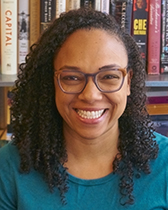
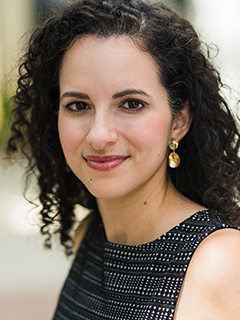
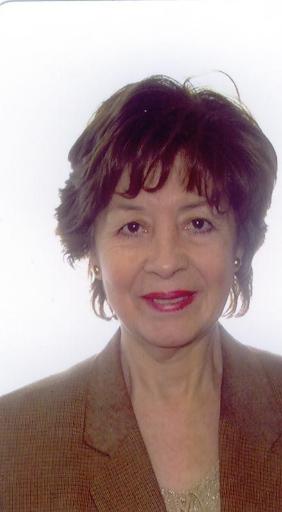
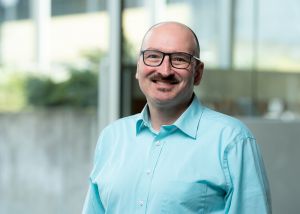
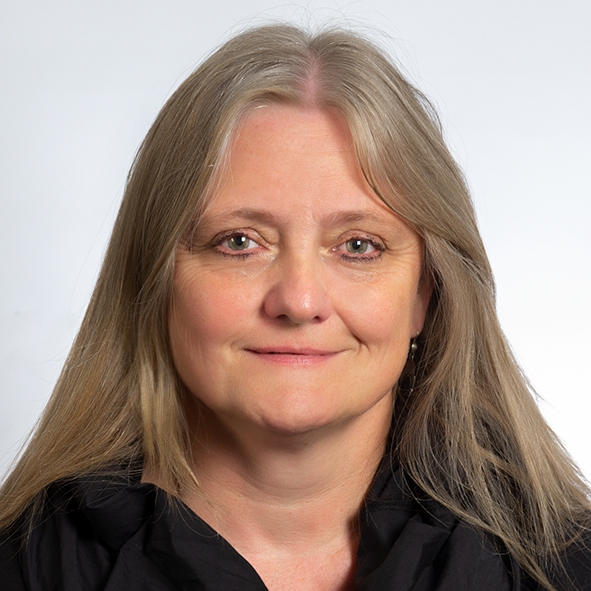
Jennifer Jones is an Associate Professor of Sociology at Northwestern University in the Department of Sociology. Her research focuses on racial formation, immigration, political sociology, and Afro-Latinx communities. Jones explores how race is socially constructed through migration, multiracial identity dynamics, and intergroup solidarity. She is the author of The Browning of the New South (2019), analyzing race relations in the U.S. South post-Mexican immigration. Her work has been funded by the National Science Foundation, Russell Sage Foundation, and the Institute for Citizens and Scholars. Education: BA from Pomona College; PhD from UC Berkeley. Prior positions include faculty roles at University of Notre Dame and University of Illinois Chicago, alongside a postdoctoral fellowship at Ohio State University. Courses taught include Sociology of Immigration and Immigration and Society . Her research on immigrant-serving institutions in the South examines how racial ideologies shape institutional practices. She collaborates with scholars like Hana Brown on projects linking social movements to racial dynamics. Jones’ articles appear in top journals like American Journal of Sociology and Ethnic and Racial Studies . Her grants include NSF and Russell Sage Foundation awards. While no specific labs are named, her work emphasizes interdisciplinary collaboration. Professional activities include advising graduate students and mentoring junior scholars.
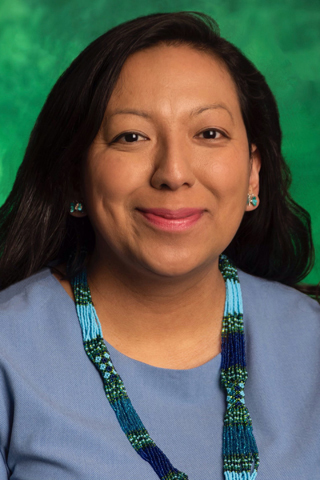
Jennifer Gómez Menjívar is Professor and Director of the M.A. in Media Industries and Critical Cultural Studies at the University of North Texas. Her research examines historical and ethno-linguistic movements influencing text production, circulation, and reception across print media, screen cultures, and digital communities. With over 18 years of teaching experience, she previously held positions at international organizations including the UNECE and UNDP. Her scholarly interests span media linguistics, film adaptation, digital activism, hemispheric animation histories, Indigenous sovereignty media, and Spanish-language media. Her publications demonstrate interdisciplinary work bridging media studies, cultural history, and postcolonial theory. Her extensive publication record includes books such as Tropical Tongues: Language Ideologies, Endangerment, and Minority Languages in Belize (2018) and Black in Print: Plotting the Coordinates of Blackness in Central America (2023), as well as co-edited volumes on Indigenous technology and hemispheric Blackness. She received a Senior Research Fellowship at Freie University Berlin for her upcoming work on Indigenous sovereignty media. Gómez Menjívar teaches courses including Introduction to Graduate Studies in Media Arts, Women in Film, and Global Media. She also mentors students in critical media analysis and serves as faculty advisor for media research projects.
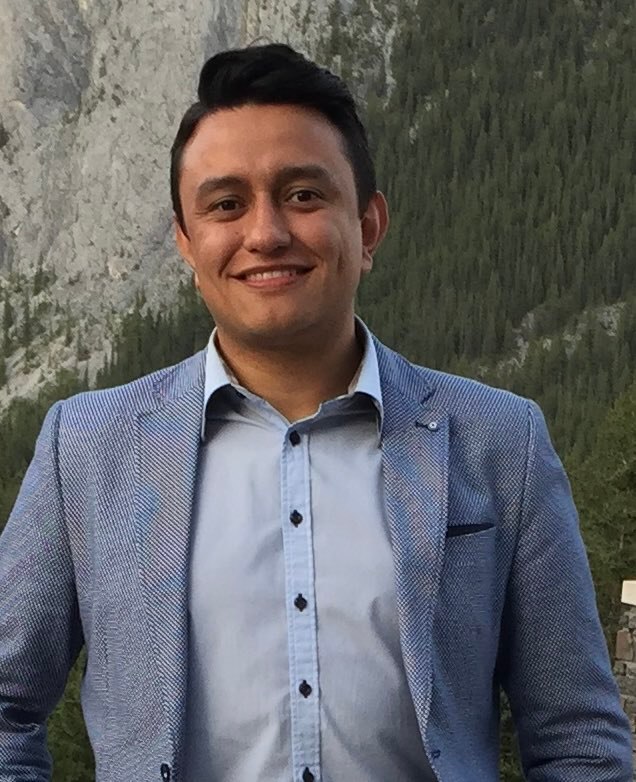
José Eduardo Villalobos Graillet is an Assistant Professor of Spanish at Idaho State University , specializing in Modern Peninsular Literature and Culture with a focus on visual culture (film and television) . He previously held a position as Spanish Instructor at Wilfrid Laurier University in the Department of Languages and Literatures. Research Areas : Spanish Film Studies, Spanish Medieval Literature, Latin American and Caribbean Studies, Teaching Spanish as a Foreign Language, Visual Culture, and Critical Pedagogy. His scholarly work examines film and television adaptations of 'La Celestina' , analyzing censorship dynamics across Francoist Spain, the Democratic Transition, and contemporary Spain. He also contributes to Spanish pedagogy , developing technological tools like Lang-8 for written expression and culturally immersive teaching units on topics such as winter festivals and Caribbean music. His publications span both critical academic analysis and methodological innovations for language instruction. Key Themes in Publications : Adaptation fidelity, political censorship, intercultural pedagogy, and the role of digital platforms in language learning.
Leo J. Garofalo is the Virginia Eason Weinmann '51 Professor of History at Connecticut College, where he joined in 2002. He coordinates the Social Justice and Sustainability Pathway and co-directs the Mellon Mays Undergraduate Fellowship program. His scholarship focuses on colonial Latin America with emphasis on racial dynamics and cultural exchange. Education: B.A. in History and Hispanic Studies from Brown University M.A. from Boston College Ph.D. from University of Wisconsin at Madison Research Focus: Garofalo investigates the intersection of African and Indigenous cultures in colonial Peru, examining how marketplaces, taverns, and religious practices shaped Afro-Andean identities. His current work traces West African diaspora routes to the Andes and analyzes Afro-Iberian influences on witchcraft traditions. He utilizes Inquisition records and Spanish imperial archives to reconstruct transatlantic cultural networks. Awards: Virginia Eason Weinmann '51 Professorship (endowed chair) Social Science Research Council Grant Fulbright-Hays Research Grant Academic Leadership: Garofalo has organized campus events featuring Afro-Peruvian performers (Negrura Peruana) and activists like former Colombian Governor Luis Murillo. In 2010, he co-led a Study Away Teach Away program in Oaxaca, Mexico, examining immigration and indigenous rights movements.
Marysol Quevedo is an Associate Professor at the University of Miami's Frost School of Music, specializing in musicology with a focus on Cuban and Puerto Rican musical cultures. Her research explores intersections between music, politics, and identity in post-revolutionary Cuba and the Caribbean diaspora. Research Themes: Cuban avant-garde music and revolutionary ideology Film music analysis (e.g., Leo Brouwer's scores) Cultural diplomacy through symphonic institutions Puerto Rican music historiography Public ethnomusicology and community engagement Publication Trends: Analyzes Cuban composers' negotiation of socialist values with global artistic movements, emphasizing music's role in ideological narratives through film scores, symphonic programming, and diasporic cultural preservation.
Lady Rojas Benavente is an Associate Professor in the Department of Classics, Modern Languages and Linguistics at Concordia University, where she has been teaching since her appointment as Assistant Professor in 1996, with promotion to Associate Professor in May 2003. Prior to joining Concordia, she served as an Assistant Professor at the University of Ottawa and as a lecturer at the Faculty of Education at The University of Western Ontario, where she taught second language methodology, French and Spanish. Dr. Rojas Benavente received her PhD in Hispanic Literature from the University Laval in 1991, following an MA in Spanish Literatures (Cum Laude, 1985) and BA in History and Spanish (1983), both from the University of Ottawa. She also holds a Diploma qualifying as a Secondary School teacher specializing in Spanish Language and Literature, Psychology and Philosophy from the National Pedagogic University of Women in Lima, Peru (Cum Laude, 1968). Her research focuses on Critical Feminism in Peruvian & Latin-American Women Writers, with special emphasis on contemporary Peruvian and Mexican narrative, drama, poetry and essay. Her work encompasses Cultural Studies and Literary and Critical Theories, Latin American History, Post-colonialism, Human Rights, Women Studies, Feminist Theories, Gender Issues, Latin America Black History, Indigenous and Minorities Studies, and Comparative Studies in Education. She has published nine books (two poetry collections and seven critical interpretations) and over 50 refereed papers in Latin American Women's literary work, particularly focusing on Peruvian and Mexican authors. Dr. Rojas Benavente's scholarly output demonstrates consistent engagement with themes of gender, ethnicity, and power structures in Latin American literature. Her recent publications explore the works of contemporary Peruvian women writers, examining how they address issues of violence, racism, and gender in post-independence national contexts. Her research trajectory reveals a deepening focus on decolonial perspectives, indigenous resistance, and the intersection of gender with other social categories. Hispanic Literary and Cultural Institute's Honor Diploma (2010) Publication Award from the University of New Brunswick for the Anthology, Constructing Memory: Latino-Canadian Women Writers in the New Millennium Recognition by Mouvement Desjardins in celebration of International Women's Day (2008) As president of the Society for Literary Criticism of Spanish American Women Writers' work (CCLEH), Dr. Rojas Benavente has facilitated connections between Concordia colleagues, local artists, international writers, and the Latino-Montreal community. She serves on the editorial boards of Alba de America, a literary magazine from the United States, and Voces, a Peruvian cultural magazine. Her leadership extends to organizing numerous conferences on Latin American women writers across Canada, Latin America, and Montreal, including multiple meetings of Hispano-Canadian Women Writers and events commemorating significant figures in Latin American literature.
Juan Eduardo Wolf is an Associate Professor of Ethnomusicology at the University of Oregon's School of Music and Dance. He holds a PhD in Folklore and Ethnomusicology from Indiana University (2013), alongside degrees in Chemical Engineering and Art Studio from prestigious institutions. His research focuses on music-dance traditions of Afro-descendant and Indigenous communities in Latin America and the Caribbean, exploring decolonial methodologies and cultural equity. He directs the Latin American Studies Program and coordinates the World Music Series, which hosts global music performances. His awards include grants from UO's Center for Latin American and Latinx Studies (2018) and Global Oregon (2018). Wolf teaches courses like Decolonizing Music, Music in World Cultures, and directs World Music Ensembles focusing on Andean and Puerto Rican traditions. His research examines how marginalized groups use music-dance to resist colonial legacies, with fieldwork in Chile, Puerto Rico, and Bolivia. He is a core faculty member in Folklore and Public Culture Programs and advises on Latinx Studies initiatives. Notable publications include Styling Blackness in Chile (2019), analyzing Afro-Chilean music-dance, and Un Tumbe Ch’ixi (2021), integrating Afro-descendant ideas into Andean methodologies. His work challenges colonial frameworks and advocates for socially just music science practices. He performs as a percussionist/guitarist in global ensembles and mentors students through experiential learning.
Isadora Moura Mota is an Assistant Professor of History at Princeton University, specializing in Brazilian slavery and the Atlantic world. Her research focuses on modern Brazilian history, comparative slavery, abolitionism, literacy among enslaved populations, and the African diaspora in Latin America. She holds a PhD from Brown University (2017) and previously taught at the University of Miami. Key research areas include the role of Afro-Brazilians in shaping abolition movements, transnational connections during the 19th century, and the intersection of literacy with emancipation struggles. Her book Freedom’s Horizon examines abolitionism as a grassroots movement anchored in enslaved communities. Her work has been supported by the Social Sciences Research Council, Brown University’s Center for the Study of Slavery and Justice, and Brazil’s CNPq. Future projects explore intellectual histories of Afro-Brazilian literacy and labor struggles between European colonists and enslaved peoples. She has received an ACLS Fellowship and authored articles in Slavery & Abolition and Hispanic American Historical Review . Currently on leave through 2024–2025, her office is Dickinson Hall at Princeton.
University of California , Santa Barbara (UCSB)United States
Jaime Alves is an Assistant Professor in the Department of Black Studies at the University of California, Santa Barbara. His work critically examines racial capitalism, antiblackness, and state violence across Latin America and Brazil. Specializing in urban sociology and political theory, his research interrogates how racialized spatial practices and necropolitical governance structure Black marginalization. Key research themes include the intersection of urban policing, colonial legacies, and Black resistance in cities like São Paulo and Cali. He analyzes how racialized temporal frameworks (e.g., "chronos") and spatial discourses (e.g., "necropolis") perpetuate systemic inequities. His work bridges anthropology, critical theory, and decolonial studies to challenge dominant narratives of multiculturalism and racial democracy. Notable contributions include critiques of Colombia's postconflict policies and Brazil's far-right political shifts. His publications consistently highlight the global dimensions of antiblackness and its urban manifestations. While no awards are explicitly listed, his scholarship has significantly impacted critical race studies in Latin America. Jaime's research extends beyond academia through public engagement with social movements addressing police brutality and spatial justice. Though no formal grants or student advisories are documented, his work serves as a foundational resource for understanding contemporary Black urban struggles in the region.
Prof. Dr. Ute Fendler holds the Chair of Romance Literature and Comparative Studies with Special Emphasis on Africa at the University of Bayreuth. Her academic journey includes a 2006 Habilitation and 1992 PhD from Saarland University, with research spanning Francophone African literatures , intermedial phenomena , and postcolonial cinematic analysis . She coordinates the Bayreuth Academy of Advanced African Studies as Vice-Director and serves on multiple editorial boards. 2006-Present: Professor at University of Bayreuth 2011-2015: Director of Institute for African Studies 2015-Present: Vice-Director of Bayreuth Academy of Advanced African Studies Her research interrogates urban ecotonal spaces through African music videos, transnational cinematic flows in African and Afro-Asian contexts, and mediated memory practices . Recent publications explore post-apocalyptic storytelling and decolonial aesthetics in music videos and films. Scientific contributions include: 2025: Staging Atmosphere: Urban Ecotonal Spaces in African Music Videos (Brill) 2024: Co-edited Asia-Africa: Multifaceted Engagement (Palgrave Macmillan) 2022: Animating the Future: Superheroes in Africa (Brill) 2020: Ghosts as Mediators: Memory and Hauntology (iwalewabooks) 2019: K-Pop Fandom in Germany (Korea University Press) She received the Faculty Enrichment Award from the Canadian Embassy in 2005 and serves on multiple academic committees including the University Library Commission (2007-2016).
Sujatha Fernandes is a Professor of Sociology at the University of Sydney, joining in 2016. Previously, she held positions at Queens College and the City University of New York’s Graduate Center, and was a Wilson-Cotsen Fellow at Princeton University. She earned a PhD in Political Science from the University of Chicago. Her research focuses on social and labor movements, global Black cultures, migrant workers, and anti-Blackness in the Americas. She has authored six books, including The Cuban Hustle (2020) and Curated Stories (2017), and her work explores storytelling, climate justice, and marginalized communities. Dr. Fernandes has received grants such as the Australian Research Council’s Discovery Project (2021) and contributed to initiatives like the Racial Justice and the Curriculum Project at the University of Sydney. She has been featured in global media, including The New York Times , NPR , and Orion Magazine . Her writing spans academic articles, creative nonfiction, and op-eds addressing climate displacement, migrant rights, and cultural policy. Notable works include analyses of Venezuela’s urban movements, Cuba’s cultural politics, and domestic worker advocacy. She sits on the editorial board of Transition: The Magazine of Africa and the Diaspora . Her interdisciplinary approach bridges sociology, anthropology, and literature, with ongoing projects in climate fiction and interlinked short stories.
Charlie Geyer serves as Assistant Professor of Hispanic Studies at Davidson College, specializing in hemispheric border studies through comparative analysis of Latin American and Latinx literatures and cultures. His educational credentials include: Ph.D. and M.A. from Vanderbilt University B.A. from Emory University Geyer's research centers on the politics and aesthetics of bordering practices across the Americas, examining how literature, performance, and visual arts engage with geographic and social borders related to race, class, gender, sexuality, and citizenship. His current book project "Disturbing Beauty: Border Crossing in Latin American and Latinx Imaginaries" identifies an aesthetic practice that challenges violent border enforcement while proposing new political arrangements for border coexistence. His scholarly publications appear in Revista de Estudios Hispánicos, CENTRO: Journal, Chasqui, The Comparatist, and Afro-Hispanic Review. Geyer teaches specialized courses including "Border Crossing in the Latinx Americas," "Queer Crossings: Latin and Latinx Americas," and "Beauty and Marginality in Contemporary Latin America," following prior appointments at University of Arizona and Ball State University.
Bruno Carvalho is a Professor of Romance Languages and Literatures and African and African American Studies at Harvard University, affiliated with the Graduate School of Design. He holds roles as Co-Director of the Harvard Mellon Urban Initiative and Co-Chair of the Art, Film, & Culture Committee at the David Rockefeller Center for Latin American Studies. His research focuses on urban studies, literature, and film, with a particular emphasis on Brazil's cultural and urban history. Carvalho earned his Ph.D. in Romance Languages and Literatures from Harvard in 2009. He specializes in interdisciplinary approaches linking history, literature, and social sciences to explore urbanization, race, and futurism. His award-winning book Porous City: A Cultural History of Rio de Janeiro analyzes structural inequalities and cultural dynamics in urban spaces. Current projects include a cultural history of futures and collaborations on environmental justice in the Amazon. Carvalho serves on numerous committees, including the Brazil Studies Program and the Weatherhead Initiative on Global History. He co-edits the Lateral Exchanges book series on design and the built environment. His recent op-eds address deforestation, urban inequality, and political extremism in Brazil and beyond.
Adriana Chira is an Associate Professor of Atlantic World History at Emory University. She holds a Ph.D. from the University of Michigan, an M.A. from Cornell University, and a B.A. from Cambridge University (UK). Her research focuses on race, law, and property in Cuba and Puerto Rico during and after slavery. Her award-winning book Patchwork Freedoms examines how enslaved and free Afro-descendants navigated legal systems to claim land and freedom in 19th-century Cuba. Dr. Chira’s work has been supported by the National Endowment for the Humanities and fellowships at Yale and Harvard. She teaches courses on global history, Cuba, Puerto Rico, and the Caribbean. She also leads a study abroad program in Cuba focused on food sovereignty and environmental history. Her current research includes projects on labor markets in 18th-century Cuba/Colombia, land ownership theories in Cuba, and 20th-century Puerto Rican land policies. She has published widely in journals like the American Historical Review and Law and History Review , and her work has earned multiple prizes, including the James A. Rawley Prize and Elsa Goveia Prize. Education: B.A. Cambridge University (2005), M.A. Cornell (2008), Ph.D. University of Michigan (2016) Key Awards: Outstanding First Book Prize (ASWAD), James A. Rawley Prize (AHA), Peter Gonville Stein Award (ASLH) Teaching: Courses include Human Trafficking in World History , Globalization: The Atlantic World , and Cuba in World History
Ana Paulina Lee is an Assistant Professor of Writing and Digital Humanities in the Comparative Literature, English, and Creative Writing Department at the American University of Paris. She joined AUP in 2025 after teaching Latin American literature and culture at Columbia University for eight years and serving as a Mellon Postdoctoral Fellow at Tulane University. Her interdisciplinary scholarship bridges literature, history, law, and urban studies with particular focus on marginalized narratives in the Americas. Ph.D. from University of Southern California M.A. from New York University B.A. from Binghamton University Professor Lee's research examines how stories—archival, fictional, oral—shape legal imagination, social life, and urban experience in the Americas. She specializes in the intersections of magic, law, and literature in Latin America, with particular focus on Asian and African diasporas in Brazil. Her work traces how narrative functions as both historical record and catalyst for social transformation, exploring themes of slavery, emancipation, colonial legacies, and urban memory. She approaches these topics through interdisciplinary lenses combining literary analysis with histories of labor, migration, and performance. Lee's recent publications reveal a consistent focus on marginalized narratives and their impact on social structures. Her scholarship connects legal history with cultural production, showing how magical thinking and narrative practices shape urban spaces and social relations. Works like 'Urban Sorcery, Segregation, and Spectacle in Twentieth-Century Rio de Janeiro' and 'Black Magic City' demonstrate her innovative approach to understanding the relationship between occult logics and legal frameworks in Brazilian contexts. Her research on diasporic communities, particularly Chinese and Japanese experiences in Latin America, contributes significantly to transnational and comparative race studies. David B. Larson Fellowship in Health and Spirituality, Kluge Center, United States Library of Congress (2025-2026) National Endowment for the Humanities Fellowship (2025) Social Sciences Research Council, Inaugural Recipient of Interdisciplinary Projects in the Social Sciences (2020-2023) Institute for Ideas and Imagination Fellowship, Columbia University in Paris, France (2021-2022) Provost's Tsunoda Senior Fellowship, Visiting Scholar, Waseda University, Tokyo, Japan (2019) Heyman Center Fellow, The Heyman Center for the Humanities, Columbia University (2017-2018) Fulbright, Lisbon, Portugal (2013-2014) Professor Lee's scholarly activities have been generously supported by major research grants from the National Endowment for the Humanities, the Social Sciences Research Council, and the Library of Congress. Her work demonstrates a commitment to interdisciplinary approaches that bridge humanities and social sciences, particularly through projects examining intersections of race, migration, and cultural production in the Americas. Her publication 'Socially Engaged Oral History Pedagogy Amid the COVID-19 Pandemic' indicates a strong commitment to innovative teaching methods and community-based research. While specific details about current advisees aren't provided, her research program suggests engagement with graduate students interested in diaspora studies, urban history, and literary-cultural analysis. Though not explicitly mentioned in the available information, Professor Lee's research on urban spaces, magic, and law in Brazil likely involves collaborative work with scholars across disciplines. Her participation in centers like the Institute for Ideas and Imagination at Columbia University suggests engagement with interdisciplinary research communities focused on global cultural production and social transformation. Her work contributes to ongoing conversations about how narrative practices shape legal frameworks and social structures in the Americas, particularly regarding racial formation and diasporic experiences.