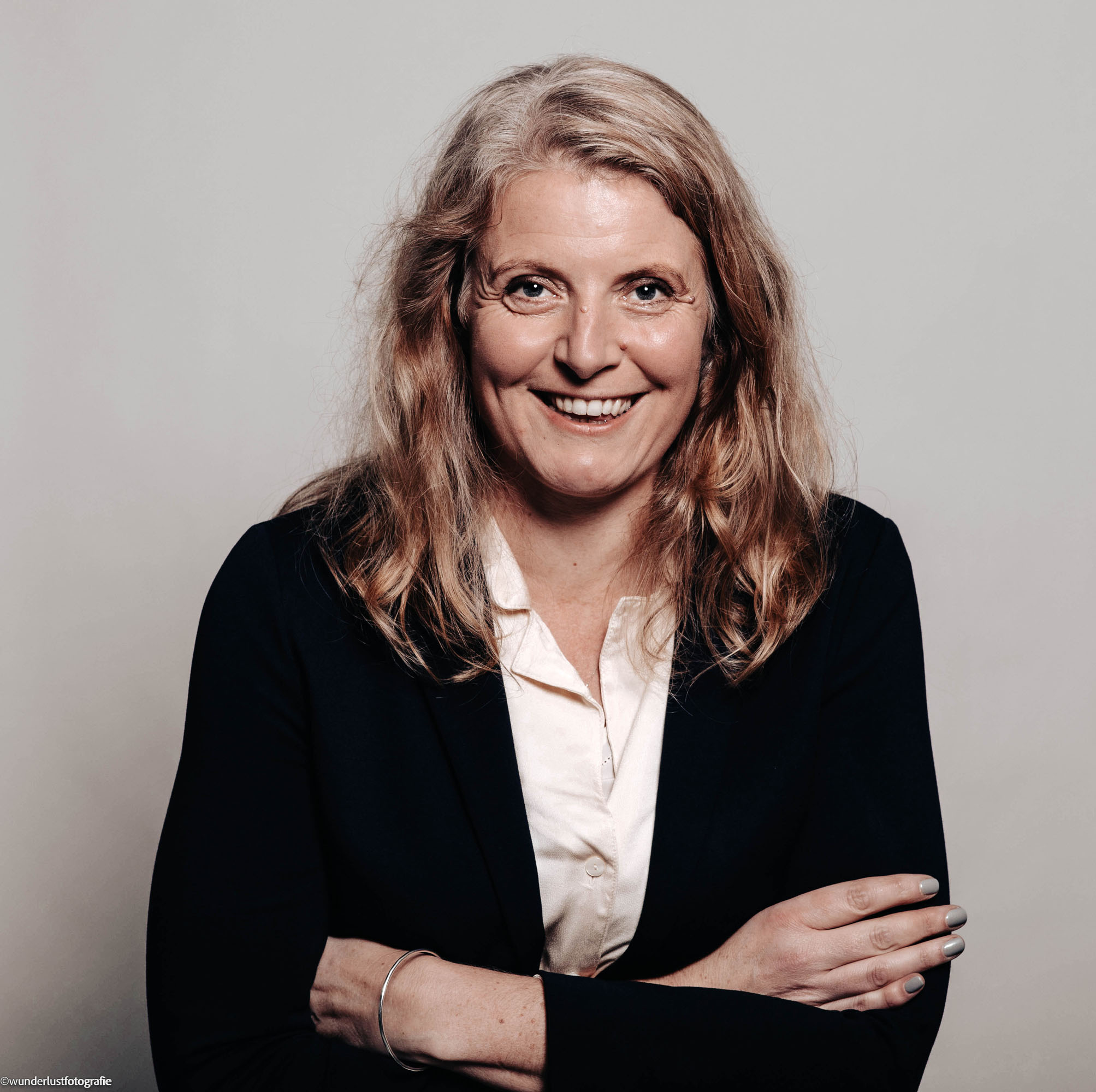
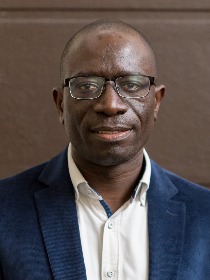
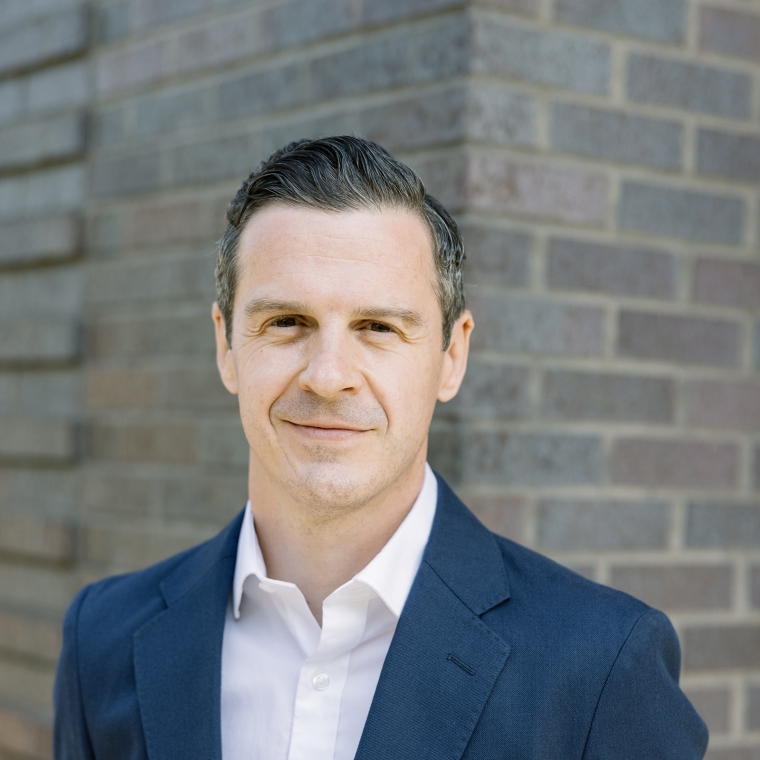
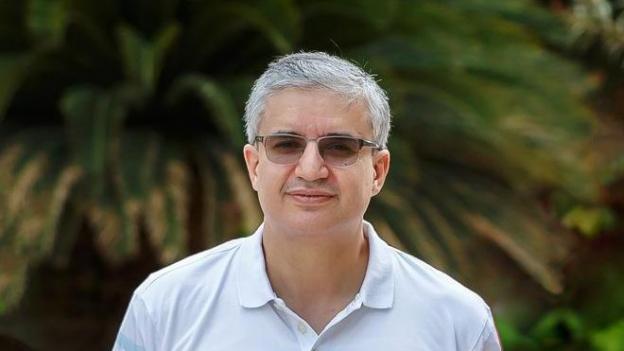
Dr Olawale Ismail is a Senior Lecturer in Leadership, Peace and Development Education at the African Leadership Centre , King's College London. He has 13+ years of experience in security and peacebuilding research, serving as Head of Research at International Alert and collaborating with institutions like Oxford University Press, Addis Ababa University, and the Conflict, Security & Development Group. PhD in Peace Studies (University of Bradford) MPhil in International Relations (University of Cambridge) His research focuses on the security-development nexus , with expertise in youth-related dynamics, including employment, radicalization, and protest movements. He applies interdisciplinary approaches to peacebuilding, mental health interventions in conflict zones, and regional security governance . Key article trends include: Youth agency in violence and peacebuilding Post-conflict psychosocial support Security cooperation with external actors Informal economy impacts on youth Policy frameworks for SDG 16 Mental health integration in peace efforts He has collaborated with global institutions including the Commonwealth Society , CODESRIA , and African Security Sector Network , and consults for DFID, SIDA, and the African Union.
Dr. Barney Walsh is a Senior Lecturer in Security, Leadership and Development Education at the African Leadership Centre (ALC) within King's College London's School of Global Affairs, Faculty of Social Science & Public Policy. He serves as programme convenor of the blended learning MSc Global Leadership and Peacebuilding and is the Managing Editor of the ALC Journal of Leadership and Developing Societies. Currently on sabbatical until December 2025, Walsh has been faculty at ALC-King's since completing his PhD there in 2016, where he was the program's first graduate. He also mentors various ALC Fellowship programmes. Education: BA in History and Sociology (international) from Leeds University MA in International Relations from King's College London PhD in Leadership Studies with reference to Security and Development from ALC-King's (2016, first graduate of program) Dr. Walsh's research focuses on African security dynamics, particularly examining leadership, political economy, and international relations in East Africa. His work explores China-Africa relations, Ugandan political economy, and regional security frameworks. He has conducted extensive field research in Uganda, Kenya, Rwanda, Tanzania, and South Africa, bringing practical insights to his theoretical work on security complex theory and human security approaches in the East African context. His scholarship consistently examines African agency within international relations, challenging traditional narratives about external influence on the continent. Dr. Walsh's publication record demonstrates a consistent focus on African security frameworks, with particular attention to East Africa and China-Africa relations. His work bridges theoretical approaches like Regional Security Complex Theory with practical case studies examining Ugandan foreign policy, China's role in African security, and women's contributions to state-building. A recurring theme is the examination of African agency within international relations, challenging traditional narratives about external influence on the continent. Dr. Walsh supervises PhD students in Leadership Studies, Global Leadership, China-Africa Relations, and East African Security. He has organized and overseen numerous academic conferences and symposiums, indicating successful grant acquisition for these activities. His research has involved fieldwork across multiple African countries, suggesting substantial research funding for these activities. Dr. Walsh is associated with the Chinese International Investments research group which examines how Chinese companies and government initiatives have made China a new source of large-scale capital investments and business activities in various sectors across Africa. He has also contributed to policy discussions through initiatives like the African-focused op-ed series on COVID-19 launched by the African Leadership Centre.
Prof. Wolfgang Sting is a Professor of Theater Pedagogy/Didactics of Performing Arts at the University of Hamburg's Faculty of Education. He holds a position in the Department of Didactics of Linguistic and Aesthetic Subjects (EW 4). His career includes roles as Master's Program Director for Performance Studies and guest professorships internationally. Sting has led major research projects funded by Volkswagen Foundation, Körber Foundation, and others, focusing on intercultural theatre, performative education, and uncertainty in teaching. Education: Pädagogik, Philosophie, Psychologie, Theatre Studies (Bielefeld, Eugene, München) Habilitation: Volkswagen Foundation-funded project on Theatre Pedagogy (2000) Research focuses on Theatre Pedagogy's interplay with cultural education, intercultural practices, and performative methodologies. His projects like TUSCH and TheaterSprachCamp integrate theatre into school curricula. Recent work explores irritation as a pedagogical tool in performance-based teaching. Key awards include the 2025 ASSITEJ Prize for commitment to youth performing arts and the 2020 Hamburger Lehrpreis. He advises several scholarly boards including the journal Zeitschrift für Theaterpädagogik. Advisory roles include leading Performance Studies programs and supervising over 20 PhD students. Notable students include Alina Gregor (2023) and Virginia Thielicke (2015). Research projects span 25 years with ongoing work in Hamburg's TheaterSprachCamp initiative. Labs/Teams: Core contributor to the University's Theatre Education Lab, co-founder of the interfaculty Performance Studies program, and collaborator on the Theater in Schulen network.
Dr. Caner Sayan is a Lecturer in Policy Analysis at Swansea University's Faculty of Humanities and Social Sciences, within the Department of Politics, Philosophy, and International Relations. He previously held roles as a Research Fellow in Water and Resilience at Cranfield University, Postdoctoral Fellow in Water Security at UNU-INWEH, and Research Associate at the University of Dundee. His research focuses on environmental politics, water security, and transboundary water governance, with a regional emphasis on the Middle East, Turkey, and Sub-Saharan Africa. Key themes include environmental justice, political ecology, and the intersection of water infrastructure and regional policy. Recipient of the 2015 Dundee University Students' Association Teaching Award, Dr. Sayan is dedicated to innovative pedagogy and has contributed to modules on global development, environmental justice, and water politics. He actively supervises PhD and MA/MSc theses, emphasizing fieldwork design and participatory methods. His publications span journals such as International Affairs , Water Alternatives , and Energy Research & Social Science , addressing topics like energy transitions, NGO capacity, and peacebuilding through water security frameworks. Engagements include opinion pieces on African water projects and invited lectures on transboundary water governance.
Harriet Bulkeley is a Professor of Geography and Deputy Executive Dean for Research in the Faculty of Social Sciences and Health at Durham University, alongside a part-time Professorial role at Utrecht University's Copernicus Institute of Sustainable Development. Her expertise spans climate governance, urban sustainability, and environmental justice, with a focus on cities' roles in addressing global challenges. She leads projects like the Horizon Europe NATURESCAPES initiative, exploring nature-based solutions for biodiversity and climate resilience. Key Roles: Full Professor at Durham University, Deputy Executive Dean, and part-time role at Utrecht University. Research: Prioritizes climate policy, urban low-carbon transitions, and the governance of sustainability experiments. Her research has secured over £19M in funding and includes influential works like An Urban Politics of Climate Change . Bulkeley serves on high-profile advisory bodies, including the ERC Scientific Council and the American Academy of Arts & Sciences. She is a recipient of the Back Award (2017) and multiple fellowships.
Dr. David Mills is an Associate Professor in Pedagogy and the Social Sciences within the Department of Education. His work focuses on postcolonial African higher education systems, doctoral training methodologies, and the ethical dimensions of academic publishing in global contexts. Trained in anthropology, his research interrogates colonial legacies in academia, publishing inequities, and the socio-political dimensions of knowledge production. David holds a PhD from the University of London, an MA from Oxford University, and another MA from the University of Florida. His interdisciplinary approach bridges anthropology, education studies, and publishing economics. Research interests include decolonial methodologies, the political economy of scholarly communication, and the intersection of education policy with global development agendas. Recent work critiques 'predatory publishing' discourses and examines how African scholars navigate bibliometric pressures in global research ecosystems. Key themes across his publications include: challenges facing African universities, reforming doctoral pedagogies, and reimagining publishing practices through decolonial frameworks. His work often highlights systemic inequities perpetuated by citation indices and commercial publishing giants. No scientific awards are explicitly listed in the provided materials. His academic contributions focus on critical analysis of educational and publishing systems rather than individual accolades. While no formal advising relationships are listed, his research engages deeply with doctoral student experiences and pedagogical strategies in global contexts. No specific grants or funding sources are mentioned in the text.
Ralina L. Joseph is a Professor of Communication and Adjunct Professor in American Ethnic Studies and Gender, Women, and Sexuality Studies at the University of Washington. She serves as the Associate Dean for Equity & Justice in Graduate Programs and the Director of the Center for Communication, Difference, and Equity (CCDE). She holds a Ph.D. in Ethnic Studies from the University of California, San Diego, and a B.A. in American Civilization from Brown University. Her research focuses on race, media, and multiracial identity, particularly examining how African American women navigate postracial racism and how multiracial youth experience education. Key works include Postracial Resistance (2018), which won the ICA Outstanding Book Award, and Transcending Blackness (2012). She is also co-author of Generation Mixed Goes to School (2020) and has published widely in journals like International Journal of Communication and Communication, Culture, and Critique . Dr. Joseph’s academic leadership includes directing CCDE, which advances equity through communication research, and advocating for inclusive policies in higher education. She is currently not accepting new graduate students but mentors existing scholars through her roles in affiliated programs.
Uros Kovac is a Marie Skłodowska-Curie Postdoctoral Fellow at the University of Groningen's Faculty of Religion, Culture and Society. He holds a PhD and specializes in social anthropology with a focus on youth, gender, migration, and religion, particularly through the lens of sports in Africa. His current research investigates the intersection of football, migration, and religious hope among African migrants in Europe. Kovac has conducted extensive fieldwork in Cameroon and Kenya, examining themes like masculinity, Pentecostalism, and neoliberalism's impact on sport and society. Education: PhD in Anthropology (not explicitly stated, inferred from title and publications). Research Interests: Anthropology of sport and migration Gender and religion in Africa Neoliberalism and transnational aspirations Ruination and future-making in postcolonial contexts Grants/Fellowships: Marie Skłodowska-Curie Postdoctoral Fellowship (2023-2025). Publications: Author of the monograph *The Precarity of Masculinity* (2022) and over 15 peer-reviewed articles in journals like *Ethnos*, *Africa*, and *Journal of the Royal Anthropological Institute*. Editor of a special issue on 'Living with ruins' in *Journal of Eastern African Studies* (2023).
Joram Tarusarira is an Associate Professor in Religious Studies at the University of Groningen, affiliated with the Faculty of Religion, Culture and Society. His work bridges religion, conflict, and climate security. He holds a PhD from the University of Leipzig (2015) and has extensive post-doctoral and field experience in Africa. Expertise: Religion & Conflict, Climate Security, Peacebuilding Leadership: Coordinator of MA Religion, Conflict and Globalisation Funding: NWO Idea Generator Grant for 'Invoking the Sacred' project Research focuses on sacred dimensions of climate conflicts, African peacebuilding strategies, and religion's role in human security. He leads interdisciplinary projects like CGIAR Climate Security Initiative and contributes to policy frameworks globally. Awards: NWO Grant (2020), CGIAR Recognition (2023) Teaching: Methodology clinics, Ethics & Secularity courses His 70+ publications analyze intersections of religion, climate change, and security in Africa. Current projects investigate Northern Mozambique's climate conflicts and Ugandan veterans' identity dynamics.
Khalid Mustafa Medani is an Associate Professor of Political Science and Islamic Studies at McGill University, serving as Director of the Institute of Islamic Studies and Chair of the African Studies Program. He holds a joint appointment between the Department of Political Science and the Institute of Islamic Studies. His academic journey includes degrees from Brown University, Georgetown University, and the University of California, Berkeley. Specializing in Comparative Politics, his research focuses on globalization, political economy, and the intersection of Islamism, ethnicity, and conflict in Africa and the Middle East, with a particular emphasis on Sudan, Egypt, and Somalia. His seminal work Black Markets and Militants: Informal Networks in the Middle East and Africa (2021) earned the APSA Best Book Award in 2022 for its groundbreaking analysis of informal financial networks and Islamist movements. Medani has contributed to numerous peer-reviewed journals, including Middle East Report , African Political Economy , and Political Islam . He has held visiting appointments at Stanford University and taught at Oberlin College. Beyond academia, he is a frequent commentator on Sudan’s political crises, offering insights into regional geopolitics, resource conflicts, and democratization processes through media engagements like Democracy Now!, Al Jazeera, and the Globe and Mail . His work bridges theoretical political economy with empirical case studies, emphasizing transnational migration, labor remittances, and the impact of global capital flows on local political dynamics. Educations: PhD (UC Berkeley, 2003), MA (Political Science, UC Berkeley, 1995), MA (Development Studies, Georgetown, 1990), BA (Brown University, 1987) Key Research Themes: Informal economies, Islamist politics, ethnic conflict, globalization, Sudanese history Recent Engagements: Author of award-winning Black Markets and Militants ; panelist on Sudan’s war dynamics at institutions like the University of Michigan and Northwestern University; frequent media contributor on Sudanese politics Medani’s academic leadership includes directing interdisciplinary programs and mentoring students in political science, Islamic studies, and African studies. His work underscores the importance of linking global economic trends to localized political struggles, particularly in conflict-prone regions.
Dr Folahanmi Aina is a Lecturer in Development Studies at SOAS University of London, specializing in the Political Economy of Violence, Conflict, and Development. He holds a PhD in Leadership Studies from King’s College London, with academic qualifications from institutions including the University of Oxford and Seoul National University. His research focuses on peace, security, and development challenges in West Africa’s Sahel and Lake Chad Basin regions, particularly addressing terrorism, insurgency, and governance failures. Education: BSc (Zaria) → MSc (Oxford) → MA (Seoul) → PhD (King’s College London). Research emphasizes transnational security dynamics, counterterrorism strategies, and the interplay between climate change and violent extremism. He has published in journals like African Security and Democracy and Security , and received the prestigious General Lamine Cissé Young Researcher Award. Recent work examines armed banditry in Nigeria, exploring its linkages to drug trafficking, pandemic impacts, and humanitarian crises. His studies highlight the need for process-based leadership and credible governance to address sub-national fragility.
Randall F. Mason is a Professor of Historic Preservation, City & Regional Planning, and Landscape Architecture at the University of Pennsylvania's Stuart Weitzman School of Design. His research bridges preservation theory, urban conservation, and social justice, with a focus on cultural landscapes and memorial design. He currently leads the Urban Heritage Project at PennPraxis and directs the Center for the Preservation of Civil Rights Sites, dedicated to documenting Black heritage sites tied to civil rights histories. Education: B.A., Bucknell University M.S., Pennsylvania State University Ph.D., Columbia University His work explores heritage economics, historic site management, and preservation policy. Notable projects include cultural landscape studies for the National Park Service and research on genocide memorials in Rwanda. Mason has authored influential books including The Once and Future New York and co-edited Values in Heritage Management . He served as PennPraxis Executive Director (2014–2017) and received the NEA Rome Prize (2012–2013). Mason’s teaching includes courses on heritage and social justice, cultural landscapes, and preservation planning. He advises initiatives like the Detroit Tactical Preservation Program and collaborates with organizations such as Eastern State Penitentiary and the Preservation Alliance of Greater Philadelphia. He is advancing two book projects: a critique of cultural landscape theory and an anthology of contemporary preservation theories. His research emphasizes equity in heritage management, particularly through the lens of civil rights sites and marginalized communities.
Christopher Marcinkoski is an Associate Professor in the Department of Landscape Architecture at the University of Pennsylvania Weitzman School of Design. His research examines speculative urbanization phenomena globally, with focus on the socio-environmental implications of large-scale urban developments. As founding principal of PORT design practice, he integrates academic research with built projects. Research Focus: Marcinkoski's Atlas of African Urbanization project documents over 150 speculative new town developments across Africa, analyzing their planning frameworks and potential impacts. His work advocates for design strategies addressing spatial justice and ecological resilience in rapidly urbanizing contexts. Professional Recognition: PORT has received multiple ASLA and AIA awards, and was named an Emerging Voices firm by the Architectural League of New York in 2020.
Mohamed-Slim Alouini is a Professor of Electrical Engineering and Associate Dean of the Computer, Electrical and Mathematical Science and Engineering (CEMSE) Division at King Abdullah University of Science and Technology (KAUST) in Saudi Arabia. He also serves as the Associate Vice President for Research and holds the UNESCO Chair in Education to Connect the Unconnected. With over 500 journal publications and more than 46,000 citations, he is a world-renowned expert in wireless communications who was elected IEEE Fellow in 2009 at the age of 39. Education: PhD in Electrical Engineering, California Institute of Technology (Caltech), 1998 MS in Electrical Engineering, Georgia Institute of Technology (Georgia Tech), 1995 Diplôme d'Etudes Approfondies (DEA) in Electronics, Université Pierre & Marie Curie (Sorbonne University), 1993 Diplôme d'Ingénieur, École Nationale Supérieure des Télécommunications (Télécom Paris Tech), 1993 Habilitation, Université Pierre & Marie Curie (Sorbonne University), 2003 Dr. Alouini is a world-renowned expert in wireless communication and networking with research interests spanning diversity combining techniques, MIMO systems, multi-hop/cooperative communications, optical wireless systems, cognitive radio, UAV communications, and advanced modulation schemes. His current focus addresses the technical challenges of uneven information and communication technology distribution, particularly targeting rural, low-income, disaster-prone, and hard-to-reach areas through integrated ground-airborne-space networks. His work bridges theoretical foundations with practical implementations to solve real-world connectivity problems. His recent publications (2020-2024) demonstrate a clear research trajectory toward integrated communication networks combining terrestrial, aerial, and space components. There's growing emphasis on UAV communications, satellite systems, optical wireless technologies, and rural connectivity solutions, with increasing integration of machine learning techniques for network optimization. His work shows consistent focus on addressing the digital divide, with several publications specifically targeting 6G challenges for connecting underserved populations and recycling existing infrastructure for enhanced rural connectivity. Scientific Awards: Member of the European Academy of Sciences and Arts (2019) Fellow of the African Academy of Sciences (2018) IEEE Fellow (2009) Abdul Hameed Shoman Award for Arab Researchers (2016) OIC Science & Technology Achievement Award (2017) Multiple recognitions as Highly Cited Researcher NSF CAREER Award (1999) Dr. Alouini has mentored numerous successful students and post-doctoral fellows who have secured positions at top institutions worldwide including Harvard, Caltech, Imperial College, and faculty positions at Korea University, Hanyang University, and universities across the Middle East. His December 2018 PhD graduate Qurrat-Ul-Ain Nadeem received the prestigious Marconi Society Paul Baran Young Scholars award, while post-doctoral fellows have won IEEE ComSoc Young Professionals Best Innovation Award and attended the Lindau Nobel Meeting. His Communication Theory Lab at KAUST drives significant research in wireless communications with funding supporting extensive publication output and innovative projects. Dr. Alouini leads the Communication Theory Lab at KAUST and holds the UNESCO Chair in Education to Connect the Unconnected, focusing specifically on technical solutions for connecting underserved communities. His lab works on integrated ground-airborne-space networks to bridge the digital divide, with particular emphasis on rural, low-income, and hard-to-reach areas. The team develops practical solutions using UAVs, satellite communications, and recycled infrastructure to provide cost-effective connectivity where traditional approaches fail.
Zinaida Miller is a Professor of Law and International Affairs at Northeastern University's School of Law, with a joint appointment in the International Affairs Program of the College of Social Sciences and Humanities (CSSH). She co-directs the Center for Global Law and Justice and the Program on Human Rights and the Global Economy. Miller holds a JD from Harvard Law School and a PhD from The Fletcher School, Tufts University. Her research focuses on transitional justice, human rights, and structural violence, with emphasis on temporal dimensions of justice, racial and economic inequalities, and global governance. Notable works include Anti-Impunity and the Human Rights Agenda (Cambridge UP, 2016) and articles analyzing temporal governance in transitional justice contexts. Awards include multiple Teacher of the Year honors and research grants from Seton Hall University and the Social Sciences and Humanities Research Council. She has held roles such as co-chair of the American Society of International Law’s Transitional Justice Interest Group (2017–2020). Maintains affiliations with Harvard Law School’s Institute for Global Law & Policy and teaches courses on international law, criminal law, and race. Her work bridges legal frameworks with sociopolitical struggles, emphasizing accountability and systemic change in post-conflict and racially divided societies.