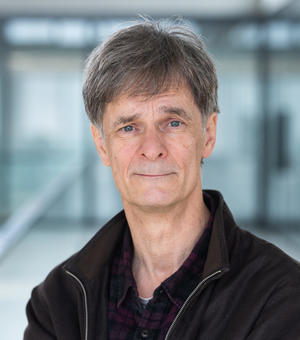
Jonathan Perris is a DPhil Candidate at Oriel College, University of Oxford , specializing in British Romanticism, cultural history, and medical humanities. He works as a Tutor for English literature and supervises undergraduate dissertations at the Middlebury-CMRS Oxford Humanities Program . Research Focus: Romantic nationalism, epidemiological metaphors in literature, imperialism, transatlantic slavery, and Enlightenment philosophy. Key Publications: Studies on William Blake, Thuggee sensationalism, and intersections of abolitionism and religion in Romantic texts. Scientific Awards: Recipient of the BSECS Bursary Award for conference participation. Teaching: Develops syllabi and tutorials on 18th-19th century British literature, covering topics like satire, Gothic literature, and Romantic Orientalism.
Dr Davor Jancic is Senior Lecturer at the Department of Law, Queen Mary University of London and Fellow of the Higher Education Academy. At QMUL, he teaches EU Law, Global Law and Governance, Elements of Contract Law, and Public Law. Previously, he was Senior Researcher in EU Law at the T.M.C. Asser Institute in The Hague and a British Academy Newton Fellow at LSE. His educational background includes a PhD in European constitutional law from Utrecht University, an LL.M. in International and European Law cum laude from the University of Amsterdam, and an LLB summa cum laude from the University of Novi Sad. He has also taught and conducted research as a Visiting Scholar at multiple institutions including Renmin University of China Law School, Max Planck Institute, and Sciences Po Paris. Dr Jancic's research focuses on EU institutional law and governance, comparative regional integration, parliamentary diplomacy, and transatlantic relations. His work examines the changing role of citizens in EU governance, national parliaments after the Lisbon Treaty, the European Parliament in foreign affairs, and comparative regional integration in South America and Africa. His publications reveal a strong trend toward analyzing parliamentary diplomacy as an emerging phenomenon in international politics and the evolving role of elected officials in global governance. Among his notable achievements are winning the Teacher of the Year Award at Queen Mary in 2018, being appointed Academic Fellow of the Honourable Society of the Inner Temple in 2019, and receiving the Europe Award from the Montesquieu Institute in 2011. His research has been funded by prestigious grants including the Newton International Fellowship and Max Planck Postdoc Research Fellowship. Dr Jancic currently supervises PhD students in areas related to EU institutional law and governance, and he actively engages with policymakers through consultancy work for the UK House of Commons, House of Lords, and European Parliament. His public engagement demonstrates the practical impact of his academic work on contemporary EU-UK relations and parliamentary scrutiny mechanisms.
Rosalind Cornforth is a Professor of Climate and Development and Director of the Walker Institute at the University of Reading, Department of Meteorology. She holds a PhD in Tropical Meteorology and has over 15 years of experience collaborating with governments and NGOs in developing nations. As Walker Institute Director, she leads strategic vision, operations, and interdisciplinary projects in climate resilience. Her roles include Senior Research Scientist at the National Centre for Atmospheric Science (NCAS) and Ambassador for the TAMSAT group. Her research focuses on African weather systems, climate early warning systems, rainfall variability, knowledge exchange, and governance for adaptation. Key projects include the Africa Climate Exchange (AfClix), AfClix Early Warning System for Sudan, and BRAVE groundwater studies. She advises on UN initiatives, including WHO/WMO, UNDP, and the African Union. Recent publications (2020–2024) address climate adaptation, flood early warning, heat stress, and transboundary resilience. She supervises postgraduate students and leads NERC-funded projects. Her work bridges science and policy, emphasizing actionable solutions for vulnerable regions.
Quarraisha Abdool Karim, PhD, is a Professor of Epidemiology at Columbia University's Mailman School of Public Health and holds a joint appointment in Public Health at the Nelson R Mandela School of Medicine, University of KwaZulu-Natal. She is the Associate Scientific Director of CAPRISA and a visiting scientist at Massachusetts General Hospital and Visiting Lecturer at Harvard University. Her research focuses on HIV/AIDS epidemiology, particularly in South African adolescent populations, and includes landmark studies like the CAPRISA 004 tenofovir gel trial (2010), recognized as a Top 10 scientific breakthrough by Science . Education: BS, University of Durban-Westville (1981) MS, Columbia University (1988) Research Interests: Reducing HIV transmission in young women Antiretroviral therapy implementation in resource-limited settings Global health capacity building through programs like the Columbia University Southern African Fogarty AITRP Awards: John Dirks-Canada Gairdner Award in Global Health L’Oréal-UNESCO Women in Science Laureate for Africa and the Middle East Order of Mapungubwe (Bronze) Leadership Roles: Chair, South African National AIDS Council Prevention Technical Task Team Member, UNAIDS Scientific Expert Panel Vice-President, African Academy of Sciences Key Projects: CAPRISA 007 RHIVA trial addressing HIV prevention in rural KwaZulu-Natal WHO Solidarity Trial evaluating antiviral drugs for COVID-19
Kurt Waldman is an Assistant Professor in the Department of Global Development at Cornell University, part of the College of Agriculture and Life Sciences. His research focuses on environmental decision-making, particularly in climate adaptation, food security, and sustainable agricultural practices. He holds a Ph.D. in Sustainability from Michigan State University (2014), an M.S. in Applied Economics from Cornell University (2009), and a B.A. in History from Earlham College (2000). Waldman’s work integrates behavioral experiments, econometrics, and environmental data to study cognitive biases and heuristics in environmental decision-making. His geographic focus includes arid regions of Africa, the U.S., and globally. He leads a NSF-funded grant (BCS-2215426, $400,000, 2022–2026) investigating spatial and cognitive dimensions of farmer climate adaptation, collaborating with co-PI Meha Jain (University of Michigan). His research interests span social-environmental systems, judgment under uncertainty, and policy design for sustainable outcomes. He teaches Environmental Decisions and is affiliated with the Ostrom Workshop, Cognitive Science Program, and Sustainable Food System Science initiative. Waldman’s recent publications address food security measurement, smallholder adaptation strategies, and spatial data applications. His work emphasizes interdisciplinary approaches to address climate and food system challenges.
David Lewis is the Head of the Department of Materials and Professor of Materials Chemistry at the University of Manchester. His research focuses on energy-generation materials, including inorganic thin films and nanomaterials for applications in thermoelectrics, photocatalysis, and photovoltaics. He leads an internationally collaborative group exploring solution-phase synthesis routes and additive manufacturing techniques. Lewis holds editorial roles at Scientific Reports and Materials Science in Semiconductor Processing . Education: PhD in Chemistry MSc in Chemistry (1st Class Hons), University of Birmingham Research Interests: Lewis’s work centers on designing low-temperature syntheses of nanomaterials using molecular precursors. Key areas include layered and 2D materials (e.g., MoS2, black phosphorus), high-entropy materials, and superhydrophobic nanomaterials. His lab pioneers scalable methods like aerosol-assisted CVD and liquid-phase exfoliation. Grants & Awards: Lewis has secured £3.1M+ in funding, including EPSRC grants for nanofabrication and corrosion-resistant electrocatalysts. He received the IAAM Medal (2021) and FIMMM fellowship. His group hosts students via scholarships like the Presidential Doctoral Scheme. Labs & Teams: His lab collaborates globally on energy materials. Capacity-building initiatives include the Royal Society-funded CaGSUMI project for African solar cell development.
Emily Hencken Ritter is an Associate Professor of Political Science and Director of Graduate Studies at Vanderbilt University. She holds a PhD from Emory University (2010), and previously taught at the University of Alabama and University of California, Merced. Her research examines strategic interactions between state repression and dissent under international legal frameworks, employing game theory and quantitative methods. Key areas include human rights institutions, conflict dynamics, and causal inference methodologies. Her work has been published in top journals like the American Political Science Review and Journal of Conflict Resolution. Recent accolades include the 2025 APSA Human Rights Section Best Paper Award. She co-authored a book with Oxford University Press and leads initiatives like the ROCCA Lab at Vanderbilt, focusing on conflict and collective action research. Ritter actively contributes to professional organizations including the Peace Science Society and Society for Political Methodology, emphasizing methodological innovation and diversity in academia. Grants: NSF-funded Research Experience for Undergraduates (2023-2025), LSU mini-residency (2024) Labs/Teams: ROCCA Lab (Vanderbilt), Visions in Methodology (leadership role) Service: Host of 2027 Peace Science Society meeting, Society of Political Methodology conference organizer
Dr. Cora Gilroy-Ware is an Associate Professor in the History of Art at the University of Oxford. Previously, she served as a Lecturer in History of Art at the University of York, where she was nominated for Teacher of the Year (2020-21). Her research focuses on decolonizing art history through re-examining classical art's role in racial constructs and centering BIPOC artists' adaptations of Greco-Roman traditions. She holds a PhD from the University of York, developed via a Collaborative Doctoral Project with the Tate Gallery. Her work bridges academia and practice, including curation at institutions like Tate Britain and MK Gallery, and fellowships at Yale Center for British Art, the Huntington Library, and University College London. She actively engages in contemporary art criticism, published in London Review of Books and X-Tra . Current projects include a second monograph exploring Greco-Roman art adaptations by African and Indigenous American artists, supported by the Henry Moore Foundation. She also edited a volume on Isaac Julien’s film Lessons of the Hour , linking historical scholarship with contemporary art.
Alex Ansong is a Senior Lecturer in Law at the College of Business, Law and Social Sciences. His research focuses on international trade law, particularly the African Continental Free Trade Area (AfCFTA), dispute settlement mechanisms, and labor law in global supply chains. He examines the intersection of sovereignty, regional integration, and sustainable development goals in legal frameworks. Key research areas include: Dispute resolution under AfCFTA, child labor eradication in Ghana’s cocoa industry, and WTO institutional challenges. Recent publications explore legal enforcement strategies for SDG compliance and sovereignty dynamics in multilateral trade governance. His work bridges theoretical international law with practical policy solutions, addressing contemporary issues like privatization of trade regulation and the protection of traditional knowledge. Despite no listed awards or grants, his scholarship critically analyzes systemic challenges in global economic governance.
Friederike Dillenseger is a Researcher at the Institute for World Church and Mission (IWM) at Saint George University in Frankfurt am Main. Her work focuses on mission history with particular emphasis on East Africa, gender studies in missiology, and intercultural mission dynamics. She holds a Diploma in Catholic Theology from the Julius Maximilians University of Würzburg (2010) and has extensive field experience including a Jesuit Mission Volunteer assignment in Uganda (2010/11), development work in Kenyan slums (2014–2017), and secondary school teaching in Germany (2018). Her research interests coalesce around three core areas: 1) Women's roles and agency in missionary contexts, 2) Historical analysis of East African church-mission dynamics, and 3) Gender-sensitive missiological frameworks. She combines academic rigor with practical engagement, having managed projects addressing socio-economic challenges in Nairobi's Mukuru slums. Recent scholarly contributions include critical reviews of mission historiography and explorations of theological gaps in understanding women's mission contributions. Though not explicitly noted, her fieldwork experience suggests strong practical engagement with mission-related development initiatives. Her academic trajectory reflects a unique blend of theological training, hands-on missionary work, and educational outreach, positioning her at the intersection of academic missiology and applied social mission projects.
María José Piñeira Mantinán is a Professor at the University of Santiago de Compostela, affiliated with the Department of Geography within the Faculty of Geography and History. She is part of the Institute of Studies and Development of Galicia (IDEGA) and leads the ANTE research group focused on territorial analysis. Her doctorate (2005) from the same university examined urban structures in A Coruña, supervised by Dr. Xosé Manuel Santos Solla and Dr. Petros Petsimeris. Her research interests center on urban geography, particularly urban planning, tourism impacts, social vulnerability, housing policy, and regional development. She explores how urbanization processes intersect with economic, social, and environmental challenges, with a focus on Spanish cities and peripheral regions. Her recent work highlights trends in urban segregation, the effects of touristification on historical centers, and innovative housing solutions. She has also addressed environmental challenges like flood mitigation in Niamey and fisheries policy impacts in Galician ports. Her interdisciplinary approach combines spatial analysis with socio-economic frameworks. No scientific awards are explicitly mentioned. She has advised one doctoral thesis (2005) and collaborates with IDEGA and ANTE to advance urban governance and territorial development initiatives. Her involvement with research groups like ANTE and IDEGA positions her at the forefront of urban studies in Galicia, contributing to policy-oriented research on sustainable urbanization and regional resilience.
Ibiyemi Omeihe is a Lecturer and Programme Leader in the School of Business and Creative Industries at the University of the West of Scotland (UWS). She leads the MSc Logistics and Supply Chain Management and the pioneering dual-degree MSc Sustainable Logistics and Supply Chain Management, co-developed with the Ukrainian State University of Railway Transport. Her research focuses on entrepreneurship, leadership, small business development, and supply chain management, with a strong emphasis on decolonising business education and gender equity in entrepreneurial ecosystems. She holds a PhD in Management from UWS and an MBA (Distinction), alongside a Postgraduate Certificate in Academic Practice and Fellowships from the Higher Education Academy and Chartered Association of Business Schools. Her academic roles include Managing Editor of Applied Qualitative Research Methods and Design and International Studies in Entrepreneurship and Small Business . Ibiyemi’s professional affiliations include leadership roles in the Academy of African Studies, British Academy of Management, and Scottish Women’s Budget Group. She has received multiple awards, including the 2022 Lecturer of the Year and 2024 Social Citizenship Award nomination. Her work contributes to UN SDGs related to gender equality, sustainable cities, and responsible consumption.
PD Dr. Markus Verne is an Acting Professor at the Department of Social and Cultural Anthropology, Albert Ludwig University of Freiburg. His career includes roles as Senior Academic Councillor (since 2014) and Academic Councillor (2006–2014) at the Chair of Social and Cultural Anthropology under Prof. Dr. Kurt Beck. He received his habilitation in 2014 with a thesis on Malagasy heavy metal culture and holds a PhD from the University of Bayreuth's Collaborative Research Center on African studies (2000–2006). Research focuses on West Africa (consumption patterns, economic ethnology) and Madagascar (ethnomusicology, popular culture), with thematic interests in cultural theory, popular music, consumption in scarcity, and ethnological aesthetics. He was a Marie Curie Fellow (2011/12) at UCLA and University of Bayreuth, examining Malagasy heavy metal and its cultural implications. Key publications include Heavy Metal in Madagascar (2014) and edited volumes on cultural astonishment. His work critiques contextualist approaches in anthropology and explores music's role in cultural expression. Awards include the Marie Curie International Outgoing Fellowship under FP7. Teaching and research activities emphasize fieldwork in Africa and interdisciplinary approaches to cultural studies. Current lab affiliations include the Institute for Social and Cultural Anthropology in Freiburg.
Rick Van Der Ploeg is a Professor of Economics at the University of Oxford and Research Director of the Oxford Centre for Analysis of Resource Rich Economies (OXCARRE). He is affiliated with New College, Oxford. His research focuses on macroeconomics, public finance, climate economics, and natural resource management. He holds a PhD from the University of Cambridge. Previously, he held academic positions at institutions including the London School of Economics, Cambridge University, and multiple Dutch universities. He has also served as a Member of Parliament and State Secretary in the Netherlands, and held roles in UNESCO's World Heritage Committee. His consultancy work includes engagements with the EU, IMF, World Bank, Asian Development Bank, and African Development Bank. His research emphasizes climate policy design, fiscal frameworks for resource-rich economies, and risk-adjusted environmental policies. Key contributions include pioneering work on optimal carbon pricing mechanisms. He leads OXCARRE, which analyzes economic strategies for resource-rich nations, blending macroeconomic theory with policy application.
Myropi Garri is a Senior Lecturer in Strategic Management and International Business at the University of Portsmouth's Faculty of Business & Law, within the School of Strategy, Marketing and Innovation. She serves as the Global DBA Course Director and supervises PhD students. Her research focuses on strategy and international business, with emphasis on Foreign Direct Investment (FDI), institutional influences, sustainability, and geopolitical dynamics. She has contributed to over 20 peer-reviewed publications and led projects such as the 'Dynamic Capabilities building in Ukrainian SMEs for post-war restoration' and the Portsmouth City Council-funded 'AI Leadership Skills Bootcamp.' Her work addresses UN Sustainable Development Goals (SDGs), particularly in sustainable development and global economic equity. Garri has received the Alan M. Rugman Most Promising Young Scholar Award (2016) and frequently presents at international conferences, including a 2024 invited talk at the University of Macedonia in Greece. Key research themes include configurational theorizing, institutional theory, dynamic capabilities, and resource-based strategies. Her projects often involve cross-disciplinary collaborations, such as analyzing FDI motives in South Korea and exploring SME resilience in post-war Ukraine.