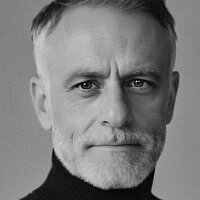
Prof. Boris Egloff holds a W3 professorship in Personality Psychology and Psychological Diagnostics at the Johannes Gutenberg University Mainz, where he has been since 2009. Previously, he served as a professor at the University of Leipzig (2005–2009) and held academic positions at Stanford University as a Visiting Scholar. His research focuses on personality dynamics, emotion regulation, and the impact of social media on psychological processes. He has received notable awards including the Theodor-Litt-Preis (2008) and William-Stern-Preis (2003). Education: PhD in Psychology from Johannes Gutenberg University Mainz (1997), Diplom in Psychology (1993). Academic lineage includes postdoctoral habilitation (2008) on anxiety assessment and emotion regulation. Research interests span personality development, implicit personality measures, and the application of psychometric methods. His work bridges cognitive, social, and clinical psychology, with a focus on anxiety, coping strategies, and digital behavior. Recent studies explore climate change communication, Instagram-based personality expression, and age-related personality stability. Grants and funding include DFG projects on narcissism, implicit personality tests, and conflict-of-interest regulations in medicine. He serves as associate editor for Cognition and Emotion and reviews for high-impact journals like Journal of Personality and Social Psychology . Labs/Teams: Leads research groups at the Psychological Institute, focusing on experimental personality psychology and clinical applications. Collaborates internationally on projects involving neuroimaging and longitudinal data analysis.
Anne Wohlauf is a Researcher at the Design Research Lab, an interdisciplinary team affiliated with Berlin University of the Arts, German Research Center for Artificial Intelligence (DFKI), Weizenbaum Institute for the Networked Society, and Einsteincenter Digital Future (ECDF). She joined the lab in 2008 as a research assistant and currently works as a designer on security and identity management projects, including the 'trust-me' initiative. Wohlauf studied Interface Design at the Potsdam University of Applied Sciences, providing her foundation in design thinking and technical implementation. Her research trajectory shows a consistent focus on creating meaningful physical-digital connections through tangible interfaces. Her primary research interests center around participatory design and tangible interaction, with particular emphasis on how physical properties of devices can enhance user experience. Wohlauf's work explores how shape-changing interfaces, weight shifting mechanisms, and haptic feedback systems can create more intuitive and emotionally resonant interactions with mobile technology. Her publications reveal a sustained investigation into how mobile devices can express 'body language' and respond to user proximity and touch in meaningful ways. Analysis of Wohlauf's publication history from 2009-2017 shows a clear research trajectory in intimate mobile interfaces, with increasing sophistication in how devices can respond to user behavior through physical actuation. Her work sits at the intersection of human factors engineering, interaction design, and social computing, with applications in security, identity management, and everyday mobile interactions. As part of the Design Research Lab, Wohlauf contributes to the lab's mission of creating socially and ecologically sustainable tools that support people's participation in digital society. The lab operates at the intersection of technologies, materials, and social practices, with principles of inclusiveness and respect for the planet guiding their work.
Johannes Pfeifer is a Researcher in Psychology at Rhine-Waal University of Applied Sciences. His work bridges affective neuroscience, occupational health, and organizational development, focusing on stress resilience, performance optimization, and practical applications for individual and systemic well-being. Key research areas: Emotion regulation, sleep science, leadership dynamics, and collaboration metrics Labs: Supervises psychology program laboratories for Bachelor's and Master's students Academic roles: Elected member of the Faculty Council of Communication and Environment His publications reveal interdisciplinary trends combining psychological theory with real-world applications in occupational safety, AI ethics, and pandemic-era mental health. Supervised theses cover topics like grit in CrossFit, media trust during crises, and nudging for sustainable consumer behavior.
Dr. Livia Kuklick is a Research Scientist (Postdoc) at the Leibniz Institute for Science and Mathematics Education (IPN) since 2023, affiliated with Kiel University . Her work focuses on cognitive and affective-motivational processes in educational assessment, particularly in computer-based environments and automated feedback systems. PhD in Psychology (2023), Kiel University Diplom in Psychology (2018), Kiel University Her research examines how multimedia and emotional design factors influence feedback effectiveness, learner choice in automated feedback systems, and the motivational implications of negative feedback for low-performing students. She is part of the Digitation and Education research group at IPN, contributing to advancements in digital learning tools and methodological research. Scientific recognitions include: Fellow in the College for Interdisciplinary Educational Research (CIDER) since 2024 German Business Foundation (SDW) Scholar (2013-2018)
Luca Cagliero is an Associate Professor in the Department of Control and Computer Engineering at Politecnico di Torino (Polytechnic University of Turin), Italy. His research spans multiple domains within computer science, with particular expertise in data mining, machine learning, natural language processing, and multimodal analysis. He has established a prolific research career with over 150 publications spanning from 2009 to the present, demonstrating consistent scholarly productivity. Dr. Cagliero's research interests focus on the intersection of artificial intelligence and practical applications. His work addresses fundamental challenges in data mining, information retrieval, and educational technology, with recent publications showing increasing emphasis on large language models, multimodal analysis, and explainable AI. He has made significant contributions to text summarization techniques, database systems, and applying machine learning to educational contexts. His recent publications (2023-2025) demonstrate a clear research trajectory toward multimodal AI systems, with particular attention to the integration of vision and language processing. His work spans theoretical contributions in machine learning methods as well as practical applications in educational technology, social media analysis, and document understanding. The breadth of his collaborations across different application domains indicates a versatile research profile that bridges theoretical and applied computer science. Dr. Cagliero has mentored numerous researchers who have become his frequent collaborators, including Lorenzo Vaiani, Moreno La Quatra, and Davide Napolitano. His work has appeared in top-tier venues including ACL, IEEE Transactions on Knowledge and Data Engineering, and Expert Systems with Applications, reflecting the high quality and impact of his research contributions.
Dr. Katharina Kirsten is a researcher at the Institute for Didactics of Mathematics and Informatik, Department of Mathematics and Computer Science, University of Münster. Her work focuses on empirical studies in undergraduate mathematics education, particularly proof comprehension, instructional videos, and the impact of teaching modes (on-campus vs. distance) on student learning. Her research interests lie at the intersection of mathematics education, cognitive science, and educational technology. She investigates how students engage with mathematical proofs, use instructional videos, and develop cognitive and affective traits during their early university studies. Key areas include proof construction, example usage, validation strategies, and the design of effective digital learning materials. The recent publications highlight a strong focus on comparative studies of learning environments (e.g., flipped classrooms, synchronous distance vs. on-campus), mode effects in assessments, and detailed analyses of student behaviors in proof-related tasks. Her work frequently employs empirical methodologies to assess performance gains, viewing strategies, and affective outcomes such as interest and self-efficacy. Dr. Kirsten has been active in presenting her research at major international conferences including ICME, ERME, and GDM. She is a key contributor to the ProVie project, which explores strategic video use in proof-based instruction. While no formal advising or grant information is listed, her collaborative publications suggest active involvement in research teams and projects.
Dr. Alexey Popov is a Group Leader in the Department of Nanoscale Chemistry at the Leibniz Institute for Solid State and Materials Research Dresden (IFW Dresden), Germany, where he has led research on metallofullerenes since 2010. His position represents a significant academic leadership role within this prominent German research institute focused on cutting-edge materials science. Dr. Popov completed his academic training at Moscow State University, earning his Ph.D. in Physical Chemistry between 1999 and 2003 after completing undergraduate studies from 1994-1999. His early career included positions as junior researcher (2003-2005) and senior researcher (2006-2008) at the same institution, followed by a prestigious Humboldt Fellowship at IFW Dresden (2008-2010) before assuming his current group leader position. His research program centers on endohedral metallofullerenes , particularly those exhibiting single molecule magnetism . He investigates how the carbon cage structure influences magnetic anisotropy and relaxation dynamics in systems containing lanthanide ions like dysprosium, neodymium, and terbium. His experimental approach combines vibrational and optical spectroscopy with electrochemical and spectroelectrochemical techniques to probe electronic structure and electron transfer processes. Theoretical work in his group employs quantum-chemical calculations , QTAIM , and ELF topological analysis to understand chemical bonding within the confined space of fullerene cages. Recent work has expanded into 2D materials and their interfaces with fullerene systems. Analysis of Dr. Popov's extensive publication record reveals a consistent trajectory of high-impact research in molecular magnetism, with increasing focus on practical applications of metallofullerenes in quantum information technologies. His work demonstrates sophisticated understanding of how subtle changes in metal cluster composition and carbon cage geometry dramatically affect magnetic properties, with particular attention to lanthanide-lanthanide bonding interactions that enable room-temperature magnetic hysteresis in some systems. Humboldt Fellowship (2008-2010) As group leader, Dr. Popov oversees a research team investigating the fundamental properties of metallofullerenes with potential applications in quantum computing and high-density data storage. His laboratory maintains specialized capabilities for synthesizing and characterizing endohedral fullerenes, including advanced spectroscopic and magnetic measurement techniques. The ERC grant 'GraM3' mentioned in his profile indicates significant competitive funding supporting innovative research at the intersection of graphene and metallofullerene science.
Petra Nieken is a Professor of Human Resource Management at the Institute of Management (IBU) of the Karlsruhe Institute of Technology (KIT), where she researches digital transformation in workplace collaboration, leadership adaptation to new work forms, communication strategies for digital leadership, and gender equity promotion. Her primary research interests include: Digital Leadership Human Resource Management Organizational Behavior Gender Equity Ethics in the Workplace Digital Transformation Nieken investigates how to design digital technologies that benefit employees without intrusive monitoring, emphasizing privacy preservation and attention management. Her work analyzes charismatic leadership effectiveness across communication channels (text, audio, video), demonstrating that non-verbal cues in video significantly enhance motivation for complex topics. She also examines how gender-inclusive language affects workplace dynamics and employee perceptions. As co-speaker of the Karlsruhe Decision and Design Lab (KD2Lab)—one of the world's largest computer-assisted experimental laboratories—she facilitates interdisciplinary research bridging theory and practice. Nieken publishes in leading international journals and serves on the editorial board of The Leadership Quarterly.
Panagiotis Filntisis is a Researcher at the National Technical University of Athens (NTUA), focusing on monocular 3D face reconstruction, 3D face registration, and body emotion recognition. He also holds a Research Associate position at the Athena Research and Innovation Center and a Guest Scientist role at the Perceiving Systems department of the Max Planck Institute for Intelligent Systems. His research bridges computer vision and affective computing to advance robotic perception through foundation models. Key contributions include visual emotion translation and computational modeling of facial and bodily cues for human-machine interaction. Contact: panagiotis.filntisis@tuebingen.mpg.de
Dr. Robert Haschke serves as a Professor and Responsible Investigator in the Cognitive Systems and Social Interaction Group at Bielefeld University's Faculty of Engineering. He is affiliated with the Center for Cognitive Interaction Technology (CITEC) and serves on the Examination Board for the Intelligent Interactive Systems Master's program. His office is located at CITEC 2-035, and he can be reached at rhaschke@techfak.uni-bielefeld.de or +49 521 106-12122. Professor Haschke's research spans multiple domains of robotics and artificial intelligence, with particular emphasis on tactile sensing systems, robotic manipulation, and human-robot interaction. His work explores advanced methods for enabling robots to perceive their environment through touch, with applications in assistive robotics and industrial automation. He investigates how machines can learn from human interactions and adapt their behavior through reinforcement learning and sensor fusion techniques. His research bridges theoretical advances with practical implementations, focusing on transferring knowledge from simulation to real-world robotic systems. Analysis of Professor Haschke's recent publications reveals a strong trajectory toward more sophisticated tactile perception systems and their integration with language and vision for natural human-robot collaboration. His work consistently addresses the simulation-to-reality gap, developing methods for transferring control policies from virtual environments to physical robots. The research shows increasing integration of multimodal sensing (tactile, visual, linguistic) to enable more capable and adaptable robotic manipulation in unstructured environments. As an educator, Professor Haschke teaches advanced courses including Robot Manipulators (39-Inf-RM), Advanced Artificial Intelligence (39-M-Inf-AI-adv_a), Advanced Artificial Intelligence (focus) (39-M-Inf-AI-adv-foc), and Basics of Artificial Intelligence (39-M-Inf-AI-bas). His teaching reflects his research expertise, providing students with both theoretical foundations and practical skills in robotics and AI. Professor Haschke is an integral member of Bielefeld University's Cognitive Systems and Social Interaction Group within CITEC. His work contributes significantly to the university's Socio-Technical World research area, particularly in developing capabilities that enable agents (humans, robots, and AI systems) to act, communicate, and learn in complex environments. His research group focuses on creating robotic systems that can interact naturally with humans through advanced perception and adaptive control mechanisms.
PD Dr. Marina Grenzer (Saphiannikova) serves as Head of the Department "Material Theory and Modeling" at the Leibniz Institute for Polymer Research Dresden (IPF) within the Theory of Polymers Division, and holds a private lecturer position at TU Dresden's Faculty of Mechanical Science and Engineering since January 1, 2015. Her research focuses on: Application-oriented studies of functional polymer materials sensitive to magnetic, electromagnetic and mechanical fields Theory and simulations of photosensitive materials including azobenzene polymers Mechanical properties of magnetoactive elastomers and field-induced shape changes Modeling mechanical reinforcement in polymer networks filled with rigid particles Organic semi-conductors for light-to-energy conversion applications Dr. Grenzer investigates the relationship between microstructure and macroscopic properties using analytical and computer simulation techniques, with emphasis on how magnetizable particles affect material response to external fields. She publishes under her maiden name Saphiannikova and maintains contact through grenzer@ipfdd.de (+49 351 4658 597).
Ankita Singh is a PhD candidate and Research Associate at Kühne Logistics University (KLU) , Hamburg, Germany, since 2023. Under the primary supervision of Prof. Dr. Alexander Himme and secondary supervision by Prof. Dr. Henrik Leopold, her research explores the intersection of machine learning, accounting, and marketing by applying advanced machine learning algorithms to forecast the influence of non-financial information from earnings calls on firm value. Bachelor of Engineering in Information Technology, Amaravati University (2006-2010) Master of Science in Computer Science and Engineering, Rajiv Gandhi Proudyogiki Vishwavidyalaya (2016-2018) Ankita’s research interests span Machine Learning , Data Science , and their applications in Computational Finance and Marketing Analytics . Her work leverages Artificial Intelligence and Computer Vision to detect facial emotions in real time using deep learning. The system, validated on the ADFES-BIV dataset, achieves 81.67% training accuracy in recognizing universal emotions (happy, sad, neutral, surprise, anger) and micro-emotions (contempt, embarrassment, fear, disgust, pride) via DCNN and Haar-cascade classifiers. Her prior industry experience as a Senior Software Engineer and Team Lead at Accenture Solutions Pvt Ltd (2011-2019) and internship at Pantech Solutions Pvt Ltd (2022-2023) highlight her expertise in software engineering and team leadership across financial and telecommunications sectors in London, Düsseldorf, and India.
Dr. Moritz Herrmann is a postdoc researcher and Reproducibility & Open Science Transfer Coordinator at the Munich Center for Machine Learning (MCML). He is affiliated with the Biometry in Molecular Medicine working group led by Prof. Anne-Laure Boulesteix at Ludwig-Maximilians-Universität München, and contributes to initiatives like the LMU Open Science Center , Open Science Initiative in Statistics (OSIS) , and Open Science Initiative in Medicine (OSIM) . Ph.D. in Statistics from LMU (2022), M.Sc. in Statistics (2018), and B.Sc. in Mathematics/Sports Science (2014) His research focuses on Empirical Machine Learning , Manifold Learning , and Metascience , with emphasis on epistemological foundations and reliability in ML research. He advocates for open science practices and data literacy, as outlined in his ICML 2024 position paper on rethinking empirical ML research. As a member of the Empirical Machine Learning research focus group and the Statistical Learning and Data Science Chair , Herrmann bridges statistical methodology with biomedical applications. His work spans outlier detection, cluster analysis, and reproducibility frameworks, reflected in his recent publications in journals like Biometrical Journal and Data Mining and Knowledge Discovery .
Professor Karsten Mueller is a distinguished researcher in cognitive neurology and neural data science at the Max Planck Institute for Human Cognitive and Brain Sciences in Leipzig, Germany. He holds the position of Associate Professor at Leipzig University's Faculty of Medicine and serves as a faculty member at both the International Max Planck Research School on Neuroscience of Communication (IMPRS NeuroCom) and the International Max Planck Research School on Cognitive NeuroImaging (IMPRS CoNI). Additionally, he has been appointed as a Visiting Professor at the First Faculty of Medicine at Charles University in Prague since 2025. His work focuses on advanced neuroimaging techniques to understand brain structure and function in various neurological conditions. Dr. Mueller received his Dr. habil. degree in Cognitive Neurology from Leipzig University's Faculty of Medicine in 2006, the same year he became a Private lecturer (Privatdozent) at the institution. His academic journey includes a postdoctoral position from 1999 to 2008 at the Department of Cognitive Neurology, Max Planck Institute for Human Cognitive and Brain Sciences, under the supervision of D.Y. von Cramon. In 2015, he was awarded the title of Apl.-Professor (Associate Professor) at Leipzig University, recognizing his significant contributions to the field. Professor Mueller's research spans several critical areas in cognitive neuroscience and neuroimaging. His primary focus is on understanding brain connectivity and structure in neurological disorders, particularly Parkinson's disease, frontotemporal dementia, and the effects of deep brain stimulation. He leads the Methods and Development Group for Neural Data Science and Statistical Computing, where his team develops advanced computational approaches for analyzing complex neuroimaging data. His work bridges clinical neurology with cutting-edge data science, creating innovative methods to extract meaningful insights from brain imaging studies. This interdisciplinary approach has led to significant contributions in understanding how neurological conditions affect brain networks and cognitive functions. Analysis of Professor Mueller's recent publication record reveals a strong emphasis on applying advanced computational and machine learning techniques to neuroimaging data. His research consistently explores the relationship between brain structure/function and various neurological conditions, with particular attention to Parkinson's disease, frontotemporal dementia, and stroke recovery. A notable trend is his increasing use of artificial intelligence and deep learning approaches to improve diagnostic accuracy and understand disease progression. His work also demonstrates a growing interest in connecting peripheral biomarkers (like retinal imaging) with central nervous system changes, suggesting a more holistic approach to understanding neurological disorders. The collaborative nature of his research is evident through numerous international partnerships, particularly with institutions in Prague. Professor Mueller leads the Methods and Development Group for Neural Data Science and Statistical Computing at the Max Planck Institute. This team focuses on developing innovative computational approaches for analyzing complex neuroimaging datasets. Their work encompasses statistical modeling, machine learning applications, and the creation of open-source tools for the neuroscience community. The group collaborates extensively with clinical researchers to translate advanced data analysis techniques into meaningful clinical insights, particularly in the areas of movement disorders, dementia, and brain connectivity research.
Josef Nerb is a Professor of Educational Psychology and Dean at the University of Education Freiburg, where he works in the Department of Social Psychology and Evaluation within the Faculty of Psychology. His office is located at KG II 220 and Heinrich-v.-Stephan-Str. 5a, 114, 1st floor (Hölderle-Carré), and he holds consultation hours on Thursdays from 2:30 p.m. to 3:30 p.m. He has been at PH Freiburg since 2005 when he received his professorship, following previous positions as a research assistant at the University of Freiburg since 1993 and a postdoc at the University of Waterloo in 2000/2001. Nerb's research spans educational psychology, cognitive psychology, and emotion studies, with particular focus on appraisal theory, attentional skills, decision making, and more recently AI applications in education. His work shows a clear trajectory from environmental risk perception studies early in his career to more recent investigations of digital technologies in educational contexts. His publications demonstrate interdisciplinary collaboration across psychology, education, and computer science fields. His recent work has increasingly focused on the intersection of technology and education, with multiple publications on voice user experience, AI in STEM education, and digital learning environments. This represents an evolution from his earlier foundational work on emotion-cognition interactions and environmental risk assessment. Nerb has supervised numerous doctoral students through graduate colleges including the Graduate College Human and Machine Intelligence in Freiburg. His research has been supported by organizations including the DFG (German Research Foundation) and the ESF (European Science Foundation). His academic leadership extends beyond his professorship to his current role as Dean, where he oversees academic operations within his faculty. His work bridges theoretical cognitive psychology with practical educational applications, making significant contributions to both research and practice in educational psychology.