Jeremy Engels is the Liberal Arts Endowed Professor of Communication Arts & Sciences at Pennsylvania State University and Barry Director of the Paterno Fellows Program. His work focuses on communication ethics, democracy studies, and mindfulness practices. He holds a B.A. from University of Kansas (2002), M.A. from University of Illinois (2003), and Ph.D. from University of Illinois (2006). Professor Engels has received prestigious awards including the Karl Wallace Award and New Investigator Award from the National Communication Association, as well as the 2017 College of Liberal Arts Teaching Award. He teaches courses on communication ethics, democratic theory, and yoga/mindfulness-based pedagogy. His research explores democracy’s historical foundations to reimagine its future, with notable works like The Ethics of Oneness (2021) and Enemyship (2010). Engels’ scholarship bridges American philosophical traditions with Eastern thought, emphasizing rhetorical analysis of political emotions like resentment and gratitude. He also co-founded Yoga Lab, integrating contemplative practices into civic education. Key Research Themes: Democratic deliberation, rhetorical criticism, political affect, mindfulness in education Teaching Contributions: CAS courses on communication ethics, peace rhetoric, and democratic citizenship Public Engagement: Combines academic expertise with yoga instruction to foster civic mindfulness
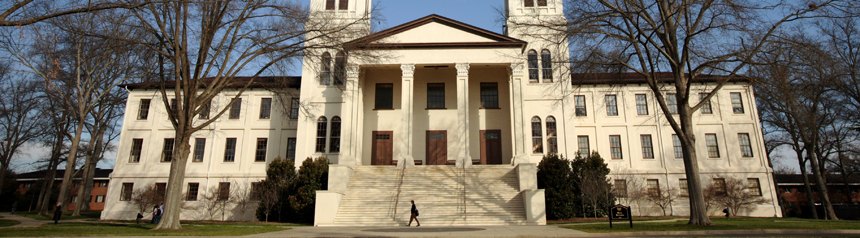
Dr. Katherine Mickley Steinmetz is a Professor in the Department of Psychology at Wofford College, where she directs the Neuroscience of Cognition and Emotion Lab. Her office is located in the R. Milliken Science Center 231D, and she can be reached at (864) 597-4643 or steinmetzkr@wofford.edu. She has established herself as a prominent researcher in emotional memory and cognition through her extensive publication record and laboratory work. Dr. Steinmetz earned her undergraduate degree in Psychology and Neuroscience from Allegheny College, where she participated in the Neuroscience in the Humanities program and completed a thesis on electrophysiological changes caused by learning words in emotional contexts. She then pursued graduate studies at Boston College under Dr. Elizabeth Kensinger, using neuroimaging (fMRI), eye-tracking, electrophysiological, and behavioral techniques to investigate neural mechanisms influencing memory for emotional events. Following this, she completed a post-doctoral fellowship focusing on stress and sleep effects on memory at Boston College and Notre Dame. Her research program focuses on understanding the neuroscience behind how emotional processing influences attention and memory. Dr. Steinmetz combines behavioral testing, event-related potential (ERP) recordings, and salivary hormonal assays to examine both cognitive and neural processes guiding attention toward and memory for emotional information. She is particularly interested in how factors like stress and anxiety modulate these processes. Her work spans multiple domains including emotional memory enhancement, cross-cultural differences in memory, physiological correlates of emotional processing, and the interaction between sleep, stress hormones, and memory consolidation. Analysis of Dr. Steinmetz's publication history reveals consistent focus on emotional memory mechanisms across various contexts. Her research demonstrates how emotional content differentially affects item versus background memory, how stress hormones like cortisol modulate memory processes, and how attentional mechanisms interact with emotional processing. Her methodological approach integrates multiple techniques including ERP, eye-tracking, physiological monitoring, and behavioral paradigms to provide comprehensive insights into emotion-cognition interactions. Dr. Steinmetz has authored numerous peer-reviewed publications in prominent journals including Journal of American College Health, Frontiers in Physiology, Cognition and Emotion, Memory, and Affective Science. She has also contributed book chapters and co-authored the book "How Does Emotion Affect Attention & Memory?" (2010) with Elizabeth A. Kensinger, which reviews behavioral and neuroimaging evidence on emotion's effects on memory and attention in individuals with and without PTSD. As an educator, Dr. Steinmetz has focused on developing effective undergraduate research experiences in cognitive neuroscience. Her work in this area addresses the challenges of preparing students for careers in this interdisciplinary field while maintaining sustainable faculty development. She appears to be actively involved in mentoring undergraduate researchers through her laboratory work at Wofford College. Dr. Steinmetz's Neuroscience of Cognition and Emotion Lab serves as the primary research hub for her investigations. The lab employs multiple methodological approaches to study emotion-cognition interactions, providing students with hands-on research experience in cognitive neuroscience techniques. Her research program demonstrates continuity from her graduate and postdoctoral training while developing its own distinct focus on the interplay between emotional processing, attention, and memory.
Paul Nuyujukian serves as an Assistant Professor of Bioengineering and Neurosurgery, with courtesy appointment in Electrical Engineering at Stanford University. He is a Faculty Scholar of the Wu Tsai Neurosciences Institute, directing the Brain Interfacing Laboratory where his team develops neural interface technologies for clinical applications in stroke and epilepsy. Education: MD, Stanford University (2014) PhD in Bioengineering, Stanford University (2012) BS, UCLA (2006) Dr. Nuyujukian's research integrates motor systems neuroscience with neuroengineering to decode brain activity during movement and recovery from injury. His laboratory pioneers brain-machine interface (BMI) platforms that translate neural signals into communication and control systems, with particular emphasis on intracranial EEG recording and real-time neural decoding. Current work focuses on developing clinically viable BMI solutions for neurological conditions through both preclinical models and human trials, advancing our understanding of neural population dynamics in health and disease. Recent publications reveal strong trends in intracranial EEG acquisition systems, seizure detection algorithms using information theory, and closed-loop BMI applications for ambulatory neuroscience. His work bridges fundamental neuroscience with clinical translation, particularly in epilepsy monitoring, chronic pain management, and neural prosthetics for paralysis. A notable emphasis exists on creating scalable, minimally invasive recording platforms that reduce clinical burden while maintaining high-fidelity neural data. Scientific Awards: No specific awards listed in provided materials As director of the Brain Interfacing Laboratory, Dr. Nuyujukian mentors students and collaborators in neural engineering research while securing grant funding for BMI development. His group maintains active collaborations with Stanford's Department of Neurosurgery and Neurology for clinical translation, with current projects including real-time decision-state decoding and personalized network mapping for pain management. The laboratory operates advanced facilities for both animal and human neural recording, emphasizing seamless integration of engineering innovation with clinical neuroscience. The Brain Interfacing Laboratory comprises multidisciplinary scientists and engineers developing next-generation neural interfaces. Current initiatives include the LiCoRICE platform for ambulatory neuroscience, seizure detection systems using compression-enabled entropy estimation, and ketamine's effects on hippocampal connectivity. The team actively participates in clinical trials for BMI applications in stroke rehabilitation and epilepsy, with strong partnerships across Stanford's medical and engineering schools to accelerate technology translation.
Jen Park is an Assistant Professor in the Marketing and Behavioural Science Division at the UBC Sauder School of Business. She holds a BA from Korea University, an MA from New York University, and a PhD from Stanford University. Her research focuses on Judgment and Decision-Making, Framing & Context Effects, Digital Interfaces & Information Processing, and Prosocial & Pro-environmental Behavior. She teaches 'Consumer Judgment and Decision Making' in the 2024-2025 academic year. Her recent work bridges consumer psychology and behavioral science, exploring how subjective perceptions (e.g., age) influence prosocial behavior and how digital interface design affects decision-making. The 2021 article on 'Subjective Age and the Greater Good' examines motivations for altruistic actions, while the 2020 study on 'Swipe Left For No' analyzes rejection-based decision frameworks in consumer purchases. No scientific awards are listed, but her scholarly contributions reflect emerging trends in behavioral marketing. She advises no listed students and no grants are mentioned. She is based at the Henry Angus 565 office and can be reached via email at jen.park@sauder.ubc.ca .
Anna Weinberg is an Associate Professor in the Department of Psychology at McGill University. Her research focuses on identifying biological pathways underlying disordered emotional experiences, particularly in mood and anxiety disorders. She employs neurophysiological methods like event-related potentials (ERPs) to study neural systems involved in processing errors, emotional stimuli, and rewards, linking these to behavioral outcomes. Key interests include distinguishing neural markers between anxiety and mood disorders, and determining whether these biological correlates represent vulnerability factors or symptoms. Her work has examined the impact of childhood maltreatment, social stress, and the intergenerational transmission of depression risk. She leads the TRAC Lab and collaborates on large-scale projects like the Adolescent Brain Cognitive Development (ABCD) Study. Education details are not explicitly listed in the provided text, but her academic career includes extensive postdoctoral and faculty roles in clinical and developmental neuroscience. Her research has been published in high-impact journals such as Biological Psychiatry , Clinical Psychological Science , and Psychophysiology . Research interests emphasize translational neurophysiology, with a focus on developmental trajectories of neural systems and their modulation by stress, trauma, and social environments. Recent studies investigate how neural responses to rewards and errors predict symptom progression during stressful events like the pandemic. No scientific awards are explicitly mentioned in the text. Her advising and grants involve collaborations on ERP methodologies, risk markers for depression, and adolescent neurodevelopment. She directs the TRAC Lab, which focuses on translational research in affective neuroscience.
Efrén O. Pérez is a Full Professor of Political Science and Psychology at the University of California, Los Angeles (UCLA), where he directs the Race, Ethnicity, Politics, and Society (REPS) Lab. His interdisciplinary work bridges political science and psychological frameworks to examine societal dynamics. His academic foundation includes a doctoral degree from Duke University. Ph.D., Duke University Professor Pérez specializes in political psychology, with core research examining how language shapes implicit political cognition, racial and ethnic identity formation, and public attitudes toward gender/LGBTQ equality. His methodology emphasizes experimental and cross-linguistic approaches to uncover subconscious political processes, particularly in multicultural contexts where linguistic structures influence policy perceptions and social cohesion. Analysis of his recent publications reveals a cohesive trajectory exploring language-politics interfaces: early work established links between linguistic structures and time perception affecting policy support (2017), while 2019 studies demonstrated how language directly shapes mass opinion on gender equality and ethnic identity. His research consistently employs rigorous experimental designs across diverse populations, with growing emphasis on marginalized communities and identity-based political behavior. His scholarly contributions have been recognized through significant academic honors. Award-winning book for 'Unspoken Politics: Implicit Attitudes and Political Thinking' As REPS Lab director, Pérez oversees a collaborative research ecosystem investigating systemic inequities through mixed-methods studies of race, ethnicity, and political participation. The lab serves as an intellectual hub for advancing critical discourse on identity politics in democratic societies.
Renée B. Adams is a Professor of Finance at the Saïd Business School, University of Oxford. She holds a PhD in Economics from the University of Chicago and an MS in Mathematics from Stanford University. Her research focuses on corporate governance, bank governance, and gender diversity in leadership, with a policy-oriented approach informed by interdisciplinary methods including psychological and legal frameworks. She has published in top journals such as the Journal of Finance and Review of Financial Studies, and her work has been covered by global media including the Financial Times and Economist. Adams has held academic positions at institutions like the Stockholm School of Economics and University of New South Wales, and serves as a Fellow of the European Corporate Governance Institute. She co-founded AFFECT, the American Finance Association’s committee for women in finance, and currently chairs it. Her recent grants include support from Swedish foundations like Riksbankens Jubileumsfond and Jan Wallanders och Tom Hedelius Foundation. Her research highlights governance mechanisms in boards, central banks, and the role of gender in leadership decisions. She has explored legal and cultural factors influencing corporate governance globally, with a focus on gender diversity policies and their impacts on organizational outcomes.
Nilanjan Sarkar is the Vice Dean and Senior Associate Dean for Faculty Affairs at Vanderbilt University's School of Engineering, holding the David K. Wilson Professorship in Engineering. He is a Professor in Mechanical Engineering, Computer Engineering, and Computer Science. His research focuses on intelligent systems for human interaction, including robotics, virtual/augmented reality, and assistive technologies for neurodevelopmental disorders and aging populations. Education: PhD (Mechanical Engineering, University of Pennsylvania), ME (Indian Institute of Science), BE (Indian Institute of Engineering Science and Technology, Shibpur). Research interests span human-robot interaction, sensor fusion, and rehabilitation engineering. His lab develops systems for autism intervention, stroke rehabilitation, and elderly engagement through socially assistive robotics and VR/AR. Notable projects include robot-mediated therapy for children and AR telepresence systems for long-term care facilities. Labs/Teams: Robotics and Autonomous Systems Laboratory. Key contributions include CoMove, RASSLE, and the Career Interview Readiness in VR platform. His work emphasizes participatory design with end-users for ethical and inclusive technology.
Seth Frey is an Associate Professor in the Department of Communication at the University of California, Davis. His research focuses on computational social science, exploring governance institutions and complex human decision-making through computational methods, large datasets, and web-based experiments. He examines online communities as models of governance, with expertise in computational approaches to institutional design and strategic behavior analysis. Education: Ph.D. in Cognitive Science and Informatics, Indiana University, 2013 B.A. in Cognitive Science, UC Berkeley, 2004 Research Interests: Frey's work integrates data science, lab experiments, and computational modeling to study human organizations and communication. Key areas include governance technology, cognitive mechanisms of social outcomes, and institutional evolution. His projects span online games, sports, and open-source software communities, emphasizing topics like collective action, self-governance, and cooperative behavior. Publications & Funding: His work appears in journals like PNAS and Nature Scientific Reports, and has been funded by NSF, NASA, and the Ford Foundation. He contributes to the Ostrom Workshop at Indiana University and directs the Computational Communication Lab at UC Davis. Teaching: Frey teaches courses on data visualization, simulation methods, and online data analysis in the social sciences.
Gabriele Oettingen is a Professor of Psychology at New York University (since 2002) and the University of Hamburg (since 2000). Her work focuses on self-regulation processes, particularly mental contrasting with implementation intentions (MCII), which bridges positive fantasies and actionable goals. She holds a M.A. in Biology from Ludwig-Maximilians-Universität (1982), a Ph.D. in Biology (Ethology) from the same institution and the Max Planck Institute for Behavioral Physiology (1986), and a Habilitation in Psychology from Free University Berlin (1996). Her research explores how individuals engage with and disengage from goals, emphasizing the interplay between positive fantasies and realistic evaluations. Key areas include health behavior change, interpersonal relationships, and decision-making. Notable contributions include the development of the WOOP intervention (Wish, Outcome, Obstacle, Plan) for goal achievement. She has held positions at the Max Planck Institute for Human Development and the University of Pennsylvania. Research Interests: Self-regulation strategies, goal-setting mechanisms, mental contrasting, disengagement from unattainable goals, and applications in health, education, and clinical settings. Her work integrates cognitive, motivational, and cultural perspectives to understand human behavior. Lab: Motivation Lab at NYU Publications: Over 200 peer-reviewed articles and books, including *Rethinking Positive Thinking* (2014).
William Whelton is a Professor in the Department of Educational Psychology at the Faculty of Education, University of Alberta. He specializes in counseling psychology, focusing on psychotherapy process/outcome, emotion's role in therapy, and the historical development of psychological disciplines. His work integrates humanistic/experiential/existential approaches with contemporary therapeutic practices. He teaches courses like History and Systems of Psychology and supervises doctoral internships through the Canadian Psychological Association-accredited program. Research interests include self-criticism's impact on depression vulnerability, therapeutic alliance dynamics, and the philosophical evolution of psychology. No scientific awards were explicitly mentioned in the provided texts. His advising focuses on training doctoral counseling students through rigorous 1,600-hour internships. He has contributed to understanding burnout in child/youth care workers and the application of terror management theory in psychotherapy integration. Recent publications (2005–2016) explore emotion-focused therapy, depression mechanisms, and the interplay between personality traits and therapeutic processes.
Gonzalo De Lucas Abril is an Associate Professor at Pompeu Fabra University specializing in Film Studies, with a focus on documentary cinema , creative processes , and gender studies . His academic roles include Academic Director at UPF Barcelona School of Management and vanguardist cinema programmer at Centre de Cultura Contemporània de Barcelona . Education: Doctor in Social and Legal Sciences His research explores actor's bodily experience , montage theory , and feminist film criticism . Recent work examines affective transport in actresses' bodies and mystical corporeal representations. Publications engage with Spanish transitional cinema, Fassbinder's ideological portrayal, and comparative film analysis. Key themes across his 15 most recent articles include: Actor-subjectivity in historical contexts Essay film methodology Body politics in fascist-era cinema Transnational film analysis Emotional expression in performance
Daan van Knippenberg is the Houston Endowed Professor of Management in Organizational Behavior at the Jones Graduate School of Business, Rice University. Previously, he held academic positions at Drexel University, Erasmus University Rotterdam, University of Amsterdam, and Leiden University, where he earned his Ph.D. His expertise spans leadership dynamics, diversity and inclusion strategies, team performance optimization, and creativity/innovation mechanisms. He focuses on understanding how leadership styles influence team effectiveness, particularly in diverse and crisis-prone environments. Research emphasizes: leadership authenticity and integrity, paradoxical leadership approaches, knowledge diversity impacts, and intergroup relational dynamics. He explores how organizational structures and leadership rhetoric affect collective creativity and innovation processes. His work bridges social psychology and management theory to address real-world organizational challenges. Recent articles highlight themes like leader behavior consistency, team voice dynamics, and innovation under constraints. Findings often reveal counterintuitive outcomes, such as how perceived leadership flaws can paradoxically boost certain team behaviors. No specific awards listed in current profile data. His advisory and grant activities remain unreported here. Active in advancing social identity theory applications to leadership contexts, emphasizing leader group prototypicality effects on team cohesion and performance.
Dr. Chuan Khoo is a Lecturer in the Department of Design at Monash University, specializing in interaction design, digital media, and physical computing. He holds a PhD from RMIT University and an MFA from the Rhode Island School of Design. His work explores the dual edges of technology through projects like Touchstone (interactive public art) and Lumogram , which interrogate the relationship between humans and digital systems. Khoo’s research focuses on 'slow data'—design perspectives that critically engage with digital augmentation. He has exhibited internationally and developed tools like the mote mini , an IoT microcontroller for design students. His academic roles include teaching at RMIT and heading the Interaction Design program at Nanyang Polytechnic, Singapore. Key projects include When Echoes Find Light (2019), an interactive public bench installation, and Slow Data in the Age of Digital Things , his PhD work critiquing tech velocity. He co-designed the Alfred Health Universal Design Principles project (2024) and received a 2024 DIA Award shortlist for Lumogram . Khoo maintains Technologies for Interactivity , an open-source resource for physical computing, and collaborates globally on projects blending art, tech, and critical design.
Ian M. Hughes is an Assistant Professor in the Industrial/Organizational Psychology program at North Carolina State University's Department of Psychology within the College of Humanities and Social Sciences. His research focuses on workplace social exchanges, employee well-being, and occupational health psychology. He holds a Ph.D. from Bowling Green State University (2023) following prior degrees from the same institution (M.A., 2021) and the University of Central Florida (B.S., 2019). Dr. Hughes' work examines how social support dynamics and workplace mistreatment affect psychological, physiological, and behavioral outcomes. He also investigates politics and work, social media's impact, and human-animal interaction. His research has been published in high-impact journals such as the Journal of Occupational Health Psychology and Computers in Human Behavior . He leads the PAWW (Psychology, Animals, Work, and Well-being) lab, exploring interdisciplinary connections between these areas. Recent studies highlight trends in understanding unhelpful workplace support mechanisms, pet ownership's spillover effects on work performance, and the psychological impacts of doomscrolling. His work bridges organizational behavior with health psychology, emphasizing practical applications for improving workplace climates and employee well-being. Though no formal awards are listed, his prolific publication record (over 20 articles since 2019) indicates sustained academic impact. His CV provides further details about grants, lab activities, and collaborative projects. He advises the PAWW lab team but no named students are listed in available materials.