Prof. Waldemar Kolanus leads the Molecular Immunology and Cell Biology department at the University of Bonn's Life & Medical Sciences Institute (LIMES) . His research bridges immunoregulation , stem cell dynamics , and metabolic stress responses in immune cells. Unit 2 member at LIMES Principal investigator in SFB 704 and ImmunoSensation Cluster Leads a multidisciplinary lab with postdocs, PhD students, and technical staff His work focuses on intracellular signaling pathways connecting immune activation to tissue homeostasis, particularly through: Cytohesin proteins in integrin-mediated adhesion and migration TRIM71 in stem cell regulation and congenital hydrocephalus High-salt environments affecting macrophage function Publication trends show expertise in immune cell migration , genetic models , and chemical inhibition , with frequent use of mice and zebrafish for in vivo studies. Key articles explore: TRIM71's dual role in auditory development and germ cell maintenance Cytohesin family's Golgi regulation and insulin signaling Ruxolitinib's off-target migration inhibition of dendritic cells Contact details: Address: LIMES Institute, Carl-Troll-Straße 31, Bonn Email: kolanus.sekretariat@uni-bonn.de Phone: +49 228 73-62788
Professor Emily S. Cross is a cognitive and social neuroscientist holding dual appointments at the University of Glasgow's School of Psychology & Neuroscience (UK) and Western Sydney University's MARCS Institute (Australia). She directs the Social Brain in Action Laboratory (SoBA), specializing in how embodied experiences shape social perception. Cross earned a BA in psychology and dance from Pomona College, MSc from University of Otago as a Fulbright Fellow, and PhD in cognitive neuroscience from Dartmouth College, followed by postdoctoral training at University of Nottingham and Max Planck Institute. Her research explores experience-dependent plasticity through dance, robotics, and neuroimaging techniques (fMRI, TMS), focusing on four key areas: neural signatures of embodied expertise, neuroaesthetics, visual learning across lifespan, and social engagement with robots. This interdisciplinary work bridges neuroscience, performing arts, and robotics. Cross's research shows strong focus on human-robot interaction dynamics, cultural perceptions of robotics, and the neural correlates of aesthetic experiences. Recent work investigates how social experience shapes human-robot interaction, cross-cultural differences in robot acceptance, and computational approaches to movement analysis. Publications consistently demonstrate methodological innovation through VR, economic games, and large-scale motion capture libraries. Honors & Awards: Jacob Brownowski Award (British Science Association, 2017) Philip Leverhulme Prize in Psychology (2018) World's 50 Most Renowned Women in Robotics (2020) Elected member: Young Academy of Europe Elected member: Royal Society of Edinburgh's Young Academy of Scotland Her ERC Starting Grant funds groundbreaking work on human-robot interaction. Cross leads the Social Brain in Action Lab with focus on mentoring next-generation scientists and research ethics training. The lab employs neuroimaging, training paradigms, and diverse methodologies to study action observation across dance, music, and robotics domains.
Ben Bollig is a Professor of Latin American Literature and Film at the University of Oxford, where he is also a Fellow and Tutor in Spanish at St Catherine's College and Associate Lecturer in Spanish at St John's College. He holds a First Class BA in Hispanic Studies from the University of Nottingham, followed by an MA and PhD from King's College London (2004). Research focuses on contemporary Latin American literature and film, particularly Argentine poetry Editor of the Journal of Latin American Cultural Studies Co-editor of Latin American Cultural Studies: A Reader (Routledge, 2017, pbk 2019) Key Research Themes : Comparative Literature, Film Studies, Translation Studies, Poetics of Resistance, and Postcolonial Studies. His work explores intersections between poetry and cinema, cultural identity, and political dimensions of artistic practice in Latin America. Publications include books on Argentine marginal poetry, cinematic adaptation of verse, and edited volumes of resistance literature. He coordinates the Poetics of Resistance project with Dr. Cornelia Graebner (Lancaster University) and contributes translations to journals like Calque and El extremo sur: Confines.
Dr. rer. nat. Thomas Hermann is a faculty member at Bielefeld University's Faculty of Engineering, leading the Ambient Intelligence Group and coordinating the Computer Science program. He specializes in sonification, auditory data science, and smart environments. Head of Ambient Intelligence Working Group Computer Science Program Coordinator Member of multiple academic advisory boards His research focuses on interactive sonification for biomedical applications, quantum systems, and smart environments. Key projects include ECG sonification for cardiac diagnosis, real-time auditory feedback in swimming, and sonic interfaces for AR cooperation. Recent publications span 2025 with Python-based sonification tools ( pya AGen ), quantum system sonification, and ST-elevation myocardial infarction monitoring. He contributes to open-access supplementary materials and interdisciplinary workshops. As a researcher , Hermann develops practical sonification frameworks like Panson for facial behavior analysis, CardioScope for portable ECG monitoring, and Base Cube One for smart environments. His work bridges academic research with industry applications.
Prof. Dr. Sabine C. Koch is a Professor of Dance and Movement Therapy at Alanus Hochschule Alfter and Head of the Research Institute for Creative Arts Therapies (RIArT). She holds a habilitation and multiple professorships, including at SRH Hochschule Heidelberg (2012–present) and has led the Alanus Research Institute since 2015. Her work focuses on embodiment theory, applying it to creative arts therapies such as dance, theater, and art to address mental and physical health challenges. Her education includes a Diplom in Psychology from Heidelberg University (1999) and a PhD (2003) and Habilitation (2009) from Heidelberg. She has led major projects like the BMBF-funded 'Körpersprache' (2009–2011), the EU TESIS project (2011–2015), and the Heidelberg Center for Motion Research (2016–2022). Awards include ADTA Research Awards (2007, 2013, 2014, 2023) and a Fulbright Scholarship (1996). Research interests span embodiment theory, enaction, systems theory, and their application in therapies. Her work emphasizes the role of movement in mental health, including studies on autism, schizophrenia, oncology, and refugee trauma. She collaborates internationally, including with institutions in Chile, Slovenia, and France. Her recent articles explore drama therapy for flood-affected children, dance therapy for dementia patients, and embodied approaches to experience studies. Grants and networks include the DFG-funded EmbodiNet (2024–2026) and a PhD program in Creative Arts Therapies with Witten/Herdecke University. Koch’s labs and teams focus on interdisciplinary motion research and clinical applications of movement therapies. She has advised numerous studies on therapeutic efficacy and co-authored over 200 peer-reviewed articles and books, including 'The Routledge International Handbook of Embodied Perspectives in Psychotherapy' (2019).
Alexander Müller-Rakow is a Researcher and PhD Candidate at the Design Research Lab at Berlin University of the Arts. His work explores the interplay between embodied interfaces , digital sovereignty , and social design , focusing on bodily movements as a medium for musical and interactive technologies. Education: Industrial and Interaction Design (University of Applied Science Magdeburg, University of Bergen) Current Roles: Research Scientist (Design Research Lab), Lecturer (Hochschule für Kunste Bremen, others) His research spans haptic technology , textile-integrated sensors , and experimental interfaces , often intersecting with digital justice and material interactions . Early-career publications include collaborations on capacitive sensing and urban design interventions , reflecting his interdisciplinary approach. As part of the Design Research Lab, he contributes to projects addressing inclusive digital futures , smart urban mobility , and collaborative tools , aligning with the lab's mission for ecologically sustainable design .
Mustafa Kahya is a Scientific Staff member and Ph.D. candidate at the Chair of Media Technology within the Munich Institute of Robotics and Machine Intelligence (MIRMI) at the Technical University of Munich (TUM). He works under the supervision of Prof. Dr.-Ing. Eckehard Steinbach and is actively involved in research related to radar systems and machine learning. His academic background includes a B.Sc. in Computer Engineering from Istanbul Technical University (2017) and an M.Sc. in Informatics from TUM (2021). During his master's studies, he conducted research on 3D Reconstruction and Multi-view Shape from Shading at the TUM Computer Vision Group. Kahya's research focuses on Radar Image Analysis , Out-of-distribution Detection , One-Class Deep Neural Networks , Anomaly Detection , and Generative Models . His work primarily centers on applying deep learning techniques to short-range FMCW radar systems for various applications including human presence detection, facial authentication, and activity recognition. His publications demonstrate a strong trend toward real-time radar-based systems with emphasis on out-of-distribution detection capabilities. Kahya has been actively publishing in top-tier conferences and journals from 2023 through 2025, with multiple first-author publications in IEEE venues including ICASSP, ICIP, and IEEE Sensors. His research has been part of several significant projects including the Centre for Tactile Internet with Human-in-the-Loop (CeTI) and DFG-funded research on Teleoperation over 5G. As a Ph.D. candidate at the Chair of Media Technology, Kahya contributes to the research group's work in computer vision, machine learning, and radar systems. His work bridges the gap between traditional computer vision techniques and novel radar-based sensing modalities, creating opportunities for applications in environments where optical systems face limitations.
Max Pellert is a computational social scientist and cognitive scientist with faculty appointments at multiple institutions. Since 2022, he has served as an Assistant Professor at the Chair for Data Science in the Economic and Social Sciences at the University of Mannheim . He previously held an interim Professor position at the University of Konstanz and an Assistant Researcher role at Sony Computer Science Laboratories Rome. His work bridges computational methods with social science theory. Education M.Sc., University of Vienna (2017) in Middle European interdisciplinary Master's program in Cognitive Science (with distinction) Ph.D., Medical University of Vienna (2022) in Medical Informatics, Biostatistics & Complex Systems Research interests center on Computational Social Science , Digital Traces , and Natural Language Processing for emotion and sentiment analysis. He develops Temporal Adapters for tracking longitudinal emotional patterns and FAULTANA pipeline for polarization studies. His AI Psychometrics framework assesses personality-like traits in large language models. Recent publications include: (1) 2025 ACL work on political bias in LLMs; (2) 2025 ICWSM study of temporal emotion analysis; (3) 2024 Perspectives on Psychological Science paper on LLM psychometrics; (4) 2024 PNAS Nexus polarization analysis; (5) 2023 Emotion cross-cultural study of pandemic emotions. Scientific Awards Habilitation candidate status at University of Mannheim Teaching includes IS 616: Large Scale Data Analysis , IS 809: Advanced Text Mining Lab , and IS 723: Data Science Seminar at master’s and PhD levels. His Barcelona Supercomputing Center role focuses on principal investigator duties for computational social science projects.
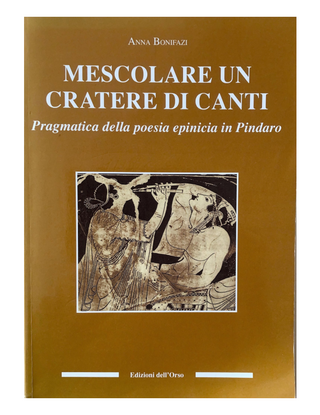
Prof. Anna Bonifazi holds a Professorship in Discourse Studies at the Department of Linguistics, University of Cologne. Her research spans Discourse Analysis, Pragmatics, Cognitive Linguistics, and Multimodal Communication with a focus on Ancient Greek Linguistics and Oral Epic traditions. She investigates phenomena like anaphoric cohesion in long texts, multimodal storytelling in film and oral traditions, and ancient Greek particles' discursive functions. Her work explores how multimodal elements (e.g., visual, musical, gestural) interact in communication, particularly analyzing films (e.g., mystery genres), ancient texts (e.g., Homeric epics), and South Slavic oral narratives. She examines cross-modal iconicity, viewpoint blending, and the cognitive underpinnings of discourse structures. Recent publications address topics like anaphoric strategies in crime stories and syntactic patterns in ancient Greek conversational frameworks. Prof. Bonifazi's research often bridges classical philology and modern cognitive theories, emphasizing embodied cognition and the interplay between language and other semiotic systems. She collaborates internationally on projects involving gesture analysis in storytelling and ancient papyrological studies. Her interdisciplinary work integrates linguistics with musicology, film studies, and cognitive science. Administratively, she oversees the Discourse Studies research group at Cologne and mentors assistants like Dr. Sandra Debreslioska and Madeleine Frings. Her lab focuses on multimodal discourse analysis using experimental and corpus-based methods.
Hedvig Kjellströmeröm is Professor at KTH Royal Institute of Technology and affiliated with the Max Planck Institute for Intelligent Systems. Her research develops methods for interpreting human and animal behavior through computer vision, with applications in computational aesthetics, communicative behavior analysis, and embodied AI. She serves as Editor-in-Chief for CVIU and was Program Chair for CVPR 2025.
Vidyasagar Sharma is a Research Associate at Bielefeld University's Faculty of Sociology, working on the DFG-funded project "Navigating Universities. Student Aspirations, Boundary Drawing, and Transformations in India and the Philippines" under Prof. Dr. em. Joanna Pfaff-Czarnecka. He is affiliated with Department 6 - Sociology of Transnationalization and Social Anthropology and the Bielefeld Graduate School in History and Sociology. Education: 2023-04 - Ongoing: Research Associate in DFG project "Navigating Universities..." at Bielefeld University 2021-08 - 2022-05: Urban Fellows Program, Indian Institute of Human Settlements, Bengaluru 2018-10 - 2021-02: Master of Philosophy in Political Science, University of Delhi (Dissertation: Changing Contours of Caste in Urban Spaces: A Case Study of Delhi) 2015-07 - 2017-07: Master of Arts in Political Science, Jawaharlal Nehru University 2011-07 - 2014-06: Bachelor of Arts in Political Science, Indira Gandhi National Open University Research Focus: Sharma's work critically examines caste dynamics in Indian educational institutions, institutional violence against marginalized students, and the commodification of higher education. His research explores how social hierarchies manifest in university spaces and affect student experiences, particularly for Dalit-Bahujan communities, with strong emphasis on belonging, social exclusion, and educational equity. Publication Trends: His prolific output spans academic journals and major media outlets including The Indian Express and The Wire. A consistent theme across his work is the intersection of caste discrimination and mental health among university students, with particular attention to institutional responses to student suicides and the moral crisis in India's higher education system. Scientific Awards: 2019-07 - 2023-03: Junior Research Fellowship, University Grants Commission, India 2015-07 - 2016-07: Nirman Foundation Fellowship, Centre for Policy Studies, Jawaharlal Nehru University Professional Activities: Sharma is a member of the British Sociological Association (2023-present) and founded the academic initiative "Speaking From Margin" in 2021 to build solidarity for social justice in higher education. His research experience includes work as a Principal Investigator at the Indian Institute for Human Settlements and a Research Intern at the Center for Policy Research in New Delhi. Additional Information: Fluent in Hindi and English with working knowledge of German, Sharma bridges academic scholarship with public discourse through regular contributions to major media platforms addressing pressing issues in education policy and social justice.
Prof. Dr. Angelika Braun is a full Professor of Phonetics at the University of Trier since October 2009, with a career spanning forensic phonetics, sociophonetics, and cross-cultural speech analysis. She previously held roles at the Bundeskriminalamt (Wiesbaden/Düsseldorf) and Philipps-Universität Marburg, where she habilitated in Phonetics and Speech Processing (2000). Her work bridges academic research with forensic practice. Research Focus: Her Sociophonetics (language and emotions, gender-specific speech) Forensic Phonetics (speaker identification, voice analysis) Contrastive and Hawaiian Phonetics Speech prosody and toxin effects (smoking, alcohol) Intercultural dubbing studies Academic Contributions: Over 15 recent articles explore voice quality, emotional speech, forensic age estimation, and cross-cultural dubbing effects. Key conferences include Interspeech, International Congress of Phonetic Sciences, and ISCA. Her work appears in journals like Forensic Linguistics and The Phonetician . Scientific Honors: Fellow of the American Academy of Forensic Sciences (AAFS) Founder Member and former Chairperson of the International Association for Forensic Phonetics (IAFP) Life-Member of the International Phonetic Association (IPA) Leadership roles in ISPhS and GAL Practical Impact: Developed the Almeida-Braun Transcription System for dialect analysis and contributed to forensic audio enhancement protocols (e.g., Rodney King case). Serves as reviewer for Language and Speech , Forensic Linguistics , and JIPA . Collaborates on longitudinal studies of vocal aging and speaker identification.
Dr. Hilary Martin is a Group Leader in Human Genetics at the Wellcome Sanger Institute and a College Research Associate at St John's College, Cambridge. Her research focuses on medical and population genomics, analyzing high-throughput sequence and genotype data from large cohorts to address various medical and population genetic questions. She leads the Martin Group which studies the genetic architecture of rare and common disorders in diverse populations, with particular emphasis on populations with high levels of parental relatedness. BSc (Human Genetics) from the University of Queensland, Australia PhD from the Wellcome Trust Centre for Human Genetics in Oxford Postdoctoral research at Sanger Institute with Jeff Barrett Group Leader at Sanger Institute since September 2018 Dr. Martin's research program spans several key areas in human genetics. Her group analyzes large-scale genetic and electronic health record data to explore fine-scale population structure, its impact on disease risk, and the genetic architecture of both rare and complex diseases. A particular focus is on populations with high levels of parental relatedness (consanguinity), where her team investigates how autozygosity affects disease risk across the phenotypic spectrum. Her work on developmental disorders examines the role of rare recessive variants and polygenic risk, while her research with South Asian populations explores the genetic basis of cardiometabolic diseases. Analyzing her recent publications reveals a strong trend toward multi-ancestry studies, particularly focusing on British Pakistani and Bangladeshi populations through the Genes & Health project. Her research increasingly integrates rare variant analysis with polygenic risk scores to understand the full genetic architecture of complex traits. There's also a growing emphasis on understanding how population structure, consanguinity, and founder effects influence disease risk across diverse populations. Her work bridges fundamental population genetics with clinical applications, particularly in neurodevelopmental disorders and cardiometabolic diseases. Extensive publication record in top journals including Nature, Cell, and Nature Genetics Leadership in major collaborative projects like Deciphering Developmental Disorders (DDD) Key contributions to understanding the role of consanguinity in disease architecture Development of methods for analyzing recessive variants in diverse populations Dr. Martin leads a dynamic research group comprising PhD students, postdoctoral fellows, and staff scientists. Her group works closely with multiple large-scale studies including the Avon Longitudinal Study of Parents and Children (ALSPAC), Millennium Cohort Study, Born in Bradford, Deciphering Developmental Disorders study, Genomics England, and Genes & Health. She maintains strong collaborations with clinical and research teams across the UK and internationally, particularly with groups studying South Asian populations. Her research has secured significant funding through institutional support and collaborative grants that enable large-scale genomic analyses. The Martin Group operates within the Human Genetics Programme at the Wellcome Sanger Institute, maintaining close ties with the Hurles Group and other related teams. They collaborate extensively with the East London Genes and Health project, which is one of the world's largest community-based genetics studies focusing on people of Pakistani and Bangladeshi heritage. The group maintains strict data security and confidentiality procedures while working closely with the communities they study through community engagement and dissemination of scientific findings.
Karin Peters is a Full Professor of Romance Literature and Cultural Studies with a Focus on Ibero-Romania at the University of Bonn since 2023. Her academic journey includes a habilitation at Johannes Gutenberg University Mainz (2021-2022), a doctorate from LMU Munich (2010), and a Magister Artium from the same institution (2006). Her research spans transnational literary history, affect theory, pastoral poetry, and intersections of gender and politics in Spanish and Argentinian literatures. Key projects include co-editing The Face as Scene. Virtuality and Embodiment of Affect and leading the network 'Comic Literacies. Cultural Techniques of the Comic' at KWI Essen. She has supervised doctoral work on Iberoamerican Baroque theater and published extensively on Roland Barthes, Georges Bataille, and contemporary Latin American narratives. Her recent publications analyze the European myth of the emotional subject, pastoral masks in Cervantes, and affective economies in 18th-century literature. She has received scholarships from DAAD, Studienstiftung des deutschen Volkes, and e-fellows.net, and actively contributes to academic organizations including the Romanistenverband and the Bonn Center for Dependency Studies.
Prof. Dr.-Ing. Jochen Steffens is a faculty member at the University of Applied Sciences Düsseldorf , affiliated with the Faculty of Media . His research spans interdisciplinary domains at the intersection of music, soundscapes, and cognitive-affective processes. Research Focus : Music listening behavior, soundscapes, noise perception, music recommendation systems, film music, and the psychological effects of sounds. Teaching : Supervises final theses and offers modules aligned with examination regulations of 2018, including topics in media informatics and mixed reality applications. Technical Contributions : Develops tools for soundscape exploration (e.g., Advanced Soundscape Search) and music information retrieval (MIR) systems for live performance visualization. Methodological Expertise : Utilizes computational music analysis, experience sampling, statistical learning, and multilevel modeling to investigate situational and demographic influences on auditory perception. Applied Research : Explores the impact of room acoustics on customer satisfaction in restaurants, motivational music in sports, and semantic expression in audio branding.