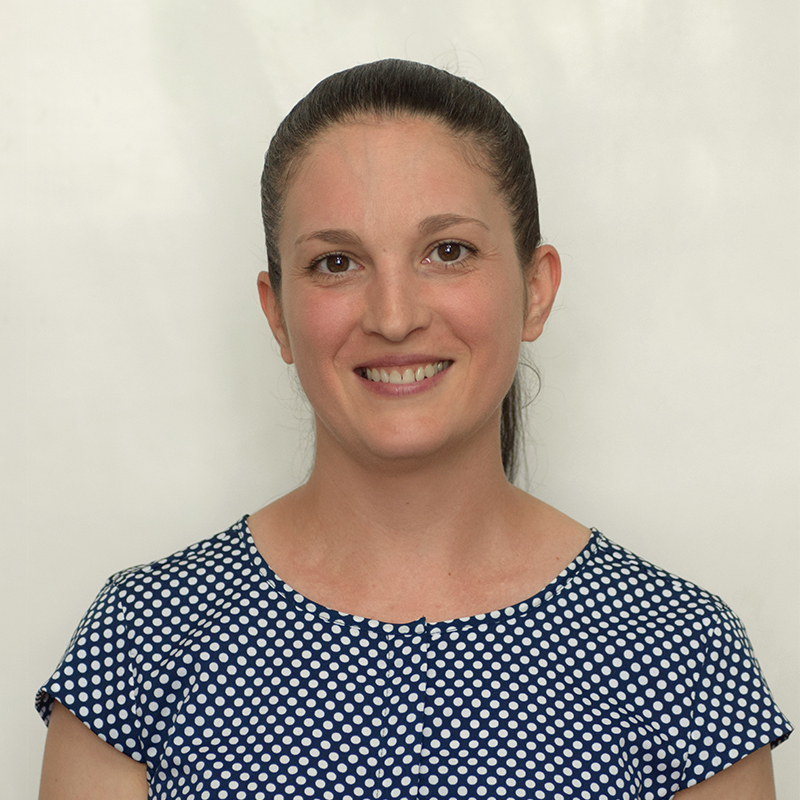
Bojan Međo is an Associate Professor at the University of Belgrade's Faculty of Technology and Metallurgy, specializing in Materials Engineering and Finite Element Method . He has been active since his election on September 12, 2022, and his work spans pharmaceutical equipment design , pressure vessel integrity , and process industry equipment . His research focuses on adhesive properties of polymer blends , fracture mechanics in welded structures , and finite element applications in metallurgy and materials engineering. He has authored educational materials like INŽENJERSKO CRTANJE (2016) and Primenа metode konačnih elemenata u inženjerstvu materijala (2014). Key trends in his publications include finite element modeling for structural analysis, adhesion testing for optical fibers, and failure analysis in industrial equipment. His work often integrates experimental validation with computational simulations. Bojan Međo has mentored numerous students, including PhD candidates like Sladjana Laketic (2025) and Isaak Trajković (2024), as well as Master's and Bachelor's students in topics such as tensile properties of biomedical alloys and pressure vessel design .
Associate Professor Uroš Krčadinac is affiliated with the Faculty of Media and Communications at Singidunum University. He combines expertise from digital art, computer science, and interactive design in his research and teaching. Doctor of Science (PhD) in Software Engineering, Affective Computing, and Generative Design (University of Belgrade) Expert Associate at Design Seminar, Petnica Research Station His research spans interactive design , new media art , data visualization , and human-computer interaction . Recent publications focus on generative design , multi-agent systems , and textual affect recognition . He has contributed to software engineering encyclopedias and developed open-source emotion recognition tools. Scientific Awards include: IDMAA best group project award (2011) Belgrade Chamber of Commerce graduation thesis award (2009) ASIFA diploma for animated film (2007) Pančevo cultural contribution award (2004) Krčadinac teaches Design for New Media , Interactive Design , and Programming for Visual Artists , with over 100 workshops conducted globally since 2007. His work bridges computational methods with artistic expression.
Đorđe Đorđević is an Associate Professor at the University of Belgrade's Faculty of Architecture, Department of Architecture. He specializes in Descriptive Geometry and Geometry of Architectural Forms, with research focusing on descriptive geometry, architectural geometry, visual illusions in architectural-urban spaces, and architectural photogrammetry. His educational background includes a PhD in technical sciences (Architecture and Urbanism) from the University of Belgrade. Research interests span geometric applications in architecture and computer-guided 3D modeling. He has authored numerous scientific papers presented at national and international conferences. Awards include scholarships and academic honors during studies. Professional affiliations include membership in the Serbian Chamber of Engineers. Laboratory affiliations include photogrammetric research facilities.
Angelina Njegus is a Full Professor at Singidunum University , where she has worked since 2005. She holds a Ph.D. in Business Studies and has extensive experience in both academia and industry, including consulting for IBM. Her research focuses on machine learning algorithms , deep learning , and Big Data Analytics , with applications in pattern recognition , tourism technology , and blockchain systems . Bachelor's: Faculty of Organizational Sciences, Information Systems (1994) Master's: Faculty of Organizational Sciences, Industrial Engineering (1999) Doctoral: Faculty of Business Studies (2003) Her recent publications (2023-2025) demonstrate expertise in metaheuristic optimization for machine learning, audio-visual emotion recognition , and cryptocurrency applications in tourism . She pioneered the Virtual University platform (MTVU) and contributes to agile methodologies in software development. Collaborations include projects with researchers from IEEE, Springer, and international institutions. Research interests span AI ethics in human resources , IoT integration in tourism , and security risks in cloud computing . Her work appears in journals like Complex & Intelligent Systems and conferences including ICPR and FG 2017 . She has authored books on software design patterns and information systems in tourism .
Radmila Suzić is a Professor at Singidunum University, specializing in Applied Linguistics, English Language Teaching, and Digital Education Tools. She holds a PhD in Teaching Methodology from the University of Novi Sad's Faculty of Philosophy (2016) and has published extensively on language anxiety, curriculum development, and technology integration in education. Fields of Interest: Applied Linguistics, Language Anxiety, English Language Teaching, Curriculum Development, Translation Studies, Digital Education Tools Email: rsuzic@singidunum.ac.rs Key Collaborations: Co-authored works with M. Nedeljkovic, A. Puška, T. Dabić, and B. Radić-Bojanić Notable Publications: 'Evolving Methodologies' (2024), studies on multi-criteria analysis in agricultural selection, and research on digital tools in language teaching Her recent articles focus on agricultural decision-making models, digital transformation in education, and cross-cultural language studies. She actively participates in international conferences like SINTEZA and CILRAID.
Prof. Dr. Ivana Ćirković-Miladinović is a Full Professor at the Department of Philological Sciences, Faculty of Pedagogical Sciences, University of Kragujevac, Jagodina. She holds a PhD in English language teaching methodology and has held academic positions since 2004. She currently serves as Vice-Dean for Teaching and Student Affairs, leading initiatives in curriculum development and international education programs. Her academic journey includes a Master's degree from the University of Nottingham (2006–2007) and a Diploma in Primary Education from the Faculty of Education in Jagodina (2004). She has taught extensively across undergraduate, master's, and doctoral programs, focusing on English language methodology, pedagogical strategies, and international education leadership. Research interests center on innovative language teaching methodologies for young learners, integrating technology (CALL/STREAM), and affective learning strategies. She has authored/co-authored monographs and peer-reviewed articles, such as Representation of affective strategies for learning English (2024) and Integrating technology in young learners' English language classrooms (2024). Prof. Ćirković-Miladinović leads multiple international projects including the Erasmus+ initiative Learning and Teaching STEAM – LETs STEAM (2024–2025) and STE(PA)M – Teacher Training in Physical Activities and Embodied Learning through STEAM Education (2023–2026). She is Editor-in-Chief of Uzdanica journal (ISSN 1451-673X) and serves on editorial boards of international journals. Her contributions include creating the MA in International Teacher Education Programme (MITEP) and developing its accreditation framework. She is actively involved in teacher training, peer micro-teaching processes, and cross-cultural communication initiatives with institutions in Hungary, Croatia, Montenegro, and Georgia.
Dr. Branko Marković serves as an Assistant Professor at the Department of Computer and Software Engineering, Faculty of Technical Sciences in Čačak, University of Kragujevac, Serbia. His academic career spans over two decades, transitioning from industry experience in telecommunications to dedicated academic work following the merger of the College of Technical Vocational Studies with the Faculty in 2020. Dr. Marković earned his Bachelor's degree from the Faculty of Electrical Engineering in Belgrade in 1992, followed by a Master's degree in 2004 and a Doctorate in 2018, all focusing on telecommunications and speech processing. His doctoral research centered on speech processing and recognition, establishing the foundation for his subsequent research trajectory. His primary research focuses on speech processing , with groundbreaking work in whispered speech recognition - a challenging domain due to reduced acoustic energy in whispered speech. His research explores sophisticated methodologies including data augmentation techniques, wavelet transformations, inverse filtering, and various feature extraction approaches. He has made significant contributions to Serbian speech database development, notably the "Phonemes_1.0" database. His work bridges theoretical research with practical applications in assistive technologies, security systems, and human-computer interaction, demonstrating consistent innovation through 2024 publications. Analysis of his publication trends reveals an evolution from fundamental techniques like Dynamic Time Warping (DTW) and Mel-Frequency Cepstral Coefficients (MFCC) toward more advanced approaches involving deep learning and multimodal systems. His recent work emphasizes data augmentation for model robustness and wavelet-based feature extraction, reflecting the field's progression toward more sophisticated machine learning methodologies while maintaining focus on the unique challenges of whispered speech. Dr. Marković teaches across multiple academic levels, covering essential computer engineering subjects including Computer Assembly and Service, Internet Technologies, Computer Networks, Distributed Software Systems, Web Programming, and Computer Systems Design. His educational contributions extend to several textbooks for vocational studies in computer engineering fields. His professional journey includes valuable industry experience at the Mihailo Pupin Institute in Belgrade and Canadian telecommunications companies Bell Sygma, Architel, and Nortel Networks, followed by founding his own company Big engineering before transitioning to academia. This industry-academia trajectory enriches his practical teaching approach and research relevance.
Božanić Milenka is a Research Associate in the Institute of Zoology at the Faculty of Biology, University of Belgrade. Her work focuses on aquatic invertebrates, particularly the morphology, systematics, and phylogeny of Plecoptera, Ephemeroptera, and Trichoptera larvae in mountain streams. She contributes to water quality assessment using biological indicators and employs advanced techniques like deep learning for insect identification. PhD in Biology (2019), Faculty of Biology, University of Belgrade Master’s in Invertebrate Zoology and Entomology (2013), Faculty of Biology, University of Belgrade BSc in Biology (2012), Faculty of Biology, University of Belgrade Her research interests span aquatic invertebrate morphology, taxonomy, and environmental monitoring. She investigates how anthropogenic activities like trout farming affect oxidative stress biomarkers in insect larvae and contributes to biodiversity inventories in Serbian caves and rivers. Recent publications highlight her work on stonefly and caddisfly distribution, AI-driven insect classification, and pollution impact assessments. Collaborations with researchers like Zaric Nenad and Novakovic Jelica reflect her interdisciplinary approach to freshwater ecosystem studies. Scientific Awards Ministry of Education, Science and Technological Development Scholarship (2014) Božanić participates in environmental projects like PROJECT JADAR, analyzing potential impacts on wildlife. She is affiliated with the Institute of Zoology and contributes to educational initiatives such as the „Mali Dunav“ research station, engaging both academic and public audiences in conservation efforts.
Biljana Milenkovic is a researcher at the Department of Physics, Faculty of Sciences, University of Kragujevac, Serbia. She specializes in radiation physics, radioecology, and dosimetry, with a focus on neutron detection using CR-39 detectors and environmental contamination analysis. Her work includes projects funded by the Serbian Ministry of Science, addressing microdosimetry, radioecological investigations, and radiation safety. Education: BSc in Physics (2006) and PhD in Physics (2013) from University of Kragujevac. Awards: Best Student in Physics Class and Best Student at Faculty of Sciences (2006). Research interests include nuclear track detectors, heavy metal and radionuclide contamination in soil and plants, and environmental radiation monitoring. She has contributed to studies on radon diffusion, boron neutron capture therapy, and post-conflict environmental assessments in areas affected by warfare. Publications span over 20 peer-reviewed articles in journals like Radiation Measurements and Environmental Science: Processes & Impacts , focusing on dosimetry techniques, detector efficiency, and environmental radioactivity. She has also authored book chapters on computational methods in radiation physics. Key Awards: Recognition for academic excellence in 2006. Labs and collaborations involve radiation physics teams at the University of Kragujevac, with ongoing projects analyzing environmental pollutants and radiation safety in urban and rural settings.
Dr. Kristina Pogrmic-Majkic is a Principal Research Fellow at the Department of Biology and Ecology, Faculty of Sciences, University of Novi Sad. She holds a PhD in Biochemistry (2010) and BSc in Biology (2002) from the University of Novi Sad, with postdoctoral experience at Aarhus University, Denmark (2015-2016). Her research specializes in endocrine disruption and reproductive toxicology, particularly investigating mechanisms of endocrine-disrupting compounds on gonadal function and reproductive health. She employs cellular and molecular approaches to study toxicity pathways affecting steroidogenesis and reproductive development. Dr. Pogrmic-Majkic's publication record demonstrates consistent focus on reproductive toxicology, with recent work exploring: Effects of phthalates on ovarian function and steroidogenesis Adverse outcome pathways for female reproductive toxicity Molecular mechanisms of endocrine disruptors in granulosa cells Transcriptomic responses to low-dose chemical exposure Predictive toxicology using computational models
Prof. Dr. Slaviša Putić is a Full Professor at the Department of General Technical Sciences , Faculty of Technology and Metallurgy , University of Belgrade. His academic focus centers on Materials Engineering, with specialized expertise in composite materials, mechanical properties analysis, and engineering design. His research explores: Mechanical behavior of polymer and carbon-epoxy composites Fracture mechanics and failure analysis Design validation of pressure vessels and industrial equipment Numerical modeling of material stresses Publications predominantly address experimental and computational studies of composite materials, including energy absorption dynamics, bioceramics optimization, and heat-affected zones in advanced steels. Recurring themes include mechanical testing methodologies and industrial applications. He has advised over 100 students across academic levels: 4 doctoral students (e.g., nanomaterials, luminescent materials) 24 master's students (pressure equipment design, composite reliability) 76 undergraduate students (material testing, risk assessment) Laboratory activities include ultrasonic testing of materials and residual stress analysis using magnetic methods.
Marija D. Gavrovic Jankulovic is a full Professor in the Department of Biochemistry at the Faculty of Chemistry, University of Belgrade. She serves as Head of the Department of Biochemistry (since 2022) and previously held roles as Vice-Dean for Science and International Cooperation (2010-2013). Her institutional affiliations include the Center for Molecular Food Sciences and Serbia's Biochemical Society, where she serves as General Secretary. Education: BSc in Chemical Sciences, University of Belgrade (1991) Master's in Chemical Sciences, University of Belgrade (1996) PhD in Chemical Sciences, University of Belgrade (2002) Her research focuses on molecular allergology with emphasis on structural and immunological characterization of food allergens, particularly kiwifruit proteins. Her group pioneered the identification of novel kiwifruit allergens (Act d 2, Act d 4) and demonstrated how thermal processing affects allergenicity. Current work investigates protease-mediated intestinal barrier disruption and develops recombinant IgE-binding proteins for allergy diagnostics. Her team also engineers hypoallergenic variants and chimeric protein therapeutics with immunomodulatory properties. Analysis of her 15 most recent publications reveals dominant themes in food allergen characterization (kiwifruit, banana), recombinant protein engineering for diagnostics/therapeutics, and molecular mechanisms of allergic sensitization . Key methodologies include mass spectrometry, CD spectroscopy, and intestinal cell models. Scientific Awards: Diploma 'Đorđe Stefanović' (top student award) She leads multiple EU-funded projects including 'Tools for Predicting Allergenicity for Novel Foods (ALLPreT)' (Horizon Europe) and previously directed national project 'Allergens, Antibodies, Enzymes and Small Physiologically Significant Molecules'. Her team maintains active collaborations with the European Academy of Allergy and Clinical Immunology and participates in COST Actions on glyconanomaterials. Her research group operates within the Faculty of Chemistry's infrastructure, utilizing advanced facilities for protein characterization and molecular modeling. Current projects focus on computational prediction of allergenicity and development of mucosal delivery systems for allergy therapeutics.
Angelina Njeguš is a Full Professor at Singidunum University. She holds a B.Sc. in Information Systems from the Faculty of Organizational Sciences (FON), University of Belgrade (1994), an M.Sc. in Industrial Engineering (FON, 1999), and a Ph.D. in Virtual University System Development from the Faculty of Business Studies, Belgrade (2003). Her expertise spans Information Systems Analysis, Business Intelligence, Data Governance, and Big Data Analytics. Recently, her research focuses on Affective Computing, HCI, and pattern recognition using Deep Learning. She has published over 100 articles and authored seven books, including titles on software design patterns and information systems in tourism. Research Interests: - Advanced analytics and AI-driven systems in hospitality - Cybersecurity in cloud environments - Emotion recognition through multimodal data analysis - Agile methodologies in software development Key Collaborations: - IBM (AI and IDR consulting) - Microsoft/Oracle partnerships in certification and internship programs Her work bridges academia and industry, with contributions to: - Blockchain applications in tourism - Employee satisfaction models using ML - Digital transformation strategies in hospitality
Vedrana Vodopivec is a Lecturer at Singidunum University in Belgrade, Serbia, affiliated with the Anglistics department. She holds a Master of Education (M.Ed.) from Nipissing University (2023) and a Bachelor of Education (B.Ed.) in English Language and Literature from the University of Windsor (2007). Her research focuses on the intersection of digital technology and pedagogy, particularly examining how devices like smartphones and computers affect student learning outcomes and classroom engagement. Her scholarly work includes: 2024: Analyzed negative impacts of digital tools on academic performance 2021: Authored children's poetry, integrating educational narratives Vodopivec's research interests align with contemporary debates in educational technology and applied linguistics, where she explores both technological disruptions and creative approaches to language instruction.
Ana Vesić is affiliated with Singidunum University, holding a Master's degree in Media and Human-Centered Computing from the Technical University of Vienna (2022) and a Bachelor's in Software and Data Engineering from Singidunum University (2018-2022). Her research focuses on machine learning, optimization algorithms, and their applications in healthcare, agriculture, and computer vision. She has authored multiple peer-reviewed articles on topics such as AI-driven medical image classification, agricultural automation, and emotion detection systems. Education: Master's in Media and Human-Centered Computing, Technical University of Vienna (2022) Bachelor's in Software and Data Engineering, Singidunum University (2018–2022) Research Interests: Her work bridges AI and real-world challenges, emphasizing optimization techniques for machine learning models (e.g., Animal Migration Optimization, Multi-verse Optimizer) and their deployment in healthcare diagnostics, agricultural sustainability, and behavioral analysis. Her projects include developing tools like EAGRO for precision farming and analyzing hidden emotional states through facial recognition. Awards: Helmut-Veith stipend award (2021) for promoting excellence in women in computer science (Vienna University of Technology) Grants & Collaborations: Her research has been supported by stipends and industry collaborations, including work with the Development and Testing Center (DTC) in Belgrade and the Serbian Games Association (SGA). She has presented at international conferences such as IEEE ZINC, Sinteza, and INFUS. Labs & Teams: She contributes to Singidunum University's research initiatives in applied informatics and AI, with a focus on interdisciplinary projects merging technology and societal needs.