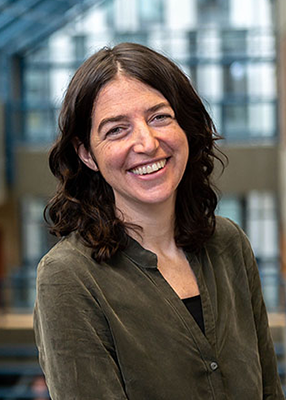
Megan Boler is a Full Professor in the Department of Social Justice Education at the Ontario Institute for Studies in Education (OISE), University of Toronto. She holds affiliate faculty positions at Innis College, the Center for the Study of the United States, Cinema Studies, and the Institute for Women’s and Gender Studies at the same institution. Research focuses on affect, algorithms, and the psychology of micro-targeting in digital propaganda. Current projects include studying emotional expression in social media during elections and developing digital tools against 2SLGBTQI+ hate. Recipient of SSHRC and Canadian Heritage grants for interdisciplinary research on digital dissent and disinformation. Her work spans digital media, democracy, and critical pedagogy, with a strong emphasis on racial and gendered dynamics. Recent publications analyze polarized online discourse and the role of melodrama in political narratives. She has received awards for her contributions to media studies and social justice education. Teaches graduate courses in philosophy, feminist theory, and media studies. Advocates for diverse media diets and privacy measures to counter echo chambers.
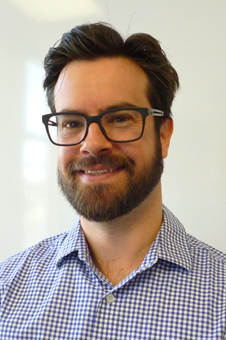
Jian Zhao is an Associate Professor at the University of Waterloo's School of Computer Science, specializing in Information Visualization (InfoVis), Human-Computer Interaction (HCI), and Data Science. With a Ph.D. from the University of Toronto (2016), his research emphasizes interactive visualization techniques, AI integration in design processes, and socio-technical systems. He explores how human-AI collaboration can enhance data analysis, presentation, and user experience in complex systems. Key research areas include: 1) AI-Driven Design (e.g., code generation via sketching, infographic creation), 2) Health Informatics (therapeutic AI tools for autism support), 3) Immersive Technologies (VR/AR interfaces for presentations and education), and 4) Social Computing (remote family communication, multi-modal emoticons). His work bridges technical innovation with human-centered design principles. His publications (2021–2025) reflect a focus on interactive visualization frameworks (e.g., iTrace for cross-view data analysis), AI-human collaboration (CoLadder for hierarchical code editing), and specialized applications like TherAIssist for art therapy and EMooly for autism support. Zhao frequently explores novel interaction modalities , including gesture-based VR interfaces and sketch-based programming tools. He leads projects in computational notebooks (EDAssistant, Slide4N), visual analytics (MissBin for bipartite networks), and neurofeedback training games (Eggly). His work often emphasizes systematic design considerations for missing data, cross-view analysis, and contextual visualization in spatial AR environments.
Maria Camila Ceballos Betancourt is an Assistant Professor (Teaching & Research) in Beef Cattle Welfare at the Faculty of Veterinary Medicine , University of Calgary . She holds a Ph.D. and M.Sc. in Animal Welfare and Behaviour from São Paulo State University (UNESP) , Brazil, and a B.Sc. in Animal Science from National University of Colombia . Her research focuses on animal welfare , human-animal interactions , and cattle temperament , with an emphasis on livestock handling practices and sustainable production systems . Education: B.Sc. in Animal Science, National University of Colombia (2010) M.Sc. in Animal Welfare and Behaviour, UNESP (2014) Ph.D. in Animal Welfare and Behaviour, UNESP (2017) She teaches VETM322: Animal Welfare and Behaviour annually since 2020. Her research integrates animal behavior , physiological and reproductive performance measures , and applied handling interventions . Recent publications address grimace scales for pain assessment , human-animal dynamics in livestock systems , and technological innovations for piglet monitoring , reflecting her interdisciplinary approach between agricultural science , veterinary medicine , and behavioral neuroscience . Her work spans continents, including internships at the Animal Welfare Science Centre (University of Melbourne, Australia) and postdoctoral research at the University of Pennsylvania (USA). While no formal awards are listed, her research has been highlighted in media outlets like Canadian Cattlemen’s The Beef Magazine and CBC Calgary .
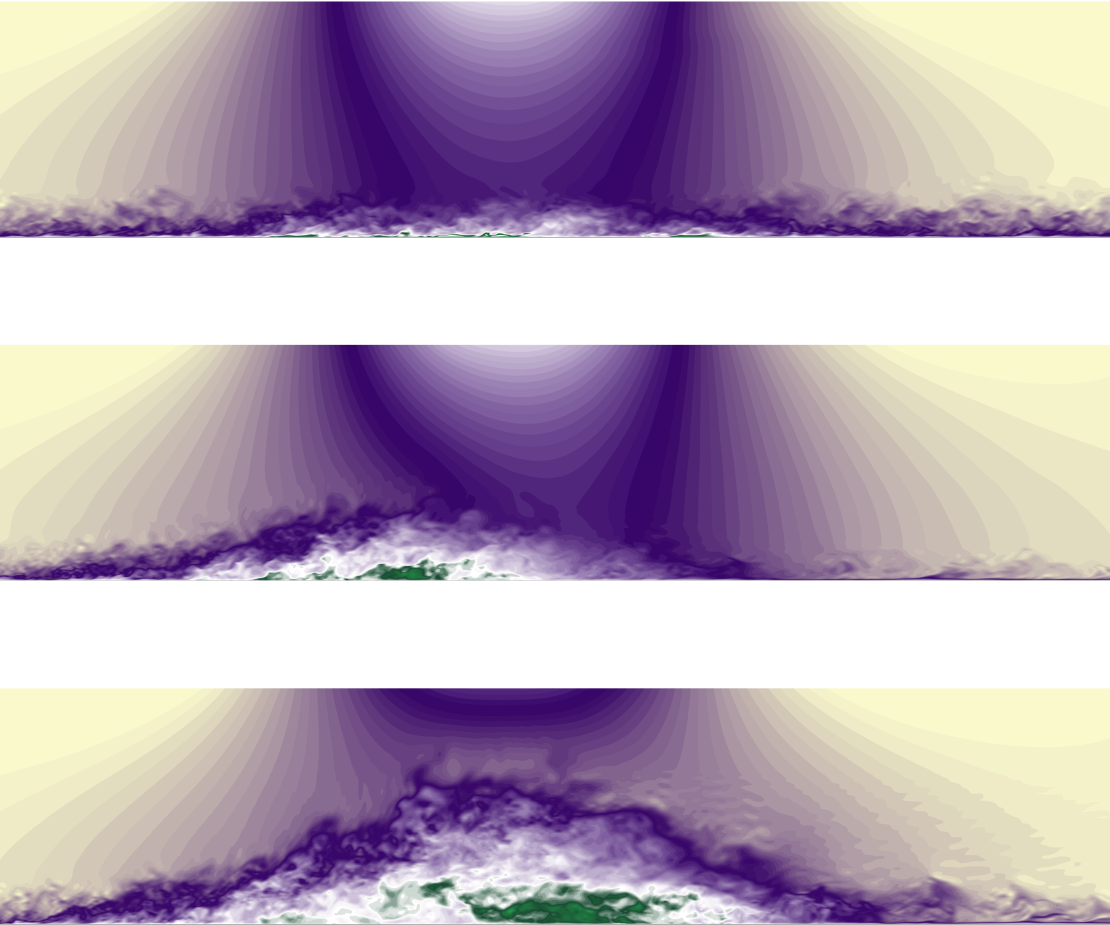
Francesco Ambrogi is an Assistant Professor in the Department of Mechanical and Materials Engineering at Queen's University, where he leads the Fluids, Energy, and Bio-inspired Unsteady Simulations (FEBUS) lab. His research focuses on computational and theoretical studies of turbulent boundary layers under pressure gradients, with applications in unsteady aerodynamics (turbine blades, rotor blades) and biomimicry (swimming/flying animals) for flow control. Dr. Ambrogi received his PhD in Mechanical Engineering from Queen's University in 2024, following a MASc in Energy and Nuclear Engineering from the University of Bologna, Italy (2019), and a BAsc in Mechanical Engineering from the University of Modena and Reggio Emilia, Italy (2015). He previously served as an Adjunct Assistant Professor at Queen's University in 2024 and completed a Postdoctoral Research Fellowship at the University of Waterloo in Mechanical and Mechatronics Engineering. His research program centers on advancing the understanding of turbulent boundary layer physics under unsteady pressure gradients. Dr. Ambrogi's team leverages modern computational tools, particularly large-eddy simulations, to investigate separated turbulent boundary layers and large-scale coherent structures. These structures are pivotal for the transport of mass, momentum, energy, and contaminants in turbulent flows. His work has significant implications for engineering applications such as turbulent mixing, heat diffusion, and contaminant transport in the atmosphere, with direct relevance to turbine blades, rotor blades, and biomimetic systems for flow control. Dr. Ambrogi's recent publications demonstrate a consistent research trajectory focused on unsteady boundary layer separation phenomena, showing increasing sophistication in handling complex unsteady flow physics. His work combines rigorous computational methods with practical applications in aerodynamics and flow control, particularly examining how time-varying freestream conditions affect boundary layer separation and how turbulent kinetic energy is advected in these complex flows. Dr. Ambrogi has secured funding through the Natural Sciences and Engineering Research Council of Canada (NSERC-CRNSG) under the Discovery Grant Program, with computational support provided by the Digital Research Alliance of Canada. His educational initiatives include ARC4CFD, an open-source course designed to bridge the gap between small-scale CFD simulations and large-scale computations on high-performance computing systems. As director of the FEBUS lab at Queen's University, Dr. Ambrogi leads research that combines fundamental fluid dynamics with practical engineering applications. The lab's work spans from theoretical investigations of flow separation mechanisms to the development of computational tools for practical engineering problems in aerospace and bio-inspired systems.
Dr. Lauren Emberson (she/her/hers) is an Associate Professor in the Department of Psychology at the University of British Columbia, Faculty of Arts. She directs the Baby Learning Lab, which is part of UBC's Early Development Research Group, a consortium focused on infant and child development. Prior to her position at UBC, Dr. Emberson was an Assistant Professor at Princeton University where she co-founded and co-directed the Princeton Baby and Princeton Kid Labs. Education: Postdoctoral Associate, University of Rochester (PI Aslin) Ph.D, Cornell University (PIs Amso, Goldstein, Spivey) B.Sc, University of British Columbia Dr. Emberson's research focuses on learning, perception (audition, vision, crossmodal or multisensory), language development, face/object perception, and attention in infants. She investigates these capacities using behavioral and neuroimaging techniques, particularly fNIRS (functional near infrared spectroscopy), working primarily with very young infants (birth through 1 year) and preterm/premature infants. Her work examines how infants' learning capacities contribute to rapid development of perception in ecological contexts, with implications for understanding how early life experiences affect later outcomes. Analysis of Dr. Emberson's recent publications reveals a consistent focus on infant perception, learning mechanisms, and neuroimaging methodology. Her work increasingly incorporates advanced fNIRS techniques while maintaining focus on fundamental questions about how infants learn from their environment. There's a growing emphasis on individual differences, cross-cultural comparisons, and applications to infants facing developmental challenges. Dr. Emberson serves on the editorial board of Infancy (journal of the International Congress of Infancy Studies) and is a consulting editor for the Journal of Cognitive Neuroscience . Her research has been published in top journals including PNAS, Current Biology, Psychological Science, Cognition, Developmental Science, and the Journal of Neuroscience. Dr. Emberson has secured significant research funding from prestigious organizations including the Bill and Melinda Gates Foundation, James S. McDonnell Foundation, Natural Sciences and Engineering Research Council (NSERC), Canadian Institutes of Health Research (CIHR), and the National Institutes of Health (NIH). She collaborates with clinicians at BC Women's and Children's Hospitals to understand how different early life experiences impact learning and brain development. Dr. Emberson is currently accepting graduate students into her research program. The Baby Learning Lab, under Dr. Emberson's direction, is part of UBC's Early Developmental Research Group and collaborates with multiple institutions. The lab strives to provide interactive research experiences for infants and families while advancing scientific understanding of early cognitive development. The lab acknowledges that it operates on the traditional, ancestral, and unceded territory of the xʷməθkʷəy̓əm (Musqueam) people.
Dr. Eunice Eunhee Jang is a Professor in the Department of Applied Psychology and Human Development at the Ontario Institute for Studies in Education (OISE), University of Toronto. Her research focuses on synergistic learner modeling, dynamic assessment systems, and the intersection of language testing with educational measurement. PhD with specializations in language testing, educational measurement, and program evaluation Develops interactive digital assessment interfaces for struggling readers Author of "Focus on Assessment" (2014) and co-author of OECD Reviews on Evaluation and Assessment in Education Research Interests Dr. Jang's work explores prismatic assessment analytics to understand learner potential and predict learning pathways. She integrates natural language processing and machine learning to create diagnostic feedback systems that support cognitive, metacognitive, and affective growth in technology-rich classrooms. Scientific Awards Jacqueline Ross TOEFL Dissertation Award Caroline Clapham IELTS Master’s Award Tatsuoka Measurement Award Professional Contributions She has served on major advisory boards including EQAO provincial assessments and TOEFL Committees of Examiners. Currently, she is an elected board member for the International Language Testing Association and contributes to the Broader Measures of Success Advisory Committee for People for Education.
Steven Livingstone is an Associate Professor in the Department of Computer Science at Ontario Tech University, Faculty of Science. His research focuses on affective data science, applying machine learning and statistical modeling to understand emotion and its disorders. He leads the Affective Data Science Lab (ADSL), specializing in emotion recognition technologies using physiological data like EEG and motion capture. Livingstone holds a PhD from The University of Queensland (2008) and has published over 70 peer-reviewed papers, with over 2,400 citations. His RAVDESS dataset is widely used in speech emotion recognition research. His research interests span data science, affective computing, and music's role in emotion. Recent work emphasizes data provisioning for deep learning applications. Livingstone teaches courses including Scientific Data Analysis and Information Visualization. He actively mentors undergraduate and graduate students in his lab, focusing on research assistantships in emotion technology development. Key contributions include studies on musical tempo’s physiological effects, Parkinson’s disease facial mimicry deficits, and ensemble performance dynamics. His work has been featured in The Atlantic, NBC Today, and on the cover of Informatik Spektrum. The ADSL lab collaborates on projects combining data analytics with human-computer interaction to advance emotion-aware systems.
Dr. Sean K. Carey is a Professor in the School of Earth, Environment and Society at McMaster University, where he directs the Watershed Hydrology Group. His research focuses on hydrological and land surface processes in natural and human-impacted environments, with particular expertise in cold regions hydrology and northern environments. Dr. Carey holds a BSc (Hons) from the University of Guelph (1994), an MSc from McMaster University (1996), and a PhD from McMaster University (2000). His educational background established the foundation for his research in northern hydrology and climate change impacts. His research examines climate change processes and surface water hydrology, particularly in subarctic and alpine environments. Key interests include: Hydrological responses to climate change in cold regions Land surface processes in natural and disturbed landscapes Ecohydrological interactions in northern ecosystems Water resource management in mining-affected regions Long-term watershed monitoring and modeling Dr. Carey's extensive publication record focuses on hydrological processes in changing cold regions, with recent work examining permafrost interactions, watershed biogeochemistry, and ecosystem recovery in reclaimed landscapes. His research consistently addresses climate change impacts on northern water resources. He leads the Watershed Hydrology Group, which conducts field-based research across northern Canada including Yukon Territory and Alberta's oil sands region. Current work investigates the effects of climate warming on hydrological cycles and ecosystem functions in vulnerable northern environments.
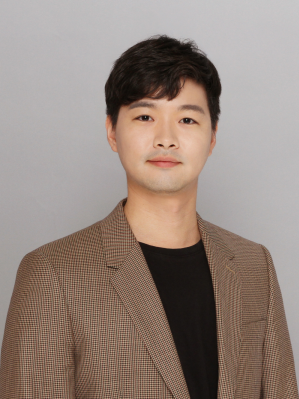
Lawrence Kim is an Assistant Professor at the School of Computing Science, Simon Fraser University. His research focuses on Human-Computer Interaction, Tangible User Interfaces, and Human-Robot Interaction, with teaching interests in Physical Computing and Human-Centered Computing. Education: PhD in Mechanical Engineering (Stanford University, 2020), MS in Mechanical Engineering (Stanford, 2015), and BS in Mechanical Engineering (University of Illinois at Urbana-Champaign, 2013). Research interests emphasize tangible interaction design, swarm robotics, and assistive technologies for special needs populations. His work includes developing interfaces like Woogu for child education and DiminishAR for cognitive enhancement. He directs the Tangent Lab (https://tangent.cs.sfu.ca/), exploring embodied and robotic interaction. Teaching includes courses such as CMPT 263 (Introduction to Human-Centered Computing) and CMPT 415/416 (Special Research Projects). His recent articles address topics like head posture correction in VR, programmable fidgeting with swarm robots, and stress prediction via mouse movements.
Joshua Neves is an Associate Professor at Concordia University , affiliated with the Global Emergent Media (GEM) Lab as its Director. His research spans global and digital media, cultural and political theory, China/Asia studies, and media urbanism, focusing on themes like (over)development, digital ethnography, and informal media networks. Research Keywords: global media, digital culture, cultural theory, political theory, China, Asia, video, television, piracy, urbanism Teaching: Courses include Cinemas of Under/Overdevelopment , Technology and Intimacy , and Media Genealogies of the Digital . His scientific awards include the Canada Research Chair , highlighting his leadership in media studies. Publications such as Technopharmacology (2022) and Underglobalization (2020) reflect his interdisciplinary approach, merging media theory with political and cultural critique. Neves’ recent article trends explore optimization ideologies, pandemic platforms, and the intersection of convenience with inequality. His work bridges media studies with postcolonial theory, emphasizing the geopolitical implications of digital cultures.
Angelica Lim is an Assistant Professor of Professional Practice and Rajan Family Scholar in the School of Computing Science at Simon Fraser University. Her research focuses on Human Robot Interaction, Affective Computing, and Multimodal Perception with applications in healthcare and developmental robotics. She holds a PhD in Informatics from Kyoto University (2014), an M.Sc. from Kyoto University (2012), and a B.Sc. in Computing Science from SFU (2008). Her work bridges robotics and human-centered AI through projects like the ROSIE Lab, exploring emotion-aware systems, socially assistive robots, and VR programs for aging populations. Key contributions include benchmarking emotional speech recognition (BERSting), developing embodied emotion models for robots, and co-designing healthcare technologies with patient partners. Recent publications emphasize ethical AI, multimodal perception systems, and human-robot collaboration in dynamic environments. Teaching includes courses on software engineering, artificial intelligence, and introductory computer science. Her research has been applied in dementia care through VR programs, robotic companionship for older adults, and emotion-aware human-robot communication systems. Current initiatives focus on inclusive HRI design and sim2real methodologies for underrepresented data in affective computing.
Atrisha Sarkar is an Assistant Professor in the Department of Electrical and Computer Engineering at Western University , Canada, and heads the Humans and Autonomous Agents Lab . She is also a faculty member of the Rotman Institute of Philosophy and a Faculty Affiliate at the Schwartz Reisman Institute for Technology and Society . Her research integrates empirical and behavioral game theory with software engineering to design human-centric AI systems that prioritize safety and societal well-being. Education: Atrisha holds a PhD and has previously served as a postdoctoral fellow at the Schwartz Reisman Institute for Technology and Society at the University of Toronto under the supervision of Prof. Gillian Hadfield. Research Focus: Her work centers on human-centric multiagent systems , combining methods from: Behavioral and empirical game theory Software engineering Human-AI and human-robot interaction AI safety and reliability She applies these to domains such as autonomous driving, cooperative AI, and social media dynamics, aiming to ensure AI systems align with human values and societal norms. Publications and Impact: Atrisha has published extensively in top-tier venues including AAAI , AAMAS , ICRA , NeurIPS , and EC . Her work spans from theoretical models of strategic behavior to practical frameworks for validating autonomous systems, with a strong emphasis on real-world applicability. Labs and Teams: She leads the Humans and Autonomous Agents Lab at Western University, where her team focuses on designing AI agents that can cooperate effectively with humans in complex, dynamic environments.
Dr. Elizabeth Dunn is a Professor in the Department of Psychology at the University of British Columbia, Faculty of Arts. Her research examines how time, money, and technology shape human happiness, with a secondary focus on health. She co-authored the book "Happy Money: The Science of Happier Spending" with Dr. Michael Norton and has given talks at TED, PopTech!, and TEDx. Dr. Dunn earned her PhD from the University of Virginia in 2004. Her academic journey has been marked by numerous accolades, including being named a "rising star" by the Chronicle of Higher Education in 2004. Her research primarily focuses on the science of happiness, examining how prosocial spending, time management, and technology use affect well-being. She investigates how to promote rewarding social interactions using technology and how spending decisions shape happiness in everyday life. Her work has appeared in top journals, with three papers published in Science. Recent research has expanded into climate action framing, AI companionship effects, and recycling behavior. Dr. Dunn's research portfolio shows a consistent focus on practical applications of happiness science. Her work has evolved from examining basic happiness mechanisms to applying these principles to contemporary issues like climate change, digital technology impacts, and environmental behavior. She frequently employs experimental methods and large-scale data analysis to understand how small behavioral changes can significantly impact well-being. Royal Society of Canada's College of New Scholars, Artists and Scientists (2015) Society for Personality and Social Psychology Fellow (2014) Social Science and Humanities Research Council Impact Connection Award Finalist (2014, 2015) Killam Faculty Research Fellowship (2011) Killam Faculty Research Prize (2010) Robert E. Knox Master Teaching Award (2010) Canadian Institutes of Health Research New Investigator Award (2010) Mind Gym Academic Prize Honouree (2007) Peter Wall Institute for Advanced Studies – Early Career Scholar (2007) Chronicle of Higher Education Rising Star (2004) Dr. Dunn has supervised numerous graduate students through the UBC Psychology Department's MA and PhD programs. While she is not currently accepting new graduate students for fall 2025, her lab has been instrumental in training the next generation of happiness researchers. Her research has been supported by significant grants including the Killam Faculty Research Fellowship and the Canadian Institutes of Health Research New Investigator Award. She is also a co-author of influential books that translate academic research into practical advice for the public. Dr. Dunn leads an active research laboratory focused on happiness and well-being. Her team conducts experimental research examining how time, money, and technology shape human happiness. The lab has expanded its focus to include contemporary issues such as the impact of AI on social connection, climate action framing, and sustainable behavior. The lab's work combines rigorous experimental methodology with real-world applications to help people optimize their pursuit of happiness.
Kristin A Andrews serves as Professor of Philosophy and York Research Chair in Animal Minds at York University in Toronto, Canada. She is a CIFAR Fellow in the Future Flourishing program and will join the CUNY Graduate Center as Professor in Fall 2025. Her interdisciplinary work bridges philosophy, cognitive science, and animal ethics to investigate nonhuman animal capacities. Her educational background includes a PhD in Philosophy from the University of Minnesota and an MA in Philosophy from Western Michigan University. Professor Andrews' research centers on the cognitive, affective, social, and cultural capacities of nonhuman animals. She pioneers frameworks for identifying social norms in animal communities, arguing these predate human language. Her work spans animal consciousness, morality, legal personhood, and conservation implications—challenging anthropocentric views through empirical and theoretical analysis. She actively develops implications for animal welfare policy and multispecies ethics. Recent publications (2023-2025) reveal three dominant trends: (1) Advocating for the 'All Animals Are Conscious' hypothesis to shift consciousness science's null hypothesis; (2) Developing dimensional frameworks for cross-species normativity studies; (3) Addressing methodological biases like the WEIRD problem in comparative cognition. Her interdisciplinary approach integrates philosophy, primatology, and cognitive neuroscience. Key honors include: York Research Chair in Animal Minds CIFAR Fellowship (Future Flourishing program) Royal Society of Canada’s College of New Scholars membership (2015) Visiting Professorships at LSE (2021-2022), Ruhr-Universität Bochum (2022-2025), and Università Degli Studi di Cagliari (2023) Professor Andrews coordinates the Greater Toronto Area Animal Cognition Discussion Group and serves on the Borneo Orangutan Society Canada board. She co-authored the New York Declaration on Animal Consciousness—endorsed by 39 scholars—and engages public discourse through media like TVO interviews. Her grant activity focuses on CIFAR-funded projects examining animal social cognition and norm evolution. She leads collaborative initiatives including the 'week of animal social norms' research with international teams studying chimpanzees, dolphins, and rats. Her upcoming book on social norm evolution and ongoing work with the OCTOPUS Act advocacy group demonstrate active research expansion into policy applications.
Jennifer Jakobi is a Professor at the School of Health and Exercise Sciences , Faculty of Health and Social Development, UBC Okanagan. She serves as Director of the Institute for Healthy Living and Chronic Disease Prevention and holds the NSERC Chair for Women in Science and Engineering . Her work bridges neuromuscular physiology and STEM diversity initiatives . Research Themes : Frailty, aging in place, sex-differential muscle function, and motor unit modulation. Labs : Leads the Healthy Exercise and Aging Lab (HEAL) and coordinates the iSTAND diversity program. Publications focus on aging biomechanics, cannabis impacts in elderly populations, social VR interventions, and pandemic-era health behaviors. Her NSERC-funded basic research examines cortical-spinal pathways, while UBCO grants support applied studies on vibration therapy and assistive technologies. Scientific Contributions : Identified sex-specific force steadiness mechanisms Developed prehabilitation frameworks for functional independence Advocated for gender-inclusive STEM education Outreach includes youth STEM camps, equity workshops, and community partnerships on aging-in-place policies. Current research explores VR-based social engagement and cannabis safety protocols for seniors.