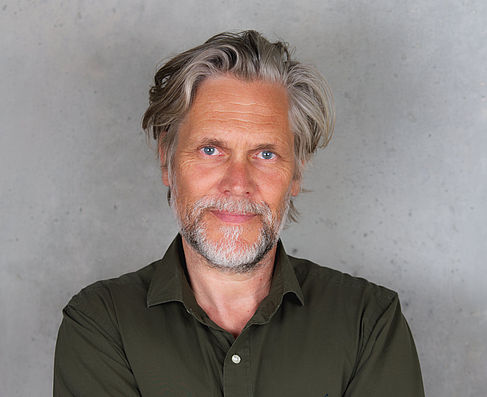
Thomas Bremer is a Professor at HTW Berlin's School of Design and Culture, Department of Game Design. He serves as Program Spokesperson for the Game Design program, Laboratory Director, and member of multiple committees including the Department Council and Examination Board. His research focuses on Game Design, Virtual Reality, Augmented Reality, and Technical System Architectures . He pioneered the GAME CHANGER research cluster in 2007 and co-founded the DE:HIVE Institute in 2016. His work emphasizes visionary game concepts and the aesthetic potential of games as 21st-century cultural expressions. Prof. Bremer initiated the Game Design degree program in 2008 and has developed it continuously since its 2009 launch. His industry collaborations span institutions like the Prussian Cultural Heritage Foundation and corporations including Volkswagen AG and Deutsche Telekom AG. He holds office hours on Tuesdays from 5:00 PM to 6:00 PM during lecture periods.
Prof. Dr. Sebastian Conrad holds the Chair of Modern History at Freie Universität Berlin , specializing in Global History , (Post-)colonial History , and Intellectual History . He joined the faculty in 2010 after teaching at European University Institute in Florence and serving as visiting scholar at institutions including NYU Abu Dhabi and The New School, New York. Director of MA "Global History" (FU Berlin/Humboldt University joint program) Director of Graduate School "Global Intellectual History" Principal Investigator, Cluster of Excellence "Temporal Communities" (2024) Research Interests focus on transnational historical frameworks , globalization of historical narratives , and postcolonial historiography . His latest book Die Königin: Nofretetes globale Karriere (2024) analyzes cultural globalization through Nefertiti's iconography, while his current project explores global history of bodily aesthetics and identity formation since the 19th century. Recent Publications include: 2022: "Empire and Nationalism" (American Historical Review) 2021: "Globalizing the Beautiful Body" (Journal of World History) 2020: "Greek in Their Own Way" (American Historical Review) Scientific Honors : Elected member, Berlin-Brandenburg Academy of Sciences and Humanities (2024) Elected member, Academia Europaea (2024) Finalist, German/NDR non-fiction book awards (2024) for Nefertiti study Academic Leadership includes editorial roles at Geschichte und Gesellschaft , Past & Present , and Globalgeschichte book series (Campus Verlag). His work bridges historical analysis with contemporary debates on memory, identity, and global cultural dynamics.
Max Planck Institute for Empirical AestheticsGermany
Jan Jokisch is a Researcher and PhD student at the Max Planck Institute for Empirical Aesthetics in Frankfurt am Main, Germany, affiliated with the Heisenberg research group. His academic background includes a Master's in Comparative Literature from Johannes Gutenberg University Mainz and the University of Massachusetts Amherst, and a Bachelor's in Comparative Literature and Philosophy from Mainz. He has lectured in German language and literature at Argentine universities and served as a translator for the DEFA Film Library. His research focuses on drama history, quantitative and digital literary studies, and methodologies in the humanities, with current collaboration on the DFG-funded 'Forager Folklore Database (FFDB)' project. Education highlights include a thesis on 'Epistemological Horror in Literature' (2021) and a BA thesis reinterpreting Shklovsky's literary theory through Heidegger's phenomenology (2018). Jokisch has been recognized with DAAD scholarships (2019, 2021) and the Gutenberg Lehrkolleg Award (2018). He has authored and edited conference proceedings, including works on distant reading methodologies and interdisciplinary language studies. His academic work bridges computational analysis with traditional humanities, emphasizing the role of technology in literary research. Collaborations and editorial roles reflect his commitment to fostering international student scholarship and innovative research practices.
Dr. Victor Kempf is a postdoctoral researcher at the Institut für Philosophie , Humboldt-Universität zu Berlin, since March 2025. He completed his PhD at Goethe-Universität Frankfurt in 2017 and focuses on social and political philosophy from a critical theory perspective.
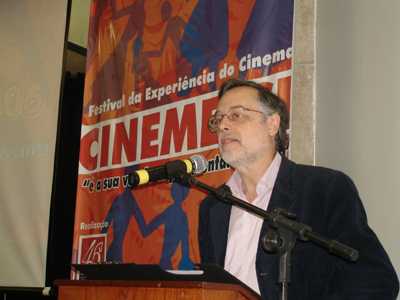
Prof. Ismail Xavier is a prominent Brazilian film scholar affiliated with the Institute of Film and Television at Universidade de São Paulo. He has served as a visiting professor at New York University, Sorbonne Nouvelle in Paris, and the University of Chicago. His academic work focuses on the intersection of aesthetics, politics, and cultural identity in Brazilian cinema, particularly Cinema Novo and its contemporary evolution. Xavier's research examines the mythical role of the Sertão (Brazilian backlands) in shaping national identity and its connection to migration narratives. His seminal book Allegories of Underdevelopment (1997) remains a foundational text in Brazilian modern cinema studies. At the Center for Intercultural Studies (ZIS) in Mainz, he delivered a guest lecture exploring how Cinema Novo's legacy informs contemporary Brazilian films through themes of migration and cultural transformation. As a key figure in film historiography, Xavier has edited critical volumes on cinema history and theory while analyzing the interplay between film movements like Tropicalismo and broader sociocultural contexts. His work bridges cinematic analysis with intercultural studies, emphasizing visual representation in postcolonial frameworks.
Professor Andreas Mildner, born in 1984, serves as Professor of Harp and Deputy Chair of the University Council at the University of Music Würzburg. He is also the spokesperson for the Harp Department at the institution. Mildner is recognized as one of the most interesting harpists of his generation, known for his "technical brilliance" and "incredibly aesthetic play with timbres." He discovered his passion for the harp at age six and began formal training at 14 in Gisèle Herbet's harp class, with further instruction from Ursula Holliger, Frederique Cambreling, and Marie-Pierre Langlamet. After graduating with honors in 2007, he completed his master class studies in 2009. Mildner has established himself as a much sought-after soloist both in Germany and internationally. His solo debut came at age 17 with the Czech Chamber Philharmonic Orchestra in Prague, and he has since performed with renowned orchestras including the WDR and SWR Symphony Orchestras and the Bremen Philharmonic. First prize at the 6th International Harp Contest Arpista Ludovico in Madrid Two special prizes for best interpretation of final concertos Bavarian Cultural Prize Bavarian Art Prize Scholarships from multiple prestigious foundations Mildner maintains an active performance schedule, regularly appearing at major music festivals worldwide including the Mecklenburg-Vorpommern Festival, Ludwigsburg Palace Festival, Schleswig-Holstein Music Festival, Central Europe Festival, World Harp Congress, Lucerne Festival, and International Harp Festival Rio de Janeiro.
Prof. Mark Heitmann is a Professor of Marketing & Customer Insight at the University of Hamburg Business School. He holds a visiting appointment at Nova School of Business and Economics. His research focuses on AI-driven marketing strategies, social media analytics, brand equity, and consumer decision-making. He has held academic roles at institutions including the University of St. Gallen and Christian-Albrechts-University in Kiel before joining Hamburg in 2011. Academic Career: Holds a PhD (2004) and post-doctoral Habilitation (2007) from the University of St. Gallen. Visiting researcher at Columbia University and the Max Planck Institute for Human Development. Research Interests: Applications of artificial intelligence in marketing Social media and digital transformation Ethical consumer behavior Brand self-expression and visual design Marketing technology (MarTech) innovations Key Achievements: Over 20 peer-reviewed publications in top journals like Journal of Marketing Research and Harvard Business Review . Award-winning research includes the MSI/H. Paul Root Award and IJRM-EMAC Best Article Award. Active in translating research into scalable commercial solutions through software-as-a-service ventures. Team & Collaborations: Leads a research team including M.Sc. candidates Sammar Rath, Julia Rosada, Maximilian Witte, Tijmen Jansen, Claus Hegmann-Napp, and Magdalena Heynicke. Engages in interdisciplinary projects with industry partners.
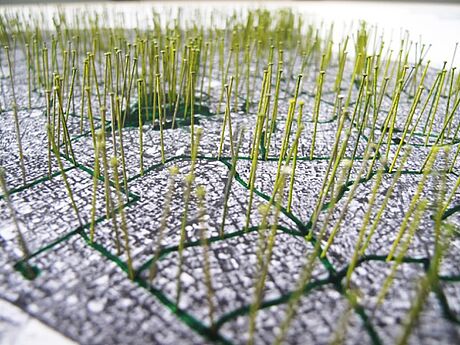
Prof. Antje Stokman is a Professor of Landscape Architecture and Landscape Planning at HafenCity University Hamburg. Her department researches and designs landscape-, nature-, and water-related transformation processes, with teaching and research focused on the design and collaborative creation of urban landscapes in their dynamic interactions between natural and human habitats. Her research interests include: Landscape Architecture and Urban Design Climate-Adapted Urban Landscapes Blue-Green Infrastructure Water-sensitive Urban Design Linear Infrastructure Landscapes Urban Transformation Processes Prof. Stokman has led several significant research projects including the LILAS research network (Linear Infrastructure Landscapes as Open Spaces for the City in Climate Change), the City on the Blue Belt project, and the Blue-Green Infrastructure Dialogue Process. Her recent publications focus on transforming urban linear infrastructure landscapes and developing water development corridors along federal waterways as open space potential for urban green-blue infrastructure. Scientific awards: City of Hamburg's Teaching Prize (Hamburg Teaching Award) Prof. Stokman supervises doctoral projects including Katarina Bajc's work on "Perception and Design of Ecological Processes in Landscape Architecture" and Anne Kittel's research on "The Transformation of Metropolitan Landscapes." She has received research funding from various sources including the Federal Environment Agency, BMUV, BMBF, and EU Horizon 2020. She co-leads the Blue-Green Infrastructure Lab (BGI-Lab) with Prof. Wolfgang Dickhaut, which focuses on interdisciplinary research at the intersection of environmentally sound urban planning and landscape architecture.
Prof. Dr. Andreas Butz is a Full Professor and Chair for Human-Computer Interaction at the Department for Informatics, Ludwig-Maximilians-Universität München (LMU Munich). He leads the Media Informatics Group, focusing on innovative interaction techniques and interfaces in immersive environments like VR/AR, automotive systems, and smart spaces. His research emphasizes perceptual user interfaces, social robotics, and designing systems that balance invisibility with transparency. Key research areas include: Virtual/Augmented Reality interfaces for productivity and social interaction AI-driven decision support in safety-critical domains (aviation, healthcare) Haptic and wearable interaction technologies Automotive UI design for driver assistance systems Principles of explainable AI and human-AI collaboration His work bridges theory and practice through projects like: VR-based movement training systems AI trust calibration mechanisms Multi-modal interaction frameworks for automotive environments Systems for analyzing long-term music listening behavior Recent articles explore topics ranging from AI support in pilot decision-making to haptic wearables and creative writing interfaces. His team collaborates with industry partners on electric vehicle information systems and in-car interaction challenges.
Mei Mei Rado is an Assistant Professor at Bard Graduate Center, specializing in textile and dress history with a focus on China and France (18th–20th centuries). Her work connects global networks to local cultural systems through material analysis and cross-cultural interpretation. Education: PhD, Bard Graduate Center MA, University of Chicago BA, Nanjing University Research Interests: She explores intercultural textile exchanges, particularly European-Chinese interactions, rococo style diffusion, and Qing court arts. Her forthcoming book The Empire’s New Cloth (Yale, 2025) examines European textiles in Qing imperial contexts. Publications: Recent works include analyses of 18th-century French drapery, Qing cosmopolitanism through Japanese screens, and lamé textiles in modern fashion. Her research spans material culture, cross-cultural aesthetics, and historical networks. Curatorial Practice: Formerly Associate Curator at LACMA, she pioneered modern Chinese fashion collections. Collaborations with European/American institutions continue through her current projects on Edo-period textiles and light in fashion history.
Rhenish Friedrich Wilhelm University of BonnGermany
Prof. Cornelia Richter is a Professor of Systematic Theology and Hermeneutics at the Protestant Theological Faculty of the University of Bonn since 2012. She serves as Chair of the Senate of the University of Bonn since 2024 and has held leadership roles such as Dean of the Faculty of Protestant Theology (2020–2024). Born in 1970, she earned her doctorate (summa cum laude) from the University of Marburg in 2002 and habilitation in 2010. Her research focuses on Philosophy of Religion, Hermeneutics, and Resilience in Religion and Spirituality, notably leading the DFG-funded project FOR 2686. She has held visiting professorships in Zurich and Giessen and contributed to theology through editorial roles in journals like International Journal of Philosophy and Theology . Her work bridges theology with interdisciplinary studies, addressing modern challenges like pandemic resilience and interfaith dialogue. Education: PhD (2002), Habilitation (2010) – University of Marburg Studies in Protestant Theology and Philosophy – Universities of Vienna and Munich Research Fellowship – Center for Subjectivity Research, Copenhagen (2003–2005) Research Interests: Her work explores hermeneutical approaches to religious meaning, resilience in crises, and the interplay between theology and modern challenges. Key areas include: - Critical analysis of resilience frameworks in theology and philosophy - Theological engagement with modern existential issues (e.g., hope, fear, powerlessness) - Interdisciplinary dialogue on religion’s role in human sciences. - Resilience studies in healthcare and pandemic contexts. Grants & Projects: DFG-FOR 2686 “Resilience in Religion and Spirituality” (2019–2022) Editorial leadership in multiple theological journals and book series Co-director of the Bonn Institute of Hermeneutics Labs/Teams: Department of Systematic Theology, University of Bonn; interdisciplinary research groups on resilience and theology.
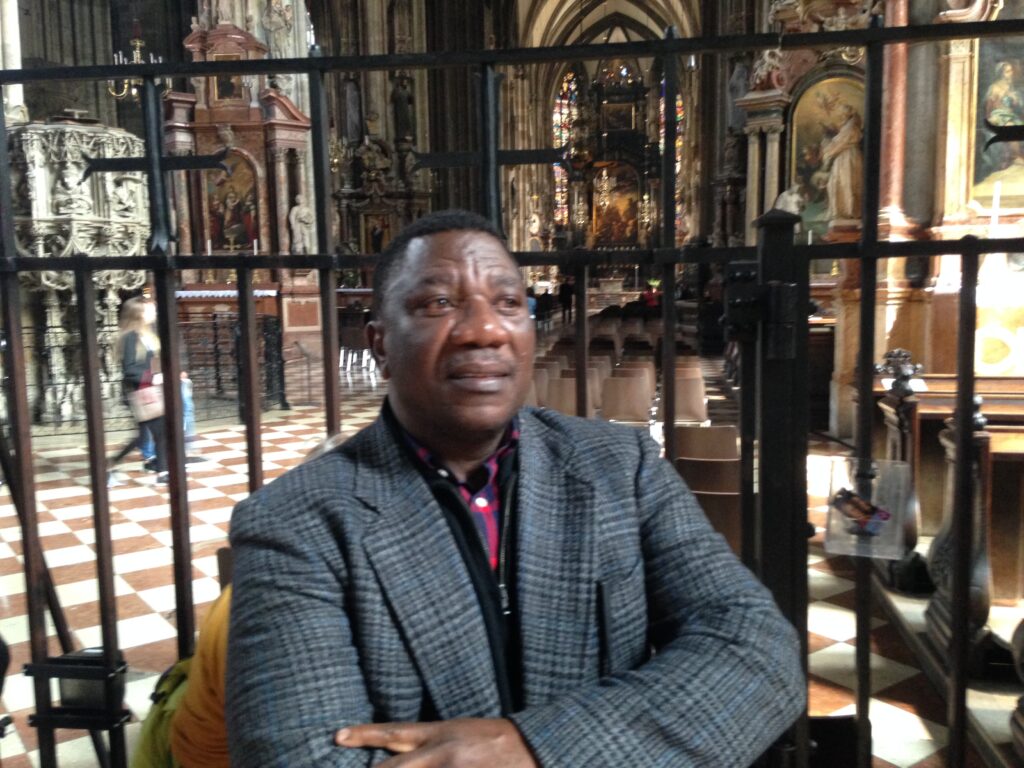
Onookome Okome is a Professor in the Department of English and Film Studies at the University of Alberta. He holds MA and PhD degrees from the University of Ibadan, Nigeria. Previously at the University of Calabar (1989-2002), he became a full professor in 2008. He is an External Fellow (FRESCO Programme, 2021-2025) and recipient of the Alexander Humboldt Research Prize (2010). His research focuses on African literature, cinema (especially Nollywood), postcolonial theory, and critical race studies. Education: MA and PhD from University of Ibadan, Nigeria. Professional affiliations include collaborations with institutions in Germany, the UK, and York University, Canada. He co-edited Popular Culture in Africa: The Episteme of the Everyday (2014) with Stephanie Newell and Global Nollywood (2013) with Matthias Krings. Research emphasizes African popular culture's role in understanding everyday life, with notable work on Karin Barber's legacy and Nollywood's cultural significance. Current projects include a book on Nollywood's textual and contextual dynamics. Teaching spans race and literature, postcolonial theory, and African cinema at graduate/undergraduate levels. Awards: Alexander Humboldt Research Prize (2010), Leverhulme Professorship (unspecified period). Collaborations include the "Expressive Cultures of the African Diaspora" project with York University researchers.
Max Planck Institute for Empirical AestheticsGermany
Professor Emily S. Cross is a cognitive and social neuroscientist holding dual appointments at the University of Glasgow's School of Psychology & Neuroscience (UK) and Western Sydney University's MARCS Institute (Australia). She directs the Social Brain in Action Laboratory (SoBA), specializing in how embodied experiences shape social perception. Cross earned a BA in psychology and dance from Pomona College, MSc from University of Otago as a Fulbright Fellow, and PhD in cognitive neuroscience from Dartmouth College, followed by postdoctoral training at University of Nottingham and Max Planck Institute. Her research explores experience-dependent plasticity through dance, robotics, and neuroimaging techniques (fMRI, TMS), focusing on four key areas: neural signatures of embodied expertise, neuroaesthetics, visual learning across lifespan, and social engagement with robots. This interdisciplinary work bridges neuroscience, performing arts, and robotics. Cross's research shows strong focus on human-robot interaction dynamics, cultural perceptions of robotics, and the neural correlates of aesthetic experiences. Recent work investigates how social experience shapes human-robot interaction, cross-cultural differences in robot acceptance, and computational approaches to movement analysis. Publications consistently demonstrate methodological innovation through VR, economic games, and large-scale motion capture libraries. Honors & Awards: Jacob Brownowski Award (British Science Association, 2017) Philip Leverhulme Prize in Psychology (2018) World's 50 Most Renowned Women in Robotics (2020) Elected member: Young Academy of Europe Elected member: Royal Society of Edinburgh's Young Academy of Scotland Her ERC Starting Grant funds groundbreaking work on human-robot interaction. Cross leads the Social Brain in Action Lab with focus on mentoring next-generation scientists and research ethics training. The lab employs neuroimaging, training paradigms, and diverse methodologies to study action observation across dance, music, and robotics domains.
Prof. Dr. Sami Khatib is a Professor for Political and Social Aesthetics at Karlsruhe University of Arts and Design since spring 2025, where he also serves as Vice-Rector for International Affairs and Cooperations. His academic career spans teaching at institutions including the American University of Beirut, American University in Cairo, Leuphana University of Lüneburg, Academy of Fine Arts Vienna, and Free University of Berlin. His research focuses on critical theory from the Global South, aesthetic theory, and continental philosophy. Key publication projects include the 2025 title Real Abstraction: The Birth of Aesthetics from the Spirit of Capitalism , and co-editing the 2025 posthumous collection of Irving Wohlfarth’s essays on Walter Benjamin. His 2013 monograph Teleology without End explores Benjamin’s reconfiguration of messianic thought. Khatib’s work bridges traditional arts with media technology, and he contributes to international academic collaborations through his administrative leadership. Current research trends show focus on capitalist systems, theological materialism, and critical theory methodologies.
Catholic University of Eichstätt-IngolstadtGermany
Prof. Dr. Isabelle Stauffer holds the Professorship for Modern German Literature at the Catholic University of Eichstätt-Ingolstadt , where she also serves as Vice Dean of the Faculty of Languages and Literature and Deputy Director of the Center for Religion, Church, and Society in Change (ZRKG) . She co-leads the ZRKG Research Field III on "Religiosity in Contemporary Transformation Processes" and examines intersections of literature with gender/queer studies , postcolonial theory , and cultural history of gallantry . Studied at University of Zurich and Humboldt University Berlin Doctorate (2006) and Habilitation (2015) from Johannes Gutenberg University Mainz Previously held positions at Goethe University Frankfurt, Philipps University Marburg, and Saarland University Her research spans early modern to contemporary German literature , with specializations in intermediality (film, digital media), epistolary culture , and dandyism/fashion history . Current projects include organizing the 2025 IVG congress panel "Figures of Crisis – Crisis of the Figure" and editing the complete works of Aurora von Königsmarck. She has published extensively on topics including: Postcolonial transformations in early modern texts Religious discourse in contemporary literature Intermedia reflexivity in digital age narratives Queer performativity in historical and modern contexts Translation as cultural transfer mechanism Surface aesthetics in cinema and art