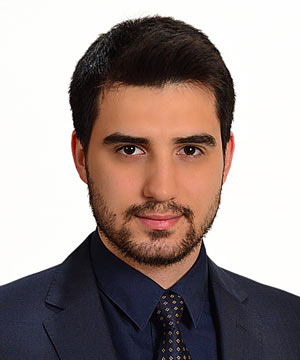
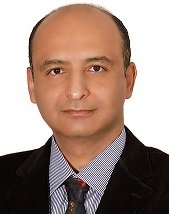
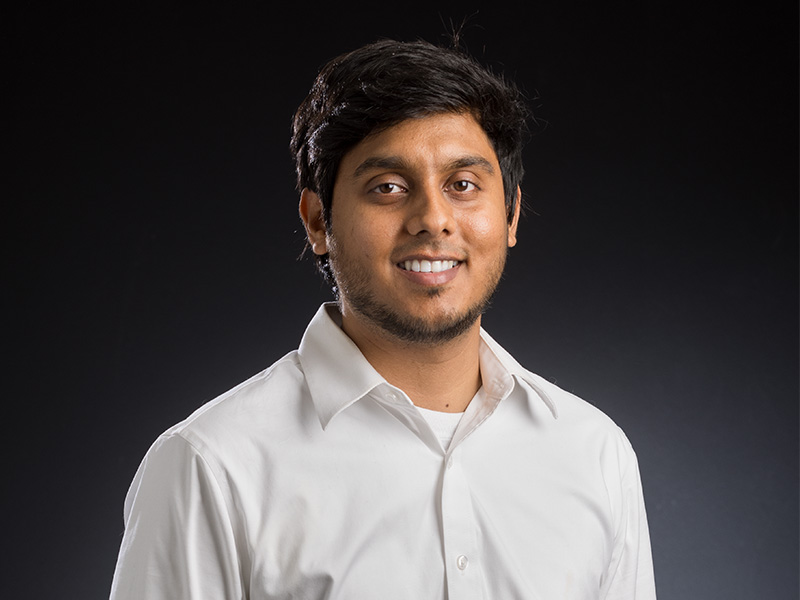
Igor Bargatin is an Assistant Professor of Mechanical Engineering and Applied Mechanics at the University of Pennsylvania's School of Engineering and Applied Science. His research focuses on micro- and nanoelectromechanical systems (MEMS/NEMS) for energy conversion, optics, and smart materials. He develops innovative devices such as thermionic energy converters and photophoretic flyers, leveraging interdisciplinary approaches across mechanical engineering, materials science, and applied physics. Research Interests: Photophoretic propulsion and near-space flight systems Ultralight robust materials (e.g., nanocardboard) Thermionic energy conversion and surface engineering MEMS/NEMS fabrication and microscale devices Key Contributions: Developed lightweight photophoretic flyers capable of carrying payloads in the mesosphere Pioneered tunable work function surfaces for high-efficiency thermionic converters Advanced mechanical metamaterials with unprecedented strength-to-weight ratios Awards & Grants: NSF CAREER Award (2019) for thermal transport research in metamaterials Labs & Affiliations: Center for Environmental Building & Design (collaborator) University of Pennsylvania Nanofabrication Facility
Mingyang Tan is a Postdoctoral Research Associate at the Department of Mechanical and Industrial Engineering, Northeastern University. Their research focuses on intersections of biomedical engineering, rheology, 3D printing, and materials science, with applications in pharmaceutical manufacturing and biofluid dynamics. Role: Postdoctoral Research Associate Department: Mechanical and Industrial Engineering Email: mi.tan@northeastern.edu Research Interests Mingyang Tan's work explores rheological properties of complex systems, including 3D bioprinting for tissue engineering, magnetic particle dynamics in fluids, and microrheology of biofluids. Their studies address biomedical applications like plasma coagulation and osteochondral graft development, alongside innovations in pharmaceutical manufacturing using binder jetting 3D printing . Publication Trends Recent articles highlight advances in additive manufacturing , biomaterials , and microrheology , particularly for medical and pharmaceutical contexts. Key themes include magnetic alignment of particles, sustained drug delivery , and anisotropic suspensions . The work spans computational simulations, experimental validations, and translational applications. Scientific Awards Advising & Grants No formal advising or grant information is explicitly mentioned in the provided text. Labs & Collaborations Details about specific labs, teams, or collaborative networks are unavailable in the provided materials.
Semih Doğu is an Assistant Professor at the Department of Electronics and Communication Engineering , Faculty of Electrical and Electronics Engineering , Istanbul Technical University . His research focuses on Electromagnetic Theory , Microwave Imaging , Inverse Scattering Problems , and Antenna Design . Doctorate: Istanbul Technical University (2023) Master's: Istanbul Technical University (2017) Bachelor's: Yıldız Technical University (2015) His research interests emphasize microwave-based diagnostics, including: Microwave imaging for breast cancer detection Antenna optimization for medical and security applications Inverse problem solving in electromagnetic systems Through-the-wall imaging for surveillance Semih Doğu's recent publications demonstrate his expertise in: Neural networks for temperature monitoring in hyperthermia Ku/Ka-band antenna designs for satellite systems Microwave salinity sensing Algorithm development for improved imaging accuracy He contributes to the ITU Electromagnetics Research Group , participating in projects like: Microwave Brain and Breast Imaging Device Development Compressed Sensing for Energy-Efficient Communication Microwave Tissue Analysis
Role & Affiliation: Jean-Christophe BACH is an Associate Professor at IMT Atlantique's Computer Science department since 2015. He leads the PASS research group (IRISA) and focuses on software security, model-driven engineering, and cybersecurity applications. Previously, he held roles as a teaching assistant (ATER) at University of Lille (2014–2015) and completed his PhD on model transformations at Inria/LORIA under Pierre-Étienne Moreau and Marc Pantel (defended 2014). Research Interests: His work centers on improving software trustworthiness through 'security by design' principles. Key areas include model federation, formal methods for software verification, transformation traceability, and cybersecurity in industrial systems. He actively contributes to frameworks like Openflexo and PAMELA, emphasizing practical tooling for secure systems engineering. Teaching & Education: Teaches advanced topics such as object-oriented design, functional programming (OCaml), concurrency modeling, and cybersecurity. Supervises student projects on Openflexo, game development, and network security (IPv6/Tor). Courses include INF301, INF447, and others. Labs & Collaborations: Engaged with IRISA and Lab-STICC research centers. Collaborates on projects like the European Space Agency's SSE4Space framework for secure space missions and the Quarteft project (aerospace software). Active in open-source initiatives and scientific mediation for K-12 programming education.
Dr. Ivana Kovacevic is a Lecturer at the Department of Information Technology and Electrical Engineering at ETH Zürich. Her research focuses on power electronics, semiconductor device modeling, and electromagnetic analysis of wide bandgap devices. ETH Zürich, Department of Information Technology and Electrical Engineering Contact: kovacevic@aps.ee.ethz.ch Her research explores SiC power MOSFETs, emphasizing their dynamic performance, reliability, and optimization through advanced modeling techniques like the Partial Element Equivalent Circuit (PEEC) method. She investigates parasitic extraction, thermal behavior, and stability issues in power modules, contributing to design improvements for high-efficiency systems. Her publications highlight trends in electromagnetic modeling, device-circuit interactions, and reliability analysis under extreme conditions. Key subfields include gate resistance dynamics, frequency-dependent capacitances, and multi-chip module design. Current projects involve virtual prototyping for power electronics and mission profile-based optimization of wearable power systems.
Matthias Heller is a Professor at Technische Universität München (TUM) and holds the title of Honorary Professor for Highly Augmented Aircraft Systems. He is affiliated with the Department of Flight Mechanics & Performance and has been a Rudolf Diesel Industry Fellow at TUM-IAS since 2010. His research focuses on flight dynamics, robust control systems, and handling qualities analysis for advanced aircraft configurations. Heller has extensive industry experience with Airbus Defence & Space, where he contributed to flight control system development and stability analysis of hypersonic vehicles. Education: 1987–1992: Aerospace Engineering, TUM (Diplom Ingenieur) 1999: Dr.-Ing. (summa cum laude) from TUM, Dissertation: “Analysis and Robust Control of the Lateral Dynamics of Hypersonic Vehicles” Research Interests: Flight dynamics modeling & simulation Robust flight control system design Pilot-in-the-loop oscillation (PIO) prevention Handling qualities assessment for autonomous systems Stability analysis of innovative aircraft configurations Key Achievements: Willy Messerschmitt Prize (2001) for contributions to flight dynamics research Founder of the Focus Group “Aircraft Stability and Control” at TUM-IAS Leading work on UAV control systems and hybrid flight control architectures Labs & Collaborations: Active in the Safe Adaptive Dependable Aerospace Systems (SADAS) Focus Group, focusing on dynamics and control of autonomous flight systems. Previously led the Aircraft Stability and Control group.
R. Vos is an academic researcher affiliated with Delft University of Technology and holds an external role as Short Course Instructor at The University of Kansas since March 2014. Their primary academic home is the Faculty of Aerospace Engineering at Delft, specializing in Flight Performance and Propulsion within the Department of Flight Performance and Propulsion. Educational background includes a BSc and MSc in Aerospace Engineering from Delft University of Technology (2000–2005) and a PhD in Mechanics and Applications of Pressure Adaptive Honeycomb from the University of Kansas (2006–2009). Research focuses on aircraft design, aerodynamics, and sustainable aviation technologies, notably leading the Flying V project aiming to revolutionize subsonic transport efficiency. Key interests also include mobility system futures and nonlinear optimization in aircraft design. Received prestigious awards including the AIAA Aircraft Design Best Paper Award (2018 & 2022), Abe M. Zarem Award (2007), and AIAA Associate Fellow designation (2019). Active in collaborative projects like MANTA (Movables for Next generation Aircraft) and has delivered talks on sustainable aviation innovations at international forums. Media engagements include discussions on Flying V advancements and Dutch mobility scenarios for 2050.
John Junkins is a distinguished academic and researcher in aerospace engineering, holding the Royce E. Wisenbaker Chair and serving as Director of the Hagler Institute for Advanced Study at Texas A&M University's College of Engineering. He has been affiliated with the Department of Aerospace Engineering since at least 1993. Junkins' roles include being a Distinguished Professor (mapped to Professor rank), a Regents Professor, and an Honorary Fellow of the American Institute of Aeronautics and Astronautics (AIAA). His educational background includes a B.A.E. from Auburn University (1965), and M.S. and Ph.D. in Aerospace Engineering from UCLA (1967, 1969). His research focuses on spacecraft dynamics and control, guidance systems, analytical methods, and smart sensor technologies. Notable contributions include work on trajectory optimization, orbital mechanics, and nonlinear control systems. Key awards include the Kay Bailey Hutchinson Distinguished Service Award (2022), Robert H. Goddard Astronautics Award (2019), and TYCHO BRAHE Medal (2004). His publications span textbooks like 'Analytical Mechanics of Aerospace Systems' and pioneering research in astrodynamics. Junkins' work emphasizes interdisciplinary collaboration through the Hagler Institute, advancing computational methods for space mission design and autonomous systems.
Dr. Hamid Zargariasl is a Researcher in the Computer Engineering Department at BTU Cottbus-Senftenberg. His work focuses on IoT systems, RFID technology, social network analysis, and distributed computing. He leads the UBICO Team and contributes to the Computer Engineering Group, exploring interdisciplinary applications of telecommunications and sensor networks. His research integrates theoretical frameworks with practical implementations, addressing challenges in smart city infrastructure, healthcare systems, and educational technology. Key research areas include optimizing RFID and sensor performance, analyzing social object interactions in IoT networks, and developing protocols for distributed computing. His experimental studies bridge academic performance metrics with mobile social network dynamics, and he has pioneered methodologies for network integration and centrality analysis in evolving systems. Publications span 15 years (2009–2024), emphasizing real-world data analysis and system optimization. Notable work includes enhancing digital thread functionality in aerospace engineering and evaluating smart parking sensor technologies. His contributions inform both technical systems and socio-economic policy recommendations. Dr. Zargariasl collaborates within interdisciplinary teams, contributing to the BTU's research initiatives while maintaining active engagement in the academic community through lectures and student mentorship.
Dr. Mohammad Naraghi is a Professor in the Department of Mechanical Engineering at Manhattan University, specializing in thermal analysis of rocket engines, sustainable building systems, and radiative heat transfer. His research focuses on rocket thermal evaluation (RTE), solar energy optimization, and crystal growth processes. He holds a PhD from the University of Akron, MS from the University of Wales, and BS from the University of Tehran. Research areas include: Thermal modeling of regeneratively cooled rocket engines Radiative heat transfer in enclosures and aerospace systems Solar energy systems optimization (panel orientation, photovoltaic plants) Energy dynamics of green buildings and data centers CFD analysis of fluid flow and heat transfer in propulsion systems His 30+ years of publications span advanced thermal modeling techniques, including RTE software development and stochastic methods. Key contributions include NASA-recognized rocket engine thermal models and a patented seasonally selective building façade. Grants include NASA-funded rocket thermal research and ARPA/AFOSR crystal growth projects. Awards include ASME Fellow, AIAA Associate Fellow, and multiple NASA/ASEE fellowships. Teaching includes courses on solar energy systems, fluid mechanics, and green building energy dynamics. Advises graduate students in mechanical engineering and contributes to industry partnerships through applied thermal research.
Dr. Christopher Roy is a Professor and Assistant Department Head for Graduate Studies in the Aerospace and Ocean Engineering Department at Virginia Tech (since 2013). He holds a Ph.D. from North Carolina State University (1998) and has held roles at Sandia National Laboratories and Auburn University. His research focuses on Computational Fluid Dynamics (CFD) , Verification and Validation , Turbulence Modeling , and Uncertainty Quantification , with notable contributions to CFD validation frameworks and error estimation techniques. He leads the CFD Research Group and co-teaches courses like Computational Fluid Dynamics and Verification and Validation in Scientific Computing . Education : Ph.D., 1998, Aerospace Engineering, North Carolina State University M.S., 1994, Aerospace Engineering, Texas A&M University B.S.E., 1992, Mechanical Engineering and Materials Science, Duke University Research Interests : Dr. Roy’s work emphasizes advancing CFD methodologies for complex flows, including turbulence modeling for hypersonic and high Reynolds number flows, and validation strategies for non-equilibrium boundary layers. He explores computational acceleration techniques (e.g., GPU-CPU hybrid systems) and error transport equations to improve simulation accuracy and efficiency. His team collaborates with NASA and industry on challenges like the VT-NASA CFD Validation Challenge and BlueRidge CFD solver development. Awards : Presidential Early Career Award for Scientists and Engineers (2006) Associate Fellow, AIAA (2006) Faculty Fellow Award, Virginia Tech (2009) Advising and Grants : Dr. Roy oversees graduate studies and has secured grants for research in CFD validation and turbulence modeling. His work bridges academic, industrial, and federal collaborations, including projects with Sandia National Labs and NASA. He actively contributes to AIAA technical committees and organizes CFD validation workshops. Labs and Teams : He leads the CFD Research Group at Virginia Tech, focusing on code development, validation experiments, and computational methodologies. His team develops tools like the SENSEI and BlueRidge solvers and participates in NATO-AVT349 projects for naval applications.
Dr. Srikanthan Ramesh serves as an Assistant Professor in the School of Industrial Engineering and Management within Oklahoma State University's College of Engineering, Architecture and Technology. Since establishing the Advanced Materials and Additive Manufacturing Laboratory in August 2022, he has led interdisciplinary research at the intersection of materials science, physical phenomena, and advanced manufacturing technologies, with applications spanning healthcare, aerospace, and electronics sectors. His educational foundation includes a Ph.D. in Mechanical and Industrial Engineering from Rochester Institute of Technology (2022) and an M.S. in Industrial and Manufacturing Systems Engineering from Iowa State University (2017). This academic background enables his innovative approach to manufacturing science. Dr. Ramesh's research program focuses on biological and micro-scale additive manufacturing (bio-AM), specializing in biomaterial development for tissue engineering and regenerative medicine. His work integrates computational fluid dynamics, machine learning, and real-time process monitoring to achieve precise control over mechanical, biological, and electrical properties of manufactured structures. He develops experimental tools and process frameworks for droplet-based and extrusion-based AM systems, with particular emphasis on wound healing applications and space-compatible microelectronics. Analysis of his 14 publications from 2020-2025 reveals a strong trajectory toward AI-driven manufacturing solutions, with increasing emphasis on multi-objective Bayesian optimization for bioink design, aerosol jet printing process refinement, and bioprinted tissue construct development. His recent work demonstrates sophisticated integration of machine learning with physical manufacturing processes to solve complex biomedical challenges. His scientific recognition includes: Doctoral Dissertation Pitch Competition (Runner-up), IISE, 2021 Best Oral Presentation, Graduate Showcase, Rochester Institute of Technology, 2019 Gilbreth Memorial Fellowship, IISE, 2018-2019 Wakonse College Teaching Fellowship, Iowa State University, 2018-2019 Graduate Research Excellence Award, Iowa State University, 2017 Best Overall Oral Presentation, Nano@IAstate, Iowa State University, 2017 Dr. Ramesh currently leads significant research initiatives including as Principal Investigator for an NSF REU Site on Additive Manufacturing and Cybersecurity ($464,606, 2025-2028) and a NASA EPSCoR Travel Grant for aerosol jet printing in space missions (2024-2025). As Co-PI on an NSF grant for Privacy-aware Collaborative Design in additive biofabrication ($599,981, 2025-2028), he develops frameworks for mass personalization in medical applications while addressing data security challenges. These projects support his lab's mission to advance manufacturing science through rigorous experimentation and computational innovation. The Advanced Materials and Additive Manufacturing Laboratory operates as a collaborative hub where Dr. Ramesh directs research teams in developing novel biomaterials, optimizing printing processes, and creating functional prototypes for wound dressings, liver tissue models, and space-rated microelectronics. The lab's interdisciplinary approach combines expertise in materials characterization, computational modeling, and machine learning to push the boundaries of what's possible in additive manufacturing for critical applications.
David Wagner is a Professor in the Department of Electrical Engineering and Computer Sciences at the University of California, Berkeley's College of Engineering. He holds the Carl J. Penther Chair in Engineering and leads the Wagner Research Group, which focuses on computer security, AI security, and systems security. Education Ph.D., Computer Science, UC Berkeley (2000) M.S., Computer Science, UC Berkeley (1999) A.B., Mathematics, Princeton University (1995) Research Interests Wagner's work spans computer security, with a particular focus on security for AI systems (especially large language models) and security for wearable/smartphone devices . He has extensive experience in wireless security , sensor network security , applied cryptography , and software security , including electronic voting systems and program analysis for security. His research group develops tools like OpenCount for election auditing, AuditBear for voting machine analysis, and PrimeVul for vulnerability detection in code. Scientific Awards ACM SIGSAC Test of Time Award (2022) IEEE Symposium on Security and Privacy Test of Time Award (2020) USENIX Test of Time Award (2019) Google Faculty Research Award (2018) Internet Defense Prize (2017) ACM SIGSAC Outstanding Innovation Award (2016) IBM Pat Goldberg Memorial Best Paper Award (2008) UC Berkeley Distinguished Teaching Award (2006) Sloan Research Fellow (2003) NSF CAREER Award (2001) Advising & Grants Wagner has advised numerous graduate students including Sizhe Chen , Zhanhao Hu , and Dennis Jacob . His research has been supported by grants from NSF (CAREER, ITR), Microsoft, Intel, and the Okawa Foundation. Labs & Teams He co-directs the Berkeley Security Research Group , participates in the ACTION Institute , and leads the KACST-UCB Joint Center on Cybersecurity. His team develops open-source security tools and datasets like DiverseVul for vulnerability detection.
Shaohui Foong is an Associate Professor in the Engineering Product Development (EPD) pillar at Singapore University of Technology and Design (SUTD). He previously served as a Visiting Assistant Professor at MIT's Department of Mechanical Engineering (2011). His research focuses on innovative robotics and UAV systems, medical technology, and design-centric pedagogy. Core projects include magnetic localization for medical devices, nature-inspired aerial robotics (e.g., THOR hybrid UAV), and competitive engineering design activities like Designettes. Research interests span biomimetic flight systems, autonomous navigation, and interdisciplinary educational frameworks. Notable innovations include the Transformable HOvering Rotorcraft (THOR), which merges fixed-wing and rotor-wing capabilities, and magnetic localization for nasogastric tube tracking. His work emphasizes practical applications in healthcare, infrastructure inspection, and environmental monitoring. Teaching emphasizes ethical engineering practice and hands-on design. He actively mentors students across PhD, master’s, and undergraduate levels, offering research opportunities in robotics, control systems, and medical technology. Collaborative projects with industry and academic partners are encouraged, with a focus on sustainability and technological innovation. Current research trends reflect a blend of bio-inspired design, advanced control algorithms, and cross-disciplinary problem-solving. Recent publications highlight advancements in monocopter dynamics, hybrid UAV architectures, and sensor integration for medical and industrial applications.
Julio Soria is a Professor in the Department of Mechanical & Aerospace Engineering at Monash University, where he also holds a leadership role at the Victorian Heart Institute (VHI). He has been a core academic staff member since 1993 and was promoted to full Professor in 2000. He founded and directs the Laboratory for Turbulence Research in Aerospace & Combustion (LTRAC), a key research hub in fluid dynamics. PhD in Mechanical Engineering, University of Western Australia (1989) B.E. (1st Class Honours), University of Western Australia (1983) Postdoctoral Fellowships: CSIRO (1989–1990), Stanford University & NASA Ames Research Center (1990–1991) His research spans Fluid Mechanics , with emphasis on turbulent flows , boundary layers , supersonic jets , and optical measurement techniques like PIV and tomographic methods. Recently, he has integrated scientific machine learning and physics-informed neural networks into fluid dynamics research. His work bridges engineering and biomedical applications, including drug delivery and cardiovascular flows. The most recent publications highlight his work in biomedical fluid dynamics (e.g., sperm motility), inhaler design using CFD and PIV, and advanced 4D imaging techniques. These reflect broad expertise in both experimental and computational methods. His scientific honors include: Fellow, Australasian Fluid Mechanics Society Associate Fellow, American Institute of Aeronautics and Astronautics (AIAA) Member, American Physical Society Member, EUROMECH He serves as Associate Editor of Theoretical and Computational Fluid Mechanics and on editorial boards of Experiments in Fluids and Experimental and Thermal Fluid Science . He leads multiple active research projects in turbulence, flow control, and biomedical applications, and is actively mentoring PhD students. He is also a key investigator in interdisciplinary collaborations involving medical devices and industrial fluid systems. Julio Soria leads the Laboratory for Turbulence Research in Aerospace & Combustion (LTRAC), established in 1994, which conducts cutting-edge research in experimental and computational fluid dynamics, with applications in aerospace, energy, and health.