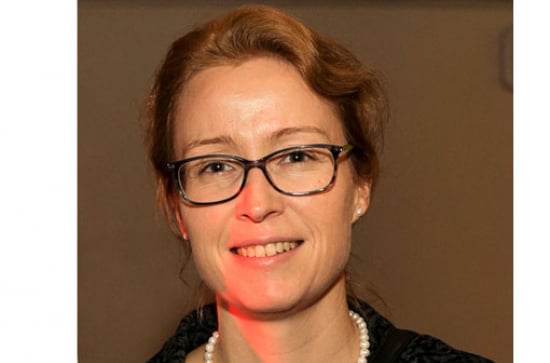
Rozenn Dahyot is a Professor of Computer Science at Maynooth University within the Faculty of Science & Engineering. She previously held roles as Assistant and Associate Professor in Statistics at Trinity College Dublin (2008-2021) and Lecturer in Computer Science (2005-2008). Her research interests bridge Digital Signal Processing, Computer Vision, Machine Learning, and Statistical Analysis. She organized the European Signal Processing Conference (EUSIPCO2021) in Dublin and served as President of the Irish Pattern Recognition and Classification Society (IPRCS) from 2014-2020. Her work spans topics like semantic scene understanding, CNN compression, and medical image segmentation. Key contributions include advancements in graph-based image analysis, reinforcement learning optimization, and AI-driven systems for disaster management. Dahyot is a member of IEEE, ACM, and EURASIP, contributing to both academic and industrial collaborations.
Michela Bertolotto is a Professor in the School of Computer Science at University College Dublin (UCD). Her research focuses on spatio-temporal data modeling, GIScience, and applications of geospatial technologies in fields like urban planning and health informatics. She leads a research group and has supervised 19 PhD and 8 MSc students. Her work includes innovations in LiDAR-based flood risk visualization, semantic web quality assurance, and open-source spatial data analysis. Bertolotto has held roles including College Lecturer at UCD (2000–2006) and postdoctoral research positions at the University of Maine and University of Genoa. Education: BSc and PhD in Computer Science from the University of Genoa (1993, 1998). Professional achievements include over 100 publications, 24 grants (e.g., Science Foundation Ireland-funded Urban ARK project), and editorial roles at journals like the International Journal of Geographical Information Science. Awards include the UCD President's Research Award (2001) and NATO Postdoc Fellowship (1998–1999). Research interests span map personalization, volunteered geographic information (VGI), and geospatial data quality. Her lab develops tools like the LAMSkyCam (low-cost sky imaging system) and dynamic flood risk viewers. She chairs international conferences and serves on program committees for GIScience events.
John McDonald is a Professor in the Department of Computer Science at Maynooth University, where he has held a faculty position since 2001. He is affiliated with the Maynooth University Hamilton Institute and the Assisted Living and Learning Institute (ALL). His research focuses on computer vision, robotics, and AI, emphasizing spatial perception and autonomous systems. He has contributed to areas such as visual SLAM, intelligent vehicle systems, and digital holography, with funding from SFI, EU, and other agencies. Currently, he is a Funded Investigator in Lero (SFI Research Centre for Software) and collaborates on the SFI Blended Autonomy Vehicles Spoke. Key research themes include simultaneous localization and mapping (SLAM), robotic navigation, 3D reconstruction, and applications in autonomous driving. His work integrates cutting-edge techniques in computer vision and machine learning to address challenges in spatial intelligence and perception. Publications highlight advancements in dense mapping, fisheye camera systems, and geospatial analysis. He has held visiting roles at MIT’s CSAIL and the National Centre for Geocomputation. His contributions span academic journals, conferences, and technical reports, reflecting a strong emphasis on both theoretical and applied robotics research. John McDonald has supervised numerous research projects and contributed to initiatives like the John and Pat Hume Doctoral Scholarships. His work bridges academia and industry, with a focus on real-world applications of autonomous systems and AI-driven robotics.
Dr. Le-Nam Tran is a researcher at the UCD School of Electrical & Electronic Engineering , University College Dublin. His work focuses on optimizing the last hop of 5G/6G wireless networks through mathematical programming, with emphasis on energy efficiency, interference management, and security against eavesdropping. Develops low-cost, low-complexity transmission techniques Projects supported by Science Foundation Ireland Career Development Award Author of over 80 peer-reviewed publications Research Keywords: Wireless Communications Network Security Signal Processing Energy-Efficient Systems Beamforming Optimization Interference Mitigation
Peter Mooney is a Lecturer in the Department of Computer Science, Faculty of Science & Engineering at Maynooth University. His research focuses on Volunteered Geographic Information (VGI), OpenStreetMap, spatial data analysis, and geospatial data integration in applications such as environmental monitoring and pervasive health systems. Institution: Maynooth University School: Faculty of Science & Engineering Department: Computer Science Role: Lecturer Mooney's research explores the use of crowdsourced geospatial data, particularly through OpenStreetMap, analyzing data quality, community roles, and integration into location-based services. His work bridges technical analysis with policy considerations in geospatial data management. Recent publications highlight his contributions to understanding spatial data dynamics, including attribute changes in OpenStreetMap, characteristics of edited objects, and applications of VGI in environmental systems. He also investigates the intersection of haptics and GIS for novel interaction methods. Contact: peter.mooney@mu.ie
Dr. Meisam Gordan is an Assistant Professor in Civil Engineering at University College Dublin (UCD), affiliated with the School of Civil Engineering. Previously, he held Postdoctoral Research Fellow positions at UCD (2022–2024) and the University of Malaya (2021–2022), and was a Graduate Research Assistant at the University of Malaya (2019–2020). He earned his PhD in Civil Engineering (2020) from the University of Malaya, specializing in Structural Health Monitoring, Data Mining, and Artificial Intelligence, supported by a High Impact Research Scholarship. **Education**: PhD in Civil Engineering, University of Malaya (2020) MSc in Civil Engineering, University Technology of Malaysia (UTM) **Research Interests**: Focuses on integrating Civil Engineering with Computer Science using Industry 4.0 technologies such as IoT, Big Data, Blockchain, Digital Twins, and Circular Economy. Key areas include Structural Health Monitoring, Machine Learning, Vibration Control, and Smart Infrastructure. Current projects include the Di-Rail project (railway fault diagnosis) and the Horizon 2020-funded PRECINCT (critical infrastructure resilience). **Publications**: Over 40 peer-reviewed articles, with recent work emphasizing hybrid digital twins, smart cities, and cybersecurity. His articles analyze trends in SHM with AI, edge-IoV networks, and resilience frameworks for critical infrastructure. **Awards**: High Impact Research Scholarship (2014), recognized as a reliable peer reviewer for journals like Structural Health Monitoring and IEEE Access. **Teaching**: Coordinates modules on Environmental Engineering, Transportation, and Structural Dynamics at UCD. Teaches courses like CVEN30170 Analysis of Structures 2 and CVEN20070 Computer Applications in Civil Engineering. **Grants/Projects**: Lead roles in PRECINCT and Di-Rail. Previously contributed to projects on recycled rubber energy dissipation systems and blockchain-based sensor data storage. **Labs/Teams**: Collaborates with the Structural Dynamics and Assessment Laboratory (SDA-Lab) at UCD and the PRECINCT Living Labs. Active in the UCD Civil Engineering research community.
Ben Bartlett is a Researcher at the University of Limerick's School of Engineering, specializing in robotics and unmanned systems for environmental and infrastructure applications. His work bridges engineering innovation with practical solutions for challenging real-world environments. His research focuses on: Development of UAV systems for wildlife monitoring and offshore wind farm surveys Cooperative multi-robot path planning for bridge and infrastructure inspection Fault-tolerant control systems for inaccessible environments Maritime robotics using integrated aerial and surface vehicles Automated 3D reconstruction of unknown structures using LiDAR Analysis of his 2023-2025 publications reveals a consistent trend toward real-time, automated systems that balance wide-area coverage with high-resolution precision. His work demonstrates particular strength in adapting robotic systems to dynamic environments like offshore wind farms, aging infrastructure, and maritime settings, with emphasis on efficiency, safety, and cost-effectiveness through modular design and fault tolerance. Contact: Ben.Bartlett@ul.ie
Tim McCarthy is a Professor in the Department of Computer Science at Maynooth University's Faculty of Science & Engineering. He serves as Principal Investigator at the National Centre for Geocomputation (NCG) and co-PI in over 32 externally funded projects totaling €28 million. His work focuses on Earth Observation, geospatial data science, and autonomous systems with applications in environmental monitoring, precision agriculture, and emergency management. Developed Terrain-AI for greenhouse gas emission monitoring Led CoPilot-AI for wildfire response systems Contributed to Copernicus Academy as Irish National Delegate Created U-Flyte drone research program His geospatial research integrates satellite, airborne, and terrestrial sensor data with machine learning for petabyte-scale environmental analytics. Applications span critical infrastructure, climate change mitigation, and marine coastal management through projects like MaCoBioS . He has spun out 2 university companies and supervises 4 current PhD/MRes students. Scientific Awards : 2023 SFI Defence Organisation Innovation Challenge 2022 US-Ireland Research Innovation Award 2021 AI Awards (Social Good) 2012 Copernicus Masters 2011 Maynooth Commercialisation Award Active in EU committees like the Copernicus Earth Observation program and Irish drone policy development through the Aerial and Drone Oversight Committee . His outreach includes media engagements with RTE, Sunday Times, and Silicon Republic on geospatial AI and drone technology.
Viet Quoc Pham is an Assistant Professor in Networks and Distributed Systems at Trinity College Dublin's School of Computer Science and Statistics and a CONNECT Associate Investigator. His research integrates convex optimization, game theory, and machine learning to advance edge computing, wireless AI, and next-generation networking for 6G, IoT, and blockchain applications. Education: PhD in Telecommunications Engineering, Inje University, Korea (2017) His work centers on three interconnected thrusts: (1) Computing innovations in edge AI, aerial computing, and edge of things; (2) Intelligence through wireless AI and federated learning; and (3) Networking advancements in 6G, IoT, intelligent surfaces, metaverse, and blockchain. This cross-disciplinary approach optimizes cloud-edge systems and wireless infrastructure using mathematical frameworks. Recent publications (2021-2024) demonstrate applied impact across security (smart speaker intrusion detection), environmental science (satellite carbon monitoring), healthcare (mental disorder detection), and e-commerce (basket recommendation systems), reflecting his methodology of adapting AI/optimization to domain-specific challenges. Scientific Awards: Korea NRF funding for outstanding young researchers (2019-2024) Best Ph.D. Dissertation Award, Inje University (2017) Top Reviewer Award, IEEE Transactions on Vehicular Technology (2020) Golden Globe Award, Vietnam Ministry of Science (2021) IEEE ATC Best Paper Award (2022) Enterprise Ireland Coordination Support Award (2023) Dr. Pham secured competitive funding including Korea NRF and Enterprise Ireland grants. As Editor for Journal of Network and Computer Applications and Scientific Reports, and Lead/Guest Editor for IEEE Internet of Things Journal, IEEE Transactions on Consumer Electronics, and Computer Communications, he shapes discourse in networking and computer systems through rigorous peer review and special issues. Through the CONNECT Centre, he collaborates with industry partners on Ireland's national research initiative for future networks, focusing on practical implementations of 6G architectures, IoT security protocols, and edge AI frameworks for real-world deployment.
Eleni Mangina is a Full Professor at the School of Computer Science, University College Dublin (UCD), and Vice Principal (International) for the College of Science. Her research focuses on applied artificial intelligence (AI), robotics, unmanned aerial vehicles (UAVs), and extended reality (XR) technologies with interdisciplinary applications in energy systems and education. She holds a PhD from the University of Strathclyde (UK), an MSc in Artificial Intelligence from the University of Edinburgh, and an MSc in Agricultural Science from the Agricultural University of Athens. Education : PhD, University of Strathclyde (UK), 2001 MSc in Artificial Intelligence, University of Edinburgh (UK) MSc in Agricultural Science, Agricultural University of Athens (Greece) HDip in University Teaching & Learning, UCD Research Interests : AI-driven optimization for energy and materials Xr applications in healthcare and education Citizen science and open data practices Robotics in early childhood education Smart city technologies Awards & Honors : 2022 CEN/CENELEC Standards Innovation Award 2021 Athena SWAN Bronze Award (School of Computer Science) 2020 UCD President's Teaching Award 2022 StandICT.eu Fellowship Grants & Projects : Coordinator of EU H2020 projects: ARETE, AHA, and FANTASIA Principal Investigator in SFI Energy Systems Integration Programme Lead on multiple XR and energy-related grants (2017-2025) Labs & Teams : Her lab develops XR solutions for education and energy, collaborating with EU and international partners. Current focuses include ethical XR standards and AI integration with metaverse platforms.
Muhammad Haris Kaka Khel is a PhD Candidate and Part-time Lecturer at Atlantic Technological University (ATU) in Ireland, working within the Department of Computing and Intelligent Systems. He is supervised by Dr. Kevin Meehan (ATU Donegal), with co-supervisors Dr. Paul Greaney (ATU Donegal), Dr. Marion McAfee (ATU Sligo), and Dr. Sandra Moffet (Ulster University, Derry). Haris completed his B.S. degree in Electrical Engineering, with a major in Communication, from the University of Engineering and Technology (UET) Peshawar, Pakistan, in 2019. He then pursued a research-based master's degree at the University of Kuala Lumpur, Malaysia, with one semester spent at Politecnico di Torino, Italy, through the Erasmus exchange program. His research focuses on pedestrian trajectory prediction , behavioral modeling , social interactions , and dynamic scene analysis . His PhD research centers on the Pedestrian Adaptive Trajectory Hypothesis System (PATHS) , which forecasts future paths of individuals by analyzing human behavior, past movements, social interactions, and environmental factors. Unlike traditional single-path models, his approach predicts multiple possible paths to account for human behavior uncertainties, making the framework robust for dynamic urban environments. His publications reveal expertise in computer vision and deep learning applications for crowd analysis, developing innovative approaches using YOLOv4, BiLSTM networks, graph neural networks, and attention mechanisms. This work has significant applications in autonomous driving systems, urban planning, crowd management during large events, and smart surveillance systems. Haris has been involved in the Intelligent Real-time Crowd Monitoring System Using Unmanned Aerial Vehicle (UAV) Video and Global Positioning Systems (GPS) Data , sponsored by the Deputyship for Research and Innovation, Ministry of Education in Saudi Arabia. Previously, he served as a Graduate Research Assistant at University Kuala Lumpur - British Malaysian Institute in 2022 and completed an internship at the Center of Intelligent Systems and Networks Research from March 2019 to February 2020.
Dr. Shen Wang is an Assistant Professor (Tenured) at the School of Computer Science, University College Dublin, Ireland. He holds an M.Eng. from Wuhan University and a Ph.D. from Dublin City University. As an academic co-director of Netslab and a member of the UCD Earth Institute, his research focuses on explainable AI, connected autonomous vehicles, and cybersecurity in telecommunications. He has led EU projects like the Horizon 2020 SPATIAL initiative and collaborates with industry partners such as IBM Research Brazil and Boeing. His teaching roles include coordinating modules like Programming for Big Data and Leadership in Security. He advises PhD students on topics like federated learning and autonomous systems. Notable awards include the IRC Postgraduate Scholarship (2021) and recognition for transport resilience research. His work bridges AI, edge computing, and blockchain for future networks and smart mobility.
Dr. Muhammad Iftikhar Umrani is a Lecturer at SZABIST University and a PhD candidate at Walton Institute, SETU Waterford, Ireland. His research focuses on AI-driven cybersecurity solutions, particularly in UAV security and cyber-physical systems. He holds a Master of Science in Telecommunication from National University of Sciences and Technology (NUST) Pakistan (2017) and a Bachelor of Engineering in Telecommunication from Mehran University of Engineering & Technology (2012). His work aligns with UN Sustainable Development Goals, emphasizing education and innovation. Research interests include deep learning algorithms for UAV security, intrusion detection systems, and decision-making frameworks in cyber-physical systems. Recent publications explore trust mechanisms in AI-driven CPS and cybersecurity vulnerabilities in UAVs. No scientific awards are explicitly listed, but academic achievements include his advanced degrees. He is involved in collaborative research projects and contributes to cybersecurity testbed development. His PhD research at Walton Institute further enhances his expertise in autonomous systems and cybersecurity.
Petar Trslić is an Assistant Professor at the University of Limerick's School of Engineering, affiliated with the Centre for Robotics and Intelligent Systems. His research focuses on advanced robotics, autonomous systems, and sensor fusion technologies, with applications in maritime operations, wildlife monitoring, and infrastructure inspection. Key technical areas include Unmanned Aerial Vehicles (UAVs), Remotely Operated Vehicles (ROVs), path planning algorithms, and LiDAR-based systems. His work contributes to UN Sustainable Development Goals related to innovation and infrastructure, climate action, and sustainable energy. Trslić has collaborated internationally on projects involving cooperative robotic systems, multi-sensor fusion for state estimation, and autonomous vehicle coordination in challenging environments. His recent publications highlight innovations in UAV wildlife surveillance, maritime robotics for offshore wind farms, and automated infrastructure inspection using 3D reconstruction. He has secured research funding for initiatives in autonomous underwater robotics and has developed novel algorithms for robotic docking and navigation under dynamic conditions. Trslić's lab emphasizes practical solutions for industrial automation challenges and environmental monitoring through interdisciplinary approaches.
Professor Olarenwaju M. Oyewola is a Full Professor in the Department of Mechanical Engineering at the University of Ibadan, Nigeria. With a Doctor of Philosophy degree, he has established himself as a leading researcher in thermofluids and energy systems, with particular expertise in battery thermal management, renewable energy technologies, and computational fluid dynamics. His research focuses on addressing energy challenges in developing regions, with significant work on solar energy applications in Nigeria and Fiji, battery thermal management systems for electric vehicles, and sustainable energy solutions. Professor Oyewola's expertise spans: Thermofluids and energy systems Hybrid energy technologies Flow perturbation and control Wind and solar energy systems Renewable energy applications in developing contexts Battery thermal management for electric vehicles Professor Oyewola's recent publication record through 2025 demonstrates his active research program, with significant contributions to battery thermal management systems, renewable energy technologies, and sustainable engineering solutions. His work shows a strong trend toward applying artificial intelligence to energy and materials problems, while maintaining a focus on practical engineering solutions for developing regions. His scientific contributions include: 144 publications with over 58,000 reads and 2,124 citations Significant research on battery thermal management systems for electric vehicles Studies on solar energy potential in Nigeria and Fiji Work on renewable energy applications in developing contexts Research on fluid dynamics and heat transfer optimization Professor Oyewola actively supervises graduate students and maintains research collaborations across Africa and with institutions internationally. His work on climate impacts on solar radiation and energy systems demonstrates his commitment to addressing energy challenges in developing regions through rigorous engineering research.