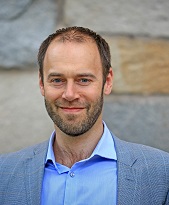
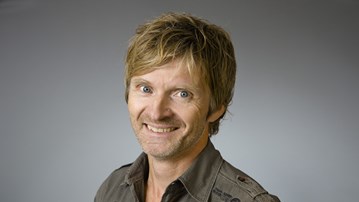
Dag Björnberg is a researcher at Linnaeus University, affiliated with the graduate school Data Intensive Applications (DIA) and the research groups Data Intensive Software Technologies and Applications (DISTA) and Linnaeus University Centre for Data Intensive Sciences and Applications. His research focuses on applying artificial intelligence and machine learning techniques to solve challenges in the forest industry. Key projects include developing algorithms for log tracking using end-grain fingerprints, generating photorealistic log end images via conditional Generative Adversarial Networks (cGANs), and improving forest inventory efficiency through AI-driven methodologies. Doctoral project: Advanced identification methods for the forest industry via computer vision and AI ForestMap: Global forest mapping methodology Tree volume measurement by AI: Sweden-Brazil collaboration His recent publications highlight the integration of GANs, image translation, and data-intensive approaches in forest resource management and AI development.
Rita Kovordanyi is a Senior Lecturer and Associate Professor at the Department of Computer Science (IDA) , Linköping University (LIU) , where she contributes to the Human-Centered Systems (HCS) research group. Her academic work bridges multiple domains including Artificial Intelligence, Human-Computer Interaction, and Crisis Management. Research Interests Machine Learning applications in occupational health and stress detection Cognitive modeling and attention focus in digital environments Crisis management training systems using simulation technologies Disaster risk reduction through computational meteorology Human-robot interaction in military operations Neural network-based cyclone track forecasting Recent Publication Trends Her research output spans from 2012 to 2022, showing a consistent focus on Human-Centered Systems with applications in: health monitoring (IoT, workplace well-being), military technology (unmanned vehicles), disaster response (cyclone forecasting), and educational simulations. Key methodologies include LSTM networks , GANs , and biologically-based hierarchical modeling . The work frequently intersects with Human-Computer Interaction and Cognitive Science while maintaining practical applications in Emergency Management and Transportation Safety . Academic Affiliation Department: Department of Computer Science (IDA) University: Linköping University Research Group: Human-Centered Systems (HCS) Email: rita.kovordanyi@liu.se
Niklas Carlsson is a Professor at Linköping University's Department of Computer and Information Science (IDA), where he leads research in distributed systems, network security, and multimedia streaming. He holds a M.Sc. in Engineering Physics from Umeå University and a Ph.D. in Computer Science from the University of Saskatchewan, with postdoctoral experience in Canada. His research spans adaptive streaming technologies, privacy-preserving systems, and sports analytics. Notable projects include the ASTECC initiative on edge-cloud systems and collaborations with Linköping Ice Hockey Club on strategy analysis. He has authored over 150 publications, including works on video fingerprinting, homomorphic encryption, and social media dynamics. Carlsson actively serves on editorial boards and conference committees (e.g., ACM SIGMETRICS, MASCOTS) and has received awards for best papers (2022, 2023) and innovative frameworks like AnonFACES. His lab focuses on real-world applications of theoretical insights, emphasizing measurable performance improvements.
Zeinab Shahbazi is a Senior Lecturer in the Department of Computer Science at the Faculty of Natural Science. With nine years of expertise, her research focuses on AI-driven solutions for complex data challenges, including machine learning, blockchain, and natural language processing. Current role: Senior Lecturer in Computer Science Research affiliations: Faculty of Natural Science Her work integrates advanced AI techniques to address real-world problems such as climate misinformation detection, security patch optimization, and healthcare data security. She leads collaborative projects like the 2024-2025 International Staff Exchange in Emerging Technologies. Recent research emphasizes interdisciplinary applications, spanning climate informatics, cybersecurity, and recommendation systems. Over 38 publications highlight her contributions to machine learning frameworks and blockchain-based solutions.
Amy Loutfi is a Professor of Information Technology at Örebro University, where she leads the AI, Robotics and Cybersecurity Center (ARC), and serves as Program Director for the Wallenberg AI, Autonomous Systems and Software Program (WASP) at Linköping University. Born in Saint John, Canada (1978), she earned her PhD in Computer Science from Örebro University (2006) and became a Docent (2011) and Professor (2015) in Information Technology there. Her research focuses on intelligent sensor systems, particularly their integration with artificial intelligence to convert raw data (e.g., from robotic olfaction or vision sensors) into human-interpretable semantic information. She explores human-robot interaction dynamics, emphasizing safety, collaboration, and usability across diverse environments like homes and industries. Key projects include BioLearning (water quality analysis), MicroSens (taste perception via microbiota), and TeamRob (robot teams working with humans). Amy’s work bridges technical innovation with societal impact, addressing challenges in healthcare, elder care, and smart home technologies. She advocates for Sweden’s national AI strategy and emphasizes ethical considerations in emerging robotics. Her research also involves collaboration with industry and public sectors, as seen in the E-care@home and Mednose initiatives. In 2020, she was elected to the Royal Swedish Academy of Engineering Sciences (IVA) for her contributions. Her grants and projects include strategic funding for AI applications and interdisciplinary collaborations. She collaborates with global teams and contributes to conferences like ICSR (Social Robotics) and ECAI (Artificial Intelligence).
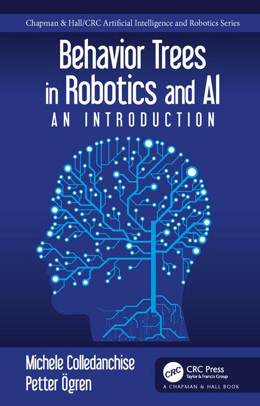
Petter Ögren is a Professor at the Division of Robotics, Perception and Learning at KTH Royal Institute of Technology. He holds a M.S. in Engineering Physics and a Ph.D. in Applied Mathematics from KTH. Previously, he worked as a senior scientist and deputy research director at the Swedish Defence Research Agency (FOI). His research focuses on modular control systems, multi-agent systems, and human-robot teaming, emphasizing robustness, safety, and user-friendliness. Key contributions include the development of Behavior Trees as a modular control architecture. Education: - Ph.D. in Applied Mathematics (KTH, 2003) - M.S. in Engineering Physics (KTH, 1998) Research Interests : - Behavior Trees in Robotics and AI - Multi-agent coordination and formation control - Human-robot collaboration in complex tasks - Autonomous systems and decision-making under uncertainty Advising & Grants : - Supervised over 15 PhD students in projects funded by EU, Swedish Space Corporation, SSF, Vinnova, and WASP. - Key projects include CARMA, SMaRC, and TRADR. Labs/Teams : - Leads research in autonomous systems, mobile robotics, and human-robot interaction at KTH's Robotics Lab.
Florian T. Pokorny is an Associate Professor in Machine Learning at the Division of Robotics, Perception and Learning (RPL), Department of Electrical Engineering and Computer Science (EECS), KTH Royal Institute of Technology. He coordinates research projects such as the Horizon Europe-funded SoftEnable and the WASP-funded Intelligent Cloud Robotics for Real-Time Manipulation at Scale . His research focuses on data-driven methods for robotic manipulation, including transfer learning, cloud robotics, and caging-based manipulation of rigid and deformable objects. Education: PhD in Mathematics, University of Edinburgh (supervisor: Michael Singer) MSc in Advanced Study in Mathematics (Part III), University of Cambridge BSc in Mathematics, University of Edinburgh Research Interests: His work emphasizes scalable robotic manipulation, leveraging deep learning and geometric/topological methods. Key areas include training data requirements, transfer learning, and cloud robotics paradigms for manipulation at scale. Recent projects explore energy margin analysis, caging-guided morphology optimization, and robust policy learning. Publications: His recent work spans topics like caging-based manipulation, federated learning, and cloud robotics infrastructure. Notable contributions include CageCoOpt (manipulation robustness), CloudGripper (open-source testbed), and RealCraft (zero-shot video editing). Awards & Grants: Funded by WASP, Horizon Europe, and the Knut and Alice Wallenberg Foundation. His group hosts the CloudGripper platform and collaborates on benchmarks like DLO@Scale. Advising & Labs: Supervises multiple PhD students and research engineers. Alumni include Robert Gieselmann (Amazon Robotics), Yiannis Karayiannidis (Chalmers University), and Anastasiia Varava (Postdoc at KTH). Active in organizing workshops like RoDGE (IROS 2025) and ICRA 2025 robotics learning events.
Miguel Serras Vasco is a postdoctoral researcher at KTH Royal Institute of Technology in Stockholm, Sweden, affiliated with the Robotics, Perception and Learning (RPL) division. He holds a PhD from Instituto Superior Técnico, University of Lisbon (2023), where his work earned the Best PhD Thesis in AI in Portugal award. His research focuses on multimodal perception, reinforcement learning, and aligning artificial agents with human perception. He previously worked as an RSS Pioneer and research intern at Sony AI. Education: PhD in Artificial Intelligence, Instituto Superior Técnico, University of Lisbon (2023) Research Interests: Vasco’s work bridges robotics, neuroscience, and AI, emphasizing embodied agents that co-exist with humans. He explores representation learning, human-aligned image models, and sample-efficient reinforcement learning. His recent projects include super-human autonomous racing agents and olfactory perception modeling with transformers. Key Contributions: Vasco co-developed the GT Sophy racing agent, achieved outstanding results in visual decoding from brain activity, and proposed methods like FLoRA for preference-based RL. His work on NeuralSolver advances algorithm extrapolation in reinforcement learning. Awards: Best PhD Thesis in AI in Portugal (APPIA, 2023) Outstanding Paper Award at RLC 2024 (for autonomous racing research) Grants/Advising: Vasco advises students on multimodal and reinforcement learning topics. He actively organizes conferences like the Reinforcement Learning and Video Games Workshop (RLVG) at RLC 2025 and collaborates with institutions like INESC-ID (Lisbon). Labs/Teams: Associated with the Collaborative Autonomous Systems unit at KTH and previously with the GAIPS Lab (INESC-ID, Lisbon).
György Dán is a Professor in Teletraffic Systems at KTH Royal Institute of Technology, Stockholm, Sweden. He holds a Ph.D. in Telecommunications from KTH (2006) and has extensive academic leadership roles, including Director of Third Cycle Education. His research focuses on networked systems design, with expertise in critical infrastructure security, edge computing, and cyber-physical systems. Dán has supervised over 20 PhD students and led major projects like VR DICE6G and REACT. He has authored/co-authored over 150 publications, receiving awards such as the Ericsson Research Foundation Award (2010-2014) and the 2020 KTH PhD Supervisor of the Year. Education Ph.D. in Telecommunications, KTH Royal Institute of Technology (2006) M.Sc. in Business Administration, Corvinus University of Budapest (2003) M.Sc. in Computer Engineering, Budapest University of Technology and Economics (1999) Research Interests His work spans applied game theory, smart grid security, mobile edge computing, and adversarial machine learning. Current projects include resilient edge computing systems and secure AI for cyber-physical infrastructures. Awards & Recognition Best Paper Awards at SNCNW 2025, IEEE SmartGridComm 2014, and IEEE Infocom 2008 Fulbright Visiting Scholar (University of Illinois, 2012-2013) Invited Professor at EPFL (2014-2015) Labs & Collaborations He leads the Network and Systems Engineering Division at KTH, collaborating with industries like Ericsson and ABB. His group focuses on experimental platforms like the GreenEyes testbed and stateful serverless edge computing.
Erik Elmroth is a Professor at the Department of Computing Science, Umeå University. He leads research in distributed systems, cloud/edge computing, and autonomous resource management, directing a 30+ member research group. His leadership includes transformative roles as department head (2009-2021) and Deputy Director at High Performance Computing Center North (HPC2N). Elmroth serves on executive committees for the SEK 6.2B Wallenberg AI program (WASP) and SEK 390M eSSENCE initiative, and leads multiple Kempe Foundation projects. Research interests center on: Autonomous control of cloud/edge infrastructures Software-defined systems and federated clouds AI-driven resource optimization High-performance computing architectures Robust machine learning for distributed environments His publications emphasize adaptive cloud systems, anomaly detection, and federated learning, with consistent focus on scalability and resilience in edge/cloud deployments. Awards and honors: Member of Royal Swedish Academy of Engineering Sciences (IVA) Nordea Scientific Prize (2011) SIAM Linear Algebra Prize (2000) National HPC Lecturer appointment He has supervised 40+ PhD students and secured major grants including the Swedish Research Council's second-largest award for the Cloud Control project. Elmroth founded the Control Workshops series and co-founded Elastisys AB, a cloud security firm with 50+ employees recognized as Umeå's Spin-off Company of the Year.
Bengt Lennartson is a Professor of Automation at Chalmers University of Technology and Head of the Department of Systems and Control Engineering. His research focuses on automation engineering, sustainable production, robotics, and energy optimization, with over 280 international publications. Collaborations include industry leaders like Volvo, Daimler, Kuka, and TetraPak. IEEE Fellow for contributions to automation systems Specializes in hybrid/discrete-event systems Develops energy optimization strategies for robotic production lines Recent work explores Plug-and-Produce systems , digital twin calibration , and stochastic energy optimization in robotics. His team integrates AI with formal methods for safety verification and develops open-source educational tools like biomedical exoskeletons. Scientific awards include IEEE Fellowship , with articles addressing energy-efficient robot trajectories, safety-aware multi-agent control, and formal verification of cyber-physical systems.
Håkan Grahn is a Professor of Computer Engineering at the Department of Computer Science, School of Computing, Blekinge Institute of Technology (BTH) in Sweden. He has been a faculty member since 1996, becoming a full professor in 2007. His academic leadership includes serving as Head of Department (1999-2002) and Dean of Research (2011-2013) at BTH. He leads multiple significant research projects including GPAI (General Purpose AI Computing) and Green Clouds, with funding from ELLIIT, the Knowledge Foundation, and Vinnova. His educational background includes: M.Sc. in Computer Science and Engineering (1990) from Lund University Ph.D. in Computer Engineering (1995) from Lund University Håkan's research spans several interconnected domains in computer science and engineering, with a strong emphasis on practical applications. His work in computer architecture focuses on optimizing system performance through innovative cache coherence protocols and memory management techniques. In the realm of parallel computing , he investigates multicore systems, GPU computing, and thread-level speculation to enhance computational efficiency. His research in AI and machine learning addresses energy efficiency, data stream mining, and practical applications in areas like district heating systems and airborne networks. The integration of image processing with machine learning forms another significant strand of his work, particularly in historical document analysis and medical imaging applications. These research areas converge in his leadership of major initiatives like BigData@BTH and GPAI, where he bridges theoretical advances with real-world implementation challenges. Analysis of Håkan's recent publications reveals a clear trajectory toward increasingly applied research with strong industry connections. While maintaining foundational work in computer architecture, his output increasingly focuses on practical AI applications, energy efficiency in computing, and domain-specific implementations in sectors like telecommunications, energy systems, and defense. The interdisciplinary nature of his work is evident in collaborations spanning computer science, engineering, and domain-specific applications, with a growing emphasis on sustainability and resource optimization in computing systems. Håkan has successfully supervised numerous doctoral students, with ten graduates and six current Ph.D. candidates. His research has been supported by substantial funding from: The Knowledge Foundation (BigData@BTH, HINTS, Green Clouds) ELLIIT (GPAI project) Vinnova (FANET-MCA, Directed COM & EW) Industry partners including Ericsson, Saab, Telenor, and Fortnox He is actively involved in multiple research groups including DISL (Distributed and Intelligent Systems Lab), CCS-Lab (Communication and Computer Systems Research Lab), and previously PAARTS (Parallel Architectures and Applications for Real-Time Systems). His leadership extends to organizing academic events like the Nordic workshop on Multi-Core Computing and the Swedish Artificial Intelligence Society workshop.
Shafiullah Soomro serves as Associate Professor in the Department of Artificial Intelligence at Quaid-e-Awam University of Engineering Science and Technology, Pakistan. He completed his Ph.D. in Application Software from Chung-Ang University, South Korea (2018), where he was honored as Best PhD Graduate. Ph.D., Application Software, Chung-Ang University (2018) His research spans medical image segmentation, computer vision, and AI applications in environmental monitoring. Specializing in automatic segmentation techniques using machine learning, he combines theoretical frameworks with practical biomedical implementations. Recent work integrates Swedish National Forest Inventory data with airborne laser scanning for forest attribute prediction. Current research projects include ForestMap (global forest cartography), AI-driven tree volume measurement (Sweden-Brazil collaboration), and machine learning models for predicting mechanical properties of oxynitride glasses. Best PhD Graduate, Chung-Ang University Dr. Soomro has mentored multiple MS students across Korea and Pakistan while supervising 2 Master's and 1 PhD students currently. His teaching portfolio includes 11 undergraduate, 2 MS, and 1 PhD courses such as Artificial Intelligence, Digital Image Processing, and Advanced Image Processing/Computer Vision. He actively contributes to academic curriculum design and research community development within the Computer Science and Artificial Intelligence department.
Pierre Dersin serves as an Adjunct Professor at Luleå University of Technology within the Department of Civil, Environmental and Natural Resources Engineering, specifically in the Division of Operation, Maintenance and Acoustics. He simultaneously works as a RAM Director (Reliability-Availability-Maintainability) and PHM Architect (Prognostics & Health Management) at Alstom Digital Mobility, demonstrating a strong industry-academia connection. His research interests span Operation and Maintenance Engineering , Prognostics & Health Management , Reliability Engineering , and the application of Deep Learning to industrial systems. His work bridges theoretical reliability principles with practical applications in asset management, particularly in railway systems and industrial cybersecurity. His recent publications (2024-2025) reveal a strong focus on integrating reliability engineering with artificial intelligence, particularly through his concept of Reliability-Informed Deep Learning (RIDL). His research spans multiple domains including railway asset management, LED reliability, and cybersecurity for Industry 5.0, showing interdisciplinary expertise across engineering fields. Pierre Dersin maintains active connections with both academic and industrial communities, as evidenced by his dual affiliations and collaborative publications with researchers from institutions including Delft University of Technology and Zurich University of Applied Sciences.