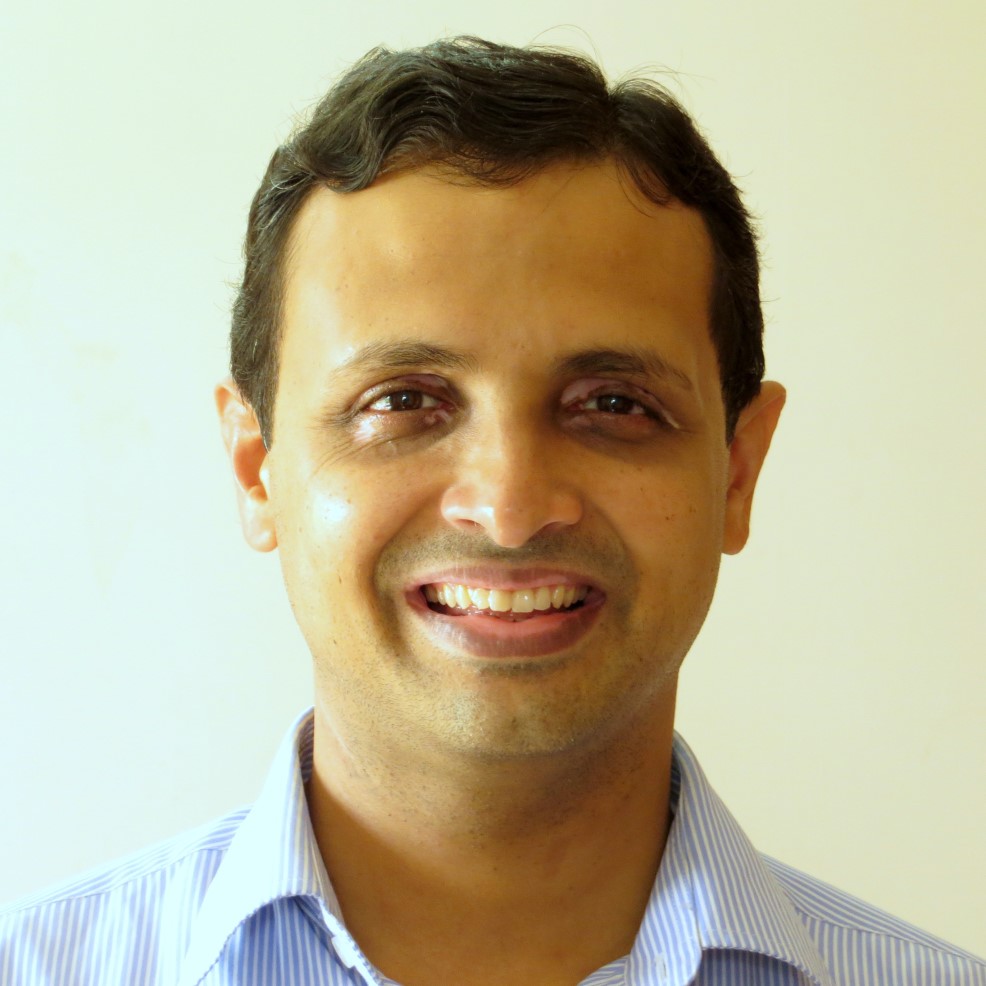
Vineeth N Balasubramanian is a Professor in the Department of Computer Science & Engineering at the Indian Institute of Technology Hyderabad, with affiliate faculty status in the Department of Artificial Intelligence. His research focuses on the intersection of deep learning, machine learning, and computer vision, emphasizing explainability, robustness, and real-world applications. He leads Lab 1055, which investigates problems such as Explainable and robust AI/ML systems Lifelong learning in evolving environments Multimodal vision-language models Applications in agriculture, autonomous navigation, and human behavior analysis His recent work includes causal reasoning in transformers, vision-language model capabilities, and drone-based object detection. Funded by organizations like Google, Microsoft, Intel, and DST, he has received multiple awards including the World's Top 2% Scientists (2022-23), INSA/INAE Fellowships, and Best Paper recognitions. Lab 1055 collaborates with institutions like CMU, UBC, and Monash University, contributing to cutting-edge advancements in AI.
Supratik Chakraborty serves as the Bajaj Group Chair Professor in the Department of Computer Science and Engineering at Indian Institute of Technology Bombay. He maintains dual affiliations with the Centre for Formal Design and Verification of Software and the Centre for Liberal Education at IIT Bombay, demonstrating his cross-disciplinary engagement. Professor Chakraborty's research spans formal methods with focus on formal verification, rigorous analysis of system models, and automated synthesis of systems from specifications. His work bridges theoretical foundations with practical applications, particularly in developing mathematically provable guarantees for increasingly complex hardware, software, and intelligent systems. Current research interests include constrained counting and sampling, scalable formal verification of software and hardware systems, automated synthesis of programs and circuits, and applications of automata, logic and finite model theory to practical verification challenges. His publication trajectory shows a significant evolution from traditional hardware and software verification toward addressing verification challenges in machine learning and AI systems. Recent work increasingly focuses on interpretability of black-box models, verification of neural networks, and synthesis techniques applicable to intelligent systems. The research demonstrates strong interdisciplinary connections between formal methods, programming languages, and artificial intelligence. IIT Bombay Excellence in Thesis (CSE) Award 2011 (for Bhargav Gulavani's thesis) IIT Bombay Excellence in Thesis (CSE) Award 2017 (for Abhisekh Sankaran's thesis) Best Paper in Algorithms and Architecture track at IEEE International Conference on Computer Design: VLSI in Computers and Processors, 1998 Professor Chakraborty has successfully supervised 11 doctoral students, with research spanning formal verification techniques, Boolean functional synthesis, constrained counting, and applications to hardware and software systems. His students have gone on to positions at major institutions including Microsoft Research, TCS Research, Georgia Tech, and BARC, reflecting the strong industry and academic impact of his mentorship. Current research directions show increasing emphasis on verification challenges posed by machine learning systems and AI. His research group at IIT Bombay, while not explicitly named in the materials, appears to focus on formal methods with strong connections to the Centre for Formal Design and Verification of Software. The group maintains active collaborations with international researchers including Moshe Y. Vardi at Rice University, and has made significant contributions to verification tools like VeriAbs that bridge theoretical advances with practical applications.
Arpit Agarwal is an Assistant Professor in the Department of Computer Science & Engineering at the Indian Institute of Technology, Bombay. He previously held postdoctoral positions at FAIR Labs (Meta) working with Max Nickel and at the Data Science Institute at Columbia University hosted by Prof. Yash Kanoria and Prof. Tim Roughgarden. He completed his PhD from the Department of Computer & Information Science at the University of Pennsylvania under the guidance of Prof. Shivani Agarwal. His research focuses on the intersection of human behavior and machine learning systems, with particular interest in learning from implicit, strategic, and heterogeneous human feedback. His work spans multiple dimensions of human-AI interaction including understanding long-term dynamics between humans and AI systems, designing responsible AI, and studying misalignment between user preferences and system objectives. His research methodology often combines theoretical machine learning with practical applications in recommendation systems and social AI. His recent publications reveal a strong focus on bandit algorithms, preference learning, and recommendation systems, with increasing attention to responsible AI design and human-centered considerations. His work demonstrates expertise in theoretical machine learning with applications to real-world problems, particularly in understanding how humans interact with and are influenced by AI systems over time. Dr. Agarwal teaches advanced courses including CS767 Theoretical Machine Learning (Autumn 2025) and CS6103 Human-Centered AI: From Learning Models to Responsible Systems (Spring 2025), which covers topics such as AI alignment, learning from pairwise comparisons, crowdsourcing, human-in-the-loop decision making, recommendation systems, interpretability, privacy, fairness, causality, and AI governance.
Aditya T Siripuram is an Associate Professor at the Indian Institute of Technology Hyderabad (IITH), holding joint appointments in the Department of Electrical Engineering and the Department of Artificial Intelligence. He completed his PhD at Stanford University and holds B.Tech and M.Tech degrees from IIT Bombay. Education: PhD in Electrical Engineering, Stanford University (2017) - GPA: 4.17/4 M.Tech in Electrical Engineering, IIT Bombay (2009) - GPA: 9.79/10 B.Tech in Electrical Engineering, IIT Bombay (2009) - GPA: 9.79/10 Research Interests: His research spans Fourier analysis, signal processing, machine learning, convex and combinatorial optimization, with applications in AI/ML and applied mathematics. His work particularly focuses on computational aspects of Fourier analysis, including fast DFT computation for structured signals, convolution idempotents, and graph-based signal processing techniques. His recent research directions involve developing efficient algorithms for computing Discrete Fourier Transforms for signals with structured frequency support, investigating relationships between additive structures in frequency domains and computational complexity, and exploring graph learning techniques under spectral constraints. Awards and Recognition: Excellence in Teaching Award, IIT Hyderabad (2019, 2022) Stanford Graduate Fellowship Qualcomm Innovation Fellowship (awarded to his PhD student Charantej Reddy P in 2021) Teaching and Service: He has taught courses including AI1110 Probability and Stochastic Processes, EE5609 Matrix Theory, EE5606 Convex Optimization, and EE5328 Introduction to Submodular Functions. He serves as Departmental Undergraduate Committee Chair for the Department of AI at IITH (2020-present) and was MTech Admissions Coordinator for the same department (2019-2022). Research Group: He currently advises three PhD students working on signal processing based graph learning techniques, DFT computation for structured signals, and coded computing problems.
Kishalay Mitra is a Professor at the Indian Institute of Technology Hyderabad , with affiliations to the Department of Chemical Engineering , Department of Climate Change , and Department of Artificial Intelligence . He also holds visiting professorships at Washington University in St. Louis and University of Washington, Seattle . His work in the Global Optimization & Knowledge Unearthing Laboratory (GOKUL) spans interdisciplinary optimization, machine learning, and their applications in industrial-scale engineering problems. Education : Ph.D. from IIT Bombay. Research Interests : Mitra's research focuses on optimization under uncertainty , surrogate modeling , multi-objective optimization , and integrating machine learning with physics-based models . His work addresses real-world challenges in wind energy , bioenergy supply chains , chemical process control , nanoscience , and environmental modeling (e.g., PM10 spatiotemporal analysis, forest fire prediction, and carbon capture). Article Trends : His recent publications emphasize wind energy systems (layout optimization, yaw control, forecasting), materials science (precipitate growth prediction, polymerization), and industrial processes (crystallization, grinding circuits). Techniques include neural operators , Bayesian optimization , generative adversarial networks (GANs) , and explainable AI .
Roop Aparajita Subhra Purushottam is an Associate Professor in the Department of Computer Science and Engineering at the Indian Institute of Technology Kanpur. His research focuses on machine learning foundations and applications, particularly in extreme classification, optimization techniques, robust learning, and educational technology. He has developed scalable algorithms for web-scale applications and innovative teaching tools for programming education. His research interests span: Design and analysis of machine learning algorithms Statistical learning theory and online optimization Non-convex optimization for large-scale problems Robust learning against adversarial corruptions Applications in information retrieval, education, and environmental monitoring Recent publications demonstrate a strong focus on extreme classification techniques, efficient deep learning architectures, and educational technologies. His work consistently appears in top-tier conferences including KDD, ICML, NeurIPS, and CVPR, with innovations in scaling machine learning systems to handle millions of labels and users. Significant Awards: Gopal Das Bhandari Distinguished Teacher Award (2024) PK Kelkar Faculty Fellowship (2024-2027) Microsoft Bing Ads Greatness Award (2021) Computer Society of India Faculty Award (2018) Multiple best paper awards and nominations at major conferences He leads several research grants and consults for industry partners including Microsoft Research and Tower Research. His team develops open-source tools like Prutor for programming education and DEFRAG for efficient feature agglomeration in extreme classification. He has advised numerous PhD and Master's students who have received prestigious awards for their research contributions.
Shashank Vatedka is an Assistant Professor in the Department of Electrical Engineering at the Indian Institute of Technology Hyderabad . His research focuses on information theory , coding theory , and their applications to data compression , statistical inference , and security . He holds a PhD from IISc, Bengaluru and has postdoctoral experience at Institut Polytechnique de Paris and The Chinese University of Hong Kong . Education : PhD and MSc (Engg) in Electrical Communication Engineering, IISc, Bengaluru (2011-17) Academic Positions : Assistant Professor, IIT Hyderabad (2019-present) Postdoctoral Fellow, Telecom Paris (2018-19) Research Assistant/Postdoctoral Fellow, Institute of Network Coding, CUHK (2016-18) His research spans three main areas: distributed inference (federated learning, wireless sensor networks), compression with locality constraints (local decoding, low-complexity algorithms), and communication in adversarial environments (jamming, list decoding). Recent work includes distributed mean estimation with limited communication and adversarial channel coding with partial information. He has received several honors including the Seshagiri Kaikini Medal for best PhD thesis at IISc in 2017, Best Paper Awards at NCC 2023 and Stanford Compression Workshop 2021, and the TCS Research Fellowship (2014-17). He serves as a Faculty Placement Coordinator at IIT Hyderabad and organizes international conference tracks. His research group advises students across PhD, MTech, BTech , and internships , with alumni pursuing advanced degrees at institutions like UCSD , Columbia University , and TU Delft . Collaborations include theoretical work with colleagues like Yihan Zhang and Sidharth Jaggi .
Karthik P. N. is an Assistant Professor in the Department of Artificial Intelligence at the Indian Institute of Technology Hyderabad (IIT Hyderabad). He previously served as a Research Fellow at the Institute of Data Science, National University of Singapore (NUS), and completed his Ph.D. and Master of Science (Engineering) at the Department of Electrical Communication Engineering, Indian Institute of Science (IISc), Bengaluru, under the guidance of Prof. Rajesh Sundaresan. Earlier, he worked as a Project Assistant in Prof. Chandra R. Murthy's lab at IISc and earned a Bachelor of Engineering in Electronics and Communications from R V College of Engineering, Bengaluru. Ph.D., Electrical Communication Engineering, IISc Bengaluru M.Sc. (Engineering), IISc Bengaluru B.E., Electronics and Communications, R V College of Engineering His research focuses on Probability Theory, Detection and Estimation Theory, Markov Decision Processes , and Multi-armed Bandits , with applications in Federated Learning, Differential Privacy, Reinforcement Learning, Information Theory , and Statistics . Recent work explores optimal strategies for best arm identification in restless bandits and privacy-preserving machine learning. He has received high instructor ratings for courses like Stochastic Processes and Programming for AI , and was honored with the Faculty Teaching Excellence Award 2025 at IIT Hyderabad. His Google Scholar articles highlight advances in 3D point cloud security, railway accident prevention, and vision-language model robustness . Scientific awards include the Faculty Teaching Excellence Award 2025 and First place in the INAE Kanpur Chapter 100 Seconds Competition (2021) . He collaborates with researchers like Prof. Vincent Y. F. Tan and Prof. Yeow Meng Chee, and has served on technical program committees for conferences such as APWDSIT 2025 and ISIT 2025 . Teaching roles at IIT Hyderabad involve graduate-level courses on Probability and Stochastic Processes , cross-listed with Electrical Engineering.
Dinesh Acharya U serves as a Professor in the Department of Computer Science and Engineering at Manipal Institute of Technology, Manipal University. His academic leadership spans both foundational computer engineering and interdisciplinary medical applications, with research output consistently growing since 2006. Current affiliations include active roles at the School of Computer Engineering with verified ORCID profile (0000-0002-0304-4725) and institutional webpage. Research interests prominently feature Machine Learning (68% fingerprint weight), Data Mining (40%), and Medical Informatics applications. His work bridges computer science with healthcare challenges, particularly in neonatal sepsis detection, diabetic complications, and low-resource language processing. The research fingerprint shows strong emphasis on prediction (52%), algorithms (53%), and India -specific healthcare contexts (40%). Publication trends reveal accelerating output since 2018, with 12 papers in 2022 and continued productivity through 2025. Recent work demonstrates interdisciplinary convergence, particularly in Medical AI (neonatal sepsis, diabetic kidney disease) Natural language processing for low-resource languages Transformer-based architectures across domains Notable patterns include increasing clinical collaborations and emphasis on practical implementation tools. Professional recognition includes an h-index of 13 with 596 citations across 71 research outputs. Key distinctions: Scopus profile verification ORCID registration Multi-institutional collaborations evident in co-authorship Academic supervision and grant activity cannot be confirmed from available data, though 15+ recent publications suggest active research teams. Current projects appear focused on Medical diagnostic tool development Low-resource language technology Clinical decision support systems with evident laboratory infrastructure supporting computational healthcare research.
Suyash P. Awate serves as the Asha and Keshav Bhide Chair Professor in the Department of Computer Science and Engineering at the Indian Institute of Technology (IIT) Bombay, Mumbai, India. His research spans medical image computing, machine learning, image analysis, computer vision, and statistical modeling and inference. His work focuses on developing novel computational methods for medical image analysis, reconstruction, and quality enhancement. Prof. Awate's research interests center on medical image computing, where he develops advanced machine learning techniques for medical image reconstruction, segmentation, and quality enhancement. His work addresses critical challenges in medical imaging such as low-dose PET/CT imaging, uncertainty quantification in segmentation, robustness to out-of-distribution data, and accelerated MRI/fMRI acquisition. He has pioneered methods combining variational inference, expectation maximization, and deep learning to improve medical image quality while reducing radiation exposure and scan times. His research has significant clinical applications in neuroimaging, tumor analysis, and brain function mapping. His recent publications demonstrate a strong trend toward integrating deep learning with classical statistical methods, particularly focusing on uncertainty-aware models for medical image analysis. His work consistently addresses the challenge of robustness in medical imaging, developing methods that maintain performance even with degraded input data or distribution shifts. A significant portion of his research targets clinical applications, particularly in neuroimaging and oncology, with emphasis on practical implementation for real-world medical settings. Prof. Awate actively mentors PhD, MTech, and BTech students at IIT Bombay. His current PhD students include Vatsala Sharma (awarded Microsoft Research India PhD Award), Jimut Bahan Pal (CMInDS Fellow, Prime Minister's Research Fellow), Tejomay Padole (TCS Research Fellow), Subhankar Nag, and Koustav Pal. He also guides MTech/MS students Soumya Mukherjee, Jay Gorakhiya, and Russel Abreo, along with BTech student Varshith Anumalasetty. He teaches several courses including CS 736: Medical Image Computing (inaugurated in 2014), CS 663: Fundamentals of Digital Image Processing, CS 215: Data Analysis and Interpretation, CS 740: Mathematics for Visual Computing, and CS 101: Computer Programming and Utilization. His laboratory focuses on developing computational methods for medical image analysis, with particular emphasis on uncertainty quantification, robust deep learning for medical imaging, and accelerated acquisition techniques. The research group maintains strong collaborations with medical institutions to ensure clinical relevance of their computational methods.
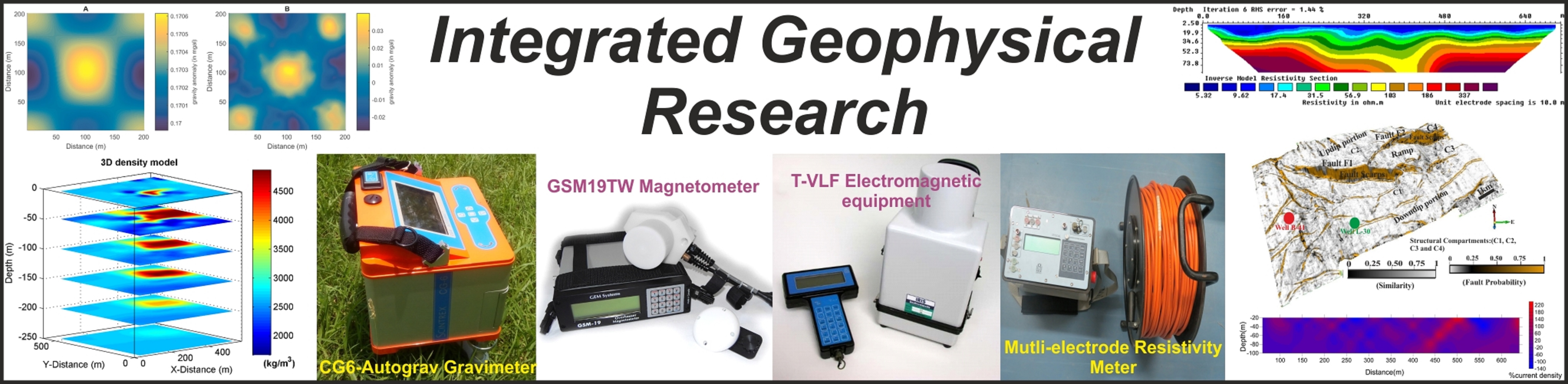
Animesh Mandal serves as an Associate Professor in the Department of Earth Sciences at Indian Institute of Technology Kanpur (IITK) , where he has been a faculty member since April 2015. His academic journey includes a B.Sc. in Physics from University of Calcutta (2005), M.Sc. in Physics from IIT Delhi (2007), and Ph.D. in Geophysics from IIT Kharagpur (2013). Prior to joining IITK, he worked as a Project Scientist at the National Geophysical Research Institute (NGRI). Research Interests : Dr. Mandal specializes in near-surface geophysical studies , geophysical data enhancement , and subsurface modeling . His work focuses on integrated geophysical approaches to understand shallow crustal configuration and delineate natural resources, utilizing gravimeter, magnetometer, electrical, and EM equipment. He has pioneered research in machine learning-assisted interpretation of geophysical data, particularly in seismic impedance inversion, reservoir characterization, and geothermal system analysis. His recent publications demonstrate expertise in applying deep learning techniques to solve complex geophysical problems. Research Trends : Analysis of his recent publications reveals a strong focus on geothermal energy systems , particularly non-volcanic hot springs in the Eastern Ghats Mobile Belt. His work combines gravity-magnetic studies with advanced computational methods to understand crustal configuration and thermal structure. Another major trend involves machine learning applications in seismic data processing, where he develops novel deep learning architectures for impedance inversion and reservoir characterization. His research bridges traditional geophysical methods with cutting-edge AI techniques, creating innovative approaches to subsurface imaging. Scientific Awards : Supervised students who received Prime Minister's Research Fellowship (PMRF) Advisees awarded FARE Fellowship, ONGC-IGU Best Poster Presentation Award, and EAGE PACE grants Students received FULL sponsorship to attend major international conferences like IMAGE 2024 Mentored students who secured postdoctoral positions at prestigious institutions including KAUST and University College Dublin Academic Leadership : Dr. Mandal has successfully supervised multiple Ph.D. and M.Tech. students to completion, with recent graduates securing positions at institutions like University College Dublin, Queen's University, and industry roles at companies including Verisk Analytics and ONGC. His research group maintains active collaborations with international institutions and regularly presents at major geoscience conferences including EAGE, SEG, and AOGS. The group has secured competitive research funding that supports field studies, laboratory work, and student training in advanced geophysical techniques.
S. Akshay is a Professor in the Department of Computer Science and Engineering at the Indian Institute of Technology Bombay . He is affiliated with the IITB Trust Lab , the Ashank Desai Centre for Policy Studies , and the Centre for Formal Design and Verification of Software Systems . His academic background includes a joint PhD from École Normale Supérieure de Cachan and Chennai Mathematical Institute (2010), postdoctoral work at IRISA/ENS Cachan Bretagne (2012) and National University of Singapore (2011), and earlier degrees from ÉNS-Cachan (2006) and Chennai Mathematical Institute (2004). Research interests focus on formal methods , particularly verification of timed, recursive, and distributed systems; automated functional synthesis; formal modeling of probabilistic and dynamical systems; and trust certification in AI models. Applications span systems biology , cyber-physical systems , and artificial intelligence . His recent publications emphasize verification techniques for Markov chains, timed automata, and Boolean functional synthesis, with algorithmic advancements in probabilistic inference, quantifier elimination, and robustness analysis. Professional activities include serving as Treasurer and Council Member of the Indian Association for Research in Computer Science (IARCS). He has co-chaired FSTTCS 2016 and ATVA 2024, and participated in program committees for major conferences like AAAI, CAV, and LICS. Teaching roles at IIT Bombay include courses on Discrete Structures , Formal Models of Concurrent Systems , and Quantitative Verification . Collaborative projects involve institutions such as University of Waterloo, IIT Delhi, and IRISA, Rennes.
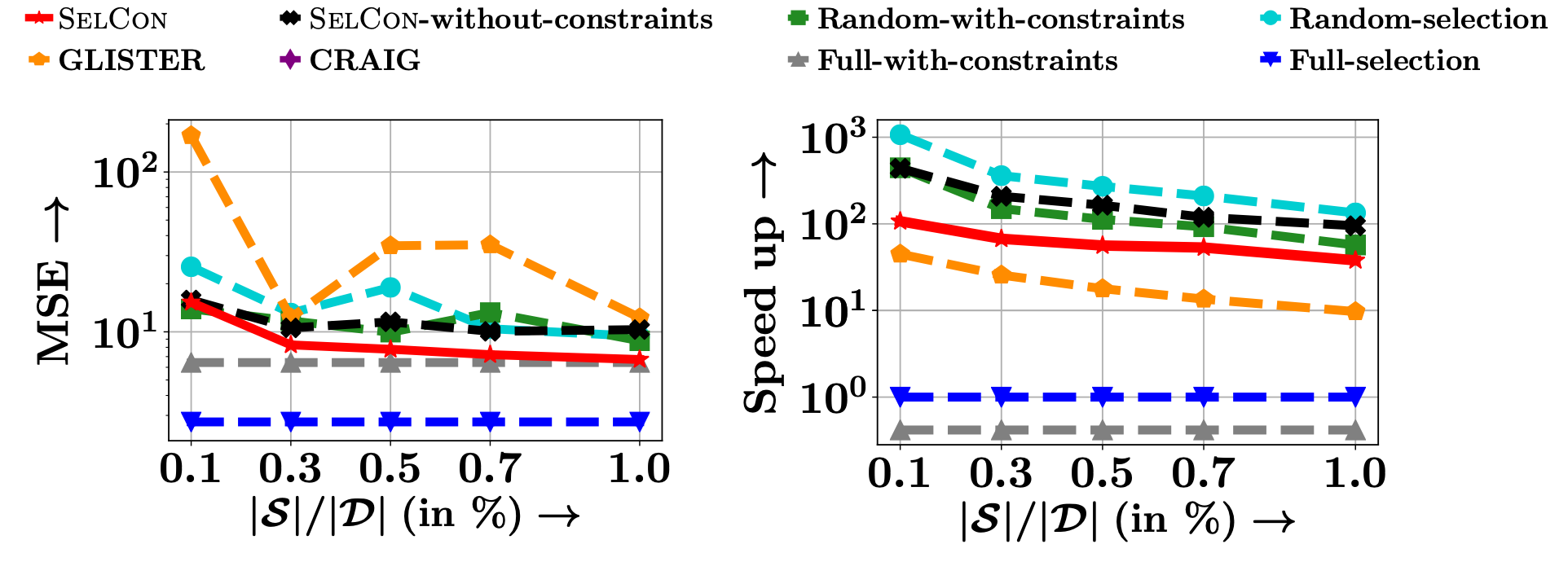
Abir De is an Assistant Professor at the Department of Computer Science and Engineering, Indian Institute of Technology Bombay. His research focuses on designing machine learning models for structured objects like graphs and sets, emphasizing data-efficient learning and human-machine collaboration. Academic Rank: Assistant Professor Institution: Indian Institute of Technology Bombay Department: Computer Science and Engineering Research Interests : Differentiable surrogates for combinatorial graph algorithms (e.g., subgraph isomorphism detection) Data-efficient machine learning through strategic subset selection Neural models for submodular set functions Human-in-the-loop machine learning Information diffusion with capacity constraints Scientific Awards : Qualcomm Innovation Fellowship Winner (2022) and Superwinner (2023) Indian National Academy of Engineering Young Engineer Award (2021) Prof. Krithi Ramamritham Award for Creative Research (2020) Google India PhD Fellowship (2013) Advising and Community Contributions : Co-advising PhD students Indradyumna Roy and N Lokesh Program Co-chair of IndoML 2023 Co-organizer of CSE Research Symposium (2023) and SubSetML workshop (2021) Tutorial creator at AIML Systems Conference (2021) and AAAI (2022) Serving on Senior PC at AAAI (2022-2024), PC member at NeurIPS (2016-2023), and ICLR (2018-2023)
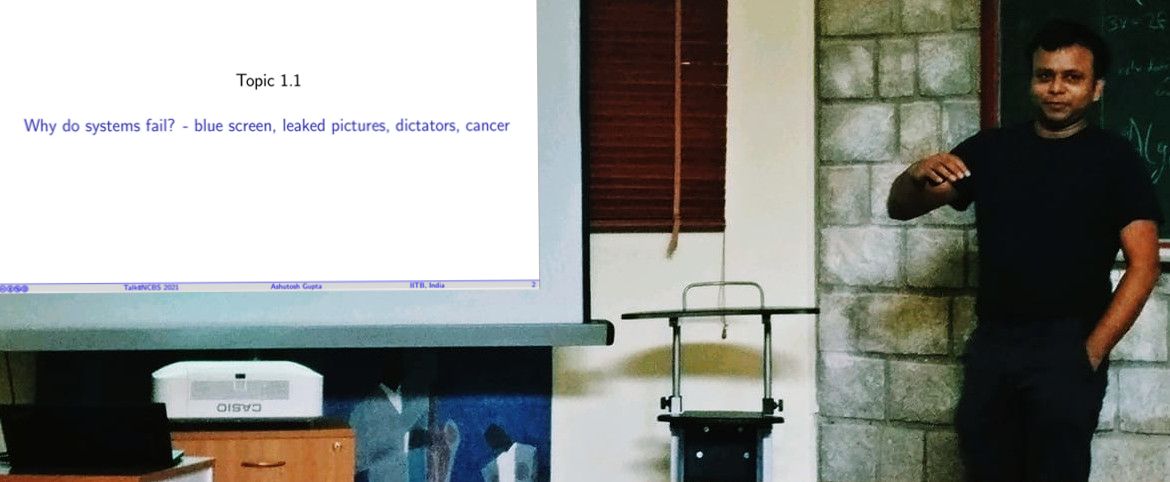
Ashutosh Gupta is an Associate Professor in the Department of Computer Science and Engineering at the Indian Institute of Technology Bombay, where he has been a faculty member since 2018. His research focuses on formal methods for software verification, particularly in the areas of model checking, constraint solving, and automated reasoning for both sequential and concurrent programs. He teaches advanced courses including Automated Reasoning (CS433), Analysis of Concurrent Programs (CS766), and Logic for Computer Science (CS228). Dr. Gupta received his Ph.D. in Computer Science from Technical University of Munich (TUM) in 2011, with affiliations during his doctoral studies at TUM, Max Planck Institute for Software Systems (MPI-SWS), and École Polytechnique Fédérale de Lausanne (EPFL). Prior to joining IIT Bombay, he served as a faculty member at Tata Institute of Fundamental Research (TIFR) in Mumbai and completed post-doctoral research in the Henzinger group at IST Austria. His research interests span formal verification of sequential and concurrent software, modeling of biological systems, and constraint solving including constraint logic programming, decision procedures, and automated theorem proving. He has developed several verification tools including VAJRA, HSF, and InvGen. His work bridges theoretical foundations with practical applications, particularly in verifying safety-critical systems and biological processes. Dr. Gupta's publication record shows a consistent trajectory of high-impact research in top venues like POPL, CAV, TACAS, and AAAI. His recent work has expanded into neural network verification, reinforcement learning verification for medical devices, and applying formal methods to biological systems, demonstrating both depth in core verification techniques and breadth in application domains. Best Paper Award at TACAS 2015 Best Paper Award at TACAS 2009 Dr. Gupta actively mentors numerous students through course projects, research presentations, and specialized workshops like SATfest. He has supervised students working on SAT/SMT solvers, verification of concurrent programs, and applications of formal methods to biological systems. His teaching philosophy emphasizes hands-on experience with verification tools and encourages students to engage with cutting-edge research through reading and presenting recent conference papers. He maintains active research collaborations with institutions including TUM, MPI-SWS, EPFL, IST Austria, and TIFR, reflecting his continued integration into the international formal methods research community.
Virendra Singh is a Professor at the Indian Institute of Technology Bombay , affiliated with both the Department of Electrical Engineering and Department of Computer Science & Engineering . He leads the Computer Architecture and Dependable Systems Lab (CADSL) and coordinates the Indo-Japanese Joint Laboratory for Intelligent Dependable Cyber Physical Systems and the Information Security Research and Development Centre (ISRDC). Ph.D. in Computer Science from Nara Institute of Science and Technology (NAIST), Japan (2002-2005) M.E. and B.E. in Electronics & Communication from Malaviya National Institute of Technology (MNIT), Jaipur (1994-1996 and 1990-1994) Research Interests : Virendra Singh focuses on Cyber Security , Computer Architecture , Fault-Tolerant Computing , Formal Verification , Trusted Computing , and Blockchain Technology . His work integrates security into hardware design, with a strong emphasis on Cyber Physical Cognitive Systems and Software Defined Networking . Recent Publications highlight advancements in cache security , quantum-resistant cryptography , malware detection , and heterogeneous computing , reflecting his interdisciplinary approach. Awards : SP Sukhatme Excellence in Teaching Award (2021) Students : He currently supervises 15 Ph.D. students, advancing cutting-edge research in security and architecture.