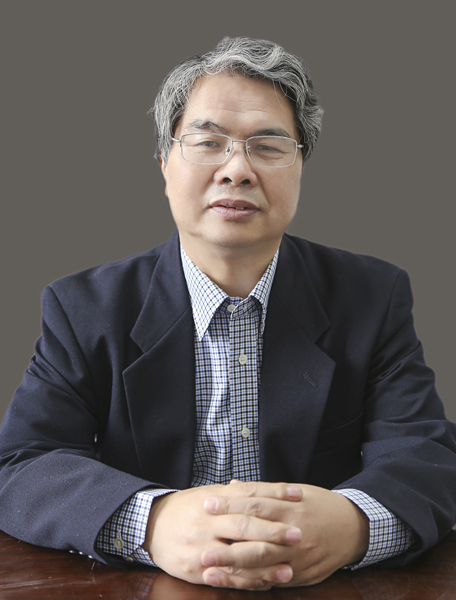
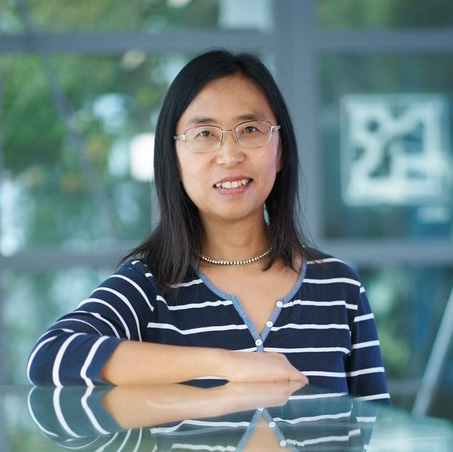
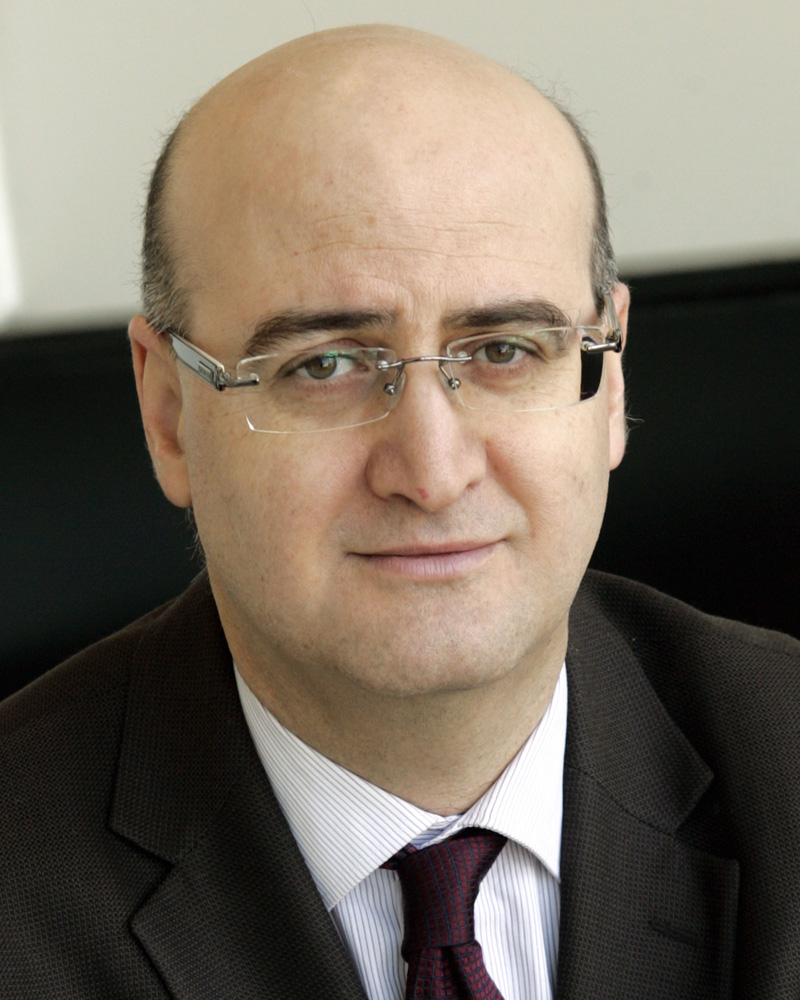
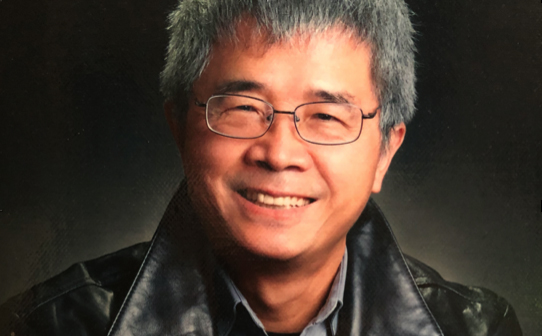
Jiao Licheng is a Distinguished Professor and Doctoral Supervisor at Xidian University, leading the School of Artificial Intelligence and the Department of Computer Science and Technology. He holds prominent roles such as Director of the Key Laboratory of Intelligent Perception and Image Understanding (Ministry of Education) and the International Joint Research Center for Intelligent Perception and Computing. His research focuses on Artificial Intelligence, Deep Learning, Evolutionary Computation, and Remote Sensing, with significant contributions to image understanding and brain-inspired computing. Education: B.E. (1982) from Shanghai Jiao Tong University, M.E. (1984) and Ph.D. (1990) from Xi'an Jiaotong University. Postdoctoral research at Xidian University (1990–1992). Research Interests include AI, Machine Learning, Image Processing, and Big Data Analysis. His work bridges theoretical advancements and practical applications, such as medical imaging, SAR image analysis, and autonomous systems. Recent articles emphasize innovations in remote sensing, deep learning architectures, and evolutionary algorithms. Awards include IEEE Fellow, IET Fellow, and the Wu Wenjun Artificial Intelligence Outstanding Contribution Award. Labs/Teams: Key Lab of Intelligent Perception, International Joint Research Center, and leadership in national innovation bases. Active in academic societies, including editorial roles in IEEE Transactions on Cybernetics and Geoscience and Remote Sensing.
Matteo Maffei is a Full Professor at TU Wien, leading the Security and Privacy group. He joined in 2017 after 11 years at Saarland University's CISPA. He holds a Ph.D. in Computer Science from Ca’ Foscari University of Venice (2006). He coordinates the TU Wien Cybersecurity Center, the SecInt Doctoral School, and the FWF Special Research Program SPyCoDe. His research focuses on formal methods for security and privacy, blockchain technologies, and web security. Roles: Full Professor, Coordinator of TU Wien Cybersecurity Center, Module Head of Christian Doppler Lab for Blockchain Technologies (CDL-BOT), Board Member of Vienna Cybersecurity and Privacy Research Cluster (ViSP). His work emphasizes formal verification of cryptographic protocols, smart contracts, and decentralized systems. Key achievements include ERC Advanced (2024) and Consolidator (2018) Grants, and leadership roles in conferences like IEEE Computer Security Foundations Symposium (CSF). Research Interests: Formal methods, smart contracts, blockchain scalability, web security, privacy-preserving protocols, and decentralized systems. His recent projects include optimizing Lightning Network channels, secure multi-hop payments, and AI-driven robustness verification. Publications: Over 200 publications in top venues like CCS, IEEE S&P, and CRYPTO. Recent work includes advancements in blockchain interoperability (e.g., Alba bridges), light client protocols (Blink), and neural network verification techniques. Grants & Awards: ERC Advanced Grant (2024), ERC Consolidator Grant (2018), DFG Emmy Noether Fellowship (2009). Led projects funded by EU Horizon, FWF, and industry partners like ABC Research GmbH. Advising & Labs: Supervised over 20 PhD/Master theses. Active in the Christian Doppler Lab for Blockchain Technologies and the SPyCoDe SFB. Collaborates with institutions like SBA Research and Stanford University.
Professor Thomas Lukasiewicz is a Full Professor and Head of the Artificial Intelligence Techniques research group at the Faculty of Informatics, Vienna University of Technology (TU Wien). His research focuses on enabling machines to mimic human-like intelligence through techniques spanning deep learning, symbolic reasoning, and predictive coding. Key areas include explainable AI, hybrid neurosymbolic systems, and applications in healthcare and law. He teaches courses such as Deep Learning for Natural Language Processing, Scientific Research and Writing, and multiple seminars in artificial intelligence and knowledge representation. His research projects include Explainable AI in Healthcare (2023–2027) and foundational work on predictive coding networks. His publications (15+ recent articles) address medical image segmentation, neurosymbolic frameworks, and language model evaluation in mathematics. Notable work includes neurosymbolic hybrid models (CCN⁺), reinforcement learning for medical report generation, and theoretical foundations of predictive coding networks.
Zhao Guoying is an Academy Professor at the Academy of Finland and holds a tenured Full Professorship at the University of Oulu, Finland. His research focuses on human behavior understanding, emotion AI, and computer vision. He has held visiting positions at institutions including Stanford University and Aalto University. He earned his PhD (2005) in Computer Science from the Chinese Academy of Sciences. His work has led to pioneering contributions in facial expression analysis, micro-expression recognition, and remote physiological signal measurement. Zhao has secured over €19.8 million in research grants as PI, including the prestigious Academy Professor Grant (2021-2026) and Profi-7 Hybrid Intelligence funding. He has supervised 22+ PhD students and 16+ postdocs, many of whom hold academic and industry leadership roles. His awards include IEEE Fellow (2022), IAPR Fellow (2020), and Finland’s Most Publishing AI Researcher (2017). His research interests span machine learning, affective computing, and feature representation. Notable contributions include the first systems for spontaneous micro-expression analysis, novel methods for face anti-spoofing, and remote health monitoring via video. He actively organizes conferences (e.g., Arctic AI Days) and chairs committees such as the Finnish AI Society board.
Alan Bovik is the Cockrell Family Regents Endowed Chair Professor in the Department of Electrical and Computer Engineering at The University of Texas at Austin's Cockrell School of Engineering. He also holds positions at The Institute for Neurosciences and serves as Director of the Laboratory for Image and Video Engineering (LIVE). With a career spanning over three decades at UT Austin, he has progressed from Assistant Professor (1984-1988) to Associate Professor (1988-1994) to his current position as Full Professor (1994-present). Dr. Bovik received his Ph.D. in Electrical and Computer Engineering in 1984 from the University of Illinois, Urbana-Champaign. Professor Bovik's research focuses on image and video quality assessment, visual perception, and digital media processing. He is renowned for developing groundbreaking algorithms including the Structural Similarity (SSIM) index, Visual Information Fidelity (VIF), and various blind quality assessment models like BRISQUE and NIQE. His work bridges engineering and neuroscience, creating perception-based models that optimize visual media delivery while reducing bandwidth consumption. These innovations have had profound industry impact, with his algorithms processing a significant proportion of global internet video traffic. His recent publications demonstrate continued leadership in perceptual quality assessment, with increasing focus on AI-generated content, high dynamic range (HDR) video, and novel applications in medical imaging. The research shows a clear trajectory toward more sophisticated, neural network-based quality metrics that better align with human visual perception across diverse content types. Professor Bovik has received numerous prestigious awards recognizing his contributions to the field: John Fritz Medal (2024) IEEE Edison Medal (2022) IAMB BaM Award (2022) Elected to the United States National Academy of Engineering (2022) Technology and Engineering Emmy Award (2021) IEEE Fourier Award for Signal Processing (2019) Progress Medal from The Royal Photographic Society (2019) Named Honorary Fellow of The Royal Photographic Society (2019) Primetime Emmy Award (2015) Edwin H. Land Medal from The Optical Society (2017) As Director of the Laboratory for Image and Video Engineering (LIVE), Professor Bovik has secured substantial research funding from organizations including the National Science Foundation and the National Institute for Standards and Technologies. His lab has produced numerous influential datasets including the LIVE Image and Video Quality Databases. He has mentored many successful students who have gone on to make significant contributions in academia and industry, though specific student names are not provided in the source materials. The Laboratory for Image and Video Engineering (LIVE) under Professor Bovik's direction has become a world-renowned center for research in perceptual image and video quality. The lab maintains close collaborations with major technology companies including Netflix, Amazon, and YouTube, ensuring that research has direct practical applications. LIVE has developed numerous influential tools and databases that are widely used in both academic research and industrial applications worldwide.
Professor Moncef Gabbouj is a distinguished academic and researcher currently serving as Professor of Signal Processing at the Department of Computing Sciences, Faculty of Information Technology and Communication Sciences, Tampere University, Finland. Previously, he held the same position at Tampere University of Technology before the merger in 2019. He has also held visiting professorships at prestigious institutions including Hong Kong University of Technology and Science, University of Southern California, and Purdue University. Ph.D. and MSc. in Electrical Engineering from Purdue University, USA (1989 and 1986) B.Sc. in Electrical Engineering from Oklahoma State University, USA (1985) Prof. Gabbouj's research spans multiple domains within signal and image processing, with a strong focus on machine learning applications. His primary research interests include artificial intelligence, machine learning, Big Data analytics, multimedia content-based analysis, indexing and retrieval, nonlinear signal and image processing, voice conversion, and video processing and coding. His work bridges theoretical advancements with practical applications across various industries, particularly in multimedia communications and biomedical applications. His extensive publication record demonstrates a clear evolution from traditional signal processing techniques toward more sophisticated machine learning and deep learning approaches. Recent work shows increasing focus on convolutional neural networks for various applications including ECG classification, video processing, financial time-series analysis, and image recognition tasks, reflecting the broader trend in the field toward deep learning methodologies while maintaining strong foundations in signal processing theory. IEEE Fellow (2011) Member, Finnish Academy of Science and Letters (2014) Knight, First Class, of the Order of the White Rose of Finland (2006) Nokia Foundation Recognition Award (2005) Nokia Foundation Visiting Professor Award (2012) Finnish Cultural Foundation for Art and Science Award (2017) TUT Foundation Grand Award (2015) Prof. Gabbouj has supervised 64 doctoral and 72 Master's theses, demonstrating his significant contribution to academic mentoring. His research has been supported by substantial funding, including research grants totaling 8.5 million Euro (2001-2015). He has served as Academy of Finland Professor during 2011-2015 and has been involved in numerous EU research projects including Horizon, ESPRIT, HCM, IST, COST, Tempus and Erasmus programs. As Editor, Guest Editor or member of the Editorial Board of 6 international scientific journals, he has significantly influenced the academic discourse in his field. He leads the Signal Analysis and Machine Intelligence (SAMI) research group at Tampere University and serves as the Finland Site Director of the NSF IUCRC funded Center for Visual and Decision Informatics. His research unit focuses on applying advanced machine learning techniques to solve complex problems in signal processing, computer vision, and multimedia analytics, with applications ranging from healthcare to multimedia communications and financial analysis.
Sylvain Lefebvre is a permanent researcher at INRIA (Institut National de Recherche en Informatique et en Automatique) in France, where he leads the MFX research team since 2018. Previously, he was part of the ALICE group at INRIA Nancy (2009-2018) and the REVES team in Sophia Antipolis (2006-2009). His career includes a postdoctoral position at Microsoft Research Seattle (2005) following his PhD at INRIA Rhones-Alpes under Fabrice Neyret. His educational background includes a PhD in Computer Graphics from Université Joseph Fourier (Grenoble) in 2005, preceded by a Master in Computer Graphics from INP Grenoble in 2001. His habilitation thesis focused on Runtime Texture Synthesis. Lefebvre's research centers on simplifying content creation for highly detailed patterns, structures, and shapes with applications spanning Computer Graphics to additive manufacturing. He develops fast, controllable by-example synthesis approaches that generate content while enforcing user-specified constraints. His work addresses computational challenges through novel data structures and algorithms optimized for GPUs and FPGAs, including his Silice programming language. The ERC-funded ShapeForge project (2012-2017) advanced shape generation for 3D printing, leading to the IceSL software for digital modeling and fabrication. Analysis of his 15 most recent publications reveals a strong focus on additive manufacturing optimization, with recurring themes in structural integrity, material efficiency, and geometric algorithms. His work bridges computer graphics theory with practical fabrication constraints, particularly in microstructure design, slicing techniques, and mechanical metamaterials. The interdisciplinary nature spans computer science, materials engineering, and robotics. EUROGRAPHICS Young Researcher Award (2010) ERC Starting Grant for ShapeForge project (2012) Lefebvre has advised over 25 PhD students and interns including Marco Freire, Thibault Tricard, and Jimmy Etienne. His ShapeForge project received significant ERC funding, supporting research in computational fabrication. He serves on numerous program committees including SIGGRAPH, Eurographics, and SIGGRAPH Asia, reflecting his leadership in the computer graphics community. As leader of the MFX team since 2018, Lefebvre directs research in computational fabrication, focusing on IceSL software development for 3D printing workflows. The team integrates computer graphics techniques with manufacturing constraints, developing tools that simplify complex object design and fabrication while addressing real-world challenges in material usage and structural integrity.
Xiaotie Deng is a distinguished academic and Chair Professor at Peking University (since 2018), with prior roles at Shanghai Jiao Tong University (2013–2017), the University of Liverpool (2010–2013), and City University of Hong Kong (1997–2013). His research focuses on algorithmic game theory, internet economics, and parallel computing. He holds prestigious fellowships including ACM Fellow (2008) and IEEE Fellow (2019). Deng has led significant grants, including a RMB 5M project on algorithmic game theory at Peking University (2018–2020) and NNSFC-funded research on market competitiveness and fairness (2018–2020). Education: PhD in Computer Science from Stanford University (1989), MSc from Chinese Academy of Sciences (1984), BSc from Tsinghua University (1982). Research interests span computational game theory, equilibrium analysis, and blockchain applications. Notable contributions include foundational work on Nash equilibrium complexity and mechanism design for resource allocation. He has advised numerous PhD students and serves on editorial boards of top journals like SIAM Journal on Computing and IEEE Transactions on Cloud Computing. Key awards: ACM and IEEE Fellowships, JSPS Invitation Fellowships (2005, 1996), and NSERC International Fellowship (1991). Active in conference organizing, including PC chairs for WINE 2020 and SAGT 2018. Consultancy includes work with Cryptape, Ant Financial, and Microsoft Research Asia, reflecting his industry engagement in algorithmic solutions and blockchain technologies.
Georg Langs is a Full Professor of Machine Learning in Medical Imaging at the Medical University of Vienna and Founding Director of the Computational Imaging Research Lab (CIR). He leads a 25-member interdisciplinary team focusing on machine learning methodologies for medical image analysis. Key roles include Director of the Joint Initiative on AI in Medical Imaging (European Institute of Biomedical Imaging Research) and Scientific Lead of the Respiratory Disease Phenotype Observatory (ZODIAC, UNO/IAEA). He is affiliated with MIT’s CSAIL and serves on advisory boards for global AI initiatives. Education: PhD in Computer Science, Graz University of Technology (2007) M.Sc. in Mathematics, Vienna University of Technology (2003) Research Interests: Machine learning-driven precision imaging, neuroimaging, clinical data phenotyping, and cross-species brain connectivity analysis. His work bridges imaging biomarkers with biological mechanisms and large-scale clinical data integration. Grants & Funding: Over €6M in competitive grants as Principal Investigator in the last two years. Projects include ARTEMIS (fatty liver disease digital twins) and AI-POD (personalized risk scores via imaging). Awards: 2022 IS3R Emerging Leaders Club 2022 National Academy of Medicine Emerging Leader Programme 2018 Advisor, AI Mission Austria 2030 Lab & Teams: CIR Lab focuses on AI-driven medical imaging solutions. Co-founded contextflow GmbH , a MedUni spin-off developing AI software for imaging analysis.
Edgar Weippl is a Professor at the Faculty of Computer Science, University of Vienna, where he serves as Vice Dean and Head of the Research Group Security and Privacy. His work spans cybersecurity, blockchain, and machine learning, with teaching roles in information security and software security courses. Current Positions: Vice Dean (Faculty of Computer Science), Head (Security and Privacy Research Group), Deputy Head (Neuroinformatics & Knowledge Engineering Groups) Research Interests: Cybersecurity, blockchain, IoT security, code obfuscation, privacy technologies, reinforcement learning, and socio-technical systems security Selected Publications: Focus on blockchain privacy, VoWiFi security, code obfuscation, and reinforcement learning applications
Andreas Rauber is an Associate Professor in the Department of Data Science at Technical University of Vienna. He serves as Curriculum Coordinator for Bachelor and Master programs in Business Informatics and Data Science, and chairs the Curriculum Commission for Business Informatics. His research focuses on Information Systems Engineering, Logic and Computation, and Visual Computing, addressing challenges in data management, digital preservation, and reproducibility in e-science. He leads projects like OS Trails and FAIR-AI, emphasizing FAIR principles and trustworthy research infrastructures. Rauber has contributed to over 150 publications, including works on data citation frameworks, adversarial ML defenses, and reproducibility in IR. His work bridges technical innovation with policy, exemplified through roles in the EOSC Support Office Austria and RDA Austria initiatives. Key projects include establishing FAIR data practices across universities and advancing digital preservation through repositories like DBRepo. He coordinates international collaborations, such as the EU-funded EOSC-Life and EGI Advanced Computing projects. His teaching spans courses in machine learning, information retrieval, and research methods, fostering next-generation data scientists.
Anja Feldmann is Director at the Max Planck Institute for Informatics in Saarbrücken and Professor of Internet Network Architectures at Technische Universität Berlin (since 2006). Previously she held a full professorship at Technische Universität München (2002–2006) and conducted research at AT&T Labs Research , Saarland University , and Carnegie Mellon University , where she earned her Ph.D. in 1995. Education Ph.D. in Computer Science, Carnegie Mellon University, 1995 M.Sc. in Computer Science, Carnegie Mellon University, 1991 Diplom in Computer Science, Universität Paderborn, 1990 Research Interests Anja Feldmann’s research centers on measurement-driven understanding of the Internet. She tackles challenges such as software-defined networking , cloud-network interactions , performance debugging , and traffic characterization . A growing focus is the privacy and security of networked systems, evidenced by recent studies on online tracking, DNS security, and disinformation ecosystems. Her group designs scalable measurement platforms that combine passive and active monitoring , programmable data planes , and machine-learning analytics to dissect phenomena ranging from terabit-scale traffic to covert tracking on illegal streaming sites. Recent Publication Themes The 2021-2025 publications reveal a methodological evolution toward large-scale, longitudinal measurement . Topics include: Impact of global events (COVID-19, CrowdStrike outage) on Internet traffic Cross-country tracking ecosystems and privacy leaks DNS root and routing plane stability and security ML-driven real-time monitoring at terabit speeds Disinformation campaigns on encrypted messaging platforms Scientific Awards Gottfried Wilhelm Leibniz Prize (2011) – Germany’s highest research honor Berliner Wissenschaftspreis (2011) Elected Member of the German National Academy of Sciences Leopoldina (2009) Advising & Grants While individual student names are not listed, Prof. Feldmann leads a vibrant team at MPI-INF’s Internet Architecture department. She has supervised numerous doctoral candidates and post-doctoral researchers whose work is reflected in the co-authored papers. Funding sources include the German Research Foundation (DFG) via the Leibniz Prize and EU Horizon projects, although explicit grant numbers are not provided in the source material. Labs & Teams She heads the Internet Architecture department at MPI-INF, located at the Saarland Informatics Campus . The department operates state-of-the-art measurement infrastructure—including programmable switches, honeynets, and global vantage points—to support empirical network science.
Professor Dong Xu is a Tenured Professor in the Department of Computer Science at the University of Hong Kong (HKU), part of the School of Computing and Data Science. He holds a B.Eng. and Ph.D. from the University of Science and Technology of China (USTC). His career includes tenured roles at Nanyang Technological University and the University of Sydney, alongside postdoctoral research at Columbia University. His research focuses on Artificial Intelligence, Computer Vision, Multimedia, and Machine Learning , with applications in autonomous driving, AR/VR, medical image analysis, and video surveillance. Xu has authored over 150 papers in top journals and conferences, including CVPR, ICCV, and IEEE Transactions. He actively contributes to the academic community as an editorial board member for journals like ACM Computing Surveys and IEEE Transactions, and through leadership roles in conferences such as ACM Multimedia and ICME. Notable awards include Fellowships from IEEE and IAPR, and the IEEE Signal Processing Society Distinguished Lecturer title (2021–2022). Education: B.Eng. (USTC, 2001), Ph.D. (USTC, 2005) Professional Service: Program Coordinator of ACM Multimedia 2024, Guest Editor of over ten special issues.
Martin Bicher is a PostDoc Researcher at TU Wien, affiliated with the Department of Data Science under the Faculty of Informatics. He specializes in agent-based simulation, epidemiological modeling, and decision support systems for public health crises. His work focuses on optimizing resource allocation, vaccination strategies, and policy evaluation during pandemics. He teaches courses such as Modeling and Simulation (194.076), Modelling and Simulation in Health Technology Assessment (194.094), and Advanced Modeling and Simulation (194.056). His research is supported by projects like DynOptTestControl (2022–2026) and KLIPHA-COVID19 (2020–2021). Key research interests include agent-based modeling frameworks, integration of machine learning into simulation systems, and multi-criteria decision support for public health interventions. His publications analyze pandemic response strategies, vaccination prioritization, and the impact of environmental factors on disease spread. Recent work includes developing mathematical models for equitable disease testing, simulating vaccination strategies under supply uncertainties, and evaluating contact-tracing policies. He collaborates with interdisciplinary teams to address challenges in healthcare resource optimization and policy design. Advising two students, Bicher has mentored theses on railway simulation and delay modeling. His contributions to pandemic decision support have been featured in high-impact journals like Omega and PLoS ONE.
Markus Haltmeier is a Professor in the Department of Mathematics at the University of Innsbruck. His research focuses on inverse problems, image reconstruction, and deep learning with applications in medical imaging, photoacoustics, and computational mathematics. He leads a group dedicated to advancing theoretical and practical solutions for challenges in non-destructive testing and medical diagnostics. His work integrates mathematical analysis with machine learning, addressing issues such as high-resolution imaging in scattering media and automated segmentation of cardiac structures. Key research areas include regularization techniques for inverse problems, self-supervised learning approaches for limited data scenarios, and computational methods for photoacoustic tomography. His contributions span both theoretical developments (e.g., inversion formulas for Radon transforms) and applied solutions (e.g., algorithms for cylinder liner wear assessment and myocardial infarct segmentation). Publications highlight advancements in neural network-based regularization, 3D medical image synthesis, and unsupervised learning frameworks for segmentation and registration. His research emphasizes bridging the gap between mathematical theory and real-world applications in healthcare and engineering.