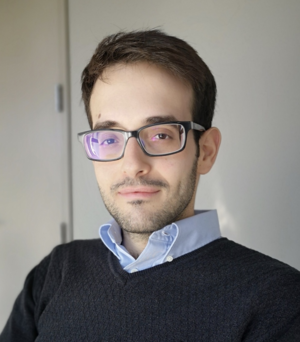
Tobias Nießen is a PreDoc Researcher in the Formal Methods in Systems Engineering department at TU Wien (Vienna University of Technology). His research focuses on cyber-physical systems, security verification, and formal methods applied to software engineering challenges. He is actively involved in the ARTIST project (2021–2026) , which addresses safety-critical systems and hyperproperty verification. Key Projects/Grants: ARTIST (Horizon 2020 Project) Contact & Profiles: Email: tobias.niessen@tuwien.ac.at ORCID: 0000-0002-7712-0006 Lab: Formal Methods in Systems Engineering His recent work emphasizes hyperproperty verification (e.g., differential privacy, information flow security) and backdoor detection in software systems using formal methods. He has contributed to advancing symbolic execution techniques for finding ∀∃ hyperbugs, a class of security vulnerabilities affecting multiple system executions simultaneously.
Sarah Sophie Sallinger is a PreDoc Researcher at the Institute of Software Technology within the Faculty of Informatics at Technische Universität Wien. Her research focuses on formal methods applied to systems engineering, including cybersecurity, probabilistic systems, and software reliability. She contributes to projects such as ARTIST (2021–2026) and ProbInG (2020–2025). Her work addresses challenges like backdoor detection in software, formalization of Heisenbugs, and controller synthesis for probabilistic hyperproperties. Publications reflect her expertise in formal verification and cybersecurity, with recent work emphasizing practical applications of theoretical frameworks. She supervises student research, including Consistency-based software fault localization with multiple observations (Lukas Graussam, 2024). Contact: Email | Profile
Alexander Schindler is an External Lecturer at the Department of Information Systems Engineering at Technische Universität Wien. His research focuses on audio signal processing, music information retrieval, and deep learning applications in multimodal analysis. He coordinates the approacH project (2010–2013) funded by the European Commission, exploring audio-visual search engines. His academic background includes a Dipl.-Ing. in Technical Engineering and a Dr.techn. from TU Wien. Key research areas include acoustic scene classification, deepfake detection, and music video analysis. He has supervised students on topics like bird song identification and machine outage prediction. Notable publications span from unsupervised cross-modal learning (2020) to multi-modal MIR frameworks (2019). He holds a Bakk.techn. and advanced technical qualifications. Recent work includes advancements in deepfake audio detection (2025) and audio-visual surveillance systems (2024). His projects bridge theoretical research with practical applications in forensic analysis and industrial predictive maintenance. He contributes to international conferences like ACM SAC and DCASE, focusing on neural network architectures for audio analysis.
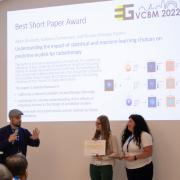
Renata Raidou is an Associate Professor in Biomedical Visualization and Visual Analytics at the Research Unit of Computer Graphics, Institute of Visual Computing & Human-Centered Technology, TU Wien, Austria. She previously held positions at the University of Groningen and TU Wien as a postdoc. Her research focuses on medical visualization, uncertainty visualization, and data physicalization for healthcare applications. Raidou has received prestigious awards including the Dirk Bartz Prize (2017) and EuroVis Young Researcher Award (2022). She coordinates TU Wien's BSc in Digital Health and MSc in Medical Informatics. Education: PhD in Medical Visualization (Eindhoven University of Technology, 2017), MSc in Biomedical Engineering (TU Delft), Diploma in Electrical and Computer Engineering (NTUA). Professional Roles: Editorial Board member of Computer & Graphics , Steering Committee member of EG VCBM, and member of EASAC's AI in Healthcare working group. Research Interests: Medical visualization strategies for P4 medicine, anatomical edutainment through physicalization, and uncertainty-aware visual analytics in radiotherapy. Her work bridges visual computing, machine learning, and medical applications, emphasizing clinical decision support and public health education. Awards: Over 10 awards including Best Paper recognitions at IEEE Vis and EuroVis, and the EuroVis Best PhD Award. Her contributions span visualizing anatomical variability, ensemble data exploration, and interactive medical training tools. Grants & Projects: Leads the Health Virtual Twins project (2024–2028) for personalized stroke management. Active in interdisciplinary collaborations, including the Shonan Meeting on Formalizing Biological Visualization. Labs/Teams: Head of the Visualization Group at TU Wien, developing tools like Vologram (holographic medical data physicalization) and Slice and Dice anatomical crafts. Collaborates on edutainment systems and AI-driven healthcare visualization.
Fotios Lygerakis is a doctoral student and university assistant at the Department of Cyber-Physical Systems (CPS) at Montanuniversität Leoben, Austria. His research focuses on advancing machine learning and robotics, particularly in representation learning, visuotactile fusion, and reinforcement learning for robotic manipulation. He holds a Diploma in Electrical and Computer Engineering from the Technical University of Crete (2019) and has held roles including teaching assistant at the University of Texas at Arlington, research assistant at Demokritos (Athens), and research intern at Toshiba Research Europe. His research interests span representation learning, multimodal fusion, reinforcement learning, and healthcare robotics. Notable contributions include work on CR-VAE and M2CURL, earning a Best Student Paper Award at the 2024 Ubiquitous Robotics Conference. Lygerakis actively supervises theses in areas like human-robot interaction and self-supervised learning, and teaches courses on machine learning and deep learning. Lygerakis maintains active engagement in the scientific community through reviewing for journals/conferences (e.g., IROS, IJRR), organizing workshops, and leading the Neural Coffee Reading Group. He has presented invited talks at institutions like New York University and Technical University of Crete, and his work has been featured in outlets like Computer Vision News.
Shen Heng Tao is a Distinguished Professor and Dean of the School of Computer Science and Engineering at the University of Electronic Science and Technology of China (UESTC). He is also the Executive Dean of the AI Research Institute and Chief Scientist of Vision Intelligence at the Peng Cheng Laboratory. His academic journey includes a BSc (First Class Honours) and PhD from the National University of Singapore (2000 and 2004), followed by roles at the University of Queensland, where he became a Professor in 2011. His research focuses on artificial intelligence, multimedia computing, and computer vision, with notable contributions to cross-media intelligent analysis and real-time video retrieval systems. He has published over 400 peer-reviewed papers, including 160+ IEEE/ACM Transactions, and holds an H-index of 78. His work has been recognized with awards such as the IEEE Fellow, ACM Fellow, OSA Fellow, and Clarivate Highly Cited Researcher. He has led 15 major research grants, including projects from the Ministry of Science and Technology of China and National Natural Science Foundation. His service includes roles as Associate Editor for journals like ACM Transactions of Data Science and IEEE Transactions on Multimedia, and conference chairs like ACM Multimedia 2021. His lab, the Center for Future Media, explores advanced topics like multimodal learning, trustworthy AI, and human-robot interaction. Current research emphasizes cross-modal reasoning and real-world applications in metaverse, autonomous systems, and smart cities.
Robert J. C. Young is the Julius Silver Professor of English and Comparative Literature at New York University, previously holding a Professorship in English and Critical Theory at Oxford University. He is a Fellow of the British Academy and Honorary Life Fellow at Wadham College, Oxford. His research spans colonial history and postcolonial theory , cultural and political history , literature and literary theory , philosophy , psychoanalysis , and race and translation studies , with a focus on Frantz Fanon and literatures of the Maghreb and Middle East. He has edited Fanon's works, including Alienation and Freedom (2018). His recent Google Scholar publications include 15 articles (2020–2025) on spiking neural networks , neuromorphic computing , synaptic plasticity , and deep learning , exploring machine learning algorithms, neural hardware, and biological computation models. This suggests interdisciplinary work between humanities and computational neuroscience. Corresponding Fellow, British Academy (2013) Honorary Life Fellowship, Wadham College, Oxford (2017) President, AILC/ICLA Research Committee on Literary Theory
Professor Robert Young is a leading academic in Polymer Science and Technology at the University of Manchester, UK. With a distinguished career spanning decades, he has held visiting professorships at The Hong Kong Polytechnic University, King Fahd University of Petroleum and Minerals, and École Polytechnique Fédérale de Lausanne. His research focuses on polymers, nanotechnology, and composite materials. Current: Professor of Polymer Science and Technology, University of Manchester 2015-2017: Visiting Chair Professor, The Hong Kong Polytechnic University 2011-2013: Visiting Professor, King Fahd University of Petroleum and Minerals His work combines experimental and computational approaches to study polymer composites, graphene, and advanced materials characterization techniques like Raman spectroscopy. Recent publications emphasize neuromorphic computing, spiking neural networks, and hardware-aware AI. Professor Young's accolades include the 2019 Platinum Medal from the Institute of Materials, Minerals and Mining, and fellowships at the Royal Society (2013) and Royal Academy of Engineering (2006). He has delivered prestigious lectures including the Cockcroft Lecturer (1996) and Wolfson Research Professor (1992).
Assoc. Prof. Ozan Özdenizci is a faculty member at the Institute of Machine Learning and Neural Computation, TU Graz, Austria. His research focuses on robustness, safety, and efficiency in machine learning, particularly in adversarial robustness, spiking neural networks, and privacy-aware learning. He holds a PhD from Northeastern University (2016), and MSc/BSc degrees from Sabancı University (2010/2008). Previously, he served as a postdoc at TU Graz (2016–2020) and a research group leader at Montanuniversität Leoben (2020–2023). Affiliations: TU Graz (2023–present), Montanuniversität Leoben (2020–2023), TU Graz Postdoc (2016–2020) Education: PhD (Northeastern University, 2016), MSc/BSc (Sabancı University, 2010/2008) Research Interests: Developing ML systems with robustness guarantees, efficient deep learning (e.g., spiking networks), and privacy-aware mechanisms. Key areas include adversarial defense mechanisms, sparse network design, and neuromorphic computing applications. His work bridges theoretical foundations with practical implementations in computer vision and autonomous systems. Recent Contributions: Advances in privacy-aware lifelong learning (ICLR 2025), robust spiking networks (TMLR 2024), and weather-resistant vision models (TPAMI 2023). His research emphasizes trade-offs between model efficiency, robustness, and scalability. Awards: Top Reviewer at NeurIPS 2023, Outstanding Reviewer at ICML 2022/ICLR 2022 Labs/Teams: Member of Graz Center for Machine Learning (GraML) and ELLIS Unit Graz
Adrian Vulpe-Grigorasi is a Junior Researcher at the Center for Digital Health and Social Innovation , affiliated with the Institute of Health Sciences at FH Steyr (FHSTP.ac.at). He holds BEng and MEng degrees and specializes in interdisciplinary research at the intersection of machine learning, cognitive science, and biomedical engineering. His research focuses on: Cognitive load assessment using VR systems and biosensors Development of multimodal machine learning frameworks for health monitoring Applications of GANs in ECG analysis and synthetic data generation Energy systems optimization through data-driven approaches Key projects include: Realistic clinical XR training systems Attention performance classification via eye tracking Smart grid forecasting with GAN data augmentation Adrian has published in conferences such as IEEE Informatics, CGI, and ACM MUM. His work bridges theoretical machine learning advancements with practical healthcare and energy applications.
Sebastian Schrittwieser is a Researcher in the Research Group Security and Privacy, part of the Faculty of Computer Science. His work focuses on cybersecurity, code obfuscation, malware analysis, and machine learning applications in security. He leads and contributes to projects like INODES (Cyber Defense Strategies) and EMRESS (Resilience Evaluation Models). His research bridges theoretical foundations and practical applications, addressing challenges in software protection and threat detection. Key research interests include: Code Obfuscation Techniques and Resistance Adversarial Machine Learning and Risk Assessment Malware Analysis and Program Simulation User Behavior in Cybersecurity Contexts Recent publications emphasize empirical studies on IT/OT infrastructure security, graph neural network vulnerabilities, and quantum-inspired machine learning. He actively collaborates with institutions like SBA Research and presents at international conferences. Grants include Research Funding for projects on optimal cyber defense strategies (INODES) and software resilience evaluation (EMRESS). His work aligns with interdisciplinary efforts in security engineering and privacy-preserving technologies.
Andreas Uhl is a University Professor in Artificial Intelligence and Human Interfaces at the Department of Computer Science, University of Salzburg. With a prolific research career spanning from 1996 to present, he has authored or co-authored 534 publications and led or participated in 59 research projects. His work demonstrates sustained academic productivity with recent publications and projects extending through 2025. Professor Uhl's research interests span multiple domains at the intersection of artificial intelligence and practical applications. His primary focus areas include computer vision, biometrics, biomedical imaging, and digital forensics, with significant contributions to pattern recognition and image analysis. His work bridges theoretical computer science with practical applications in cultural heritage preservation, medical diagnostics, and security systems, demonstrating a versatile research portfolio that addresses both fundamental challenges and real-world problems. His recent publications reveal a strong emphasis on temporal image forensics, biomedical image analysis, and biometric security. The research shows a clear trajectory toward increasingly sophisticated applications of AI in specialized domains, with particular attention to validation methodologies and limitations of current approaches. His work on cultural heritage applications demonstrates an innovative application of computer vision techniques to historical artifacts. Best paper award @ 25th ACM Symposium on Applied Computing (Applications Track), 2010 Best Paper award @ 2nd European Workshop on Visual Information Processing (EUVIP'10), 2010 IEEE Biometrics Council Best Paper Award (TBIOM), 2022 Kurt Zopf Preis, 2023 Professor Uhl actively leads multiple significant research initiatives, including the CDL-POSA project on People and Object Surface Authentication (2025-2032), Artificial Intelligence driven Biomedical Imaging Innovation (2025-2029), and the AIBIA Research and Transfer Junior Lab (2023-2025). His research group maintains active collaborations with institutions like Carnegie Mellon University, as evidenced by his recent research stay there in September 2024. The scope and duration of his current projects indicate substantial grant funding and institutional support for his research agenda. His laboratory activities focus on AI applications in biomedical imaging, border security through vehicle-integrated technologies (AutoBorder project), and cultural heritage analysis. The research environment appears to integrate academic inquiry with practical transfer through initiatives like the FFG Student Internships program, suggesting a strong commitment to both fundamental research and real-world implementation.
Chen Xihui, Ph.D., is a Researcher at the Institute of Creative\Media/Technologies within the Department of Media and Digital Technologies at the University of Applied Sciences St. Pölten. His work focuses on media computing and digital technologies, with specialized expertise in cybersecurity frameworks. Primary research domains include: Federated learning systems and their security vulnerabilities Robustness of recommendation algorithms against adversarial attacks Privacy-preserving machine learning architectures Competitive data poisoning mitigation strategies Recent scholarly work demonstrates concentrated focus on security challenges in federated recommendation systems, particularly examining attack vectors and defensive mechanisms in distributed learning environments.
Nicola Zannone serves as Associate Professor and Chair of the Data Protection research group within the Department of Mathematics and Computer Science at Eindhoven University of Technology (TU/e). He holds a PhD in Computer Science from the University of Trento (2007), where his dissertation focused on security requirements engineering during a research visit to the Center for ... Research Focus: His work centers on cybersecurity with emphasis on data protection, phishing defense mechanisms, and access control systems. Recent investigations explore emerging threats like quishing and LLM-generated phishing attacks, autonomous navigation security, and industrial control system vulnerabilities. His research uniquely bridges technical security solutions with human behavioral factors in organizational contexts. Publication Trends: Between 2024-2025, Zannone's output demonstrates growing attention to AI-powered threats and automated vulnerability mitigation. His systematic reviews and empirical studies consistently address practical security challenges in critical infrastructure and software supply chains, reflecting industry relevance through collaborations with security practitioners. Leadership Roles: As Chief Editor for Computer Security (Frontiers in Computer Science) and Associate Editor for Cybersecurity and Privacy (Frontiers in Big Data), he shapes discourse in security research. His editorial work on topics like "Generative AI for Cybersecurity" highlights forward-looking engagement with evolving threat landscapes.