Dr. Ludovic Rapp is a Senior Research Fellow at the Research School of Physics , Australian National University (ANU) , and leads the High-Power Laser group at the Laser Physics Centre (LPC) . His expertise spans ultrafast laser interaction with matter , beam shaping , and laser-induced microexplosions for synthesizing super-dense material phases , including novel silicon allotropes. He is also the Laser Safety Officer for the Research School of Physics.
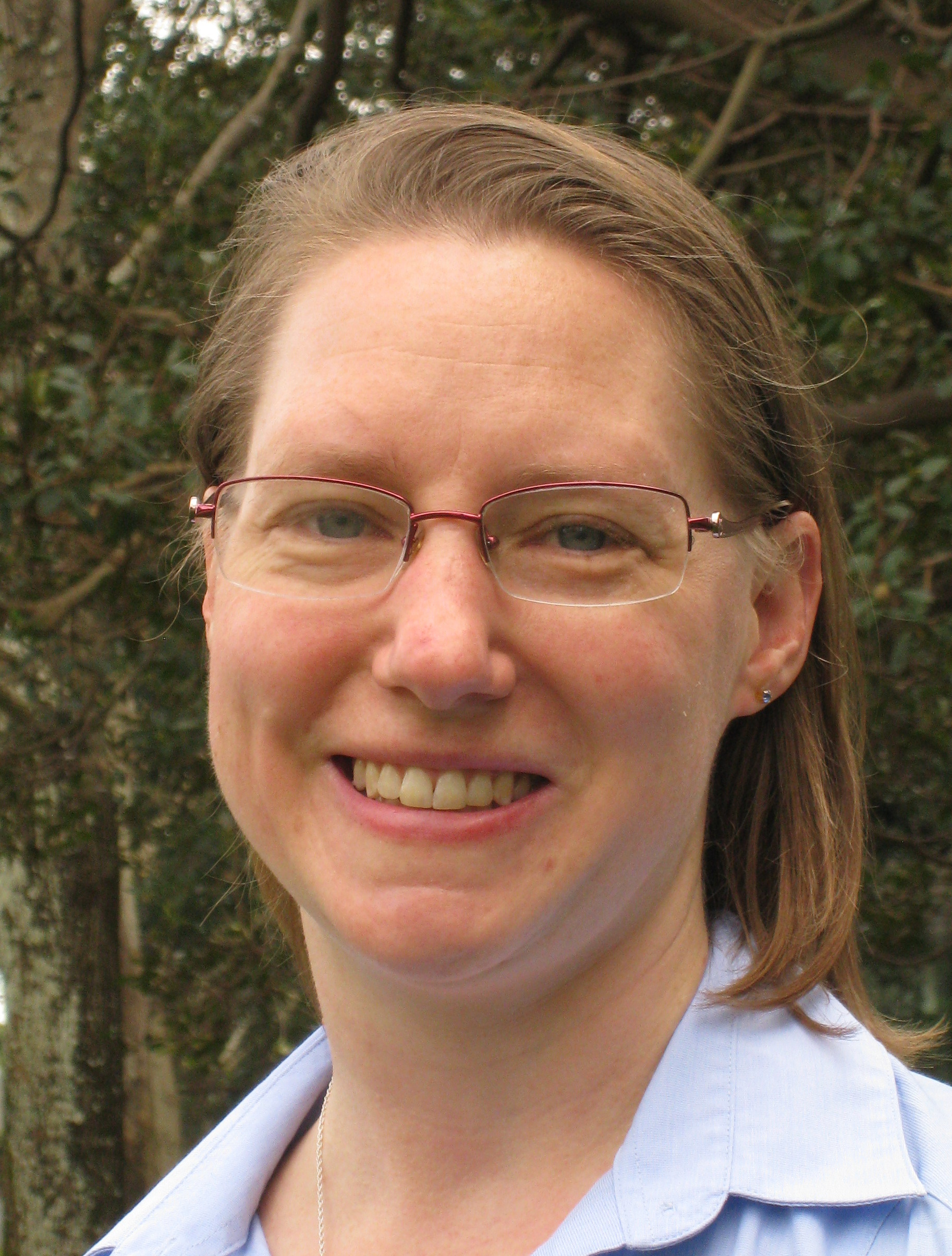
Associate Professor Judy Hart is a materials scientist at the School of Materials Science & Engineering, UNSW Sydney , specializing in the development of semiconducting materials for renewable energy applications. Her work integrates computational (DFT) and experimental approaches to understand composition-property relationships in systems like solid solutions , heterostructures , and doped materials for photocatalysis and solar cells . She leads projects funded by ARC Discovery and Linkage grants , including work on photo-electro-catalysis systems and stabilizing ceramic materials . Education: PhD in Materials Engineering (Monash University, 2007), BEng (Materials) (Monash, 2002) Professional Experience: Senior Lecturer (UNSW, 2017–), Lecturer (UNSW, 2013–2017), University of Bristol (2007–2012) Research Interests Her research focuses on designing materials for renewable energy , particularly photoelectrochemical water splitting and organic oxidation reactions . Key areas include Density Functional Theory (DFT) , defect engineering , band gap tuning , and nanostructured materials . She investigates ferroelectric polarization effects , metal oxide heterostructures , and stability of battery components , with applications in hydrogen production , CO2 conversion , and advanced battery materials . Scientific Awards Ramsay Memorial Fellowship (University of Bristol, 2007–2009) Teaching Contributions She is co-author of the 1st Australian & New Zealand edition of "Materials Science and Engineering: An Introduction" , and teaches courses on computational materials science , corrosion-resistant surfaces , mechanical behavior of metals , and materials design .
Dr. Thanh-Son Pham is an ARC DECRA Research Fellow in the Geophysics Department at The Australian National University’s Research School of Earth Sciences. His research focuses on using seismic waves to study Earth’s interior structures, from polar ice sheets to the inner core. He has pioneered methods like teleseismic P-wave coda autocorrelation and coda correlation wavefield analysis, leading to breakthroughs such as detecting J-waves in the inner core and identifying an innermost inner core layer. His work has been featured in Science , Nature Communications , and international media. He holds a PhD from ANU (2019) and has supervised research projects on Antarctic seismology and earthquake source physics. Awards include the 2024 Zatman lectureship from SEDI. Current projects include probing Antarctic ice sheets via correlation seismology and advancing machine learning tools for deep Earth studies. Education: PhD in Geophysics (ANU, 2019), Graduate Diploma in Earth System Physics (ICTP, 2015), BSc in Applied Mathematics (Hanoi University, 2013) Research interests span seismic source inversion, Antarctic ice dynamics, and inner core anisotropy. His 2024 articles address Hunga Tonga eruption mechanics and PKIKP wave analysis using deep learning. Media highlights include BBC, NYT, and ANU press releases.
Professor Mia Woodruff is a leading academic at Queensland University of Technology (QUT), holding the position of Professor in the School of Mechanical, Medical and Process Engineering within the Faculty of Engineering. She is the Group Leader of the Biofabrication and Tissue Morphology Group and Acting Director of the Herston Biofabrication Institute. Her research focuses on biofabrication, tissue engineering, and 3D printing applications in medicine, particularly in bone regeneration, vascular surgery, and personalized prosthetics. Woodruff holds a PhD in Materials Engineering from the University of Nottingham, UK. She has led over $40 million in external grants, including ARC and Advance Queensland funding. Her work emphasizes translating biofabrication technologies into clinical practice, such as developing patient-specific implants and surgical tools. She has published over 120 peer-reviewed articles and co-founded initiatives like the Herston Biofabrication Institute to bridge clinical, research, and industry collaboration. Key research areas include composite biomaterials, 3D scanning/modelling, electrospinning, and large-animal models for bone regeneration. She has been awarded the QUT Vice Chancellor’s Research Fellowship and ARC Fellowship. Her outreach efforts include promoting STEM through media appearances and school programs, such as the 3D Printing in All High Schools initiative. Grants & Awards $40M Innovation Manufacturing CRC (Co-Investigator) $3.72M ARC Industrial Transformation Training Center (Additive Biomanufacturing) Advance Queensland Fellowships ($1.2M Cluster Grant for Biofabrication) Media & Engagement Featured in SCOPE TV, SBS The Feed , and ABC News Keynote speaker at global conferences (e.g., TERMIS, ORS) Research Infrastructure Herston Biofabrication Institute: Integrates 3D printing, clinical trials, and patient collaboration World-first Biofabrication Master’s program launched in 2014
Dr. Farshid Rahmani is a Lecturer at the School of Property, Construction and Project Management (PCPM), RMIT University, Australia. His research and teaching focus on Construction Procurement , Relational Contracting , and Agile Project Management . He supervises Masters and PhD students in areas including Early Contractor Involvement (ECI) Alliances Public-Private Partnerships (PPP) Collaborative Delivery Systems . His recent publications explore agile frameworks for building adaptation, sustainable materials like recycled concrete, and team dynamics in large infrastructure projects. Key themes include modular construction , project lifecycle management , and innovative material usage . He actively applies Grounded Theory and Abductive Reasoning in construction management research.
Dr. Andy Nguyen is a Senior Lecturer in the School of Engineering at the University of Southern Queensland. He holds a PhD from Queensland University of Technology (QUT), an MEng from the National University of Civil Engineering (NUCE), and a BEng from NUCE. His research focuses on structural health monitoring, integrating machine learning and deep learning techniques to assess infrastructure integrity. Key areas include damage detection in bridges, pavements, and buildings, as well as sustainable construction materials like bamboo. Nguyen leads projects such as the 'Next Generation Living Laboratory for Engineering Education and Engagement,' emphasizing real-world applications of technology in civil infrastructure. His work spans crack detection algorithms, finite element model updating, and vibration-based structural analysis. He collaborates on AI-driven solutions for autonomous vehicle object detection and smart maintenance planning. Nguyen’s contributions include over 50 peer-reviewed publications and active supervision of postgraduate research in composite materials and transport infrastructure. His research outputs highlight advancements in computational mechanics, sensor technologies, and data-driven methods for infrastructure resilience. Nguyen’s expertise bridges civil engineering challenges with cutting-edge machine learning, advancing both theoretical and applied solutions for sustainable and safe structures.
Professor Jun Huang is a faculty member in the School of Chemical and Biomolecular Engineering at the University of Sydney, where he holds the rank of Professor and is Director of the Laboratory for Catalysis Engineering. He is also a Domain Leader for Materials at the nanoscale at Sydney Nano Institute and a member of several interdisciplinary institutes, including the China Studies Centre and Sydney Institute of Agriculture. His research focuses on catalysis engineering, with an emphasis on developing sustainable processes for renewable fuels, pollutant treatment, and greenhouse gas mitigation. Huang has held prestigious awards such as the Australia Research Council Future Fellowship (2022) and the Sydney Accelerator Fellowship (2018). Education: Huang earned his PhD from the University of Stuttgart (2008) and completed postdoctoral research at Georgia Institute of Technology and ETH Zurich. He joined the University of Sydney in 2010 as a Lecturer, advancing to Senior Lecturer, Associate Professor, and Professor. Research Interests: Huang's work centers on catalyst design for green chemical processes, including biomass conversion to biofuels, wastewater treatment, and CO2 utilization. He emphasizes sustainable manufacturing and environmental impact reduction through innovative catalytic systems. Current Projects: These include catalytic transformation of hydrocarbons/CO2/biomass, nano-catalysts for renewable energy, and advanced NMR spectroscopy for catalysis analysis. Collaborative projects involve anti-cancer therapies and drug pharmacology studies. Awards: Over 15 awards, including the 2021 ACS Sustainable Chemistry & Engineering Lectureship and 2017 Vice-Chancellor’s Research Excellence Award. Teaching: Huang instructs courses such as CHNG2801 (Conservation Processes), CHNG3802 (Industrial Systems), and advanced chemical engineering topics. He supervises PhD/Master students in catalysis and sustainable engineering. Labs/Teams: Leads the Catalysis Engineering Lab and collaborates with Sydney Nano Institute on nanomaterials research.
Martin Saunders is an Associate Professor and leader of the Physical Science Electron Microscopy Platform at the University of Western Australia's Centre for Microscopy, Characterisation & Analysis (CMCA). He holds leadership roles in national microscopy consortia, including Microscopy Australia and the National Imaging Facility. His academic career spans over 20 years, with roles as Deputy Director and Acting Director of CMCA, and President of the Australian Microscopy and Microanalysis Society (AMMS). Saunders earned a PhD in Physics from the University of Bath (UK) and postdoctoral experience at institutions including the University of Bristol and the US Naval Postgraduate School. His research focuses on advanced electron microscopy techniques, including TEM, STEM, EELS, and tomography, applied across physical, biological, and geo sciences. Education: PhD in Physics (University of Bath, 1994), BSc in Applied Physics (University of Bath, 1990). Research interests include structural and chemical analysis of nanomaterials, biominerals, and geological samples. He collaborates globally, contributing to high-impact journals like Nature and Advanced Materials . Saunders has secured over $25M in grants from ARC, NHMRC, and NCRIS, funding cutting-edge microscopy infrastructure. Awards: Inaugural AMMS Fellow (2025), Life Membership (AMMS), Fellow of the UK Institute of Physics (2012). Teaching: Coordinates materials characterization courses for biomedical engineering and nanotechnology programs. Provides training in electron microscopy for researchers and postgraduates. Labs/Infrastructure: Manages state-of-the-art facilities including FEI Titan G2 80-200 TEM/STEM and DualBeam FIB-SEM systems at CMCA.
Professor Martin Van Kranendonk is the Head of School at the School of Earth and Planetary Sciences (EPS), part of Curtin University's Faculty of Science and Engineering. He holds a portfolio role in the Office of the Provost. His research focuses on early Earth history, astrobiology, and the geological processes that shaped microbial life. He leads investigations into ancient stromatolites, hydrothermal systems, and the environmental conditions conducive to life’s origins. Van Kranendonk’s work spans over four decades, with a strong emphasis on the Pilbara Craton and other Archaean-Proterozoic terrains. His studies integrate geochemistry, sedimentology, and geobiology to unravel the co-evolution of life and Earth’s systems. He collaborates globally, contributing to Mars sample return mission planning and astrobiological studies of extraterrestrial environments. Key research themes include: 1) Early Earth geochemical and tectonic evolution; 2) Microbial biosignatures in ancient rocks; 3) Hydrothermal systems as life’s incubators; and 4) Planetary habitability. His publications emphasize interdisciplinary approaches, linking field geology with cutting-edge analytical techniques. Recent articles highlight advancements in understanding prebiotic chemistry, mantle evolution, and microbial adaptation in extreme environments. While no awards are explicitly listed, his contributions have significantly impacted astrobiology and Archaean geology. He oversees research teams and advises projects at Curtin’s EPS, fostering collaborations across disciplines. Van Kranendonk’s work has implications for both Earth science and planetary exploration, bridging the gap between ancient terrestrial records and future space missions.
Dr. Hung Yew Mun is an Associate Professor and Interim Head of the Mechanical Engineering program at Monash University Malaysia’s Malaysia School of Engineering. His expertise spans heat transfer, thermodynamics, and fluid dynamics, with a focus on micro-scale phenomena, phase-change heat transfer, and graphene-based materials. He teaches courses including MEC3454/MEC4408 (Thermodynamics and Heat Transfer) and MEC4416 (Momentum, Energy & Mass Transport). Dr. Hung’s research addresses advanced cooling solutions for electronics, energy storage, and sustainable materials. Education: PhD in Mechanical Engineering from University of Multimedia, Malaysia (2010). Research Interests: Micro-scale heat transfer, phase-change mechanisms, graphene nanostructures, and applications in thermal management. His work contributes to UN SDG goals related to affordable and clean energy (SDG7) and industry innovation (SDG9). Recent Projects: Includes studies on MXene-biochar composites for energy storage, graphene-enhanced devices for electronics cooling, and multiscale modeling of postharvest fruit water transport. He has led/co-investigated 12 projects since 2013, emphasizing interdisciplinary collaboration. Publications: Over 100 peer-reviewed articles, with recent focus on graphene-mediated heat transfer enhancement, plasma-activated cooling, and nanofluid applications. His work addresses both fundamental mechanisms and industrial applications. Labs/Teams: Active in thermal engineering and nanomaterials research groups, collaborating with institutions globally on sustainable energy and advanced materials.
Professor Paul Webley is the Woodside Monash Energy Partnership Director and Professor of Chemical Engineering at Monash University's Department of Chemical and Biological Engineering. His research focuses on sustainable energy technologies including carbon capture, hydrogen production/storage, and adsorption engineering. His work spans thermodynamics, gas separation processes, and clean fuel development, with applications in energy efficiency and environmental sustainability. Recent publications demonstrate significant contributions to CO2 utilization, hydrogen liquefaction/storage, and advanced separation technologies. Professor Webley leads multiple projects on carbon dioxide conversion, hydrogen technologies, and adsorption process optimization. He mentors PhD students in areas including carbon capture, hydrogen liquefaction, and adsorption engineering.
Cormac Fay is a Research Fellow in Artificial Intelligence for Smart Cities at the School of Computing and Information Technology (SCIT), University of Wollongong, within the Faculty of Engineering and Information Sciences. His roles include affiliations with the SMART Infrastructure Facility and the ARC Centre of Excellence for Electromaterials Science. Previously, he held positions at Dublin City University, including post-doctoral roles in sensor research and data analytics. He holds a PhD in Engineering from Dublin City University (2013), an M.Eng. in Telecommunications Engineering (2007), and a B.Eng. in Mechatronic Engineering (2005). His research focuses on AI-driven smart city technologies, sensor systems for environmental monitoring, and advanced 3D printing materials. Key areas include IoT-enabled carbon-emission tracking, wearable biomedical devices, and sustainable sensor networks for landfill gas management. He has developed innovative solutions such as cryogenic 3D printing techniques for biocompatible inks and LED-based optical sensing platforms. Dr. Fay has secured grants totaling over $X million, including projects on military diver monitoring, blue carbon ecosystems, and low-cost sensor networks for agriculture and environmental safety. His work integrates interdisciplinary approaches, bridging materials science, biomedical engineering, and environmental engineering. Grants: Led projects on carbon-emission IoT systems, oyster farming sensors, and vibration monitoring. Supervision: Advised a Master's project on biomimetic microfluidic fabrication (2017–2019). Labs/Teams: Collaborates with the SCIT, SMART Infrastructure Facility, and global institutions like École Polytechnique Fédérale de Lausanne.
Dr. Huadong Mo is a Senior Lecturer at the School of Systems and Computing, University of New South Wales (UNSW) Canberra, Australia. He holds a B.E. degree in automation from the University of Science and Technology of China (2012) and a Ph.D. in systems engineering and engineering management from the City University of Hong Kong (2016). Prior to his current position, he was a research associate at ETH Zurich's Reliability and Risk Engineering Lab (2016-2019) and a Lecturer at UNSW Canberra (2019-2021). Dr. Mo's educational background includes a strong foundation in systems engineering with international experience across China, Switzerland, and Australia. His career trajectory demonstrates a progression from academic research to faculty positions with increasing responsibilities in teaching and research leadership. His research focuses on enhancing the resilience, performance, and security of complex systems using learning-based algorithms, primarily in power and energy systems, cyber-physical systems, and manufacturing systems. He applies data analytics to understand system evolution under uncertainties, with particular emphasis on prognostics and health management, sustainable transportation, robust operation of power systems under extreme events, and reinforcement learning-based asset management. His work bridges theoretical advances with practical applications in critical infrastructure. Analysis of Dr. Mo's recent publications reveals a strong focus on energy systems, particularly in the integration of machine learning with power grid management, battery storage systems, and resilience against cyber threats. His research shows a clear trajectory toward increasingly complex system integration, with growing emphasis on multi-vector energy communities, cross-domain prediction, and uncertainty-aware energy management. The interdisciplinary nature of his work spans electrical engineering, computer science, and operations research. 2024 IEEE SMC Early Career Award 2023 Visiting Research Fellowship (Jean d'Alembert Pour Fellowship) Gold Medal in 2024 China International College Student Innovation Competition (as supervisor) Arc PGC Supervisor Award (2021) IEEE SMC Outstanding Chapter Award (2021) Alumni Achievement Award from City University of Hong Kong (2019) Dr. Mo actively supervises numerous HDR students working on cutting-edge research topics including battery health monitoring, quantum control, reinforcement learning for power systems, and explainable AI for energy management. He leads multiple significant research grants totaling over 3 million AUD, including projects funded by ARC, Energy Innovation Fund, and international collaborations with institutions like ETH Zurich, Cambridge, and Tsinghua University. His research group maintains strong international connections, facilitating student exchanges and collaborative research. As Postgraduate Course Coordinator of Systems Engineering and Chair of IEEE SMC ACT Chapter, Dr. Mo plays a significant role in academic leadership and professional community building. His research team collaborates with industry partners on practical implementations of their theoretical work, particularly in the energy sector.
Gerhard (Gerry) F. Swiegers is a Professor of Chemistry at the University of Wollongong , with affiliations to the Australian Institute for Innovative Materials and Intelligent Polymer Research Institute . He holds an Australian Research Council Industry Laureate Fellowship (2023 - present) and has been a key figure in commercializing fundamental research, bridging academia and industry. Previously, he was a Principal Research Scientist at CSIRO (1998-2009) and has founded 7 spin-off companies, licensing 3 technologies. PhD in Chemistry (1991) , University of Connecticut BSc with Honours (1982) , Nelson Mandela University His research focuses on electrochemical catalysis , particularly hydrogen generation from water using renewable electricity. He explores electrocatalytic process engineering and synergistic effects in catalysis with interacting supports. His book Bioinspiration and Biomimicry in Chemistry (Wiley) received a Prose Award (2012). Recent publications highlight advancements in capillary-fed electrolysis for cost-competitive green hydrogen, DFT studies on oxygen evolution by manganese complexes, and electrochemical process modeling . His work spans materials engineering , renewable energy , and industrial electrochemistry . American Publishers Award (Prose Award) for Chemistry (2012) DuPont Innovation Awards (2011, 2008) for 'Intelliseed' and 'Datatrace' National Australia Bank Excellence in Agribusiness Award (2010) Copper Theft Campaign Award (2009) for 'Datatrace' Professor Swiegers has participated in $24.5 million of competitive academic grants and is actively supervising PhD students in electrochemical engineering. His inventions are deployed in pharmaceuticals, energy, and agriculture industries through 66 patent families and 436 individual patents .
Professor Hao Wang is a distinguished academic and researcher in materials science and manufacturing at the University of Southern Queensland (UniSQ). He holds the position of Professor (Materials and Manufacturing) within the School of Engineering and serves as the Theme Leader for Functional Materials at the Centre for Future Materials. His career spans over 30 years, with a PhD from the University of Queensland (2001) and a GCertEd from Queensland (2005). Professor Wang’s research focuses on advanced materials, including carbon fiber composites, flame retardants, CO2 conversion technologies, and green concrete (geopolymer). He has authored over 450 papers, earning a Google Scholar H-index of 100 and recognition as a Clarivate Highly Cited Author (2023) and Top 2% World Scientist. He leads the Asian-Australasian Association for Composite Materials and was Chair of the 2018 Asian-Australasian Conference on Composite Materials. His recent publications emphasize sustainable materials, recyclable polymers, and fire-safe composites. Over 150 doctoral students have been supervised under his mentorship, focusing on topics like CO2 electrolysis, geopolymer concrete, and flame-retardant epoxy resins. His work bridges academia and industry, addressing global challenges in materials innovation and environmental sustainability.