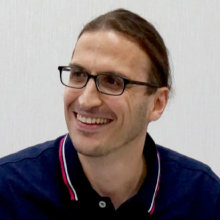
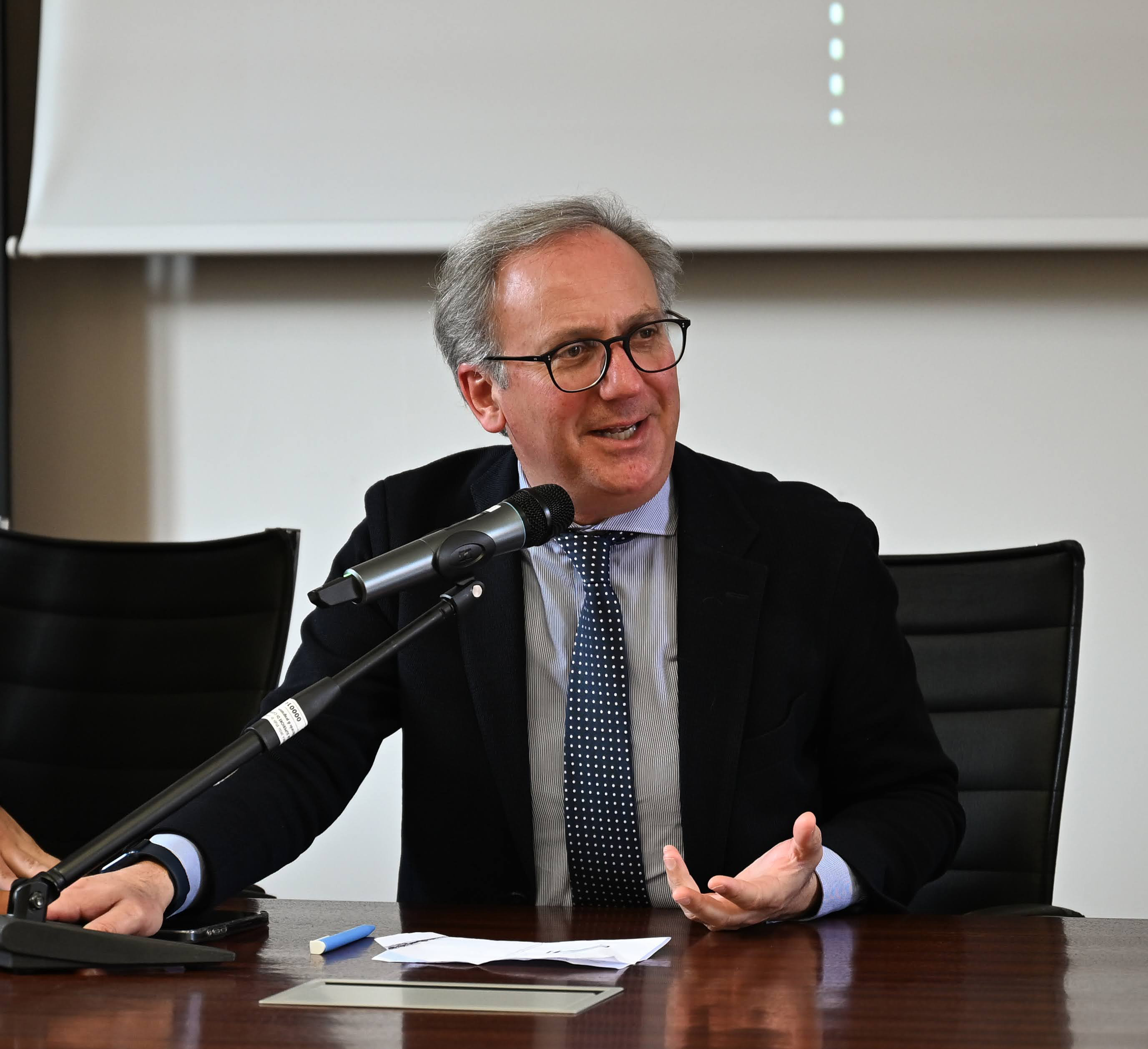
Domenico Ferrero is a Fixed-term Tenure-track Assistant Professor at the Department of Energy (DENERG), Politecnico di Torino. His primary role involves advancing research in renewable energy systems, particularly focusing on hydrogen technologies, energy storage, and thermochemical cycles. He contributes to the College of Electrical and Energy Engineering, teaching courses such as Hydrogen Laboratory and Sistemi di accumulo dell'energia elettrica . His research emphasizes experimental and modeling studies on hydrogen production via electrolysis, solar-driven thermochemical cycles, and CO₂ utilization. Key projects include H2SHIFT, HyAcademy.EU, and IMAGHyNE, funded by EU initiatives. Ferrero collaborates internationally on material characterization for protonic ceramic electrolysis cells and sealant development. He supervises multiple PhD students in energy systems and leads the M3ES research group. Publications highlight innovations in solar fuels, redox cycles, and hydrogen-battery hybrid systems. His work bridges fundamental science with applied engineering, targeting sustainable energy solutions for remote and urban environments.
Federico Smeacetto is a Full Professor of Materials Science and Technology at the Polytechnic University of Turin, Italy, where he is affiliated with the Department of Applied Science and Technology (DISAT) within the School of Engineering. He serves as the principal investigator for multiple EU-funded research projects focused on hydrogen technologies, solid oxide cells, and sustainable energy solutions. Professor Smeacetto's research focuses on advanced materials for energy applications, particularly glass and ceramics as joining and coating materials. His work spans several critical areas for the energy transition: Glass and glass-ceramics for solid oxide fuel cells and electrolysis cells Joining technologies for high-temperature energy devices Materials for hydrogen production and storage Recycling of end-of-life energy conversion devices 3D printing of advanced ceramic materials His recent publications demonstrate a strong focus on developing sustainable solutions for the energy transition, with particular emphasis on proton ceramic electrolysis cells, solid oxide fuel cells, and recycling technologies. The research combines materials development, manufacturing innovation (particularly 3D printing), and comprehensive performance assessment to address critical challenges in clean energy technologies. Professor Smeacetto has received notable recognition including the Abilitazione Scientifica Nazionale as Full Professor of Materials Science and Technology and The Acers Global Ambassador award. Abilitazione Scientifica Nazionale - Professore di Seconda Fascia - Settore 09/D1 (2013) National Scientific Habilitation – Full Professor of Materials Science and Technology (2019) The Acers Global Ambassador (2020) He actively supervises PhD students and leads multiple research projects, including EU-funded initiatives like H2START, H2SHIFT, ECOLEFINS, Pressuriz3D, 24_7 ZEN, HyP3D, and SOLSTICE. Professor Smeacetto also chairs advanced courses on glass and ceramics for PhD students and teaches undergraduate and graduate courses on materials for energy applications. As a member of the GLANCE research group at Politecnico di Torino, Professor Smeacetto contributes to the development of custom glasses, glass-ceramics, and composites for various applications including energy conversion and storage, joining technologies, and sustainable materials solutions.
Francesco Prudenzano is a Full Professor at the Department of Electrical and Information Engineering (DEI), Polytechnic University of Bari, Italy. He leads research in photonics, microwave engineering, and electromagnetic compatibility, with a focus on mid-infrared optical fiber devices, laser design, and microwave antennas. His work spans theoretical modeling, fabrication, and application development in advanced photonic systems. University: Polytechnic University of Bari Department: Electrical and Information Engineering Research Group: MOE Group (Microwave and Optical Engineering) Research Interests: Prudenzano's research explores the design and optimization of optical fiber devices, microwave sensors, and electromagnetic systems. Key areas include mid-infrared laser development, additive manufacturing of antennas, and photonic sensors for composite materials. His work bridges material science, photonics, and electromagnetics to solve practical engineering challenges. Recent Publications (2024-2025): His articles highlight advancements in fluoride and chalcogenide fiber optics, Q-switched lasers, and 5G antenna technologies. Topics span mid-IR amplification, supercontinuum generation, and microwave applicators for medical use, reflecting his interdisciplinary approach. Laboratories: Research is conducted at the Electromagnetic Fields and Telecommunications laboratories in Bari and the "Polo Magna Grecia" facility in Taranto, focusing on device prototyping and electromagnetic modeling.
Luca Lutterotti is an Associate Professor at the University of Trento , Department of Industrial Engineering, specializing in material characterization techniques. His expertise spans X-ray diffraction (XRD) , X-ray fluorescence (XRF) , and electron diffraction , with a focus on nanomaterials , functional materials , and crystallographic texture . He developed the widely used MAUD software for Rietveld refinement and texture analysis, with over 30 daily downloads since 2000. Education : Laurea in Materials Engineering (1988, University of Trento, Italy), HDR in Fundamental Sciences (2010, Université de Caen-Basse Normandie) His research interests include micromechanics , residual stress analysis , quantitative phase analysis , and archeometry . He has led international projects like EIT Raw Materials Paired-X (2018-2021) and coordinated the SOLSA H2020 project (2016-2020), which introduced automated core analysis systems for mining. His work has secured €1.5 million in European funding. Recent publications emphasize combined XRD-XRF methodologies , neutron diffraction , and automated material analysis , particularly in mining and recycling. Key tools include MILK (Python interface for MAUD) and advanced detectors for portable systems. Scientific Awards : HDR (2010), Chaire of Excellence (2012-2014) He has held visiting positions at UC Berkeley , Université du Maine , and JAEA (Japan Atomic Energy Agency) , contributing to global collaborations in material science and mining technologies.
Leonardo PUPPULIN is a Researcher at the Department of Molecular Sciences and Nanosystems, Ca' Foscari University of Venice. He specializes in Physical Chemistry, with a focus on nanoscale material characterization, biomaterials, and sustainable chemistry. His work includes advanced microscopy techniques such as high-speed atomic force microscopy (HS-AFM) to study biological systems, molecular dynamics, and material degradation mechanisms. He oversees laboratory safety and teaching activities, including courses in Physical Chemistry, Colloids and Interfaces, and Electron Microscopy techniques at both undergraduate and doctoral levels. Research interests span diverse areas: Dynamic imaging of proteins and channels (e.g., TRPV1, TMEM16F) using HS-AFM Development of protective silica-based coatings for cultural heritage artifacts Upcycling chitin into catalytic materials for green chemistry applications Biomedical materials analysis, particularly polyethylene and ceramic implants Optical properties of nanomaterials like NaBiF4 for photonics applications Teaching responsibilities include laboratory supervision and theoretical modules for Chemistry and Nanomaterials programs. He collaborates on interdisciplinary projects combining physical chemistry with biomedical and environmental applications. His 15 most recent articles (2023–2025) highlight advancements in HS-AFM imaging, nanomaterial synthesis, and biomaterial degradation studies, reflecting a strong emphasis on experimental techniques and interdisciplinary applications.
Gabriele Bertagnoli is an Associate Professor in the Department of Structural, Building and Geotechnical Engineering (DISEG) at Politecnico di Torino, Italy. His research and teaching focus on civil and structural engineering, particularly in bridge design, composite and concrete structures, finite element analysis, and structural health monitoring. His research interests include: Structural Engineering Bridge and Composite Structures Finite Element and Nonlinear Analysis Structural Health Monitoring (SHM) Optimization of Reinforced and Prestressed Concrete Seismic Retrofitting and Safety Assessment Bertagnoli's recent publications reveal a strong trend in developing and applying advanced computational models for the safety assessment of existing bridges and buildings, especially under damage and seismic loading. His work integrates innovative sensor technologies for SHM, genetic algorithms for structural optimization, and nonlinear finite element simulations to evaluate structural performance and reliability. His scientific awards include: Best Ph.D. Thesis of 2006 in the field of concrete structures – fib (Fédération Internationale du béton) CTE Congress 2018 Memorial Award – CTE (Italy, 2020) He is actively involved in research supervision and grant leadership: Supervises PhD students: Mario Ferrara and Sofia Villar Principal Investigator on multiple national and international projects (e.g., PRIN, PNRR, DECORI, Ri-REVERSE) Leads commercial and applied research contracts in structural consultancy and monitoring His laboratory and research group are engaged in developing intelligent monitoring systems for urban infrastructure (e.g., INSIST, Smart Concrete) and innovative retrofitting solutions using steel exoskeletons, composite connections, and sensor-embedded materials.
Sabina Luisa Campanelli serves as an Associate Professor in the Department of Mechanics, Mathematics and Management at the Polytechnic University of Bari, Italy, where she conducts cutting-edge research in advanced manufacturing technologies with emphasis on laser-based additive processes. Her research specializes in Additive Manufacturing , particularly Powder Bed Fusion and Directed Energy Deposition techniques, focusing on multi-material fabrication , functionally graded materials , and in-process monitoring . She develops innovative methodologies for layer-level control of material composition and thermal management, addressing critical challenges in geometric accuracy, residual stress, and defect formation in aerospace and biomedical components. Analysis of her recent publications reveals a dominant trend toward real-time process monitoring using thermal and optical systems, with increasing focus on sustainable material utilization through recycled feedstocks. Her work bridges Materials Science , Mechanical Engineering , and Industrial Manufacturing , demonstrating strong industry applicability in high-value sectors requiring precision metal components.
Devid Maniglio is an Associate Professor at the Department of Industrial Engineering, University of Trento. His research focuses on bioengineering, biomaterials, and tissue engineering, with a particular emphasis on bioprinting, surface modification, and functional materials. He has contributed to advancements in silk fibroin and hydrogel-based systems for medical applications. Research Interests Bioengineering for personalized medicine Biomaterials and surface engineering 3D bioprinting and tissue regeneration Molecular imprinting and biosensors Drug delivery and cell encapsulation Teaching Diagnostic and therapeutic technologies for personalized medicine Engineered materials for precision medicine Fundamentals of biomedical technologies Functional surfaces laboratory Labs & Collaborations Devid Maniglio is affiliated with the Functional Surfaces Laboratory at the University of Trento, collaborating with researchers such as Stefano Rossi and Flavio Deflorian. His work integrates interdisciplinary approaches in biomedical engineering and sustainable medical technologies.
Giovanna Barigozzi is a Full Professor at the University of Bergamo's Department of Engineering and Applied Sciences within the School of Engineering. Since October 2024, she has served as Vice Rector with responsibility for Innovation and Digital Transition of University Processes and Services, with a focus on ethical AI implementation in academic contexts. Previously, from 2018 to 2024, she was Director of the Department of Engineering and Applied Sciences and a Member of the Academic Senate. PhD in Fluid Machine Engineering, University of Genoa (1996) Diploma Course in Turbomachinery, von Karman Institute for Fluid Dynamics, Belgium Bachelor's with honors in Mechanical Engineering, University of Genoa (1992) Professor Barigozzi's research spans thermo-fluid dynamics, gas turbine cooling systems, and sustainable energy technologies. Her work combines experimental and numerical approaches to address complex engineering challenges in film cooling of gas turbine arrays, energy conversion systems, and hydrogen technologies. She has pioneered innovative cooling system analyses through collaborations with Korea University, applying artificial intelligence to optimize cooling geometries. Her recent publication portfolio reveals strong trends in advanced cooling techniques for gas turbines, with particular emphasis on film cooling optimization using shaped holes, trench geometries, and experimental techniques like Pressure Sensitive Paint. The research spans fundamental fluid dynamics investigations to applied studies on hydrogen production systems and automotive brake disc aerodynamics, demonstrating both theoretical depth and practical engineering applications. As an academic leader, Professor Barigozzi serves as Associate Editor of the ASME Journal of Turbomachinery and on the Editorial Board of the International Journal of Turbomachinery, Propulsion, and Power. For ASME IGTI, she coordinates the Honors & Awards Committee for the 2024-2026 biennium, reflecting her standing in the international turbomachinery community. Professor Barigozzi coordinates the Energy Systems and Turbomachinery Laboratory at the University of Bergamo and is a member of the Doctoral School in Sustainable Technologies for Industrial and Construction Engineering (SUSTAIN). Her leadership extends to coordinating teaching activities across multiple engineering programs, including courses on fluid machinery, sustainable energy, and experimental techniques for fluid machinery.
Vincenzo Maria Sglavo is a Full Professor of Materials Science and Technology at the Department of Industrial Engineering , University of Trento , Italy. He coordinates the Doctoral Program in Industrial Innovation (M.D. 45/2013) and has held academic appointments at The Pennsylvania State University (Postdoctoral Fellow, 1993-1994) and as Adjunct Professor there (2001). His career spans over three decades, including roles as Assistant Professor (1989-1999) and Associate Professor (1999-2018) at the University of Trento. Education: Master’s in Materials Engineering (cum laude), University of Trento (1988) Research Interests focus on glasses and ceramics , with expertise in fatigue and fracture mechanics , chemical strengthening , high-strength ceramics , flash and cold sintering , solid oxide fuel cells (SOFC/SOEC), and 3D printing of inorganics . His work bridges fundamental material behavior and industrial applications, particularly in energy, construction, and biomedical fields. Recent publications highlight innovations in ultrafast high-temperature sintering for ceramics, 3D-printed alumina , alkali-activated limestone for construction, and plasma-assisted ammonia synthesis . He explores entropy-stabilized composites, glass joining techniques, and iron speciation effects in aluminosilicates. Scientific Awards include the AIMAT Prize (1996) AIAS Prize (2000) Outstanding Reviewer Award, Scripta Materialia (2019) Pfeil Award (2022) Nanomaterials 2023 Best Paper (Second Award) Fellow, European Ceramic Society (2023) Advising and Grants: He has advised 34 PhD students and over 100 Master’s theses , managing 50+ research projects funded by NATO, the EU, MUR, and private companies. His editorial roles include Associate Editor for the Journal of the American Ceramic Society and Frontiers in Ceramics . Labs and Teams: He collaborates with institutions like the Joint Research Centre (EC) , Universidade de San Carlos , and Instituto de Cerámica y Vidrio . His work integrates academic research with industrial consultancy, addressing technical challenges in ceramics, glass, and sustainable materials.
Daniele Malfitana is a Full Professor of Archaeological Research Methodologies at the Department of Humanities, University of Catania. He also serves as Director of the School of Specialization in Archaeological Heritage and President of the Advanced School of the University of Catania. He has held leadership roles at the CNR Institute of Cultural Heritage Sciences (formerly IBAM), including Research Director and former Director from 2011 to 2019. His international academic engagements include Visiting Professor at the University of Oxford and Distinguished Lecturer at Stanford University’s Archaeology Center. His research focuses on material culture in the Hellenistic and Roman Mediterranean, with specializations in archaeology of production, consumption, and cognitive archaeology. He emphasizes interdisciplinary methodologies, integrating technology and digital tools into heritage studies. His work spans major excavations in Sicily—such as the Aci Valley, Portopalo-Vendicari fish-processing sites, and the Roman Villa of Realmonte—and innovative projects like Smart Cultural Heritage and the PNRR-funded CHANGES initiative. The 15 most recent publications and research projects reflect a strong trend in cultural heritage innovation , digital archaeology , material culture networks , and sustainable preservation . These works span subfields including Roman trade, ceramic analysis, smart cities, GIS applications, public engagement, and interdisciplinary teaching. The keywords consistently highlight archaeology, technology, sustainability, and Mediterranean connectivity. International Guido Dorso Award (2013) – Research Section International Sabatino Moscati Award (2023) – for strategic heritage management, dissemination, and integration of science and art Co-director of HEROM. Journal of Hellenistic and Roman Material Culture (Class A journal) Member of the German Archaeological Institute – Rome (since 2016) President of the Technical Scientific Committee for Archaeology at MiC (since 2019) Member of the Regional Council for Cultural Heritage of Sicily (since 2024) Malfitana mentors students in thesis topics related to coastal settlements, urban archaeology (OpenCiTy, Technic), and artifact analysis. He leads national and international research teams, including the PRIN SHERDs project and the Archeofish Lab with the University of Cadiz. He has coordinated major scientific initiatives funded by MIUR, PON, and PNRR, and has served on doctoral committees for universities in Catania, Palermo, Messina, and Bari. He directs multiple archaeological field projects in collaboration with Italian cultural authorities and international institutions. His lab and team activities emphasize interdisciplinary collaboration, smart heritage technologies, and knowledge transfer between academia, policy, and the public.
Luciana Mantovani is a Researcher in Mineralogy (SSD GEO/06) at the Department of Chemical, Life and Environmental Sustainability Sciences, University of Parma, Italy. Her career spans postdoctoral research, teaching, and multidisciplinary studies in mineralogy with applications to environmental sustainability and technological processes. Education: Bachelor's and Master's in Cultural Heritage Sciences (University of Parma, 2005/2008), PhD in Earth Sciences (University of Parma, 2013). Research interests focus on synthesis and characterization of pyroxenes for ceramic pigments mineralogical analysis of incinerator residues environmental mineralogy crystal chemistry of natural and synthetic minerals phase transitions in spinels microstructural analysis of geological materials Teaching roles include Environmental Mineralogy (Bachelor's/Master's level) and Crystallography (Doctoral School). She has co-supervised numerous theses since 2010 and participated in organizing international mineralogy congresses. Research projects include PRIN grants, Italian-French CNRT Nickel collaborations, and industrial partnerships with IREN. Her work employs advanced techniques such as X-ray diffraction, electron microscopy, and Raman/IR spectroscopy.
Marcello Romagnoli is a Full Professor at the Department of Engineering 'Enzo Ferrari' of the University of Modena and Reggio Emilia. His research focuses on materials science, fuel cells, and renewable energy technologies. He teaches courses on fuel cells, applied chemistry to materials, ceramic process science, and hydrogen applications in electric transportation. Research Interests His work emphasizes advanced ceramic materials, electrochemical systems, and sustainable energy solutions. Key areas include PEMFC and SOFC development, hydrogen production techniques, and composite materials for fuel cell components. He explores innovative manufacturing processes like 3D printing for electrode fabrication and geopolymer-based materials from industrial waste. Teaching Responsibilities Fuel Cells (Master's in Civil & Environmental Engineering) Applied Chemistry to Materials (Environmental Engineering Pathway) Ceramic Process Science & Engineering (Materials Engineering) Hydrogen and Fuel Cells in Electric Transportation (Advanced Automotive Engineering) Publications Recent work includes studies on 3D-printed conductive inks, hydrogen production via aluminum reactions, and biochar applications. His articles address material characterization, nanofluid thermal properties, and composite bipolar plate design for fuel cells. Grants and Labs While specific grants are not detailed here, his involvement in courses like MAMA-MEA and FCHgo suggests participation in funded research initiatives. He collaborates on projects involving additive manufacturing and sustainable material development.
Roberto ROSA is an Associate Professor at the University of Modena and Reggio Emilia, affiliated with the Department of Engineering Sciences and Methods. His work focuses on interdisciplinary research at the intersection of environmental sustainability, materials science, and chemical engineering. Key areas include Life Cycle Assessment (LCA) of chemical processes, development of sustainable materials (e.g., photocatalysts, geopolymer composites), and nanotechnology applications. ROSA’s research emphasizes environmental impact mitigation through innovative synthesis methods, such as microwave-assisted processes and solution combustion. His academic roles include teaching and guiding research in environmental technologies, materials engineering, and process intensification. Notable collaborations involve studies on green hydrogen supply chains, MXene material synthesis, and biorefinery processes using agricultural residues. ROSA’s work frequently integrates experimental design with LCA to optimize both technical and environmental outcomes. Publications highlight contributions to sustainable energy systems, biomedical applications of materials (e.g., dental pulp cell studies), and waste valorization (marble powder, ceramic waste). His research aligns with the UN Sustainable Development Goals, particularly in advancing resource efficiency and reducing environmental footprints of industrial processes.
Mattia Biesuz is Associate Professor at the University of Trento , Department of Industrial Engineering, where he also obtained his B.Sc., M.Sc. (both 110/110 cum laude) and Ph.D. (Excellent cum laude, 2017). He teaches courses on Materials Science, Ceramic Materials, Materials for Energy and interdisciplinary laboratories, and has been teaching assistant continuously since 2014. Education: Ph.D. in Materials, Mechatronics and Systems Engineering, University of Trento, 2014-2017 M.Sc. in Materials Engineering, University of Trento, 2010-2013 B.Sc. in Industrial Engineering, University of Trento, 2007-2010 Research interests focus on advanced ceramic processing including flash sintering, cold sintering, ultra-fast high-temperature sintering (UHS), spark plasma sintering, entropy-stabilised ceramics, polymer-derived ceramics, field-assisted ion exchange and low-temperature ceramic joining. His group explores structure–property relationships in glasses and ceramics for energy, functional and structural applications. Recent publications (2023-2025) demonstrate a clear trend toward ultra-rapid sintering technologies (UHS, flash, cold sintering) combined with additive manufacturing , high-entropy ceramics , ceramic aerogels for thermal insulation and environmental remediation, and glass strengthening by field-assisted ion exchange. The work integrates fundamental science (diffusion, electromigration, nucleation) with technological demonstrators (batteries, thermal-barrier coatings, catalytic supports, space resources). Scientific awards & honours include the MRS Postdoctoral Award 2022 , two Pfeil Awards (2021 & 2022) from IOM3-UK, the Crystals 2022 Young Investigator Award , multiple Acta Journals Outstanding Reviewer distinctions, best-paper and travel awards from MDPI journals, and the Best Master Thesis Award of his Department in 2013. Funding & leadership: He coordinates/works in several EU and national projects on flash/cold sintering and high-entropy ceramics, serves as associate editor of the Journal of the American Ceramic Society and on the editorial boards of Materials and Frontiers in Materials , and regularly evaluates proposals for the Czech Science Foundation and ECerS. Labs & teams: He leads the “Field-Assisted Sintering & Advanced Ceramics” research line within the Industrial Engineering Department, hosting numerous international visitors (post-docs from Prague, Gdańsk, Izmir, Charles University) and coordinates shared labs equipped with flash-sintering rigs, UHS furnaces, SPS, DSC/TG-GC-MS, impedance analysers, and additive-manufacturing stations.