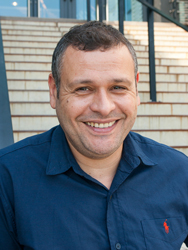
Adlen KSENTINI is a Professor at EURECOM's Communication Systems department, specializing in advanced networking technologies. His research focuses on Mobile and Wireless Networks, Software Defined Networking (SDN), Mobile Edge Computing (MEC), Network Function Virtualization (NFV), and Content Delivery Networks (CDN), with an emphasis on performance evaluation and network virtualization. He has contributed to projects like AC3 and 6G-BRICKS, exploring cloud-edge continuum integration and 6G infrastructure. Key research interests include virtualized mobile core networks, carrier cloud systems, and AI-driven network management. He has received Best Paper Awards at IEEE WCNC 2018 and IWCMC 2016 for works on network slicing and LTE modeling accuracy. His work often integrates machine learning for optimization, sustainability, and security in 5G/6G networks. Distinctions: Two Best Paper Awards Labs/Teams: Involved in EU-funded projects like AC3 and 6G-BRICKS Grants: Not explicitly listed, but active in collaborative research initiatives
Mircea R. Stan is a Professor of Electrical and Computer Engineering at the University of Virginia, serving as Director of Computer Engineering and Virginia Microelectronics Consortium (VMEC) Professor. He leads the High-Performance Low-Power (HPLP) lab and is an associate director of the Center for Automata Processing (CAP). His research focuses on AI hardware, Processing in Memory, Low Power Design, Cyber-Physical Systems, and Spintronics. Education: Ph.D. (1996) and M.S. (1994) from UMass Amherst; Diploma (1984) from Politehnica University, Bucharest. Research interests include energy-efficient computing architectures, IoT systems, and emerging technologies like magnetic skyrmions and memristors. He has pioneered work on asynchronous stochastic computing, thermal-aware microarchitecture, and microfluidic cooling for 3D-ICs. Key awards include the 2024 A. Richard Newton Technical Impact Award, 2018 ISCA Influential Paper Award, and IEEE Fellow (2014). He has held editorial roles at IEEE TVLSI, IEEE TNano, and IEEE Design & Test. Notable contributions include the HPLP lab’s advancements in low-power logic computing, the VCRFID framework for Industry 4.0, and thermal-aware design tools like Hot-LEGO and Cool-3D.
Robert Czechowski, PhD , is an Assistant Professor at the Faculty of Information and Communication Technology , Wrocław University of Science and Technology , Poland, stationed in the Department of Telecommunications and Teleinformatics . His office is located in building D-20, room 421, and he holds regular consultation hours on Tuesdays 14:00–15:00, Wednesdays 15:00–17:00, and Thursdays 13:00–15:00. His research portfolio is centred on securing the next generation of electrical power systems. Core interests include: Cyber-security architectures for smart grids and micro-grids Artificial-intelligence-driven intrusion detection and prevention systems (IDS/IPS) Network protocols and time-synchronisation security in SCADA environments Simulation of information flow in complex, dynamically reconfigurable networks IPv4/IPv6 network design and security policy enforcement in power-system automation Database and expert-system solutions for real-time energy-management and fraud detection Between 2014 and 2019 he authored or co-authored more than fifteen peer-reviewed works. The publications reveal a clear longitudinal trend: early work established foundational security policies and good-practice guidelines, while later studies pivot toward advanced AI/ML techniques for anomaly detection and risk quantification in smart-metering infrastructures. A recurring theme is the integration of communication-protocol security (IEC 61850, PLC, IPv4/IPv6) with higher-level cyber-physical risk governance. Scientific recognitions: None explicitly mentioned in the supplied text. Advising & Grant activities: The provided material does not list specific doctoral or master’s students, nor does it enumerate funded projects. Laboratories & Teams: He conducts research within the Department of Telecommunications and Teleinformatics, leveraging university laboratories and the wider ICT Faculty infrastructure, although no dedicated lab name is specified.
Luca Guarnera is a Fixed-term Assistant Professor (RTDA) of Informatics at the Department of Mathematics and Computer Science, University of Catania. Born in Catania on October 26, 1992, he has been a research fellow in Computer Science at the University of Catania since January 1, 2022. His academic journey includes a PhD in Computer Science (XXXIII cycle, PON number E37H18000330006) from the University of Catania, with part of his research conducted at the University of Hertfordshire under Prof. Salvatore Livatino. PhD in Computer Science, University of Catania (2018-2021) Master's Degree in Computer Science (cum laude), University of Catania (2015-2017) Bachelor's Degree in Computer Science, University of Catania (2011-2015) Guarnera's research focuses on Computer Vision, Machine Learning, and Multimedia Forensics, with special emphasis on Deepfake Detection across images, video, audio, and multimodal data. His work explores intrinsic traces left during content creation processes, VR applications for forensic analysis, and deep learning approaches to forensic problems. He has contributed significantly to forensic firearms ballistics analysis through immersive VR observation and handwritten document analysis. His publication record shows a strong trajectory in deepfake detection technologies, evolving from early work on convolutional traces to current research distinguishing between GAN and Diffusion Model outputs. His research spans both theoretical foundations and practical applications in digital forensics, with increasing focus on multimodal approaches and real-world implementation challenges. Guest Editor for Special Issue 'Advancements in Deepfake Technology, Biometry System and Multimedia Forensic' in MDPI Journal of Imaging Guarnera actively participates in the academic community as a reviewer for international journals and has contributed to prestigious international events as a Technical Program Committee member. His research is supported through collaborations with industry partners like iCTLAB srl and academic institutions. He is involved in the HEALTHY-UNICT project studying dietary habits of college students through ecological momentary assessment approaches. As a member of IPLab (Image Processing Lab) since 2015, Guarnera has been involved in various research initiatives including participation in Mohamed Bin Zayed International Robotics Challenge (MBZIRC) competitions and international summer schools (ICVSS, MISS, S3P). His work bridges theoretical computer science with practical forensic applications, particularly in the rapidly evolving field of deepfake detection and multimedia authentication.
Prof. Dr.-Ing. Rüdiger Kapitza serves as a Professor and Chair of Computer Science 4 (Systems Software) at Friedrich Alexander University Erlangen-Nuremberg (FAU). His extensive research portfolio spans trusted execution environments, Byzantine fault tolerance, blockchain technology, and secure systems. Kapitza actively contributes to the academic community through program committee roles for major conferences including OSDI, Middleware, EuroSys, and DSN. His research interests focus on creating secure, reliable systems through the integration of hardware security features with distributed systems. Kapitza investigates how trusted computing can enhance system security while maintaining performance, particularly for critical applications. His work bridges theoretical foundations with practical implementations across domains including cloud infrastructure, edge computing, and transportation systems. Analysis of his recent publications reveals consistent innovation in trusted execution environments, distributed consensus protocols, and secure virtualization. His research demonstrates a clear trajectory from early work on adaptive services to current focus on hardware-assisted security solutions. Key themes include making distributed systems more robust through trusted components, optimizing energy efficiency in heterogeneous systems, and developing practical security solutions for real-world applications. Prof. Kapitza's standing in the systems research community is evidenced by his service on program committees for top-tier conferences. His work has been published in prestigious venues including OSDI, EuroSys, Middleware, and DSN, reflecting significant impact in both academic and industrial contexts. He leads the Systems Software research group at FAU, mentoring students and collaborating with researchers worldwide. The group addresses fundamental challenges in systems security, reliability, and performance, with applications ranging from drone data recording to railway systems and secure cloud services. His team develops practical tools and frameworks that advance the state of the art in systems research.
Justine Cassell is an SCS Dean's Professor in the School of Computer Science at Carnegie Mellon University, where she also serves as associate dean for technology strategy and impact. She is director emerita of the Human-Computer Interaction Institute (HCII) and co-director of CMU's Simon Initiative and Yahoo-InMind collaboration. Additionally, she is a senior researcher in the ALMAnaCH NLP group at INRIA Paris and holds the founding international chair at the PRAIRIE Paris Institute on Interdisciplinary Research in AI. She maintains courtesy appointments in Psychology, Linguistics, and the Center for the Neural Basis of Cognition. Cassell earned her DEUG in Literature from the Université de Besançon, an M.Litt in Linguistics from the University of Edinburgh, and a dual Ph.D. from the University of Chicago in Psychology and Linguistics. Her academic journey includes founding director roles at the Center for Technology and Social Behavior and the Technology and Social Behavior joint Ph.D. program at Northwestern University, as well as a tenured professorship at the MIT Media Lab where she directed the Gesture and Narrative Language Research Group. Cassell's research focuses on human-human conversation and storytelling, progressively evolving to develop computational systems that can participate in these activities. She is credited with developing Embodied Conversational Agents (ECAs), virtual humans capable of interacting with humans using both language and nonverbal behavior. Her work increasingly addresses the impact of these technologies on learning and communication, particularly through virtual peer systems for children's language and literacy development, and studying online communities' effects on young people's self-esteem and sense of community. Her recent publications demonstrate a clear trajectory toward increasingly sophisticated multimodal interaction systems, with growing emphasis on social bonding, neural synchrony, and the application of conversational AI in educational contexts. The research shows progression from basic conversational agents to complex systems that model social dynamics and support learning through virtual peers, with recent work exploring large language models' role in conversational grounding and the application of multimodal approaches to studying social bonds. Edgerton prize at MIT (2001) Anita Borg Institute Women of Vision award for Leadership (2008) AAAS Fellow (2012) Royal Society of Edinburgh Fellow (2016) ACM Fellow (2016) Henry and Bryna David prize for social science applicable to public policy (2018) Honorary doctorate by the University of Edinburgh (2023) Cassell has been instrumental in developing numerous research initiatives including the Simon Initiative on Technology-Enhanced Learning and the Yahoo InMind Project on the Future of Personal Assistants. Her work has received significant funding for projects investigating virtual peer technology for children with autism, scaffolding science achievement in culturally diverse classrooms, and connection machines studying nonverbal behaviors in conversation. She has advised numerous students and researchers who have gone on to make significant contributions in human-computer interaction, social computing, and educational technology. As director of the HCII and through her current research leadership roles, Cassell has fostered interdisciplinary collaboration across computer science, psychology, linguistics, and education. Her ALMAnaCH research group at INRIA Paris and her continued work at CMU focus on advancing socially interactive agents, with particular attention to their applications in education and their ability to model and support human social interaction. Her leadership extends to the French governmental committee CNNUM (Conseil National du Numérique), where she contributes expertise on the future of digital technology.
Sonia Freire Trigo serves as Lecturer in Urban Planning at The Bartlett School of Planning, University College London (UCL) since December 2018. With professional training in architecture (Universidade da Coruña, 2004) and advanced degrees in urban planning (MSc, Universidad Politécnica de Madrid, 2010; PhD, UCL, 2018), she combines academic rigor with practical experience from Spain-based planning consultancies and real estate appraisal work. PhD in Urban Planning (2018), UCL MSc in Urban Planning (2010), Universidad Politécnica de Madrid BArch in Architecture (2004), Universidade da Coruña Her research focuses on the governance of urban regeneration processes, particularly examining interactions between planning regulation, land markets, and land policy. Current projects analyze the regulation of affordable housing, strategic planning tools like London's Opportunity Areas, and temporal dimensions in planning processes that affect regeneration delivery. Recent publications reveal consistent exploration of regulatory capitalism (2017-2023), housing association governance (2023), virtual statecraft mechanisms (2022), and brownfield land policies (2022). Her work combines institutional analysis with critical planning theory to address urban inequalities and development challenges. Associate Fellow, Higher Education Academy (2015-present) Postgraduate Fellowship, Royal Geographical Society (2013-2016) Active in teaching and program leadership, she directs UCL's MSc Urban Regeneration program since 2019 and teaches regeneration delivery modules at postgraduate level. Earlier teaching experience at London South Bank University focused on housing and property development topics.
Sherene Razack is Distinguished Professor and Penny Kanner Endowed Chair in Women's Studies within the Department of Gender Studies at the University of California, Los Angeles. Her groundbreaking work centers on systemic racial violence, with particular focus on its manifestations in legal institutions, spatial politics, and state power structures. She founded the Racial Violence Hub (RVHub), a virtual research and teaching network, and the Race and Deaths in Custody digital project to advance critical scholarship on racialized violence. Razack's research interrogates the intersections of race, gender, and colonial power through frameworks of critical race feminism and anti-racist analysis. Her work examines how anti-Muslim racism operates within Western legal-political systems, analyzes the racialized dimensions of torture and terror discourses, and investigates the disposability of racialized bodies within settler colonial contexts. She critically explores how spatial arrangements produce racial hierarchies and constrain citizenship possibilities for marginalized communities, particularly Indigenous peoples and women of color. Her publications over the past two decades reveal consistent engagement with institutional violence, from Indigenous deaths in custody to Muslim exclusion from political life. Razack's scholarship demonstrates how legal inquests often fail to address systemic racism while exposing connections between imperialism, peacekeeping operations, and racialized violence. Her interdisciplinary approach bridges critical legal studies, feminist theory, and postcolonial analysis to challenge conventional understandings of justice and citizenship. Through the Racial Violence Hub and Race and Deaths in Custody project, Razack has created collaborative platforms for researchers, activists, and educators to document, analyze, and resist racial violence globally. These digital initiatives facilitate knowledge exchange across disciplinary and geographical boundaries while providing critical resources for understanding the structural nature of racialized state violence.
O. Remus Tutunea-Fatan is a Professor in the Department of Mechanical & Materials Engineering at Western University, with cross appointments in Biomedical Engineering and Electrical and Computer Engineering. His work focuses on laser polishing, CNC machining, and surface structuring for drag reduction and biomedical applications. Ph.D. in Mechanical Engineering, The University of Western Ontario M.E.Sc. and B.E.Sc. in Mechanical Engineering, Transilvania University, Romania Research interests include: Advanced CAD/CAM frameworks Laser remelting process optimization Biomedical device design Composite manufacturing techniques Surface topography analysis Artificial intelligence in process control Recent publications indicate expertise in: Laser polishing of metallic surfaces Riblet microstructures for drag reduction AI-driven process monitoring 5-axis machining error compensation Scientific recognition includes: Edward G. Pleva Award for Excellence in Teaching (Western University, 2023) Dr. Terry Base Memorial Teaching Award (2022 co-winner, 2021, 2019) R. Mohan Mathur Award (Faculty of Engineering, 2020) University Students' Council Teaching Honour Roll (2011-2012) Prof. Tutunea-Fatan serves as Associate Chair for Graduate Research Programs (2025-2027) Acting Associate Dean for Undergraduate Studies (2023-2024) Acting Chair, Department of Mechanical and Materials Engineering (2021-2022) He supervises over 40 graduate students and collaborates with industry partners including DuPont Safety and Construction, General Motors, and Active Industrial Solutions Inc.
Marko Šarac is a Professor at Singidunum University in the Faculty of Informatics and Computer Science . He holds a Master's degree in Contemporary Information Technologies (2008) and a PhD in Advanced Protection Systems (2013) from the same institution. His research spans Cybersecurity, Artificial Intelligence, Blockchain, Internet of Things (IoT), Machine Learning, and Data Privacy . Education: Master: Contemporary Information Technologies, Singidunum University, 2008 PhD: Advanced Protection Systems, Singidunum University, 2013 Research Focus: SSL Traffic Security, Virtual Datacenters, Biometric Cryptography, and IoT Healthcare Systems Developed frameworks for Explainable AI in Metaverse Security , Blockchain-based IoT Security Gateways , and Machine Learning for Medical Diagnostics Notable Publications: 2025: CNN-enhanced attack detection for IoT-based Metaverse 2024: Modified Firefly Algorithm for medical dataset classification 2023: Space weather prediction using metaheuristics Projects: Co-author on 9+ books including Internet Marketing (2020) and Computer Network Security (2014) Contributed to 50+ peer-reviewed journals and conference papers on cybersecurity and AI Grants & Collaborations: Active in IEEE , ZINC , and Sinteza conference series Collaborated with researchers across Europe and Asia on IoT, Blockchain, and Cloud Security Contact: msarac@singidunum.ac.rs
Christopher M. Moretti is a Senior Lecturer in the Department of Computer Science at Princeton University's School of Engineering and Applied Science. He has taught foundational courses including COS126 (Introduction to Computer Science), COS217 (Systems Programming), COS326 (Functional Programming), and COS333 (Software Engineering) since joining Princeton in 2010. He serves as academic advisor for computer science majors (classes of 2017, 2021, 2024) and freshman engineering students (classes of 2016, 2017), and holds the role of department placement officer. His educational background includes: Ph.D. in Computer Science and Engineering, University of Notre Dame (2010) M.S. in Computer Science and Engineering, University of Notre Dame (2007) B.S. in Computer Science, College of William and Mary (2004) Dr. Moretti's research centers on Computer Science Education and Distributed Computing and Storage . In education, he develops advanced K-12 professional development content and innovative teaching methodologies. His distributed systems work focuses on scalable frameworks for campus grids, cloud computing, and storage solutions like the Chirp filesystem. He directs undergraduate independent work projects across distributed computing, sports analytics, and software engineering. His publication history reveals consistent contributions to practical distributed systems infrastructure, with recent emphasis on educational applications and bioinformatics scalability. Key themes include abstraction layers for heterogeneous computing environments and pedagogical approaches for complex CS concepts. He has received significant recognition for teaching excellence: SEAS Excellence in Teaching Award (2024) SEAS Excellence in Teaching Award (2023) Dr. Moretti actively mentors undergraduate researchers through independent work projects, though specific student names are not documented. His grant activities likely support distributed systems research and educational initiatives, though explicit funding details are absent from the source material. He maintains strong connections to the Cooperative Computing Lab from his Notre Dame doctoral work under Professor Doug Thain. Outside academia, he participates in Princeton sports culture (particularly hockey), enjoys tennis and trivia competitions, and travels with a focus on zoological institutions. A Notre Dame athletics enthusiast, he previously contributed to sports statistics and media relations during graduate studies.
Robb W Lindgren is a Professor at the University of Illinois at Urbana-Champaign with appointments in Curriculum and Instruction and Educational Psychology . He serves as Associate Dean for Research in the College of Education and holds affiliations with the National Center for Supercomputing Applications (NCSA) , Beckman Institute for Advanced Science and Technology , and Center for Social & Behavioral Science . His research focuses on Embodied learning through gesture and physical interaction Design of mixed/augmented reality educational systems Collaborative STEM education with immersive technologies Recent publications highlight his work in: Biochemistry simulations using haptic feedback (2024) VR-based spatial reasoning for astronomy education (2023) Metaverse learning environments with theory-driven design (2023) Climate change simulations with full-body tracking (2022) His research group explores how physical movement and gestural interfaces shape scientific understanding and conceptual change. Key collaborations include work with Jee Hyang Park , Jun Kang , and Thomas Kim , focusing on Gesture-mediated collaboration XR learning analytics Agency in embodied design
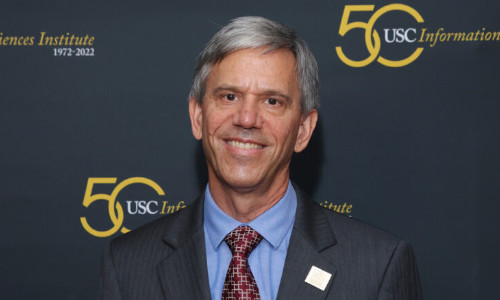
Craig Knoblock serves as the Keston Executive Director of the Information Sciences Institute (ISI) at the University of Southern California, Vice Dean of Engineering for the Viterbi School of Engineering, and Research Professor of both Computer Science and Spatial Sciences. He also directs USC's Data Science Program and leads the Center on Knowledge Graphs as Research Director. Dr. Knoblock's research focuses on techniques for describing, acquiring, and exploiting the semantics of data. His extensive work spans source modeling, schema and ontology alignment, entity and record linkage, data cleaning and normalization, extracting data from the Web, and building comprehensive knowledge graphs. With over 300 published works in these areas, his research has significantly advanced the field of semantic data integration. His work demonstrates strong trends toward practical applications of knowledge graphs across diverse domains including cultural heritage, geospatial information systems, human trafficking detection, and sensor networks. The evolution of his publications shows a progression from foundational ontology alignment techniques to sophisticated knowledge graph applications addressing real-world challenges. Fellow of the Association for the Advancement of Artificial Intelligence (AAAI) Fellow of the Association of Computing Machinery (ACM) Past President and Trustee of the International Joint Conference on Artificial Intelligence (IJCAI) Recipient of the 2014 Robert S. Engelmore Award Seven best paper awards for his research contributions As Executive Director of USC's Information Sciences Institute, Dr. Knoblock leads one of the world's premier research centers in computer science and information technology. His leadership extends to directing the Center on Knowledge Graphs and serving as Associate Director of the Informatics Program at USC. His educational background includes a Bachelor of Science from Syracuse University and Master's and Ph.D. degrees in Computer Science from Carnegie Mellon University.
Talie Massachi is a Lecturer in the Department of Computer and Information Science at the University of Pennsylvania, specializing in human-computer interaction with a focus on social support networks in online communication platforms. Her work bridges technology design with psychological understanding to create systems that enhance emotional wellbeing through digital interactions while preserving privacy. Her educational background includes: PhD in Computer Science from Brown University, where she worked in the Brown HCI Lab under the supervision of Professor Jeff Huang BS in Computer Science and Psychology from Brandeis University (2018) Dr. Massachi's research investigates how people build and maintain social connections through digital channels, with particular emphasis on anonymous communication and mental health support. Her work combines rigorous user studies with practical system development, often resulting in open-source tools that address specific challenges in online social interaction. She approaches problems at the intersection of technology design, psychology, and social behavior, seeking solutions that balance user needs with ethical considerations. Her publication record shows consistent contributions to top HCI venues (CSCW, CHI, IUI), with recent work focusing on worker wellbeing, personal data reflection, and the socio-emotional impacts of limited communication channels like emoji-only interactions. Her research demonstrates methodological diversity, employing qualitative studies, user experiments, and system development to explore how technology can foster meaningful connections. Dr. Massachi is actively engaged in teaching user interface and experience design, having taught courses at both Brown University and the University of Pennsylvania. She has instructed both introductory workshops for non-majors and advanced courses for computer science concentrators, demonstrating adaptability in her pedagogical approach. She leads two major research projects: Chirp (a social support system with anonymous emoji-based mood tracking, evaluated in a 90-person user study) and Sochiatrist (a social data extractor for mental health research that has processed data from over 350 individuals). These projects involve collaboration with clinical researchers and are supported by multiple NIH grants including R21 HD088739, R01 MH108641, and others.
Gintaras Reklaitis is the Burton and Kathryn Gedge Distinguished Professor of Chemical Engineering at Purdue University's Davidson School of Chemical Engineering. He joined Purdue in 1970 and holds a B.S. from Illinois Institute of Technology (1965) and M.S./Ph.D. from Stanford University (1969). His research focuses on applying computing and systems technology to optimize processing systems, particularly in pharmaceutical manufacturing and integrated energy systems. Key areas include batch process design, enterprise-wide planning, and robust scheduling under uncertainty. Professor Reklaitis has been recognized with prestigious awards, including National Academy of Engineering membership (2007) and the Professional Achievement Award from Illinois Institute of Technology (2006). He has co-advised multiple graduate students, including Megha Das, Zachary Hillman, Shrivatsa Korde, and Dalton Yu. His work appears in journals like Computers & Chemical Engineering and Journal of Pharmaceutical Sciences . Research highlights include developing frameworks for real-time quality assurance in pharmaceutical manufacturing, integrating data management systems, and advancing continuous manufacturing technologies. His contributions also span editorial roles, including Editor-in-chief of Computers & Chemical Engineering (1986–2008). Current projects emphasize digital design tools, techno-economic analysis, and sensor-driven process monitoring.