Prof. Dr. Veronika Waldboth is a Professor for Family-Centered Nursing at the ZHAW School of Health Sciences (Institute of Nursing). Her work focuses on Advanced Practice Nursing (APN) , Rare Diseases , Digital Technologies in Nursing , and Participative Mixed Methods Research . PhD in Nursing (2013-2017) from King's College London MSc and BSc in Nursing from Zurich University of Applied Sciences and University of Verona Her research explores family transitions in chronic conditions, with emphasis on neuromuscular diseases and low-birth-weight infants . She leads projects like the Swiss Nursing Research Agenda and Care-NMD-CH , focusing on interprofessional care models and digital health platforms. Recipient of the 2015 Nursing Science Foundation Switzerland Young Researchers Award Active in Rare Disease Action Forum and ORCID ID 0000-0003-2785-3241 Current projects include Care Management for Neuromuscular Diseases and Global Bridge in Health Professions Education . Her teaching includes Advanced Practice Competencies and Rare Diseases Nursing Education .
Ali Demirci is a Professor in the Department of Agricultural and Biological Engineering at the College of Agricultural Sciences, Pennsylvania State University, where he leads research in food safety engineering and sustainable bioprocessing. His work bridges agricultural engineering with microbiology to develop innovative solutions for food safety and bioresource utilization. His research program focuses on three interconnected domains: Non-thermal Food Safety : Development and characterization of pulsed UV light, electrolyzed oxidizing water, and ozone for microbial inactivation on food surfaces and equipment Advanced Bioreactor Systems : Design of biofilm bioreactors for enhanced production of high-value compounds like menaquinone-7 and nisin using immobilized microbial cultures Waste Valorization : Conversion of agricultural byproducts (particularly distillers' dried grains) into biofuels, enzymes, and functional food ingredients through optimized fermentation processes Analysis of his 2022-2025 publications reveals a strategic research trajectory toward sustainable bioprocess intensification. His work increasingly integrates circular economy principles, focusing on non-sterile processing, waste stream utilization, and techno-economic feasibility. Key technological threads include biofilm reactor scalability, lignocellulosic enzyme optimization, and pulsed light decontamination systems for industrial implementation. Professional recognition includes being honored as part of the Penn State College of Agricultural Sciences faculty by a national society in October 2024, highlighting his contributions to agricultural engineering. Dr. Demirci's research program demonstrates strong industry relevance through development of practical technologies for food safety enhancement and agricultural waste conversion. His collaborations span microbiology, food science, and chemical engineering disciplines, with publications appearing in leading journals including Bioprocess and Biosystems Engineering, Journal of Food Engineering, and Food and Bioprocess Technology. Current projects focus on scaling biofilm reactor technologies and integrating first- and second-generation bioethanol production systems.
Wyatt E. Tenhaeff is an Assistant Professor leading a research group focused on thin film coatings for electrochemical energy storage systems. His work targets lithium metal and solid-state batteries, developing ultrathin protective coatings to enhance cycle life, safety, and energy density through suppression of parasitic electrolyte reactions. He teaches core Chemical Engineering courses including Chemical Reactor Design (CHE 231) and Process Control (CHE 272). His research program centers on: Electrochemical Energy Storage Solid State and Lithium Metal Batteries Polymer Thin Films, Interfaces, and Thin Film Synthesis and Characterization Vacuum Deposition Processing Recent publications demonstrate expertise in initiated chemical vapor deposition (iCVD) for nanoscale-precise polymer films, with dual applications in battery interface engineering and optical coatings. Key trends include elastic antireflection systems for flexible optics, mechanically robust battery separators, and high-voltage stable polymer electrolytes enabled by novel plasticization strategies. His scientific recognition includes: NSF CAREER Award (2019) Curtis Award for Nontenured Faculty Teaching (2018) R&D 100 Award (2017) Oak Ridge National Laboratory Weinberg Fellowship (2009-2011) National Science Foundation Graduate Research Fellowship (2005-2008) MIT Presidential T. Haslam Fellowship (2004-2005) Tenhaeff mentors graduate researchers in thin film synthesis and battery technology development, supported by his NSF CAREER grant investigating polymer electrolytes for high-voltage applications. His collaborative projects frequently involve national laboratories and industry partners in advancing separator technologies and vapor-deposited coatings. His laboratory specializes in initiated chemical vapor deposition (iCVD) with in situ thickness monitoring, enabling conformal polymer films down to 10 nm. Current efforts focus on shear-thickening electrolytes, silicon anode stabilization, and scalable thin film processes for next-generation energy storage and flexible electronics.
Sue Schutz is a Senior Lecturer at the Oxford School of Nursing and Midwifery, Oxford Brookes University, where she contributes significantly to teaching and research in nursing. She teaches on the Professional Doctorate in Nursing and Midwifery and supervises PhD and Professional Doctorate students. Her research interests center on reflective practice in nursing , qualitative research methods , and patient and caregiver experiences in chronic illness, particularly in cancer care, heart failure, and hypertension. She is also deeply engaged in clinical communication, mental health nursing, and the impact of digital health innovations during and after the pandemic. The recent publications reflect a strong trend in qualitative and mixed-methods research focused on understanding patient, caregiver, and clinician experiences across diverse settings—from robotic surgery and remote consultations to end-of-life care and mental health challenges. Her work emphasizes empathy, ethical practice, and the application of reflective methodologies in clinical and educational contexts. Scientific Affiliations and Memberships: Royal College of Nursing Phi Mu Chapter, Sigma Scientific Committee, Sigma European Research Conference Co-chair, OxPINTS (Oxford Philosophy Informing Nursing Theory) Sue Schutz actively supervises doctoral students and welcomes new PhD and Professional Doctorate candidates in nursing and midwifery. Her research is supported through institutional affiliations and collaborative projects, particularly in supportive cancer care and heart failure. She has co-edited the book Reflective Practice in Nursing and continues to influence nursing education and practice through scholarship and leadership. She is involved in key research groups focusing on Supportive Cancer Care and Caregivers and Heart Failure , contributing to interdisciplinary efforts to improve patient and caregiver outcomes.
Hui-Jun Zhang serves as an Associate Professor in the Department of Chemistry at Xiamen University's College of Chemistry and Chemical Engineering, with research centered on organometallic chemistry and organic synthesis methodologies. His academic credentials include a BS from Zhengzhou University (2004), followed by a dual-institution PhD completed in 2010 under Prof. Zhenfeng Xi at Peking University and Dr. Christian Bruneau at Université de Rennes 1, culminating in his appointment as Associate Professor at Xiamen University in 2012. Dr. Zhang's research program emphasizes transition metal-catalyzed reactions, particularly rhodium(III)-mediated C-H activation for molecular construction. His work bridges synthetic organic chemistry and materials science through the development of π-extended systems like perylene diimides and thienoacenes, alongside innovative approaches to covalent organic frameworks using supramolecular assembly principles. Analysis of his 2016-2020 publications reveals a dominant focus on rhodium catalysis for C-H functionalization, with significant contributions in electrochemical phosphorylation methods and the structural engineering of perylene-based dyes. His collaborative work frequently explores π-stacking interactions and regioselective synthesis strategies for advanced organic materials.
Martin Salzmann-Erikson is an Associate Professor in Nursing Science at the University of Gävle, specializing in Caring Science. With extensive clinical experience in psychiatric intensive care, he has developed innovative models for staff-patient interactions and advanced courses like "Integrative Nursing in Psychiatric Care" and "Concept Analysis." His work bridges clinical practice, education, and research, focusing on the complexities of human interaction through chaos theory and digital transformation. Current research in the "Digital Shapeshifting" program addresses critical challenges in healthcare digitization, including reducing digital exclusion, ensuring inclusive care environments, and safeguarding nursing quality. Projects span interprofessional communication, digital inclusion for homeless women, and the ethical implications of AI in mental health. His methodological expertise includes netnography, autoethnography, and complexity science. Key article trends highlight intersections of technology and empathy, with recurring themes in psychiatric care, technostress, and digital equity. His 2023–2025 publications emphasize ethical AI integration, footwear symbolism in healthcare teams, and socio-technical approaches to continuous learning. Supervision roles include doctoral projects on intellectual disabilities, cyber nursing, and violence in intensive care. Supervised: Ingela Rudberg (Interprofessional Communication), Oskar Andersson (Staff Participation Promotion), Fredric Sjöberg (Violence Management, KI) Education: Courses on Integrative Nursing & Concept Analysis Affiliations: Strategic Research Area Health-Promoting Work, University of Gävle
Samarjit Chakraborty is the William R. Kenan, Jr. Distinguished Professor in the Department of Computer Science at the University of North Carolina at Chapel Hill. He previously held the Chair of Real-Time Computer Systems at the Technical University of Munich (2008–2019) and was an assistant professor at the National University of Singapore (2003–2008). His research spans real-time embedded systems, cyber-physical systems (CPS), and automotive security. Research Interests include distributed embedded systems, hardware/software co-design, low-power systems, energy storage, electromobility, and sensor network-based information processing. His work addresses challenges in scheduling algorithms for autonomous vehicles, timing predictability in automotive networks, and safety-critical controller implementations. Recent Publications highlight advancements in Timing analysis for automotive networks Energy modeling of Bluetooth Low Energy Autonomous vehicle perception computing Security in automotive systems Flexible manufacturing with process dynamics Scientific Awards include the ETH Medal, European DAAD Outstanding Doctoral Dissertation Award, multiple best paper awards at conferences (ISLPED, ICCD, RTCSA, etc.), the 2023 Humboldt Professorship, and IEEE Fellowship. Advising active PhD students: Clara Hobbs, Shengjie Xu, Sharmin Aktar, and postdoc Enrico Fraccaroli. His research is supported by NSF grants and industry partnerships with General Motors, Intel, Google, BMW, Audi, Siemens, and Bosch.
Hans Vernooij is a Lecturer in Farm Animal Health at the Faculty of Veterinary Medicine, Utrecht University. He specializes in statistical methods and data science applications in veterinary epidemiology and animal health. His areas of expertise include: Statistical methods for veterinary research Applied Data Science in Life Sciences Epidemiological modeling Machine learning applications in animal health Vernooij has extensive experience in developing statistical models for animal health applications. His research focuses on applying advanced statistical techniques and data science methods to solve problems in veterinary epidemiology and farm animal health. He has particular expertise in Random Forest models, as demonstrated during his sabbatical at the Human Sciences Research Council in Pretoria where he developed a model for HIV status prediction based on demographic information and knowledge of HIV prevention from large-scale survey data. His publication record shows consistent contributions across veterinary epidemiology, with recent work emphasizing machine learning applications and big data analytics in animal health surveillance. The research demonstrates a clear trajectory from traditional statistical methods toward more advanced data science approaches. Vernooij is actively involved in teaching and mentoring: Teaches statistics to Bachelor students at the veterinary faculty Supports PhD candidates and Master students during data analysis phases of their research Provides statistics education for the Master of Epidemiology program at the Julius Centre of University Medical Centre
Silvia Cascianelli is an AI and Computer Vision Researcher at the University of Modena and Reggio Emilia (UNIMORE). She actively contributes to the computer vision and document analysis communities through research, conference organization, and academic mentorship. She serves as Area Chair for major computer vision conferences including CVPR2025, BMVC2025, and ECCV2024, demonstrating her standing in the field. Her research focuses on several key areas within computer vision and document analysis: Image Generation : Developing efficient and lightweight methods for image generation with desired characteristics, particularly using diffusion models Handwriting Imitation : Creating algorithms for generating images of text with specific content and handwriting styles, along with evaluation methods Document Understanding : Extracting information from 2D and 3D document images, ranging from modern documents to historical artifacts like carbonized Roman papyri Dr. Cascianelli's work shows a clear progression toward more sophisticated generative models and evaluation frameworks, with recent publications focusing on diffusion models for handwritten text generation, efficient token reduction for multimodal tasks, and innovative approaches to historical document analysis. Her research bridges theoretical advancements with practical applications across diverse document types. Her scientific contributions have been recognized through invitations to serve as Area Chair for top-tier computer vision conferences (CVPR, ECCV, BMVC) and opportunities to organize specialized workshops including VisionDocs at ICCV, AI4DH at ECCV, and ADAPDA at ICDAR. Area Chair at CVPR2025 Area Chair at BMVC2025 Area Chair at ECCV2024 Organizer of VisionDocs Workshop at ICCV2025 Organizer of AI for Digital Humanities Workshop at ECCV2024 Organizer of ADAPDA Workshop at ICDAR2024 Dr. Cascianelli actively mentors the next generation of researchers: Vittorio Pippi - PhD Student at UniMoRe (National PhD program in AI) Fabio Quattrini - PhD Student at UniMoRe (ICT program) Carmine Zaccagnino - Research Intern at UniMoRe (formerly MSc student) Kostantina Nikolaidou - PhD Student at Luleå University of Technology Pau Torras Coloma - PhD Student at Computer Vision Center, Universitat Autònoma de Barcelona Bram Vanherle - CV Engineer at Colruyt Group Smart Innovation (formerly PhD student) She is actively involved in several research initiatives including the AI Governance Lab where she serves as a lecturer, and collaborates with institutions worldwide. Her current projects focus on advancing diffusion models for image generation, improving handwritten text recognition systems, and developing novel methods for document understanding across historical and contemporary contexts.
Dr. D. Grant Allen is a Professor and Frank Dottori Chair in Pulp and Paper Engineering at the University of Toronto's Department of Chemical Engineering and Applied Chemistry (Faculty of Applied Science and Engineering). He serves as Principal Investigator at the Bioprocess Engineering Lab and BioZone research center. His education includes a B.A.Sc. and M.A.Sc. from the University of Toronto, and a Ph.D. from the University of Waterloo. Dr. Allen's research focuses on environmental bioprocess engineering , with emphasis on: Microalgae cultivation for biofuels/chemicals using CO₂ and wastewater Advanced biological wastewater treatment and toxicity reduction Biosolids dewatering using novel bioflocculants and enzymatic methods Bioconversion of waste streams into value-added products Biofilm/floc microbiology and process optimization His publications demonstrate strong interdisciplinary trends in sustainable waste valorization, algal biotechnology, and advanced sludge treatment techniques, with consistent focus on industrial applications in pulp/paper and wastewater sectors. Awards & Honors: Sustained Excellence in Teaching Award (2022) Professor Diran Basmadjian Teacher of the Year Award Fellow: Chemical Institute of Canada, AAAS, Canadian Academy of Engineering, Engineering Institute of Canada LeSuer Memorial Award for Technical Excellence He currently advises graduate students and leads collaborative projects with industry/government partners. As Principal Investigator at BioZone, he coordinates interdisciplinary teams developing bioscience solutions for sustainability. Current projects include photocatalytic wastewater pretreatment and microfluidic carbon capture systems.
Prof. Dr. Georgia Salanti serves as Associate Professor in Biostatistics and Epidemiology and Head of the Evidence Synthesis Methods Research Group at the Institute of Social and Preventive Medicine (ISPM) , University of Bern, Switzerland. Previously, she held academic positions at the University of Ioannina School of Medicine (Greece) from 2006–2015 and postdoctoral/research associate roles at MRC Biostatistics Unit (UK) and Technical University of Munich (Germany). Research Focus: Statistical modeling for evidence synthesis, methodology of systematic reviews, publication bias, network meta-analysis, and applications to mental health. Key Applications: Major depressive disorder, schizophrenia, antipsychotic drugs, stroke with atrial fibrillation, PTSD, and pharmacological interventions. Recent Publications emphasize network meta-analysis advancements, dose-response modeling (e.g., aripiprazole, antidepressants), and real-world clinical questions via projects like the MHCOVID Initiative . Her work spans 2003–2025 with over 289 PubMed-indexed articles. Collaborations: ELAN Investigators, Cochrane Network, MRC Biostatistics Unit, CIBIO (Spain).
Felicia Castro-Villarreal serves as a Professor of School Psychology within the Department of Educational Psychology at the University of Texas at San Antonio (UTSA), part of the College of Education and Human Development. She holds licensure as a Licensed Specialist in School Psychology (LSSP) and is actively pursuing Licensed Psychologist status, demonstrating her dual commitment to academic rigor and clinical practice in educational settings. Her educational trajectory includes a Bachelor’s degree in Psychology from UTSA, a Master of Science in Clinical Psychology from St. Mary’s University, and a Ph.D. in School Psychology from Oklahoma State University. She completed her doctoral internship at the APA-accredited Cypress-Fairbanks ISD Psychological Services Department, establishing foundational expertise in school-based psychological services. Dr. Castro-Villarreal’s research program centers on multicultural assessment and culturally responsive consultation practices, directly addressing systemic inequities in educational psychology. Her work examines how cultural identity influences assessment validity, develops consultation frameworks for diverse educators, and investigates barriers to mental health services for marginalized student populations—particularly focusing on autism spectrum disorders and high-stakes testing implications. Analysis of her recent publications reveals a cohesive research trajectory emphasizing social justice in school psychology. Her work consistently bridges theory and practice through mental health screening innovations, autism intervention adaptations, and critical examinations of labeling practices. Notably, her 2025 study on autistic women’s care experiences and 2023 meta-analysis on mental health screening demonstrate methodological diversity while maintaining focus on underserved populations. While specific grant details and student advisees aren't publicly documented, her extensive publication record—including systematic reviews, qualitative explorations, and intervention studies—indicates active research leadership. Her contributions to yearbook introductions and special issues reflect scholarly service to advance equity-focused discourse within educational psychology.
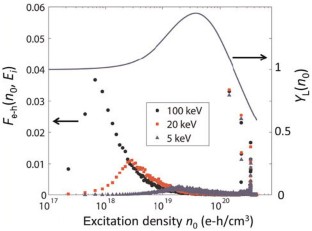
Dr. Gregory Bizarri is a Reader (equivalent to Associate Professor) in Material Science at Cranfield University, UK, where he serves as Head of the Surface Engineering and Precision Centre (SEPC), one of six centers within the Manufacturing theme of the School of Aerospace, Transport and Manufacturing and Materials (SATM). Prior to joining Cranfield in 2017, he was a Staff Scientist at the Lawrence Berkeley National Laboratory (USA) from 2009-2017, where he conducted research on scintillator materials and radiation detection technologies. Dr. Bizarri's research sits at the confluence of multiple disciplines: material science, detector physics, and instrumentation. His work promotes a multidisciplinary approach combining synthesis, characterization, instrumentation design, and modeling to investigate energy transport and conversion processes in materials for applications ranging from medical imaging to energy sectors. His expertise spans scintillator physics, radiation detection, optical materials, and sensor technology, with emphasis on developing novel detector materials through crystal growth and material engineering. His recent publications demonstrate a strong trajectory toward improving radiation detection systems, particularly for time-of-flight positron emission tomography (ToF-PET). His work on heterostructured scintillators, 3D-printed plastic scintillators, photonic crystal integration, and nanocomposite development represents cutting-edge approaches to enhance detection efficiency, resolution, and speed. This research bridges fundamental materials science with practical applications in medical imaging and radiation detection. As Head of the Surface Engineering and Precision Centre, Dr. Bizarri leads a research team dedicated to developing materials for sustainable and fair societal applications. His leadership involves managing large national and international collaborations focused on the design, development, and engineering of detector materials. The center's work integrates advanced materials development with precision engineering techniques to address challenges in aerospace, healthcare, and energy sectors.
Tobias Ritschel is a Professor of Computer Graphics at University College London . His research spans advanced rendering techniques, perceptual modeling, and data-driven graphics, with a focus on bridging physical accuracy and artistic flexibility in visual computing. Key research themes include: Interactive Global Illumination : Real-time simulation of complex lighting effects on GPUs Perceptual Graphics : Human vision-driven rendering and display optimization Non-physical Graphics : Beyond-photorealistic techniques for artistic expression Data-driven Graphics : Leveraging large datasets for novel rendering and modeling approaches His recent work emphasizes neural rendering , differentiable graphics , and X-ray tomography , with applications in 3D reconstruction , NeRF manipulation , and holographic imaging . Notable scientific achievements include the Eurographics Young Researcher Award 2014 and Eurographics Thesis Award 2011 . He has advised multiple PhD students including Philipp Henzler (EG PhD Award 2024) and Thomas Leimkühler (Otto Hahn Medal 2019), while actively contributing to conference leadership as co-chair for EGSR 2024 and Pacific Graphics 2024 . His team collaborates on X-ray reconstruction with Pablo Villanueva-Perez and works on 3D perception with Anthony Steed.
Dr. Qingshi Tu is an Assistant Professor in the Department of Wood Science at the University of British Columbia (UBC) Faculty of Forestry . His research focuses on integrating industrial ecology principles with computational modeling to advance sustainable bioeconomy development. Research Pillars: System-scale sustainability modeling using process simulation, statistics, and AI Environmental/economic/social impact assessment of bioenergy and bioproducts Interactions between bioeconomy, circular economy, and climate mitigation Technical Expertise: Life Cycle Assessment (LCA) Material Flow Analysis (MFA) Techno-economic Analysis (TEA) Machine Learning for sustainability Publication Scope: Dr. Tu has published 20+ articles in top journals like Journal of Industrial Ecology , Nature Communications , and ACS Nano , covering topics from nanomaterial synthesis to climate policy frameworks. His work emphasizes system-scale modeling of bioeconomy-climate interactions. Laboratory: Leads the Sustainable Bioeconomy Research Group , developing computational tools for evaluating emerging biotechnologies.