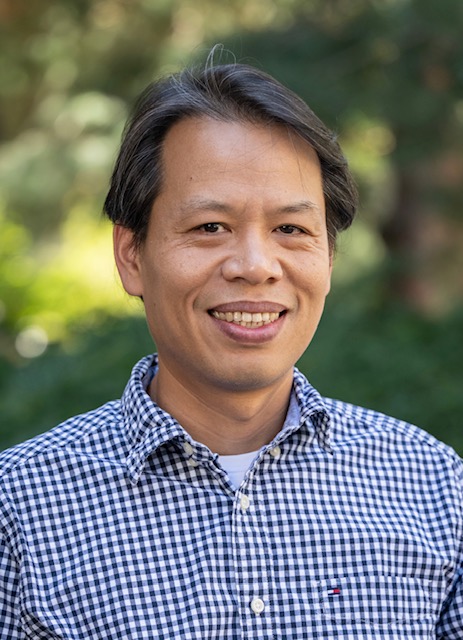
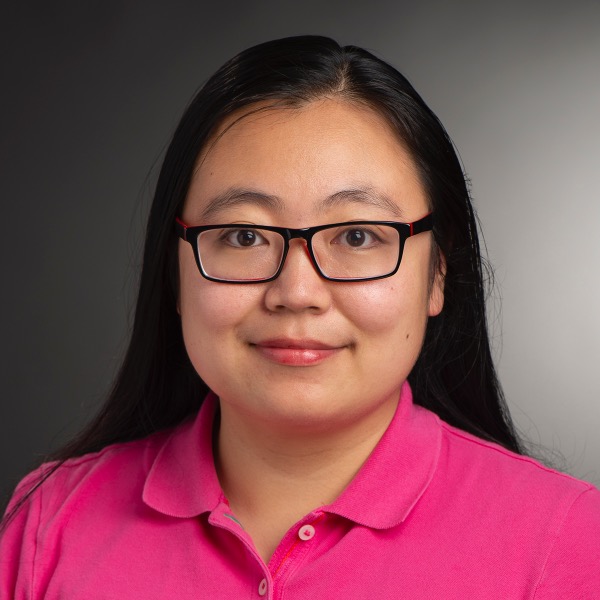
Armando Lara-Millan is an Associate Professor in the Department of Sociology at the University of California, Berkeley. He earned his PhD from Northwestern University and holds affiliations with the Berkeley Economy and Society Initiative and Stanford's Center for Advanced Study in the Behavioral Sciences. His research bridges political economy, historical sociology, and ethnography to analyze institutional transformations. PhD in Sociology, Northwestern University Current Chair-Elect, Sociology of Law Section, ASA 2022 Distinguished Scholarly Book Award (ASA) His work examines: Political Economy of Institutions : How public hospitals and county jails use caseloads to generate revenue, challenging conventional cost-benefit analyses Global Economic Shifts : Reassessing neoliberal theories through the lens of investment firms, corporate reporting, and the end of low-cost labor Urban Digital Platforms : Investigating Nextdoor and Citizen's impact on neighborhood governance and social control Recent publications span American Sociological Review , Criminology , and Social Problems , with a focus on: Administrative disappearing mechanisms Healthcare spending dynamics Medical debt data collection Urban order reconstruction Awards include the 2022 ASA Distinguished Scholarly Book Award. His email is armando@berkeley.edu and blog posts explore contemporary economic challenges.
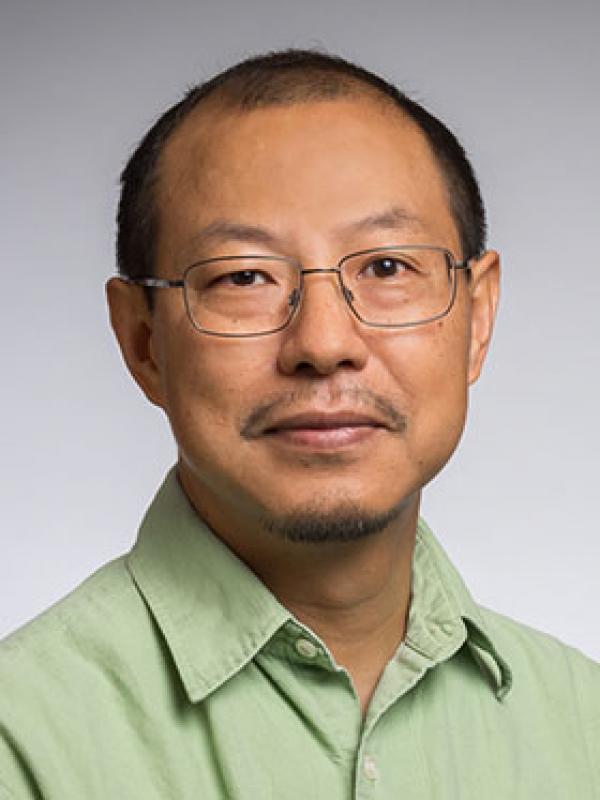
Long Nguyen is a Professor of Statistics at the University of Michigan, Ann Arbor, with a courtesy appointment in Electrical Engineering and Computer Science. He is affiliated with the Michigan Institute for Data Science (MIDAS) and the Vietnam Institute for Advanced Study in Mathematics (VIASM). His research focuses on Bayesian nonparametrics, optimal transport, machine learning, and spatiotemporal data analysis. Nguyen holds a PhD in Computer Science from UC Berkeley and has held postdoctoral positions at Duke University and the Statistical and Applied Mathematical Institute. Education: B.Sc. in Computer Science from Pohang University of Science and Technology; M.Sc. in Mathematics from Arizona State University; Ph.D. in Computer Science from UC Berkeley (2007). Research Interests: Bayesian nonparametric methods, optimal transport theory, statistical inference for complex models, and applications in spatiotemporal data, functional data analysis, and hierarchical modeling. He emphasizes developing scalable algorithms and geometric approaches for statistical learning. Editorial Roles : Annals of Statistics Journal of Machine Learning Research SIAM Journal on Mathematics of Data Science Bayesian Analysis Awards : IMS Fellow, ASA Fellow NSF CAREER Award IEEE Signal Processing Young Author Award L. J. Savage Dissertation Award (via student Aritra Guha) Advising & Collaborations : Guided over 20 PhD students and postdocs, many now in academia and industry. Collaborates on projects in AI ethics, music theory, and environmental data science. Active in organizing summer schools in Vietnam on Bayesian statistics and machine learning. Labs & Teams : Co-leads the Statistical Machine Learning reading group at U-M and collaborates with the VIASM on advanced mathematical research in Hanoi.
Philipp Otto is a Professor of Statistics and Data Science at the University of Glasgow. Previously, he was a Reader in Statistics and Data Analytics (2023–2024) and held a Junior Professorship in Big Geospatial Data at Leibniz University Hannover (2018–2023). He earned his PhD in Statistics (summa cum laude) from European University Viadrina in 2016 and a B.Sc. in International Economics, with study visits to Saint Petersburg State University. His research focuses on spatial and spatiotemporal statistics, environmetrics, network modeling, and machine learning applications. Education: PhD in Statistics (2016), European University Viadrina, Frankfurt (Oder) B.Sc. in International Economics (with study visits to Saint Petersburg) Research Interests: Philipp’s work centers on spatial statistics, spatiotemporal volatility modeling, environmental data analysis, and network processes. He develops statistical methods for geo-referenced and network data, with applications in climatology, finance, and environmental risk assessment. His contributions include advancements in GARCH models, spatiotemporal clustering detection, and statistical process monitoring for AI systems. Grants & Projects: He has secured €1,038,847 in research grants, leading projects on historical map time series analysis, agricultural air quality impacts, and high-dimensional spatial dependence structures. Industry collaborations include survival analysis for building information models. Awards: 2017 Fellowship to attend the Lindau Nobel Laureate Meeting (Economic Sciences) 2017 Best Presentation Award (Data Science, Statistics, and Visualisation) Teaching: He teaches statistics and data science across disciplines, including economics, engineering, and mathematics, at both undergraduate and postgraduate levels. Professional Activities: Editorial Boards: Environmetrics (2021), AStA Advances in Statistical Analysis (2020) Member of German Statistical Society (Treasurer, 2013)
Ningchuan Xiao is a Professor of Geography at The Ohio State University's Department of Geography. His work bridges Geographic Information Science (GIScience) with computational methods, emphasizing spatial optimization, cartography, and machine learning integration. Education: Ph.D. in Geography from The University of Iowa (2003). Courses taught include GIS fundamentals, cartography, and Python-based spatial analysis. Research Interests: Spatial Optimization: Developing algorithms for land acquisition, redistricting, and resource allocation. Machine Learning & Cartography: Exploring AI-driven map interpretation and ethical visualization of complex data. Census Data: Innovating privacy-preserving techniques while maintaining data utility, including temporal/spatial modeling. Open Source Tools: Authored GIS Algorithms (2016) and maintains GitHub repository 'gisalgs' for accessible code. Publications: Recent work (2023-2025) highlights advancements in synthetic microdata generation, privacy-utility tradeoffs in census aggregation, and AI-driven cartographic recognition. His 2022 studies include traffic camera analytics and choropleth map QA systems. Awards: Not explicitly listed in the provided texts. Advising & Grants: Collaborated with researchers like Y. Lin, J. Li, and S. Bao. Projects include the Sustainable Columbus Observatory (SCO) for urban sustainability metrics. Research is supported through academic partnerships and computational initiatives.
Magnus Richardson is a Professor at the University of Warwick, affiliated with the Mathematics for Real-World Systems Centre for Doctoral Training (CDT), where he previously served as Director (2016–2020) and currently acts as Deputy Director. His research focuses on theoretical neuroscience, mathematical modeling of neural systems, and neurodegenerative diseases. He has led significant grants, including the UKRI-funded £5M renewal for the CDT, extending its operations until 2028. Richardson has supervised numerous doctoral students, including Alice Wang, Ivana Del Popolo, and alumni such as Dr. Emily Hill and Dr. Robert Gowers. His work bridges computational neuroscience and experimental biology, investigating topics like synaptic plasticity, adenosine signaling, and the impact of protein aggregates (e.g., tau, α-synuclein) on neuronal function. Richardson’s teaching includes modules on mathematical biology and machine learning. His GitHub repositories reflect his computational contributions, including neural modeling frameworks for integrate-and-fire neurons. Key research themes include understanding how synaptic inputs and neuromodulators influence neuronal dynamics, and developing mathematical tools to analyze neural systems under pathological conditions. Richardson’s grants and collaborations highlight his role in advancing interdisciplinary research at the intersection of mathematics, neuroscience, and computational biology.
Dr. Rani Moran is a Lecturer in Psychology at Queen Mary University of London's School of Biological and Behavioural Sciences. She is affiliated with the Centre for Brain and Behaviour. Her research focuses on decision-making, memory, and learning mechanisms, employing methods like computational modeling, neuroimaging, and pharmacological interventions. Key interests include reinforcement learning, cognitive maps, and exploration-exploitation dilemmas. Her work integrates experimental designs with advanced statistical analysis to understand flexible behavioral control. Recent studies explore model-based vs. model-free learning, credit assignment mechanisms, and disinformation's impact on learning biases. She has published in top journals such as Psychological Review and Nature Communications . Dr. Moran collaborates on projects involving neurocomputational models of confidence, meta-cognition, and social learning. Her research aims to develop interventions for optimizing cognitive processes, with applications in mental health and decision-making contexts.
Monica Pratesi is a Full Professor of Statistics at the Department of Economics and Management of the University of Pisa. She currently serves on leave as Director of the Department for Statistical Production at ISTAT, coordinating 937 researchers and managers. Her expertise spans small area estimation, poverty measurement, survey methodology, and official statistics. She leads the Tuscan Universities Research Centre “Camilo Dagum” and has held two Jean Monnet Chairs focusing on poverty and living conditions in the EU. She has coordinated major EU projects like INGRID-2 and MAKSWELL, advancing methodologies for inclusive growth and sustainable development. Her research integrates big data and citizen-generated data into statistical frameworks. Awards include presidencies of the Italian Statistical Society and the International Association of Survey Statisticians. Education & Roles: Full Professor of Statistics (SECS-S/01) at University of Pisa since 2012 Director, Department for Statistical Production at ISTAT (until 2024) President, Italian Statistical Society (2016-2020) President-elect, International Association of Survey Statisticians (2022-2023) Research Focus: Advanced statistical methods for poverty monitoring, small area estimation, survey design, and leveraging big data for policy impact. Key areas include multidimensional poverty, educational poverty, and sustainable development indicators. Her work emphasizes real-time data integration and policy relevance. Grants & Projects: Principal Investigator for INGRID-2 (EU H2020, 2017-2021) Principal Investigator for MAKSWELL (EU H2020, 2017-2020) Coordinator of SAMPLE (FP7) and INGRID (FP7) Labs & Teams: Active in the Societal Transitions group and contributes to the European Master in Official Statistics program. Her research center, REMARC, focuses on policy-driven statistical innovation.
Chenyu You is an Assistant Professor in the Department of Applied Mathematics & Statistics and Department of Computer Science at Stony Brook University. He is affiliated with CVLab, AI Institute, and Institute for Advanced Computational Science. His research focuses on principles and practice of trustworthy machine intelligence, emphasizing generalization and reliability in machine learning, with applications to healthcare, biomedical imaging, and cognitive neuroscience. Ph.D. in Electrical Engineering from Yale University (2024) M.S. in Electrical Engineering from Stanford University (2019) B.S. in Electrical Engineering from Rensselaer Polytechnic Institute (2017) His research spans three major areas: Efficient World Foundation Models (task-agnostic pretraining, scalable adaptation), Learning with Imperfect Data (label scarcity, class imbalance), and Biomedical Foundation Models (large-scale medical AI agents). Applied work includes healthcare, biomedical imaging, and cognitive neuroscience. Recent publications (2025) include breakthroughs in sparse coding (ICML), cycle-consistent diffusion models (ICCV), optimal transport for survival analysis (MICCAI), and prompt theory (ACL). His team addresses challenges in trustworthy AI, spurious correlation mitigation, and multi-modality robustness. Scientific recognition includes Excellence in Teaching Award (2025) , World's Top 2% Scientists (2024) , and multiple IEEE TMI Platinum Distinguished Reviewer awards. He advises students Qin Ren and Yifan Wang, with alumni pursuing roles at Two Sigma, Amazon Science, and top PhD programs. His lab collaborates with leading institutions and actively seeks motivated students for flexible-start positions. He serves as Associate Editor for IEEE Transactions on Medical Imaging and Area Chair for major conferences like MICCAI and NeurIPS.
Zhe He is a Full Professor at Florida State University (FSU), leading the eHealth Lab in the School of Information (iSchool) within the College of Communication & Information. He holds courtesy appointments in the Department of Behavioral Sciences and Social Medicine (College of Medicine), Department of Computer Science, and Department of Statistics. His research focuses on biomedical informatics, AI, and big data analytics, aiming to improve population health and advance biomedical research through informatics applications. He directs the Institute for Successful Longevity and co-leads the Biostatistics, Informatics, and Research Design Program (BIRD) of the UF-FSU Clinical and Translational Science Award. Education: Postdoctoral training at Columbia University (2015), PhD in Computer Science from NJIT (2014), MS from Columbia University (2009), and BE from Beijing University of Posts and Telecommunications (2007). Research Interests: Clinical trial generalizability, ontology quality assurance, consumer health informatics, and AI in medicine. His work bridges biomedical terminologies, patient engagement, and healthcare equity, with a focus on older adults and underserved populations. Grants & Funding: Over $21.9M in grants from NIH (NLM, NIA, NIMH), AHRQ, Amazon, NVIDIA, and Eli Lilly. Active grants include projects on medical marijuana effects, AI-driven clinical training, HIV prevention, and lab result interpretation tools for older adults. Awards & Honors: 2022 Lois Lunin Award (ASIS&T), FAMIA (2022), two AMIA Distinguished Paper Awards, and recognition for interdisciplinary research. Promoted to Full Professor in 2025 after early tenure as Associate Professor (2020). Labs & Teams: Directs the eHealth Lab and collaborates with跨学科 teams in the OneFlorida Data Trust, UF-FSU Clinical and Translational Science Award, and the National Center for Biotechnology Information (during sabbatical).
Prof. Dr. Ahmet ÖZMEN is a Professor at Sakarya University's Faculty of Computer and Information Sciences, Department of Software Engineering. He has held various administrative positions including Head of the Software Engineering Department (2019-2028) and Director of the Computer Research and Application Center (2019-2022). With extensive experience in academia since 1991, he has made significant contributions to computer vision, traffic monitoring systems, and sensor technologies. Sakarya University: Professor (2019-present), Associate Professor (2011-2019) Dumlupınar University: Assistant Professor (2001-2011), Research Assistant (2000-2001, 1993-1998) Istanbul Technical University: Research Assistant (1991-1993) Prof. ÖZMEN's research spans computer vision applications for traffic monitoring, indoor air quality systems, parallel computing, and sensor technologies. His work bridges theoretical computer science with practical engineering applications, particularly in developing vision-based systems for nighttime vehicle detection, traffic flow monitoring, and environmental sensing. His interdisciplinary approach combines machine learning, image processing, and embedded systems to solve real-world problems in transportation and environmental monitoring. His publication record shows a clear evolution from parallel and distributed systems in his early career to computer vision and sensor applications in recent years. The majority of his recent work focuses on traffic monitoring systems using computer vision techniques, particularly for nighttime conditions, and indoor air quality monitoring systems using sensor networks. His research demonstrates strong industry and societal relevance, with applications in smart transportation, environmental protection, and educational technology. TÜBİTAK Publication Awards (2006, 2008, 2009, 2010) Physical implementation award from TÜBİDER (2008) Microsoft Certified Professional Certificate (2005) YÖK overseas study scholarships (1993, 1998) Elginkan graduate scholarships (1990, 1991) Prof. ÖZMEN has supervised numerous graduate students across multiple institutions, with a focus on practical engineering problems. His research has been supported by various projects including TÜBİTAK projects, institutional research grants, and industry collaborations. He has led significant research initiatives in traffic monitoring systems, indoor air quality monitoring, and educational technology platforms. His administrative leadership has included directing research centers and shaping curriculum development in software engineering. His work has involved establishing research teams focused on computer vision applications, sensor network development, and educational technology. These teams have produced numerous publications, developed practical systems, and trained the next generation of computer engineers. Current research directions include advanced traffic monitoring systems using deep learning and multi-camera setups for urban planning applications.
Gary Koenig is Associate Professor of Chemical Engineering at the University of Virginia. His research program focuses on advanced materials for energy storage systems, particularly lithium-ion batteries and flow batteries. He holds a PhD from University of Wisconsin-Madison and completed postdoctoral research at Argonne National Laboratory. His group develops novel electrode architectures, including thick sintered electrodes and all-active-material designs, to improve battery energy density and rate capability. Research spans materials synthesis, electrochemical characterization, and transport modeling to overcome limitations in current energy storage technologies. Honors include the NSF CAREER Award (2017) and Fulbright Research Fellowship (2020). Recent publications examine electrode processing techniques, lithium extraction methods, and transport phenomena in battery systems. His work demonstrates innovations in electrode design that enable higher energy densities while maintaining cycling stability. He has taught courses including Applied Statistics, Chemical Reaction Engineering, and Energy Technology Options.
Dr. Anna Raffoni serves as a Senior Lecturer in Accounting and Finance at Loughborough Business School, Loughborough University, and holds the strategic role of Programme Lead for Social Science Research (Business and Management Studies). She joined the institution in January 2015 after accumulating academic experience at the University of East Anglia, Cranfield University School of Management, and the University of Bologna, establishing herself as a key contributor to the Accounting and Finance research group. Her academic foundation includes a PhD in Management Accounting (specializing in customer value management) awarded by the University of Florence in 2009, which continues to inform her interdisciplinary research trajectory. Raffoni's scholarly work centers on performance management, business analytics, and strategic management accounting, with publications appearing in premier journals including the European Journal of Operational Research, British Accounting Review, Production, Planning & Control, and Omega. Her research uniquely bridges quantitative operations research methods with accounting frameworks, particularly examining how data analytics transforms traditional performance measurement in banking and service sectors through techniques like machine learning and data envelopment analysis. Analysis of her 15 most recent publications (2012-2024) reveals a clear evolution toward integrating advanced analytics with performance management systems. She has pioneered multidimensional efficiency measurement in banking branches, explored total cost of ownership in supply chains, and investigated strategic performance measurement adoption, consistently demonstrating how operational research methods solve real-world accounting challenges while advancing theoretical models. Her scientific recognition features the Dean’s Award for Early Career Teacher of the Year (2017), acknowledging her excellence in undergraduate and postgraduate instruction. In her capacity as Programme Lead, Raffoni shapes research strategy and supports faculty development across Business and Management Studies. While specific supervisees and grant details aren't documented in available materials, her leadership role and active publication record indicate substantial engagement in research mentorship and academic community building. She actively collaborates within Loughborough's Accounting and Finance research group, contributing to interdisciplinary projects that address contemporary challenges in financial management through analytical approaches, with emerging work suggesting increasing focus on artificial intelligence applications in performance systems.
Bing Yan is an Assistant Professor in the Department of Electrical and Microelectronic Engineering at Rochester Institute of Technology (RIT), affiliated with the Kate Gleason College of Engineering. She holds a B.S. in Information Management from Renmin University of China (2010), and M.S. and Ph.D. degrees in Electrical Engineering and Statistics from the University of Connecticut (2012–2017). Prior to RIT, she was an Assistant Research Professor at the University of Connecticut. Dr. Yan’s research focuses on power system optimization , including grid integration of renewables (wind/solar), microgrid operations, distributed energy systems, and manufacturing scheduling. She has published over 30 peer-reviewed articles and secured grants from the National Science Foundation (including a CAREER Award), Department of Energy, and industry partners like Brookhaven National Laboratory and ABB. Her work emphasizes mixed-integer linear programming and machine learning applications in energy systems. Notable contributions include stochastic unit commitment models for wind farms, voltage control via deep reinforcement learning, and multi-layer weather models for PV prediction. She advises on projects involving grid resilience, smart manufacturing, and data-driven optimization. Awards: National Science Foundation Faculty Early Career Development (CAREER) Award Multiple NSF grants, DOE grants, and industry contracts Teaching: Courses include Circuits I , Electric Power Transmission & Distribution , and Advanced Power Systems . She also mentors students through co-op programs and independent studies. Labs/Teams: Leads the Intelligent Lab of Power and Manufacturing (ILPM), focusing on multidisciplinary solutions for energy and manufacturing systems. The lab emphasizes hands-on training and innovation in smart grid technologies and sustainable energy systems.
Professor Michael Davies is Professor of Building Physics and the Environment at the UCL Institute for Environmental Design and Engineering (IEDE) within The Bartlett School of Environment, Energy & Resources at University College London. He is also a member of the UK Climate Change Committee. With over two decades of academic experience, Professor Davies leads research at the critical intersection of building physics, environmental design, and public health, focusing on how the built environment impacts human well-being. His educational background includes: Doctor of Philosophy from the University of Westminster (1994) Postgraduate Certificate in Education from the University of York (1990) Bachelor of Science from the University of Manchester (1986) Professor Davies has pioneered transdisciplinary research methods, particularly in modeling health impacts and applying system dynamics approaches to address urban health challenges. His work demonstrates how healthy sustainable development can be achieved through innovative stakeholder participation and methodological advancements. His research spans building physics, climate change adaptation, indoor environmental quality, and the health implications of urban design, with particular attention to vulnerable populations and environmental justice considerations. His extensive publication record (over 300 outputs) reveals a consistent evolution toward more integrated approaches that connect building science with public health and climate policy. Recent work shows growing emphasis on health equity in climate adaptation, advanced modeling of complex urban systems, and the application of system dynamics to understand interconnected challenges in housing and urban environments. His research bridges technical building performance analysis with broader policy implications, reflecting his commitment to solutions that address both environmental sustainability and social equity. Professor Davies has secured significant research funding, including the prestigious EPSRC Platform Grant funding the Complex Built Environment Systems group at UCL (awarded only to "world leading" centers) and the Wellcome Trust-funded 'CUSSH' project. In total, he has served as PI or Co-I on approximately 50 research projects, demonstrating exceptional ability to lead large-scale, transdisciplinary research initiatives addressing critical urban challenges. As an educator, Professor Davies leads the 'Energy Context' module in the Environmental Design and Engineering MSc course and supervises EngD and PhD students. His teaching emphasizes the integration of energy systems within broader environmental, social, and policy contexts, preparing students to address complex sustainability challenges in the built environment sector.
Alejandro Sánchez Gracia is an Associate Professor at the Universitat de Barcelona's Faculty of Biology, affiliated with the Department of Genetics, Microbiology and Statistics. He leads the Molecular Evolutionary Genetics research group and directs the advanced course in 'Phylogenomics and Population Genomics: Inference and Applications.' Education: Llicenciat in Biology (Universitat de Barcelona, 1998), PhD in Biology (Universitat de Barcelona, 2006) Research Focus: Molecular mechanisms of chemosensory gene evolution in arthropods, development of bioinformatics tools for evolutionary and population genomics, and population genomics of adaptation in Drosophila. His work bridges computational methods with evolutionary biology, emphasizing genomic approaches to study adaptation. Key projects include analysis of chemoreceptor gene families across Panarthropoda, genomic studies of Canary Island endemic species, and development of tools like BITACORA for gene family annotation. He has contributed to major genomic resources such as DnaSP 6 and participated in initiatives like the Earth BioGenome Project. Active in collaborative networks like the European Drosophila Population Genomics Consortium and AdaptNET (Adaptive Genomics Network). Grants and Projects: 2021-2024: PID2020-113168GB-I00 (Ministry of Science, Spain) - Poligenic adaptation in Drosophila 2020-2021: Catalan blind scorpion genome project (Institut d'Estudis Catalans) Labs/Teams: Heads the Molecular Evolutionary Genetics group, collaborating on projects involving spider genomics, chemosensory evolution, and population-level adaptation studies.