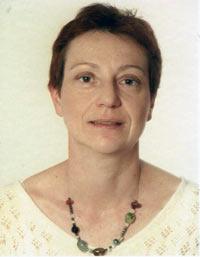
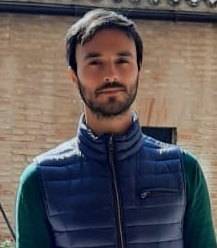
Andrea Corti serves as Associate Professor in the Department of Information Engineering and Mathematical Sciences at the University of Siena, teaching core courses including Physics I for Management Engineering undergraduates and advanced subjects like Energy Conversion Systems and Environmental Impact Containment, alongside Technologies for Environmental Resource Management for Engineering Management graduate students. Research Focus: His work centers on Environmental Engineering with specialized expertise in Waste Management and Circular Economy systems. He investigates hazardous waste treatment processes, biochemical methane potential in organic waste streams, and solid recovered fuel applications, increasingly integrating robotics and machine learning for sustainable resource management solutions as evidenced by his 2024 IEEE Access publication. Publication Evolution: Analyzing his 2015-2024 output reveals a clear trajectory from foundational waste characterization studies toward interdisciplinary approaches. The 2024 paper demonstrates his current emphasis on unifying deep-learning vision with thermodynamic modeling and robotic manipulation to advance circular economy frameworks, signaling a strategic pivot toward AI-driven environmental engineering solutions.
Valerio Re is a Full Professor of Electronics at the Department of Engineering and Applied Sciences of the University of Bergamo, specializing in microelectronics for radiation detectors and sensor systems. His academic career spans over three decades with significant contributions to high-energy physics instrumentation and biomedical sensor applications. Re received his Physics degree with honors from the University of Milan in 1985 and earned his PhD in Electronic Engineering from the University of Pavia in 1990. His educational background provided the foundation for his subsequent research in advanced electronics for challenging environments. His research interests focus on analog front-end circuits for radiation detectors, noise and radiation resistance in electronic devices, development of measurement instrumentation, and nanoscale CMOS technologies for sensor signal processing. More recently, he has expanded into wearable sensor systems for wireless monitoring of physiological parameters. His work bridges fundamental electronics with practical applications in particle physics and healthcare. Analysis of his recent publications (2021-2025) reveals a strong focus on advancing pixel detector technology for high-energy physics experiments (particularly Belle II and HL-LHC), with increasing exploration of 2D materials and smart textiles for biomedical applications. His research demonstrates a consistent progression toward smaller technology nodes (65nm to 28nm CMOS) while addressing the challenges of radiation hardness and high data rates. Re has served as Scientific Director for two major Horizon 2020 projects: Advanced European Infrastructures for Detectors at Accelerators (2015-2020) and Remote Assessment of Disease and Relapse in Central Nervous System Disorders (2016-2022). From 2014-2017, he coordinated the Analog Working Group of CERN's RD53 project, and from 2015-2020 led WP4 of the AIDA-2020 project. His teaching portfolio includes Biomedical Sensors for Medical and Mechatronics Engineering programs, and Electronics and Industrial Measurements for Computer Engineering. His research group collaborates extensively with microelectronics companies, clinical research institutions, and international physics laboratories including CERN and INFN.
Barabino Silvia is an Associate Professor of Molecular Biology at the University of Milan-Bicocca's Department of Biotechnology and Biosciences. She leads the Barabino Lab (#BarabinoLab_BtBS), specializing in RNA biology and neurodegeneration research. Her work investigates RNA-binding proteins in transcription/RNA processing and their links to human diseases. Current projects focus on: miRNA dysregulation in amyotrophic lateral sclerosis (ALS) pathogenesis FET protein functions in DNA damage response and genome stability Molecular mechanisms connecting RNA metabolism to neurodegeneration Experimental approaches include biochemical assays, advanced microscopy, and transgenic mouse models. Recent publications demonstrate broad impact across molecular neuroscience and RNA biology, including therapeutic target identification for ALS (2020), leukemia proliferation mechanisms (2019), and oxidative stress regulation of RNA processing (2017). She maintains active collaborations with European institutions including King's College London and Stockholm University.
Giuseppe Gorini is a Professor in the Department of Physics "Giuseppe Occhialini" at the University of Milan-Bicocca, specializing in nuclear fusion diagnostics and plasma physics. His research primarily focuses on developing and implementing advanced diagnostic techniques for measuring fusion power in tokamak devices through neutron and gamma-ray spectroscopy. Professor Gorini's research interests center on fusion plasma diagnostics, with particular expertise in gamma-ray spectroscopy for fusion power determination, neutron detection systems, and radiation-hard detector development. His work addresses critical challenges in magnetic confinement fusion, including accurate measurement of fusion reactions, plasma behavior analysis during disruptions, and characterization of detector technologies for harsh fusion environments. His research has significant implications for the success of major fusion projects including ITER, SPARC, and other international tokamak experiments. His recent publications demonstrate a strong focus on applying cutting-edge diagnostic approaches to solve fundamental challenges in fusion research. The work spans from fundamental detector characterization to complex plasma physics analysis, with an increasing incorporation of machine learning techniques for data analysis. His research consistently addresses the critical need for accurate, reliable diagnostics in the path toward practical fusion energy. Professor Gorini actively collaborates with major fusion research institutions worldwide, contributing his diagnostic expertise to experiments at facilities including JET, MAST-U, TCV, and SPARC. His work on gamma-ray spectroscopy for fusion power measurement represents a critical capability needed for the success of ITER and future fusion power plants.
Antonio Genova is an Associate Professor in the Department of Mechanical and Aerospace Engineering at Sapienza University of Rome, where he has been working since 2019 (initially as Assistant Professor, promoted to Associate Professor in 2022). His expertise spans planetary geodesy, radio science, and spacecraft navigation, with significant contributions to multiple NASA and ESA missions including Europa Clipper, EnVision, BepiColombo, and JUICE. Dr. Genova received his PhD in Aerospace Engineering (2013) and Master of Science in Astronautical Engineering with honors (2009) from Sapienza University of Rome. Prior to his current position, he worked as a Research Scientist and Postdoctoral Associate at MIT's Department of Earth, Atmospheric and Planetary Sciences, with off-campus assignments at NASA Goddard Space Flight Center. His research focuses on planetary interior structure determination through gravity field analysis, precise orbit determination techniques, and radio science investigations of planetary bodies. His work has significantly advanced our understanding of Mercury's interior structure (including evidence for a solid inner core), Mars' polar ice deposits, and the geophysical properties of icy moons like Europa and Enceladus. Dr. Genova has developed innovative methods for spacecraft navigation using sensor fusion of optical and radiometric data, and has made important contributions to understanding planetary atmospheres through radio occultation measurements. Dr. Genova's recent publications demonstrate a strong focus on cutting-edge techniques in spacecraft navigation and planetary science. His work spans multiple planetary bodies including Mercury, Venus, Mars, Jupiter's moons, and Saturn's moons. A significant portion of his recent research involves the analysis of data from current and upcoming missions like BepiColombo, EnVision, and Europa Clipper, with emphasis on gravity science, atmospheric studies, and interior structure characterization. Rita Levi Montalcini Award for Young Researchers by the Italian Ministry of Education, University and Research (MIUR) (2018) Planetary Science (690) Division Peer Award at NASA Goddard Space Flight Center (2017) Dr. Genova has supervised multiple graduate students, including 5 M.Sc. students and 1 Ph.D. student in 2020, and 2 M.Sc. students in 2019. He has served as Co-Investigator on numerous high-profile space missions including Europa Clipper, EnVision, BepiColombo, and JUICE. He was Principal Investigator for a NASA-funded project on 'Solar System Planetary Geodesy Research' (2017-2018) and has been a member of multiple NASA mission teams including GRAIL, LOLA, MRO, and MESSENGER. As Co-chair of the Geodesy and Geophysics Working Group for the ESA/JAXA BepiColombo mission, Dr. Genova plays a key role in Mercury exploration. He is also a member of ESA's Science Program Voyage 2050 Topical Team, contributing to the strategic planning of future European space science missions.