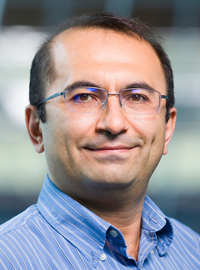
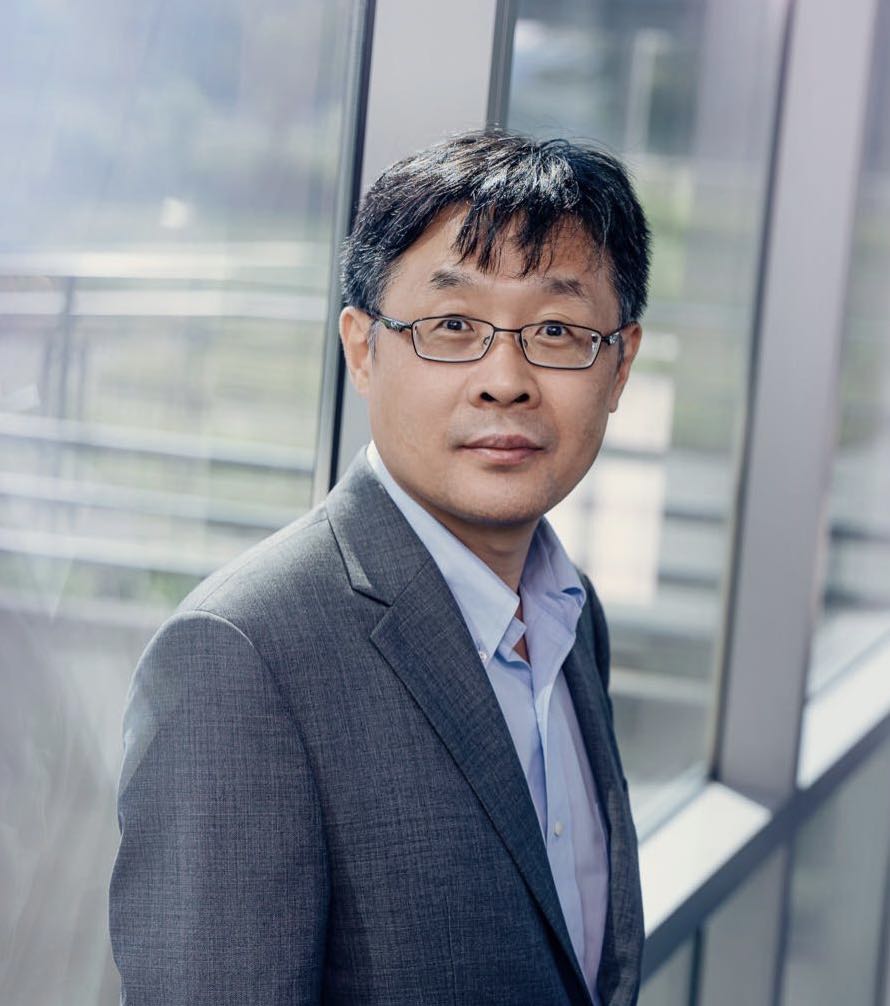
Dr. Aman Singh Dhaliwal is an Assistant Professor of Instruction in the Psychology department at The University of Texas at Arlington. He holds a Ph.D. (2021), MS (2019), and BS (2016) in Experimental Psychology and Psychology, all from UTA. His research focuses on cognitive psychology, decision-making in digital environments, cyberpsychology, and the psychological impact of misinformation and political persuasion. He also explores experiential learning in adolescents with Autism Spectrum Disorder. Education: PhD/MS/BS in Psychology from UTA Teaching includes advanced statistics, cognitive processes, cyberpsychology, and research methods. He has mentored undergraduate and high school researchers. Notable presentations include a 2023 Psychonomics Society poster on decision-making biases and mindfulness. No grants or awards are explicitly listed. He has taught courses across 2018–2025, including Brain & Behavior, Cognitive Processes, and Health Psychology.
Davood B. Pourkargar is an Assistant Professor in the Tim Taylor Department of Chemical Engineering at Kansas State University (K-State), part of the Carl R. Ice College of Engineering. He is also a graduate faculty member at the Food Science Institute and a faculty researcher at the Johnson Cancer Research Center. His professional experience includes roles at ExxonMobil Research and Engineering, the University of Minnesota, and the University of Delaware. Education: Ph.D. in Chemical Engineering, Pennsylvania State University (2015) M.S. in Chemical Engineering, Sharif University of Technology (2010) B.S. in Chemical Engineering, Sharif University of Technology (2008) Research Interests: Focuses on computational multiscale modeling, artificial intelligence, optimal control, and automation for sustainable energy/chemical production. Key areas include physics-informed machine learning, cyber-physical systems, and smart materials synthesis. His lab integrates process systems engineering with digital twin technology to enhance decision-making in complex systems. Key Research Trends: Recent work emphasizes distributed control architectures, resilient process networks, and applications in renewable energy (e.g., green ammonia, solar cell production). His publications span AI-driven modeling, cybersecurity for manufacturing systems, and data-driven predictive frameworks. Awards: 2024 Carl R. Ice College Outstanding Assistant Professor NSF EPSCoR Fellowship AFOSR Faculty Fellowship Multiple Best Presentation Awards at AIChE/ACC conferences Advising & Grants: Advises over a dozen graduate/undergraduate students. Secured grants including NSF funding for physics-informed machine learning in organ-on-a-chip systems. Active in lab automation and robotic additive manufacturing initiatives. Labs & Teams: Director of the Intelligent Sustainable Process Systems Lab (ISPSL), with computational and experimental facilities in Durland Hall. Collaborates across disciplines including food science, cancer research, and biomedical engineering.
Yevgen Biletskiy is a Professor in the Department of Electrical and Computer Engineering at the University of New Brunswick (UNB), Fredericton. His academic roles include serving as Co-Director of the RuleML Initiative and Program Co-Chair of RuleML-2007. He holds a Ph.D. and is a licensed Professional Engineer (P.Eng.) in New Brunswick. His teaching spans graduate and undergraduate courses in software engineering, digital systems, and power electronics, including EE 6263 (Knowledge Representation for Software Engineering) and EE 6213 (Advanced Digital Systems). Research Interests: His work focuses on Knowledge-Based Systems , Artificial Intelligence , Semantic Web , Information Extraction , FPGA-based Design , and Renewable Energy . He has supervised over 40 graduate and undergraduate students, including 3 active PhD candidates, 1 completed PhD, 9 Masters, and 30+ research-based Bachelors. Publications: Over 100 peer-reviewed articles, including recent contributions on smart grid optimization, fault diagnosis in power electronics, and ontology-driven systems. Notable works include frameworks for semantic interoperability, rule-based learning systems, and FPGA applications. Professional Activities: Served as a reviewer for NSERC grants, IEEE journals (e.g., TKDE, TE), and conferences (CDC, WTAS). He has chaired tracks at international conferences and contributed to industry partnerships through consulting roles with firms like Netsphare Solutions and Vox Interactif. Labs/Teams: Active in UNB’s research initiatives involving power systems, semantic web technologies, and e-learning systems. His lab collaborates on projects like SEMESIS (semantic search systems) and advanced manufacturing post-processing techniques.
Renata Dividino is an Assistant Professor in the Department of Computer Science at Brock University, Canada. She holds a BSc from the University of Campinas (Brazil), an MSc from Universität des Saarlandes (Germany), and a PhD from Universität Koblenz – Landau (Germany). Her research focuses on graph knowledge representation, machine learning, and their applications in web science, semantic web foundations, and provenance systems. She has worked at institutions like DFKI, Fraunhofer IGD, and the Big Data Analytics Lab at Dalhousie University, bridging academic and industrial sectors. Her industry experience includes roles as an AI Scientist and Director of Data Science in the maritime sector, where she developed patented technologies for AI-driven maritime operations and risk assessment systems. Key research contributions include improving AI system reliability via provenance analysis and advancing knowledge graph applications. Education: BSc in Computer Science, University of Campinas MSc in Computer Science, Universität des Saarlandes PhD in Computer Science, Universität Koblenz – Landau Research Interests: Provenance systems, semantic web foundations, knowledge graphs, graph-based AI, maritime AI applications, and federated learning. Her work emphasizes practical applications in complex networks, web-scale data, and social networks. Awards: No specific awards mentioned, but her contributions include patented technologies and peer-reviewed publications on provenance-driven AI transparency. Advising & Grants: Secured industry grants for R&D projects in maritime AI and data science. Her work on vessel risk assessment and infectious disease prediction demonstrates applied research impact.
Joel Wooten is an Associate Professor of Management Science at the University of South Carolina's Darla Moore School of Business. His expertise spans innovation and entrepreneurship, with teaching focus on innovation/design, web-based products, business analytics, and statistics. He holds a Ph.D. and MBA from the Wharton School (University of Pennsylvania) and a B.S. in Industrial Engineering from Georgia Tech. Education: Ph.D., The Wharton School, University of Pennsylvania (2013) MBA, The Wharton School, University of Pennsylvania (2006) B.S., Industrial Engineering, Georgia Tech (2000) His research explores innovation tournaments, procurement auctions, and space industry operations. Notable partnerships include collaborations with XPRIZE and Merck, alongside entrepreneurial support for Fortune 500 firms and local businesses. Before academia, he was a strategy consultant at Bain & Company. Recent work analyzes subsidy efficacy in auctions, visibility impacts in innovation contests, and commercial space travel trends. His articles emphasize strategic procurement, competitive innovation, and emerging industry dynamics. No scientific awards are explicitly mentioned. Advising and grant details are not provided in the text.
Professor Karen Douglas is a Professor of Social Psychology at the School of Psychology, University of Kent. She currently serves as the Research and Innovation Lead and as the director of the ERC-funded project "CONSPIRACY_FX - Consequences of conspiracy theories". Her work has received significant media attention from outlets including The Conversation, The Observer, Huffington Post, and BBC Future. Professor Douglas specializes in the psychology of conspiracy theories, examining why they appeal to people and their consequences for individuals, groups, and society. Her research spans social psychology, political psychology, and group dynamics, with a particular focus on how conspiracy theories influence interpersonal relationships, political attitudes, and health behaviors. She has developed a comprehensive database of academic literature on conspiracy theories with support from the Centre for Research and Evidence on Security Threats. Her publication record shows a consistent focus on conspiracy theories across multiple contexts including political events, pandemics, and social issues. Recent work examines emotional responses to conspiracy theories, their relationship with distrust and dishonesty, and their impact on social relationships and political engagement. She frequently collaborates with international researchers across numerous countries. Professor Douglas has secured substantial research funding, including a €2.5 million European Research Council grant (2022-2026) for her CONSPIRACY_FX project. Other notable grants include funding from the Australian Research Council, Leverhulme Trust, British Academy, and ESRC/CREST. She actively supervises PhD students including current students Irem Eker, Ricky Green, and Kenzo Nera. Her past students include Dr. Clara De Inocencio Laporta, Dr. Varoth Chotipitayasunondh, Dr. Daniel Jolley, Dr. Michael Wood, Dr. Yvonne Skipper, Dr. Jennifer Cole, and Dr. Tracey Elder. Professor Douglas also serves on editorial boards for several prestigious journals including the British Journal of Psychology and Advances in Political Psychology.
Souran Manoochehri is a Professor and Chair of the Department of Mechanical Engineering at Stevens Institute of Technology, within the Charles V. Schaefer, Jr. School of Engineering and Science. He joined Stevens in 1989 as an Assistant Professor, advancing to Associate Dean for Research and Technology (2004-2009) and Director of the Design and Manufacturing Institute (1990-2004). He holds a PhD (1986), MS (1983), and BS (1981) in Mechanical Engineering from the University of Wisconsin-Madison and Illinois Institute of Technology, respectively. Education: PhD, MS, and BS in Mechanical Engineering Roles: Department Chair, former Associate Dean, and co-founder of the Design and Manufacturing Institute Research: Focuses on additive manufacturing, computer-integrated design, and intelligent optimization His research integrates mathematical modeling, machine learning, and experimental studies to ensure product and process quality in manufacturing. Over his career, he has secured $30M+ in grants, authored 130+ publications, and supervised 30+ graduate students and 12 postdoctoral fellows. He is an ASME Fellow and recipient of awards including the ASME Design Engineering Division Award. Key research trends in his articles include real-time monitoring of additive manufacturing processes (e.g., melt pool analysis, acoustic emission sensors), machine learning applications in quality control, and optimization of manufacturing systems. His work addresses challenges in precision, defect detection, and process automation across 3D printing and microfluidics. Scientific Awards: ASME Fellow, ASME IDETC Award, DMC Best Presentation Grants: Over 50 contracts totaling $30M+; advising over 30 graduate students Labs/Teams: Co-founded the Design and Manufacturing Institute (DMI) at Stevens His contributions span academic leadership and industry-relevant innovation, emphasizing interdisciplinary solutions in advanced manufacturing.
Somayeh Moazeni is an Associate Professor at the School of Business, Stevens Institute of Technology. She holds a PhD in Computer Science from the University of Waterloo and has held academic appointments including Visiting Associate Professor at Northwestern University and Postdoctoral Research Associate at Princeton University. Her research focuses on Reinforcement Learning, Stochastic Dynamic Optimization, and applications in Energy Markets, Inventory Management, and Algorithmic Trading. She has authored over 30 peer-reviewed articles and serves as an associate editor for INFOR and PLOS One . Education: PhD (Computer Science, 2012), University of Waterloo; Postdoc (Operations Research, 2012-2014), Princeton University Industry Experience: Senior Risk Analyst at RBC (2011-2012), Risk Analyst at BMO (2010) Awards: IEEE Senior Member (2019), Anita Borg Institute GHC Faculty Scholar (2017), MITACS Poster Competition First Place (2009) Her research spans Bayesian Optimization , Resilient Network Design , and Energy Efficiency . Current funded projects include PSEG Foundation grants for energy resilience and NSF funding for distributed energy resource controls. She advises PhD students in Operations Research and Energy Systems and teaches graduate courses in Reinforcement Learning and Financial Engineering. Key Contributions: Developed stochastic optimization frameworks for energy storage, contact center reliability modeling, and risk-aware trading strategies. Her work on sequential learning for consumer-driven demand response programs has advanced smart grid applications.
Ericka L. Kalp, PhD, MPH, CIC, FAPIC, is an Associate Clinical Professor in the Department of Environmental and Occupational Health at Drexel University’s Dornsife School of Public Health. She also serves as Co-Director of Dornsife’s Infection Prevention and Control Academic Programs and Director of Infection Prevention and Control at ECRI. Her career spans over 20 years in epidemiology and infection prevention across acute care, long-term care, and ambulatory settings. Affiliations: Drexel University, ECRI, Pennsylvania Department of Health Roles: Academic Program Co-Director, Clinical Director, Adjunct Faculty Education: PhD in Epidemiology, Walden University MPH in Epidemiology, Drexel University BS in Biobehavioral Health, Pennsylvania State University Research Interests: Focuses on infectious disease epidemiology, healthcare-associated infections, outbreak investigations, and infection prevention strategies. Specializes in applying epidemiological methods to improve patient safety and reduce healthcare-acquired pathogens. Publications: Over 15 peer-reviewed articles and book chapters, with recent work addressing antibiotic resistance patterns, infection prevention certification trends, and pandemic response strategies (e.g., APIC Text on COVID-19). Awards: Fellow of APIC, CIC certification since 2007, Lean/Six Sigma Green Belt (2021) Advising & Grants: Active in professional committees (APIC Research Committee) and board roles. Leads initiatives in competency modeling for infection preventionists. No formal student advisees listed in current records. Labs/Teams: Collaborates with ECRI’s Infection Prevention teams and Dornsife’s public health programs to advance practical solutions for healthcare safety challenges.
Qin Lin is an Assistant Professor in the Department of Engineering Technology at the University of Houston's Cullen College of Engineering. Their research focuses on autonomous systems, control theory, and safety-critical applications. Lin holds a Ph.D. in Computer Science from Delft University of Technology (2015-2019) and completed a postdoctoral fellowship at Carnegie Mellon University's Robotics Institute (2019-2021). Research interests include safe reinforcement learning, fault-tolerant control systems, and cybersecurity for industrial control systems. Lin has published extensively on topics like vehicle autonomy, exoskeleton safety, and disturbance rejection in robotics. Their work emphasizes practical applications of control theory in autonomous driving, robotics, and human-robot interaction. Recent publications highlight advancements in control barrier functions, latency-aware autonomous systems, and data-driven anomaly detection in ICS environments. Lin has been recognized for contributions to curriculum development in engineering technology and maintains active collaborations in automotive and robotics domains.
Dr. Tom Gleeson is a Professor and President’s Chair in the Department of Civil Engineering at the University of Victoria, Canada. His research focuses on groundwater sustainability, mega-scale groundwater systems, groundwater-surface water interactions, and fluid dynamics in geologic structures. He integrates geocomputation, data science, numerical modeling, field hydrogeology, and sustainability science to address interdisciplinary challenges. Gleeson holds a PhD from Queen’s University and is a licensed Professional Engineer (P.Eng.). Education: PhD (Queen’s University), P.Eng. License Research Themes: Groundwater sustainability, climate change impacts, socio-ecological systems, and planetary boundaries His work emphasizes global groundwater governance, environmental flow management, and Indigenous reconciliation in water science. Recent research highlights include quantifying groundwater’s role in planetary boundaries, evaluating nitrate contamination risks, and developing open-access groundwater modeling tools (e.g., GroMoPo). He advocates for community-based and arts-informed approaches to hydrogeology. His team, the Groundwater Science and Sustainability (GSAS) group, collaborates internationally to advance sustainable water management. Publications focus on groundwater’s socio-ecological connections, climate adaptation strategies, and innovative modeling frameworks. He actively engages with policymakers, Indigenous communities, and the public through blogs, social media, and open-access platforms.
Eren Erman Ozguven is an Associate Professor and Director of the Resilient Infrastructure and Disaster Response (RIDER) Center at the FAMU-FSU College of Engineering's Department of Civil and Environmental Engineering. His research focuses on emergency evacuation modeling, traffic safety, and disaster resilience. He holds a Ph.D. from Rutgers University (2012) and M.S./B.S. degrees from Bogazici University (2006/2002). University: Florida A&M University-Florida State University School: FAMU-FSU College of Engineering Department: Civil and Environmental Engineering Research interests include GIS-based analysis of transportation networks, hurricane evacuation planning, and smart city infrastructure. Ozguven leads projects funded by NSF and FDOT, addressing vulnerable populations' needs during disasters. His work integrates AI, remote sensing, and simulation tools for resilience. Key articles focus on disaster risk reduction, evacuation modeling, and roadway safety using advanced data analytics. Notable grants include NSF projects on rural resiliency hubs and hurricane-pandemic shelter planning. Ozguven advises 10+ students and collaborates with RIDER Center to develop tech-driven solutions for community resilience. Labs/Teams: RIDER Center, ASAP Center (Aging Population Safety).
Kevin P. Kaut is a Professor of Psychology at the University of Akron, jointly affiliated with the Biology department. He holds academic leadership roles as Chair of the Institutional Animal Care and Use Committee (IACUC) and contributor to the University of Akron Research Vivarium (UARV). His academic journey includes a Bachelor's in Psychology with Biology coursework, a Master’s in School Psychology, and a PhD in Biomedical Science (Neuroscience) from Kent State University and NEOMED. Dr. Kaut’s teaching focuses on Biological Psychology, Psychopharmacology, and Neuroscience, with specializations in neuroanatomy and behavioral neuroscience. His research spans human and animal behavior, neuropathology, and ethical issues in medical decision-making. Key areas include Chiari malformation’s impact on work and health, animal welfare, and public interest neuroscience (e.g., capital punishment ethics). He has advised numerous students across Psychology and Biology, many advancing to careers in medicine, research, and industry. His research facilities include the Auburn Science and Engineering building, where he explores topics like invertebrate learning (e.g., isopod phototaxis), neuroanatomical correlates of consciousness, and age-related cognitive changes. Despite no explicitly listed awards, his work reflects contributions to interdisciplinary neuroscience and ethical medical practice. Advising and grants: Over 25 years, Dr. Kaut has mentored diverse student projects, including studies on traumatic brain injury in athletes, pediatric Chiari malformation outcomes, and zebrafish developmental physiology. His labs emphasize translational research bridging animal models and human neuropsychological challenges.
Harrison Huibin Zhou is the Henry Ford II Professor of Statistics and Data Science at Yale University. He has held leadership roles, including Department Chair of Statistics and Data Science (2018–present) and former Chair of Statistics (2012–2017). His academic career at Yale spans over two decades, with promotions from Assistant Professor (2004–2009) to Associate (2009–2010) and full Professor (2010–present). Research Interests: Dr. Zhou specializes in high-dimensional statistical theory, including nonparametric estimation, minimax theory, and applications in network analysis, machine learning, and functional data analysis. His work bridges theoretical foundations with computational methods, addressing challenges in modern statistical decision-making. Publications: His recent work focuses on spectral clustering, quantum state tomography, and optimal estimation in high-dimensional models. Notable contributions include theoretical guarantees for algorithms like the EM method in Gaussian mixtures and advancements in community detection in networks. Teaching: He teaches advanced courses such as Functional Data Analysis, Nonparametric Estimation, and Decision Theory, reflecting his expertise in statistical methodology and theory. Professional Service: Organized workshops on topics like Empirical Processes (2015) and High-Dimensional Data (2012), underscoring his role in fostering academic collaboration.
Giorgos Mountrakis is a Professor in the Department of Environmental Resources Engineering at SUNY College of Environmental Science and Forestry (ESF). His research focuses on environmental monitoring using remote sensing, environmental modeling through geographic methods, and decision support systems for ecological and urban challenges. He holds a Dipl. Eng. from the National Technical University of Athens (1998), an M.S. (2000), and Ph.D. (2004) from the University of Maine. His work integrates advanced technologies like satellite imagery, LiDAR, and machine learning to address land cover dynamics, climate impacts, and wildlife conservation. Current advisees include Atef Amriche (PhD candidate in Geospatial Information Science), Babak Haji Seyed asadollah (PhD in Environmental Resources Engineering), Ahmadreza Safaeinia (PhD in Environmental Resources Engineering), and Zhixin Wang (PhD in Geospatial Information Science). Key research themes include: land use/cover classification using deep neural networks, climate change impacts on forests and rangelands, and optimizing spatial-temporal models for large-scale environmental analysis. His projects span global datasets (e.g., Landsat, MODIS) and regional case studies in the US, Mongolia, and Algeria. Publications emphasize methodological advancements in remote sensing, such as fusion of multisensor data, accuracy assessment frameworks, and applications in biodiversity conservation. His work bridges technical innovation with practical environmental decision-making, addressing issues like urban growth prediction and wildlife-vehicle collision mitigation.