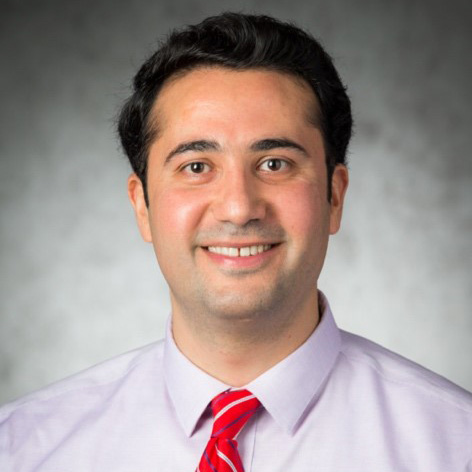
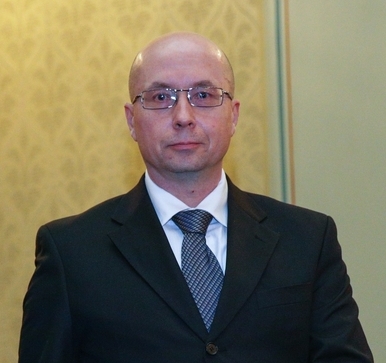
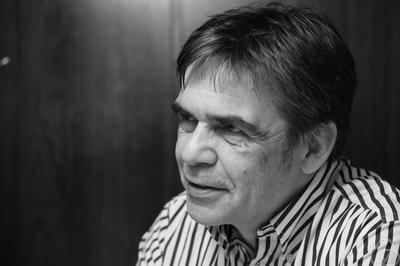
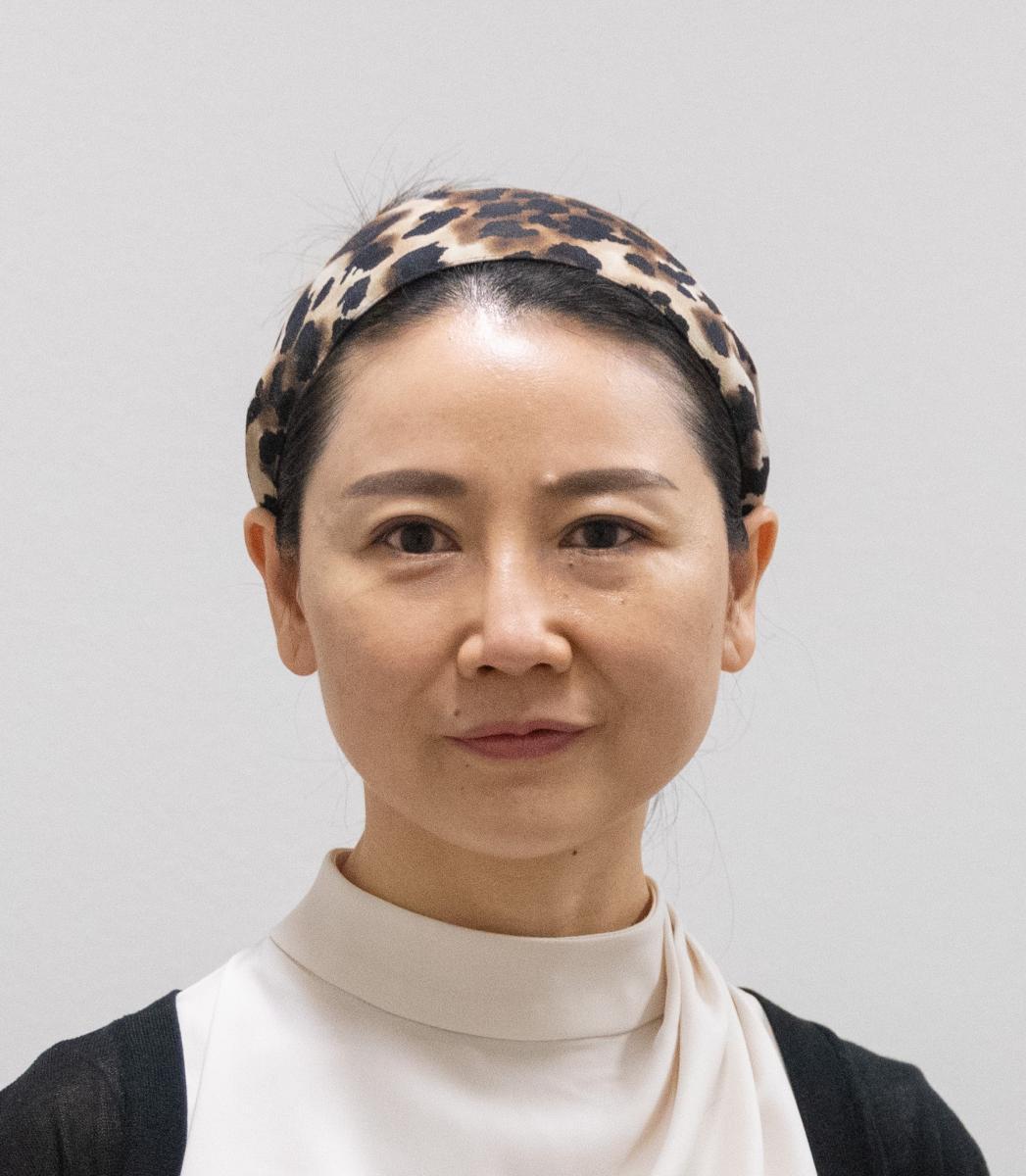
Plamen Atanassov is a Chancellor’s Professor in the Department of Chemical and Biomolecular Engineering with a joint appointment in Materials Science and Engineering at the Samueli School of Engineering, University of California, Irvine . His work focuses on developing advanced electrocatalysts for energy conversion and storage systems. Department: Chemical and Biomolecular Engineering, Materials Science and Engineering Academic Rank: Professor (Chancellor’s Professor honorific) Research Themes: Electrocatalysis, Bio-electrocatalysis, Fuel Cells, Energy Harvesting Research Interests: Prof. Atanassov specializes in non-platinum and platinum-based electrocatalysts for fuel cells, bio-inspired energy systems , and carbon dioxide valorization technologies . His group has pioneered: Atomically dispersed metal-nitrogen-carbon catalysts Novel synthesis methods for durable electrocatalysts Machine learning-guided fuel cell optimization Electrochemical ammonia and urea production Hydrogen evolution reaction with non-precious metals Scientific Contributions: With over 380 peer-reviewed papers (101 h-index), 50 issued US patents , and 35+ PhD students advised , his work bridges fundamental electrochemistry and industrial-scale energy solutions. Recent publications emphasize catalyst durability under realistic conditions, CO2 reduction, and sustainable manufacturing practices.
Stefano Grivet-Talocia is a Full Professor at the Department of Electronics and Telecommunications at the Polytechnic University of Turin, where he also serves as Director of the Doctoral School and President of the Doctoral School Council. He is a member of the Interdepartmental Center SmartData@PoliTO - Big Data and Data Science Laboratory, the University Committee for Research, Technology Transfer and Services to the Territory, and the Commission for the Promotion of Library, Archive and Museum Heritage. His academic career spans over two decades at Politecnico di Torino, where he has established himself as a leading researcher in electromagnetic modeling and signal integrity. Grivet-Talocia earned his Laurea degree (summa cum laude) in Electronic Engineering in 1994 and his Ph.D. in Electronic and Communication Engineering in 1998, both from the Polytechnic University of Turin. Between 1994 and 1996, he conducted research at NASA/Goddard Space Flight Center in Greenbelt, Maryland. His educational background laid the foundation for his expertise in electromagnetic modeling, wavelet analysis, and signal processing. His research focuses on behavioral modeling, electromagnetic compatibility, macromodeling, model order reduction, numerical modeling, passivity, power integrity, signal integrity, transmission lines, and wavelets . Grivet-Talocia is particularly renowned for his work on passive macromodeling of interconnect structures, development of the TOPLine technique for transmission line simulation, and pioneering contributions to passivity enforcement algorithms. He has co-authored the first book entirely dedicated to Macromodeling (2016) and developed innovative approaches to waveform relaxation and wavelet-based signal processing. His recent publications (2024-2025) demonstrate continued leadership in model order reduction, with significant contributions to data-driven modeling of linear and nonlinear systems, power integrity analysis, and electromagnetic compatibility. His work spans both theoretical advances in numerical methods and practical applications in circuit design, with strong industry relevance particularly for semiconductor and electronic design automation companies. IEEE Fellow (2018-present) Three Intel SRS Grants (2022-2024) Three IBM SUR Grant Awards (2007-2009) Best Associate Editor Award - IEEE Transactions on Components, Packaging and Manufacturing Technology (2020) Multiple Best Conference Paper Awards (2006-2020) URSI Young Scientist Awards (1999) Ranked among the "top 2% worldwide researchers" (Stanford) since 2019 Grivet-Talocia actively supervises doctoral students including Michele Cusano, Sara Paknezhad Panahi, Antonio Carlucci, and Kun Zhao. He has secured numerous research grants from competitive national calls (PRIN) and commercial contracts with industry partners including Intel, IBM, Nokia, Hitachi, Infineon, and Cadence. His technology transfer activities include co-founding the spin-off IdemWorks (2007-2016), which was acquired by CST in 2016. He also developed the autoCircuits web service for automated circuit problem generation, widely used in electrical engineering education. He leads the EMC Group (Electromagnetic Compatibility) at DET and has been instrumental in establishing the Compact Dynamical Modeling research area. His work has practical applications in high-speed electronics design, with algorithms embedded in commercial tools like IBM PowerSPICE. Grivet-Talocia maintains strong industry connections through his research projects and serves as Associate Editor for IEEE Transactions on Components, Packaging and Manufacturing Technology.
Byron Boots is the Amazon Professor of Machine Learning in the Paul G. Allen School of Computer Science and Engineering at the University of Washington, where he directs the UW Robot Learning Laboratory. He also serves as a Principal Research Scientist in the Seattle Robotics Lab at NVIDIA Research and co-chairs the IEEE Robotics and Automation Society Technical Committee on Robot Learning. Dr. Boots received his Ph.D. from the Machine Learning Department in the School of Computer Science at Carnegie Mellon University, where he was a member of the Sense, Learn, Act (SELECT) Lab co-directed by Carlos Guestrin and his advisor Geoff Gordon. Prior to joining the University of Washington faculty, he was an Assistant Professor in the School of Interactive Computing within the College of Computing at Georgia Tech, and before that, he completed a post-doc in the Robotics and State Estimation Lab directed by Dieter Fox at the University of Washington. Professor Boots' research focuses on the intersection of machine learning, artificial intelligence, and robotics, with particular emphasis on developing theory and systems that tightly integrate perception, learning, and control. His work spans computer vision, state estimation, localization and mapping, high-speed navigation, motion planning, and robotic manipulation. His group develops algorithms drawing from deep learning and neural networks, nonparametric statistics, graphical models, nonconvex optimization, quantum physics, online learning, reinforcement learning, and optimal control. The research demonstrates a strong theoretical foundation while maintaining practical relevance to real-world robotic systems. His recent publications reveal a clear trend toward integrating advanced machine learning techniques with robotics, particularly in model predictive control, motion planning, and learning-based approaches to robot control. His work shows increasing focus on developing theoretically grounded methods that can handle the complex, nonlinear dynamics of real-world robotic systems while maintaining computational efficiency. The publications span top venues including ICRA, CoRL, IROS, and NeurIPS, demonstrating broad impact across multiple subfields of robotics and AI. Finalist for Best Systems Paper at Conference on Robot Learning (CoRL-2021) Multiple papers selected for oral presentations at top robotics conferences Work recognized for theoretical contributions and practical applications in robot learning As director of the UW Robot Learning Laboratory, Boots leads a vibrant research group focused on fundamental and applied research in robot learning. The lab maintains strong collaborations with NVIDIA Research and has produced numerous high-impact publications that bridge theory and practice. Professor Boots teaches courses in autonomous robotics, machine learning, and reinforcement learning, contributing to both undergraduate and graduate education at the University of Washington.
Stefan Krastanov is an Assistant Professor at the University of Massachusetts Amherst, focusing on quantum hardware design, control, and optimization across multiple layers of quantum computing and networking technologies. His work bridges physical hardware descriptions with logical circuit compilation, emphasizing resilience in noisy quantum systems. Research Interests include Quantum Hardware Design, Entanglement-Based Networking, Quantum Error Correction, and Modeling Software for Quantum Systems. His primary lab is the Quantum Information Lab , with affiliations to the Advanced Classical and Quantum Information Research Lab. Recent work trends highlight advancements in quantum repeater networks, error-corrected compilation, and photonic neural networks. His publications span topics like non-Markovian dynamics simulation, NP-hard optimization in quantum dot arrays, and scalable spin quantum memory control. Labs and Teams: Quantum Information Lab (leading experimental/theoretical work) and collaborations through the Advanced Classical and Quantum Information Research Lab.
Professor Philip Wai Hong Chan holds a Chair in Chemistry at Monash University, leading research in organic and inorganic chemistry with a focus on sustainable catalytic methodologies. He earned a B.Sc.(Honours) from the University of Bristol (1995) and a D.Phil. from the University of Oxford (1998), followed by postdoctoral training at Tohoku University, University of Sydney, and University of Hong Kong. Since 2014, he has been a Professor in Monash's School of Chemistry, advancing studies in homogeneous catalysis, photoredox systems, and organocatalysis. His research integrates synthetic chemistry with applications in drug discovery and materials science, particularly targeting bioactive natural products and functional materials. Key areas include transition metal catalysis for complex molecule synthesis and development of green chemistry approaches. Chan leads major projects like the ARC Training Centre for Advanced Radiochemical Technologies and has authored over 157 publications. Recognition includes multiple Asian Core Program Lectureship Awards (2007, 2014), a SPMS Teaching Excellence Award (2012), and contributions to antimicrobial research through self-assembling nanoparticles. He collaborates globally on topics like sustainable catalysis and medical imaging, reflecting his commitment to UN Sustainable Development Goals in health and innovation.
Sam Emaminejad is an Associate Professor in the Department of Electrical and Computer Engineering at the Henry Samueli School of Engineering and Applied Science, University of California Los Angeles (UCLA). His research focuses on developing advanced wearable bioelectronic systems for continuous, noninvasive health monitoring and personalized therapeutics. Key Research Areas: Biomarker detection via flexible sensors Microfluidic and ferrobotic systems Stress and drug level monitoring Biodegradable and breathable wearable materials Recent Trends: Analysis of sweat and interstitial fluids using microneedles, aerogel skins, and programmable microfluidics. Machine learning integration for physiological evaluation is prominent. Awards & Collaborations: While specific awards aren't listed, he collaborates with major UCLA Health and Engineering faculty, including Ali Khademhosseini and Dino Di Carlo, on projects funded by NIH T32 grants and institutional fellowship programs. Grants & Labs: Leads projects in NIH-funded wearable sensor research, including the development of autonomous systems for cystic fibrosis and glucose monitoring. His lab explores ferrobotic swarms and hydrogel-based interfaces for clinical and consumer applications.
Julie M. Goddard is a Professor of Food Science at Cornell University , affiliated with the College of Agriculture and Life Sciences and the Department of Food Science . Her research focuses on Biomaterials and Biointerfaces , with emphasis on food quality, safety, and sustainability. She leads the Goddard Research Group, which develops innovative polymeric materials and coatings for food packaging, bioprocessing, and equipment. Key projects include antimicrobial/nonfouling coatings, biocatalytic materials, and active packaging to reduce synthetic additives and food waste. Dr. Goddard holds a Bachelor of Science (1999) and Ph.D. (2008) in Food Science from Cornell University. Her work is supported by grants from USDA NIFA, NIH, NSF, and FFAR. Notable awards include the National Excellence in Multistate Research Award (2019) , APLU Junior Moulton Medal (2015) , and Institute of Food Technologists Young Scientist Award (2013) . Her research spans nonmigratory active packaging (e.g., antioxidant, antimicrobial films), biofilm inhibition , and enzyme immobilization . Recent articles highlight advancements in PETase engineering for microplastic degradation and optimization of curcumin-grafted biodegradable materials. She collaborates across disciplines, including materials science, chemical engineering, and microbiology. Labs/Teams: The Goddard Group operates in Stocking Hall, Cornell. Projects include biocatalytic packaging , hydrogen sulfide formation in canned beverages , and consumer acceptance of novel food technologies . Key grants fund exploration of bio-based materials and food safety innovations.
Dr. Mortaza Saeidi-Javash is an Assistant Professor in the Department of Mechanical and Aerospace Engineering at California State University, Long Beach (CSULB). He joined in Fall 2022 following his Ph.D. in Mechanical Engineering from the University of Notre Dame, where he received the Prince Engineering Fellowship and Dehner Graduate Fellowship. His research focuses on developing next-generation flexible electronics using advanced materials and 3D printing technologies, particularly thermoelectric devices for wearable applications and multifunctional sensors for structural health monitoring. Dr. Saeidi-Javash's academic background includes interdisciplinary work combining materials science, additive manufacturing, and machine learning. His Ph.D. research emphasized aerosol jet printing and ultrafast flash sintering to create high-performance, low-cost thermoelectric devices. He has published extensively in journals like Advanced Materials and Nano Energy , with a focus on flexible electronics, energy harvesting, and sensor integration. His recent publications highlight innovations in machine learning-aided materials discovery, plasma sintering processes, and hybrid printing methods. These contributions address challenges in scalable manufacturing, energy efficiency, and wearable technology applications. Dr. Saeidi-Javash’s work bridges gaps between fundamental materials research and practical engineering solutions for sustainable energy systems and smart devices. Awards: Prince Engineering Fellowship (University of Notre Dame) Dehner Graduate Fellowship in Engineering (University of Notre Dame) Advising & Office Hours: Office: ECS-647 Office Hours: Wednesday 12:00-2:00 PM Advising Hours: Thursday 12:30-1:30 PM His research lab focuses on additive manufacturing of functional materials, with ongoing projects in thermoelectric energy conversion, wearable sensors, and biomaterials for cardiac tissue engineering.
Kostya (Ken) Ostrikov is Professor of Nanotechnology and Molecular Science at the Queensland University of Technology (QUT), Faculty of Science and Engineering, Australia, and concurrently serves as CEO Science Leader and Chief Research Scientist (Plasma- and Nano- Technologies) at CSIRO Manufacturing Flagship. Beyond his primary appointments, he holds visiting or honorary professorships at more than a dozen institutions across six countries, including Peking University, Zhejiang University, the University of Sydney, University of Technology Sydney, University of Wollongong, Huazhong University of Science and Technology, Shanghai Jiao Tong University, Jiangnan University, Kharkiv National University, Nanyang Technological University, and the Jožef Stefan Institute. Education & Fellowships: Distinguished Doctor of Sciences, Kharkiv National University, Ukraine (2009) Alexander von Humboldt Research Fellowship, Germany (1997–1999) Royal Society Postdoctoral Research Fellowship, United Kingdom (1997) Japan Society for the Promotion of Science Invitation Fellowship (2000–2001) Lee Kuan Yew Research Fellowship, Singapore (2002) Australian Research Council (ARC) Queen Elizabeth II Fellowship (2004–2009) ARC Future Fellowship – Level FT3 (2011–2015) Research Interests: Professor Ostrikov is globally recognized as the pioneer of Plasma Nanoscience , a field he established and advanced through seminal reviews in Reviews of Modern Physics (2005) and Advances in Physics (2013). His research targets the fundamental challenge of controlling energy and matter at the nanoscale, translating insights into sustainable technologies. Core themes include: plasma-aided nanofabrication, functional nanomaterials synthesis, plasma catalysis, low-temperature plasmas for energy and environmental applications, plasma medicine and healthcare, and nano-plasmonics. The work bridges physics, chemistry, materials science and biotechnology, aiming at renewable-energy devices, environmental remediation, and next-generation health-care solutions. Grants & Funding: He has secured over AU $15 million in competitive research funding during the last six years alone, including flagship and centre-level grants from the Australian Research Council and CSIRO. Advising & Mentoring: Ostrikov has supervised approximately 65 PhD graduates and more than 92 research students (post-doctoral fellows, master’s and honours students). Alumni hold prestigious fellowships and faculty positions worldwide, attesting to the global impact of his mentoring. Leadership & Community: He is the Convenor of the annual iPlasmaNano international conference series (since 2009) and chairs the Executive Committee of the International Plasma Nanoscience Collaborative Research Network. These roles coordinate a vibrant community of >250 active collaborators, ensuring rapid dissemination of breakthroughs and fostering cross-disciplinary partnerships.
Endre Süli is a Professor of Numerical Analysis at the University of Oxford, affiliated with Worcester College and Linacre College. He has held various academic roles since 1985, including Fellowships and Tutorships in Mathematics. University Education: B.Sc. in Mathematics, University of Belgrade (1974-1978) M.Sc. in Mathematics, University of Belgrade (1978-1980) Ph.D. in Mathematics, University of Belgrade (1985) M.A., University of Oxford (1985) British Council Visiting Student, Reading University and University of Oxford (1983/84) Süli's research focuses on numerical methods for partial differential equations (PDEs), with expertise in finite element methods, adaptive algorithms, error control, and computational modeling of fractures and non-Newtonian fluids. His work bridges mathematical theory and practical applications in fluid dynamics and material science. His recent publications emphasize finite element approximations, nonlinear PDEs, and stochastic models for polymer dynamics. Themes include multiscale methods, tensor-sparsity for high-dimensional problems, and compressible flow simulations. Scientific Awards: Fellow of the Royal Society (2021) London Mathematical Society Naylor Prize and Lectureship (2021) Pro Urbe Prize, City of Subotica (2021) SIAM Fellow (2016) Member, Academia Europaea (2020) Foreign Member, Serbian National Academy of Sciences and Arts (2009) IMA Service Award (2011) Fellow, European Academy of Sciences (EurASc) (2010) Fellow, Institute of Mathematics and its Applications (2007) London Mathematical Society/New Zealand Mathematical Society Forder Lecturer (2015) Professor Hospitus, Charles University, Prague (2012) Distinguished Visiting Chair Professor, Shanghai Jiao Tong University (2013) Invited Speaker, International Congress of Mathematicians, Madrid (2006) Süli has supervised numerous research projects and held visiting appointments globally. His contributions to numerical analysis span foundational work on error estimation, nonlinear stability, and advanced computational frameworks for complex physical systems.
Upaka Rathnayake is a Professor of Civil Engineering and Principal Investigator at the Mathematical Modelling and Intelligent Systems for Health and Environment (MISHE) research unit at Atlantic Technological University Sligo, Ireland. He has held academic and research roles globally, including in Sri Lanka, Japan, the UK, New Zealand, Australia, and Fiji. His research focuses on water resources management, hydrological modeling, climate analysis, and AI-driven solutions for environmental challenges. He holds a PhD from the University of Strathclyde and advanced certifications from Hokkaido University. Education: PhD in Optimal Management of Urban Sewer Systems (University of Strathclyde, 2013) Professional Memberships: Institution of Engineers Sri Lanka, Engineers New Zealand, International Association of Hydrological Sciences Research interests include: Hydrological modeling and climate change adaptation Multi-objective optimization and soft computing techniques Explainable AI applications in environmental systems Remote sensing and GIS for water resource management Recent articles highlight AI-driven solutions for air quality prediction, soil nutrient analysis, and flood risk assessment. Awards include the 2023 Presidential Award for Scientific Publications and multiple university excellence awards. He actively advises PhD students on projects like urban water systems optimization and climatic trends analysis. Rathnayake is an editorial board member of journals like Scientific Reports and PLoS ONE , contributing to peer review and policy-oriented research. His work bridges data-driven methods with traditional hydrological practices to address global environmental challenges.
Leah Doane is a Professor and Chair of the Department of Psychology at Arizona State University (ASU) since 2025. She holds affiliations with the Biodesign Center for Personalized Diagnostics and previously served as Associate Dean of Graduate Initiatives in the College of Liberal Arts and Sciences (2024). Her academic background includes a B.A. in Psychology from Cornell University (2002), M.A. and Ph.D. in Human Development and Social Policy from Northwestern University (2006/2008), and a postdoc at the University of Chicago in Psychiatry and Behavioral Neuroscience. Research focuses on developmental psychopathology, examining links between health behaviors, physiological stress (e.g., cortisol), and stressful experiences across childhood, adolescence, and emerging adulthood—with particular emphasis on Latinx youth and college transition challenges. Key themes include cultural adaptation, sleep health, epigenetic influences, and bicultural stress. Funded by NIH, CDC, and Army Research Institute, her work integrates ecological and ambulatory assessment methods. Leadership roles include Director of Faculty Success, Developmental Graduate Training Area Head, and Deputy Chair in ASU's Psychology Department. Awards include William T. Grant Foundation Scholar (2025-). Active in teaching advanced courses on research methods and thesis supervision, she mentors students through courses like Honors Thesis (PSY 493), Research (PSY 792), and Dissertation (PSY 799). Key grants include studies on Latino youth college pathways (Helios Education Foundation, 2015-2016), genetic/environmental influences on sleep and behavior (NICHD, 2015-2020), and culturally informed interventions. The Adolescent Stress and Emotion Lab (adolescentstressandemotionlab.org) serves as her research hub.
Q. Jane Gu is a Professor at the School of Electrical and Computer Engineering at Georgia Tech since September 2024, holding the Ed and Pat Joy Professorship. Previously, she was at the University of California, Davis (2012–2024) and the University of Florida (2010–2012). She earned her Ph.D. in Electrical Engineering from UCLA in 2007. Her research focuses on high-efficiency, low-power interconnects, millimeter-wave, sub-mm-wave, and terahertz integrated circuits and systems for applications in communication, radar, and imaging. Notable contributions include sub-THz resonator-based sensors, dielectric waveguide interconnect channels, and energy-efficient transmitters. Recipient of NSF CAREER Award (2013) 2015 UC Davis Outstanding Junior Faculty Award 2017 and 2018 Qualcomm Faculty Awards 2019 UC Davis Chancellor’s Fellow 2022–2023 IEEE SSCS Distinguished Lecturer Her group has garnered nine best paper awards, including top honors at the 2016, 2017, and 2020 IEEE MTT-S International Microwave Symposia. Research interests span terahertz interconnects, millimeter-wave radar systems, and integrated circuits for high-speed communication. Publications reflect advancements in sensor design, high-frequency transceivers, and phased-array systems, emphasizing energy efficiency and signal integrity.
Neil Champness is the Norman Haworth Professor of Chemistry at the University of Birmingham. He holds a prestigious academic position following roles at the University of Nottingham, including Professor of Chemical Nanoscience (2004-2020). His research focuses on supramolecular chemistry, crystal engineering, and metal-organic frameworks (MOFs). Champness leads a group pioneering studies on molecular self-assembly, surface chemistry, and functional materials. Education & Career - Began academic career with Teaching Fellowships at the University of Nottingham (1995) and Southampton (1994). - Became Lecturer in Inorganic Chemistry at Nottingham (1998), progressing to Reader (2003) and full Professor (2004). - Currently heads the Champness Group at Birmingham, established in 2021. Research Interests Champness’s work spans: - Design of porous materials (MOFs, HOFs) for gas storage and catalysis. - Surface self-assembly of 2D supramolecular frameworks. - Photoresponsive materials and molecular rotaxanes. - Chemical synthesis under constrained conditions. His group emphasizes interdisciplinary approaches, linking chemistry with materials science and nanotechnology. Awards & Recognition 2019: Elected Fellow of the European Academy of Sciences 2020: EPSRC Established Career Fellowship 2016: Royal Society of Chemistry Surfaces & Interfaces Award 2011: Thomson Reuters Highly Cited Researcher 2006: Corday-Morgan Medal (Royal Society of Chemistry) Advisory Roles & Grants - Editorial roles include Chem, Crystals, and CrystEngComm. - Served on Royal Society panels, Irish Research Council, and IUPAC. - Secured major grants from EPSRC and Royal Society. Labs & Collaborations His Birmingham group collaborates globally, with visiting professorships in Japan, Australia, and Brazil. Research is supported by advanced facilities in crystallography and surface chemistry.
Associate Professor Khoon Lim is a biomedical engineer specializing in polymer chemistry and biomaterials, affiliated with the School of Medical Sciences at the University of Sydney. He holds a PhD in Biomedical Engineering from UNSW Sydney and has conducted postdoctoral research at the University of Otago. His research focuses on hydrogels for tissue engineering, 3D bioprinting, and regenerative medicine, with over $8M in grant funding. Lim leads the Light Activated Biomaterials (LAB) research group and is a member of prestigious organizations like the Australasian Society for Biomaterials and Tissue Engineering. Education: BE (Chemical Engineering, Hons 1) and ME (Biomedical Engineering) from UNSW Sydney, followed by a PhD in Biomedical Engineering (2014). Postdoctoral fellowship at University of Otago Christchurch (2019). Research Interests: Biofabrication, 3D bioprinting, hydrogels for tissue regeneration, cardiovascular applications, and chronic disease management. Current projects include developing bioinks for functional tissues, smart delivery systems for growth factors, and cancer models for drug screening. Key Achievements: ARC Future Fellow (2022), Rutherford Discovery Fellowship (2021), and over 170 publications in journals like Advanced Materials and Biofabrication . Holds patents in hydrogel technologies. Leadership Roles: President of ASBTE, Board Member of ISBF, and editorial board positions in journals such as RSC Biomaterials Science . Active in translational research through collaborations in Australia, New Zealand, Europe, and Asia.