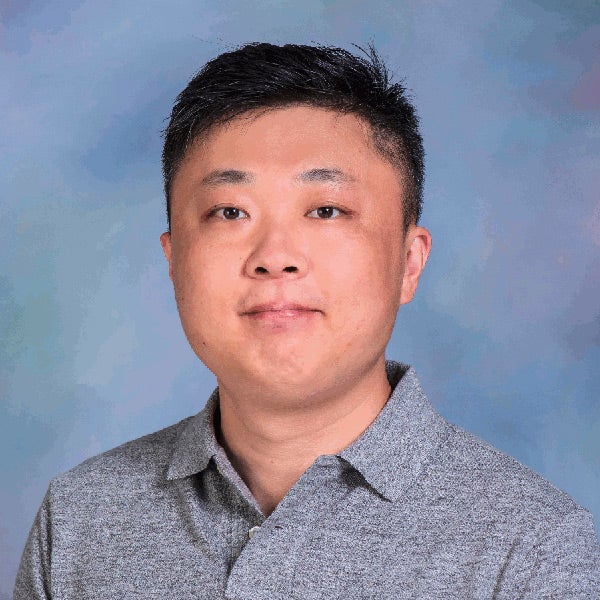
Immanuel Trummer is a Professor of Computer Science at Cornell University, specializing in database systems, query optimization, and applications of large language models (LLMs) and quantum computing. He leads research projects such as DB-BERT, UDO, and SkinnerDB, focusing on automated database tuning, adaptive query processing, and leveraging LLMs for code synthesis and system optimization. His research interests span quantum computing for database optimization, cost-efficient LLM utilization, and voice-based data exploration. Key contributions include developing systems like CEDAR for claim verification, CodexDB for LLM-driven code generation, and ThalamusDB for multimodal data querying. Trummer has received prestigious awards, including the NSF CAREER Award (2023-2028) and the Best Demonstration Award at BDA 2020. His work has been funded by NSF, Google, Huawei, and others, supporting projects like quantum-index selection and misinformation detection. He advises graduate students in database systems and teaches advanced courses such as CS 6320 (Advanced Database Systems) and CS 7390 (Seminar in Database Systems). His research lab hosts open-source tools like JoinGym and maintains extensive collaborations in industry and academia.
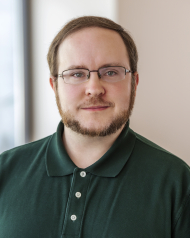
Mark Allen Weiss is a Distinguished University Professor in the Knight Foundation School of Computing and Information Sciences (KFSCIS) at Florida International University (FIU). He currently serves as the Interim Vice Dean for the College of Engineering and Computing (CEC) and has held several leadership roles, including Associate Dean for Undergraduate Education (2017-2024) and Interim Founding Director of SUCCEED . His academic career at FIU spans over three decades, with prior roles as Associate Director of the School of Computing and Information Sciences. Education: Ph.D., Computer Science, Princeton University (1987) M.A., Computer Science, Princeton University (1985) M.S., Electrical Engineering and Computer Science, Princeton University (1984) B.E., Electrical Engineering (Summa Cum Laude), The Cooper Union (1983) Research and Educational Interests: Weiss is renowned for his work in data structures , algorithms , and computer science education . He co-leads an NSF-funded project to define a 15-year agenda for CS Education research and advocates for Broadening Participation in Computing in South Florida. His contributions to curriculum design include leadership on the Advanced Placement Computer Science Development Committee (1997-2004), which shaped exams taken by 60,000 high school students annually. Scientific Awards and Honors: Fellow of IEEE and AAAS ACM Distinguished Educator Recipient of four major IEEE and ACM education awards (2015-2021) FIU Excellence in Research (1994) and Teaching Awards (1999, 2005) Three FIU Top Scholar awards Recognition by Dr. Dobbs as one of the top 30 influential computer science books of the 20th century Professional Activities: Weiss served on multiple committees for the College Board and ACM SIGCSE Board. He has authored foundational textbooks such as Data Structures and Algorithm Analysis in C++ (four editions) and Data Structures and Algorithm Analysis in Java (three editions), which have been widely adopted globally.
Kaiyu Hang is an Assistant Professor of Computer Science at Rice University, directing the Robotics and Physical Interactions Lab (RobotΠ Lab). He holds a PhD and MSc from KTH Royal Institute of Technology and a B.Eng. from Xi’an Jiaotong University. His postdoctoral research was conducted at Yale University. His research focuses on robotic systems capable of physically interacting with the environment and humans, emphasizing algorithms in optimization, learning, and control. Key areas include manipulation systems (small-scale grasping to large-scale multi-robot manipulation), robust control, and energy-efficient UAV perching mechanisms inspired by nature. His work has been featured in MIT Technology Review, Science Robotics, and NPR. Hang has received notable awards such as the NSF CAREER Award (2023) and ASME Rising Star (2024). He serves on editorial boards for IEEE Robotics and Automation Letters (2019–present), ICRA (2021–present), IROS (2020–present), and Humanoids (2019). He also organizes the 10th Robotic Grasping and Manipulation Competition (RGMC) at ICRA 2024. As a faculty advisor for the Rice Robotics Club and on the CS Graduate Admission Committee, Hang actively mentors students and promotes inclusivity in robotics through initiatives like Inclusion@RSS. His lab’s projects aim to enhance manipulation robustness, develop novel UAV landing gear, and advance nonprehensile manipulation via motion planning and control.
Gruia Calinescu is an Associate Professor of Computer Science at Illinois Institute of Technology (IIT), affiliated with the College of Computing's Computer Science Department. He joined IIT in 2000 and has held visiting positions at the University of Bonn and the University of Wisconsin-Milwaukee. His research focuses on approximation algorithms, combinatorial optimization, and theoretical computer science, with contributions to graph theory, network design, and algorithmic problems in wireless networks. Education includes a PhD from Georgia Tech's Algorithms, Combinatorics, and Optimization program (1998) under Howard Karloff. He also holds a diploma from the University of Bucharest in scheduling theory. Key research interests include algorithms for Steiner trees, network connectivity, scheduling, and power optimization. He has published extensively on topics like minimum power covering, relay placement, and LP rounding techniques. His work often bridges theoretical foundations with practical applications in wireless networks and distributed systems. Recent work includes advancements in combination algorithms for Steiner tree variants (2022), energy-aware scheduling (2016), and improved approximation algorithms for relay placement (2014). He is also involved in teaching, such as CS 530 - Theory of Computation.
Christopher M. Moretti is a Senior Lecturer in the Department of Computer Science at Princeton University's School of Engineering and Applied Science. He has taught foundational courses including COS126 (Introduction to Computer Science), COS217 (Systems Programming), COS326 (Functional Programming), and COS333 (Software Engineering) since joining Princeton in 2010. He serves as academic advisor for computer science majors (classes of 2017, 2021, 2024) and freshman engineering students (classes of 2016, 2017), and holds the role of department placement officer. His educational background includes: Ph.D. in Computer Science and Engineering, University of Notre Dame (2010) M.S. in Computer Science and Engineering, University of Notre Dame (2007) B.S. in Computer Science, College of William and Mary (2004) Dr. Moretti's research centers on Computer Science Education and Distributed Computing and Storage . In education, he develops advanced K-12 professional development content and innovative teaching methodologies. His distributed systems work focuses on scalable frameworks for campus grids, cloud computing, and storage solutions like the Chirp filesystem. He directs undergraduate independent work projects across distributed computing, sports analytics, and software engineering. His publication history reveals consistent contributions to practical distributed systems infrastructure, with recent emphasis on educational applications and bioinformatics scalability. Key themes include abstraction layers for heterogeneous computing environments and pedagogical approaches for complex CS concepts. He has received significant recognition for teaching excellence: SEAS Excellence in Teaching Award (2024) SEAS Excellence in Teaching Award (2023) Dr. Moretti actively mentors undergraduate researchers through independent work projects, though specific student names are not documented. His grant activities likely support distributed systems research and educational initiatives, though explicit funding details are absent from the source material. He maintains strong connections to the Cooperative Computing Lab from his Notre Dame doctoral work under Professor Doug Thain. Outside academia, he participates in Princeton sports culture (particularly hockey), enjoys tennis and trivia competitions, and travels with a focus on zoological institutions. A Notre Dame athletics enthusiast, he previously contributed to sports statistics and media relations during graduate studies.
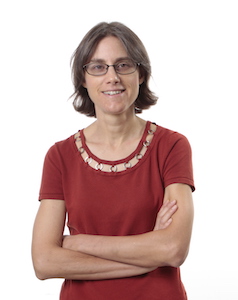
Linda Ott is a Professor of Computer Science at Michigan Technological University (MTU), where she has held roles including Department Chair of Computer Science (1996–2010 and 2019–2022) and Associate Dean for Special Initiatives (2015–2018). She earned her PhD, MS, and BS in Computer Science from Purdue University (1978, 1974, 1972). Education: Purdue University (PhD 1978, MS 1974, BS 1972) Research Focus: Software engineering (processes, measurement), computing education, diversity initiatives, and student retention in CS. Professional Contributions: Founded the Michigan Celebration of Women in Computing, led NCWIT Extension Services teams, and received awards like the ACM SIGSOFT Retrospective Paper Award (2010) and NCWIT Transformation Award (2020). Her research spans software metrics, education strategies for inclusivity, and curriculum development. Ott has advised numerous students and co-authored over $1.5M in grants. She taught abroad as a Fulbright Scholar in Russia (2012) and China (2011). Grants and Awards: Over $1.5M in grants, including NSF and NCWIT-funded projects. Awards highlight her contributions to software engineering and diversity in computing. Teaching & Service: Taught courses ranging from introductory programming to advanced software engineering. Served on university committees, advised student organizations, and mentored junior faculty.
Dr. Keith Howard is a Professor and Director of the Ph.D. in Education Program at the Attallah College of Educational Studies, Chapman University. He is a prominent scholar in K-12 computer science education, equity in STEM access, and career and technical education research. His work integrates technology, ethics, and social justice to improve educational outcomes, particularly for underrepresented students. Dr. Howard earned his Ph.D. in Educational Psychology and Technology from the University of Southern California, an MA in Teaching and Curriculum from California State University, Dominguez Hills, and a BA in Business Administration from California State University, Long Beach. He has taught at USC, UCLA, CSUDH, and Chapman University, covering subjects such as educational psychology, teacher education, and quantitative statistics. His research interests focus on technology integration in education, equity in mathematics and STEM, and ethical issues in K-12 schooling. He has conducted extensive work on schema-based mathematics instruction, metacognition, and working memory. A significant portion of his recent scholarship examines disparities in CTE outcomes and access to advanced computer science courses like AP Computer Science Principles. His publications reveal a consistent trend toward analyzing structural inequities in education using national datasets. He frequently investigates how race, gender, and socioeconomic status influence access to and outcomes in STEM and CTE programs. His work often emphasizes practical implications for policy and teaching practices aimed at fostering inclusion. Career and Technical Education’s Unequal Dividends for High School Students (2022) Advanced Placement (AP) Computer Science Principles: Searching for Equity in a Two-Tiered Solution to Underrepresentation (2019) Let’s talk: An examination of parental involvement as a predictor of STEM achievement in math for high school girls (2019) Using Tablet Technologies to Engage and Motivate Urban High School Students (2017) Success after Failure: Academic effects and psychological implications of early universal algebra policies (2015) Dr. Howard has received no explicitly mentioned scientific awards in the provided text. He previously served as a senior research associate at UCLA’s CRESST, where he co-led professional development for a major IES-funded study on middle school mathematics. He has conducted professional development for teachers across Southern California and Arizona. He has advised or collaborated with several researchers, including Nicol R. Howard, Douglas D. Havard, and others, though formal advisees are not listed. He has also served as co-editor of the Journal of Computer Science Integration. Dr. Howard has led multiple research and evaluation projects, including the Chapman-Orange High School iPad Program Evaluation and assessments of independent learning centers. His work bridges academic research with practical program evaluation in K-12 settings.
Balajee Vamanan is an Associate Professor in the Department of Computer Science at the University of Illinois at Chicago (UIC), where he has held a faculty position since October 2015. His office is located in CDRLC 4458 and SEO 1310, with contact details including email bvamanan@uic.edu and phone (312) 996-9442. He teaches core systems and networking courses such as CS 361 (Systems Programming), CS 450 (Introduction to Networking), and CS 594 (Advanced Computer Networking), emphasizing hands-on programming and critical problem-solving in modern networked environments. Education: Bachelor's degree from Birla Institute of Science & Technology (BITS), Pilani, India. Ph.D. from Purdue University (August 2015). Research Interests: His work centers on computer networks , with primary focus on datacenters , low-latency networks , software-defined networking (SDN) , router architecture , and cellular networks . Secondary interests include computer systems research, memory system architecture, and in-memory caches. He bridges theoretical networking concepts with real-world implementation, leveraging industry experience from NVIDIA and Google to address performance bottlenecks in network hardware and protocols. Publication Trends: Recent work (2020-2025) demonstrates concentrated innovation in datacenter transport protocols (e.g., MTP for in-network computing), programmable switch optimizations (TCAM utilization, memory management), and congestion control for RDMA environments. His research increasingly intersects distributed machine learning training with networking challenges, while maintaining strong contributions to cellular background traffic management and topology design for incast workloads. Scientific Awards: No scientific awards, fellowships, or medals are documented in the provided materials. Advising and Grants: He advises multiple Ph.D. students (Seyri, Vardekar, Saxena) and undergraduate researchers. Past students have secured roles at Google, Cisco, Microsoft, and VMware. His lab receives sustained funding from the National Science Foundation (NSF) through grants including BIGDATA: RDMA-Based Datacenter Networks for Big Data Applications, FMitF: Injecting Formal Methods into Internet Standardization, and CNS Core: Network-wide Policy Enforcement in Programmable Networks. Labs and Collaborations: Leads a research group within UIC's BITS Lab, a cross-disciplinary hub for networking, systems, and security. Maintains active industry partnerships with AT&T Research, Microsoft, and NVIDIA, alongside academic collaborations with UT Austin, University of Utah, Purdue University, and Indian Institute of Science's Parimal Parag group.
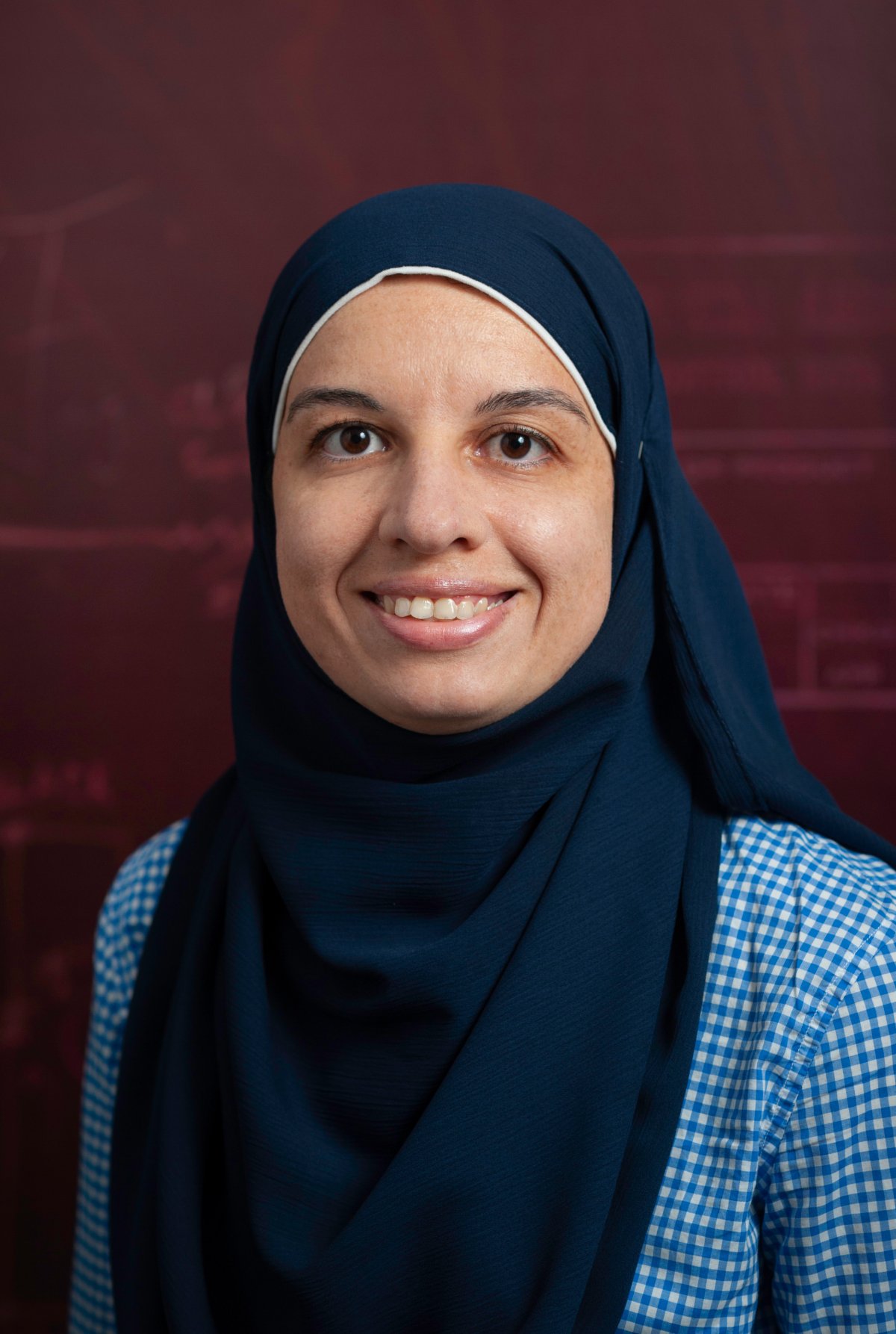
Eman Ramadan is a Lecturer and Research Associate at the University of Minnesota 's Computer Science and Engineering Department , collaborating with Professor Zhi-Li Zhang at the UMN Networking Lab . She co-leads the Computer Networking, Mobile, and AI Research Lab , focusing on 5G/NextG mobile networking, autonomous vehicles, content distribution networks, resilient routing, and software-defined networking. PhD in Computer Science (2022), MSc in Computer Science (2014), MSc in Computer Engineering (2012), BSc in Computer Engineering (2008) – all from University of Minnesota or Alexandria University Her research explores 5G network performance, particularly mmWave throughput prediction, carrier aggregation implications, and roaming challenges in the European Union. Current projects include developing AI/ML algorithms for intelligent network infrastructures and enhancing SDN resilience through the Taproot framework. Recent publications (2024-2022) demonstrate significant advancements in 5G network analysis, caching optimization, and network-application integration. She has secured NSF funding as Co-PI for xGTracker platform (2023-2025), and holds a provisional patent for 5G throughput prediction. Recipient of CSE Postdoctoral Award for DEI Leadership (2023) Best paper awards at SIGCOMM NetAIM (2018) and APNet (2017) Travel grants including ACM SRC (2018), GENI (2014), and CRA-W (2014) She actively contributes to diversity initiatives, serving as chair of CS-IDEA committee and member of CSE Diversity & Inclusivity Alliance . Her work bridges theoretical research with practical implementation across multiple domains.
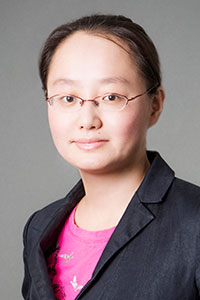
Minlan Yu is the Gordon McKay Professor of Computer Science at Harvard University's John A. Paulson School of Engineering and Applied Sciences (SEAS). She leads the Harvard Theory and Systems group and co-leads the Harvard Power and AI initiative. Her research focuses on data networking, distributed systems, and software-defined networking, with recent emphasis on sustainable computing and AI-driven network management. She is also Assistant Director of the SRC/DARPA JUMP 2.0 ACE Center for Evolvable Computing. Key research interests include network optimization, edge AI serving, large-scale resource allocation, and fault tolerance in distributed systems. Recent work highlights include innovations in energy-efficient data centers, homomorphic encryption acceleration, and real-time network telemetry using FPGA coprocessors. Teaching responsibilities include advanced courses on networking (CS 145/243) and systems programming. She actively advises PhD students and postdocs across systems and networking domains. Her lab's work has led to impactful contributions in both academia and industry, with a focus on bridging theory and practical system implementations. Current research initiatives include the Harvard Power and AI initiative exploring energy-efficient AI workflows and the development of evolvable computing infrastructure through the ACE Center.
Mark Allen Weiss is a Professor in the School of Computer Science at Florida International University (FIU), where he has served as Associate Dean of Undergraduate Studies. His career spans decades of significant contributions to computer science education, particularly through his influential textbooks on data structures that have been used worldwide for multiple decades. Dr. Weiss's research interests focus on data structures, algorithms, computer science curriculum development, and educational methodologies. He pioneered the inclusion of advanced topics like splay trees and amortized analysis in programming textbooks with detailed implementations matching theoretical results. His work with C++ predates the Standard Template Library with vector and string classes, demonstrating his forward-thinking approach to programming education. His publication record shows a consistent focus on computing education research, with recent work examining enrollment trends, math requirements in CS programs, student identity formation, and industry-academic partnerships. These publications demonstrate his commitment to understanding and improving the educational experiences of computer science students at all levels. ACM Karl V. Karlstrom Outstanding Educator Award (2021) ACM Distinguished Member (2011) ACM SIGCSE Award for Outstanding Contributions to Computer Science Education IEEE-CS Taylor Booth Education Award IEEE Sayle Education Achievement Award IEEE Fellow ACM Distinguished Educator As Associate Dean at FIU, Weiss has championed programs to improve student success and increase diversity in computing through partnership initiatives across Florida universities. These programs include course pooling to increase access, enhanced support for challenging early courses, and financial assistance for high-ability students with economic needs, significantly improving graduation rates at FIU. His leadership extended to the Advanced Placement CS Development Committee where he chaired the transition from C++ to Java in the early 2000s. Weiss has been instrumental in co-leading projects to help the National Science Foundation set priorities for CS education research, demonstrating his ongoing commitment to shaping the future of computing education through evidence-based practices and systemic improvements.
Vincent Sobotka is a Full Professor at Polytech Nantes, University of Nantes, where he also serves as Deputy Director. He is affiliated with the Nantes Thermal and Energy Laboratory (UMR_C 6607) and is the Scientific Director of CAPACITES SAS. His office is located at La Chantrerie, rue Christian Pauc, CS 50609 44306 Nantes Cedex 3 in the Isitem building, offices R115 and E212. Dr. Sobotka completed his doctoral thesis at LTN, University of Nantes (2001-2004), followed by an ATER position at Polytech Nantes (2004-2005), then served as a Lecturer (2005-2017) before becoming a University Professor (2017-present). His academic journey demonstrates a steady progression within the same institution, reflecting deep institutional knowledge and commitment to his field. His research focuses on experimental approaches and modeling of heat transfer in polymer materials and composites. He specializes in characterizing thermal properties of polymers and composites, modeling heat transfers in shaping processes, and controlling/optimizing thermal properties during manufacturing. Dr. Sobotka has developed experimental apparatus for characterizing thermal properties under industrial process conditions and works extensively on thermal optimal design of forming processes. His work spans applications in additive manufacturing, composite materials, thermoplastic processing, and injection molding technologies. Analysis of his recent publications reveals a strong emphasis on thermal management solutions for composite manufacturing, with significant focus on lattice structures for enhanced heat transfer, optimization of cooling channels in molds, and characterization of high-performance polymers like PEEK. His research increasingly integrates computational methods with experimental validation to solve practical manufacturing challenges. Dr. Sobotka has supervised numerous PhD students, with several currently in progress. His research appears to be supported by various industry partnerships including CIFRE agreements with companies like Cogit Composites, Airbus, and the IRT Jules Verne institute. He has established strong connections between academic research and industrial applications, particularly in aerospace and advanced manufacturing sectors. He is affiliated with the Laboratoire de Thermique et Energie de Nantes (LTEN), where he leads research activities focused on thermal characterization of materials, process optimization, and development of innovative manufacturing technologies. His team works closely with industry partners to address real-world challenges in composite manufacturing and thermal management.
Sagnik Nath is an Assistant Teaching Professor in the Department of Computer Science and Engineering at the University of California, Santa Cruz (UCSC). His work focuses on bridging equity gaps in STEM education through inclusive pedagogy and outreach programs targeting underrepresented student populations. He specializes in Computer Architecture, VLSI Design, and developing methodologies for equitable access to high-impact CS courses. Dr. Nath teaches core CSE courses including CSE 12, CSE 100, CSE 120, CSE 122, and CSE 222A. His research emphasizes both technical innovations (e.g., SFQ circuit design automation) and educational equity strategies, such as the ITL framework and inquiry-based learning approaches. He actively engages in community college transfer initiatives to support student transitions to four-year institutions. In technical domains, his publications address advanced circuit design challenges in VLSI and superconducting RFQ (SFQ) technologies. His educational research explores AI tutor efficacy (e.g., ChatGPT in CS education) and pedagogical tools like notional machine approaches for assembly language instruction. No scientific awards are explicitly listed in the provided materials. His advising and grant activities remain unspecified, though his teaching and outreach efforts suggest involvement in educational grant programs. No dedicated labs or teams are mentioned, though collaborations with UCSC's Teaching & Learning Center are implied through his affiliation.
Anja Remshagen is a Professor of Computer Science and Program Coordinator at the University of West Georgia, affiliated with the School of Computing, Analytics, and Modeling within the Dr. Perry College of Mathematics, Computing, and Sciences. She holds a Ph.D. in Computer Science from the University of Texas at Dallas (2001) and an M.S. in Mathematics from the University of Cologne (1998). Her teaching spans undergraduate and graduate courses including Computer Science I, Data Structures, Web Technologies, and Mobile AR development. She actively coordinates internship programs and oversees multiple computing courses annually. Her research focuses on algorithm development for combinatorial problems and computer science education, particularly advocating for greater participation of women and children in computing. She co-founded CSWoW (CS Women of West Georgia), the coding club uCode@UWG, and the annual teen hackathon 'Coding for a Better Community.' These initiatives emphasize inclusive education and community engagement in technology. Dr. Remshagen has consistently taught advanced data structures, discrete mathematics, and web technologies courses since 2020, alongside supervising internship placements. Her work bridges technical innovation with educational outreach, fostering both academic rigor and accessibility in computer science.
Mark Allen Weiss is an Eminent Scholar Chaired Professor and Associate Director for Academic Affairs at Florida International University's School of Computing and Information Sciences. He is renowned for authoring nine influential textbooks, including the market-leading Data Structures and Algorithm Analysis series in multiple programming languages (C, Ada, C++, Java). His leadership in computer science education includes chairing the College Board's Advanced Placement Computer Science Development Committee, driving curriculum transitions from Pascal to C++ to Java. Secured over $10M in state funding for Florida IT programs Lead PI on a $5M NSF grant for longitudinal CS education studies His research focuses on data structures, algorithm analysis, programming pedagogy, and educational interventions. He has profoundly shaped national computer science standards through College Board advisory roles. Scientific Awards: 2017 Taylor L. Booth Education Award 2015 SIGCSE Award IEEE Region 3 Leadership Award (2017) ACM Distinguished Educator AAAS Fellow IEEE Senior Member