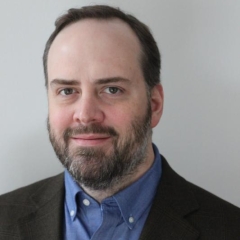
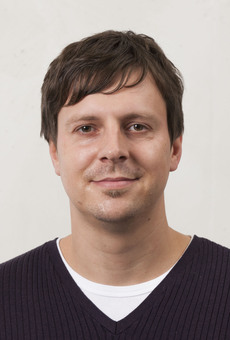
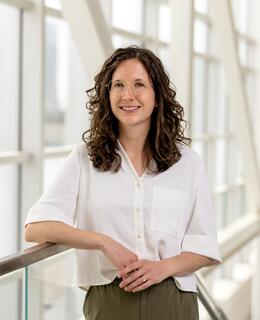
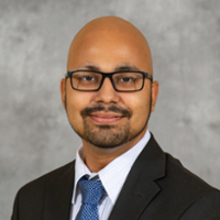
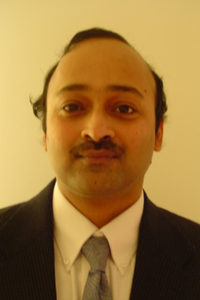
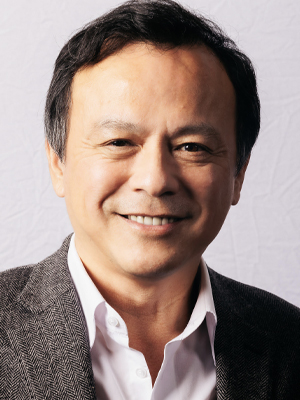
Jean-Daniel Penot is a Researcher at CESI's Research and Innovation Department , with expertise in additive manufacturing, materials science, and industrial integration. His work bridges advanced manufacturing technologies with environmental sustainability and educational innovation. Doctorate in Materials Physics (2010) Engineering Degree in Physics (2007) Research Master in Optoelectronics (2007) Penot's research spans Additive Manufacturing and its applications in automotive, nuclear, and construction sectors. He focuses on Laser-Material Interaction , Machine Learning for process optimization, and Sustainable Engineering through life cycle assessments and geopolymer applications. His recent publications emphasize BIM , AM Modular Plants , and Defect Analysis in 3D-printed metals. Penot leads France Additive initiatives and contributes to International Standards as a board member. Penot supervises PhD students including Maryam Houhou and Amal Khabouchi , with a focus on Industrial Security and Energy Transitions . His projects integrate Thermal Comfort , Ultrasonic Inspection , and Quality Assurance in additive manufacturing systems.
Dr. Benjamin Durakovic is an Associate Professor at the Faculty of Engineering and Natural Sciences, International University of Sarajevo since 2016. He holds a PhD in Industrial Engineering (2016), MSc in Industrial Engineering and Management (2008), and a Dipl. Eng. in Energy Engineering from the University of Sarajevo (2003). Education: PhD in Industrial Engineering, International University of Sarajevo (2016) MSc in Industrial Engineering and Management, University of Sarajevo (2008) Dipl. Eng. in Energy Engineering, University of Sarajevo (2003) Research Interests: His work focuses on lean manufacturing integration with Industry 4.0, phase change materials (PCMs) in construction and energy systems, thermal energy storage, quality management, and optimization of manufacturing processes. He explores applications of PCMs in building envelopes, electronics cooling, and sustainable composites, while also investigating the impact of industrial IoT on quality control and workforce productivity. Recent Articles: Recent publications highlight advancements in PCM applications, lean 4.0 manufacturing, measurement system capability, and error analysis in shift-based production. His research bridges theoretical frameworks with practical case studies in metal coating, textile, and rebar manufacturing. Advising & Grants: No formal advisees listed, but his research emphasizes industry collaboration and applied solutions. His work contributes to innovation ecosystems through initiatives like the Science-Technology Park Ilidža. Labs & Teams: Engaged in interdisciplinary projects at the International University of Sarajevo, focusing on smart technologies, sustainable materials, and advanced manufacturing systems.
Matthias Feinaeugle is an Assistant Professor in Laser Processing at the University of Twente (Netherlands), specializing in laser-induced forward transfer (LIFT) and additive manufacturing of functional materials under Dr. G.R.B.E Römer. Previously, he was a research fellow at the Optoelectronics Research Centre, University of Southampton (UK), focusing on laser-assisted microfabrication. He holds a PhD in Photonics (2014) and dual Master's degrees in Electronics Engineering and Telecommunications. Education: PhD: Laser-induced forward transfer of intact, solid-phase inorganic materials (University of Southampton, 2014) MSc: Phosphorus-doped Amorphous Silicon Nitride Films (Universitat Politècnica de Catalunya, Spain, 2008) Dipl.-Ing.: Electronics Engineering (Universität Stuttgart, Germany, 2008) Research Interests: Thin film technology and laser-matter interaction 3D printing of functional materials (e.g., polymers, sapphire) Laser-induced periodic surface structures (LIPSS) for medical and industrial applications Laser-assisted microfabrication for optoelectronic devices Research Trends: Recent work emphasizes medical-grade polymer surface modification (e.g., cyclic olefin copolymer) and precise laser-based fabrication of microstructures in sapphire. Earlier studies explored LIFT for photonic devices and laser alloying for material enhancement. His contributions span photonics, materials science, and additive manufacturing. Activities: Active in international conferences (2024: presentations on LIPSS, biocompatible polymers, and microfluidic sealing). Collaborations include institutions in Germany, Spain, and the UK. Media features highlight innovations in 3D printing of gold microstructures (2018). Labs/Teams: Part of the University of Twente’s laser processing research group, focusing on industrial and biomedical applications of advanced laser techniques.
Prof. Paul Townsend is Head of the Photonics Centre at Tyndall National Institute and Research Professor in the Department of Physics at University College Cork (UCC). He leads a research group of 130 staff and students, focusing on photonic integration and applications in telecommunications and healthcare. As Director of the SFI-funded Irish Photonic Integration Centre (IPIC), he drives advancements in medical diagnostics and optical communications. His research spans next-generation fiber networks, quantum key distribution (QKD), and energy-efficient photonic systems. Education: PhD in Physics (University of Cambridge, 1987). Career highlights include pioneering work on QKD at BT Laboratories and leadership roles in industry (Bellcore, Corning). He has authored 170+ publications, holds 16 patent families, and is a Fellow of the Institute of Physics. Research interests include photonic communications, quantum communications, and optical network design. Notable grants include €24M for IPIC and multiple SFI/EU projects. Awards include UCC's Research Professorship (2012) and Honorary Professorship at Heriot-Watt University. Advises PhD students in photonics and optical systems (e.g., burst-mode transmission, QKD on WDM-PONs). Collaborates with industry partners like BT, Intel, and Nokia Siemens Networks. Leads IPIC, a hub for photonic integration and biomedical innovation.
Clint Schow is a Professor and Vice Chair in the Electrical and Computer Engineering Department at the University of California, Santa Barbara. He leads an active research group focused on advancing optical interconnect technologies for data centers and high-performance computing systems. His work bridges electronics and photonics to develop energy-efficient, high-speed optical communication solutions. Dr. Schow's research interests center on optoelectronic/electronic integration and co-design , photonic switching , equalization techniques for high-speed optical links , optoelectronic devices , and integrated transceiver packaging . His group pursues several key research thrusts including low-power coherent links for datacenters, cryogenic optical links for quantum applications, low-power VCSEL-based optical links, and photonic switching technologies. These research areas address fundamental challenges in scaling data center networks while reducing energy consumption. His recent publications reveal a strong focus on O-band coherent optical communication, heterogeneous integration of photonic components, energy-efficient transceiver design, and novel architectures for data center interconnects. Schow's work demonstrates how coherent detection techniques can be applied to short-reach data center links to achieve higher bandwidth density and lower power consumption compared to traditional approaches. Fellow of Institute of Electrical and Electronics Engineers (IEEE) Fellow of Optical Society (OSA) Senior Member IEEE Professor Schow advises numerous PhD students working on cutting-edge optical interconnect technologies. His group receives funding from various sources to develop next-generation photonic solutions for data centers and high-performance computing environments. The Schow Group maintains strong industry connections and collaborates on projects addressing real-world challenges in optical communications infrastructure. The research group operates state-of-the-art laboratories for photonic device characterization, optical link testing, and system-level validation of novel optical interconnect architectures. Current projects include developing cryogenic silicon photonics for quantum applications and creating all-optical switching solutions for dynamically reconfigurable data center networks.
Torsten Brezesinski is a Group Leader and Laboratory Manager at the KIT/BASF Joint Laboratory for Batteries and Electrochemistry (BELLA), part of the Institute of Nanotechnology at Karlsruhe Institute of Technology (KIT). He leads research on next-generation battery materials and mesostructured metal oxide thin films, with a strong focus on structure-property relationships and energy storage applications. Education: Ph.D. (Dr. rer. nat.), Max Planck Institute of Colloids and Interfaces / University of Potsdam, 2005 (with Prof. Markus Antonietti) His research interests center on advanced materials for electrochemical energy storage, including nanostructured electrodes, thin films, and mesoporous metal oxides. His work combines synthesis, characterization, and performance evaluation to develop high-efficiency battery components. A major focus is on polymer-templated mesostructured materials with optimized ion transport and interfacial properties. The selected publications highlight a consistent trajectory in materials for energy storage, particularly in lithium-ion and solid-state batteries, thin films, and nanostructured electrodes. The research spans fundamental synthesis, electrochemical behavior, and advanced characterization, with increasing emphasis on interfacial phenomena and degradation mechanisms in recent years. Scientific Awards: Dieter Rampacher Prize (Max Planck Society), 2006 Sonderpreis für Nachwuchswissenschaftler/innen in Brandenburg und Berlin, 2006 Dr.-Herbert-Stolzenberg-Award, 2009 ADUC Jahrespreis (German Chemical Society), 2010 Reviewer Excellence Award (Chemistry of Materials), 2018 Outstanding Reviewer for Chemical Communications, 2019 and 2020 Editor of Distinction Award (Springer Nature), 2025 Brezesinski has advised numerous researchers and students through his leadership roles at KIT and previous institutions. His group has secured significant research output, including over 240 peer-reviewed papers and more than 30 patents. He has also served on editorial boards of major journals such as Materials Futures , Scientific Reports , and Batteries , reflecting his influence in the materials science community. He leads the BELLA laboratory, a collaborative research unit between KIT and BASF, focused on advancing battery technologies. His team works on innovative materials synthesis, thin film fabrication, and electrochemical testing, contributing to next-generation energy storage solutions.
Dr. Emily Rogers-Bradley serves as an Assistant Professor at the University of Calgary's Schulich School of Engineering with dual appointments in the Department of Mechanical and Manufacturing Engineering and Department of Biomedical Engineering. She is also a Full Member of the McCaig Institute for Bone and Joint Health and a Child Health & Wellness Researcher at the Alberta Children's Hospital Research Institute. As director of the Adaptive Bionics Lab, Dr. Rogers-Bradley leads innovative research at the intersection of precision machine design, biomechanics, and robotics for medical applications. Her educational foundation includes: PhD in Mechanical Engineering from Massachusetts Institute of Technology (2023) SM in Mechanical Engineering from Massachusetts Institute of Technology (2019) SB in Biomedical Engineering from Harvard University (2015) Dr. Rogers-Bradley's research program focuses on three interconnected domains: Prosthesis Innovation: Developing robotic prosthetic devices with variable-stiffness mechanisms that adapt to walking speeds and terrains for people with lower limb amputations, significantly improving biomechanical outcomes Exoskeleton Development: Creating wearable orthotic devices that correct gait abnormalities and enhance performance for specialized activities including rock climbing and downhill walking Biomechanical Analysis: Conducting detailed studies of human gait to optimize device functionality and assess real-world impact on users Her publication trajectory reveals a strategic focus on adaptive wearable robotics, with recent work emphasizing variable-stiffness prostheses that improve walking biomechanics across speeds. Her research spans fundamental biomechanics to practical rehabilitation applications, with notable contributions to EMG-controlled prosthetics and specialized devices for extreme activities. She has also pioneered pediatric applications through wearable technologies for developmentally delayed infants. Dr. Rogers-Bradley's scholarly excellence is recognized through multiple prestigious awards: Best Paper Award Finalist, IEEE/ASME Transactions on Mechatronics (2025) Evolve to Innovate - Best Roadmap and Financial Plans, Hunter Hub for Entrepreneurial Thinking (2025) Early Career Research Excellence and Undergraduate Teaching Excellence, Schulich Excellence Awards (2024) National Science Foundation Graduate Research Fellowship (2017) As an academic leader, Dr. Rogers-Bradley serves as Associate Editor for IEEE Transactions on Neural Systems and Rehabilitation Engineering and the IEEE RAS/EMBS International Conference on Biomedical Robotics. She teaches Biomedical Engineering Foundations (BMEN 600) and Machine Component Design (ENME 493), while her research is supported through university strategic initiatives in Child Health and Wellness (2020-2025) and One Health (2020-2025). The Adaptive Bionics Lab, located in MEB223, operates as a multidisciplinary hub where mechanical engineers, computer scientists, and clinicians collaborate to develop next-generation assistive technologies. The lab's work integrates advanced materials, control systems, and biomechanical analysis to create devices that adapt to real-world environments, with ongoing projects spanning from adult mobility restoration to pediatric developmental support.
Mostafa Aghaei Jouybari serves as Assistant Professor in the Department of Aerospace Engineering at the University of Kansas School of Engineering, where he directs the Computational Turbulence Laboratory (CTLab). His academic appointment and laboratory leadership position him at the forefront of advanced turbulence research within the institution. His educational foundation includes: Ph.D. in Mechanical Engineering, Michigan State University (2020) B.S. in Mechanical Engineering, Sharif University of Technology, Tehran, Iran (2016) Dr. Aghaei Jouybari's research program centers on turbulence simulation and modeling, with specialized expertise in wall-bounded supersonic flows, rough-wall and porous media interactions, and computational fluid dynamics enhanced by machine learning. His work bridges fundamental turbulence physics with practical flow control applications, particularly through high-fidelity numerical simulations. Analysis of his 15 most recent publications (2020-2024) reveals a dominant research trajectory focused on developing novel models for porous media flows and rough-wall turbulence. Key themes include the extension of Darcy-Forchheimer laws to capture anisotropic effects, experimental validation of turbulent separation control using lattice substrates, and machine learning applications for drag prediction. His publications demonstrate consistent innovation in modeling techniques for complex flow regimes, with particular emphasis on passive flow control mechanisms. As Director of the Computational Turbulence Laboratory, he leads a research team utilizing high-performance computing resources to conduct DNS/LES/RANS simulations of challenging flow scenarios. The CTLab serves as the operational hub for his investigations into supersonic rough-wall flows and porous media interactions, providing critical infrastructure for advancing turbulence modeling capabilities.
Dr. Debarshi Sen is an Assistant Professor in the Department of Civil Engineering at Southern Illinois University Carbondale (SIU), specializing in structural engineering. His research focuses on structural dynamic systems, infrastructure monitoring and resilience, and the application of statistical and machine learning techniques in monitoring and seismic response control. Education: Ph.D. in Civil Engineering (2018), Rice University, Houston, TX M.S. in Civil Engineering (2013), Indian Institute of Technology Kharagpur, India B.S. in Civil Engineering (2011), Indian Institute of Technology Kharagpur, India Research Interests: Dr. Sen's research integrates advanced computational techniques with structural engineering challenges. His work spans: Development of dynamic systems for infrastructure monitoring Application of machine learning algorithms for structural health assessment Seismic response control and regional fragility assessment Innovative approaches using crowdsourced data and mobile sensing for bridge monitoring Publications Overview: Dr. Sen has an extensive publication record, including over 20 journal articles and numerous conference presentations. His recent work focuses on leveraging AI and machine learning for bridge condition assessment, with significant contributions to crowdsourced mobile sensing technologies. His research also explores experimental and analytical studies on seismic protection systems, particularly using negative stiffness devices. Labs and Teams: Dr. Sen is affiliated with the Structural Engineering research group at SIU and maintains collaborations with institutions such as MIT (as a Research Affiliate since 2020) and Lehigh University (as a Postdoctoral Research Associate from 2020-2022).
Dr. Tayfun Nesimoğlu is a faculty member in the Department of Electrical and Electronics Engineering at Middle East Technical University Northern Cyprus Campus (METU-NCC). His research focuses on advanced RF and microwave engineering, with particular expertise in amplifier design, linearization techniques, and software-defined radio technologies for modern wireless communication systems. His research interests span RF/microwave active and passive circuit design, amplifier linearization techniques, mixer design, tunable RF components, interference suppression, power-efficient transceiver design, and 3G/4G/LTE mobile communication systems. Dr. Nesimoğlu's work bridges theoretical research with practical applications, addressing critical challenges in spectrum efficiency and power consumption in modern communication systems. Analysis of his publication record reveals a consistent focus on solving fundamental challenges in RF design for wireless communications, particularly in amplifier linearization and mixer design. His research has evolved from fundamental linearization techniques to addressing specific challenges in software-defined radio and multi-standard communication systems, demonstrating both theoretical depth and practical relevance to industry needs. Dr. Nesimoğlu has made significant contributions through numerous patents and publications. His work on mixer linearization using frequency retranslation resulted in multiple international patents, and he has published extensively in IEEE journals and conferences on topics related to RF engineering and wireless communications. His research has been supported by major industry collaborations including IST-TRUST project with partners such as Siemens, Motorola, Toshiba, and Kings College London, as well as Toshiba Research Ltd. projects focused on 4G multi-band linear power amplifiers and envelope elimination and restoration techniques. These collaborations highlight the industry relevance of his research in advancing wireless communication technologies.
Shuo Li is a Professor in the Department of Macromolecular Engineering at ETH Zürich, Switzerland. His research focuses on innovative biomaterials, bioelectronic systems, and implantable medical devices. Key areas include bioresorbable materials for transient electronics, flexible/stretchable sensors, and soft robotics applications. His work integrates materials science with biomedical engineering to address challenges in tissue integration, real-time diagnostics, and programmable drug delivery. Recent projects emphasize wireless implantable sensors for continuous monitoring of physiological parameters such as blood flow, oxygen saturation, and pH levels in surgical flaps and organ grafts. He has pioneered 3D shape-morphing displays using liquid metal actuators and developed self-healing elastomeric switches for haptic interfaces. His research spans biomaterial synthesis, optoelectronics, and additive manufacturing of soft materials. Publications highlight advancements in bioresorbable platforms for drug delivery, light-controlled actuation systems, and optical probes for in vivo pharmacology. His interdisciplinary approach bridges material design, device fabrication, and clinical applications, with a focus on translating lab innovations into practical medical solutions. Advising and grants: No specific advisees or grant details listed in the provided text. However, his extensive publication record indicates active collaboration with research groups in bioelectronics, soft robotics, and biomedical engineering. Labs/Teams: Likely affiliated with ETH's Macromolecular Engineering lab and collaborate with multidisciplinary teams in materials science, robotics, and medical device development.
Dr. Pulugurtha Markondeya Raj is an Associate Professor in the Department of Electrical & Computer Engineering at Florida International University. His expertise spans electronic and bioelectronic packaging, heterogeneous integration, wearable medical devices, and advanced passive components. He co-leads technical initiatives in electronic packaging ecosystems, emphasizing nanomaterials and industry partnerships. His research has yielded over 380 publications, 13 patents, and $14M in R&D funding, primarily from industry. He serves as an Associate Editor for IEEE CPMT Transactions and IEEE Nanotechnology Magazine, and chairs IEEE Nanopackaging committees. Education: BS (1999) from IIT Kanpur, ME (1995) from IISc Bangalore, PhD (1999) from Rutgers University. His work focuses on integrating nanomaterials into packaging for 5G, biomedical systems, and power delivery. He has advised over 40 students, many now leading roles at tech giants like Apple and Intel. Research highlights include miniaturized neural recording systems, EMI shielding innovations, and 3D glass-based packages. His articles emphasize trends in 5G packaging, bioelectronic integration, and nanomaterial-driven solutions. Awards include IEEE's Best Associate Editor (2021) and numerous best-paper recognitions. Scientific Contributions: 35+ best-paper awards, 110+ journal papers, 19 book chapters Leadership: IEEE Distinguished Lecturer (2020-2022), Co-Chair IEEE Nanopackaging Technical Committee Grants and Collaboration: Secured $14M+ industry funding; his lab's innovations are commercialized via industry partnerships. Advised students contribute to cutting-edge packaging at major electronics firms. Labs/Teams: Leads research in nanopackaging and heterogeneous integration, advancing technologies like flexible fan-out packaging and embedded bioelectronics.
Dr. Matthew Kaye is an Associate Professor in the Department of Energy and Nuclear Engineering at Ontario Tech University, located in Oshawa, Ontario. He holds a PhD in Materials and Metallurgical Engineering from Queen's University and has over two decades of experience in nuclear materials research. His academic roles include teaching courses such as Radiation Effects on Material Properties and Advanced Nuclear Materials Engineering. Education: PhD in Materials and Metallurgical Engineering, Queen's University (2001) MSc in Materials and Metallurgical Engineering, Queen's University (1996) Bachelor of Applied Science in Metallurgy and Materials Science Engineering, University of Toronto (1991) Research Expertise: Dr. Kaye specializes in applied thermodynamics of nuclear materials, high-temperature materials behavior, corrosion chemistry, and phase equilibrium analysis. His work focuses on enhancing nuclear fuel performance and safety through advanced materials modeling and severe accident analysis. Research Experience: He has held roles including Senior Research Associate at the Royal Military College (2004–2007) and Postdoctoral Fellowships at Institut de Radioprotection et de Surete Nucleaire (2002–2004) and the Centre for Automotive Materials and Manufacturing (2001–2002). His research has contributed to Pourbaix diagram modeling, fission product behavior, and computational thermodynamics for nuclear safety applications. Teaching & Advising: Dr. Kaye teaches specialized courses in nuclear materials engineering and has developed problem-solving methodologies for nuclear engineering education. He has collaborated extensively with international institutions and industry partners. Labs/Teams: Affiliated with the Energy Systems and Nuclear Science Research Centre (ERC) at Ontario Tech University, focusing on interdisciplinary research in energy systems and nuclear safety.
Dr. Michael C. Lu is currently the Dean of the School of Public Health at the University of California, Berkeley. Previously, he served as Director of the federal Maternal and Child Health Bureau under the Obama Administration, where he received the U.S. Department of Health and Human Services’ Hubert H. Humphrey Service to America Award in 2013. His academic career includes roles as a professor of obstetrics-gynecology and public health at UCLA, with research focused on racial-ethnic disparities in birth outcomes. As an obstetrician, he attended over 1,000 births and was repeatedly named a Best Doctor in America since 2005. He has contributed to National Academy of Medicine committees and co-authored the report Vibrant and Healthy Kids: Aligning Science, Practice, and Policy to Advance Health Equity . His education includes degrees from Stanford University, UC Berkeley, and UCSF. Research interests emphasize improving maternal and child health equity through life-course perspectives and advancing medical imaging technologies. He has pioneered innovations in MRI motion sensing, wireless implant communication, and computational imaging algorithms. His work bridges clinical practice, public health policy, and biomedical engineering. Awards include teaching recognition and federal service accolades. He collaborates on interdisciplinary teams to address global health challenges, leveraging both clinical expertise and technological advancements. Publications span maternal health equity frameworks and cutting-edge MRI methodologies, reflecting his dual focus on societal health disparities and medical technology. Current efforts at UC Berkeley aim to integrate public health strategies with emerging imaging and data science tools. Despite no listed advisees, his mentorship is evident through residency program leadership and training grants in maternal and child health.
Dr. David Ricardo Sánchez Montero is an Associate Professor in the Department of Electronic Technology at the University Carlos III of Madrid. He serves as the Secretary of the Department and specializes in advanced optical fiber technologies with applications in telecommunications, aerospace, and renewable energy systems. His research focuses on Radio-over-Fiber systems, 5G/6G network infrastructure, power-over-fiber implementations, and sensor networks using polymer optical fibers. Education and professional background include expertise across multiple disciplines such as electronics, industrial engineering, and materials science. Key research areas involve optimizing fiber optic deployments for next-generation networks, analyzing signal integrity in 5G fronthaul scenarios, and developing energy-efficient solutions for telecommunication systems. Publications highlight contributions to multicore fiber designs, power delivery over optical links, and sensor applications in aerospace environments. His work bridges theoretical advancements with practical implementations in emerging technologies like 5G and IoT connectivity. Active in collaborative projects and academic activities, he maintains a research group within the Displays and Photonic Applications Group at UC3M.