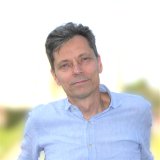
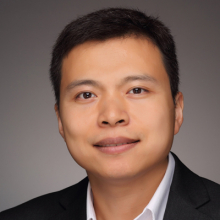
Scott W Linderman is an Assistant Professor of Statistics at Stanford University with courtesy appointments in Electrical Engineering and Computer Science. He serves as an Institute Scholar in the Wu Tsai Neurosciences Institute and is affiliated with Stanford Bio-X and the Stanford AI Lab. Education: PhD in Computer Science (2016) - Harvard University SM in Computer Science (2013) - Harvard University BS in Electrical and Computer Engineering (2008) - Cornell University 3 years as Microsoft software engineer before graduate school His research focuses on machine learning and computational neuroscience , developing: Advanced state space models (rSLDS, GP-SLDS) behavioral time series methods (GIMBAL, Keypoint MoSeq) deep state space architectures (S5, ELK) point process models (PP-Seq) scalable inference algorithms (SIXO, Structure-exploiting VI) Key collaborations include: Prof. David Anderson (Caltech) - hypothalamic dynamics Prof. Bob Datta (Harvard Medical School) - behavioral sequencing Prof. Chris Ré (Stanford) - biomedical ML Prof. David Sussillo (Stanford) - neural network theory Scientific contributions: Developed SSM and Dynamax software packages Leonard J. Savage Award recipient (2016) Bridging reinforcement learning and neural dynamics Advancing 3D keypoint tracking and behavioral syllable analysis Labs & teams: Linderman Lab - computational neuroscience Stanford AI Lab - machine learning Wu Tsai Neurosciences Institute - interdisciplinary research Stanford Bio-X - cross-departmental collaboration
Khalid Belhajjame is a Lecturer at Paris Dauphine University, where he is a member of the LAMSADE research laboratory. His academic career spans multiple prestigious institutions, having previously worked as a researcher at the University of Manchester and completed his PhD at the University of Grenoble. His research focuses on information and knowledge management systems with applications across various scientific domains. Belhajjame's research interests center on information and knowledge management, with specific contributions to pay-as-you data integration, e-Science, scientific workflow management, provenance tracking and exploitation, and semantic web services. His work bridges theoretical computer science with practical applications in astronomy, biodiversity, and life sciences. He has developed innovative approaches to workflow management, data integration, and provenance tracking that enhance scientific reproducibility and data transparency. His publication record shows a clear trajectory of advancing scientific workflow systems and data management techniques. Recent work focuses on workflow validation, knowledge graph maintenance, bioinformatics data analysis, and privacy-aware workflows. His research demonstrates increasing sophistication in handling complex data provenance while maintaining usability and transparency. The interdisciplinary nature of his work is evident in applications spanning genomics, business process analytics, and cloud computing. Belhajjame actively contributes to the scientific community through multiple roles. He serves on the editorial board of the MethodX Elsevier journal and has participated in numerous European, French, and UK-funded projects. His leadership extends to co-leading ProvBench, a provenance benchmarking initiative, and participating in influential working groups including the W3C Provenance working group and the NSF-funded DataONE working group on scientific workflows and provenance. He has established himself as a key contributor to research object frameworks and scientific workflow standards. His collaborations span multiple continents and disciplines, reflecting the broad applicability of his work in data management and workflow systems. His current research continues to push boundaries in making scientific workflows more transparent, reusable, and privacy-preserving.
Ou Jihong serves as Associate Professor of Operations Management at Cheung Kong Graduate School of Business (CKGSB), bringing extensive global academic experience from prior appointments at National University of Singapore Business School, University of Cambridge, University of California at Los Angeles, and University of Illinois. His research bridges theoretical operations research with practical applications in China's logistics industry. His educational background includes a PhD from Massachusetts Institute of Technology. Research interests span Analytics for Managers, Business Process Management, Production/Inventory Systems, Queuing Analysis and Control, Statistics, Stochastic Modeling and Analysis, and Supply Chain Management, with particular expertise in applied research on China's third-party logistics sector. Professor Ou's publication record demonstrates significant contributions to top-tier journals including Management Science and Operations Research , focusing on optimization of production systems, inventory control, queuing networks, and revenue management. His work consistently addresses real-world operational challenges through rigorous mathematical modeling. His scientific contributions include expertise in conducting industry surveys within China's logistics ecosystem and developing computational approaches for complex operational problems. Professor Ou maintains active engagement with industry through his research on supply chain dynamics and operational efficiency in emerging markets.
Eduardo Izquierdo Torres is an Associate Professor in the Department of Electrical and Computer Engineering at Rose-Hulman Institute of Technology. His academic work bridges multiple disciplines including Artificial Intelligence, Cognitive Science, Neuroscience, Robotics, and Electrical and Computer Engineering, contributing to the excellence of education at Rose-Hulman through his highly interdisciplinary approach. Dr. Izquierdo received his academic degrees from prestigious institutions: Ph.D. in Computer Science and AI (2008) from the Centre for Computational Neuroscience and Robotics at the University of Sussex, Brighton, UK Master of Science in Intelligent Systems (2004) from the University of Sussex, Brighton, UK Bachelor of Science in Computer Engineering (2002) from Universidad Simon Bolivar, Venezuela Dr. Izquierdo's research focuses on understanding intelligence in living organisms and developing artificial systems with similar robustness, flexibility, and adaptivity. His work spans Evolutionary and Adaptive Systems, including Evolutionary Robotics, Cognitive Science, Artificial Life, Evolutionary Computation, Morphological Computation, Embodied Intelligence, Evolutionary Hardware, Neuromorphic Engineering, BioRobotics, NeuroRobotics, and Biologically-Inspired Artificial Intelligence. He takes an integrated approach, studying how behavior arises from the interaction between brains, bodies, and environments through computational models of complete brain-body-environment systems. His recent publications demonstrate a strong trend toward understanding social interaction, neural plasticity, and multifunctional neural circuits, particularly using C. elegans as a model organism. His work combines computational neuroscience with artificial life principles to explore how complex behaviors emerge from neural circuits, with applications in robotics and artificial intelligence. Many of his recent papers focus on perceptual crossing, central pattern generation, and the role of homeostatic plasticity in neural networks. Dr. Izquierdo has received significant recognition for his research: NSF CAREER award: "From connectome to behavior: computational models of multifunctional neural circuits in C. elegans" (2019-2025), $882,772.00 as PI NSF Workshop grant: "Functional logic of neural circuits: diamonds in the rough" (Part 2, 2022-2023), $50,000.00 as Co-PI NSF Workshop grant: "Functional logic of neural circuits: diamonds in the rough" (Part 1, 2021-2022), $50,000.00 as Co-PI NSF Supplemental grant: "Reinforcement learning in dynamical recurrent neural networks" (2021), $50,683.00 as PI Winner of the 2021 ISAL (International Society of Artificial Life) Outstanding Student Paper Award Dr. Izquierdo has advised numerous graduate students, including PhD candidates Lindsay Stolting, Zachary Laborde, Andrew Claros, Josh Nunley, and Haily Merritt, as well as postdoctoral researchers Dr. Madhavun Candadai and Dr. Jason Yoder. His research has been consistently supported by multiple NSF grants totaling over $1.5 million, demonstrating the significance and impact of his work in computational neuroscience and bio-inspired AI. His grants have focused on understanding neural circuits in C. elegans, reinforcement learning in neural networks, and computational models of behavior. Dr. Izquierdo leads a research group focused on computational neuroethology and bio-inspired AI, with collaborative projects involving researchers from multiple institutions. His lab develops computational models of brain-body-environment systems, with particular expertise in neuromechanical models of C. elegans. He has created numerous open-source software tools for analysis and simulation, including packages for information theoretic analysis, connectome exploration, and neuromechanical modeling. His collaborative work with researchers like Dr. Erick Olivares, Prof. Randall Beer, and others has produced significant advances in understanding how neural circuits generate behavior.
Michael Lyu is a Professor at The Chinese University of Hong Kong specializing in software engineering with a focus on cloud reliability, AIOps, and log analysis. His research bridges the gap between theoretical advances and practical industrial applications in large-scale cloud systems. His research interests span Software Engineering , Cloud Computing Reliability , AIOps , and Log Analysis . Dr. Lyu's work addresses critical challenges in modern cloud operations, including failure diagnosis, anomaly detection, and reliability engineering. His recent research has pivoted toward leveraging large language models for software engineering tasks, particularly in code generation and log analysis. His publication portfolio demonstrates consistent contributions to major software engineering conferences (ASE, ICSE, ESEC/FSE) from 2018-2025, with a noticeable increase in LLM-related research since 2023. The trend shows a clear evolution from traditional software engineering topics toward AI-driven approaches for cloud operations. ICSE 2021 Keynote: "Reliability-Driven AIOps for Cloud Resilience" ASE 2023: Maat: Performance Metric Anomaly Anticipation for Cloud Services ASE 2024: LILAC: Log Parsing using LLMs with Adaptive Parsing Cache Dr. Lyu actively mentors students, with numerous co-authored publications showing his advisees as first authors. His work receives significant attention in both academic and industrial software engineering communities, addressing practical problems faced by large-scale cloud service providers. His research group appears focused on developing data-driven approaches for improving cloud system reliability through advanced analytics of logs, traces, and KPIs.
Dr. Jajati Mandal serves as a University Fellow (Environmental Pollution) at the University of Salford's School of Science, Engineering & Environment. His work focuses on addressing pressing environmental challenges related to soil and water contamination, with particular emphasis on agricultural systems. He is affiliated with the Environmental Research Centre and contributes to the University's mission of tackling global sustainability challenges through the UN Sustainable Development Goals, particularly those related to food security, health, and sustainable cities. Dr. Mandal's research interests center on environmental soil chemistry, specifically investigating the behavior and impacts of environmental contaminants including metal(loid)s, PFAS (Per- and Polyfluorinated Alkyl Substances), and tire-rubber chemicals within agricultural ecosystems. His analytical expertise encompasses speciation techniques for metals and metalloids in environmental samples (water, soil, plants), while his methodological approach combines laboratory experiments, field studies, and predictive modeling using machine learning algorithms coded in R. He has developed specialized R packages such as 'Inquilab' and 'AdsorpR' for modeling adsorption kinetics. His extensive publication record spanning 2015-2025 demonstrates consistent focus on environmental contamination issues, with recent work (2024-2025) increasingly addressing PFAS contamination, advanced remediation techniques using biochar and nanomaterials, and sophisticated machine learning applications for predicting contamination thresholds. His research shows strong interdisciplinary connections between environmental chemistry, agricultural science, data science, and public health, with practical applications for improving food safety and water quality. Dr. Mandal actively engages in knowledge dissemination through short courses (such as the 2024 course on 'Arsenic and Potentially Toxic Metals in Food and Agroecosystems' which attracted 43 participants) and collaborative initiatives like the Coastal Ecosystem Hub workshop scheduled for June 2025. His work bridges academic research with practical policy implementation, collaborating with organizations like the Mersey Gateway Environmental Trust to translate scientific findings into environmental management strategies.
Clodagh O'Shea is a Professor at the Salk Institute for Biological Studies, holding the Wicklow Chair position and serving as a Howard Hughes Medical Institute Faculty Scholar. She leads the Laboratory for Molecular and Cell Biology, where she conducts groundbreaking research at the intersection of virology, cancer biology, and genome architecture. Dr. O'Shea's educational background includes a BS in Biochemistry and Microbiology from University College Cork, Ireland; a PhD from Imperial College London/Imperial Cancer Research Fund, UK; and postdoctoral training at the UCSF Comprehensive Cancer Center in San Francisco. Her research focuses on designing synthetic viruses that selectively target cancer cells while leaving healthy cells unharmed, as well as unraveling the structural code that determines DNA accessibility in the cell nucleus. She has developed innovative technologies like ChromEM to visualize the 3D structure of chromatin in living cells, revealing how DNA is packaged in the nucleus and how this organization affects gene activity. Her work has significant implications for understanding and treating cancer, premature aging, and viral infections. Analysis of her publication record shows a consistent focus on viral-host interactions, chromatin structure, and cancer biology, with particular emphasis on how viruses can be engineered to target tumor cells and how DNA packaging influences cellular responses to damage and disease. Allen Distinguished Investigator Award (2018) Howard Hughes Medical Institute Faculty Scholar (2016) WM Keck Medical Research Program Award (2014) Anna Fuller Prize for Cancer Research (2010-2012) Sontag Distinguished Scientist Award (2009) Arnold and Mabel Beckman Young Investigator Award (2008) Dr. O'Shea's research has been supported by major grants including a $3 million NIH grant as part of the 4D Nucleome Program and a $1.5 million Allen Distinguished Investigator award. She collaborates extensively with researchers at UC San Diego, particularly with Mark Ellisman's laboratory, to develop advanced imaging techniques for studying nuclear architecture. Her laboratory is pioneering approaches to design synthetic viral therapies that can adapt to tumor heterogeneity and target specific cancer mutations. Her laboratory has developed techniques to visualize how genomic material is structured in time and space, with the potential to reveal the structural code that determines whether a gene is in an 'on' or 'off' state in health and disease. This work could lead to new epigenetic therapies that help cancer cells 'remember' how to be normal again.
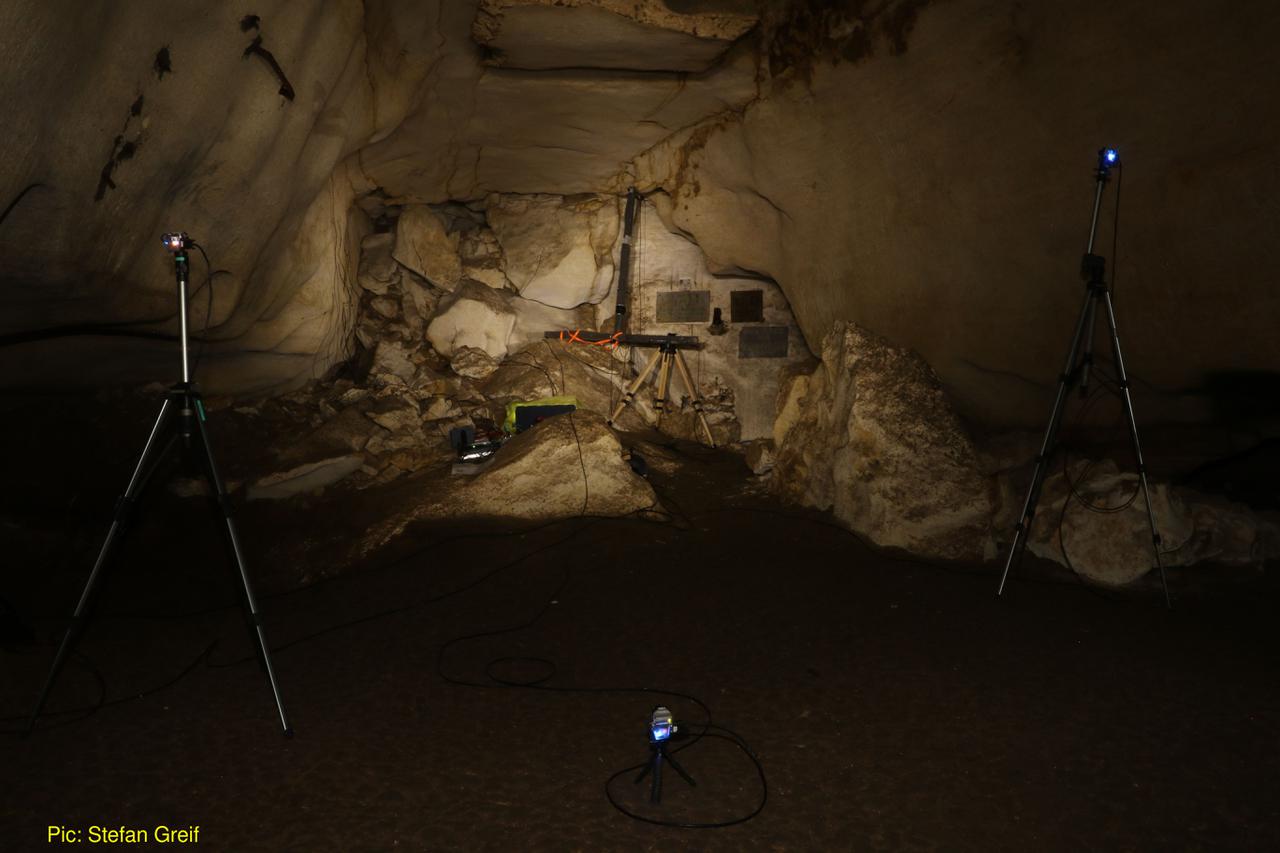
Dr. Thejasvi Beleyur is a Group Leader of the Active Sensing Collectives Lab at the Centre for the Advanced Study of Collective Behaviour, University of Konstanz, and holds an affiliated position at the Max Planck Institute of Animal Behavior. She also serves as IMPRS Faculty, contributing to interdisciplinary research at the intersection of animal behavior, sensory biology, and collective systems. Current: Group Leader, Active Sensing Collectives Lab (2025-present) Previous: Postdoc at Centre for the Advanced Study of Collective Behaviour (2021-2025) PhD: Max Planck Institute for Ornithology (2015-2021) Education: BS-MS in Biological Sciences, IISER-TVM (2008-2013) Dr. Beleyur's research program investigates how active-sensing agents like echolocating bats navigate complex sensory environments when operating in groups. Her work combines field observations, computational modeling, and swarm robotics to understand the sensorimotor strategies animals employ in information-limited settings. She has pioneered the development of the Ushichka dataset—a multichannel audio-video system for recording echolocating bats in natural habitats—which provides unprecedented insights into how bats modify flight and echolocation behaviors as group sizes change. Her publication record reveals a consistent trajectory examining sensory challenges in collective animal systems, with emphasis on echolocating bats. The research spans experimental field work, computational modeling, and methodological innovations in acoustic and video tracking. Recent work has expanded into developing computational tools like the beamshapes Python package for sound source modeling and exploring robot platforms to simulate bat collective behavior. Carl-Zeiss Nexus grant for inter-disciplinary research (2025) DFG Walter Benjamin postdoc grant (2021-2023) Early Career Researcher Award at International Bioacoustics Congress Google Cloud Platform Research Credits award ($1000) DAAD-GSSP Stipend for doctoral studies (2015-2020) Dr. Beleyur actively mentors students in her lab, currently supervising PhD student Frithjof and Master's student Aditya, following the completion of Gabriele's Master's thesis on the active-sensing Ro-BAT platform. Her research program is supported by competitive grants including the Carl-Zeiss Nexus grant and previously the DFG Walter Benjamin fellowship, which funded her work on 'The How and What of Active Sensing Collectives.' The Active Sensing Collectives Lab brings together an interdisciplinary team working at the interface of sensory biology, robotics, and collective behavior. The lab develops novel computational methods for analyzing complex datasets from multi-sensor field recordings, with emphasis on creating tools for long-term community use. Current projects include characterizing echolocating groups in the field and studying sensorimotor strategies using computational modeling.
Dania Olmos Diaz is Associate Professor at Universidad Carlos III de Madrid, specializing in polymeric nanocomposites and advanced manufacturing techniques. Leads research in the Polymer Composites and Interphases group. Key research areas: Solution blow spinning for biomedical materials Antibacterial polymer systems Nanocomposite consolidation techniques for heritage conservation Flexoelectric and piezoelectric material development Structure-property relationships in multiphase composites Recent publications focus on PLA-based fibrous materials for medical applications, airbrushed coatings for archaeological conservation, and ternary nanocomposites with enhanced electrical properties. Patents include innovations in material processing and characterization methods. Principal investigator for projects on sustainable packaging materials funded by Spanish research agencies. Research collaborations extend to industrial partners including Hempel A/S for coatings characterization and IMDEA Materials Institute for advanced microscopy.
Martti Toivakka is a Professor at the Laboratory of Natural Materials Technology within the Faculty of Natural Sciences and Engineering at Åbo Akademi University . His research focuses on sustainable materials engineering, particularly in bio-based polymers and advanced coating technologies. Nanocellulose and lignin-based materials Barrier coatings for packaging Emulsion polymerization techniques Phase change materials for thermal energy Polymerization kinetics and modeling His recent publications emphasize bio-based dispersions, functionalization of cellulose nanofibrils, and scalable production of antimicrobial biocomposites. Key projects include CIMANET (circular materials bioeconomy) and SUSBINCO (sustainable binders and coatings), supported by institutions like Business Finland and Finlands Akademi . Research trends highlight advancements in nanocellulose , lignin composites , antimicrobial packaging , and high-throughput coating processes , aligning with UN Sustainable Development Goals for eco-friendly materials. His work involves collaborations across disciplines, including Professor Chunlin Xu and experts in printed intelligence infrastructure , with applications in packaging , energy storage , and biocompatible materials .
Mehdi Ali Gadiri is a Researcher and Doctoral Assistant at the École Polytechnique Fédérale de Lausanne (EPFL) , affiliated with the MicroBioRobotic Systems Laboratory within the Institute of Microtechnology (IGM) under the School of Engineering (STI). He also serves as the PhD Student Representative for the Doctoral Program in Microsystems and Microelectronics (EDMI). His research focuses on biomedical robotics, medical device innovation, and microtechnology applications in healthcare. Gadiri holds a doctoral position in Microsystems and Microelectronics, contributing to interdisciplinary projects at the intersection of engineering and medicine. His work includes developing advanced medical instruments, AI-driven clinical tools, and diagnostic technologies such as SARS-CoV-2 antigen testing and NT-proBNP detection systems. Gadiri’s contributions span from microactuator design to clinical decision-making frameworks, reflecting a strong emphasis on translating engineering solutions into practical medical applications. He is based at the MED 3 2815 office in Lausanne, Switzerland.
Dr. Yu Ma is an Associate Professor of Marketing and Bensadoun Faculty Scholar at McGill University's Desautels Faculty of Management. He previously served as Associate Professor at the University of Alberta. He holds a PhD from Washington University in St. Louis and BA from Nankai University. His research focuses on food marketing, retailing, and big data analytics, examining consumer responses to marketing incentives and the impact of macro-environmental factors on retail sectors and public health. Education: PhD, Management, Olin School of Business, Washington University in St. Louis MSc, Olin School of Business, Washington University in St. Louis BA, Business and Management, Nankai University Research Interests: Dr. Ma’s work bridges marketing and public health, analyzing how food marketing strategies and retail environments influence consumer behavior. Key areas include the effects of hunger on taste perception, the role of air pollution in food preferences, and the socioeconomic inequity in vegetable expenditure. His studies leverage advanced econometric models and loyalty card data to generate actionable insights for policy and industry. Grants & Awards: Multiple Social Sciences and Humanities Research Council Insight Grants (PI/Co-PI) 2017–2026 Bensadoun Faculty Scholar 2012 Retail Research Award CIHR grants (Co-PI) Advising & Labs: Leads the McGill Institute of Marketing (MIM), collaborating on projects like analyzing soda demand via grocery transactions and exploring obesity-related price responsiveness. His work integrates multidisciplinary approaches, including neuroscience and environmental studies.
Dr. Lennart de Groot is an Associate Professor at Utrecht University's Faculty of Geosciences, Department of Earth Sciences, leading the Paleomagnetic Laboratory at Fort Hoofddijk. His academic journey includes a BSc (2007), MSc (2008), PhD (2013, Cum Laude), and postdoctoral research at Utrecht University. Specializing in geomagnetism and paleomagnetism, his work focuses on understanding rapid fluctuations in Earth's magnetic field using advanced techniques like micromagnetic tomography and multi-method paleointensity approaches. Research Interests: Geomagnetic field dynamics, paleointensity determination, rock magnetism, and micromagnetic analysis. Key Projects: Development of pymaginverse for geomagnetic modeling, study of Mid-Miocene geomagnetic reversals, and analysis of Devonian volcanic records. His articles highlight innovations in paleomagnetic measurement techniques and their applications to ancient geomagnetic field behavior. Notable awards include the ERC Starting Grant (2019), NWO-Vidi (2019), and the William Gilbert Award (2018). He advises on grants and mentors researchers in geophysics and rock magnetism, contributing to the UN Sustainable Development Goals through Earth science research. Lab affiliations include the Paleomagnetic Laboratory Fort Hoofddijk, where cutting-edge equipment enables high-resolution studies of magnetic minerals and their paleoenvironmental records.
Ziyan Wang is a researcher affiliated with Carnegie Mellon University's School of Computer Science, Department of Computer Science. Their work focuses on computer graphics, machine learning, and medical imaging, with a strong emphasis on dynamic capture and animation of human hair and heads. They hold a PhD in Computer Science from Carnegie Mellon University (2023). Research interests include 3D modeling, neural networks, reinforcement learning, and applications in medical informatics. Notable contributions include high-fidelity hair modeling using computed tomography and neural dynamic models for volumetric hair capture. Their work spans conferences like CVPR, NeurIPS, and ECCV, demonstrating expertise in both theoretical and applied aspects of computer vision and graphics. Publications highlight advancements in diffusion models, multi-agent reinforcement learning, and domain adaptation for fault diagnosis. Collaborations span institutions like the University of Washington, Max Planck Institute, and NVIDIA Research, reflecting interdisciplinary engagement. Recent work explores AI-generated content in virtual environments and cybersecurity in package management systems.
Sam N Coday is an Assistant Professor in the Department of Electrical Engineering and Computer Science (EECS) at MIT. His research focuses on advanced power converter technologies for aerospace, space, and high-density applications. He leads the Coday Research Group, which develops innovative solutions for radiation-tolerant systems, GaN-based converters, and multilevel converter architectures. His work emphasizes high-efficiency power conversion , miniaturization of passive components , and robust operation in extreme environments . Key areas include resonant switched-capacitor converters, flying capacitor multilevel topologies, and wireless power transfer for battery charging. Recent publications highlight advancements in space robotics power systems, hybrid DC-DC converters for aviation, and radiation-hardened electronics. Coday's team collaborates on flight-qualified hardware for electric aircraft and space applications, prioritizing both theoretical analysis and practical implementation.