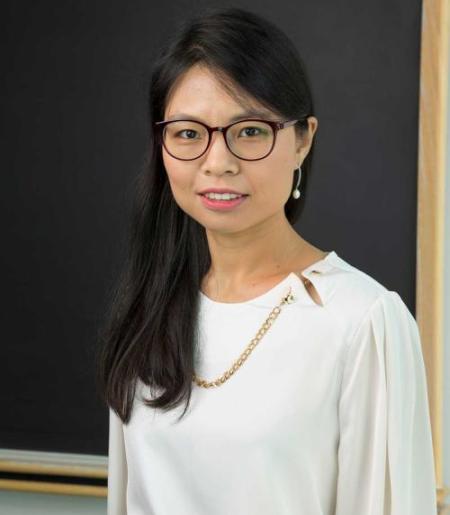
Yunan Yang is the Goenka Family Assistant Professor in Mathematics at Cornell University, within the Department of Mathematics, College of Arts and Sciences. He holds a Ph.D. from the University of Texas at Austin (2018), supervised by Prof. Björn Engquist. Previously, he was a Courant Instructor at NYU (2018–2021), Simons-Berkeley Research Fellow (2021), and Advanced Fellow at ETH Zürich (2022–2023). His research focuses on computational mathematics, including inverse problems, optimal transport, machine learning, and nonconvex optimization. Notable contributions include applications of optimal transport to seismic inversion and PDE-constrained optimization. He has advised numerous students, including undergraduates and Ph.D. candidates at Cornell and other institutions. Yang teaches courses such as MATH 6220 (Applied Functional Analysis) and has published extensively in journals like SIAM Journal on Scientific Computing and Communications on Pure and Applied Mathematics. His work bridges theoretical foundations with practical applications in geophysics and computational science.
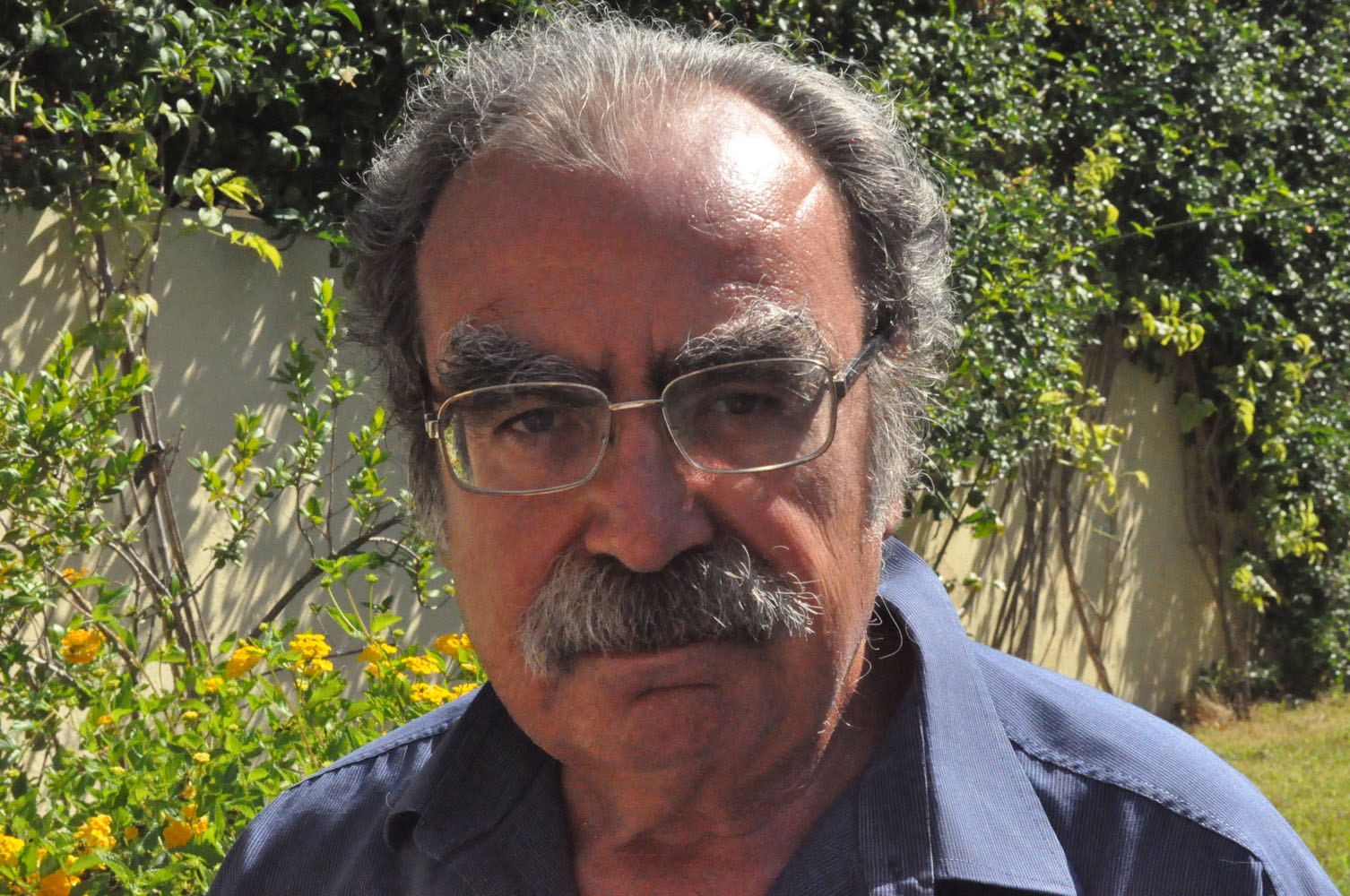
Professor Yanghua Wang is a leading academic in Geophysics at Imperial College London's Faculty of Engineering. He serves as Principal of the Resource Geophysics Academy and Director of the Centre for Reservoir Geophysics. His career spans over four decades, with roles including Research Manager at Robertson Research and a PhD from Imperial College London (1995–1997). He holds prestigious awards such as Fellow of the Royal Academy of Engineering (2021) and membership in the Chinese Academy of Engineering (2023). Education highlights include a BSc (1983) and MSc (1994) in Geophysics, followed by a PhD in Geophysics (1997). His research focuses on seismic inversion, reservoir geophysics, and time-frequency analysis, with notable monographs on seismic inversion and signal processing. He leads interdisciplinary projects combining machine learning with geophysical modeling, addressing challenges in reservoir characterization and seismic data processing. Research interests emphasize geophysical inversion techniques, anisotropic media analysis, and applications in energy exploration. He has pioneered methods like the W transform for seismic signal analysis and contributed to advancements in physics-informed neural networks. His work bridges theoretical geophysics with practical reservoir engineering solutions. Prof. Wang’s lab, the Resource Geophysics Academy, focuses on innovative geophysical methodologies for subsurface characterization. His recent projects include AI-driven data assimilation for large-scale systems and high-resolution seismic imaging techniques. Collaborations span academia and industry, addressing global energy and resource challenges.
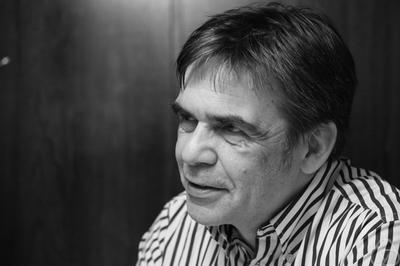
Prof. Dr. Heiko Paulheim is a Professor of Data Science and currently serves as University Vice President at the University of Mannheim. He leads the Data and Web Science Group (DWS), which focuses on Web Data Mining, Knowledge Graphs, and Semantic Web technologies. His research group contributes to open source knowledge graphs like DBpedia and develops new knowledge graphs such as WebIsALOD and DBkWik. As of October 1, 2024, he has limited teaching capacity due to his vice presidential duties. Prof. Paulheim's research interests span Knowledge Graphs, Semantic Web, Web Data Mining, Machine Learning, and Natural Language Processing. His work particularly focuses on knowledge graph refinement, embedding techniques (notably RDF2vec), and applications in various domains including news recommendation, biomedical informatics, and environmental monitoring. His group develops practical tools like the RapidMiner Linked Open Data Extension and RDF2vec for knowledge graph applications. His recent publications demonstrate a strong focus on knowledge graph embeddings, with particular attention to RDF2vec variants, applications in news recommendation systems, biomedical data integration, and spatio-temporal knowledge graphs for environmental monitoring. His work bridges theoretical advances in knowledge representation with practical applications across multiple domains. Among his notable achievements are a nomination for the Best Paper Award at CAiSE 2025 and securing an Open Science Grant for the SpatialBenchRAG project. His research has significant impact in both academic and industrial contexts, with multiple papers accepted at top conferences like ISWC and ESWC. Prof. Paulheim has supervised numerous PhD students including Alexander Brinkmann and Michael Schlechtinger, and has led several research projects including the DFG Project Mine@LOD, State of BW Project SyKoW², and BMBF Project DS4DM. His group maintains strong industry connections with partners like SAP AG, Daimler AG, and IDS.
Jim Gatheral is a Presidential Professor of Mathematics at Baruch College, City University of New York (CUNY), where he leads the Financial Engineering MS Program. He holds a Ph.D. in Theoretical Physics from Cambridge University (1983), advised by John C. Taylor, and a B.Sc. in Mathematics and Natural Philosophy from the University of Glasgow (1979). Research Focus: His work centers on volatility modeling, market impact dynamics, optimal execution strategies, and stochastic volatility frameworks. Key contributions include rough volatility theory, affine forward variance models, and advancements in Heston and SABR models. He authored The Volatility Surface: A Practitioner’s Guide (2006), a seminal text in quantitative finance. Professional Contributions: Gatheral has published extensively in journals like Quantitative Finance , Finance and Stochastics , and SIAM Journal on Financial Mathematics . He co-developed the arbitrage-free SVI volatility surface parameterization and contributed to market impact models under perfect competition. His work integrates theoretical physics insights with financial engineering. Engagement: He delivers presentations globally, including at the SIAM Financial Mathematics and Engineering Conference (2019) and Bloomberg Quant Seminars. His research bridges academia and industry, addressing practical challenges in derivatives pricing and risk management.
Hao Liu is a researcher affiliated with institutions like Chinese Academy of Sciences , Beihang University , and Stanford University . His work spans Computer Science , Artificial Intelligence , and Robotics . Key affiliations: National Space Science Center (Beijing), School of Astronautics (Beihang), Key Laboratory of Pervasive Computing (Tsinghua) Research interests include Machine Learning , Image Processing , Graph Neural Networks , and Wireless Communication Optimization His recent publications focus on: Advanced control systems for fuzzy models Medical imaging via hyperspectral analysis Transformer-based approaches in NLP and vision Quantum-safe and edge computing protocols
Roman Obermaisser is a Professor at the Vienna University of Technology (TU Wien), affiliated with the Cyber-Physical Systems department. His research focuses on real-time systems, system architectures, communication protocols, safety-critical systems, distributed algorithms, and fault-tolerance. He holds a PhD in Computer Science from TU Wien, awarded in 2003 for his work on integrated architectures for control paradigms. His academic contributions span over two decades, with publications in top-tier conferences and journals. Key research themes include time-triggered architectures (TTA), fault containment in embedded systems, and integration of heterogeneous communication protocols like CAN and Ethernet. He has supervised numerous graduate students, contributing to advancements in system-on-chip (SoC) design, transient-resilient architectures, and diagnostic frameworks for real-time systems. Obermaisser’s work emphasizes practical applications in automotive and industrial systems, addressing challenges such as scalability, reliability, and composability. His involvement in projects like GENESYS and DECOS highlights his role in developing cross-domain reference architectures for embedded systems. Recent efforts include evaluating ontology-based reconfiguration and COTS-based Ethernet solutions for safety-critical networks. His articles reflect a focus on real-time communication protocols, fault-tolerant design, and system integration, with applications ranging from automotive networks to smart transducers. Advising over 20 students underscores his commitment to nurturing the next generation of embedded systems researchers.
Elio Lo Cascio is a Professor of Roman History at Sapienza Università di Roma, with a distinguished career spanning multiple universities including Università 'Federico II' di Napoli (1990-2006), Università dell'Aquila (1986-1990), and Università di Lecce (1976-1986). He has served as Dean of the Faculty of Letters at L'Aquila and held visiting positions at the Institute for Advanced Study (Princeton, 1993, 2001), École des Hautes Études en Sciences Sociales (Paris, 2009), and the University of British Columbia (2012). Editor of the series Pragmateiai (Edipuglia) Current roles: Corresponding Fellow of the Pontificia Accademia Romana di Archeologia, member of the Consiglio Direttivo of the Istituto Italiano per la Storia Antica Active in international academic panels, including ERC Advanced Grants (2012) His research focuses on the administrative, economic, and demographic history of Rome from the Republic to Late Empire. Key themes include Romanization, urban elites (especially Pompeii), and historiography of ancient history. His publications analyze census procedures, monetary policies, and population dynamics under the Roman Empire. The articles listed reflect his expertise in Roman economic systems, administrative reforms, and demographic studies. Themes span from Servian reforms to late antique coinage, with methodologies combining textual analysis and quantitative approaches. Notable trends include interdisciplinary applications of economic theory to ancient societies and the impact of population shifts on imperial stability. Scientific Awards & Honors : Mercator Fellow (Gast Professor) at DFG-Graduierten Kolleg (2014) Socio corrispondente della Pontificia Accademia Romana di Archeologia (2009) Member, School of Historical Studies, Institute for Advanced Study (1993, 2001) Directeur d'études invité at EHESS, Paris (2009) Lo Cascio has advised numerous PhD students and participated in over 50 international conferences across Europe, North America, and Iran. He has held editorial and scientific board roles for multiple academic series and journals.
Cynthia Vinzant is an Associate Professor in the Department of Mathematics at the University of Washington. Her research focuses on real algebraic geometry, combinatorics, and convex optimization, with applications to hyperbolic polynomials, determinantal representations, and convex algebraic geometry. She collaborates extensively on projects involving numerical ranges, quasicrystals, and geometric optimization problems. Research Interests: Real algebraic geometry and its connections to combinatorics and optimization Hyperbolic and log-concave polynomials Convex geometry and spectrahedra Applications in matrix analysis and statistical mechanics Her work spans theoretical advances in algebraic geometry and computational methods, including contributions to the study of principal minors, tropical geometry, and phase retrieval problems. Recent publications highlight her focus on Fourier quasicrystals, higher-rank numerical ranges, and combinatorial structures in matroids. Publications: Over 30 peer-reviewed articles, including influential works on quartic curves, determinantal representations, and log-concave polynomials. Grants & Collaborations: Active in interdisciplinary research, with projects supported by NSF and collaborations in algebraic combinatorics and geometric optimization.
Prof. Dr. Gerhard Huisken is a Professor at Eberhard Karls University of Tübingen and Director of the Mathematical Research Institute Oberwolfach. His research focuses on geometric analysis, differential geometry, and mathematical relativity, with significant contributions to mean curvature flow, Ricci flow, and geometric evolution equations. He has authored numerous influential papers on topics such as curvature flows, singularity analysis, and applications to general relativity. Key positions include leadership at Oberwolfach and teaching roles in advanced courses like 'Mathematical Relativity' and 'Introduction to Ricci Flow'. His work bridges geometric analysis with physics, contributing to the Poincaré conjecture through Ricci flow studies. Collaborations include projects with S. Brendle and C. Sinestrari on convex solutions and flow surgeries. Research highlights include the Riemannian Penrose inequality, inverse mean curvature flow, and long-term behavior of geometric flows. His academic contributions are documented in top journals like Inventiones mathematicae and Journal of Differential Geometry .
Auezhan Amanov is an Associate Professor at the Faculty of Engineering and Natural Sciences, Tampere University, specializing in the Engineering Materials Science (EMS) department. His research focuses on tribology, surface engineering, and advanced materials processing. He leads the 'Tribology and Surface Modification' research group, aiming to enhance machine element performance through surface treatments and manufacturing innovations. Dr. Amanov is an active member of international tribology societies (STLE, JAST, KTS), chairing the 'Surface Engineering' committee at STLE. His work emphasizes improving wear resistance, fatigue life, and tribological performance of materials like titanium alloys, high-entropy alloys, and thermal spray coatings. His research integrates additive manufacturing, laser-based processes, and severe plastic deformation techniques to optimize material properties. Key contributions include studies on ultrasonic nanocrystal surface modification (UNSM) for enhancing mechanical and tribological characteristics. Collaborations with industries and academic institutions globally drive his mission to translate research into practical solutions for manufacturing efficiency and sustainable development. Dr. Amanov holds an h-index of 34 (Google Scholar) and has authored numerous peer-reviewed articles on materials science and tribology advancements. Teaching responsibilities include tribology and fatigue-related courses, reflecting his expertise in both academic and applied engineering domains. His vision includes advancing circular economy practices through bearing restoration technologies and improving 'Made in Finland' manufacturing competitiveness through material science innovations.
Endre Süli is Professor of Numerical Analysis at the University of Oxford, where he has maintained a distinguished academic career since 1985. He currently serves as Fellow and Tutor in Mathematics at Worcester College and Supernumerary Fellow at Linacre College. His progression at Oxford includes University Lecturer in Numerical Analysis (1985-1996), Reader in Numerical Analysis (1996-1999), and Professor of Numerical Analysis (1999-present). Süli completed his B.Sc. in Mathematics at the University of Belgrade (1974-1978), followed by an M.Sc. in Mathematics (1978-1980). As a British Council Visiting Student, he studied at Reading University and Oxford University in 1983/84, earned his Ph.D. from the University of Belgrade in 1985, and received his M.A. from Oxford University in the same year. Professor Süli's research centers on numerical analysis of nonlinear partial differential equations with applications across multiple scientific domains. His work spans free-discontinuity problems and computational modeling of fracture; finite element methods; Navier-Stokes-Fokker-Planck systems; adaptive algorithms with a-posteriori error control; implicitly constituted material models; and discontinuous finite element methods. His research bridges theoretical mathematics with practical computational approaches for complex physical phenomena. Recent publications (2024-2025) demonstrate Süli's continued leadership in numerical analysis, with focus areas including fractional calculus, stochastic PDEs, and advanced finite element techniques. His work shows strong interdisciplinary connections between mathematical analysis, fluid dynamics, and materials science, addressing challenging problems in polymeric fluids, porous media, and capillary flow modeling. Professor Süli's distinguished career has been recognized with numerous prestigious honors: Invited Speaker at the International Congress of Mathematicians, Madrid (2006) Fellow of the Institute of Mathematics and its Applications (2007) Foreign Member of the Serbian National Academy of Sciences and Arts (2009) Fellow of the European Academy of Sciences (2010) IMA Service Award (2011) SIAM Fellow (2016) Member of the Academia Europaea (2020) London Mathematical Society Naylor Prize and Lectureship (2021) Fellow of the Royal Society (2021) As an educator, Süli has received the Oxford University Teaching Excellence Award (2009) and the Mathematical Institute Teaching Award (2013). He has supervised numerous PhD students and postdoctoral researchers throughout his career, though specific names aren't documented in the available materials. His research has been supported by various grants enabling work on computational methods for partial differential equations. Süli maintains active service to the mathematical community through editorial boards and professional organizations. Professor Süli is affiliated with the Numerical Analysis research group and the Oxford Centre for Nonlinear PDE at the Mathematical Institute. These research centers provide a collaborative environment for theoretical and applied work on partial differential equations. His research often involves interdisciplinary collaborations with physicists, engineers, and computational scientists to develop and analyze numerical methods for complex physical phenomena.
Professor Hing-Ho Tsang is the Chair in Civil and Structural Engineering at the University of Dundee, with over a decade of academic experience in Australia and Hong Kong. His research focuses on advancing sustainable infrastructure solutions, earthquake resilience, and green technologies to enhance building and infrastructure safety against natural disasters. He holds a Chartered Professional Engineer (CPEng) certification and advises governments and industries on building codes and seismic design guidelines. Tsang chairs the Global Network for Geotechnical Seismic Isolation (GSI) and serves as the Australian National Delegate to the International Association for Earthquake Engineering (IAEE). His expertise spans geotechnical seismic isolation, recycled materials in construction, and structural dynamics, contributing to UN Sustainable Development Goals (SDGs) like resilient infrastructure, circular economy, and climate action. With over 200 publications and a career-long impact ranking in Civil Engineering, Tsang has received prestigious awards including the R W Chapman Medal and Research Impact Award. Research Focus: Seismic design, sustainable construction, bio-inspired materials, and geotechnical isolation systems. Awards: Top Cited Article (2021–2022), Teaching Excellence Award (2022), and multiple international recognitions. Leadership Roles: Editorial board member for Geosynthetics International , organizer of the 18th World Conference on Earthquake Engineering technical session. His work emphasizes equity-driven engineering solutions, fostering inclusive and disaster-resilient communities. Current projects include innovative modular building systems and AI-driven seismic response models.
Gaetano Miraglia is a Fixed-term Assistant Professor in the Department of Structural, Building and Geotechnical Engineering (DISEG) at Politecnico di Torino, where he conducts research in structural health monitoring, seismic analysis, and computational modeling. He is a member of the Interdepartmental Center R3C – Responsible Risk Resilience Centre, contributing to interdisciplinary efforts in risk mitigation and infrastructure resilience. His work spans both theoretical and applied domains, with strong emphasis on heritage preservation and sustainable urban development. His research interests include Bayesian calibration of nonlinear models, hybrid simulation, peridynamics, masonry structures, and the integration of satellite interferometric (InSAR) data with in-situ measurements for structural monitoring. He applies advanced computational and machine learning techniques to improve the accuracy and reliability of structural assessments, particularly in historical and monumental buildings. His work supports UN Sustainable Development Goals 9, 11, and 13. His recent publications demonstrate a consistent focus on data fusion, digital twinning, domain adaptation, and real-time damage detection. He frequently collaborates with researchers such as Rosario Ceravolo and Erica Lenticchia, publishing in high-impact journals like Computer-Aided Civil and Infrastructure Engineering , Structures , and Scientific Reports , as well as at major conferences including EWSHM, SAHC, and EVACES. His research is applied in projects such as the monitoring of the Vicoforte Sanctuary and the development of the CAMELOT and HY-LEARN toolboxes. Research Projects: MONITORAGGIO VICOFORTE (2024–2026) – Member of Research Group CAMELOT – PoC Transition (2023–2024) – Member of Research Group HY-LEARN – Model Calibration via Hybrid Simulation and ML (2022–2024) – Scientific Manager (PNRR Mission 4) He teaches in various programs, including as a course collaborator in PhD, Master’s, and Bachelor’s level courses such as Earthquake Engineering , Structural Consolidation , and Seismic Risk of Cultural Heritage . He is also an inventor on national and international patents and software related to the CAMELOT toolbox, highlighting the translational impact of his research. He has no listed scientific awards or formal advisees in the provided text.
Professor Anna Korre is a leading academic in Environmental Engineering at Imperial College London's Faculty of Engineering. She serves as Associate Provost (Sustainability) and held the role of Co-Director of Energy Futures Lab (2018-2024). Her primary affiliation is with the Department of Earth Science & Engineering, where she leads the Minerals, Energy and Environmental Engineering Research Group. Her research focuses on risk modeling, environmental impact assessments, and engineering solutions for sustainable resource production and decarbonization. Key areas include carbon capture and storage (CCS), geothermal energy, and life cycle analysis of industrial systems. Affiliations: Energy Futures Lab, Institute for Molecular Science & Engineering, Minerals, Energy and Environmental Engineering Group Committee Roles: Chair of Earth Science & Engineering Sustainability Committee, member of University Sustainability Strategy Committee Her work integrates computational modeling, artificial intelligence, and multi-disciplinary collaboration to address global energy challenges. Over 150+ peer-reviewed publications and high-impact projects funded by UKRI, EU, and industry partners demonstrate her leadership in advancing sustainable technologies. She has appeared in media including BBC's The Life Scientific podcast discussing carbon capture innovations. Research highlights include optimizing CO2 storage networks, assessing geothermal reservoir risks, and evaluating lithium production sustainability. She champions industry-academia partnerships to translate research into real-world decarbonization solutions.
Prof. Vesa Välimäki is an Audio Signal Processing Professor at Aalto University's School of Electrical Engineering, leading the Audio Signal Processing Research Group within the Aalto Acoustics Lab. He also serves as Vice Dean for Research and Head of the Doctoral Programme at the university. His research focuses on digital signal processing, machine learning, and their applications in audio, acoustics, and music technology, particularly in artificial reverberation, audio filter design, and virtual analog modeling. He has pioneered techniques like velvet noise for reverberation synthesis and contributed to open-source tools like FLAMO. His academic accolades include IEEE, AES, and AAIA Fellowships, along with multiple best paper awards at venues like DAFx and ICASSP. He has advised numerous students, including recipients of prestigious awards like the Huawei Master's Thesis Award. Prof. Välimäki has held editorial roles at the Journal of the Audio Engineering Society and organized major conferences such as SMC-17. His work extends to applied projects like acoustic optimization for early childhood education facilities and immersive audio in virtual reality (e.g., the 'Space Walk' project). Key Projects: NordicSMC (Nordic University Hub for Sound and Music Computing), Aalto Acoustics Lab, FLAMO library Grants: NordForsk funding (2018–2023), Foundation for Aalto University Science and Technology His research spans both theoretical advancements (e.g., diffusion models for audio restoration) and practical implementations (e.g., real-time equalizers, headphone compensation systems). He collaborates internationally, contributing to acoustic measurement techniques and noise reduction strategies for diverse environments.