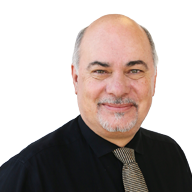
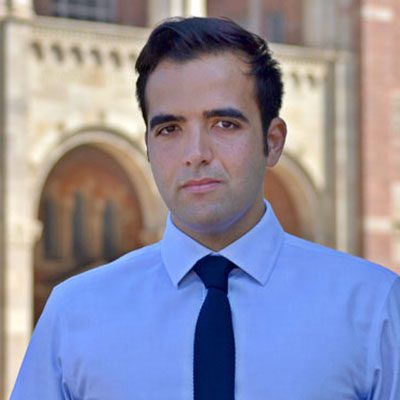
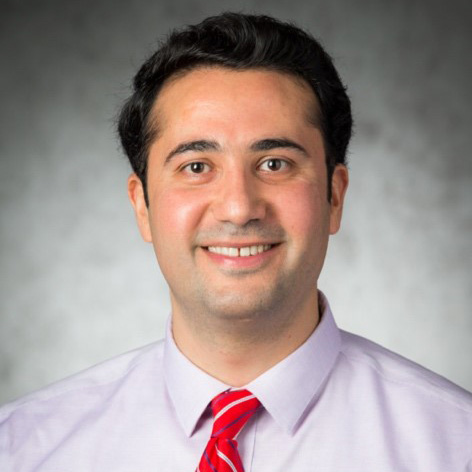
David Hsieh is the Donald A. Glaser Professor of Physics at the California Institute of Technology and has served as Executive Officer for Physics since 2023. He earned his B.S. from Stanford University (2003) and Ph.D. from Princeton University (2009). His academic career at Caltech progressed from Assistant Professor (2012-18) to Professor (2018-22) and Glaser Professor (2022-). Research Focus: Novel quantum electronic phases in solids, nonlinear optical spectroscopy, angle-resolved photoemission spectroscopy, time-resolved optical spectroscopy Dr. Hsieh’s recent publications span quantum materials, magnetic order, and ultrafast optical phenomena, with a particular emphasis on exciton dynamics and topological band structures. His work has been recognized through the prestigious Moore Experimental Physics Investigator award (2022). Scientific Awards Moore Experimental Physics Investigator The Hsieh Group develops advanced laser-based techniques to investigate and control quantum phases of matter, focusing on materials like Sr3Ir2O7, Ca2RuO4, and EuTiO3.
Roel C.G.M. Loonen is an Associate Professor at the Unit Building Physics and Services within the Department of the Built Environment at Eindhoven University of Technology (TU/e), Netherlands. He holds joint appointments with EAISI High Tech Systems and EIRES Research groups, focusing on building performance simulation and energy systems. His work bridges academic research with practical applications through collaborations with SMEs in the building industry. Loonen received his BSc and MSc (cum laude) in Building Services from Eindhoven University of Technology, followed by a PhD in 2018 with a dissertation on 'Approaches for computational performance optimization of innovative adaptive facade concepts.' His educational background has positioned him as a leading expert in building performance simulation and sustainable building technologies. His research interests center on developing and applying modeling and simulation strategies to support decision-making for designing buildings that combine high indoor quality with minimal environmental impact. Key areas include adaptive facades, building-integrated renewable energy systems, and energy-efficient building envelopes. He specializes in creating and validating new building performance simulation models to advance innovative building technologies. His recent publications demonstrate a strong focus on practical applications of building performance simulation, with emphasis on residential energy efficiency, photovoltaic systems, and occupant-centered approaches to building design. The work shows increasing integration of machine learning techniques with traditional building simulation methods, particularly for sensitivity analysis and optimization of building performance. REHVA Young Scientist Award (2021) Best PhD supervisor award from Department of the Built Environment, TU/e (2018) First prize - REHVA International student competition (2011) Smart daylight control for optimal building performance (NWO Take-off award, 2018) Best paper award (2021) Loonen actively supervises PhD and Master's students, evidenced by his Best PhD Supervisor Award in 2018. He manages multiple research projects including Sustainable Summer Comfort (2024-2027), Modeling Innovative Use Scenarios for Future Domestic Comfort (2023-2026), and Just Prepare (2022-2026), with funding from sources including the Dutch Research Council (NWO). His professional service includes being a board member of the Dutch-Flemish IBPSA affiliate and co-chair of IBPSA World's website committee, plus reviewing for 35 academic journals. He leads research within the Building Performance group, focusing on creating practical tools and methodologies that bridge the gap between theoretical building performance models and real-world implementation in the construction industry. His work particularly emphasizes the integration of occupant behavior and practices into building performance models, recognizing that human factors are critical to achieving sustainable building performance in practice.
Professor B M Azizur Rahman is a distinguished academic in the field of photonics at City University London, where he has served as Professor of Photonics in the Department of Electrical and Electronic Engineering since 2000. Previously, he was Reader in Photonics (1996-2000) and Lecturer (1988-1996) at the same institution. His academic journey began with a BEng (1971-1976) and MSc (1976-1979) from Bangladesh University of Engineering and Technology, followed by a PhD from University College London (1979-1982). His educational background laid the foundation for his extensive research career focusing on photonics, integrated waveguides, and optical sensors. Professor Rahman has made significant contributions to fields including plasmonic biosensors, fiber optic sensing technologies, supercontinuum generation, and metamaterial-based sensing systems. His research bridges theoretical modeling with practical applications in environmental monitoring, healthcare diagnostics, and engineering solutions. An analysis of his most recent publications (2022-2025) reveals a strong focus on advanced sensing technologies with applications across multiple domains. His work demonstrates expertise in combining photonics principles with nanotechnology, artificial intelligence, and novel materials to develop highly sensitive detection systems. Key research trends include the integration of deep learning with optical sensing, development of plasmonic-enhanced biosensors, and innovative waveguide designs for improved optical performance. Professor Rahman has maintained a highly productive research career with over 443 publications documented in his ORCID profile. His work shows extensive international collaboration with researchers from institutions in the UK, Bangladesh, Thailand, and other countries. While specific grant information is not provided in the available data, his sustained publication record across high-impact journals indicates successful research funding and supervision of numerous research projects over his career. His research group appears to focus on experimental photonics, computational modeling of optical systems, and development of novel sensing platforms.
Professor Kenneth Ruud is a leading expert in theoretical and computational chemistry at UiT The Arctic University of Norway. He serves as Director General of the Norwegian Defence Research Establishment and leads the Hylleraas Centre for Quantum Molecular Sciences. His research focuses on relativistic quantum chemistry, developing advanced ab initio methods for molecular property calculations, and integrating QM/MM and continuum solvent models. Education: PhD from University of Oslo (1998, supervised by Trygve Helgaker) Postdoc: University of San Diego with Peter Taylor (1998-2000) His work spans relativistic effects in molecular properties, vibronic coupling, and X-ray spectroscopy. He contributes to software development through programs like Dalton, Dirac, ReSpect, and OpenRSP. Recent publications highlight applications in spin-vibronic dynamics, heavy metal L/M-edge XAS, and topological materials. Key scientific contributions include relativistic DFT for nuclear spin-rotation constants, polarizable embedding models for vibrational spectra, and quantum dynamics frameworks. Awards recognize his impact through the Dirac Medal (2008) and multiple academy memberships. Elected to Norwegian Academy of Science and Letters Fellow of American Association for the Advancement of Science (AAAS) Foreign member of Finnish Academy of Science and Letters He actively participates in open science initiatives and serves on boards including Norges Forskningsråd and CAROS center for subsea robotics. Current projects involve quantum molecular science in extreme environments and computational protocol development.
Jouni Hirvonen is a Professor in the Division of Pharmaceutical Chemistry and Technology at the University of Helsinki's Faculty of Pharmacy. He serves as Supervisor for doctoral programmes in both the Doctoral Programme in Drug Research and the Doctoral Programme in Materials Research and Nanosciences. With an extensive publication record spanning over three decades, Hirvonen has contributed 384 research outputs and participated in 3 major research projects. His research interests focus on pharmaceutical technology, particularly in drug delivery systems, nanoparticles, and drug dissolution and absorption. His work bridges pharmaceutical chemistry with cutting-edge nanotechnology applications, developing innovative delivery systems for therapeutic agents. His research spans from fundamental pharmaceutical sciences to translational applications in regenerative medicine, immunotherapy, and cardiovascular pharmacology. The analysis of his recent publications reveals a strong focus on advanced drug delivery platforms, particularly utilizing nanoparticles, lipid-based systems, and biomaterials for targeted delivery. His work increasingly integrates microfluidic technology for precise nanoparticle preparation, with applications spanning cancer immunotherapy, cardiovascular repair, tendon regeneration, and inflammatory disease treatment. The trend shows a growing emphasis on combination therapies, RNA delivery, and cell-mediated drug delivery approaches. Hirvonen has received several prestigious awards throughout his career: CRS/Eurand Grand Prize Award on Innovations in Oral Drug Delivery Technologies (2007) Suomen Valkoisen Ruusun Ritarikunnan I luokan ritarimerkki (2013) The Young Scientist in the University of Kuopio (1993) University of Helsinki Quality Teaching Unit, Faculty of Pharmacy (2005) Visiting Professor award (2015) With 25 instances of supervising doctoral theses and numerous academic activities including conference organization, committee memberships, and editorial work, Hirvonen has made significant contributions to academic mentorship and institutional development. His research has been supported by projects including Generation Green, 3i REGENERATION, and IVIVRe. His work appears to involve collaboration with multiple research teams focusing on drug delivery applications across various therapeutic areas.
Plamen Atanassov is a Chancellor’s Professor in the Department of Chemical and Biomolecular Engineering with a joint appointment in Materials Science and Engineering at the Samueli School of Engineering, University of California, Irvine . His work focuses on developing advanced electrocatalysts for energy conversion and storage systems. Department: Chemical and Biomolecular Engineering, Materials Science and Engineering Academic Rank: Professor (Chancellor’s Professor honorific) Research Themes: Electrocatalysis, Bio-electrocatalysis, Fuel Cells, Energy Harvesting Research Interests: Prof. Atanassov specializes in non-platinum and platinum-based electrocatalysts for fuel cells, bio-inspired energy systems , and carbon dioxide valorization technologies . His group has pioneered: Atomically dispersed metal-nitrogen-carbon catalysts Novel synthesis methods for durable electrocatalysts Machine learning-guided fuel cell optimization Electrochemical ammonia and urea production Hydrogen evolution reaction with non-precious metals Scientific Contributions: With over 380 peer-reviewed papers (101 h-index), 50 issued US patents , and 35+ PhD students advised , his work bridges fundamental electrochemistry and industrial-scale energy solutions. Recent publications emphasize catalyst durability under realistic conditions, CO2 reduction, and sustainable manufacturing practices.
Stefano Grivet-Talocia is a Full Professor at the Department of Electronics and Telecommunications at the Polytechnic University of Turin, where he also serves as Director of the Doctoral School and President of the Doctoral School Council. He is a member of the Interdepartmental Center SmartData@PoliTO - Big Data and Data Science Laboratory, the University Committee for Research, Technology Transfer and Services to the Territory, and the Commission for the Promotion of Library, Archive and Museum Heritage. His academic career spans over two decades at Politecnico di Torino, where he has established himself as a leading researcher in electromagnetic modeling and signal integrity. Grivet-Talocia earned his Laurea degree (summa cum laude) in Electronic Engineering in 1994 and his Ph.D. in Electronic and Communication Engineering in 1998, both from the Polytechnic University of Turin. Between 1994 and 1996, he conducted research at NASA/Goddard Space Flight Center in Greenbelt, Maryland. His educational background laid the foundation for his expertise in electromagnetic modeling, wavelet analysis, and signal processing. His research focuses on behavioral modeling, electromagnetic compatibility, macromodeling, model order reduction, numerical modeling, passivity, power integrity, signal integrity, transmission lines, and wavelets . Grivet-Talocia is particularly renowned for his work on passive macromodeling of interconnect structures, development of the TOPLine technique for transmission line simulation, and pioneering contributions to passivity enforcement algorithms. He has co-authored the first book entirely dedicated to Macromodeling (2016) and developed innovative approaches to waveform relaxation and wavelet-based signal processing. His recent publications (2024-2025) demonstrate continued leadership in model order reduction, with significant contributions to data-driven modeling of linear and nonlinear systems, power integrity analysis, and electromagnetic compatibility. His work spans both theoretical advances in numerical methods and practical applications in circuit design, with strong industry relevance particularly for semiconductor and electronic design automation companies. IEEE Fellow (2018-present) Three Intel SRS Grants (2022-2024) Three IBM SUR Grant Awards (2007-2009) Best Associate Editor Award - IEEE Transactions on Components, Packaging and Manufacturing Technology (2020) Multiple Best Conference Paper Awards (2006-2020) URSI Young Scientist Awards (1999) Ranked among the "top 2% worldwide researchers" (Stanford) since 2019 Grivet-Talocia actively supervises doctoral students including Michele Cusano, Sara Paknezhad Panahi, Antonio Carlucci, and Kun Zhao. He has secured numerous research grants from competitive national calls (PRIN) and commercial contracts with industry partners including Intel, IBM, Nokia, Hitachi, Infineon, and Cadence. His technology transfer activities include co-founding the spin-off IdemWorks (2007-2016), which was acquired by CST in 2016. He also developed the autoCircuits web service for automated circuit problem generation, widely used in electrical engineering education. He leads the EMC Group (Electromagnetic Compatibility) at DET and has been instrumental in establishing the Compact Dynamical Modeling research area. His work has practical applications in high-speed electronics design, with algorithms embedded in commercial tools like IBM PowerSPICE. Grivet-Talocia maintains strong industry connections through his research projects and serves as Associate Editor for IEEE Transactions on Components, Packaging and Manufacturing Technology.
Prof. Stefan Eisebitt is a Director at the Max-Born-Institut für Nichtlineare Optik und Kurzzeitspektroskopie and holds a Professorship in Experimental Physics at the Technische Universität Berlin. His research focuses on ultrafast magnetization dynamics, nanoscale structure analysis, and novel imaging techniques using coherent XUV/X-ray spectroscopy. He leads the Transient Electronic Structure and Nanoscience group and is involved in cutting-edge projects involving femtosecond laser-driven X-ray sources and spintronic materials. Education and Career: He obtained his Diplom (1992) and Ph.D. (1996) from Cologne University, followed by postdoctoral research at the University of British Columbia and Forschungszentrum Jülich. He became a Privatdozent at Humboldt-Universität Berlin (2005) and held professorships at TU Berlin (2008–2015) and Lund University (2012–2015) before his current role since 2015. He leads the Functional Nanomaterials joint research group between Helmholtz-Zentrum Berlin and TU Berlin. Research Interests: His work spans transient electronic structure, ultrafast optical manipulation of magnetization, nanoscale material characterization, and advanced coherent imaging methods. Key techniques include XUV/X-ray spectroscopy, laser-driven plasma sources, and femtosecond time-resolved studies. Professional Roles: He chairs the Physikalische Gesellschaft zu Berlin and the Elettra Scientific Advisory Council. He has held leadership roles in the European XFEL Scientific Advisory Committee and the Komitee für Forschung mit Synchrotronstrahlung (KFS). His lab develops state-of-the-art setups for ultrafast X-ray scattering and holography.
Dr. Joanna Deaton Bertram is an Assistant Professor in the Thomas Lord Department of Mechanical Engineering and Materials Science at Duke University’s Pratt School of Engineering. She concurrently holds an Assistant Professor appointment in Surgery, underscoring her interdisciplinary commitment to advancing medical robotics. Dr. Bertram leads a research laboratory devoted to the design, modeling, and control of robotic systems for surgical and interventional applications, working closely with Duke’s clinical and engineering communities. Education Ph.D. in Robotics, Georgia Institute of Technology, 2024 M.S. in Mechanical Engineering, Georgia Institute of Technology, 2024 B.S. in Biomedical Engineering, Georgia Institute of Technology, 2018 Research Interests Dr. Bertram’s research program is centered on medical robotics , with particular emphasis on continuum robotics and image-guided interventions . Her work integrates novel mechanical design with advanced control algorithms and smart materials to create robotic systems capable of navigating complex anatomical pathways. A hallmark of her approach is the incorporation of real-time fiber-optic shape and force sensing (using Fiber Bragg Grating technology) to provide surgeons with unprecedented feedback during procedures. Application domains include steerable needles for brachytherapy , robotic guidewires for endovascular surgery , and pediatric neuroendoscopy . Publication Themes Across more than fifteen peer-reviewed articles, Dr. Bertram has systematically advanced the state of the art in surgical robotics , fiber-optic sensing , and robotic system modeling . Her 2024 tutorial on Nitinol and Tungsten tendon attachment techniques provides practical guidance for building highly articulated continuum robots, while her 2023 series on the COAST guidewire robot demonstrates model-based design and simultaneous shape/force sensing for large-deflection medical devices. Earlier work explored 3D-printed patient-specific robotic tools and carbon-nanotube flexible sensors, illustrating a trajectory from fundamental sensor research to full robotic system integration. Scientific Recognition & Collaboration Although no major external awards are explicitly listed, Dr. Bertram’s publications in top-tier venues such as IEEE Robotics and Automation Letters , IEEE Transactions on Medical Robotics and Bionics , and IEEE/ASME Transactions on Mechatronics attest to strong peer recognition. She actively invites motivated graduate students, post-docs, and research staff to join her lab, fostering an open and interdisciplinary environment. Advising & Grants Dr. Bertram’s lab is presently recruiting trainees at all levels. While specific funded grants are not enumerated, her dual departmental appointments and extensive publication record suggest active federal or foundation support. Prospective students and collaborators are encouraged to contact her directly at joanna.d.bertram@duke.edu . Laboratory & Teams Dr. Bertram directs a laboratory within Duke University’s Pratt School of Engineering that collaborates closely with clinicians in the School of Medicine. The group focuses on rapid prototyping of medical devices, in-vitro and ex-vivo validation, and translation of robotic technologies to the operating room.
Gianmarco Pinton is an Associate Professor in the Department of Biomedical Engineering at the University of North Carolina at Chapel Hill. His research focuses on nonlinear ultrasound and mechanical wave propagation, with applications to medical imaging and therapy. He specializes in traumatic brain injury, shear shock waves, and ultrasound therapy. Ph.D., M.S., and B.S.E. in Biomedical Engineering/Physics from Duke University His lab develops physics and simulation tools for nonlinear wave propagation, aiming to create advanced diagnostic ultrasound methods. Key areas include traumatic brain injury, transcranial imaging, and therapeutic ultrasound. His recent work explores super-resolution imaging, brain motor circuits, and Alzheimer's disease vascular mapping using ultrasound. Article trends highlight innovations in transcranial ultrasound, super-resolution techniques, lung imaging, and neuromodulation. His publications address image degradation, contrast agents, and shear wave dynamics in neurological contexts.
Hans Steenackers is an Associate Professor at the Faculty of Bioscience Engineering, KU Leuven, where he leads the MICA Lab within the Department of Microbial and Molecular Systems. His research focuses on innovative antimicrobial strategies targeting microbial communities, including socio-active, anti-resistance, and observation-guided approaches. Key research areas include biofilm dynamics antimicrobial resistance evolution in situ microbial monitoring Salmonella Typhimurium pathogenesis anti-virulence therapies His recent publications highlight advancements in biofilm inhibition, triggered antimicrobial release systems, and evolutionary robustness of probiotics. The majority of his work involves interdisciplinary collaborations, particularly in projects like TARDIS, ULTiMatE-MS, and MICROTUNe, with a focus on translating fundamental research into clinical applications. As an educator, he teaches advanced courses in microbial physiology, biofilm research, and applied biotechnology. The MICA Lab actively partners with academic and industrial stakeholders in initiatives such as the Flemish Scientific Research Network on Biofilms and the Bioclean H2020 project.
Professor Philip Wai Hong Chan holds a Chair in Chemistry at Monash University, leading research in organic and inorganic chemistry with a focus on sustainable catalytic methodologies. He earned a B.Sc.(Honours) from the University of Bristol (1995) and a D.Phil. from the University of Oxford (1998), followed by postdoctoral training at Tohoku University, University of Sydney, and University of Hong Kong. Since 2014, he has been a Professor in Monash's School of Chemistry, advancing studies in homogeneous catalysis, photoredox systems, and organocatalysis. His research integrates synthetic chemistry with applications in drug discovery and materials science, particularly targeting bioactive natural products and functional materials. Key areas include transition metal catalysis for complex molecule synthesis and development of green chemistry approaches. Chan leads major projects like the ARC Training Centre for Advanced Radiochemical Technologies and has authored over 157 publications. Recognition includes multiple Asian Core Program Lectureship Awards (2007, 2014), a SPMS Teaching Excellence Award (2012), and contributions to antimicrobial research through self-assembling nanoparticles. He collaborates globally on topics like sustainable catalysis and medical imaging, reflecting his commitment to UN Sustainable Development Goals in health and innovation.
Sam Emaminejad is an Associate Professor in the Department of Electrical and Computer Engineering at the Henry Samueli School of Engineering and Applied Science, University of California Los Angeles (UCLA). His research focuses on developing advanced wearable bioelectronic systems for continuous, noninvasive health monitoring and personalized therapeutics. Key Research Areas: Biomarker detection via flexible sensors Microfluidic and ferrobotic systems Stress and drug level monitoring Biodegradable and breathable wearable materials Recent Trends: Analysis of sweat and interstitial fluids using microneedles, aerogel skins, and programmable microfluidics. Machine learning integration for physiological evaluation is prominent. Awards & Collaborations: While specific awards aren't listed, he collaborates with major UCLA Health and Engineering faculty, including Ali Khademhosseini and Dino Di Carlo, on projects funded by NIH T32 grants and institutional fellowship programs. Grants & Labs: Leads projects in NIH-funded wearable sensor research, including the development of autonomous systems for cystic fibrosis and glucose monitoring. His lab explores ferrobotic swarms and hydrogel-based interfaces for clinical and consumer applications.
Julie M. Goddard is a Professor of Food Science at Cornell University , affiliated with the College of Agriculture and Life Sciences and the Department of Food Science . Her research focuses on Biomaterials and Biointerfaces , with emphasis on food quality, safety, and sustainability. She leads the Goddard Research Group, which develops innovative polymeric materials and coatings for food packaging, bioprocessing, and equipment. Key projects include antimicrobial/nonfouling coatings, biocatalytic materials, and active packaging to reduce synthetic additives and food waste. Dr. Goddard holds a Bachelor of Science (1999) and Ph.D. (2008) in Food Science from Cornell University. Her work is supported by grants from USDA NIFA, NIH, NSF, and FFAR. Notable awards include the National Excellence in Multistate Research Award (2019) , APLU Junior Moulton Medal (2015) , and Institute of Food Technologists Young Scientist Award (2013) . Her research spans nonmigratory active packaging (e.g., antioxidant, antimicrobial films), biofilm inhibition , and enzyme immobilization . Recent articles highlight advancements in PETase engineering for microplastic degradation and optimization of curcumin-grafted biodegradable materials. She collaborates across disciplines, including materials science, chemical engineering, and microbiology. Labs/Teams: The Goddard Group operates in Stocking Hall, Cornell. Projects include biocatalytic packaging , hydrogen sulfide formation in canned beverages , and consumer acceptance of novel food technologies . Key grants fund exploration of bio-based materials and food safety innovations.
Dr. Mortaza Saeidi-Javash is an Assistant Professor in the Department of Mechanical and Aerospace Engineering at California State University, Long Beach (CSULB). He joined in Fall 2022 following his Ph.D. in Mechanical Engineering from the University of Notre Dame, where he received the Prince Engineering Fellowship and Dehner Graduate Fellowship. His research focuses on developing next-generation flexible electronics using advanced materials and 3D printing technologies, particularly thermoelectric devices for wearable applications and multifunctional sensors for structural health monitoring. Dr. Saeidi-Javash's academic background includes interdisciplinary work combining materials science, additive manufacturing, and machine learning. His Ph.D. research emphasized aerosol jet printing and ultrafast flash sintering to create high-performance, low-cost thermoelectric devices. He has published extensively in journals like Advanced Materials and Nano Energy , with a focus on flexible electronics, energy harvesting, and sensor integration. His recent publications highlight innovations in machine learning-aided materials discovery, plasma sintering processes, and hybrid printing methods. These contributions address challenges in scalable manufacturing, energy efficiency, and wearable technology applications. Dr. Saeidi-Javash’s work bridges gaps between fundamental materials research and practical engineering solutions for sustainable energy systems and smart devices. Awards: Prince Engineering Fellowship (University of Notre Dame) Dehner Graduate Fellowship in Engineering (University of Notre Dame) Advising & Office Hours: Office: ECS-647 Office Hours: Wednesday 12:00-2:00 PM Advising Hours: Thursday 12:30-1:30 PM His research lab focuses on additive manufacturing of functional materials, with ongoing projects in thermoelectric energy conversion, wearable sensors, and biomaterials for cardiac tissue engineering.