Yongxiang Li is a Professor in the School of Engineering at RMIT University, Australia, specializing in advanced materials and nanotechnology. His research focuses on piezoelectric materials, 2D functional materials, and energy harvesting systems. He is actively involved in supervision of PhD and Master’s projects, including topics like flexible piezoelectric nanogenerators, 2D heterostructures, and low-temperature co-fired ceramic (LTCC) sensors. Research Interests: Materials Engineering, Electrical Engineering, Nanotechnology, Condensed Matter Physics, and Functional Ceramic Design. Key projects include developing lead-free piezoelectric materials, integrating sensors for lithium-ion batteries, and exploring gas sensors using liquid metal-derived oxides. Teaching Interests: Dielectric materials, ferroelectric systems, sensor technologies, and LTCC applications. His interdisciplinary work bridges materials science with optoelectronics and energy storage. Publications span over 400 outputs, emphasizing machine learning-driven materials discovery, defect engineering in 2D materials, and sensor innovation. He leads projects in collaboration with industry, focusing on practical applications of advanced ceramics and nanomaterials.
Geoffrey Cook is a Senior Lecturer at the Scripps Institution of Oceanography, UC San Diego, within the VC Marine Sciences school and Geosciences Research Division. He holds a PhD in Geology from Washington State University (2009), an M.S. from Boise State University (2002), and a B.A. from Franklin and Marshall College (2000). His research focuses on physical volcanology, including the volcanic evolution of large calderas, petrogenesis of magmas, and geoscience education. Notable projects include studies on the Otowi Member of the Bandelier Tuff and crustal assimilation processes in Iceland’s Fagradalsfjall Fires (2021). He emphasizes innovative teaching methods, such as active learning and experiential education, to address student misconceptions in geoscience. Dr. Cook has received multiple teaching awards, including the 2023 Scripps Outstanding Undergraduate Teaching Award and the 2018 UCSD Panhellenic Chapters Outstanding Faculty Award. His publications span volcanology, geochemistry, and educational pedagogy, with recent work in Nature (2024) and active learning strategies in STEM education. His academic profile reflects a commitment to both advancing geoscience research and improving undergraduate education through evidence-based practices.
Dr. Nicola Allison is a Reader at the University of St Andrews, School of Earth & Environmental Sciences, where she leads research on biomineralisation. Her work focuses on how marine organisms form calcium carbonate structures, the impact of environmental changes on these processes, and the role of these biominerals in reconstructing past climates. Her research integrates experimental studies using controlled aquaria systems to culture corals and other organisms, alongside geochemical analyses of fossil carbonates. Key areas include the effects of ocean acidification, rising temperatures, and organic matrices on biomineral formation. She collaborates internationally, including through the International Ocean Discovery Program (IODP). Publications highlight advancements in understanding coral skeletal chemistry, aragonite precipitation mechanisms, and the development of climate proxies. She holds grants from NERC, MASTS, and the Leverhulme Trust, supporting projects on coral calcification, biomolecule influences, and climate change impacts. Dr. Allison actively engages in public outreach through workshops and conferences, contributing to climate science communication and policy-relevant research on marine ecosystems.
Cameron L. Bentley is a Senior Lecturer in the School of Chemistry at Monash University, Australia. He holds a PhD in Chemistry from Monash University (2015), focusing on electroanalysis in ionic liquids. After completing his doctorate, he worked at the University of Warwick (UK) through prestigious fellowships including Endeavour, Marie Skłodowska-Curie, and Ramsay Memorial. In November 2020, he returned to Monash to lead an independent research group funded by a DECRA Fellowship. Affiliations: School of Chemistry (Monash University), Warwick Electrochemistry and Interfaces Group (former) Research Focus: Nanoscale electrochemistry, electrocatalyst design for renewable energy (water splitting, CO₂ reduction), and single nanoparticle electrochemistry. Bentley’s research innovatively combines scanning electrochemical cell microscopy (SECCM) with correlative microscopy/spectroscopy to study structure-activity relationships in electrochemical materials. Key projects include nanoscale imaging of water-splitting electrodes and developing platforms to probe individual nanoparticles for battery materials. Research Outputs: Over 77 publications since 2013, with recent focus on SECCM advancements, electrocatalyst optimization, and nanoscale reaction imaging. His work addresses pressing challenges in renewable energy storage and nanomaterials. Awards: A.M. Bond Medal (2023), Early Career Analytical Electrochemistry Prize (ISE Division 1, 2020) Grants: ARC DECRA Fellowship, CSIRO collaboration (2023–2027) He supervises PhD students in nanoscale reaction imaging and single nanoparticle electrochemistry, requiring competitive scholarships for international candidates.
Teng-Fong Wong is a Research Professor in the Department of Geosciences at Stony Brook University, where he has been a faculty member since 1982. His research focuses on the intersection of rock mechanics, earthquake processes, and environmental applications, making significant contributions to understanding deformation mechanisms in geological materials. Education: Sc.B., Brown University, 1973 M.S., Harvard University, 1976 Ph.D., Massachusetts Institute of Technology, 1981 Research Interests: Professor Wong's research centers on rock mechanics with emphasis on earthquake mechanics, energy resources, and environmental applications. He investigates both phenomenological and micromechanical aspects of rock deformation and fluid flow using an integrated approach combining high-pressure deformation experiments, quantitative microstructure characterization, and theoretical analysis. His work spans brittle-ductile transitions in porous rocks, permeability evolution, strength properties of fault zone materials from SAFOD and TCDP drilling projects, and submarine groundwater discharge systems. Publication Trends: Wong's recent publications (2006-2008) demonstrate a consistent focus on strain localization mechanisms in porous rocks, particularly examining compaction bands and deformation bands in sandstones. His work integrates advanced imaging techniques (X-ray radiography, CT scanning) with mechanical testing to understand the micromechanics of rock failure. A significant thread connects his research on fault zone properties from major drilling projects (SAFOD, TCDP) with fundamental rock deformation processes. Scientific Recognition: U.S. Patent 6,874,371 for Ultrasonic Seepage Meter (2005) U.S. Patent 7,107,859 for Ultrasonic Seepage Meter (2006) Co-author of "Experimental Rock Deformation - The Brittle Field" (2nd Edition, Springer-Verlag, 2005) Professional Activities: Professor Wong maintains an active international research profile with numerous visiting appointments including at Australian National University, MIT, ETH Zurich, and institutions in China and France. His work involves extensive collaboration with USGS and international research teams on major fault zone drilling projects. He has developed specialized equipment like the ultrasonic seepage meter for measuring submarine groundwater discharge. Research Infrastructure: Wong's laboratory utilizes advanced capabilities including high-pressure deformation equipment, 3D visualization through laser scanning confocal microscopy and synchrotron microCT, and integrates these with analytic modeling and numerical simulation techniques (finite element and discrete element methods) to investigate micromechanics of dilatant and compactant failure in geological materials.
Richard Eberhardt serves as Program Manager for the MIT Game Lab and instructor for MIT Game Lab classes at the Massachusetts Institute of Technology, where he aligns research projects with staff, equipment, and funding while mentoring student game development initiatives. His operational leadership supports the lab's mission to advance game literacy through interdisciplinary collaboration. His academic credentials include: Bachelor of Arts from the College of William & Mary Serious Games MA Certificate from Michigan State University Professional certifications: Certified Scrum Master PMI Agile Certified Practitioner Eberhardt's research investigates historical representation in games, analyzing how mechanics model historical systems and which narratives are amplified or marginalized in gaming communities. His scholarship spans serious games for mental health awareness, educational applications of VR/AR technologies, and inclusive game jam methodologies, consistently addressing public literacies through civic systems and emotional intelligence frameworks. Analysis of his 2013-2023 publications reveals sustained focus on game-based educational tools across STEM and humanities domains. His work pioneers VR simulations for photonics education, examines historical accuracy in commercial games, and develops inclusive frameworks for collaborative design events. This output demonstrates strategic integration of game mechanics with learning objectives while addressing representation gaps in historical gaming. Notable recognition includes an award for elude , the depression awareness game developed in 2010 for patients' support networks. As a mentor, Eberhardt directs student projects like elude and hosts game jams fostering community collaboration. His Agile-certified project management approach facilitates resource allocation across educational initiatives, though specific grant details remain undisclosed in available materials. The MIT Game Lab operates as his primary research ecosystem, connecting students, faculty, and community partners to explore games' transformative potential in education and social contexts through its Civic Systems, Media & Emotional Intelligence pillar.
Prof. Dr. Aliaksandr Bandarenka is a Professor at the Technical University of Munich (TUM) in the TUM School of Natural Sciences , leading the Assistant Professorship of Physics of Energy Conversion and Storage . His research focuses on electrochemical surface science and energy materials development. Education: PhD in Chemistry from Belarusian State University (2005) Key Collaborations: Ruhr University Bochum, University of Twente, Technical University of Denmark Prof. Bandarenka's research explores: Design of electrocatalytic materials via bottom-up approaches Characterization of electrified interfaces Development of sustainable energy conversion/storage systems Surface structure-activity relationships in catalysis Recent article trends (2024) include: ORR electrocatalyst optimization using ZIF-8 templating Advanced impedance spectroscopy for battery/electrolyzer diagnostics Mesoporous oxide materials for energy applications Surface structure effects on double layer capacitance Scientific Recognition: Ernst Haage-Prize (2016) Hans-Jürgen Engell Award (2013) He teaches graduate courses on: Electrified interfaces Energy materials science Electrocatalysis fundamentals Hands-on experiments in battery technology
Guojun Chen is an Assistant Professor at the Department of Biomedical Engineering and a member of the Rosalind & Morris Goodman Cancer Institute (GCI) at McGill University . His research focuses on engineering intelligent biomaterials for precision medicine , with emphasis on non-viral genome editing , cold atmospheric plasma (CAP) therapy , and biomaterials-mediated immunotherapy . The lab operates in a multidisciplinary environment , integrating principles from materials science , chemistry , biology , and health sciences . Education : Ph.D. from University of Wisconsin-Madison (2017), Postdoc at UCLA (2020) Research Themes : Genome Editing Delivery : Designing non-viral vectors for efficient CRISPR/Cas9 delivery in vivo. CAP-mediated Immunotherapy : Developing portable cold plasma devices to synergize with immune checkpoint blockade and study CAP’s immunological mechanisms. Biomaterials-based Immunotherapy : Reprogramming tumor microenvironments using bioresponsive materials to enhance immune responses. Publication Trends : Recent work spans responsive nanomaterials , genomic editing systems , and plasma oncology , with a focus on cancer immunotherapy , diabetes diagnostics , and bioinspired medical devices . Scientific Awards : Canada Research Chair (2024, 2025) McGill's President's Prize for Emerging Researchers (2025) FRQS Chercheurs-boursiers (2022) Chinese Association for Biomaterials Young Investigator Award (2022) NSERC Discovery Grant (2021) Advising & Grants : Supervises 14 current graduate and undergraduate students. Secured $5M+ in funding from CIHR , NSERC , CCS , and CFI , including multi-institutional collaborations with Dr. Morag Park , Dr. Réjean Lapointe , and Dr. Ian Watson .
Benedikt Günther is a research scientist at the Technical University of Munich (TUM) working within the Chair of Biomedical Physics led by Prof. Dr. Franz Pfeiffer. His research focuses on the Munich Compact Light Source (MuCLS), a laboratory-scale inverse Compton X-ray source that provides synchrotron-like radiation for biomedical applications. Günther plays a key role in developing, optimizing, and characterizing this innovative technology, contributing to both its fundamental physics and practical medical applications. His primary research interests center around X-ray physics and imaging techniques, particularly laser enhancement cavities for inverse Compton X-ray sources, X-ray microscopy, dynamic phase-contrast imaging, and X-ray spectroscopy. Günther's work bridges fundamental physics with practical medical applications, developing instrumentation that brings synchrotron-quality imaging to conventional laboratory settings. His research has significant implications for improving medical diagnostics while making advanced imaging techniques more accessible. Analysis of Günther's publication record reveals a consistent focus on advancing compact X-ray source technology and its applications. His work demonstrates expertise in both theoretical modeling and experimental implementation, with publications spanning instrument development, imaging techniques, and specific medical applications. The research shows progression from fundamental source characterization to increasingly sophisticated biomedical applications, particularly in breast imaging, dental diagnostics, and materials science. 2019 Best Poster Award at the combined meeting of the 68th Denver X-ray Conference (DXC) & 25th International Congress on X-ray Optics and Microanalysis (ICXOM) for 'Full-Field Structured Illumination Super-Resolution X-ray Transmission Microscopy' Günther regularly presents his work at major international conferences including the International Particle Accelerator Conference, High-Brightness Sources and Light-driven Interactions Congress, and specialized X-ray imaging meetings. His research is conducted within the Munich Compact Light Source facility, a collaborative project involving physicists, engineers, and medical researchers working to develop laboratory-scale synchrotron technology for widespread biomedical use.
Lorenzo Baraldi is an Associate Professor at the University of Modena and Reggio Emilia, where he leads research in deep learning, vision-language integration, and multimodal AI systems. He serves as an ELLIS Scholar and Coordinator of the Modena ELLIS Unit, and has held the position of deputy director at the Interdepartmental Center on Digital Humanities since 2021. Previously, he worked at Facebook AI Research laboratory in Paris in 2017, developing video-matching algorithms for content moderation. His research spans multiple areas including Vision-and-Language integration, Multimodal Retrieval, Image and Video Captioning, Visual-Semantic alignment, Large-Scale model development, High Performance Computing, and Embodied AI. With over 120 publications in international journals and conferences, his work demonstrates consistent contributions to advancing multimodal AI capabilities. He has served as an Associate Editor for Computer Vision and Image Understanding and Pattern Recognition, and as Area Chair for major conferences including ICCV, WACV 2026, and ACM Multimedia 2025. His recent publication record shows significant impact in the field, with multiple papers accepted to top-tier conferences in 2024-2025 including CVPR, ICCV, BMVC, ICLR, ECCV, and NeurIPS. Notably, his paper "Hyperbolic Safety-Aware Vision-Language Models" was selected as a highlight paper at CVPR 2025. His research often involves collaboration with Rita Cucchiara and other researchers at his institution. ELLIS Scholar and Coordinator of the Modena ELLIS Unit Associate Editor for Computer Vision and Image Understanding Area Chair for ICCV and major multimedia conferences Highlight paper at CVPR 2025 Professor Baraldi teaches courses in Computer Vision and Cognitive Systems, Scalable AI, and Computer Architecture for the Artificial Intelligence Engineering and Computer Engineering programs. His teaching spans both undergraduate and graduate levels, with a focus on providing students with both theoretical foundations and practical implementation skills. He has developed educational materials including Deep Learning tutorials for classroom instruction.
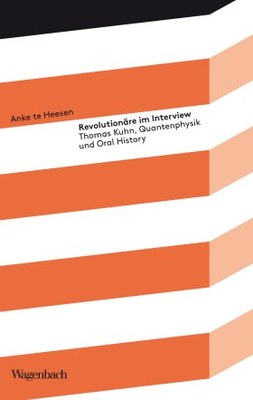
Professor Anke te Heesen is Chair of the History of Science with a focus on the history of education and the organization of knowledge in the 19th and 20th centuries at Humboldt-Universität zu Berlin. She has held this position since 2011 and is also the spokesperson (since 2024) of the DFG Center for Advanced Studies 'Applied Humanities – Politics and Genealogy,' alongside Professor Viktoria Tkaczyk. Previously, she served as Professor for Empirical Cultural Studies at the University of Tübingen (2008-2011) and founding director of the Museum of the University of Tübingen (2006-2008). Her academic career includes research positions at the Max Planck Institute for the History of Science in Berlin (1999-2006), the German Hygiene Museum Dresden (1998-1999), and the Research Center for the European Enlightenment (1996-1997). Professor te Heesen's research spans multiple interconnected fields including the history of humanities, natural history in the early modern period, museum and exhibition history, organization and notation methods of sciences, and the relationship between science and art. She has a particular interest in how knowledge is formed, organized, and presented through various material and institutional practices. Her work often examines the intersection of academic knowledge production with material culture, focusing on objects, collections, and exhibition practices as sites of knowledge formation. Her recent publications reveal a strong focus on the history of interviews as research methodology, the development of exhibition catalogs as scholarly monographs, and the material history of knowledge practices. The analysis of her 15 most recent articles shows consistent engagement with themes of materiality, the organization of knowledge, and the historical development of scholarly practices, particularly in the humanities. Her work frequently bridges historical analysis with contemporary scholarly concerns about knowledge production and dissemination. Spokesperson of the DFG Centre for Advanced Studies 'Applied Humanities: Genealogy and Politics' (since 2024) Senior Fellow, Collegium Helveticum, Zurich (WS 2023/24) Visiting Scholar, Max Planck Institute for History of Science (since 2021) Dibner Research Fellowship, Huntington Library (2020) Senior Research Fellowship, Lichtenberg Kolleg (2020) Professor te Heesen has held significant leadership roles including Ombudsperson of Humboldt University of Berlin (since April 2024) and Head of the Commission for Studies and Teaching at the Institute of History (since April 2024). She serves on multiple advisory boards including the Scientific Advisory Board of the project 'Serious Donations' at the Museum of Natural History in Berlin (since 2020), the DFG Review Board for History (2020-2024), and the Robert K. Merton Center for Science Studies at Humboldt University (since 2019). She is also a member of the editorial boards of several scholarly journals including Reports on the History of Science and History of Science and Humanities. Her work extends to museum practice and curation, with significant contributions to understanding how universities can leverage their collections to create meaningful educational experiences that connect historical context with contemporary research. She has initiated important publication series including 'Sonderdruck' (since 2016) and 'Minima Literatur- und Wissensgeschichte kleiner Formen' (since 2020).
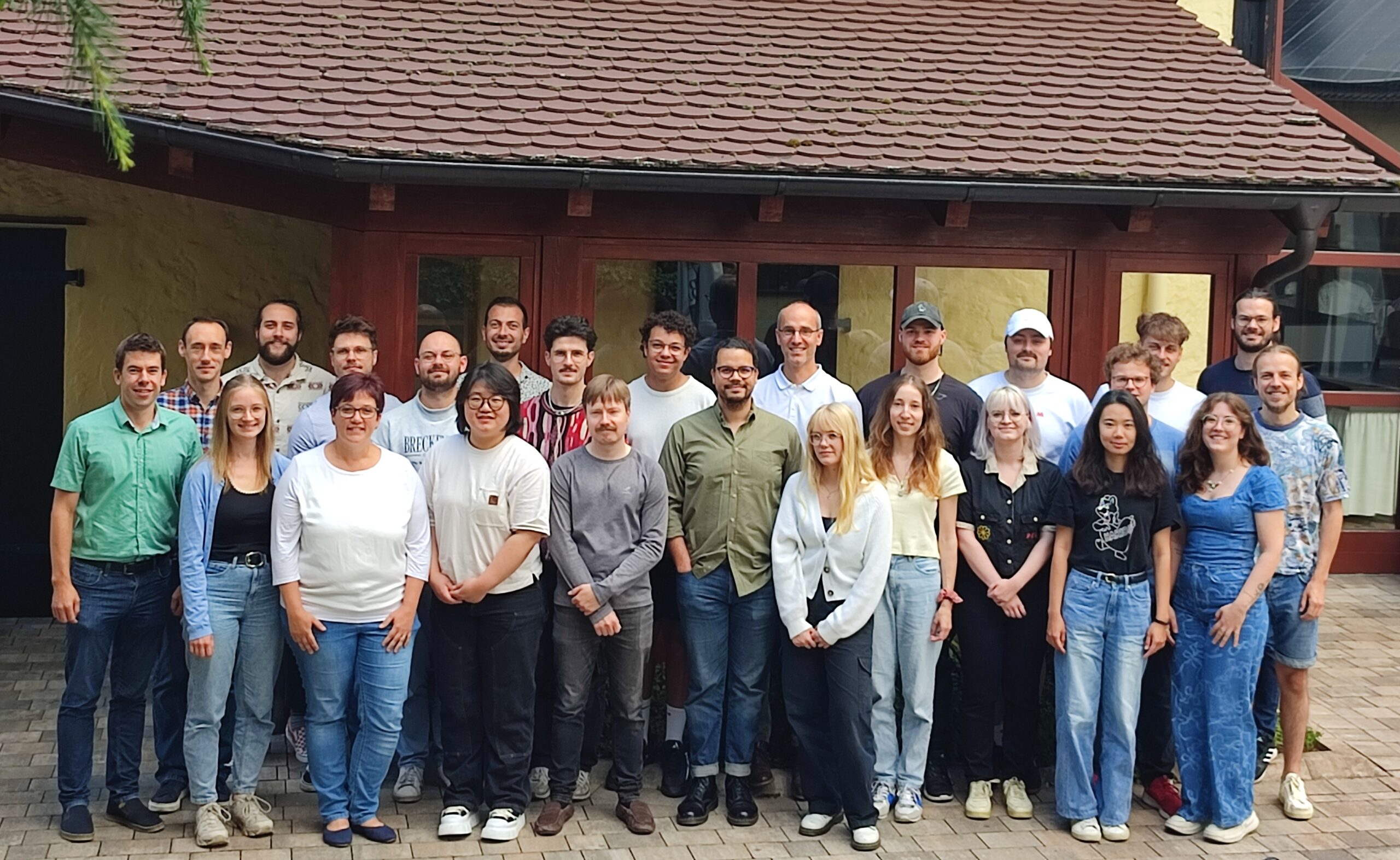
Prof. Julien Bachmann is a faculty member at the Friedrich-Alexander-Universität Erlangen-Nürnberg (FAU) within the Interdisciplinary Center for Nanostructured Films (IZNF) . His research focuses on advanced materials chemistry, particularly in the development of nanostructured films and electrochemical systems for applications like CO 2 electroreduction and energy conversion. Lab locations: Thin films (2.113), electrochemical setups (2.114, 1.100-1.101), instrumental lab (0.117), and collaborative spaces with the Halik group (2.103, 2.106-2.107, 2.110). Key research areas include nanotechnology, electrochemistry, and sustainable energy solutions. His group includes postdocs, doctoral candidates, and technical staff, with recent activities documented at workshops and retreats (e.g., FAU CTFM–DTU Nanolab workshop, 2025 Materials Chemistry retreat). Collaborative efforts highlight interdisciplinary work at FAU’s cutting-edge facilities.
Said Hamdioui serves as a full Professor in the Department of Computer Engineering within the Faculty of Electrical Engineering, Mathematics and Computer Science at Delft University of Technology. His research focuses on cutting-edge hardware architectures for neuromorphic computing and energy-efficient AI acceleration, with particular emphasis on memristor-based systems, emerging memory technologies, and fault-tolerant designs for edge applications. His research interests span Neuromorphic Computing , Memristor-Based Architectures , and Energy-Efficient AI Hardware , addressing critical challenges in hardware security, computation-in-memory, and reliable edge AI deployment. Recent work demonstrates significant advancements in RRAM/FeFET testing methodologies, spiking neural network implementations, and spin wave computing alternatives to traditional CMOS. His publications reveal strong trends toward real-world deployment of brain-inspired hardware with practical constraints like power efficiency, testability, and security. Award highlights include: DATE'20 Best Paper Award DFT'21 Outstanding Student Paper ETS 2021 Best Paper Award LATS 2018 & 2022 Best Paper Awards Professor Hamdioui actively contributes to the research community through editorial roles at IEEE Transactions on VLSI Systems , IEEE Design & Test , and Journal of Electronic Testing from 2017-2018. His leadership in multi-partner projects like CONVOLVE and NEUROKIT2E demonstrates strong industry-academia collaboration for edge AI solutions. Current work shows increasing focus on practical deployment challenges including in-field fault monitoring, security vulnerabilities in neuromorphic systems, and realistic brain simulation frameworks.
Sadaf Sobhani is an Assistant Professor in the Sibley School of Mechanical and Aerospace Engineering at Cornell University. Her research focuses on thermal management and energy conversion with applications in high-efficiency, low-emission energy systems, spacecraft thermal control, and electrochemical reactors for carbon dioxide conversion. Dr. Sobhani's educational background includes a B.S. (2014), M.S. (2015), and Ph.D. (2019) in Mechanical Engineering from Stanford University. During her doctoral studies, she worked as a research associate at the NASA Ames Research Center and later joined the Lawrence Livermore National Laboratory as a postdoctoral researcher. Her research program integrates computational modeling, experimental techniques, and advanced manufacturing to investigate flow, heat transfer, and chemical reactions in porous media. She leverages the connection between micro-scale features and macro-scale transport properties to develop innovative solutions for energy systems. Her work spans multiple disciplines including combustion engineering, electrochemical systems, and thermal management for spacecraft. Dr. Sobhani's publications demonstrate a consistent focus on porous media combustion, heat transfer optimization, and advanced diagnostic techniques. Her recent work has increasingly incorporated additive manufacturing and machine learning approaches to solve complex thermal management challenges, particularly for space applications and carbon dioxide conversion systems. Gallery of Fluid Motion Award, American Physical Society (2018) Accel Innovation Scholarship, Stanford Technology Ventures Program (2017) Graduate Public Service Fellowship, Haas Center for Public Service (2016) Schneider/MAP Sustainable Energy Fellowship, Haas Center for Public Service (2016) Graduate Research Fellowship, National Science Foundation (2015) AIAA Niagara Frontier Section 2025 Young Professional of the Year Award NASA Early Career Faculty Award (2023) NASA Early Stage Innovations Award (2023) Dr. Sobhani leads an active research group and has secured significant funding including a NASA Early Career Faculty Award and a FuzeHub grant with industry partners Lithoz America and Dimensional Energy. She has developed a new spacecraft thermal management course at Cornell and is actively mentoring students in her laboratory research. The Sobhani Lab, located at 182 Grumman Hall, spans approximately 850 sq. ft. and focuses on spacecraft thermal control, combustion research, non-intrusive diagnostic methods, and ceramic additive manufacturing. The lab utilizes advanced facilities including the Cornell NanoScale Science and Technology Facility and the Cornell High Energy Synchrotron Source.
Bing Zhou serves as an Assistant Teaching Professor in the Department of Geography and the John A. Dutton Institute for Teaching and Learning Excellence within the College of Earth & Mineral Sciences at The Pennsylvania State University, focusing on advancing geospatial education and research. His educational background includes: Ph.D. in Geography from Texas A&M University Dr. Zhou pioneers research in geospatial data science and GeoAI, developing advanced algorithms to extract insights from big geospatial data (crowd-sourced data, mobility data, social media) for climate resilience and disaster response. He founded the revolutionary field of Responsible GIScience, which integrates ethical principles, human values, and societal interests into geospatial research and education. His work specifically targets identifying location-based help information from social media to support disaster response in high-risk communities, aiming to build resilient, equitable, and healthy societies through responsible spatial thinking. He teaches core courses including GEOG 589: Emerging Trends in Remote Sensing and GEOG 480: Exploring Imagery and Elevation Data in GIS Applications. Information regarding scientific awards, student advising, grant funding, and laboratory teams is not documented in the provided materials.