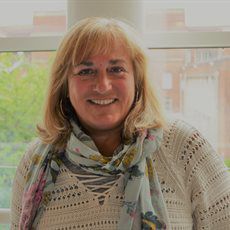
Aselia Urmanbetova is a Teaching Professor in the School of Economics at Georgia Institute of Technology. She serves as the Undergraduate Teaching Coordinator and advisor to GT Econ Club and the Georgia Tech chapter of Omicron Delta Epsilon (ODE). Her roles include managing Graduate Student Instructors, TAs, and 30+ Undergraduate TAs, emphasizing active learning and equitable education. She holds a PhD in Public Policy and multiple advanced degrees from Georgia Tech and Emory University. Her research focuses on open education resources, active learning pedagogies, environmental policy, and transportation economics. She also explores globalization's impact on local industries and higher education policy. Courses taught include Global Economy, Cost-Benefit Analysis, and SAS Coding/Data Analytics. Her publications analyze U.S. manufacturing trends, China's rural labor markets, and pulp/paper industry economics. She actively contributes to campus initiatives on sustainability, diversity, and mental health. Outside academia, she practices yoga and dance, reflecting her commitment to holistic well-being.
Dr. Andrey Molotnikov is an Associate Professor in Additive Manufacturing and Director of the RMIT Centre for Additive Manufacturing at RMIT University's School of Engineering. His expertise spans additive manufacturing, computational materials science, and multi-material 3D printing. He leads a research team of 8 academics, multiple postdocs, and 10 PhD students, focusing on innovations like multi-material printing, high entropy alloys, and in-process quality assurance. Key research themes include architectured materials, computational modeling of solidification processes, and fatigue analysis of additively manufactured components. His work has resulted in over 80 publications (h-index 29) and several patents, with industry collaborations driving technology adoption. Recent publications (2022–2025) emphasize advancements in laser-based processes, defect detection via machine learning, and biomedical applications of additive manufacturing. He actively supervises research projects on topics such as hierarchical lattice structures and hybrid materials, supported by ARC grants and industry partnerships. Dr. Molotnikov’s labs and teams prioritize cross-disciplinary collaboration, aiming to bridge computational modeling with practical manufacturing solutions. His research addresses challenges in material compatibility, process optimization, and structural integrity of AM components.
Professor Alicia El Haj is the Interdisciplinary Professor of Cell Engineering at the School of Chemical Engineering and Director of the Institute of Translational Medicine at the University of Birmingham. She leads the Healthcare Technologies Institute (HTI), an interdisciplinary network advancing technologies for tissue healing and rehabilitation. Her research focuses on bioengineering and regenerative medicine, particularly in developing cell-based therapies using biomechanics, bioreactors, and imaging systems. She holds prestigious fellowships, including from the Royal Academy of Engineering and Royal Society of Biology, and has received awards such as the MRC Suffrage Award (2015). Director of the Institute of Translational Medicine Deputy Director of the MRC UKRMP Regen Med Hub Founder of MICA Biosystems, a spin-out company commercializing pharma screening tools Her work bridges biomedical science, engineering, and physical sciences to translate innovative therapies into clinical practice. Key interests include stem cell control systems, mechanotransduction via magnetic nanoparticles, and osteogenesis. Public engagement includes talks at the Royal Society and Hay Festival. Recent research trends emphasize nanomedicine applications, such as magnetic nanoparticle activation of cellular pathways, and interdisciplinary approaches to cartilage repair, bone regeneration, and organ-on-a-chip systems. Over 200 publications highlight her contributions to tissue engineering and regenerative medicine. Scientific Awards: Royal Society Merit Award (2014), MRC Suffrage Award (2015) Grants: EPSRC, MRC, BBSRC, ERC Advanced Grant Labs and affiliations include the HTI, EPSRC Centre for Innovative Manufacturing in Regenerative Medicine, and the European Council for TERMIS. Her work prioritizes bridging lab discoveries to clinical impact, with a focus on collaborative, interdisciplinary teams.
Neil Maiden is Professor of Digital Creativity at Bayes Business School, City, University of London, where he also serves as Director of the Centre for Creativity enabled by AI (CebAI). He co-founded the Centre for Creativity in Professional Practice and leads interdisciplinary research at the intersection of software engineering, creativity science, and digital innovation. His expertise spans digital creativity support, requirements engineering, and AI-augmented systems for professional domains. PhD in Computer Science, 1992 Tenured at School of Informatics, City, University of London, 1995 Promoted to Professor of Systems Engineering, 2003 Visiting Professor at Ca' Foscari University of Venice, 2017–2019 and 2023–2024 Neil's research focuses on two primary domains: (1) Co-Creative AI for professional work, where he develops computational tools like Sport Sparks and Design Sparks to enhance creative thinking in journalism, design, and sports coaching; and (2) Specifying and designing complex digital systems using advanced requirements engineering methods applied in sectors such as air traffic, healthcare, and defence. His work is grounded in real-world applications, with collaborations involving Rolls-Royce, IBM, NATS, Sunderland AFC, and award-winning newsrooms. The 15 most recent publications reflect a strong trend toward integrating AI and computational models into creativity support and requirements engineering. Topics include automating journalism, enhancing dementia care, and modeling quality of life goals. Keywords span journalism, AI, software engineering, and digital health, with sub-fields such as generative AI, creative problem solving, assistive technology, and co-creative systems, demonstrating a consistent focus on human-centered innovation. Neil has been recognized through numerous invited keynotes and peer awards, though specific award names are not detailed in the text. He has supervised doctoral research and advised on multiple PhD projects, though student names are not listed. His research has been funded by major bodies including UKRI, EPSRC, EU (H2020), Innovate UK, and industry partners, with over £64 million in total project value and direct management of over £10 million at City. Notable grants include CebAI (£3.36M), SCAMPI (£943K), and QUEST (€1.14M). Neil leads the Centre for Creativity enabled by AI (CebAI) and previously co-founded the Centre for Creativity in Professional Practice. His research teams have developed tools such as BrightSparks, INJECT, and Care’N’Share, and he launched the JECT.AI startup to commercialize creativity support in news and content creation.
Arturo Macchi is a Professor in the Department of Chemical and Biological Engineering at the University of Ottawa, Faculty of Engineering. He holds a Ph.D. from the University of British Columbia, and MASc and B.Eng. degrees from the École Polytechnique de Montréal. His research focuses on multiphase reactor engineering, particularly fluidized bed systems, gas hydrates, microreactors, and CO₂ capture technologies. Collaborations include institutions like CanmetEnergy-Ottawa, NRC-ICPCE, and industry partners such as Syncrude Canada Ltd. and Lonza Inc. Key research areas include high-pressure multiphase reactors, CO₂ capture via dual fluidized beds, and microreactor design for pharmaceutical applications. His work integrates computational fluid dynamics (CFD) modeling with experimental validation to address challenges in energy efficiency, process intensification, and sustainable energy storage. Recent projects explore calcium looping processes for thermochemical storage and oxy-fuel combustion technologies. Publications highlight advancements in fluidization dynamics, bubble column hydrodynamics, and scale-up methodologies for industrial hydroprocessors. His contributions span both fundamental and applied research, bridging academic insights with industrial applications in petrochemical, environmental, and pharmaceutical sectors.
Professor Gareth Pierce is a leading academic at the University of Strathclyde, serving as Co-Director of the Centre for Ultrasonic Engineering and Academic Director of the UK Research Centre in Non-Destructive Evaluation (RCNDE). He specializes in robotics, autonomous systems, and non-destructive evaluation (NDT&E), with a focus on structural health monitoring (SHM) and advanced manufacturing. His work integrates robotics, AI, and ultrasonics to address challenges in aerospace, energy, and healthcare sectors. He holds a Spirit Aerosystems/Royal Academy of Engineering Research Chair and leads the £50M SEARCH (Sensor Enabled Automation, Robotics & Control Hub), which spans manufacturing and asset management applications. Education: BSc (Hons) in Pure and Applied Physics from the University of Manchester (1989), PhD in Fibre-Optic Interferometers for Laser-Generated Ultrasound from UMIST (1993). Additional qualifications include City & Guilds certifications in electrical installations and a PGDip in Psychological Wellbeing. Research Priorities Autonomous robotic inspection for manufacturing and asset management Integration of AI/machine learning with NDT&E systems In-process inspection for additive manufacturing and welding Ultrasonic and guided wave technologies for defect detection Key Achievements 2023 Anne Birt Award for NDT innovation Leadership roles in SRPe Robotics & UK HVM Catapult initiatives Over 270 research outputs, 86 projects, and a £50M research portfolio Teaching Course organiser for EE312 (Instrumentation & Microcontrollers) and contributes to advanced systems engineering education. Supervises student projects across engineering disciplines. Labs & Collaborations SEARCH Hub operates from Royal College R2.41 (manufacturing applications) and Technology Innovation Centre TIC 7.14 (asset management). Collaborates with global industry partners like Spirit Aerosystems and Högskolan Väst (Sweden).
Gonzalo Barluenga Badiola is a Professor at the Department of Architecture within the School of Architecture at the University of Alcalá. His research focuses on advanced construction materials, including 3D-printable mortars, self-healing concrete, phase change materials (PCM), and nanomaterials for sustainable architecture. He leads the 'Promarq' research group, specializing in architectural projects and building materials. He holds a Ph.D. from the Universidad Politécnica de Madrid (2002), with a thesis on joint systems in facade construction. His research interests emphasize material innovation for energy efficiency, structural health monitoring, and environmental adaptation. Key areas include bio-based composites, thermal/acoustic mortar properties, and the integration of nanotechnology into construction materials. Recent work explores post-fire self-healing mechanisms, PCM-enhanced mortars, and additive manufacturing applications. His publications (2023–2025) highlight advancements in 3D-printed cement-lime mortars, nano-modified self-compacting concretes, and fiber-reinforced composites. He investigates rheological properties of materials at early stages and their structural performance. No scientific awards are explicitly mentioned, but his work is widely cited in sustainable construction and materials science. Grants and collaborations are inferred from his research output, though specific funding details are not provided here. His lab, 'Promarq,' likely focuses on experimental and numerical analysis of building materials. No student advising records are listed in the provided data.
Funlade Sunmola is a Principal Lecturer in Manufacturing and Industrial Engineering at the University of Hertfordshire , affiliated with the School of Engineering and Computer Science and the Department of Engineering and Technology. He holds a PhD in Computer Science (Artificial Intelligence and Robotics) from the University of Birmingham and has nearly 40 years of professional experience across civil engineering, manufacturing, healthcare, and academia. Education: BEng (Hons) in Civil Engineering, Ahmadu Bello University MSc in Industrial Engineering, University of Ibadan MA in Accounting and Finance, Birmingham City University MPhil in Manufacturing Engineering, University of Birmingham PhD in Computer Science, University of Birmingham Research Interests: Focuses on Applied Artificial Intelligence , Sustainable and Smart Industries , and Industry 4.0 . Key areas include supply chain visibility, blockchain integration, machine learning applications in manufacturing, and virtual engineering. Leads the Duncan Calder Virtual Engineering Lab and oversees MSc Online Engineering Programmes. Grants & Projects: PI of LINK: Digital Direct Connection for Salvage Construction Materials (Circular Economy) PI of N-BICC: Cassava Innovation Deployment Co-I in Solar Cool System (So-Cool) for Smallholder Farmers Labs/Teams: Heads the Duncan Calder Virtual Engineering Lab , focusing on immersive technologies and virtual product design.
Gamze Egin Martin is a Researcher in the MOBI - Electromobility Research Centre at Vrije Universiteit Brussel's Faculty of Engineering, specializing in Electrical Engineering and Power Electronics. She focuses on advanced thermal management systems for wide bandgap (WBG) semiconductors, power electronics for electric vehicles, and high-performance power module design. Her work includes projects like SOCMAAK36 (Smart Single Oil System), NEXTBMS (Next-Gen Battery Management Systems), and HiEfficient (GaN-based power systems). Research Interests: Power Electronics, Thermal Systems, Electric Vehicle Technologies, Semiconductor Reliability Her recent publications address challenges in GaN power modules, SiC MOSFET cooling, and additive manufacturing for automotive inverters. She actively collaborates with industry partners, contributing to EU-funded initiatives like ECSEL. Key Projects: BRGPROV9 (HiEfficient), EUAR140 (NEXTBMS), SOCMAAK36 She has supervised student research, including Aouami's Master's thesis on cooling systems for WBG-based chargers.
Randy Bartels is a Professor in the Department of Biomedical Engineering at the University of Wisconsin-Madison. His laboratory specializes in developing advanced biomedical imaging techniques to study complex biological phenomena and translate these methods into applications that enhance fundamental understanding of biology and disease treatments. Education: PhD, University of Michigan (2002) MS, University of Michigan (1999) BS, Oklahoma State University (1997) Research Interests: Bartels focuses on creating novel coherent nonlinear optical imaging modalities, such as spatial frequency modulation imaging (SPIFI), impulsive stimulated Raman scattering (ISRS), and synthetic aperture holography. His work emphasizes label-free imaging, optical scattering robustness, and computational enhancements for resolution and sensitivity. Scientific Awards: 2021 Institut Fresnel Visiting Professor 2013 American Physical Society Fellow 2011 Optical Society of America Fellow 2006 Presidential Early Career Award in Science and Engineering (PECASE) 2005 Sloan Research Fellow (Physics) 2004 NSF CAREER Award Recent Article Trends: Bartels' publications highlight innovations in label-free imaging, nonlinear microscopy, and computational techniques. Key themes include hyperspectral coherent Raman imaging, quantum-classical fusion for super-resolution, and robustness to optical scattering in biological and industrial applications. His work spans fundamental physics, engineering, and biomedical translation. Laboratory: Bartels leads a research group dedicated to advancing imaging technologies, with a focus on overcoming limitations in resolution, depth, and sensitivity through optical and computational methods.
Mohammad Amjadi Kashani is an Assistant Professor of Mechanical Engineering at Arkansas Tech University's College of STEM Engineering & Computer Sciences. His research focuses on fatigue and fracture mechanics of polymers and composite materials, with expertise in multiaxial fatigue, damage mechanics, and machine learning applications in fatigue analysis. Education: MS (Sharif University of Technology), PhD (University of Memphis) His work addresses fatigue life prediction of injection-molded composites, thermoplastic fatigue behavior under various stresses, and mechanical modeling of HDPE polymers. Recent studies incorporate notch effects, creep-fatigue interactions, and additive manufacturing techniques. Amjadi teaches courses in mechanical design, machine dynamics, finite element analysis, and advanced fatigue topics. He emphasizes hands-on learning and adaptive teaching strategies to accommodate diverse student needs.
Dr. Moe Khaleel is an Adjunct Professor at Georgia Institute of Technology's School of Materials Science and Engineering, while currently serving as the Associate Laboratory Director for National Security Sciences at Oak Ridge National Laboratory (ORNL). His career spans leadership roles in computational sciences, advanced manufacturing, and energy programs across multiple institutions. Oversees multi-disciplinary research at ORNL in nuclear science, cybersecurity, and advanced manufacturing Established key initiatives like the Cybersecurity Manufacturing Innovation Institute Co-founded the Northwest Institute for Advanced Computing at the University of Washington His research focuses combine materials science , energy systems , and computational mechanics , driving innovation in national defense and sustainable technologies. Dr. Khaleel holds a doctorate in structural mechanics and an MBA from the University of Washington. Received fellowships from ASME, ASCE, and AAAS for contributions to mechanical and civil engineering Led energy programs at Qatar Environment and Energy Research Institute Directed PNNL’s Computational Sciences and Mathematics Division for a decade His career demonstrates a unique intersection of academic leadership and applied research management , with significant achievements in facility development and technology integration.
Zia Javanbakht is a Senior Lecturer at the School of Engineering and Built Environment , Griffith University , specializing in Mechanical Engineering and Industrial Design . As a chartered engineer with a PhD in Mechanical Engineering, he contributes to research in Continuum Mechanics , Material Modelling (composites and metamaterials), and Computational Modelling . He is affiliated with the Australian Centre for Precision Health and Technology (PRECISE) and has been involved in projects related to additive manufacturing, auxetic materials, and composite structures. Research Interests include the development of advanced computational models for material behavior, with a focus on auxetic structures , triply periodic minimal surfaces (TPMS) , and additively manufactured composites . His work addresses challenges in residual stress analysis , multiscale modelling , and machine learning applications in material deformation mechanisms. Scientific Awards Fellow (FHEA) of Higher Education Authority, Dublin, Ireland (since 2021) Key Funded Projects span collaborations with Gilmour Space Technologies (CRC-P grant for rocket fuel tanks), Bond University (concrete sensor testing), and internal Griffith University grants for equipment like the Transient Plane Source Thermal Conductivity Analyser . He actively supervises PhD and Master’s students in topics such as polymer-matrix composites , auxetic timber structures , and additive manufacturing failure models . Collaboration Networks include the AuxeticsLab and partnerships with industry leaders like Stoddart Group Pty Ltd and ATL Composites . His teaching portfolio covers Constitutive Material Modelling (7015ENG) and Computational Statics and Dynamics (7252ENG), reflecting his expertise in computational techniques and structural analysis.
Barbara Grochowicz serves as a Lecturer in the Department of Drive Automation and Robotics at Opole University of Technology. She maintains active teaching duties during the 2024/2025 academic year, conducting consultations on Tuesdays (10:10-10:55 and 12:30-13:15) in building P1, room 111/120. Her research centers on robotics and automation systems, with specialized focus on drive mechanisms and control engineering. These fields are critical for advancing industrial automation, robotic mobility systems, and precision motion control applications across manufacturing and engineering sectors. Her work bridges theoretical control principles with practical robotic implementations. Contact details include phone: 77 449 8028 and email: b.grochowicz@po.edu.pl. She participates in standard university teaching activities through the Employee's schedule and PO Knowledge Base profile.
Anna Wilbik is a Professor in Data Fusion and Intelligent Interaction at the Department of Advanced Computing Sciences, Faculty of Science and Engineering, Maastricht University (The Netherlands). Her research bridges data understanding and human-machine synergy in complex systems, focusing on multi-criteria decision making, explainable AI, and data fusion techniques. PhD in Computer Science (with honors), Systems Research Institute, Polish Academy of Science (2010) Postdoctoral Fellow, University of Missouri (2011) Stanford University TOP500 Innovators Program Alumnus Research Pillars: Intelligent human-machine interaction for joint decision making Data fusion methods for heterogeneous data integration Contextualized multi-criteria decision frameworks Fuzzy logic and linguistic summaries for explainability Federated learning systems Article Trends: Recent work focuses on intuitionistic fuzzy sets for knowledge-intensive processes, federated learning with uncertainty handling, and linguistic summarization techniques for interpretable AI. She actively explores explainability , collaborative business models , and driver behavior analysis through attention-based models. Professional Leadership: Vice-chair of IEEE Fuzzy Systems Technical Committee Organizer of IEEE World Congress on Computational Intelligence (2024)