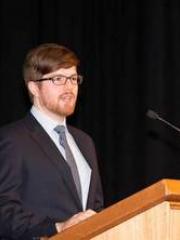
Associate Professor Joe Gattas is affiliated with the University of Queensland's School of Civil Engineering , where he leads the Folded Structures research group. His work bridges origami-inspired engineering , computational building design , and advanced manufacturing , with a focus on lightweight/modular structures and timber engineering . Education: BEng (2009) and PhD (2013) from the University of Queensland and University of Oxford, respectively. Research interests emphasize digital fabrication , hybrid materials , and structural innovation . His recent publications highlight trends in timber-CFRP composites , self-shaping structures , and value chain optimization for sustainable timber use. Scientific awards include the prestigious John Monash Scholarship . He actively supervises PhD and Master’s students in projects related to timber composites , structural optimization , and low-cost housing . Joe contributes to ARC Research Hub initiatives , co-leading Manufacturing Innovation and Value Chain Innovation nodes, and develops open-source tools like TimberTracker to visualize timber supply-demand dynamics.
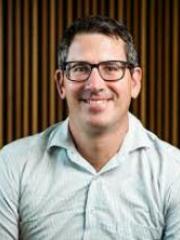
Dr. Michael Heitzmann is an Associate Professor at the School of Mechanical and Mining Engineering, The University of Queensland, and Co-Director of the Centre for Advanced Materials Processing and Manufacturing (AMPAM). He leads a research group focused on high-temperature composites and composite durability, with a strong industry-oriented approach. His research spans composite materials, manufacturing process development, and hybrid systems like FRP-timber and concrete/FRP composites. He has secured over $8.5M in research funding as Chief Investigator, including ARC Linkage and CRC projects. Recent publications highlight advancements in biocomposites, nanocomposite coatings, and tribological performance under extreme conditions. His work addresses fire safety, mechanical properties, and industry applications in aerospace and civil infrastructure. He has graduated 6 PhD and 2 MPhil students and currently supervises 10 PhD candidates. His industry collaborations include Lockheed Martin, Thales, and Cricket Australia, where he developed certification standards for cricket balls. As an inventor of 3 patents, he emphasizes practical impact, such as coal seam gas wear guides used nationwide. His expertise also includes reactive resin transfer molding, filament winding, and automation in composite manufacturing.
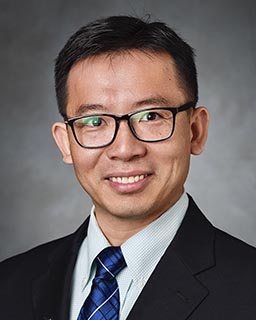
Mathieu Gaborit is an Associate Professor at Le Mans Université , affiliated with the Institute of Acoustics . His work focuses on advanced modeling techniques for acoustics, particularly in Materials Acoustics and Mechanics of Porous Materials . Acoustic characterization of anisotropic materials Development of hybrid numerical methods (FEM-DG) Integration of reinforcement learning in acoustic simulations Wave propagation in complex media Recent publications explore experimental characterization of equivalent fluids, optimization of finite element models using AI, and reinforcement learning for numerical method parameters. His research bridges computational mechanics with machine learning, emphasizing acoustic metamaterials and thin layer modeling. The work also includes studies on 3D-printed porous structures and uncertainty quantification in acoustic screens. He is active in the Acoustics and Mechanics of Porous Materials research team, contributing to projects on additive manufacturing and wave propagation. His collaborations span institutions like Kungliga Tekniska Högskolan (Sweden) and CNRS.
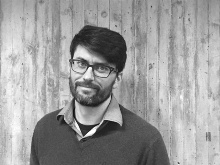
Professor Hakim Al-Samoui is a distinguished faculty member in the Department of Civil Engineering at the Faculty of Engineering, University of Tripoli. He has served at the university since 2003, obtaining the rank of Professor in 2005 and receiving a promotion to job grade 16 in 2022 (effective from January 1, 2017). His academic career spans over three decades with significant contributions to concrete technology research and education. Bachelor's degree from University of Tripoli (1988) Master's degree from University of Gdansk, Poland (1990) PhD from University of Gdansk, Poland (1996) Worked at University of Gdansk (1996-2002) Professor Al-Samoui specializes in concrete technology with particular expertise in two-stage concrete pouring, concrete durability, fabric formwork, concrete recycling, pozzolanic materials, and concrete mix design. His research bridges theoretical advancements with practical applications in construction engineering. He has published over eighty research papers in distinguished journals and presented at numerous international conferences worldwide, establishing himself as a leading expert in specialized concrete technologies. His recent publications demonstrate a clear trajectory toward sustainable construction materials, advanced concrete technologies, and computational approaches to material science. The research spans traditional concrete innovations while increasingly focusing on eco-friendly alternatives, waste material utilization, and cutting-edge technologies like 3D printing and machine learning applications in construction materials. Scientific Recognition: Fellowship from American Concrete Institute (2020) - first Libyan to receive this honor Active member of American Concrete Institute committees since approximately 1999 External evaluator for leading journals including Construction and Building Materials, American Concrete Institute publications, and American Society of Civil Engineering journals Professor Al-Samoui has supervised six Master's theses at University of Tripoli and served as advisor for graduate students from Gdansk Technical University (Poland), Tehran University (Iran), and Dublin Institute of Technology (Ireland). He has also acted as an external examiner for numerous Master's and PhD theses across multiple universities in Libya, Lebanon, Iraq, and India. His extensive international collaborations include research visits to Columbia University, University of South Carolina, Munich University, and Gdansk University of Technology. Through his active participation in international conferences across more than 20 countries and his role on scientific committees, Professor Al-Samoui maintains a robust research network that spans the global concrete technology community. His recent activities in 2023-2024 demonstrate continued research productivity and academic engagement.
Miguel Costas Piñó serves as Associate Professor in the Department of Structural Engineering at the Norwegian University of Science and Technology (NTNU), where he has been faculty since 2017 and was promoted to Associate Professor in 2021. His research bridges computational mechanics with practical engineering applications in structural safety and material behavior. Education PhD in Civil Engineering, University of A Coruña (2016), thesis: "Crashworthiness analysis and design optimization of hybrid impact energy absorbers" (awarded Cum Laude, International Distinctions, and Extraordinary Doctorate Award) Master of Science in Civil Engineering, University of A Coruña (2011), specialization in Structural Engineering Research Focus Dr. Costas's work centers on computational and experimental solid mechanics , with particular expertise in metal plasticity , aluminium structures , and crashworthiness under extreme loading conditions. His laboratory investigates ballistic penetration phenomena and structural optimization for energy-absorbing systems, utilizing advanced finite element methods and physical testing protocols. Current projects integrate machine learning with traditional mechanics to model complex failure modes in multi-material systems. Publication Trends His 2020-2025 publications reveal three dominant trajectories: (1) ballistic resistance of additively manufactured metals for defense applications, (2) crash safety of electric vehicle battery systems, and (3) advanced modeling of mechanical joints. These works consistently combine experimental validation with computational innovation, particularly in neural network applications for large-scale structural simulations. Awards Cum Laude Doctorate International Distinctions (PhD) Extraordinary Doctorate Award Professional Activities Dr. Costas actively collaborates with industry partners on structural safety projects and serves as principal investigator for multiple NTNU research initiatives. His teaching includes graduate courses in materials mechanics, and he maintains dual professional engagement as a classical pianist with Norway's collaborative music community. Current work focuses on AI-driven crash simulation frameworks and next-generation armor materials.
Roger Domingo-Roca is a Research Fellow at the Department of Electronic and Electrical Engineering, University of Strathclyde. His work intersects 3D printing, metamaterials, and piezoelectric devices, contributing to sustainable development goals through advanced material science. Research interests include: Acoustic metamaterial fabrication 3D-printed functional systems Mechanosensitive diagnostics Hydrogel-based biomedical applications Key publications focus on UV-curable magnetic resins for flexible electronics and MHz-range acoustic resonator optimization. Current projects include RESINators (EPSRC-funded acoustic resonator systems) and non-invasive diagnostic toolkits for Ehlers-Danlos syndromes. Scientific achievements: Recipient of the John Gaylor Collaborative Fund (2022) Poster Prize at ScotChem Polymer & Soft Materials Conference (2024) Active in research networks and presentations, including collaborations with Universitat Autonoma de Barcelona (2023-2025) and contributions to healthcare-focused 3D printing technologies.
Hui Yang is a Professor of Industrial and Manufacturing Engineering and Biomedical Engineering at Pennsylvania State University , holding the Gary and Sheila Bello Chair Professor title. He is affiliated with multiple institutions including the Penn State Cancer Institute , Clinical and Translational Science Institute , and Institute for Computational and Data Sciences . Currently serving as PI and Site Director of the NSF Center for Health Organization Transformation (CHOT) , his career includes leadership roles in professional societies such as IISE Data Analytics and Information Systems Society (President 2017-2018) and INFORMS Quality, Statistics and Reliability (QSR) society (President 2015-2016). As Associate Editor for journals like IISE Transactions , IEEE JBHI , and IEEE Transactions on Automation Science , he maintains strong editorial influence. His research integrates nonlinear stochastic dynamics with sensor-based system informatics to advance both smart manufacturing and healthcare engineering . Recent work explores digital twin technologies , blockchain applications , and AI-driven disease modeling for conditions like Alzheimer's and cardiovascular disease . Key scientific contributions include developing character-level linguistic biomarkers for early dementia detection, self-organizing network representations of cardiac systems, and privacy-preserving neural networks for Industry 4.0 environments. His research group has received significant external funding from NSF , DOE , and NIST to address challenges in heterogeneous manufacturing networks , adaptive failure prognosis , and spatiotemporal optimization . Fulbright Award in Science, Technology and Innovation (2022) IISE Fellow (2021) NSF CAREER Award (2015) Through his Virtual Learning Factory and SCOUT spatiotemporal framework , Yang bridges manufacturing analytics with health informatics , creating cross-domain methodologies for system diagnostics/prognostics , process optimization , and smart health monitoring . His Cross Recurrence Analysis Toolbox provides open-source methods for nonlinear time series analysis.
Dr. Laurens Mandemaker is an Assistant Professor at Utrecht University's Faculty of Veterinary Medicine, Department of Population Health Sciences, and affiliated with the Institute for Risk Assessment Sciences (IRAS). His research focuses on microplastics, nanotechnology, and catalysis, utilizing advanced techniques like atomic force microscopy and spectroscopy . Key Projects: MOMENTUM (Microplastics & Human Health), AURORA (Early-Life Health Impacts), NWO-XS (Nanoplastics in Babies), SPARK (Dialysis-Related Plastic Detection) His work bridges environmental toxicology and materials science , with recent publications on nanoplastic detection, bioplastic films, and MOF-based catalysts. He contributes to courses like Chemistry and Sustainability and collaborates on interdisciplinary exposomics studies.
Jürgen Eckert is a Professor and Director at the Erich Schmid Institute of Materials Science of the OAW and holds the Chair of Materials Physics at the University of Leoben . He is a Corresponding Member of the Division of Mathematics and Natural Sciences in Austria since 2017. His research spans Materials Science , Condensed Matter Physics , and Metallurgy , focusing on metallic glasses , high-entropy alloys , microstructure engineering , and additive manufacturing . He has pioneered work on crystallization kinetics , phase transformations , and mechanical property optimization . Recent publications (2024-2025) highlight advances in 3D-printed titanium alloys , nitrogen-stabilized nanocrystalline alloys , and multi-stage heterostructures , reflecting his interdisciplinary approach combining experimental physics , computational modeling , and materials engineering . THERMEC 2023 Distinguished Award Gottfried Wilhelm Leibniz-Preis (2009) ERC-Advanced Grant (2013) DGM-Preis der Deutschen Gesellschaft für Materialkunde (2014) Dr. honoris causa, Slovak Technical University (2018) He leads the ERC Project INTELHYB and collaborates with institutions in India , Germany , and Europe , advancing heterogeneous materials design and sustainable metallurgical solutions .
Marcin Janczarek is a researcher at the Poznań University of Technology, Faculty of Chemical Technology, Institute of Chemical Technology and Engineering. He holds a DSc in Chemical Sciences (2019) and a PhD in Chemical Technology (2005) from Gdańsk University of Technology. Research Interests: His work focuses on heterogeneous photocatalysis , semiconductor nanomaterials , and advanced oxidation processes for water and air purification. He investigates photocatalytic reactors and TiO2-based materials with applications in environmental engineering and construction industries. Recent Publications: His recent studies include TiO2-polymer composites for water treatment, visible-light photocatalysts for pollutant degradation, and antimicrobial cement applications. Collaborations span Hokkaido University, Gdańsk University of Technology, and Hubei University of Technology. Honors: Guest editor for MDPI Catalysts special issues (2017-2021) Editorial board member of IET Micro & Nano Letters Teaching: Conducts classes on process equipment and chemical engineering materials. Utilizes AutoCAD for engineering graphics.
Oliver A. Bucklin is a Researcher and doctoral candidate at the Institute for Computational Design and Construction (ICD) at the University of Stuttgart. His work focuses on sustainable building practices, particularly the development of energy-efficient solid timber construction systems using computational design and advanced fabrication techniques. Master of Architecture (M.Arch) – Harvard Graduate School of Design Bachelor of Fine Arts in Ceramics – University of Washington His research explores the integration of thermodynamic principles, robotics, and computational models to optimize timber building envelopes. Additional interests include embedded electronics, sensing networks, and kinematic control algorithms. He contributes to teaching in computational design and robotic fabrication within the ITECH Master’s Program at the University of Stuttgart. Oliver’s projects include the IBA Timber Prototype House and the ITECH Research Demonstrator , emphasizing material efficiency and recyclability. He is part of the Performative Wood research group at ICD, advancing innovations in solid timber systems.
Dr. Chiara Pischetola is a researcher at the Paul Scherrer Institute (PSI), specializing in catalysis and sustainable chemistry. She is affiliated with the Laboratory for Catalysis and Sustainable Chemistry, focusing on advanced catalytic processes for environmental and energy applications. Her research spans CO2 hydrogenation, methanol production, selective hydrogenation of alkynols, and tandem catalytic reactions. Key methodologies include gas-phase processing, bimetallic catalysts, and hydrogen transfer systems. Recent work explores LDH memory effects, perovskite-supported copper catalysts, and biomass-derived feedstocks. Notable findings include the role of alumina in Ag/ZnO catalysts, mechanistic insights into benzylideneacetophenone synthesis, and innovations in hydrogenation without external H2 supply. Publications emphasize eco-friendly processes using Au-Cu, Pd-Ni, and Fe-ZSM-5 catalysts. Her work addresses carbon capture utilization, sustainable chemical synthesis, and pollution control through heterogeneous catalysis. Current projects focus on optimizing catalyst structures and reaction conditions for industrial scalability.
Prof. Dr. Matti Schneider serves as Professor of Engineering Mathematics and Head of the Institute of Engineering Mathematics within the Faculty of Civil Engineering at the University of Duisburg-Essen. His academic leadership spans computational mechanics research and teaching core mathematics courses for civil engineering students. His educational background includes: Diploma in Applied Mathematics with distinction from TU Bergakademie Freiberg (2009) PhD (Dr. rer. nat.) from Leipzig University (2013) on "The Leray-Serre spectral sequence in Morse homology on Hilbert manifolds and in Floer homology on cotangent bundles" Professor Schneider's research focuses on advancing computational methods for solid mechanics through FFT-based homogenization techniques, microstructure modeling, and multi-scale material analysis. His work bridges applied mathematics and engineering to solve complex problems in heterogeneous material systems, with particular emphasis on numerical stability, boundary condition implementation, and efficient solver development for industrial applications. His methodologies enable accurate prediction of material behavior across scales from microscopic structures to macroscopic components. Analysis of his 15 most recent publications reveals dominant trends in FFT-based computational homogenization, with significant contributions to thermal problems, porous media, and fiber-reinforced composites. He pioneers the integration of machine learning (particularly deep material networks) with traditional numerical methods to model complex material behaviors like shear-thinning suspensions and 3D-printed materials. His work consistently addresses computational challenges in boundary condition implementation and convergence for stochastic microstructures. Professor Schneider leads the Institute of Engineering Mathematics and directs research within the ERC-funded BeyondRVE project, which focuses on extending representative volume element concepts for advanced material modeling. His collaborative network includes major German research institutions like Fraunhofer ITWM and international partners in materials science.
Professor Simon Ringer is the Pro-Vice-Chancellor (Research Infrastructure) at The University of Sydney and a Professor of Materials Science and Engineering in the School of Aerospace, Mechanical & Mechatronic Engineering. He is also an academic member of the Australian Centre for Microscopy & Microanalysis and a member of The Net Zero Institute. With an international career spanning Sweden, Japan, the USA, and Australia, Professor Ringer has established himself as a leading researcher in atomic-scale materials design. His research focuses on how atomic clusters create materials with remarkable properties for applications in semiconductors, photovoltaics, catalysis, and lightweight metal alloys. Professor Ringer's work particularly addresses 'property conflicts' in materials engineering, such as balancing strength and ductility or superconductivity and magnetism. His research group has achieved significant breakthroughs in atomic-level characterization, advanced steels development, computer memory technologies, and nanoelectronics, with publications in high-impact journals including Nature Materials, Physical Review Letters, and Advanced Materials. Professor Ringer leads the University's Core Research Facilities program, overseeing strategic planning and implementation of high-end research infrastructure initiatives. His leadership extends to national research infrastructure strategy engagement, positioning the University of Sydney as a leader in Australia's research facilities landscape. Current research projects in his group focus on atomic-scale materials design, functionalized photovoltaic surfaces, additive manufacturing, and new frontiers in microscopy techniques. Professor Ringer has published over 100 papers, authored two significant books ( Atomic-Scale Analytical Tomography in 2022 and Atom Probe Microscopy in 2012), and holds patents in steel and nanomaterial design. His research has practical implications for reducing CO2 emissions through lightweighting technologies and advancing computer memory capacity. He currently supervises several research students including Kirk CHEN, Jeffrey LU, and Samia RAZZAQ, and actively recruits for Honours, Master's, PhD, and postdoctoral positions. Former team members have gone on to work at prestigious institutions worldwide including Texas A&M University, University of Oxford, Max Planck Institute, and various multinational corporations. Professor Ringer's research team utilizes advanced tools including atom probe microscopy, transmission electron microscopy, density functional theory, and computational modeling techniques to gain insights into materials behavior at the atomic scale. His qualifications include BAppSc from Uni SA, PhD from UNSW, and numerous professional designations including CMatP, FIEAust CPEng APEC Engineer IntPE(Aus), FRSN, and FTSE.
Nariman Yousefi serves as an Assistant Professor in the Department of Chemical Engineering within the Faculty of Engineering and Architectural Science at Toronto Metropolitan University. His research focuses on innovative nanomaterial solutions for global water challenges, particularly through the development of graphene-based filtration technologies. Education: PhD, McGill University (2019) MEng, McGill University (2015) BSc, Sharif University of Technology (2009) Yousefi's research centers on graphene and 2D nanomaterials for environmental applications, with emphasis on self-assembled 3D macrostructures that remove contaminants including heavy metals, pharmaceuticals, microplastics, and pathogens. His work bridges environmental nanotechnology and advanced water treatment, creating eco-friendly solutions scalable from household jugs to industrial systems. The Yousefi Lab develops bio-inspired nanomaterials that mimic natural processes for superior contaminant adsorption and degradation. His recent publications demonstrate a clear trajectory toward multifunctional, sustainable water treatment systems, with increasing focus on enzymatic degradation mechanisms, 3D-printed platforms, and point-of-use applications for underserved communities. This research addresses critical gaps in removing emerging contaminants that conventional technologies cannot filter. Scientific Awards: Banting Postdoctoral Fellowship, NSERC C. Ellen Gonter Environmental Chemistry Award, American Chemical Society Relève étoile Louis-Berlinguet Best Researcher Award, FQRNT Eugenie Ulmer-Lamothe Chemical Engineering Award and Lars and Alberta Firing Graduate Fellowship, McGill University As principal investigator of the Yousefi Lab for Self-assembled Nanomaterials, he mentors graduate students while collaborating with institutions like the American Chemical Society. His work has attracted significant recognition including the prestigious Banting Fellowship, indicating strong potential for continued impact in environmental nanotechnology and sustainable engineering solutions. The lab maintains active industry and cross-institutional partnerships, with research directly addressing United Nations Sustainable Development Goal 6 (Clean Water and Sanitation) through practical, scalable technologies applicable from Canadian northern communities to developing nations.