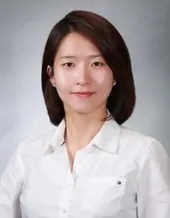
Jihyun Lee is an Assistant Professor in the Department of Mechanical and Manufacturing Engineering at the Schulich School of Engineering, University of Calgary. She was awarded the Anna Boyksen Fellowship by the Technical University of Munich Institute for Advanced Study (TUM-IAS) in 2021, hosted by Prof. Michael Zäh. Doctorate in Mechanical Engineering from University of Michigan-Ann Arbor (2016) Prior post at Korea Institute of Machinery and Materials (2016-2019) Her research focuses on mechatronics, robotics, manufacturing automation, and control systems , with applications in machine tools, additive manufacturing, and precision measurement. She integrates artificial intelligence and optimization to enhance industrial automation. Recent publications highlight work on vibration control , sensor fusion , and flexible manufacturing systems . Her team explores dynamic modeling , nanocomposite sensors , and human-in-the-loop robotics for industrial and marine applications. 2020 Remote Teaching Award, Schulich Engineering 2020 Early Achievement Award, Association of Korean-Canadian Scientists and Engineers 2018 Best Achievement Award, KIMM She supervises doctoral and master’s students at the University of Calgary, emphasizing hands-on experience and MATLAB/Python simulation skills in her lab. Her work bridges quantum logic and industrial robotics through interdisciplinary collaborations.
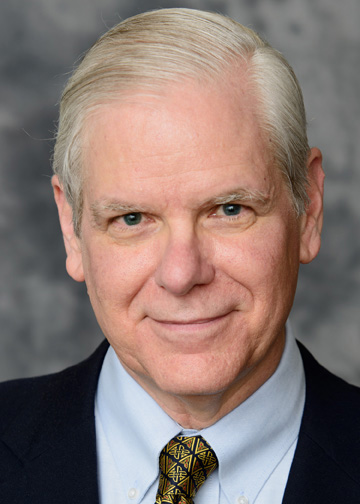
Dr. G.K. Knopf is a Professor in the Department of Mechanical & Materials Engineering at Western University, Canada. He holds a Ph.D. (1991), M.Sc. (1987), and B.E. (1984) from the University of Saskatchewan. His work bridges product design, advanced manufacturing, and bio-inspired technologies. Research Focus: Dr. Knopf’s research spans 3D shape reconstruction , laser microfabrication , micro-optics , and bioelectronic imaging arrays . Recent projects emphasize light-driven actuators , flexible electronics , and graphene-based inks for printing circuits on unconventional substrates like silk and paper. Publications: Over 150 peer-reviewed works, including two edited CRC Press volumes ( Smart Biosensor Technology , Optical Nano and Micro Actuator Technology ). Key contributions involve non-lithographic fabrication , bacteriorhodopsin photodetectors , and self-organizing feature maps for data visualization. Awards/Patents: Co-inventor of two U.S. patents (6,542,249 for 3D surface measurement; 7,573,024 for bioelectronic imaging arrays). Teaching: Leads graduate courses in Medical Device Design and Optomechatronic Systems , as well as undergraduate Mechatronics and Medical Device Development courses.
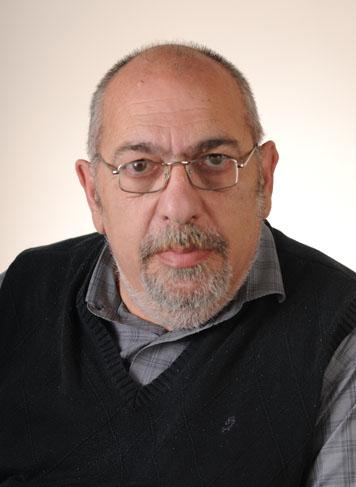
James R. Fienup is the Robert E. Hopkins Professor of Optics at the University of Rochester's Institute of Optics, with additional appointments as Distinguished Scientist at the Laboratory for Laser Energetics, Professor at the Center for Visual Science, Professor of Electrical and Computer Engineering, and Affiliated Faculty at the Goergen Institute for Data Science and Artificial Intelligence. His office is located at Wilmot 410, 275 Hutchison Rd., Rochester, NY. Education PhD in Applied Physics from Stanford University (1975) MS in Applied Physics from Stanford University (1972) BA in Physics & Mathematics (magna cum laude) from Holy Cross College (1970) Research Focus Professor Fienup's research specializes in imaging science , with emphasis on phase retrieval algorithms, unconventional imaging techniques, and wavefront sensing. His work spans computational methods for image reconstruction, sparse-aperture systems, and synthetic-aperture imaging. Recent innovations include applying machine learning to wavefront control and developing advanced digital holography techniques for 3D imaging through atmospheric turbulence. Publication Trends His recent articles (2018-2024) demonstrate a strong focus on computational imaging techniques, particularly phase retrieval algorithms applied to optical metrology and wavefront correction. Key themes include multi-plane digital holography, coronagraphic wavefront control for astronomical applications, machine learning-enhanced sensing, and novel approaches for segmented-aperture systems. His work consistently bridges theoretical optics with practical instrumentation challenges. Awards and Honors Lifetime Achievement Award, Hajim School of Engineering (2019) Emmett N. Leith Medal, Optical Society of America (2013) National Academy of Engineering Member (2012) Distinguished Visiting Scientist, JPL (2009) Fellow of OSA and SPIE International Prize in Optics (1983) Rudolf Kingslake Medal (1979) NSF Graduate Fellow (1970-1972) Professional Activities Professor Fienup has served as Editor-in-Chief of the Journal of the Optical Society of America A (1998-2003) and held editorial roles at Applied Optics and Optics Letters . He consults for NASA (James Webb Space Telescope, Hubble), national laboratories, and aerospace companies, and holds five patents in optical systems design.
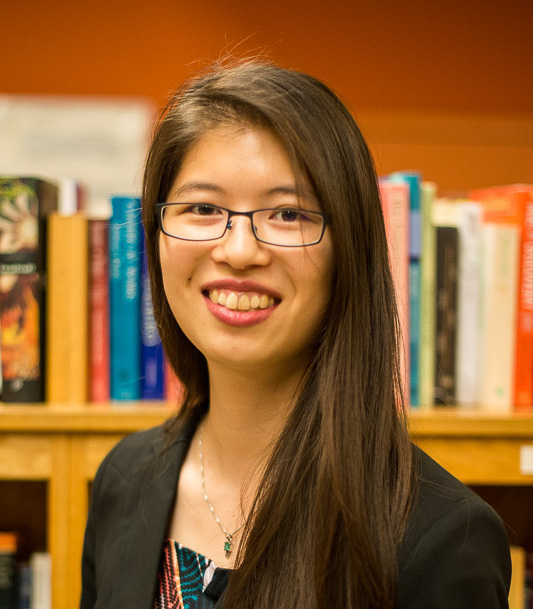
Sujan Pal is a Hydroclimate Scientist at Argonne National Laboratory , focusing on hydrometeorology, hydroclimatology, and land-atmosphere interactions through numerical modeling and field experiments. He serves as an associate mentor for multiple observational systems in the Atmospheric Radiation Measurement (ARM) user facility and monitors environmental data at Argonne Testbed for Multiscale Observational Science (ATMOS). Ph.D., University of Illinois at Urbana-Champaign (2017-2021) M.S., The University of Arizona (2015-2017) B.E., Jadavpur University (2010-2014) His research spans hydrometeorological modeling, urban climate impacts, and machine learning applications in environmental science. He leads high-resolution flood simulations and contributes to the DOE-funded CROCUS project studying urban climate change in Chicago. Recent publications highlight his work on convection-permitting climate modeling, extreme rainfall dynamics, and flood risk assessment across South America, the U.S. Northeast, and Argentina. His methodologies integrate field data with advanced computational tools. ARM Service Award 2025 Argonne Commercialization Excellence Award 2024 Argonne IMPACT Awards (2024, 2023, 2022) He actively collaborates with national user facilities and contributes to spatiotemporal modeling of water-related hazards as an Associate Editor for Frontiers in Water .
Arkadi Nemirovski is the John P. Hunter, Jr. Chair and Professor at the H. Milton Stewart School of Industrial and Systems Engineering, Georgia Tech. He holds a Ph.D. in Mathematics (1974) from Moscow State University, a Doctor of Sciences in Mathematics (1990) from the USSR Supreme Attestation Board, and an honorary Doctor of Mathematics from the University of Waterloo (2009). Ph.D. in Mathematics, Moscow State University (1974) Doctor of Sciences in Mathematics, USSR Supreme Attestation Board (1990) Doctor of Mathematics (Honoris Causa), University of Waterloo (2009) His research focuses on Optimization Theory and Algorithms , with emphasis on complexity analysis, efficient methods for nonlinear convex programs, robust optimization, optimization under uncertainty, and applications in engineering and nonparametric statistics. He has pioneered advancements in interior-point methods, semidefinite programming, and stochastic approximation, shaping modern convex optimization. His article trends highlight a trajectory from foundational interior-point algorithms (1990s) to robust optimization (2000s) and recent works on first-order methods, polyhedral estimates, and applications in machine learning, signal processing, and tomography. Key subfields include matrix norms , large-scale optimization , and stochastic uncertainty handling . Scientific awards include: 1982 Fulkerson Prize (joint with L. Khachiyan and D. Yudin) 1991 Dantzig Prize (joint with M. Grotschel) 2003 John von Neumann Theory Prize (joint with M. Todd) 2017 Member, National Academy of Engineering 2018 Fellow, American Academy of Arts and Sciences 2020 Norbert Wiener Prize (joint with M. Berger) He has supervised students like Dmitry Gabelev (polynomial-time cutting plane algorithms), Daureen Steinberg (matrix norms in robust optimization), and Eitan Rubinstein (SVMs via advanced optimization), with their works later formalized in academic journals.
Valerie Viet Triem Tong is a Research Professor at the Paris Institute of Electrical and Electronic Engineering, School of Electrical and Electronic Engineering. She has established herself as a leading researcher in cybersecurity with a particular focus on information flow control systems, Android security, and malware analysis. Her work spans both theoretical foundations and practical security tools development. Her research interests center on Information Flow Control , where she has developed frameworks for monitoring and enforcing security policies at both operating system and application levels. She has made significant contributions to Android Security , creating tools for detecting malicious behavior in mobile applications and addressing privacy concerns in smartphone environments. Her work in Malware Analysis includes developing advanced techniques for tracking and visualizing malware behavior, with emphasis on evasive Windows malware and Android malware in the wild. She also investigates Peer-to-Peer Network Security , focusing on Sybil attack resistance and distributed identity management. Analysis of her publication record reveals a consistent trajectory from foundational work in information flow theory to increasingly applied security research. Her recent work shows a strong emphasis on practical security tools (DaViz, GUI-Mimic, BAGUETTE), security evaluation methodologies (Digital twin, CERBERE), and addressing contemporary challenges in malware analysis (debiasing datasets, handling obfuscated applications). A notable trend is her integration of visualization techniques with security analysis to make complex security data accessible to both experts and machine learning systems. As an advisor, she has mentored numerous researchers who have become first authors on significant publications, including Radoniaina Andriatsimandefitra, Tomás Concepcion Miranda, and Cedric Herzog. Her research has been supported by multiple grants focused on cybersecurity infrastructure, though specific grant details are not provided in the available information. Dr. Tong is actively involved with the CIDre security research group in Rennes, contributing to collaborative projects that bridge theoretical security models with practical implementation challenges. Her work on information flow monitoring has evolved from basic research to applied systems that address real-world security concerns across multiple platforms.
Dr. Gabriele Schweikert is a Senior Lecturer and Principal Investigator with a joint appointment between the Division of Computational Biology in the School of Life Sciences at University of Dundee and Cyber Valley in Tuebingen. Her research focuses on applying machine learning techniques to understand epigenetic mechanisms and molecular processes in living cells. Dr. Schweikert completed her PhD at the Max Planck Institute Tuebingen working with Schoelkopf, Weigel, and Raetsch labs on machine learning for computational gene finding. She subsequently joined Adrian Bird's lab at the Wellcome Trust Center for Cell Biology in Edinburgh, a pioneer in epigenomic research. Prior to her current position, she held prestigious Marie Curie and EMBO Fellowships at the School of Informatics, University of Edinburgh. Her research interests center on using machine learning to decode epigenetic mechanisms that determine cellular identity and function. She investigates how cells with identical DNA can differentiate into specialized cell types through epigenetic regulation, with particular focus on applications in understanding tumorigenesis where epigenetic machinery malfunctions. Her work combines high-throughput epigenomic data with advanced computational approaches to address complex biological questions. Analysis of her recent publications reveals a strong focus on epigenomic data analysis, machine learning applications in biology, and computational approaches to understanding gene regulation. Her work spans from fundamental epigenetic mechanisms to practical applications in disease research, with growing emphasis on individual-specific epigenomic analysis and explainable AI in biomedical contexts. UKRI Future Leaders Fellowship (2020, £1.6 million) Marie Curie Fellowship EMBO Fellowship Dr. Schweikert actively supervises PhD students and has received significant research funding for projects including 'Machine Learning Methods to Re-Annotate Histone Modifications,' 'Unlocking The Alternative Splicing Code,' and 'GPU-Based Machine Learning System For Fundamental Biological Research.' She is involved in multiple interdisciplinary collaborations and frequently presents her work at major conferences including ELLIS Health program retreat, Epigenetics Meetings, and RECOMB workshops. She maintains active research laboratories in both Dundee and Tuebingen, fostering international collaboration between computational biologists, machine learning experts, and experimental biologists to advance our understanding of epigenetic regulation in health and disease.
Cathy Wu is an Associate Professor at MIT, with affiliations in the Laboratory for Information and Decision Systems (LIDS), Department of Civil and Environmental Engineering (CEE), and Institute for Data, Systems, and Society (IDSS). Her research group focuses on integrating machine learning with model-based optimization to solve complex problems in transportation systems and cyber-physical systems. Academic Leadership: Class of 1954 Career Development Associate Professor (MIT) Research Grants: NSF CAREER Award, Amazon Robotics, Mathworks, MIT Mobility Initiative, US DOT, Microsoft Research, Cintra, Symbotic Research Interests : Wu's work bridges AI and engineering challenges in transportation. Key areas include: Hybrid ML/Model-based Optimization (large neighborhood search, branch-and-cut) Sustainable Mobility (Project Greenwave, eco-driving) Multi-Agent Coordination (warehouse automation, cooperative driving) Cyber-Professional Systems (generalization in RL, transfer learning) Recent work demonstrates significant advances in eco-driving (11-22% emissions reduction), large-scale multi-agent path finding (1000+ agents), and foundational RL methods for traffic control. Her group has produced 15+ major publications since 2015, with notable media coverage in Science, Wired, and NewScientist. Selected Scientific Awards NSF CAREER Award (2023) Ole Madsen Mentoring Award (2025) IEEE ITSS WiE/YP Fellowship (2024) Harold L. Hazen Teaching Award (2022) Her lab has advised 12+ graduate students and postdocs, including: Vindula Jayawardana (PhD '24, now at Anthropic) Sirui Li (PhD '25, now at Microsoft Research) Yining Ma (Postdoc, active researcher) Zhongxia Yan (PhD '24, now at Anthropic)
Prof. Dan Jiao is the Synopsys Professor of Electrical and Computer Engineering at Purdue University's Elmore Family School. She leads the Rapid-Heterogeneous Integration (Rapid-HI) Design Institute and serves as Editor-in-Chief of the IEEE Journal on Multiscale and Multiphysics Computational Techniques. Her research focuses on computational electromagnetics, multiphysics modeling, and AI-driven design automation for advanced integrated circuits and quantum systems. She has held academic positions since 2005, progressing from Assistant to Full Professor, and has extensive industry experience at Intel Corporation (2001–2005). Education: PhD in Electrical Engineering, University of Illinois at Urbana-Champaign (2001) Senior Staff Engineer at Intel Corporation (2001–2005) Research Interests: Fast numerical methods for large-scale electromagnetic analysis AI/ML integration in design automation (EDA/MDA) Quantum circuits and spin qubit systems Heterogeneous integration and advanced packaging Multiphysics co-simulation for nano-scale devices Signal/power integrity in high-speed systems Key Projects: Leads the NSTC AIDRFIC program (first NSTC R&D Jump Start project), the DARPA NGMM Rapid-HI Design Institute, and the GENIE-RFIC generative design tool initiative. Also directs the Consortium for Electromagnetic Science and Technology. Awards & Honors: 2022 ACES Computational Electromagnetics Award IEEE Fellow (2016) Intel Outstanding Researcher Award (2019) MTT-S Distinguished Microwave Lecturer (2020–2023) 2013 Schelkunoff Prize Paper Award Advising & Grants: Advised over 30 PhD/master's students and led projects funded by NSF, DARPA, Intel, SRC, and industry partnerships. Key grants include NSF CAREER (2008), ONR Young Investigator (2006), and multiple industry-sponsored initiatives. Labs & Teams: Rapid-HI Design Institute (DARPA NGMM) Quantum device co-design group Multiphysics modeling team
Angela Di Fulvio is an Associate Professor and Donald Biggar Willett Faculty Scholar at the University of Illinois at Urbana-Champaign, holding joint appointments in the Department of Nuclear, Plasma, and Radiological Engineering and the Center for Digital Agriculture at NCSA. She leads the Nuclear Measurement Laboratory (NML), focusing on radiation detection technologies for nonproliferation, medical physics, and nuclear security. Her academic journey includes a Ph.D. in Nuclear Engineering and Industrial Safety from the University of Pisa (2012), preceded by M.Sc. and B.Sc. degrees in Bioengineering. Her research emphasizes neutron detection instrumentation, radiation protection in therapy, and safeguards applications. Key areas include next-generation thermal neutron detectors, boron neutron capture therapy dosimetry, and spent nuclear fuel imaging. She has pioneered work on pulse shape discrimination using commercial ASICs and developed algorithms for neutron-gamma discrimination in harsh environments. Di Fulvio’s 15+ peer-reviewed articles span advanced detection systems, Monte Carlo modeling, and machine learning for radiation imaging. Notable contributions include a physics-based forward model for spent fuel imaging and variational autoencoder-based pulse discrimination. Her work has been recognized with the Dean’s Award for Excellence in Research. Professional roles include Associate Editor of Radiation Measurements and editorial board member of Nature Scientific Reports . She chairs APS’s Instrumentation and Measurement Science group and ANS’s Nuclear Nonproliferation Policy Division. Recent courses taught include NPRE 451-452 labs, Nuclear Safeguards, and Student Research Seminars.
Yuguo Chen is a Professor in the Department of Statistics at the University of Illinois at Urbana-Champaign (UIUC), serving as Interim Department Chair and Director of the Illinois Statistics Office. He holds affiliations with the Department of Computer Science, Information Trust Institute, Coordinated Science Lab, and Illinois Informatics Institute. Chen earned his PhD in Statistics from Stanford University (2001) and a B.S. in Mathematics from the University of Science and Technology of China (1997). His research focuses on Monte Carlo methods, network data analysis, state space models, bioinformatics, and Bayesian inference. Key interests include scalable network estimation, community detection, and applications in public health, education, and computational biology. Recent work highlights include advancements in dynamic network modeling, Bayesian latent class models for cognitive diagnosis, and statistical methods for analyzing multi-layer networks. His contributions have been recognized through awards such as the American Statistical Association Fellowship (2018) and the Charles Edison Lectureship (2018). Editorial Roles: Associate Editor of Journal of the American Statistical Association , Journal of Computational and Graphical Statistics , and Journal of Algebraic Statistics . Grants & Consulting: Directs the Illinois Statistics Office, providing interdisciplinary research support. Active in collaborative projects involving healthcare, education, and computational infrastructure. Labs & Teams: Leads initiatives at the Coordinated Science Lab and Information Trust Institute, integrating statistical methods with cybersecurity and data-driven decision-making.
Aysegul Gunduz, Ph.D., is a Professor and Fixel Brain Mapping Professor at the University of Florida's Herbert Wertheim College of Engineering, Department of Biomedical Engineering. She leads the Brain Mapping Laboratory, focusing on neural networks and clinical translation for neurological disorders. Her work integrates electrophysiology, bioimaging, and neuromodulation to develop diagnostic and therapeutic systems for conditions like Parkinson’s disease, epilepsy, movement disorders, and stroke. Education: B.S., Electrical Engineering, Middle East Technical University (2001) M.S., Electrical Engineering, North Carolina State University (2003) Ph.D., Electrical Engineering, University of Florida (2008) Post-doctoral Fellowship in Neurology, Albany Medical College (2011) Research interests include human brain mapping, closed-loop deep brain stimulation (DBS), neuromodulation strategies for movement disorders, and wearable sensor technologies for neurological monitoring. Her lab emphasizes translational research, bridging basic science with clinical applications to improve patient outcomes. Awards include the BMES Fellowship (2024), AIMBE Fellowship (2022), and PECASE (2019), reflecting her leadership in neural engineering. Her articles explore cutting-edge topics like DBS efficacy, neural network dynamics, and ethical considerations in neural device research. Grants and collaborations focus on advancing adaptive DBS and brain-computer interfaces. She mentors students in neuroengineering and advocates for equitable participation in clinical research. The Brain Mapping Laboratory actively engages in multidisciplinary projects with neurologists, surgeons, and industry partners. Future work includes optimizing closed-loop systems for Tourette syndrome and Parkinson’s disease, developing open-source neuroimaging tools, and expanding wearable sensor applications for real-time neurological monitoring.
David Mimno is an Associate Professor and Chair of the Department of Information Science at Cornell University. He holds a PhD from the University of Massachusetts Amherst and previously worked at the Perseus Project and Princeton University. His research focuses on computational social science, natural language processing, and historical text analysis. Mimno is known for developing the MALLET toolkit, a widely used Java-based platform for machine learning in text processing. He teaches courses such as INFO 4940: How LLMs Work and INFO 6150/CS 6788: Advanced Topic Modeling. His work has been supported by the Sloan Foundation, NEH, and NSF. Mimno advises PhD students in Information Science and Computer Science, emphasizing interdisciplinary research at the intersection of computing and humanities/social sciences. He also contributes to initiatives like AI for Humanists, making large language models accessible for text-as-data research. Bachelor’s degree: Not explicitly stated in text PhD: University of Massachusetts Amherst Research Interests: Mimno explores large language models, topic modeling, cross-lingual semantics, and ethical AI applications in humanities and legal domains. His recent work addresses data curation practices for language models, LLM memorization of poetry, and generative AI’s societal impacts. He co-authored reports on generative AI in academic research and education. Grants & Collaborations: His projects include the Text as Data (TADA) conference and collaborations on generative AI law workshops. Mimno’s MALLET toolkit supports document classification, clustering, and topic modeling, with applications in cultural analytics and computational historiography.
Mohammad Mohammadi Amiri serves as an Assistant Professor in the Department of Computer Science at Rensselaer Polytechnic Institute (RPI), appointed in Fall 2023. His research focuses on advancing artificial intelligence through strategic data utilization, with emphasis on large language models, data valuation, federated learning, and deep learning. Previously, he held postdoctoral appointments at Princeton University and MIT Media Lab, building on his strong educational foundation from Imperial College London, University of Tehran, and Iran University of Science and Technology. Education: Ph.D. in Electrical and Electronic Engineering, Imperial College London (2019) - Best Ph.D. Thesis Award recipient M.Sc. in Electrical and Computer Engineering, University of Tehran (2014) - Ranked 1st among all M.Sc. students B.Sc. in Electrical Engineering, Iran University of Science and Technology (2011) - Ranked 1st among all B.Sc. students Dr. Amiri's research centers on optimizing artificial intelligence systems through innovative data strategies. His work addresses critical challenges in large language models including efficiency, memory usage, alignment, and reasoning capabilities. In data valuation, he develops principled methods to quantify data worth for fair trading platforms. His federated learning research tackles privacy concerns, heterogeneous data distribution, and communication overhead in decentralized environments. The deep learning component explores theoretical foundations to improve model interpretability and robustness. Analysis of his recent publications reveals a strong focus on making AI systems more efficient and accessible, with particular emphasis on large language model optimization, federated learning advancements, and data valuation frameworks. His work bridges theoretical foundations with practical applications in wireless communications and distributed computing environments. Scientific Awards: IEEE Communications Society Young Author Best Paper Award (2022) Best PhD Thesis Award from IEEE Information Theory Chapter of UK and Ireland (2019) Eryl Cadwallader Davies Prize for Outstanding PhD Thesis (2019) EEE Departmental Scholarship at Imperial College London (2015-2019) Ranked 1st among M.Sc. students at University of Tehran (2014) Ranked 1st among B.Sc. students at Iran University of Science and Technology (2011) Dr. Amiri actively mentors graduate students, currently supervising five Ph.D. candidates and one M.Sc. student working on efficient LLM fine-tuning, inference, and storage. His research has attracted significant attention, evidenced by numerous keynote invitations at prestigious institutions including Bell Labs, MIT, King's College London, and various IEEE conferences. He serves on program committees for major conferences including IEEE Globecom and ICC, demonstrating his growing influence in the academic community. His research group operates at the intersection of machine learning and wireless communications, developing innovative solutions for resource-constrained environments while addressing fundamental theoretical challenges in AI systems. Current projects focus on making advanced AI more scalable and accessible through efficiency improvements in model training and inference.
Dr. Muhammad Imran is a Reader and Lecturer in Mechanical, Biomedical & Design Engineering at Aston University, UK. He is affiliated with the Energy and Bioproducts Research Institute (EBRI) and the College of Engineering and Physical Sciences. His research focuses on energy efficiency, waste heat recovery, and low-temperature power cycles such as Organic Rankine Cycle (ORC) and Supercritical CO₂ systems. He has contributed to the commercialization of ORC systems and collaborates internationally on hybrid energy systems, solar-thermal integration, and district heating networks. Dr. Imran holds a PhD in Energy System Engineering (2016), MSc in Thermal Power Engineering (2012), and BEng in Mechanical Engineering (2009). He has held academic roles at institutions in Pakistan, South Korea, and Denmark, including a Marie Curie Fellowship at the Technical University of Denmark. His awards include the Marie Curie Fellowship (EU), Innovation Award (South Asia Triple Helix), and multiple Research Excellence Awards from South Korea. He leads funded projects on hybrid energy systems for agriculture, waste heat recovery in industries, and sustainable energy solutions in developing countries. His editorial roles include associate editorships in Frontiers in Thermal Engineering and Resources, Environment and Sustainability . He supervises PhD students in renewable energy and low-temperature thermodynamic systems, with ongoing projects on solid-state heat pumps and advanced ORC control strategies. Dr. Imran’s work bridges engineering, data science, and environmental science to address energy challenges. Notable collaborations include projects in Ethiopia, Kenya, Nigeria, and Sudan, focusing on off-grid cold storage, smart irrigation, and biomass energy systems. His research outputs include over 130 peer-reviewed articles, patents, and contributions to international conferences.