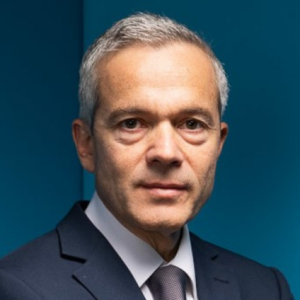
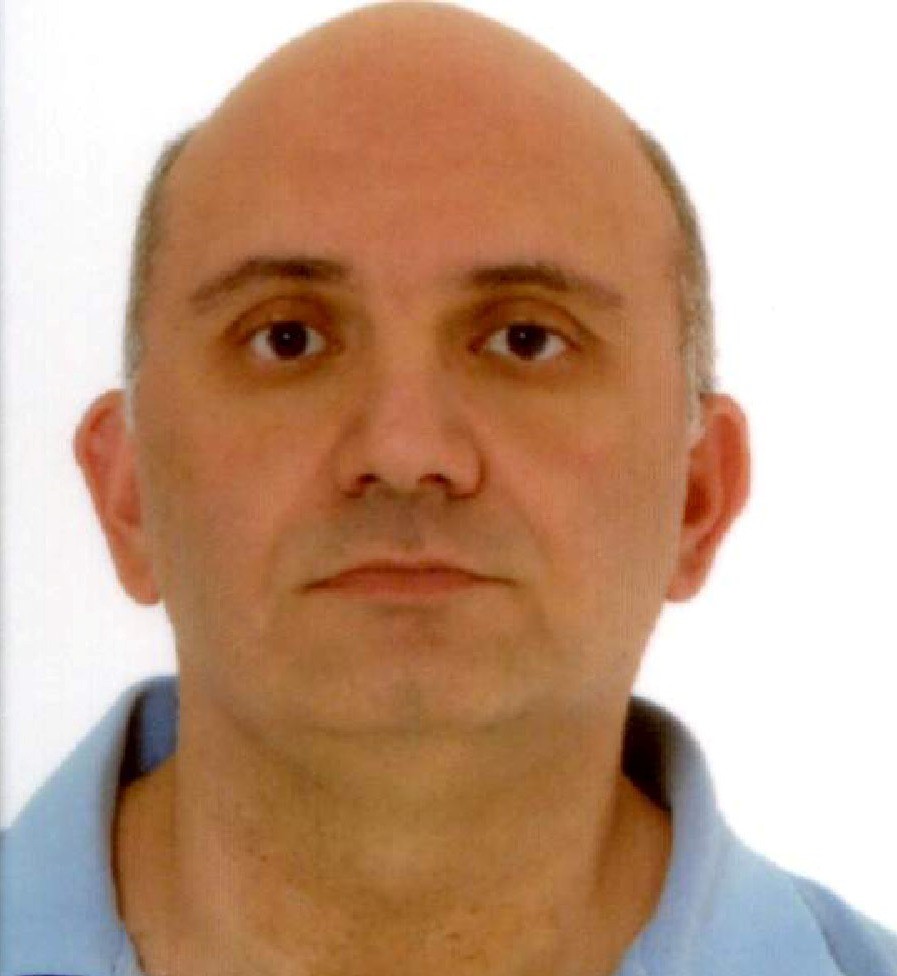
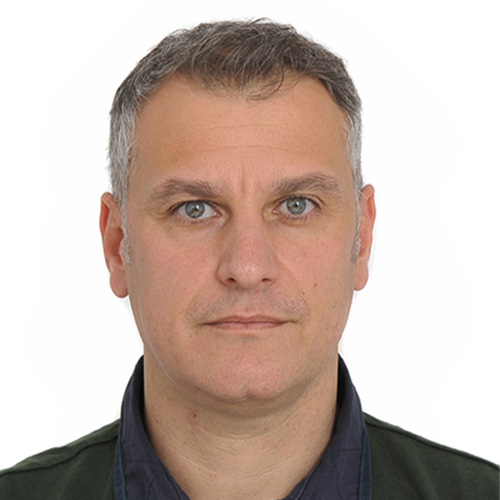
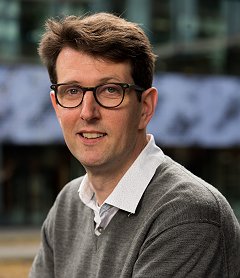
Professor Diomidis Spinellis is a renowned academic in Software Technology at Athens University of Economics and Business (AUEB). He specializes in software engineering practices, code quality, AI ethics, and system architecture. His work bridges theoretical advancements with practical applications in industry, emphasizing reproducibility and empirical methods. Recipient of the IEEE Computer Society's prestigious 'Distinguished Contributor Recognition,' Spinellis is the sole Greek scientist to achieve this honor. His research spans software evolution, security, and open-source ecosystems, with a focus on methodologies like refactoring, static analysis, and debugging strategies. Key research interests include AI-generated content detection, modular data analytics, and incident management systems. His studies often leverage large-scale datasets (e.g., Unix evolution, Linux supercomputing analysis) to uncover patterns in software behavior and development practices. Publications frequently address emerging technologies' societal impacts, such as energy-efficient computing and ethical AI deployment. He advocates for reproducible research through tools like the Alexandria3k framework and contributes to open-source initiatives.
George Alexandropoulos is an Associate Professor at the Department of Informatics and Telecommunications, National and Kapodistrian University of Athens. His research focuses on telecommunications, signal processing, and reconfigurable intelligent surfaces (RIS) for next-generation wireless networks. He has contributed to advancements in integrated sensing and communications (ISAC), 6G technologies, and holographic beamforming. His work includes experimental validation of RIS prototypes, optimization of RIS-assisted systems, and analysis of secure communication strategies. Research interests include RIS hardware design, channel modeling, and applications in IoT, UAV communications, and disaster recovery networks. He explores topics like energy-efficient RIS operation, multi-RIS coordination, and RIS-enabled localization. His studies often address challenges at sub-THz frequencies, mutual coupling effects, and hardware impairments. Publications emphasize practical implementations of RIS in both indoor and outdoor settings, with a focus on real-world performance evaluation. Awards and grants are not explicitly mentioned, but his extensive publication record indicates significant academic contributions. His research often integrates machine learning for RIS configuration and reinforcement learning for resource optimization in dynamic networks.
Dr. Zacharakis Giannis is a Research Professor and Research Director at the Institute of Electronic Structure and Laser (IESL) of the Foundation for Research and Technology (FORTH). He heads the Laboratory for Biophotonics and Molecular Imaging, focusing on developing advanced imaging technologies for biomedical and cultural heritage applications. He served as Vice President and President of the European Society for Molecular Imaging (ESMI) and holds leadership roles at FORTH. Education: BSc in Physics (1997), PhD in Biomedical Imaging (2002), both from the University of Crete. Postdoctoral Research Fellow at Harvard University (2003-2004). Research Interests: Biophotonics, optoacoustic imaging, biomedical optics, and non-invasive diagnostic tools. His work spans label-free imaging techniques, hybrid microscopy systems, and applications in healthcare, art conservation, and plant biology. Key Achievements: Over 60 peer-reviewed journal articles, 48 conference papers, 2 book chapters, 2 patents, and an h-index of 19 (Google Scholar). Awards include 3 first prizes at international conferences and 20+ invited talks globally. Labs & Groups: Leads the Biophotonics and Molecular Imaging Lab at FORTH-IESL, collaborating on projects like optical projection tomography, adaptive light-sheet microscopy, and optoacoustic technologies for cultural heritage diagnostics.
Professor Vassilios Angelidis is a distinguished academic in the field of Electrical Engineering, currently serving as a Professor at the Department of Electrical and Computer Engineering of Democritus University of Thrace. He joined the university in June 2024, bringing with him extensive international experience from prestigious institutions including the University of Glasgow, University of Sydney, University of New South Wales (UNSW), and the Technical University of Denmark. Professor Angelidis received his educational foundation with a degree in Electrical Engineering from Democritus University of Thrace, followed by a Master of Applied Science from Concordia University in Canada, and a PhD from Curtin University in Western Australia. He further enhanced his expertise with an MBA from Curtin Graduate School of Business. His research interests span Power Electronics, Renewable Energy Sources, Electrical Power Systems, and Autonomous Electricity Networks. Professor Angelidis has made significant contributions to the development of advanced power conversion techniques, grid integration of renewable energy sources, and the application of artificial intelligence in power system analysis and prediction. His work has been instrumental in advancing the field of smart grid technologies and sustainable energy systems. An analysis of his recent publications reveals a strong focus on power electronics applications in renewable energy integration, particularly in photovoltaic systems and electric vehicle charging infrastructure. His research demonstrates expertise in developing advanced algorithms for power system monitoring and control, with particular emphasis on frequency estimation, phase angle calculation, and power quality enhancement in modern grids with high penetration of distributed energy resources. Among his notable scientific achievements, Professor Angelidis has been recognized as an IEEE Fellow for his significant contributions to power electronics and the conversion and integration of renewable energy sources into power grids. He has also received the prestigious Advanced Research Fellowship for young researchers from the Engineering and Natural Sciences Council of the United Kingdom. Throughout his career, Professor Angelidis has secured research funding from various organizations across Australia, the United Kingdom, Denmark, China, India, and Malaysia, as well as industry partners with global reach. He has served on the International Councils of Beijing Jiaotong University and Universiti Tenaga Nasional (UNITEN), and currently holds the position of Vice President-elect of the IEEE Power Electronics Community. At Democritus University of Thrace, Professor Angelidis is affiliated with the Electrical Machines Laboratory within the Energy Systems Sector, where he leads research on Control and Diagnostic Methods of Electrical Machines. His current work focuses on advancing the integration of renewable energy sources into electrical power systems while maintaining grid stability and reliability.
Ioannis Andreadis is a Professor in the Department of Electrical and Computer Engineering at the School of Engineering, Democritus University of Thrace. He has been a faculty member since 1993, following his appointment as a Visiting Professor at the School of Technological Applications of TEI Kavala (1991-1992). His academic journey began with a Diploma in Electrical Engineering from Democritus University of Thrace (1983), followed by an M.Sc. in Electrical Engineering & Electronics (1985) and a Ph.D. in Instrumentation & Analytical Science (1989), both from the University of Manchester. Professor Andreadis's research spans the Design and Implementation of Electronic Systems with particular emphasis on Intelligent Systems and Machine Vision . His work has resulted in over 230 publications in international journals, book chapters, and conference proceedings. He has made significant contributions to image processing, particularly in mathematical morphology, color image processing, and real-time implementation of image processing algorithms. His research has practical applications in seismic signal processing, crowd management systems, and 3D reconstruction technologies. The analysis of his recent publications reveals a strong focus on advanced image processing techniques, with increasing integration of deep learning approaches. His work spans both theoretical foundations (such as entropy estimation and moment calculations) and practical applications (including image stabilization, multi-focus image fusion, and crowd management systems). The interdisciplinary nature of his research connects electrical engineering, computer vision, and signal processing with applications in safety engineering, structural analysis, and robotics. Among his notable achievements are the IET Image Processing Premium Award (2009) , Best Paper Award at PSVIT 2007 , and Best Paper Award at EUREKA 2009 . He was elected Fellow of the Institute of Engineering & Technology (IET) in 2006 and Fellow of the Institute of Measurement & Control (InstMC) in 2021. He has also served as Subject Editor of the IET Electronics Letters and as Guest Editor for special issues of Pattern Recognition journal. Professor Andreadis has supervised 14 PhD theses , 21 Master's theses , and 88 Diploma works , demonstrating his commitment to academic mentoring. His research has been supported by significant grants including the EDUnet project (€280,000), wireless network implementation (€37,000), laboratory infrastructure development (€120,000), school information systems support (€478,000), the RESCUER project (€350,000 as Deputy P.I.), and the EDUSAFE project (Marie Curie Actions). He leads the Electronics Laboratory at Democritus University of Thrace, which has undergone significant infrastructure development through multiple funding sources. His work on the RESCUER project demonstrates collaboration with European partners on emergency risk management systems, while his EDUSAFE involvement shows commitment to advanced AR/VR safety systems development. His research group applies computational intelligence techniques to diverse challenges from seismic analysis to pedestrian evacuation modeling.
Konstantinos G. Arvanitis is a Professor in the Department of Natural Resources Management & Agricultural Engineering at the Agricultural University of Athens, affiliated with the Agricultural Engineering Laboratory. He holds a PhD in Electrical and Computer Engineering from the National Technical University of Athens and has held diverse research and teaching roles across Greek institutions. Teaches courses on electrical engineering, sensors, automation, and AI in agriculture Supervised 2 PhD, 9 MSc theses, and guides 6 ongoing PhD projects Member of FEANI, EurAgEng, and IFAC Technical Committee (2000-2017) His research integrates IoT, machine learning, and cyber-physical systems into agricultural practices, focusing on precision agriculture and sustainability. He contributes to editorial boards of journals like Sensors and Energy , and has published over 342 technical works with significant citation metrics. His recent work explores quantum technologies, edge computing, and 3D printing in agricultural systems, emphasizing energy efficiency and educational innovation. He actively reviews for 130+ journals and conferences.
Chrysanthos Maraveas is an Assistant Professor at the Department of Technology and Natural Resources Management & Agricultural Engineering in the School of Environment and Agricultural Engineering at the Agricultural University of Athens since 2022. He earned his PhD in Structural Engineering from the University of Manchester and has held postdoctoral research positions at the University of Liège (EU-funded) and the University of Patras (Greek Ministry of Development-funded). Research Interests : Applications of AI and quantum computing in agriculture Sustainable materials and biodegradable polymers from agricultural waste Internet of Things (IoT) for greenhouse optimization Structural durability and corrosion resistance in agricultural environments Plastic waste management in agrifood systems 4D printing for sustainable agricultural plastics Scientific Recognition : Ranked in the top 2% of scientists worldwide by Stanford University (based on citations and h-index) Publications focus on: Cybersecurity in Agriculture 4.0/5.0 Smart sensors and edge computing for resource management Biopolymer innovations and nanotechnology Structural analysis of agricultural systems Sustainable construction materials from agro-waste Fire resistance in steel and composite structures
Professor Kyriazis Dimosthenis holds a faculty position at the Department of Digital Systems, University of Piraeus. He earned his diploma in Electrical & Computer Engineering from the National Technical University of Athens (2001) and a cross-disciplinary MSc in Techno-Economic Systems (2004). His academic rank is Professor specializing in service-oriented architectures with a focus on quality of service and workflow management. He has led European projects like BigDataStack, CrowdHEALTH, and CYBELE, addressing challenges in cloud computing, edge computing, and AI-driven solutions for healthcare, finance, and industrial sectors. His research emphasizes resilient service-oriented systems, AI explainability, and human-centric digital transformation. Notable contributions include frameworks for dynamic resource allocation in hybrid cloud/edge environments, AI applications for maritime safety, and data governance solutions for cross-sector integration. He coordinates initiatives such as the Future Internet Architecture Board and Cloud QoS&SLAs, driving advancements in federated data marketplaces and sustainable computing practices. His recent work explores Large Language Model (LLM) applications in financial decision-making, conversational AI for MLOps, and neurosymbolic systems for defect detection. He also investigates XAI methodologies, including VirtualXAI, which leverages GPT-generated personas for explainability assessment. His projects often bridge technical innovation with societal impact, such as the iHELP platform for holistic health records and SmartCHANGE for behavioral change strategies in youth health. Key themes in his publications include bias mitigation in machine learning, dynamic deployment prediction in hybrid cloud settings, and energy-efficient data spaces for mobility. He has contributed to standards like the H2020-funded IRMOS and 5GTANGO, emphasizing interoperability and fault-tolerant architectures. His work frequently intersects with EU policy frameworks, particularly in data governance and ethical AI implementation.
Anargyros Tsadimas serves as a Teaching Associate and member of the Department of Informatics & Telematics at Harokopio University in Athens, Greece. He joined the university in 2004 as a research associate and currently holds a position in teaching laboratory staff. His academic background includes a BSc in Applied Informatics from the University of Macedonia (2002) and an MSc in Advanced Information Systems from the National and Kapodistrian University of Athens (2005). He earned his PhD in Information Systems from Harokopio University, focusing on model-based design of enterprise systems using SysML. His research interests span modeling and simulation of systems, distributed systems, enterprise information systems engineering, and cyber-physical systems. He has contributed over 25 publications in international conferences and journals, including work on SysML extensions for cost analysis, hybrid simulation platforms, and human-centric design of cyber-physical systems. Tsadimas has participated in EU and Greek government-funded R&D projects, with practical experience in startups as a Software Engineer, DevOps, and Technology Advisor. His recent research emphasizes integrating human factors into system design frameworks, exploring cloud pricing policies, and advancing simulation methodologies for complex systems. Notable contributions include developing declarative approaches for executable SysML models and applying systems engineering to transportation infrastructure challenges. No scientific awards are explicitly mentioned in the provided materials. His professional engagement includes advising on systems design projects and collaborating on interdisciplinary initiatives combining technical and human-centric perspectives.
Sotirios Bersimis is an Associate Professor at the University of Piraeus, Department of Business Administration. He holds additional roles as an elected member of the board of directors of the National Statistical Institute (Greece) and representative for FenSTATs and ECAS. Previously, he served as President of the Hellenic Organization for Health Care Services (EOPYY) and as President of the European Healthcare Fraud & Corruption Network (EHFCN). His education includes a PhD in Statistics from the University of Piraeus, an MSc in Statistics from Athens University of Economics and Business, and a BSc in Statistics and Insurance Science from the University of Piraeus. His research focuses on stochastic models for process monitoring, statistical process control, and health analytics. He has published over 60 peer-reviewed articles in journals like Journal of Quality Technology , Statistics in Medicine , and Annals of the Institute of Statistical Mathematics . His work emphasizes applications in healthcare surveillance, quality management, and fraud detection. Notable contributions include the development of the Process Monitoring Group and the 'Multivariate Statistical Process Control Charts: An Overview' paper, which remains highly cited in the field. Bersimis has received awards such as the 2018 ENBIS Best Manager Award and a public honor from the Greek Prime Minister. He actively collaborates with healthcare institutions, pharmaceutical companies, and international organizations, contributing to projects on health expenditure modeling and anti-fraud initiatives. His teaching spans undergraduate and postgraduate programs in statistics, biostatistics, and data science.
Varouchakis Emmanuel is an Assistant Professor at the Department of Mining Technology within the School of Mineral Resources Engineering at the Technical University of Crete . His research focuses on Geostatistics , Environmental Mining , and Sustainable Development , with expertise in Risk Analysis , Stochastic Processes , and Machine Learning . He contributes to the Research Units of Geostatistics and Environmental Mining and Sustainable Development ( https://www.envi-stat.tuc.gr/en/home ). Research Trends: His recent publications address critical challenges in hydrogeological modeling, environmental risk assessment, and sustainable mining practices. Key themes include groundwater level analysis , geostatistical inversion , pit lake hazard frameworks , and multi-criteria decision-making for SDG implementation in mining contexts. Grants & Projects: He leads the HFRI-funded project "Advanced geostatistical modeling for natural resources evaluation" (2023-2025) and participates in EU initiatives like IMMERSE (2023-2025) for critical mineral education and REECOL (2023-2026) focused on ecological rehabilitation of post-mining areas, employing machine learning and remote sensing. Teaching: He teaches undergraduate courses in Statistics and Probability for Engineers and Applied Geostatistics , as well as postgraduate courses on Time Series Analysis and Geostatistical Simulation Methods .
Professor Dimitra Kaklamani is a distinguished faculty member at the School of Electrical and Computer Engineering at the National Technical University of Athens (NTUA), where she serves as a Professor in the Division of Information Transmission Systems and Material Technology. With over 300 publications to her name, she has established herself as a leading researcher in microwave engineering, wireless communications, and computational electromagnetics, having progressed through academic ranks from Lecturer (1995) to Professor (2009). Her research spans numerous critical areas in electrical engineering: Microwave Theory and Techniques Wireless Communications and MIMO Systems Computational Electromagnetics Object-Oriented and Distributed Computing Security & Privacy in Networked Systems Machine Learning Applications in Telecommunications Professor Kaklamani's research trajectory demonstrates a natural evolution from traditional microwave engineering toward cutting-edge areas like AI-enabled wireless communications and privacy-preserving network architectures. Her recent work (2023-2025) shows particular focus on intelligent metasurfaces for wireless communications, federated learning applications in next-generation networks, and security aspects of 5G/6G systems. This reflects both continuity with her foundational work in computational electromagnetics and adaptation to emerging technological frontiers. She serves as Editor of an international book by Springer-Verlag (2000) in applied Computational Electromagnetics and regularly reviews for IEEE journals, demonstrating her standing in the scholarly community. Her teaching portfolio is equally comprehensive, ranging from foundational courses like Linear Circuits Analysis to advanced topics such as Computational Electromagnetics and Machine Learning in Mobile Computing, reflecting her broad expertise across electrical engineering disciplines.
Zhenjiang Hu is a Chair Professor and Dean of the School of Computer Science at Peking University. He serves as Director of the Programming Languages Laboratory and has held significant academic positions including Professor at the National Institute of Informatics and University of Tokyo. BS and MS from Shanghai Jiaotong University (1988, 1991) PhD from University of Tokyo (1996) Lecturer/Assistant Professor at University of Tokyo (1997) Associate Professor at University of Tokyo (2000) Full Professor at National Institute of Informatics (2008) Full Professor at University of Tokyo (2018-2019) Professor Hu's research primarily focuses on programming languages and software engineering, with special emphasis on functional programming, bidirectional transformation, and software adaptation. His work explores transformational programming approaches for automatic program optimization, systematic parallelization of sequential programs, efficient manipulation of structured documents, and bidirectional model transformation for software development. His research has significantly advanced the field of bidirectional programming, developing foundational theories and practical applications that enable more reliable and maintainable software systems. His recent publications demonstrate a strong trajectory in bidirectional programming, program synthesis, and graph processing. The research shows increasing sophistication in handling program transformations, with growing emphasis on practical applications in software engineering contexts. His work increasingly integrates formal methods with practical programming language design, creating systems that maintain theoretical soundness while addressing real-world software development challenges. The research spans multiple venues including top conferences like PLDI, POPL, ICFP, and OOPSLA, reflecting its broad impact across programming language research. Fellow of JFES (Japan Federation of Engineering Society, 2016) ACM Distinguished Scientist (2016) Member of Academia Europaea (2019) IEEE Fellow (2020) Member of Engineering Academy of Japan (2020) Professor Hu actively mentors students and has welcomed excellent candidates to join his group through Peking University's International Elite PhD Program and Boya Postdoctoral Fellowship Program. He serves on numerous program committees for major conferences including PLDI, POPL, ICFP, and OOPSLA, and holds editorial positions for prestigious journals such as Journal of Functional Programming and Science of Computer Programming. His leadership extends to conference organization, having served as PC Chair for CNCC 2024 and General Co-Chair for SoICT 2019. As Director of the Programming Languages Laboratory at Peking University, Professor Hu leads a research team focused on advancing programming language theory and practice. His lab has developed influential frameworks like BiGUL for bidirectional programming and Fregel for graph processing. The laboratory maintains strong international collaborations and contributes to both theoretical foundations and practical implementations in programming languages and software engineering.
Andy D. Pimentel is a Full Professor at the University of Amsterdam, where he chairs the Parallel Computing Systems (PCS) group within the Systems and Networking Lab at the Informatics Institute. His work focuses on the design, programming, and run-time management of multi-core and multi-processor computer systems, with particular attention to performance, power/energy consumption, system dependability, and design productivity. His academic background includes: PhD in Computer Science, 1998, University of Amsterdam MSc in Computer Science, 1993, University of Amsterdam Professor Pimentel's research spans multiple critical areas in modern computing systems. His primary interests include multi-core embedded systems, system-level design and simulation, design space exploration, performance and power analysis, system dependability, hardware/software co-design, run-time resource management, and Edge AI. His work addresses the growing challenges of making computer systems faster, more sustainable, energy efficient, reliable, and secure in an era of increasing computational demands and climate concerns. The PCS group he leads performs research on the modeling, analysis and optimization of extra-functional aspects of computing systems, which play a pivotal role in their work. An analysis of Professor Pimentel's recent publications reveals a strong focus on edge computing, distributed AI, and energy-efficient system design. His work bridges theoretical computer architecture with practical implementation challenges, particularly in the context of resource-constrained environments. Key trends include the adaptation of AI models for edge devices, thermal management in advanced architectures, and optimization of multi-core systems for both performance and energy efficiency. His research increasingly addresses sustainability concerns in computing, reflecting broader industry and academic priorities. His notable scientific achievements include: IEEE CEDA Outstanding Service Recognition Award DATE Fellow Award Professor Pimentel has served in numerous leadership roles in the academic community, including as General Chair of Design Automation and Test in Europe (DATE) 2024, Vice General Chair of IEEE/ACM Embedded Systems Week 2025, and General Chair of IEEE/ACM Embedded Systems Week 2026. He has secured significant research funding for projects related to sustainable computing, edge AI, and multi-core system design. His professional service includes board membership with the ICT Research Platform Nederland (IPN) since 2020 and leadership roles in major conferences such as DATE, Embedded Systems Week, and SAMOS. The Parallel Computing Systems group he chairs is a vibrant research team within the Systems and Networking Lab at the Informatics Institute. The PCS group focuses on the challenges of modern computing systems, particularly addressing the extra-functional aspects like performance, power consumption, and system dependability. Their work is highly relevant to current technological challenges in edge computing, sustainable systems design, and the integration of AI into resource-constrained environments.
Angelos Kanas is a Professor of Finance at the Department of Economics within the School of Economics, Business and International Studies at the University of Piraeus. His academic career spans over two decades with significant contributions to finance, banking, and econometric modeling, supported by continuous research funding from entities including NATO and the European Union. His educational background includes undergraduate studies funded by the Hellenic National Scholarships Foundation (I.K.Y.), an M.Sc. supported by the Bodosakis Foundation, and a Ph.D. financed by the National Scholarships Foundation (I.K.Y.). Kanas specializes in Finance, International Finance, Financial Markets, Financial Risks and Protection, and Banking. His research integrates advanced quantitative methods to analyze systemic risk, market efficiency, and policy impacts, with particular focus on regime-switching models and DEA efficiency measurements. Recent work explores intersections between climate finance, banking stability, and corporate governance. Analysis of his 15 most recent publications reveals an evolving research trajectory: early work (2005-2013) established expertise in exchange rate dynamics and asset pricing, while post-2015 research increasingly addresses banking regulation, systemic risk prediction, and methodological innovations in efficiency analysis. Current work (2022-2025) demonstrates strong engagement with climate-related financial risks and AI applications in finance. Hellenic National Scholarships Foundation (I.K.Y) studentship (undergraduate, three annual) Bodosakis Foundation scholarship (M.Sc.) National Scholarships Foundation (I.K.Y.) scholarship (Ph.D.) Kanas has secured research funding from NATO and EU bodies, reflecting recognition of his work's policy relevance. His extensive refereeing activities across 30+ journals including Journal of International Economics and Journal of Banking and Finance demonstrate scholarly leadership. He teaches core finance courses including International Finance and Special Topics in Finance, and has authored two academic books: Principles of Investment Analysis and Financial Markets (2021) and FinTech and Machine Learning: Basic Principles and Applications (2023).