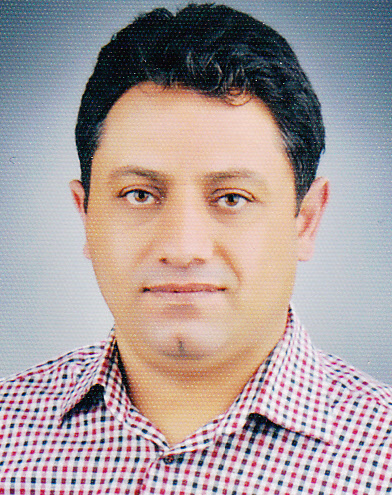
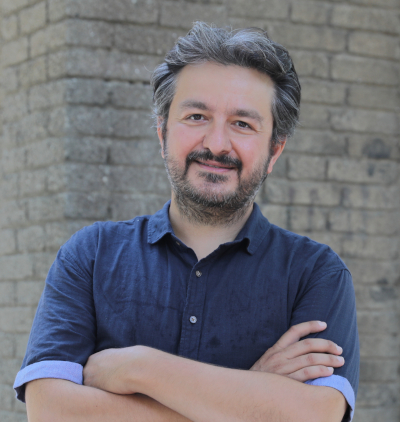
Assoc. Prof. Dr. Sema Alaçam Doğan has been affiliated with Istanbul Technical University since 2014, serving as an Associate Professor in the Department of Architecture . She has held administrative roles including Deputy Head of Department and Erasmus Coordinator. Education : PhD in Informatics in Architectural Design (2008-2014), MS in Informatics in Architectural Design (2005-2008), and BS in Architecture (1999-2005) from Istanbul Technical University. Her research explores Computational Design , Artificial Intelligence in Architecture , and Sustainable Material Innovation . She investigates digital tools for heritage preservation, daylight optimization in BIM, and cognitive development in architecture students. Recent publications analyze AI-assisted design literacy , machine learning for Sinan mosques , and environmental comfort in Harran houses . Her work integrates algorithmic frameworks with sustainable practices. Scientific awards include multiple ITU Publication and Performance Awards (2021-2024), FABFEST Prizes , and the 2024 Artemis Educator Award from NASA. Active projects like "Physical Computation in Architectural Drawing" and "Robotic Fabrication with Recycled Wind Turbine Blades" demonstrate her leadership in computational and sustainable research.
Doç. Dr. Muhammed Aras is an Associate Professor in the Department of Mechanical Engineering at Baskent University (Başkent Üniversitesi), with a research focus on sustainable machining processes, tool wear monitoring, and surface roughness optimization. His work spans advanced manufacturing technologies, energy storage systems, and biomedical device design. PhD in Manufacturing Engineering (2018), Gazi Üniversitesi MSc in Mechanical Education (2013), Gazi Üniversitesi BSc in Mechanical Engineering (2010), Tabriz Islamic Azad University Research interests include sustainable machining (dry/hard turning, cooling-lubrication strategies), tool wear analysis (CBN, ceramic and coated inserts), and surface integrity optimization using AI-based methods (firefly algorithm, TOPSIS, Grey Relational Analysis). His 15 most recent articles (2017-2024) examine topics like: Surface roughness prediction in dry hard turning Energy storage technology viability assessments Cutting parameter optimization for various steels Acoustic/vibration monitoring in machining He has received scientific awards including the Teşvik Ödülü (Encouragement Award, 2015). His patent on an automatic orthognathic surgery articulator and book chapters on tool monitoring systems demonstrate his multidisciplinary impact.
Professor Ali Yapar is a faculty member at Istanbul Technical University in the Electronics and Communication Engineering department. His research focuses on Electromagnetics , Microwave Engineering , and Antenna Technologies , with a particular emphasis on inverse scattering problems and microwave imaging for biomedical applications. He has supervised numerous graduate students and led projects related to breast cancer treatment and rough surface imaging. PhD in Electronics and Communication Engineering from Istanbul Technical University (1997) MSc in Electronics and Communication Engineering (1995) His recent publications analyze advanced techniques for microwave hyperthermia systems, reverse time migration methods, and Newton-based solutions for electromagnetic inverse scattering. Key projects include TUBITAK-funded initiatives on microwave tomography and brain stroke imaging. He serves as a project investigator and executive for electromagnetic research programs. Research areas span Electromagnetic Wave Propagation , Green's Function Applications , and Dielectric Material Analysis . Collaborations include IEEE members and international researchers in computational electromagnetics.
Prof. Dr. Ahmet ÖZMEN is a Professor at Sakarya University's Faculty of Computer and Information Sciences, Department of Software Engineering. He has held various administrative positions including Head of the Software Engineering Department (2019-2028) and Director of the Computer Research and Application Center (2019-2022). With extensive experience in academia since 1991, he has made significant contributions to computer vision, traffic monitoring systems, and sensor technologies. Sakarya University: Professor (2019-present), Associate Professor (2011-2019) Dumlupınar University: Assistant Professor (2001-2011), Research Assistant (2000-2001, 1993-1998) Istanbul Technical University: Research Assistant (1991-1993) Prof. ÖZMEN's research spans computer vision applications for traffic monitoring, indoor air quality systems, parallel computing, and sensor technologies. His work bridges theoretical computer science with practical engineering applications, particularly in developing vision-based systems for nighttime vehicle detection, traffic flow monitoring, and environmental sensing. His interdisciplinary approach combines machine learning, image processing, and embedded systems to solve real-world problems in transportation and environmental monitoring. His publication record shows a clear evolution from parallel and distributed systems in his early career to computer vision and sensor applications in recent years. The majority of his recent work focuses on traffic monitoring systems using computer vision techniques, particularly for nighttime conditions, and indoor air quality monitoring systems using sensor networks. His research demonstrates strong industry and societal relevance, with applications in smart transportation, environmental protection, and educational technology. TÜBİTAK Publication Awards (2006, 2008, 2009, 2010) Physical implementation award from TÜBİDER (2008) Microsoft Certified Professional Certificate (2005) YÖK overseas study scholarships (1993, 1998) Elginkan graduate scholarships (1990, 1991) Prof. ÖZMEN has supervised numerous graduate students across multiple institutions, with a focus on practical engineering problems. His research has been supported by various projects including TÜBİTAK projects, institutional research grants, and industry collaborations. He has led significant research initiatives in traffic monitoring systems, indoor air quality monitoring, and educational technology platforms. His administrative leadership has included directing research centers and shaping curriculum development in software engineering. His work has involved establishing research teams focused on computer vision applications, sensor network development, and educational technology. These teams have produced numerous publications, developed practical systems, and trained the next generation of computer engineers. Current research directions include advanced traffic monitoring systems using deep learning and multi-camera setups for urban planning applications.
Assoc. Prof. Dr. Yusuf Yaşa is an Associate Professor at Istanbul Technical University, Department of Electrical Engineering, specializing in Electrical Machines, Power Electronics, and Hybrid/Electric Vehicles. He holds a PhD from Yıldız Technical University and has served in academic and administrative roles at Bursa Technical University and Istanbul Technical University. PhD in Electrical Machines and Power Electronics, Yıldız Technical University (2006–2013) Current Vice Dean at Istanbul Technical University (2023–) Founding Partner of Yasa Motor Technologies (2018) and Nardan Power Conversion Systems Ltd. Co. (2023) His research focuses on noise mitigation in switched reluctance machines, battery cooling with graphene-enhanced phase change materials, and efficiency optimization in electric vehicle systems. He has led projects on DC fast-chargers and sensorless control of synchronous reluctance motors. His publications address energy conversion, battery management, and acoustic noise reduction. Recent research trends include advancements in electric vehicle modeling, state-of-charge estimation for Li-ion batteries, and thermal management solutions for battery systems. His work integrates simulation tools like ANSYS and machine learning for efficiency improvements. He has advised PhD and Master’s theses on topics such as battery charge rate estimation, graphene-doped PCM materials, and Kalman filter-based motor control. Collaborations span institutions like The University of Akron and companies in electric propulsion and robotics.
Prof. Dr. Gökhan Kiper is a faculty member in the Department of Mechanical Engineering at Izmir Institute of Technology , Turkey. His research focuses on Mechanism Science , Machine Design , and Deployable Structures , with particular emphasis on Polyhedral Geometry applications. Teaches courses: ME332 (Mechanisms), ME402 (Machine Design), ME577 (Advanced Mechanism Design) Active in IFToMM (International Federation for the Promotion of Mechanism and Machine Science), including roles in the Technical Committee for Computational Kinematics and the Turkey Branch (MakTeD) Co-organized the IFToMM Summer School on Mechanism Design for Medical Applications (2018) Research interests span kinematic synthesis of mechanisms, deployable architectural structures, and medical robotics. Key projects include a rollable ramp for temporary use, finger exoskeletons for rehabilitation, and remote-center-of-motion manipulators for minimally invasive surgery. His work integrates theoretical analysis with practical prototyping, reflected in publications across robotics, structural mechanics, and geometric design. Affiliates with the Rasim Alizade Mechatronics Laboratory (RAML) and the IzTech Kinetic Designs in Architecture Group . Presented at international conferences like International Symposium of Mechanism and Machine Science (ISMMS-2017) in Baku, Azerbaijan, where he chaired sessions on mechanism kinematics.
Dr. Gözde Damla Turhan is a Researcher at the Department of Architecture within the Faculty of Fine Arts and Design at İzmir University of Economics, a position she has held since September 2017. She holds a B.Sc. in Architecture from İzmir Ekonomi Üniversitesi (2014), followed by dual Master's degrees: M.Arch in Advanced Architectural Design (2016) and M.Sc. in Architecture (2016). Her Ph.D. in Design Studies (2022) focused on biobased materials, computational design, and digital fabrication. Current research interests include AI applications in design (machine learning, diffusion models, LLMs), and sustainable material innovation. Her work bridges architecture and computational technologies, emphasizing bio-based materials (e.g., bacterial cellulose), digital fabrication methods, and AI-driven design processes. She has explored topics like urban rehabilitation via GANs, NFT art hybrid experiences, and life cycle assessments of unconventional construction materials. Publications (2016–2023) span computational form-finding, material science, and digital tools in architecture. She actively contributes to design pedagogy, investigating how AI tools like diffusion models can reshape educational frameworks.
Professor AYTAÇ GÜVEN is a faculty member at Gaziantep University's College of Engineering, Department of Civil Engineering, specializing in Fluid Mechanics and Numerical Modeling . With a PhD from Gaziantep University (2008), he progressed from Research Assistant (2001-2008) to Professor (2017). His research focuses on Hydrology , Climate Change Impact on water resources, Dam Safety , and Hydropower Assessment using Genetic Programming and Neural Networks . He served as Department Head (2020-present) and Vice Head (2009-2014). Education: PhD (Civil Engineering, Gaziantep University, 2008) MS (Civil Engineering, Gaziantep University, 2005) BS (Civil Engineering, Gaziantep University, 2000) His research interests span: Climate change adaptation in water resources Advanced numerical modeling for hydraulic structures Hydropower potential assessments Scour and sediment yield prediction Machine learning applications in hydrology Dam failure risk analysis His 57 peer-reviewed publications (including 2 books) emphasize hybrid modeling techniques, with recent work on CMIP6 climate scenarios , steppe spillways , and dam safety tools . He has advised 5 PhD and 21 Master's theses. Scientific awards include: 2024 Stanford Career Impact Award 2018 Best PhD Thesis (Baraj Güvenliği Derneği) 2016 Gaziantep University Science Award 2010 Best Master's Thesis (Baraj Güvenliği Derneği) 2018 Best Presentation (International Academic Association)
Ayşenur Akyüz Birtürk serves as a Lecturer in the Department of Computer Engineering at Middle East Technical University (METU), Ankara, where she has taught since February 1994. Her academic career spans foundational programming courses to advanced graduate seminars in AI and Computational Linguistics, reflecting 30+ years of institutional commitment. She earned all her degrees from METU, culminating in a 1998 Ph.D. focused on Turkish language computational analysis. Her educational journey includes: B.S. in Computer Engineering (1985) M.S. in Computer Engineering (1988) with thesis on “A Model for Representing Concepts: Conceptual Dependency Theory” Ph.D. in Computer Engineering (1998) with thesis on “A Computational Analysis of Turkish using the Government-Binding Approach” Dr. Birtürk’s research centers on Artificial Intelligence and Natural Language Processing , with pioneering work in Turkish language parsing evolving into modern Recommender Systems . She integrates semantic relations and multi-domain data to build hybrid engines for movies, books, and music, emphasizing user modeling through knowledge representation and data mining techniques. Analysis of her 2010-2015 publications reveals two dominant threads: adaptive recommender systems (80% of output) using semantic similarity and dynamic clustering, and renewable energy analytics (20%) applying machine learning to wind/hydrological data. This pivot from NLP to energy forecasting demonstrates methodological versatility while maintaining core AI expertise. Her scientific recognition includes: TUBITAK scholarships throughout education (1977-1988) Multiple national contest awards in high school (1979-1980) Leadership in TUBITAK-funded energy and healthcare projects Dr. Birtürk has supervised 17 Master’s theses in NLP and recommender systems while securing competitive grants including METU-ISTEC #17435 (2006-2008; 504,000 YTL) and HASAT (2010-2013; 601,637 YTL). Her industry consultancy spans medical form design (FormAnalitik), question-answering systems, and retail intelligence platforms, translating academic research into real-world tools.
Professor Okan Topçu is a faculty member in the Department of Computer Engineering at Middle East Technical University, Northern Cyprus Campus (METU NCC), where he serves as Head of the Academic Board of Engineering and Natural Sciences. He holds a Ph.D. and M.S. from Middle East Technical University (Ankara, Turkey, 2007 and 1999 respectively). Education: Ph.D. & M.S. in Computer Engineering from METU Ankara Research Focus: Modeling and simulation, agent-based systems, distributed simulation, cybersecurity, and model-driven engineering
Uğur Efe Uçar is a Researcher at the Department of Interior Architecture, Faculty of Architecture, Istanbul Technical University. He holds a PhD in Informatics in Architectural Design (2021) and has been a Research Assistant since 2019. His academic journey includes a Master's in Interior Architecture Design International (2018–2020) and a Bachelor's in Interior Architecture (2015–2018), all from Istanbul Technical University. His research focuses on integrating technology into architectural education and design practices, particularly through virtual reality (VR) applications, computational frameworks, and phenomenological studies of interior spaces. Key areas include generative design pedagogy, anthropometric measurements using VR, and earthquake-resistant interior design. He has explored topics like the implicit meanings of domestic elements (e.g., beds, water systems) and flexible shelter designs for emergency scenarios. Uçar has authored over a dozen peer-reviewed articles since 2021, consistently advancing interdisciplinary approaches at the intersection of technology, human behavior, and space. His work emphasizes both theoretical exploration and practical applications in sustainable and resilient design. No scientific awards are listed, but his contributions reflect a strong commitment to academic innovation and pedagogical development.
Erol Demirkan is a Lecturer at the Department of Civil Engineering, Faculty of Civil Engineering at Istanbul Technical University. His research focuses on structural mechanics, nonlinear behavior of materials and structures, and vibration analysis of beams and plates. He holds a PhD in Structural Engineering from Istanbul Technical University (2014) and has held academic positions since 2015, including Research Assistant and Lecturer roles. Demirkan's work integrates advanced analytical methods with computational tools like artificial neural networks for structural analysis. Education: PhD in Structural Engineering, Istanbul Technical University (2014) MSc in Structural Engineering, Istanbul Technical University (2012) BSc in Civil Engineering, Istanbul University (2009) BSc in Civil Engineering, Balikesir University (2006) Research interests include non-local elasticity, buckling analysis of nanobeams, and finite element modeling of insulating glass units. His recent work explores hybrid analytical-machine learning approaches for vibration analysis of functionally graded materials. Professional memberships include the TMMOB Chamber of Civil Engineers since 2009. Administrative roles include membership in the Civil Engineering Department Promotion Committee (2021–present) and the Scholarship Committee (2015–2020). Current research emphasizes structural stability, composite beam dynamics, and nonlinear plate interactions. He collaborates on projects involving porous beams and ANN validation for engineering systems.
Emre Ugur is an Associate Professor in the Department of Computer Engineering at Bogazici University, where he serves as the head of the Cognition, Learning and Robotics (CoLoRs) laboratory. His research focuses on bridging the gap between continuous sensorimotor experiences and discrete symbolic representations in robotics. Funded by major international sources including the European Commission's Horizon 2020 program and TUBITAK, his work has significant implications for cognitive robotics and autonomous systems. Education: PhD in Computer Engineering from Middle East Technical University (METU, Turkey) Ugur's research interests center on cognitive and developmental approaches to robotics, with particular emphasis on neuro-symbolic integration, affordance learning, and symbol emergence. His work explores how robots can autonomously develop high-level cognitive capabilities through continuous interaction with their environment, similar to human cognitive development. His approach combines machine learning, cognitive science, and robotics to create systems that can learn, predict, and reason about their actions. His recent publications reveal a strong trajectory toward neuro-symbolic robotics, where he develops methods for extracting discrete symbolic representations from continuous sensorimotor experiences. This work enables robots to perform complex planning and reasoning tasks while maintaining connection to physical reality. There is also significant focus on social robotics, particularly in human-robot interaction, social navigation, and embodied cognition. Scientific Awards: The Young Scientist Award by the Science Academy (BAGEP) The Excellence in Teaching Award by the Faculty of Engineering (2023) As Principal Investigator of major projects including INVERSE (EU Horizon 2025), DEEPPLAN (TUBITAK), and previously DEEPSYM and IMAGINE, Ugur has established a robust research program that bridges theoretical advances with practical applications. He has supervised numerous PhD and Master's students who have made significant contributions to the field. His leadership extends to organizing major workshops at top robotics conferences including IROS, RSS, and ICRA. At the Cognition, Learning and Robotics (CoLoRs) lab, Ugur leads research on cognitive robotics, developmental robotics, and neuro-symbolic AI. The lab explores fundamental questions about how robots can develop understanding of their actions, learn from interaction, and form abstract representations necessary for high-level cognition. Current projects focus on symbolic reasoning, prediction, and planning in robotic systems.
Muammer Altan Çakır is a Professor in the Department of Physics Engineering at Istanbul Technical University, actively engaged in high-energy physics research with significant contributions to the CMS Collaboration at CERN. His work focuses on proton-proton collisions, Higgs boson physics, and top quark studies using Large Hadron Collider data. His research interests span experimental particle physics with emphasis on proton-proton collisions , Higgs boson characterization , lepton physics , and transverse momentum analysis . Recent work explores charm baryon production, Drell-Yan processes, and muon identification techniques using advanced multivariate methods in the CMS detector. Analysis of his 15 most recent publications reveals a strong focus on precision measurements in high-energy collisions, particularly in Higgs physics (3 publications), top quark physics (2), and detector optimization (2). His work consistently addresses fundamental questions in the Standard Model through advanced statistical techniques and large-scale data analysis. Doktora sonrası araştırma bursu (2010) Landes Baden Württenberg Doktorarbeit Stipendium (2006) LPC Fall Guest Visitor Faculty (2017) Multiple Performans ödülü awards (2012, 2013, 2015) Professor Çakır has supervised 15 students and leads multiple research projects including GPU-based distributed computing platforms for big data processing, real-time predictive maintenance systems, and deep learning applications for top quark spin correlation studies. His current projects integrate generative AI with domain-specific physics research while developing scalable open-source big data architectures for industrial applications. His laboratory work centers on CMS detector data analysis, with recent focus on online data visualization tools and multivariate techniques for particle identification. Current projects explore GPU-accelerated computing frameworks and generative AI applications for physics-informed design systems.
Prof. Cemal Balcı is a Professor at the Department of Mining Engineering, Faculty of Mines, Istanbul Technical University. His academic journey includes a PhD in Mine Excavation and Mechanization from ITU (2000-2004). He has held roles such as Vice President of the Department (2012–present) and served as an Associate Professor (2010–2015) and Assistant Professor (2005–2009). He conducted postdoctoral research at the University of Missouri (2004–2005) and Colorado School of Mines (2001–2004). His research focuses on Excavation Mechanics, Mechanized Tunneling, Rock Mechanics, and Mining Technology. Key projects include developing TBM performance prediction models and investigating rock cutting mechanics using portable linear cutting tests. He has advised numerous master’s and PhD students, including UFUK CEMALİ CALISKAN and CAN POLAT. Awarded the Best Paper Award by ISRM (2021) and multiple Publication Incentives from ITU and TUBITAK. His work contributes to sustainable development goals related to infrastructure and resource efficiency. He is a Board Member of the Tunneling Association and active in international conferences like the ITA-AITES World Tunnel Congress.