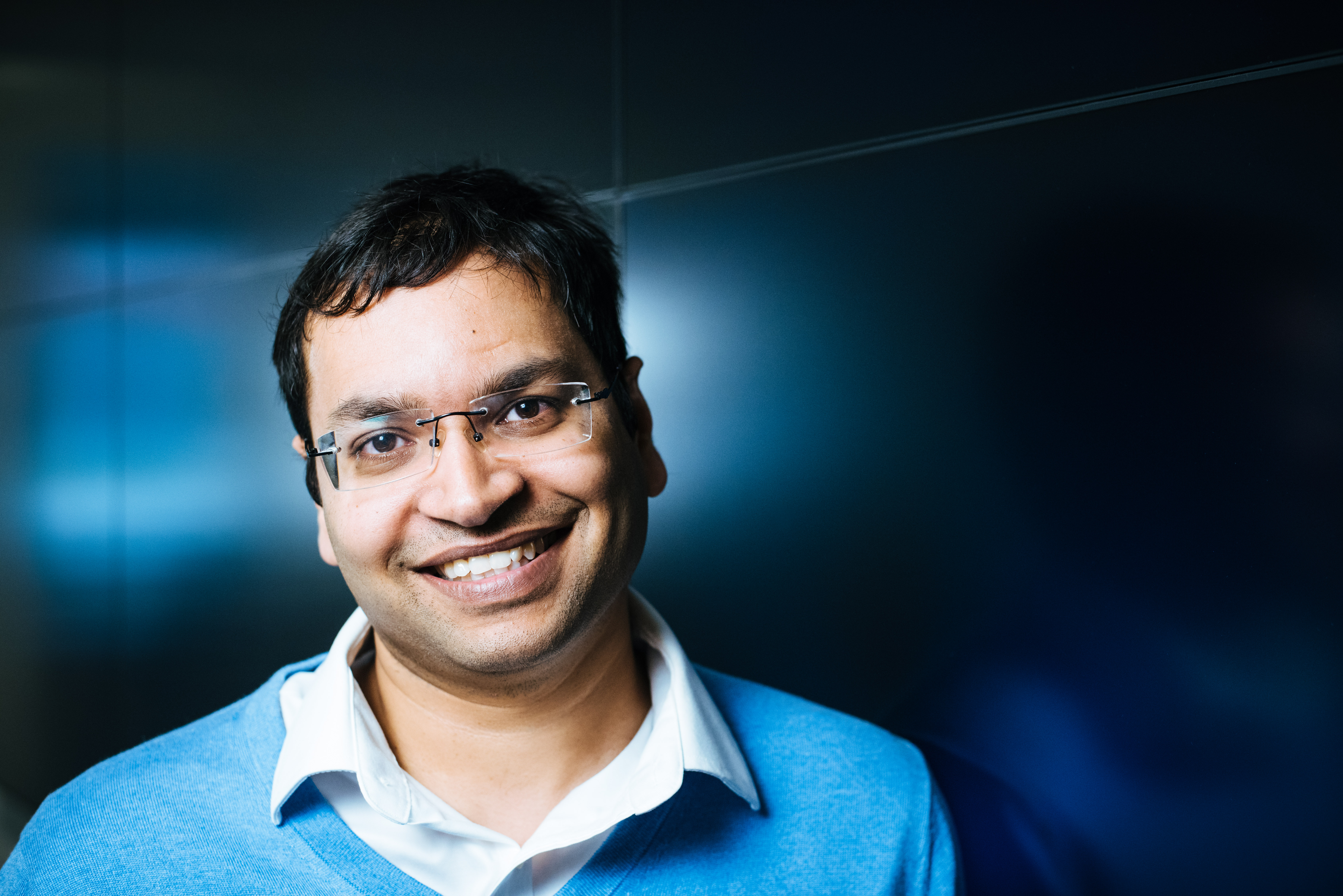
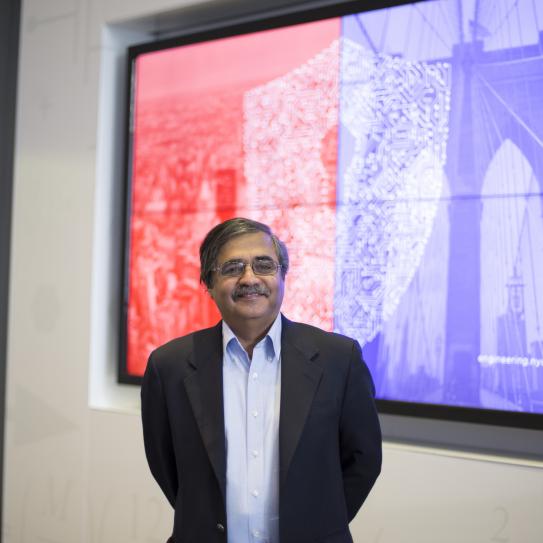
Rakesh Kumar is a Professor and John Bardeen Faculty Scholar in the Electrical and Computer Engineering Department at the University of Illinois at Urbana-Champaign. His work focuses on computer architecture, system-level design automation, and low-power computing. PhD in Computer Engineering from University of California, San Diego BS in Electrical Engineering from IIT Kharagpur His research spans all layers of the computing stack, with key contributions to flexible computer systems , waferscale computing , error-resilient architectures , and approximate computing . He has pioneered work on voltage-reliability tradeoffs and peak power management techniques. Recent publications highlight trends in space microdatacenters , printed microprocessors , and neural graph accelerators . His work on plastic chips was recognized as one of the three biggest semiconductor headlines of 2022 by IEEE Spectrum. IEEE Fellow (2024) ISCA Influential Paper Award MICRO Test-of-Time Award ICCAD Ten Year Retrospective Most Influential Paper Award Best Paper Awards at CASES, SELSE, HPCA He has received teaching accolades including the Stanley H. Pierce Faculty Award and Ronald W. Pratt Outstanding Teaching Award . His research group explores hardware-software co-design for emerging applications in AI, IoT, and sustainable computing.
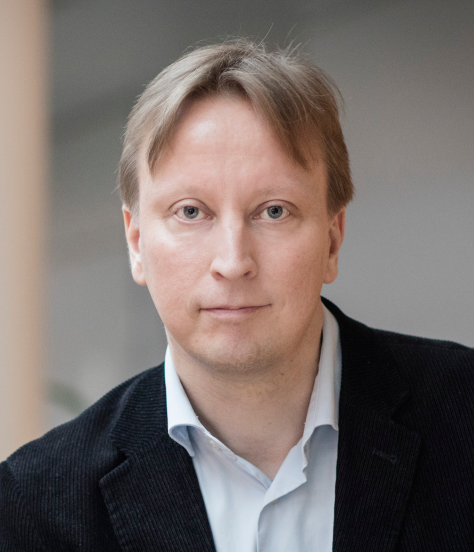
Tim G. J. Rudner is an Assistant Professor in the Department of Statistical Sciences at the University of Toronto, a Faculty Member at the Vector Institute, and a Title A Fellow at Trinity College, University of Cambridge. He was previously an Assistant Professor and Faculty Fellow at New York University. University: University of Toronto School: Faculty of Arts and Science Department: Department of Statistical Sciences Affiliation: Vector Institute, Trinity College (Cambridge) He holds a PhD in Computer Science and an MSc in Statistics from the University of Oxford, where he was advised by Yee Whye Teh and Yarin Gal, and a BS in Applied Mathematics and Economics from Yale University. PhD: Computer Science, University of Oxford MSc: Statistics, University of Oxford BS: Applied Mathematics and Economics, Yale University His research focuses on building robust, transparent, and trustworthy machine learning systems, particularly for high-stakes applications. He develops probabilistic models that improve generalization under distribution shifts, provide reliable uncertainty estimates, and enable fair and interpretable predictions. His work spans generative models, large language models, healthcare, and biomedical discovery. The recent publications highlight a strong trend toward function-space modeling, Bayesian regularization, and AI safety. Tim's work emphasizes principled uncertainty quantification, robustness to subpopulation and semantic shifts, and the development of frameworks for AI governance and specification. His research bridges theoretical advances with real-world applications, especially in safety-critical domains like medicine and defense. Tim has received numerous accolades including being named a Rhodes Scholar, Qualcomm Innovation Fellow, and 2024 Rising Star in Generative AI. He was awarded a $700,000 Foundational Research Grant and a $30,000 Apple Seed Grant for improving LLM trustworthiness. Rhodes Scholar Qualcomm Innovation Fellow AISTATS Notable Paper Award (2024) Outstanding Paper Award, ICLR GenAI4DM Workshop (2024) Apple Seed Grant ($30,000) Foundational Research Grant ($700,000) NeurIPS Spotlight Talk 2024 Rising Star in Generative AI He actively mentors students, particularly first-generation and low-income scholars, and has contributed to major policy frameworks including the OECD AI Classification Framework and a series of CSET issue briefs on AI safety. His work demonstrates a strong commitment to responsible AI development, combining technical rigor with societal impact. Tim leads research efforts at the intersection of machine learning theory and practical deployment, with ongoing projects in generative modeling, reliable LLMs, and AI governance. His lab produces high-impact work regularly published at top-tier conferences such as NeurIPS, ICML, and AISTATS.
Qianwen Wang is a tenure-track Assistant Professor in the Computer Science department at the University of Minnesota, Twin Cities. Her research combines interactive visualization with interpretable machine learning to foster intuitive, efficient, and reliable Human-AI collaboration. She actively seeks motivated students, research assistants, and interns to join her dynamic research team at UMN CS. Dr. Wang's research focuses on three primary themes: Human-AI Collaboration, where she designs tools to facilitate Human-AI interaction; Automatic & Intelligent Visualization, where she develops techniques to make visualizations accurately interpreted and easily used; and VIS+(X)AI in Biomed/Healthcare, where she studies how visualization and explainable AI can promote scientific discoveries in biomedicine and healthcare. Her work has made significant contributions to visualization, human-computer interaction, and bioinformatics, with particular applications in biomedical knowledge graphs and single-cell omics analysis. Her recent publications demonstrate a strong trend toward integrating visualization with large language models and graph neural networks for biomedical applications. She has published extensively at top venues including IEEE VIS, ACM CHI, and Nature Medicine, with a focus on making AI systems more interpretable and useful for domain experts, particularly in healthcare contexts. Her work often bridges theoretical advances in visualization with practical applications in genomics and healthcare. Two IEEE VIS Honorable Mention Awards (2022, 2024) Best Paper Award from IMLH@ICML 2021 Two Best Abstract Awards from BioVis ISMB (2021, 2022) HDSI Postdoctoral Research Fund Award Research covered by MIT News and Nature Technology Features Dr. Wang actively contributes to the academic community through service roles including General Chair for ISMB BioVis, VisNotes and Poster Chair for IEEE PacificVis, and Program Committee member for IEEE VIS, ACM CHI, and ACM IUI. Her research has been supported by various grants that enable her team to develop innovative visualization techniques and explore their practical applications in biomedical domains. Her research group maintains an active presence in the visualization and HCI communities, with members participating in major conferences and workshops. The lab focuses on creating tools that bridge the gap between complex AI models and human understanding, with particular emphasis on making these technologies accessible and useful for domain experts in biomedical research.
Professor Simo Särkkä holds a position in Sensor Informatics and Medical Technology at the Department of Electrical Engineering and Automation (EEA), Aalto University. His research focuses on multi-sensor data processing, Bayesian filtering, machine learning, and their applications in medical technology, brain imaging, and inverse problems. He leads research groups including the Helsinki Institute for Information Technology (HIIT) and Sensor Informatics and Medical Technology. His work bridges theoretical advancements in probabilistic methods with practical implementations in healthcare and engineering. Key research interests include Gaussian processes, stochastic differential equations, quantum machine learning, and signal processing. He has contributed to advancements in algorithms for nonlinear state-space models, parallel computing techniques, and medical imaging technologies such as scatter correction in CT scans. His methodologies are applied across domains like autonomous systems, robotics, and bioengineering. Notable publications span topics like quantum-assisted Gaussian regression, physics-informed machine learning for industrial processes, and parallel-in-time numerical methods. His work emphasizes computational efficiency and robustness in high-dimensional and real-time systems.
Najim Dehak is an Associate Professor in the Department of Electrical and Computer Engineering at Johns Hopkins University, part of the Whiting School of Engineering. His research focuses on machine learning applied to speech processing, audio classification, and health applications. He is renowned for developing the I-vector representation for speaker recognition, introduced in 2008 during a workshop at Johns Hopkins’ Center for Language and Speech Processing. Prior to this role, he was a research scientist at MIT’s Computer Science and Artificial Intelligence Laboratory. Dehak holds a PhD from the School of Advanced Technology in Montreal (2009). He is a Senior Member of IEEE and contributes to the IEEE Speech and Language Technical Committee. His work bridges AI, healthcare, and signal processing, with notable contributions to neurodegenerative disease detection via speech and handwriting analysis. Research interests include adversarial attacks on speech systems, multimodal biomarker discovery, and robust speech processing across demographics. His lab’s tools, like the Hermespeech Recorder, enable scalable data collection for clinical and research applications. Education: PhD in Advanced Technology (2009), Montreal Affiliations: Johns Hopkins University, IEEE Labs/Teams: Center for Language and Speech Processing (CLSP) His recent work explores AI’s role in aging research, including Alzheimer’s and Parkinson’s disease detection through speech, eye tracking, and handwriting analysis. Ongoing projects address fairness in speaker verification and robustness against adversarial attacks in ASR systems.
Seth Lloyd is a Professor of Mechanical Engineering at the Massachusetts Institute of Technology (MIT), where he directs the Center for Extreme Quantum Information Theory (xQIT). His work bridges theoretical physics, quantum information science, and complex systems theory. He has made significant contributions to the foundations of quantum computing and quantum information processing. Lloyd received his education from prestigious institutions: B.A. from Harvard College (1982) M.Phil from Cambridge University (1984) as a Marshall Scholar Ph.D. in Physics from Rockefeller University (1988) Lloyd's research focuses on quantum information science, particularly quantum computation and quantum communications. He has pioneered work in quantum analog computation, quantum error correction, and quantum metrology. His research explores how quantum mechanics can be harnessed for information processing tasks, with applications ranging from quantum computing to understanding biological processes like photosynthesis. Lloyd is also known for his work on complex systems and the relationship between information and physical systems, arguing that the universe itself can be viewed as a quantum computer. His publication record shows a clear progression from foundational quantum computing work to applications in quantum machine learning and quantum biology. The most recent articles reveal a strong focus on quantum algorithms for machine learning, quantum metrology, and the intersection of quantum mechanics with biological systems. His work on the HHL algorithm for solving linear systems has been particularly influential in quantum machine learning, though its practical advantages have been debated following Ewin Tang's classical algorithms. Lloyd has received numerous scientific honors: Lindbergh Fellow (1994) Finmeccanica Professorship (1996) Edgerton Prize (2001) Fellow of the American Physical Society (2007) Quantum Communication Award (2012) International Quantum Communication Award (2012) Throughout his career, Lloyd has mentored numerous students and researchers in quantum information science. He has secured significant research funding for his work in quantum computing and complex systems. His research has been supported by various foundations and government agencies interested in advancing quantum technologies. Lloyd has also been involved in interdisciplinary collaborations, particularly with biologists studying quantum effects in photosynthesis. Lloyd directs the Center for Extreme Quantum Information Theory (xQIT) at MIT, which brings together researchers from physics, computer science, and engineering to tackle fundamental challenges in quantum information processing. His lab has been at the forefront of developing theoretical frameworks for quantum computing and exploring practical implementations of quantum information protocols.
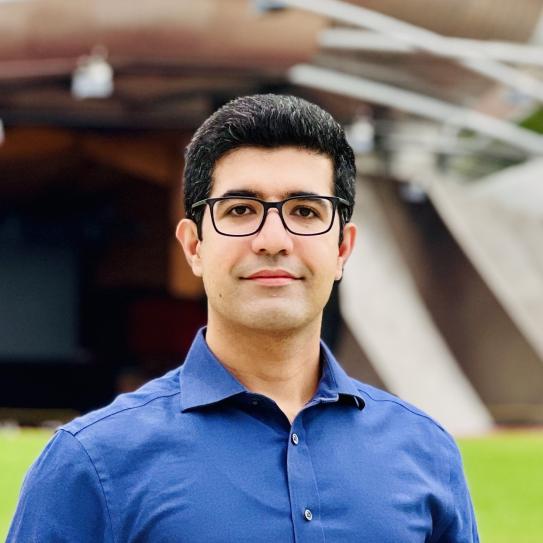
Hamed Rahmani is an Assistant Professor of Electrical and Computer Engineering at New York University (NYU Tandon School of Engineering). He is affiliated with NYU WIRELESS and the Center for Advanced Technology in Telecommunications (CATT), leading the Research in Advanced Integrated Systems and Electronics (RAISE) Lab. His research focuses on integrated circuits and systems for biomedical applications, IoT, and 5G/6G communication. Education: Ph.D., Electrical and Computer Engineering, UCLA (2020) M.Sc., Electrical and Computer Engineering, Rice University (2017) B.Sc., Electrical Engineering, Sharif University of Technology (2014) Research Interests: RF/mm-Wave circuits, low-power biomedical sensors, energy-efficient IoT systems, and wireless power transfer. His work emphasizes miniaturized implants, smart healthcare, and sustainable electronics. Awards: Recipient of the NSF CAREER Award (2025), IEEE MTT-S Graduate Fellowship (2019), and the 2023 Best Paper Award in the Journal of Microwave. He serves on technical committees for major conferences like CICC and IMS. Labs & Groups: Directs the RAISE Lab, collaborating with NYU WIRELESS on 6G research and CATT for technology transfer.
Christopher Weidlich is an Assistant Professor of Clinical in the School of Nursing and Health Studies at the University of Miami. His academic focus includes psychiatric nursing, mental health education, and healthcare provider well-being. He is involved in research addressing simulation-based education, mental health disorders in occupational groups such as fire investigators, and interventions to improve resilience among healthcare providers. His research interests span simulation modalities in psychiatric nursing education, organizational stigma's impact on mental health service utilization, and substance abuse trends like xylazine adulteration. He has also contributed to studies on military healthcare, including resilience programs for providers and PEMF therapy for chronic pain. Dr. Weidlich’s work is supported by his affiliation with the University of Miami’s School of Nursing and Health Studies, leveraging resources such as the Simulation Hospital Advancing Research and Education (S.H.A.R.E.®) facility. His research emphasizes practical applications in clinical settings and improving patient outcomes through innovative educational and therapeutic approaches.
James McCann is an Associate Professor at the Carnegie Mellon Robotics Institute, where he leads the Carnegie Mellon Textiles Lab. He has been a faculty member since May 2017 after working at Disney Research Pittsburgh. McCann's academic journey includes a PhD from Carnegie Mellon advised by Nancy Pollard, followed by a postdoc at Adobe Research and a period developing video games. McCann's research focuses on building creative tools that operate in real-time and build user intuition, with particular emphasis on textiles fabrication and machine knitting. His work spans computer-aided fabrication, simulation, graphics, and creative tools development. He has pioneered systems for machine knitting design, including compilers for knitting instructions and tools for automatic conversion of 3D meshes to knitting patterns. His recent publications demonstrate a strong trend toward computational textiles, with significant contributions to knitting semantics, deployable textile structures, and applications of machine knitting in healthcare and robotics. McCann's work bridges computer science, robotics, and textile arts, creating practical systems for once-off manufacturing with industrial knitting machines. McCann actively mentors students, with current PhD candidates working on solid knitting machines, knit calibration, and assistive devices. His teaching portfolio includes courses on Real-Time Graphics, Algorithmic Textiles Design, and Game Programming. He has taught at CMU since 2017, developing innovative courses that blend computer science with physical fabrication. As director of the Textiles Lab, McCann oversees research projects spanning machine knitting, robotic painting, and real-time graphics systems. His lab develops practical tools for creators, emphasizing intuitive interfaces and real-time feedback that lower barriers to advanced fabrication techniques.
Nasir Memon is a Professor of Computer Science and Engineering at the New York University Tandon School of Engineering and concurrently serves as the Dean of Engineering at NYU Shanghai. He has been a faculty member at NYU Tandon since September 1998. Memon is a co-founder of NYU's Center for Cyber Security (CCS) and NYU Abu Dhabi, and the founder of key initiatives such as the OSIRIS Lab, CyberSecurity Awareness Week (CSAW), the NYU Tandon Bridge program, and the Cyber Fellows program. His work focuses on advancing cybersecurity education and addressing systemic biases in AI-driven systems. Education: Ph.D., Computer Science, University of Nebraska Master of Science, Mathematics, Birla Institute of Technology and Science (BITS), Pilani Bachelor of Engineering, Chemical Engineering, BITS, Pilani Research Interests: Media Forensics and Authentication Biometric Security and Privacy Data Compression and Privacy-Preserving Techniques Network Security and Incident Response AI Ethics and Fairness in Machine Learning Cybersecurity Education and Workforce Development Awards and Honors: IEEE Fellow (2010) SPIE Fellow (2014) Jacobs Excellence in Education Award (2002) NSF CAREER Award (1997) Advising and Grants: Advises Ph.D. students like Anubhav Jain and Govind Mittal, and mentors Master’s students such as Rishit Dholakia. Recipient of NSF grants and funding from NYU Abu Dhabi and Indiana University Bloomington for projects like computational tools for fact-checking and AI-driven bias mitigation. Labs and Teams: Directs the OSIRIS Lab, a leading research group in cybersecurity and AI. Leads initiatives at the NYU Center for Cybersecurity (CCS) and collaborates with NYU Abu Dhabi’s Center for Cyber Security.
Roberto Navigli is a Full Professor in the Department of Computer, Control and Management Engineering at Sapienza University of Rome, where he leads the Sapienza NLP Group. He has held academic positions at Sapienza since 2007, progressing from Researcher to Associate Professor, and now Full Professor. Navigli is internationally recognized for his groundbreaking work in multilingual natural language processing and computational semantics. His research spans multiple areas within Natural Language Processing, with a particular focus on multilinguality , lexical semantics (Word Sense Disambiguation and induction), sentence-level semantics (Semantic Role Labeling and Semantic Parsing), and Large Language Models . As the leader of the Minerva LLM project, he pioneered the development of the first pretrained LLM in Italian. His creation of BabelNet, the largest multilingual encyclopedic computational dictionary covering 271 languages and about 14 million concepts, represents a landmark achievement in computational linguistics. Professor Navigli's recent publications demonstrate a strong focus on advancing multilingual capabilities of language models, addressing challenges in semantic understanding across languages, and developing robust evaluation frameworks. His work on Italian LLM optimization, lexical ambiguity in machine translation, and cross-lingual safety gaps reflects his commitment to building more accurate and reliable language technologies that work effectively across diverse linguistic contexts. AAAI Fellow (2025) EurAI Fellow (2024) ELLIS Fellow (2024) ACL Fellow (2023) Outstanding Paper Awards at ACL 2024, ACL 2023, and NAACL 2021 Best Resource Paper Award at ACL 2022 Prominent Paper Awards from the Artificial Intelligence Journal (2023, 2017) META Prize 2015 for BabelNet Professor Navigli has successfully secured substantial research funding, including two prestigious ERC Grants (MultiJEDI ERC Starting Grant 2010-2016 and MOUSSE ERC Consolidator Grant 2017-2023, totaling around 3 million euros), PI of PRIN 2017 and PRIN 2020 projects (overall 1.4 million euros), and a Google Focused Research Award (around 300k$). He has mentored over 30 PhD students, many of whom have gone on to successful careers in academia and industry. His leadership extends to major international conferences, serving as General Chair of ACL 2025 and Program Co-Chair of ACL-IJCNLP 2021. As the director of the Sapienza NLP Group and co-leader of the Transversal Project on Large Language/Multimodal Models in the FAIR (Future Artificial Intelligence Research) project, Professor Navigli oversees a vibrant research ecosystem focused on advancing the state-of-the-art in natural language understanding across languages. His spinoff company, Babelscape, translates academic research into practical applications for industry.
Xiaowei Jia is an Assistant Professor in the Department of Computer Science at the University of Pittsburgh. He holds a Ph.D. from the University of Minnesota (supervised by Prof. Vipin Kumar) and B.S./M.S. degrees from the University of Science and Technology of China (USTC) and SUNY Buffalo. His research focuses on integrating scientific theory with machine learning to address societal and environmental challenges, such as climate modeling, hydrology, and fairness in AI. Education: Ph.D., University of Minnesota (2020) M.S., State University of New York at Buffalo B.S., University of Science and Technology of China (USTC) Research Interests: Knowledge-Guided Machine Learning Spatiotemporal Data Mining Fairness in AI for Social Good Applications in Environmental Science and Healthcare Publications showcase his work on physics-integrated neural networks, spatiotemporal modeling (e.g., water temperature prediction), and fairness-aware algorithms. His work has been recognized with Best Paper awards at SIAM SDM (2022, 2023). Awards include the Best Applied Data Science Paper Award at SIAM SDM in 2022 and 2023. He teaches advanced machine learning courses, emphasizing theory integration with real-world applications.
Xavier Serra is a Full Professor at the Department of Engineering at Universitat Pompeu Fabra (UPF), Barcelona. He is the founder and director of the Music Technology Group (MTG), and leads the UPF-BMAT Chair on AI and Music. He also coordinates the Master in Sound and Music Computing and serves as President of the Phonos Foundation. His research focuses on audio signal processing, sound and music computing, and computational musicology, emphasizing open science and open innovation. Education: BSc in Biology, University of Barcelona (1981) Master in Music, Florida State University (1983) PhD in Computer Music, Stanford University (1989) Research Interests: Audio Signal Processing Data-Driven and Knowledge-Driven Methodologies Music Information Retrieval Cultural Music Analysis (e.g., Carnatic/Turkish/Andalusian Music) Music Education Technology Notable Projects: CompMusic (ERC Advanced Grant, 2010-2017): Multicultural computational music analysis Open datasets: Freesound, Saraga, FSD50K Technologies: Reactable, Vocaloid, Essentia API Recent Trends in Articles: Focus on AI-driven audio processing (neural fingerprints, generative models), cross-cultural music analysis, and explainable music difficulty estimation. Awards: ERC Advanced Grant (2010) for CompMusic Project. Labs/Teams: Director of MTG, Phonos Foundation, and UPF-BMAT Chair. Active in open-source projects and international collaborations.
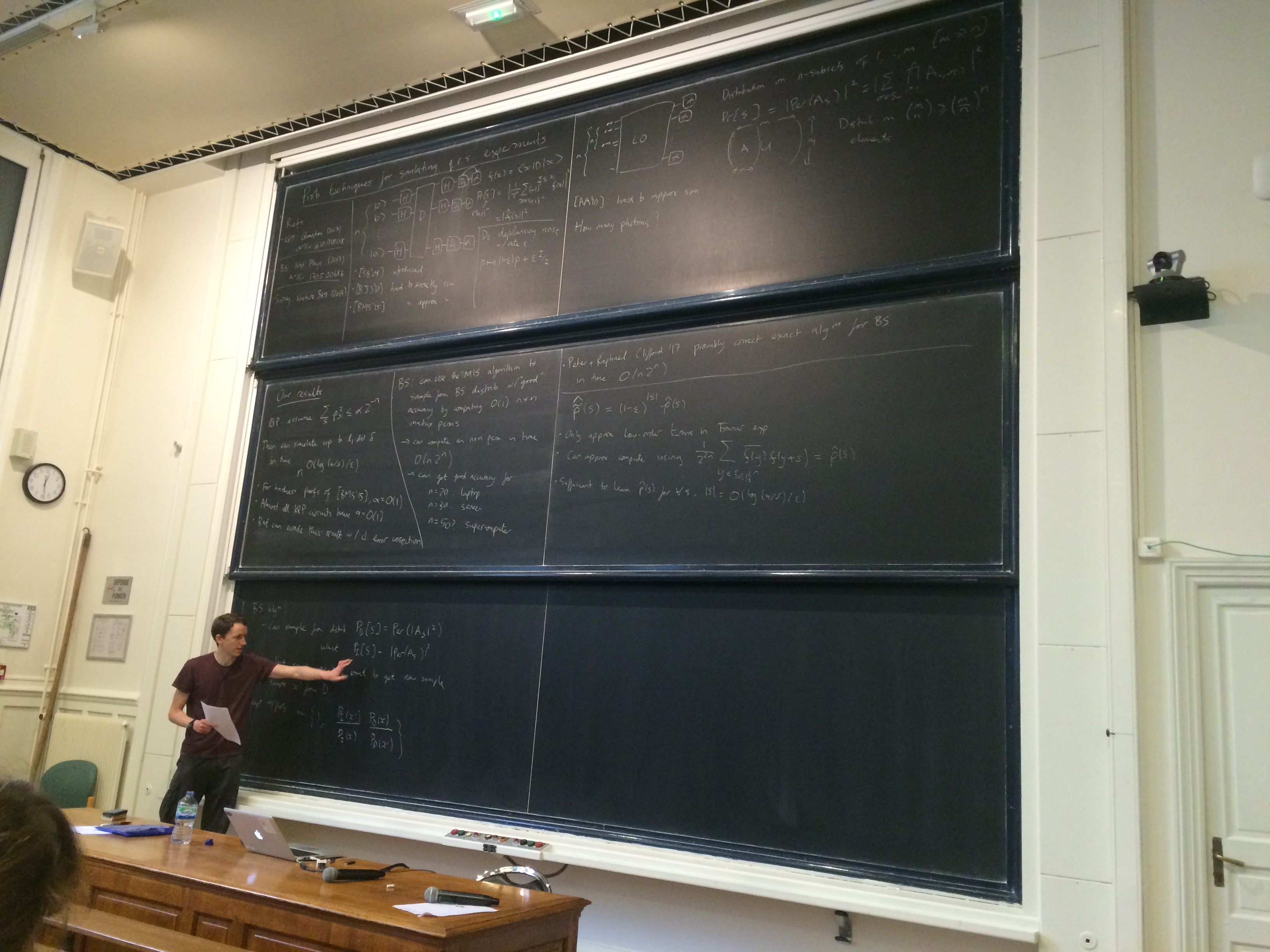
Ashley Montanaro is Professor of Quantum Computation in the School of Mathematics at the University of Bristol, and co-founder of the quantum software startup Phasecraft. He is a member of the Quantum Information Theory research group at Bristol. His research focuses on the theory of quantum computing, with particular interest in quantum algorithms, computational complexity, quantum query and communication complexity, and classical algorithms. His work spans both theoretical foundations and practical applications of quantum computing. Montanaro's research output shows significant trends toward quantum algorithms for optimization problems, quantum computational supremacy, and bridging theoretical advances with practical implementation challenges. His publications span foundational quantum information theory to applied quantum algorithms, demonstrating a versatile research program that connects computer science with quantum physics. Among his professional activities, Montanaro served on the QIP steering committee (2016-2018) and was an editor for the Quantum journal until 2019. He has been active in conference organization, serving on program committees for ITCS 2018, AQIS 2017 and 2015, QIP 2015, and TQC 2014 and 2013, reflecting his standing in the quantum computing research community. He has supervised numerous PhD students including Josh Blake, Jorja Kirk, Sheila Perez Garcia, Sami Boulebnane, Jan Lukas Bosse, Lana Mineh, Joao F. Doriguello, Chris Cade, Sam Pallister, and Stephen Piddock. His teaching includes Quantum Computation (MATHM0023) which he has taught since 2014 and Advanced Quantum Information Theory which he taught in 2015 and 2016. As co-founder of Phasecraft, Montanaro is actively translating theoretical quantum computing advances into practical software solutions, positioning him at the intersection of academic research and quantum technology commercialization.
Changxi Zheng is an Associate Professor in the Department of Computer Science at Columbia University's School of Engineering and Applied Science (SEAS). He directs Columbia's Computer Graphics Group (C2G2) within the Columbia Vision and Graphics Center (CVGC). After receiving his PhD from Cornell University, he joined the faculty of Computer Science Department at Columbia, where he has established himself as a leading researcher in computer graphics and scientific computing. Dr. Zheng's research spans multiple areas of applied computer science with a particular focus on computer graphics and scientific computing. His work centers around developing numerical models for simulating physical phenomena involving complex motions such as fluids, bubbles, and thin rods, along with their resulting acoustic waves. Leveraging computational insights from these models, he devises methods for improving tangible object creation, enabling novel human-computer interactions, and developing software tools for acoustic and photonic devices. His research has attracted significant public interest and media coverage, including projects like FontCode, AirCode, and Computational Metallophone Design. His recent publications reveal a strong interdisciplinary approach, bridging computer graphics, physics simulation, machine learning, and hardware design. His work demonstrates consistent innovation in computational methods for simulating physical phenomena and applying these techniques to practical problems in 3D printing, acoustic modeling, and interactive systems. The breadth of his research spans from fundamental physics-based simulations to practical applications in industry. Columbia SEAS Dean's Fellow (for advised students) NSF Graduate Research Fellow (for Ruilin Xu) Snap Research Fellow (for Rundi Wu) CKGSB Fellow (for Yun Fei) Adobe Research Fellow (for Gabriel Cirio) Marie Sklodowska-Curie Individual Fellow (for Rundi Wu) Best Paper Award at ACM International Conference on Multimedia (ACMMM), 2019 Dr. Zheng actively mentors a diverse group of students, including current PhD candidates and postdoctoral researchers. His research group has received support from various sources that enable their innovative work in computational graphics and physics-based simulation. He has supervised numerous successful students who have gone on to positions at leading technology companies including Adobe, Tencent, Facebook, and academic institutions. As director of Columbia's Computer Graphics Group (C2G2) within the Columbia Vision and Graphics Center (CVGC), Dr. Zheng leads a vibrant research team focused on advancing the state of the art in computer graphics, physics-based simulation, and their applications. The group maintains strong collaborations with industry partners and academic institutions worldwide, fostering an environment of innovation and practical application of theoretical concepts.