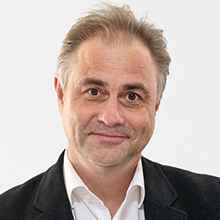
Carsten Hopf is a Professor of Bioanalytics and Drug Discovery at Mannheim University of Applied Sciences, leading the Institute of Instrumental Analytics and Bioanalytics and the CeMOS (Center for Mass Spectrometry and Optical Spectroscopy). His work focuses on developing spatially resolved omics technologies (e.g., MALDI-MS imaging) for neurodegenerative and oncological research. He explores lipidomics, proteomics, and metabolomics to understand Alzheimer's disease, glioblastoma, and other neurodegenerative disorders. Key projects include the SMART-CARE-2 BMBF initiative (2023–2026) and DFG-funded research on spatial multi-omics in glioblastoma (SFB 1389). Research interests center on mass spectrometry innovations, including matrix optimization, AI-driven data analysis, and multimodal imaging (e.g., infrared microscopy integration). His lab develops label-free cell assays for drug discovery and studies molecular mechanisms of neurodegeneration. Collaborations span academia and industry, with projects like the M 2 Aind partnership addressing 3D cell culture toxicity assessments. Grants include BMBF, DFG, and EU funding for systems medicine, organoid analysis, and mass spectrometry cores. His technological advancements aim to improve biomarker discovery and translational medicine in neuro-oncology and neurodegeneration.
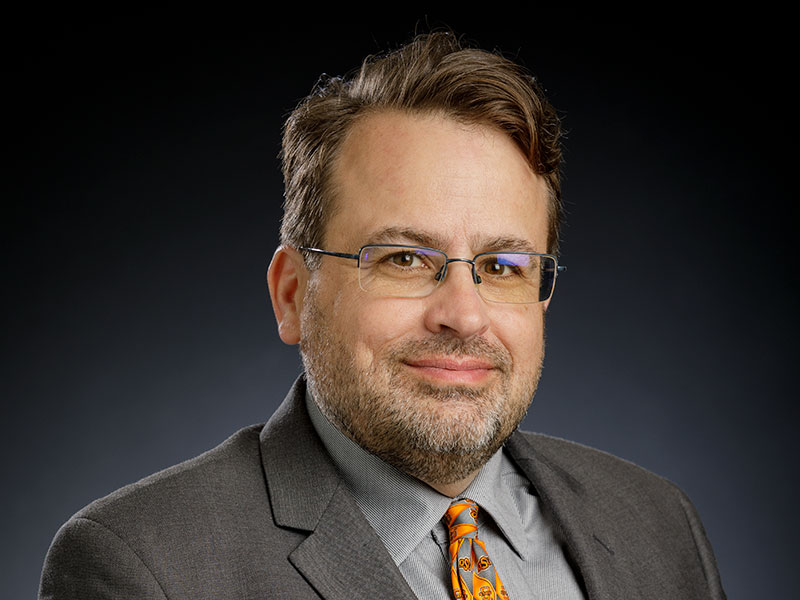
Dr. Sebastian Bosch serves as Manager of the Mobile Lab at the University of Hamburg's Centre for the Study of Manuscript Cultures (CSMC). He leads material analysis initiatives for cultural heritage artifacts through advanced scientific instrumentation. His roles include managing XRF and FTIR spectrometers in the Mobile Lab, and contributing to the Cluster of Excellence 'Understanding Written Artefacts' (2019–2025). Key projects include the Palm-Leaf Manuscript Profiling Initiative and material analysis of medieval manuscripts. Bosch holds a PhD in material science and has extensive experience in non-destructive testing techniques. His work bridges archaeometry, digital humanities, and conservation science. Research interests focus on multispectral imaging, pigment characterization, and technological applications for cultural heritage preservation. He collaborates internationally on projects like the Atri Fragment Revisited and Squarcialupi Codex analysis. Technical expertise includes XRF spectroscopy, infrared microscopy, and software development for pattern analysis in manuscripts. Has presented over 27 academic activities, including lectures on Mobile Lab methodologies and material analysis workshops. Manages laboratory equipment worth millions euros, supporting interdisciplinary research. Supervises technical operations for dozens of manuscripts annually through the Mobile Lab's fieldwork capabilities. Awards: No formal academic awards listed, though work has been recognized through high-impact publications in journals like Manuscript Studies and i-com .
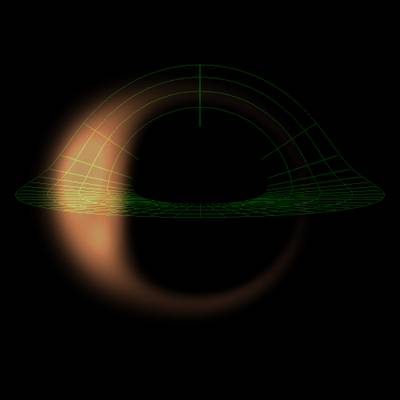
Avery E. Broderick is an Associate Professor in the Department of Physics & Astronomy at the University of Waterloo and an Associate Faculty Member at the Perimeter Institute for Theoretical Physics. His research focuses on theoretical astrophysics, particularly studying compact objects like black holes and testing general relativity through astronomical observations. He is a key member of the Event Horizon Telescope (EHT) collaboration, which produced the first direct images of black hole horizons in M87* and Sagittarius A*. Broderick’s work emphasizes relativistic astrophysical phenomena such as accretion flows, jet formation, and polarization signatures. He collaborates extensively with observational astronomers and computational physicists to model black hole environments using general relativistic magnetohydrodynamic simulations. His recent research includes analyzing EHT data to constrain black hole spin, test spacetime metrics, and study photon ring dynamics. He also explores next-generation EHT (ngEHT) capabilities for higher-resolution imaging and multi-wavelength studies. Broderick has delivered invited lectures globally, including at Harvard-Smithsonian CfA, MIT, and the Aspen Center for Physics, reflecting his leadership in the field. Broderick’s contributions span over 135 refereed publications and conference proceedings, with a focus on black hole astrophysics, VLBI techniques, and relativistic plasma physics. His work bridges theoretical predictions with observational data, advancing our understanding of extreme gravitational regimes in the universe.
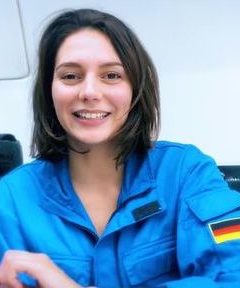
Dr. Olfa Lopez-D’Angelo is a researcher at the Department of Multiscale Simulation of Particulate Systems at Friedrich-Alexander-Universität Erlangen-Nürnberg. Her research focuses on granular rheology, additive manufacturing for space applications, and the behavior of materials under microgravity conditions. She leads the Rheologie granularer Materialien unter Weltraumbedingungen project (2023–2026), funded by the German Ministry for Economic Affairs and Climate Action (BMWK). Her work bridges theoretical physics, experimental engineering, and space technology. Key research interests include granular fluid dynamics, powder-based manufacturing processes in low-gravity environments, and the structural analysis of metamaterials. She has contributed to pioneering studies on acoustically propelled macroparticles and granular piston-probing in microgravity. Her interdisciplinary approach is evident in collaborations with institutions like ESA and DLR, as well as her involvement in projects such as the VIP-DROP2 module for droplet dynamics experiments. Awards: Granular Matter Gordon Research Conference Poster Prize (2022) ELGRA Research Prize (2021) Fly Your Thesis! 2019 (2018) ESA Networking/Partnering Initiative Fellowship (2017) Dr. Lopez-D’Angelo actively disseminates her work through international conferences (e.g., DPG, IAC) and public engagement initiatives, including the podcast Talk That Science . Her research emphasizes practical applications in space exploration, such as in-situ resource utilization and advanced manufacturing systems for extraterrestrial environments.
Jamey Jacob, Ph.D., P.E., is a Professor and John Hendrix Chair in Mechanical and Aerospace Engineering at Oklahoma State University, leading the Oklahoma Applied Research Institute (OAIRE). He holds a Ph.D. from UC Berkeley (1995), with earlier degrees from the same institution and the University of Oklahoma. His research focuses on aerodynamics, UAV design, vortex dynamics, geophysical flows, and autonomous systems. Notable projects include solar balloon flight dynamics, eclipse observations, and advanced air mobility (AAM) weather systems. Jacob has pioneered UAV-based weather sensing and developed innovative aerostructures, including inflatable systems. He has received over 15 prestigious awards, including the Regents Distinguished Teacher (2011) and Oklahoma Innovator of the Year (2010). His recent work emphasizes urban wind field mapping and stratospheric balloon applications for planetary science. Jacob’s lab, OAIRE, integrates aerospace engineering with environmental and operational challenges, advancing both academic and applied frontiers.
MaryAnne Drake is the William Neal Reynolds Distinguished Professor of Food Science at North Carolina State University and Director of the Southeast Dairy Foods Research Center. She leads research in sensory analysis and flavor chemistry, focusing on dairy product quality, consumer perception, and industrial applications. Education: Ph.D. Food Science, Washington State University (1996) M.S. Food Science, Washington State University (1992) B.S. Biology, Central Washington University (1990) Her research integrates qualitative market research, descriptive analysis, consumer testing, and advanced instrumental techniques like gas chromatography/olfactometry to link sensory properties with chemical constituents in foods. She develops methodologies and addresses industry challenges in food processing and storage.
Nadeen L. Kaufman, Ed.D., serves as Lecturer on the Clinical Faculty at the Yale Child Study Center within the Yale University School of Medicine, a position she has held since 1997. She is internationally recognized for her contributions to psychological assessment and testing. Her educational background includes a Doctor of Education (DEd) from Columbia University (1978), an MS in Specialist in Learning and Reading Disabilities from Columbia University (1975), an MA in Educational Psychology from Columbia University (1972), and a BS in Education from Hofstra University (1965). Kaufman's research focuses on the clinical interpretation of psychological tests for diagnosing learning disabilities, intellectual disabilities, and other exceptionalities. She has pioneered the integration of cognitive assessment with Response to Intervention (RTI) methodologies, significantly influencing how learning disabilities are identified and addressed in educational settings. Her work bridges theoretical psychological concepts with practical educational applications, emphasizing how test results can directly inform effective interventions for children with learning challenges. Among her most influential contributions are the various Kaufman assessment instruments, which have established new standards in psychological testing worldwide. School Neuropsychology Summer Institute KIDS, Inc. Lifetime Achievement Award (with Alan S. Kaufman) (2012) Kaufman has advised on numerous research initiatives and has been instrumental in developing training programs for professionals in the field. She has co-directed several psychoeducational clinics and has served as Associate Editor of School Psychology Review. Her collaborative work with her husband Alan Kaufman has produced assessment tools that are now standard practice in over 20 countries worldwide. She continues to be actively involved in test development, currently working on revisions of the KTEA-III and KABC-II assessment instruments, demonstrating her ongoing commitment to advancing the field of psychological assessment.
Dr. Naomi Norton serves as Lecturer in Music Education at the University of York's School of Arts and Creative Technologies, where she concurrently holds leadership positions as School Wellbeing Lead, Musicians' Health and Wellness Coordinator, and Chair of the Musicians' Health and Wellness Group. Her professional mission centers on eliminating barriers to musical proficiency related to health, socioeconomic status, and wellbeing, driving her multifaceted career in teaching, research, consultancy, and performance. Dr. Norton's academic foundation includes a BA in Music (2011) and MMus in Applied Psychology of Music (2012, Santander scholarship) from the University of Leeds, followed by AHRC-funded doctoral research at the Royal Northern College of Music (validated by Manchester Metropolitan University, 2016). Her dissertation examined health promotion in instrumental/vocal lessons from UK teachers' perspectives. BA in Music (2011), University of Leeds MMus in Applied Psychology of Music (2012), University of Leeds PhD in Music (2016), Royal Northern College of Music / Manchester Metropolitan University Her research program critically investigates intersections between music education, health psychology, and behavioral science, with particular emphasis on teacher perspectives in health promotion. She pioneers applications of frameworks like the Behaviour Change Wheel to develop evidence-based wellness strategies for musicians, addressing physical, mental, and occupational health dimensions across educational and professional contexts. This work consistently challenges systemic barriers to musical participation while advancing pedagogical approaches that integrate wellbeing into core music training. Analysis of her publication record (2014-2021) reveals evolving scholarship from foundational demographic studies of UK music teachers toward practical implementation of health promotion models. Key thematic threads include teacher health status, interdisciplinary collaboration models, and curriculum-integrated wellness education, with increasing focus on ensemble settings and behavioral change methodologies. This trajectory demonstrates growing influence in establishing health promotion as essential infrastructure within music education ecosystems. Dr. Norton has secured competitive research funding including an Arts and Humanities Research Council grant for doctoral studies and Santander scholarship support for her Master's degree. Her teaching portfolio spans undergraduate BA Music modules (Musicians' Health and Wellness, Creative and Professional Practice) and postgraduate instruction across MA Music Education, MA Community Music, and MA Vocal Studies pathways, where she specifically teaches Instrumental/Vocal Teaching and Group Teaching Leadership. Professionally, she contributes to the International Society for Music Education as committee member for the Music Health and Wellness Special Interest Group, while leading institutional change through York's Musicians' Health and Wellness Group to coordinate cross-departmental wellbeing initiatives for students and staff.
Frédérick Massin is a researcher at ETH Zürich's Swiss Seismological Service (SED), specializing in seismology, earthquake early warning systems, and volcanic monitoring. He is affiliated with the Bedretto Underground Lab (BULGG) and contributes to global seismic research. His work focuses on developing advanced algorithms for rapid earthquake rupture characterization (e.g., FinDer), improving earthquake early warning (EEW) systems in regions like Central America and New Zealand, and analyzing seismic data to enhance disaster preparedness. Key research areas include: Earthquake Source Physics and Real-Time Modeling Seismic Data Center Innovation and Global Networks Volcanic Seismicity and Lahar Detection Socio-Technical Aspects of EEW Systems Recent projects involve assessing EEW impacts in Central America, improving seismic catalogues (FEAR-1), and investigating lake ice seismicity. He collaborates internationally on initiatives such as the Nepal School Seismology Network and Yellowstone volcano-tectonic studies.
Douglas W. Carter is an Assistant Professor in the Department of Mechanical, Materials, and Aerospace Engineering at the Armour College of Engineering, Illinois Institute of Technology. He leads the Experimental Turbulent Flows Lab, focusing on advanced experimental techniques for fluid dynamics research. Education: Ph.D., University of Minnesota, 2019 M.S., University of Minnesota, 2017 B.S., University of New Hampshire, 2014 Research Interests: Dr. Carter investigates experimental turbulent flows, particle-turbulence interactions, and noise generation in separated flows. His expertise spans particle tracking velocimetry, hypersonics, compressible flows, and data-driven methods for fluid systems. Research emphasizes experimental validation of turbulence models and development of novel diagnostic tools like FLEET velocimetry. Publications: Recent work explores hypersonic flow diagnostics, pressure reconstruction in stalled airfoils, and turbulence cascade dynamics. Publications demonstrate consistent focus on experimental fluid mechanics, high-speed flow measurements, and low-order modeling for aerodynamic prediction. Laboratory: The Experimental Turbulent Flows Lab (Rettaliata Engineering Center) develops cutting-edge techniques for turbulent flow analysis, including multi-scale imaging and optical diagnostics for high-speed applications.
Giovanni Forchini is a Professor at the Umeå School of Business, Economics and Statistics (USBE), Umeå University, Sweden. His research focuses on econometrics, panel data analysis, and their applications in health economics and epidemiological modeling. He holds the title of Docent, a Swedish academic qualification reflecting advanced expertise. His work bridges theoretical econometrics with practical policy analysis, particularly in pandemic preparedness and healthcare optimization. Research Themes: Econometric methodologies for panel data and structural equation models Quantifying pandemic impacts on healthcare systems and economies Optimization of resource allocation during public health crises Key Contributions: Developed the DAEDALUS model for integrated economic-epidemiological policy simulations Analyzed SARS-CoV-2 transmission dynamics and vaccine impact in multiple countries Pioneered statistical methods for handling multifactor structures in panel data Awards & Grants: USBSE Pedagogical Prize 2020 Funding from Forte (Swedish Research Council for Health, Working Life and Welfare) and Handelsbanken Teaching & Mentorship: Coordinates Master’s theses in Economics at USBSE Teaches advanced courses like Econometrics 1 & 2 and Analysis of Financial Data
Gaurav Mohanty is an Assistant Professor at Tampere University's Materials Science and Environmental Engineering department within the Faculty of Engineering and Natural Sciences. His research focuses on deformation mechanisms of engineering materials at micro/nano scales using in-situ micromechanical testing in SEM environments. Key techniques include FIB-milled micropillars and cantilevers for studying mechanical properties under extreme conditions (cryogenic to ultra-high temperatures, strain rates from 0.0001 to 10,000/s). He explores transient plasticity, high-cycle fatigue, and combinatorial materials science across metals, ceramics, semiconductors, and thin films. Funding sources include the Academy of Finland, MATINE, and SAFIR. His work contributes to novel testing methodologies for small-scale materials and understanding deformation mechanisms. Research highlights include high-temperature nanoindentation systems, fracture studies in tungsten, and interfacial fracture toughness in dental prostheses. His research group emphasizes interdisciplinary collaborations, leveraging synchrotron X-ray diffraction and advanced EBSD analysis. Current projects address challenges in microscale fracture, high-rate deformation, and material design through combinatorial libraries.
Dr. Artem Odobesko is a Research Fellow in Experimental Physics II at the University of Würzburg, Germany. He holds a PhD (Dr. rer. nat.) in Physics from the Kotel'nikov Institute of Radio-engineering and Electronics of RAS (Russia) and prior degrees from the Moscow Institute of Physics and Technology (B.Sc. 2003, M.Sc. 2005). His research focuses on topological materials, scanning tunneling microscopy (STM), and superconductivity. Key interests include manipulating Dirac points in topological insulators, probing chiral symmetry, and enhancing STM resolution through novel probe designs. He contributes to the Experimental Physics II team under Prof. Matthias Bode, collaborating on projects involving topological domain walls, electronic interactions in 1D systems, and surface engineering. His work spans experimental and theoretical studies of quantum materials, with publications in journals like Nano Letters , Science Advances , and Nature Physics . He has developed advanced STM techniques and explored phenomena such as Yu-Shiba-Rusinov states and anisotropic vortices. Odobesko’s research also addresses strain effects in epitaxial films and surface preparation for superconductors.
Tapio Niemi is an Associate Professor (tenure track) in the Department of Physics at Aalto University. He holds a Doctor of Science (Technology) from the former Helsinki University of Technology (now part of Aalto University), awarded in 2002. His research focuses on nanophotonics, plasmonics, quantum dots, and semiconductor materials, with particular expertise in nanofabrication techniques such as block copolymer lithography and nanoimprint lithography. His work contributes to the UN Sustainable Development Goals through advancements in solar cell technology and environmental sensor development. Key research areas include the design of optical devices like microdisk lasers, guided-mode resonance gratings, and plasmonic sensors. He has pioneered studies on ZnO nanowire functionalization and nonlinear optical microscopy, with applications in biomedical imaging and environmental sensing. His interdisciplinary approach integrates nanotechnology, photonics, and materials science to address challenges in energy, health, and sustainability. Education: Doctor of Science (Technology), Helsinki University of Technology (2002) Supervision: Advised doctoral student Tommi Isoniemi on carbon nanotubes and graphene in plasmonics (2017–2021) Labs/Teams: Collaborations include the NanoScience Center (University of Jyväskylä) and Aalto’s nanophotonics research groups Recent work emphasizes high-Q resonators, Purcell-enhanced quantum dot light sources, and UV-curable polymer stamp lithography. His publications span journals like Advanced Optical Materials and Applied Physics Letters , with a focus on practical applications in photonics and nanotechnology.
Mingjiang Zhong is an Associate Professor in the Department of Chemical & Environmental Engineering at Yale University, with additional appointments in Materials Science and Chemistry. His research is centered on the development of advanced synthetic methodologies for functional organic materials and organic-inorganic hybrid systems. Education: B.S., Peking University Ph.D., Carnegie Mellon University His research interests lie at the intersection of polymer chemistry, materials science, and sustainability. He focuses on polymer-derived carbon materials and hierarchical nanostructures for applications in energy conversion, catalysis, and environmental technologies. His group combines sophisticated molecular design with advanced analytical techniques to probe and control complex soft matter behaviors . An analysis of his 15 most recent publications reveals a strong and consistent research trajectory in controlled radical polymerization , particularly in developing novel methods for branching and stereocontrol . His work frequently involves block copolymer self-assembly to create functional nanocomposites and membranes, with a growing emphasis on applications in water treatment (e.g., anti-scaling polymers, desalination membranes) and energy (e.g., electrocatalysts, ion conductors). Scientific Awards and Honors: Camille Dreyfus Teacher-Scholar Award (2022) Wiley Journal of Polymer Science Early Career Investigator (2021) 3M Non-Tenured Faculty Award (2020) National Science Foundation CAREER Award (2019) ACS PMSE Young Investigator (2019) ACS Petroleum Research Fund Doctoral New Investigator (2017) Dr. Zhong leads an active research group, mentoring numerous graduate students and postdoctoral scholars, as evidenced by frequent lab news celebrating student achievements such as passing qualifying exams and successful PhD defenses. His group has secured significant recognition, indicating strong support for research grants. The lab is equipped with state-of-the-art instrumentation for polymer synthesis and characterization, including GPC, GC, and preparative chromatography systems.