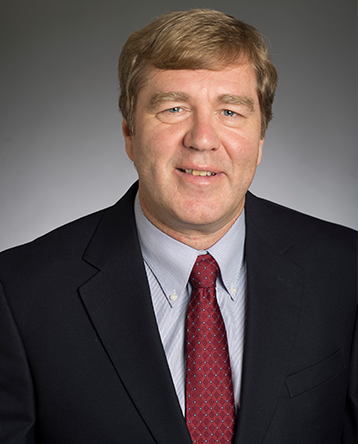
Jouni Partanen is a Professor at Aalto University's Department of Energy and Mechanical Engineering within the College of Engineering. His research focuses on advanced production technologies including Additive Manufacturing (3D-Printing), modern laser processing, and micromachining. Research Group: Materiaaleista tuotteiksi Specialization: Integration of AI in manufacturing processes Sustainability emphasis: Biochar-reinforced materials and carbon footprint reduction His work spans from fundamental material behavior analysis to industrial applications, particularly in metal additive manufacturing and composite fabrication. Recent research explores corrosion resistance in lattice structures and multiscale photopolymerization techniques. Publications highlight interdisciplinary approaches combining mechanical engineering with biomedical applications (e.g., patient-specific implants) and environmental health studies on industrial 3D printing emissions.
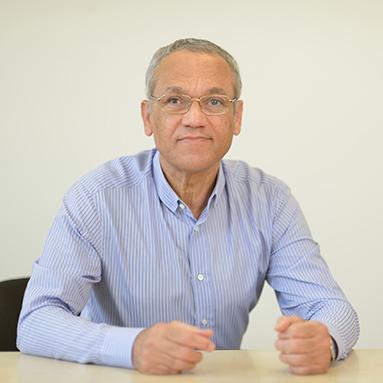
Ron H.J. Peerlings is Associate Professor in the Department of Mechanical Engineering at Eindhoven University of Technology (TU/e) , where he leads the Mechanics of Materials research group. Promoted to Associate Professor in 2007 after joining as Assistant Professor in 2000, he has built an extensive portfolio in theoretical and computational mechanics of materials. Education: PhD (1999) – Eindhoven University of Technology, thesis: Enhanced damage modelling for fracture and fatigue Post-doctoral research (1999–2000) – University of Cambridge, Engineering Department Research interests revolve around micromechanics , micro-plasticity , multiscale modelling , homogenisation , damage and fracture , and enriched continuum theories . His work spans advanced high-strength steels, composites, paper and fibrous networks, with strong emphasis on coupling rigorous theoretical developments to industrially motivated problems. His recent publications (2023-2025) demonstrate a clear trajectory towards integrating advanced experimental techniques (e.g., digital image correlation, micro-mechanical testing) with high-fidelity computational frameworks such as crystal-plasticity finite-element modelling, FFT-based solvers and micromorphic homogenisation. Dominant themes include: Deformation and fracture in lath martensite and dual-phase steels Hygro-mechanics of paper and fibrous networks Pattern-transforming mechanical metamaterials Discrete-to-continuum scale bridging methods Scientific awards are not explicitly listed in the provided material; however, his prolific output (294 research items, >6500 citations) attests to significant peer recognition. Teaching & supervision: He delivers courses on Computational Mechanics – Numerical Methods for Fluids and Solids and Fracture Mechanics – Theory and Application , and has supervised >80 student works and numerous PhD candidates whose names appear on joint publications. Laboratory & teams: He heads the Group Peerlings within the Mechanics of Materials cluster, maintaining close collaboration with the Mechanics of Materials Group Geers and extensive national/international experimental and computational networks.
Micah Hale is a Professor and Department Head of Civil Engineering at the University of Arkansas, Fayetteville, and holds the Twenty First Century Endowed Leadership Chair in Civil Engineering. His work focuses on concrete materials, structural performance, and sustainable construction practices. Education: Ph.D., M.S., and B.S. in Civil Engineering from the University of Oklahoma. Dr. Hale’s research explores High-Performance Concrete , Bond Behavior of Prestressing Strands , and Mitigation of Alkali-Silica Reaction (ASR) . He also investigates Thermal Energy Storage applications for solar power systems and sustainable ultra-high-performance concrete (UHPC) development. His publications highlight advancements in concrete durability, prestressed girder analysis, and environmentally conscious material design. Recent studies emphasize calcium oxychloride formation , prestress transfer modeling , and self-consolidating concrete optimization. His scholarly output spans structural mechanics, chemical durability, and material sustainability. Awards: Twenty First Century Endowed Leadership Chair in Civil Engineering As an educator, Dr. Hale teaches Reinforced Concrete Design , Prestressed Concrete Design , and Concrete Materials and Mixture Proportioning . His contributions to engineering ethics education and student engagement further underscore his academic leadership.
Professor Chunsheng Lu is a faculty member at Curtin University's School of Civil and Mechanical Engineering within the Faculty of Science and Engineering. He currently holds the position of Professor and serves as Editor-in-Chief of Mechanical Engineering Advances . His research focuses on fracture mechanics, multi-scale modeling, energy materials, nonlinear dynamics, and natural disaster risk analysis. Lu is actively involved in HDR (Masters/PhD) supervision, offering projects on advanced materials modeling and simulations. His research interests include mechanics of energy materials, multi-scale modeling, and fracture statistics. He has contributed to over 200 publications, with recent work emphasizing piezoelectric semiconductors, nanomaterials, and energy storage systems. Lu's teaching spans materials engineering, solid mechanics, and numerical methods.
Jack Beuth is a Professor of Mechanical Engineering at Carnegie Mellon University (CMU), affiliated with the College of Engineering. He has been on the faculty since 1992 and leads the NextManufacturing Center, focusing on additive manufacturing (AM) research. His work emphasizes process mapping for AM, material science, and machine learning integration in manufacturing processes. Key affiliations include the Engineering Research Accelerator and the Manufacturing Futures Institute. Education: Ph.D. in Engineering Sciences, Harvard University (1992) M.S. in Engineering Sciences, Harvard University (1989) M.S. in Engineering Science and Mechanics, Virginia Tech (1987) B.S. in Engineering Science and Mechanics, Virginia Tech (1984) Research Interests: Additive Manufacturing (process modeling, material characterization, and defect analysis) Melt pool dynamics and thermal modeling Machine learning for process optimization and quality control Advanced materials for AM (e.g., Ti-6Al-4V, Inconel 718) His research has led to innovations like 'process map' approaches for AM, enabling better control over variables such as melt pool geometry and microstructure. Awards and Recognition: Ralph R. Teetor Educational Award (1998) George Tallman and Florence Barrett Ladd Development Professorship (2000) ASME Curriculum Innovation Award (2005) Benjamin Richard Teare Teaching Award (2009) Grants and Collaborations: $3.5M cooperative agreement with the U.S. Army Combat Capabilities Development Command’s Army Research Laboratory (ARL) for AI-driven AM process optimization. Collaborations with Westinghouse Electric Company on 3D-printed nuclear components, such as spacer grids for pressurized water reactors. Labs and Teams: NextManufacturing Center: A research hub for AM innovation, emphasizing industrial partnerships and applied research. Beuth’s Additive Lab: Specializes in melt pool analysis, process mapping, and material behavior under AM conditions.
Dr. Qian Shunzhi is an Associate Professor and Program Director for the Bachelor of Engineering (Civil) at NTU's School of Civil and Environmental Engineering. He holds a PhD from the University of Michigan (2007), with prior faculty experience at Southeast University (2009-2013) and postdoctoral research at TU Delft (2007-2009). His research focuses on advanced construction materials like Engineered Cementitious Composites (ECC), self-healing concrete, and 3D-printable concrete, alongside life cycle assessment of infrastructure. Key interests include sustainable materials, CO2 sequestration, and material durability. Education: Bachelor's: Southeast University (Nanjing, 1998) Master's: Chinese Ministry of Transport Highway Research Institute (Beijing, 2001) PhD: University of Michigan (Ann Arbor, 2007) Research Interests: Novel cementitious composites for infrastructure resilience Recycled materials in construction 3D printing applications in concrete Material lifecycle analysis Notable contributions include bacterial encapsulation for self-healing, graphene-enhanced antibacterial surfaces, and CO2 sequestration via reactive materials. His work bridges material science, sustainability, and advanced manufacturing techniques.
Jari Puttonen is a Professor of Structural Engineering at Aalto University's Department of Civil Engineering, School of Engineering. His research focuses on structural analysis, fire safety, materials science, and nuclear infrastructure safety. He has held roles as Principal Investigator in projects related to nuclear waste repository concrete modeling and aging management of NPP infrastructure. He has advised over 20 academic visitors and served in doctoral thesis committees. Education: Doctoral degree (1987), Licentiate (1984), and Master's degree (1979) in Engineering and Technology from Helsinki University of Technology (now part of Aalto University). Research Interests: Steel and composite materials behavior under extreme conditions Fire resistance of structural systems Long-term performance of concrete in nuclear facilities Non-destructive testing of construction materials Seismic resilience of critical infrastructure Awards: Recipient of the Knight, First Class of the Order of the White Rose of Finland (2020), PUUPalkinto 2010, and Schweighofer Prize 2011 for innovative energy facade research. Grants & Projects: Led 13 research projects including PERCO2_2023 (nuclear waste repository modeling) and CONAGE2022 (NPP concrete aging). Active in EU-funded initiatives and industry collaborations. Labs & Teams: Core member of Aalto's Structural Engineering Research Group, collaborating with Chalmers University and Technical University of Munich on advanced materials testing.
Makhlouf M. Makhlouf is a Professor of Mechanical & Materials Engineering at Worcester Polytechnic Institute (WPI). He served as Director of the Advanced Casting Research Center (ACRC) from 1992 to 2015, leading it to become the world's leading foundry-industry consortium. His expertise spans physical metallurgy, materials processing, and nanocomposite development. He holds 5 US/European patents and has authored over 150 papers. Education : BS (High Honors), American University in Cairo, 1978 MS, Mechanical Engineering, New Mexico State University, 1980 PhD, Materials Science & Engineering, WPI, 1990 Research Interests : Makhlouf focuses on developing high-performance alloys (e.g., aluminum alloys for high-temperature applications), solidification processes, and metal-matrix nanocomposites via methods like RIGLI. His work integrates thermodynamics, kinetics, and heat/mass transfer modeling for materials engineering challenges. Articles Overview : His recent publications address topics like aluminum alloy precipitation strengthening (2017), gas-liquid synthesis of nanocomposites (2017), and casting process optimization (2017). These contributions emphasize practical applications in foundry and aerospace sectors. Grants & Advising : He has directed federally/non-federally funded projects, mentored 10 PhD students, 20 MS students, and 8 postdoctoral fellows. His work bridges academic research and industrial collaboration. Labs/Teams : He leads research through WPI's ACRC and collaborates with industry partners to advance foundry technologies and nanocomposite manufacturing.
Dr Dongbin Wei is an Associate Professor at the School of Mechanical and Mechatronic Engineering , University of Technology Sydney (UTS), with a career spanning academia and industry. He holds a PhD in Materials Processing Engineering from the University of Science and Technology Beijing (2001) and academic appointments from 2005–2012 at the University of Wollongong (Research Fellow to Lecturer) and 2013–2017 at UTS (Senior Lecturer) before his promotion to Associate Professor in 2018. His research lies at the intersection of Mechanical Engineering , Manufacturing Engineering , and Materials Processing , focusing on: Ultrasonic Additive Manufacturing (UAM) Micro Metal Forming and Size Effects Tribology and Lubrication Numerical Simulations of Material Processing Composite Material Fabrication Key contributions include: Development of the Springback Path–Displacement Adjustment (SP-DA) method for stamping accuracy Advancements in femtosecond laser texturing for silicon wettability control Studies on nanolubrication in hot rolling Optimization of micro-deep drawing parameters He has secured competitive grants from the Australian Research Council (ARC) and industry partners like Weir Minerals Australia Ltd , including projects on: Revolutionizing mineral separation via additive manufacturing Super high-speed grinding technologies Mechanics of micro composite drill fabrication As a lead supervisor, he guided the 2022 thesis 'Creation and Validation of 3D Printable Mineral Separation Spiral' . His work bridges theoretical analysis, computational modeling (FEM/FEA), and practical validation in advanced manufacturing systems.
Richard Jardine is a Professor of Geomechanics in the Department of Civil and Environmental Engineering at Imperial College London's Faculty of Engineering. He also serves as a College Proconsul and co-chairs the College Artworks Group. His work spans advanced geotechnical research, offshore renewable energy foundations, and international collaboration. Research Interests: His expertise includes soil properties, advanced laboratory and field measurement techniques, soil characterization, offshore geotechnics, foundation analysis, slope stability, driven pile behavior, soft ground engineering, full-scale monitoring, geotechnical instrumentation, and cold region geotechnics. His research is central to climate change adaptation and renewable power systems. Publication Trends: Recent articles focus on the mechanical behavior of chalk, sand, and glacial tills under monotonic and cyclic loading, particularly in offshore contexts. Emphasis is placed on numerical modeling (FE, MPM), pile-soil interaction, aging effects, and design method validation for offshore wind foundations. Fellow of the Royal Society (2024) Fellow of the Royal Academy of Engineering (2002) RAEng Medal (1997) British Geotechnical Association Medal (1990, 2015, 2021, 2023) Canadian Geotechnical Society Quigley Award (2019) ISSMGE McClelland Honour Lecture (2023) BGA Rankine Lecture (2016) Advising and Grants: Richard has led major international Joint Industry Projects including ALPACA, PISA, PAGE, and Unified Pile Design Method JIP, involving partners such as Orsted, NGI, Fugro, Oxford, and Zhejiang University. He has advised UK government, contractors, and energy firms on offshore projects in the Baltic Sea, Taiwan Strait, and North Sea. He holds a Royal Society Newton Advanced Fellowship with ZJU. Labs and Teams: He leads research within Imperial’s Geotechnics group and the Imperial Centre for Geohazards. His team conducts advanced laboratory and field testing, collaborates with Deltares (Netherlands), and maintains strong ties with Zhejiang University, where he is a Visiting Professor and Distinguished International Scholar.
Hamouda Ghonem is a Professor in the Department of Mechanical, Industrial and Systems Engineering at the University of Rhode Island . He established the Mechanics of Materials Research Laboratory (MMRL) in 1981, focusing on experimental and computational studies of deformation and damage in advanced engineering materials under extreme conditions. Education: Ph.D., Mechanical Engineering, McGill University (1978) M.S., Mechanical Engineering, McGill University (1976) B.Sc., Nuclear Engineering, University of Alexandria (1969) Research Interests span high-temperature deformation of metallic alloys, creep-fatigue-environment interactions, dislocation-precipitate interactions, grain boundary mechanics, and ultrafine grain manufacturing. His work quantifies microstructural effects on material failure and develops predictive models for damage evolution in aerospace and nuclear materials. Scientific Awards include: Fellow of ASME Sabbatical appointments at European universities and aerospace research centers Laboratory Facilities at MMRL include: MTS servohydraulic testing machines Creep and high-strain rate (Split Hopkinson Bar, gas gun) systems Computational modeling with Abaqus, MATLAB, and in-house codes Microstructural analysis via SEM and optical microscopy Vacuum and high-temperature (-196°C to 1200°C) testing environments
Dr. Ali Amin is a Senior Lecturer and ARC Industry Fellow at the School of Civil Engineering, The University of Sydney. He holds academic roles at ETH Zurich and The University of Toronto, and has consulting experience at Pells Sullivan Meynink. He earned a Bachelor of Engineering (Honours Class I) and PhD in Civil Engineering from UNSW Sydney, with awards including the 2017 Concrete Institute of Australia National Bursary Award and the 2016 UNSW Vice-Chancellor’s Teaching Excellence Award. His research focuses on structural analysis and design of high-performance and fiber-reinforced concrete structures, including contributions to Australian standards like AS5100.5-2017 and AS3600-2018. He teaches courses such as CIVL5269 (Advanced Concrete Structures) and CIVL3235 (Structural Analysis). Key research areas include fiber-reinforced concrete (FRC/SFRC) behavior, shear strength analysis, time-dependent deformation, and fluid-structure interaction in tall buildings. Collaborations include Professor Walter Kaufmann (ETH Zurich) and Professor Fausto Minelli (University of Brescia). Grants: ARC Industry Fellowship (2024), UNSW Goldstar Award (2018). Awards: 2017 Concrete Institute of Australia National Bursary Award, 2016 Teaching Excellence Award. His publications span over 50 peer-reviewed articles in journals like Journal of Structural Engineering , ACI Structural Journal , and conferences such as BEFIB and FraMCoS. Current research includes AI-based quality control in steel fabrication and performance evaluation of specialty cement in waste systems.
Kuanshi Zhong is an Assistant Professor in the Department of Civil and Architectural Engineering and Construction Management at the University of Cincinnati. He holds a PhD from Stanford University (2021) in Civil and Environmental Engineering, with prior degrees from Stanford (Master, 2017) and Tongji University (Bachelor, 2015). His research focuses on earthquake engineering, structural resilience, and advanced computational methods for infrastructure safety. Key research interests include seismic design of tall buildings, probabilistic modeling of structural response (e.g., using Probabilistic Learning on Manifolds), and material failure mechanisms in reinforced concrete. He also explores multi-hazard resilience, regional risk assessment, and software tools for disaster simulation (e.g., R2DTool and EE-UQ). Dr. Zhong has secured grant funding as PI/Co-PI, including a National Science Foundation grant (2023-2026) for equitable building decarbonization strategies and a Concrete Reinforcing Steel Institute grant (2024-2025) for bar performance improvements. He teaches graduate/undergraduate courses on concrete design and structural mechanics. His work spans collaborations with institutions like Stanford University and the SimCenter, contributing to open-source tools for regional loss assessments and hurricane impact modeling. Current projects address cascading hazards, steel reinforcement durability, and high-resolution seismic risk evaluation.
Pedro Vilaça is a **Professor and Head of the Department of Energy and Mechanical Engineering** at **Aalto University's School of Engineering**, Finland. Previously, he worked at the Instituto Superior Técnico (Técnico), University of Lisbon, Portugal (1995–2013). His research focuses on **welding technology**, **solid-state manufacturing**, **non-destructive testing (NDT)**, **hydrogen-related materials science**, and **materials safety**, with applications in energy and aeronautics sectors. He leads R&D teams and has collaborated globally, contributing to 142+ publications (h-index 32 via Scopus). **Research Interests**: Advanced welding techniques (e.g., friction stir welding), hydrogen embrittlement in steels, supercapacitor materials, and smart composites. He has pioneered methods for **zero-material-loss welding** and **self-sensing metallic materials**. **Key Projects**: Led initiatives like **THEWFuelCells** (fuel cell welding innovations) and **EARLY/Vilaca** (hydrogen damage assessment). His work aligns with **UN Sustainable Development Goals**, emphasizing renewable energy storage and industrial sustainability. **Awards**: 2011 Eng. Cruz Azevedo Award for outstanding research in Mecânica Experimental. **Collaborations**: Active in international networks, including the International Institute of Welding and European research consortia. He has organized conferences, reviewed patents, and advised doctoral students globally. **Recent Articles**: Focus on corrosion-resistant materials, piezoelectric composites, and hydrogen-induced failure in steels. His 2023–2025 work emphasizes energy storage innovations and advanced joining technologies. **Grants**: Principal investigator for projects funded by Business Finland, EU EIT, and Academy of Finland. **Labs/Teams**: Oversees Aalto’s mechanical engineering research teams and collaborates with institutions like Helmholtz-Zentrum Geesthacht.
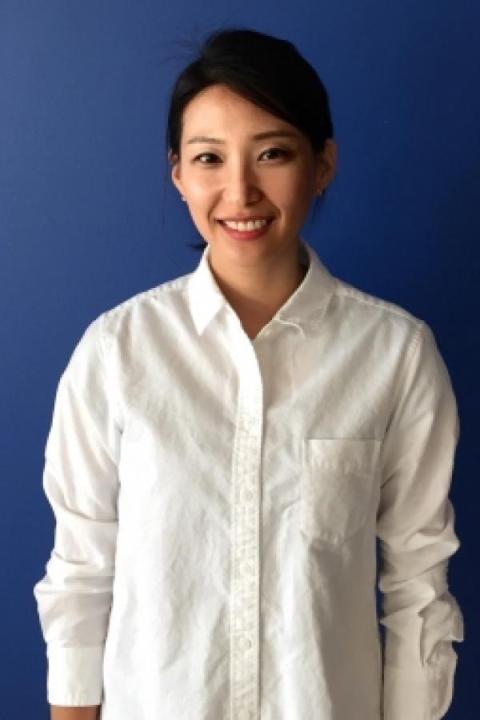
Jinjin Ha serves as an Assistant Professor in the Department of Mechanical Engineering at the University of New Hampshire, with her office located in Kingsbury Hall, Room W101a, Durham, NH. She teaches core mechanical engineering courses including Statics (ME 525), Materials Processing in Manufacturing (ME 742/842), Theory of Plasticity (ME 927), and Doctoral Research (ME 999), demonstrating active engagement in both undergraduate and graduate education. Her research program integrates computational mechanics with advanced manufacturing, focusing on: Machine learning applications for plasticity modeling and fracture prediction Deformation mechanics in incremental sheet forming processes Martensitic phase transformations in stainless steels Anisotropic material behavior and yield function development Ductile fracture characterization of titanium and aluminum alloys Analysis of her 2023-2024 publications reveals a decisive shift toward AI-driven mechanics, where neural networks solve complex constitutive modeling challenges in metal forming. This interdisciplinary approach bridges fundamental material science with industrial manufacturing optimization, particularly in toolpath design and phase transformation control. No scientific awards were documented in the provided profile information. While doctoral research supervision is indicated through ME 999 course listings, specific student names, grant funding details, laboratory facilities, or collaborative team structures were not disclosed in the available text.