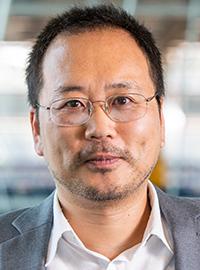
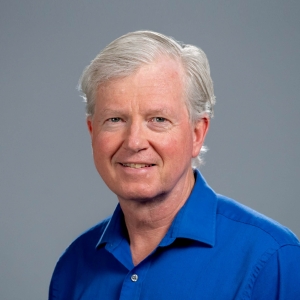
Dr. Ge Jin is an Associate Professor of Geophysics and co-director of the Reservoir Characterization Project at Colorado School of Mines. His research focuses on Distributed Fiber-Optic Sensing (DFOS) applications in oil & gas, geothermal, CO2 sequestration, smart cities, and earthquake hazard, alongside machine learning and advanced seismic imaging techniques. PhD, Geophysics and Seismology, Columbia University (2014) MSc, Geophysics and Seismology, Peking University (2009) BSc, Geophysics and Computer Science, Peking University (2006) Before joining Colorado School of Mines in 2019, Dr. Jin worked five years as a research geophysicist in the oil industry. His work integrates DFOS technology with computational methods to address subsurface challenges in energy and environmental domains. His 2024 publications emphasize DFOS and machine learning for monitoring hydraulic fractures, CO2 storage, and smart infrastructure. Articles highlight Python library development (DASCore), fracture propagation dynamics, and fluid flow analysis in unconventional reservoirs. Dr. Jin's students include Garcia-Ceballos, Li, Mjehovich, Zhu, and Ning, who lead research on topics like tube wave excitation, fracture geometry inversion, and multiphase flow sensing. He teaches courses such as Introduction to DFOS and Geophysical Computing . As co-director of the Reservoir Characterization Project, he leads interdisciplinary research and field applications, addressing energy resource extraction and subsurface risk assessment through innovative sensing and data-driven approaches.
Sungmoon Jung is a Professor of Civil & Environmental Engineering at the Florida A&M University-Florida State University College of Engineering. His research focuses on wind effects on structures, hurricane resilience, wind energy, and vehicle safety. He leads the WISE Lab (Wind and Impact on Structures), which employs advanced computational and experimental methods to study structural dynamics under extreme loads. Education: Ph.D., University of Illinois at Urbana-Champaign, 2004 M.S., Seoul National University, 1999 B.S., Seoul National University, 1997 Research Interests: Wind engineering for buildings and infrastructure Hurricane-induced structural damage and community resilience Wind energy systems and optimization Vehicle crashworthiness and occupant safety Advanced materials for energy absorption and structural reinforcement Recent Research Trends: Recent work emphasizes data-driven approaches (e.g., machine learning for wind profile prediction) and experimental validation (e.g., crash simulations, material testing). Key themes include enhancing infrastructure resilience to hurricanes and improving vehicle safety through biomechanical modeling and component-level testing. Labs & Teams: The WISE Lab collaborates with industry and government agencies to develop practical solutions for wind-related challenges in construction and transportation. Current projects include optimizing offshore wind turbine designs and mitigating risks from storm surge and vehicle rollovers.
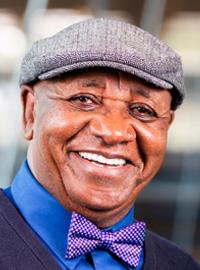
Primus Mtenga, Ph.D., P.E., is a Professor and Fulbright Scholar in the Department of Civil & Environmental Engineering at the Florida A&M University-Florida State University College of Engineering. His research focuses on non-destructive evaluation (NDE) for structural condition assessments, structural systems reliability, wood composites, forensic engineering, and decision support systems. He holds a Ph.D. from the University of Wisconsin-Madison (1991), an M.S. from the same institution (1983), and a B.S. from the University of Dar Es Salaam (1981). Dr. Mtenga’s work spans bridge management strategies, composite materials, and infrastructure performance. His research integrates advanced materials like carbon fiber-reinforced polymers with traditional civil engineering systems. He has contributed to studies on structural composite lumber, epoxy-filled decking, and vibration effects in construction. His articles highlight innovations in material durability, cyclic loading analysis, and bridge deterioration modeling. His expertise includes forensic engineering investigations and optimizing infrastructure maintenance through data-driven decision support systems.
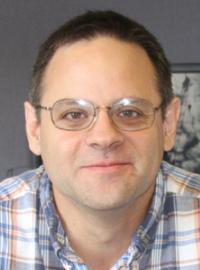
Rodrigo Herrera is a Courtesy Professor in the Department of Civil & Environmental Engineering at the Florida A&M University-Florida State University College of Engineering. He concurrently serves as a Senior Geotechnical Engineer at the Florida Department of Transportation (FDOT). His expertise spans geotechnical engineering with a focus on deep foundations, dynamic load testing, and software development for design analysis. Educational Background: M.E. in Civil/Geotechnical Engineering, University of Florida (2001) B.S. in Civil Engineering, Florida International University (1997) Research Interests: Development of strain-compatible design methodologies Calibration of geotechnical testing techniques (high strain dynamic load testing, low strain integrity testing) Florida-specific rock strength characterization for foundation systems Geo-statistical approaches to quantify design uncertainty Advancement of geotechnical design software applications Professional Affiliations: Licensed Professional Engineer (P.E.) in Civil Engineering.
Lori E. Tunstall is an Assistant Professor at the Colorado School of Mines, specializing in materials science and civil engineering applications. She previously worked as a geotechnical engineer and construction estimator before earning a joint Ph.D. in Civil and Environmental Engineering & Materials Science from Princeton University in 2016. Education: Ph.D. from Princeton University (2016), B.S. in Civil Engineering from The College of New Jersey (2008) Her research focuses on sustainable construction materials, particularly utilizing mine tailings and biochar for geopolymer and cementitious systems. She investigates fracture mechanics in lightweight concrete and ceramics derived from industrial byproducts, aiming to enhance durability and environmental impact. Recent publications highlight advancements in alkali-activated materials, air-entrained concrete stability, and biochar integration into mortars. Her work bridges materials science, civil engineering, and sustainability, with applications in infrastructure and waste valorization. Scientific Awards: Wu Graduate Fellowship in Engineering Princeton Emerging Alumni Scholars Award (2015-2016) 2017 Defense Programs Award of Excellence Lori leads the Tunstall Materials Research Group, exploring additive manufacturing techniques like direct-write electronics and direct ink write for novel construction solutions. She has contributed to pavement sustainability reviews and community recycling initiatives in Colombia.
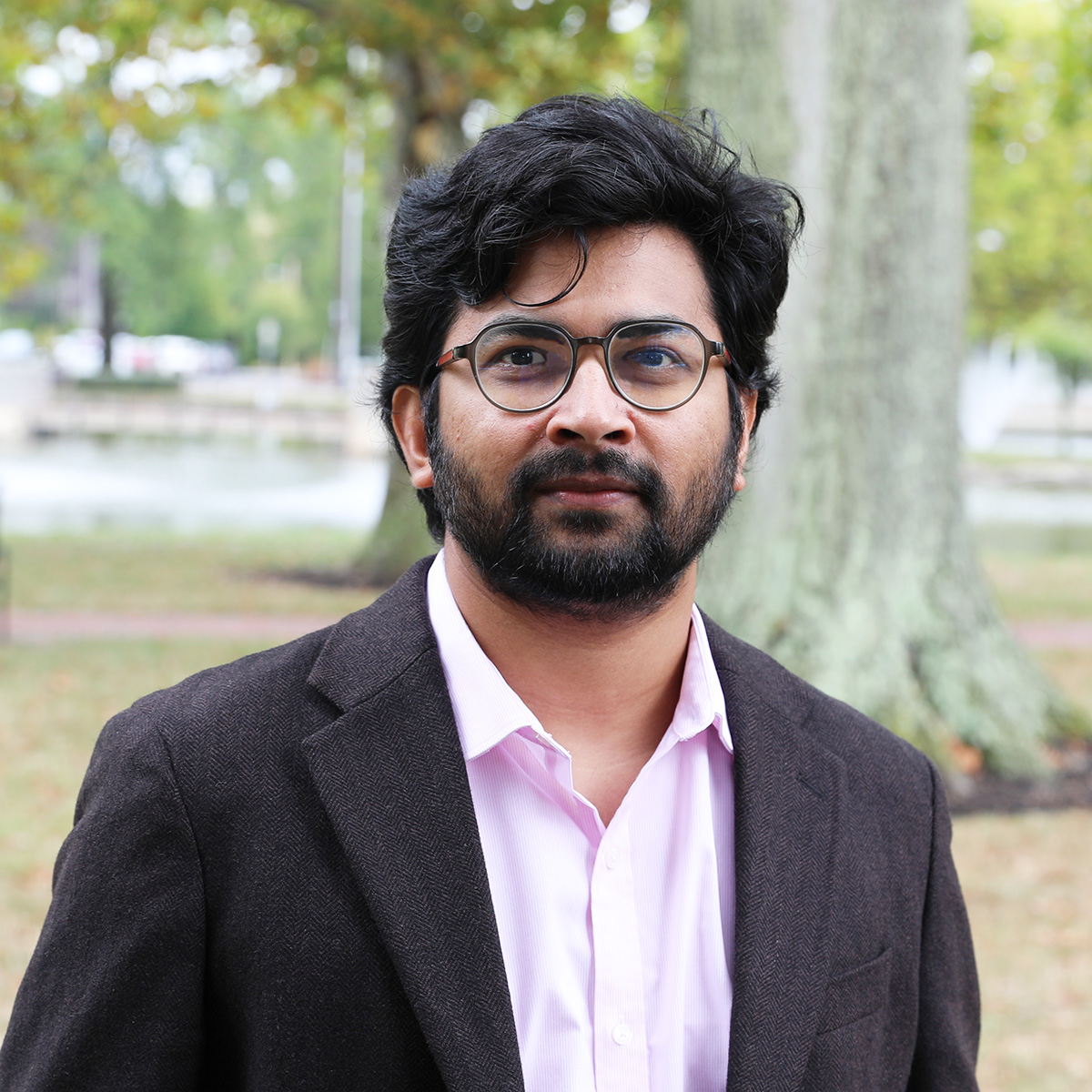
Dr. Auchib Reza is an Assistant Professor of Engineering in the Samuel W. and Dolores E. Brenton School of Engineering at Mount Union. With a Ph.D. from Memorial University of Newfoundland and B.S. from Bangladesh University of Engineering and Technology, he specializes in geotechnical engineering and buried infrastructure. Research focuses on: Soil-pipe interaction under axial loading Polyethylene pipe performance in various soil conditions Finite-element modeling of ground movement effects Pipeline response to geotechnical hazards Publications consistently analyze buried pipeline behavior using laboratory testing and computational modeling, with emphasis on medium-density polyethylene systems in sandy soils. Recent work advances understanding of strain development during ground displacement events.
Dr. Craig Lake is a Professor in the Department of Civil Engineering at Dalhousie University's Faculty of Engineering. He specializes in geo-environmental engineering, focusing on containment barrier systems, waste management, and environmental remediation. Prior to his academic role, he worked at Jacques Whitford and Associates in Dartmouth, Nova Scotia. He has been recognized with prestigious awards, including the EIC Fellow induction by the Engineering Institute of Canada and the Canadian Geotechnical Society Colloquium Recipient (2011), the first from Atlantic Canada. His research spans over two decades, addressing challenges such as leachate containment, geosynthetic clay liner performance, and sustainable development in contaminated sediment projects. Education: Ph.D., Geo-environmental/Geotechnical Engineering, University of Western Ontario (2001) Bachelor of Engineering with Distinction, Civil Engineering (Cooperative Program), Technical University of Nova Scotia (1995) Research Interests: Dr. Lake's work combines theoretical and applied research in containment barrier evaluations, landfill design, and wastewater treatment. He investigates diffusion and sorption processes in soil-cement systems, geotextile applications, and the environmental impacts of industrial effluents. His studies often emphasize sustainable solutions, such as biosolids reuse and low-impact development strategies for aquifer protection. Recent Articles Trends: His publications highlight advancements in coastal and agricultural environmental engineering, including saltwater intrusion mechanisms, thermal signatures in tidal environments, and the fate of pharmaceuticals and heavy metals in soils and water systems. He also explores innovative technologies like UV optical screening and lateral flow sand filters for contaminant management. Scientific Awards: EIC Fellow (2019) 2004 R.M. Quigley Award and Thomas C. Keefer Medal Honorable Mentions 2009 A.G. Stermac Award (for service to the Canadian Geotechnical Society) 2006 APENS Young Engineer Award Advising & Grants: Dr. Lake advises graduate students in MASc, Ph.D., and MEng programs, focusing on applied research in geo-environmental barriers and waste containment. His projects, such as the Nunavut Wastewater Treatment Program, emphasize practical solutions for northern communities. He collaborates on initiatives like the HQP List (Summer 2019), involving students in field studies and contaminant analysis. Labs & Teams: He leads research teams in Dalhousie's geo-environmental engineering group, working on projects like dewatering contaminated sediments and optimizing landfill liner systems. His work often involves interdisciplinary partnerships with industry and governmental agencies.
Robertt Ângelo Fontes Valente is an Associate Professor in the Department of Mechanical Engineering at the University of Aveiro. He specializes in computational mechanics, material forming processes, and engineering education. His research focuses on numerical simulation techniques like the Finite Element Method (FEM), Isogeometric Analysis (IgA), and Finite Cell Method (FCM), with applications in automotive and aerospace industries. He also investigates engineering education innovation, including curriculum design and entrepreneurial mindset development in engineering curricula. Valente holds a PhD in Mechanical Engineering from the University of Porto (2004) and has held academic positions at the University of Aveiro since 2005. He has led multiple research projects funded by entities like the Portuguese Foundation for Science and Technology (FCT), European Commission, and EIT Urban Mobility, focusing on topics such as advanced material modeling, virtual forming processes, and university-business collaboration. His work includes over 50 peer-reviewed publications and active roles in academic administration, including directing the Department of Mechanical Engineering at the University of Aveiro. Key research areas include computational plasticity, material forming simulations, and integrating engineering education with industry needs. Valente collaborates internationally, with sabbatical research at RWTH Aachen University and the University of Pavia. Advising and grants: He has coordinated 20+ research projects and contributed to initiatives like the HEInnovate 2.0 program. His labs and teams are part of the TEMA Research Center and the Laboratório Associado de Sistemas Inteligentes (LASI), focusing on smart systems and advanced manufacturing.
Anant Kukreti is a Professor in the School of Energy, Environmental, Biological and Medical Engineering at the University of Cincinnati's College of Engineering and Applied Science, where he has served since 2010. He also serves as Director for Engineering Outreach for the College of Engineering and Applied Science (since 2006) and previously served as Head of the Department of Civil and Environmental Engineering (2000-2006). Prior to joining the University of Cincinnati, he was a professor at the University of Oklahoma from 1978-2000, where he held positions as Professor (1989-2000), Associate Professor (1984-1989), and Assistant Professor (1978-1984). He also served as Acting Director of the College of Engineering at the University of Oklahoma (1996-1999). Ph.D. in Civil Engineering with Structural Mechanics specialization from University of Colorado Boulder (1977) M.Eng. in Structural Engineering from Asian Institute of Technology Bangkok (1973) B.S. from University of Roorkee, India (1968) Dr. Kukreti's research spans both technical and educational domains. Technically, his expertise includes finite element analysis and experimental studies of structural systems, behavior and design of steel connections, seismic analysis and design, sub-structuring analysis procedures, small-scale modeling, and constitutive modeling. Educationally, he has developed programs to increase recruitment and retention of underrepresented students in engineering, created pathways for research and graduate school for undergraduate students, and developed seamless PK-17 pathways programs for STEM education. His work has significantly impacted both structural engineering research and engineering education. Dr. Kukreti's publication record demonstrates a consistent focus on structural engineering fundamentals, particularly steel connections and seismic behavior. In recent years, he has increasingly focused on engineering education research, with numerous publications on teacher training, K-12 STEM outreach, and programs to increase diversity in engineering. His work bridges the gap between advanced structural engineering research and practical educational applications, making complex engineering concepts accessible to students at all levels. Instructional Technology Excellence Award (1999) ASME Fluke Corporation Award for Innovation in Laboratory Instruction (1998) ASME Midwest Section Outstanding Teaching Award (1997) Samuel Roberts Noble Foundation Presidential Professorship (1996-2000) UC Distinguished Engineering Research Award (2007) David Ross Boyd Professorship (2000) Dr. Kukreti has successfully mentored numerous graduate students, including doctoral candidate Yatendra Rajapaksa and master's students Abbas Iranmanesh and Adbul H. Shammaa. He has secured substantial research funding as Principal Investigator on numerous NSF grants totaling millions of dollars, with recent projects focusing on engineering education, STEM outreach, and structural engineering research. His grant portfolio includes the NSF I-Corps L project on teacher training, multiple S-STEM and STEP grants for student recruitment and retention, and REU/RET sites for undergraduate and teacher research experiences. His work has established sustainable programs that continue to impact engineering education at the University of Cincinnati and beyond. Dr. Kukreti pioneered the development of small-scale structural behavior laboratories for teaching dynamic behavior of structures to undergraduate students. His educational innovations include virtual laboratory modules for strength of materials courses and experimental courses that demonstrate earthquake effects on building structures. These hands-on learning environments have become integral to engineering education at both the University of Oklahoma and University of Cincinnati, providing students with practical experience in structural dynamics and aseismic design procedures.
Dr. Xiaoshan (Susanna) Lin is an Associate Professor and Australian Research Council Future Fellow at RMIT University's School of Engineering. Her research focuses on advanced numerical methods for composite materials, innovative cementitious structures, and free-form fabrication techniques. She has secured significant grants, including ARC Future Fellowships and industry partnerships, and supervises students in structural design, computational mechanics, and materials science. Dr. Lin holds a PhD in Civil Engineering from the University of New South Wales (2012) and has held postdoctoral positions at the University of Liverpool, Nanyang Technological University, and UNSW before joining RMIT in 2016. She is an Editor for *Construction and Building Materials* and Editorial Board Member for *Engineering Structures*. Her research interests include topological optimization, blast-resistant materials, and sustainable concrete technologies. Notable achievements include being named a World’s Top 2% Scientist (2024), IAAM Fellow (2023), and receiving RMIT’s HDR Supervision Award (2023). Dr. Lin’s work bridges theoretical and applied engineering, with projects addressing structural resilience under extreme conditions, additive manufacturing, and recycled materials integration. She actively collaborates with industry to advance eco-friendly construction solutions. Her teaching includes courses on steel and concrete structures, complementing her research focus on structural innovation and materials science.
Laura Sullivan-Green serves as an Associate Professor in the Department of Civil and Environmental Engineering at San José State University's College of Engineering, where she has held faculty positions since 2008. Her expertise bridges academic research and industry practice through concurrent work at MWH Americas. Education PhD in Civil Engineering, Northwestern University, Evanston, IL MS in Civil Engineering, Northwestern University, Evanston, IL BS in Civil Engineering, University of Dayton, Dayton, OH Research Interests Dr. Sullivan-Green specializes in forensic engineering with primary focus on scientifically determining crack age in construction materials—a critical need for litigation involving structural damage from earthquakes, construction, or natural disasters. Her current projects include accelerated testing of carbonation penetration through crack surfaces and biomass quantification on construction materials, aiming to replace subjective methods with objective age measurements. This work addresses multi-million dollar arbitration cases where precise causation timelines are disputed. Scientific Awards No scientific awards were documented in the available institutional records. Advising and Grants Provides faculty mentorship for graduate students in civil engineering Industry collaboration with MWH Americas since 2005 supports applied research No specific grant details or student advisement records were disclosed Labs and Teams Her research leverages partnerships with Zeiss Microscopy for advanced material analysis and integrates with SJSU's Geotechnical Engineering group. Current industry engagement through MWH Americas facilitates real-world testing of crack age determination methodologies in construction environments.
Michael Riemer is an Adjunct Professor in the Department of Civil and Environmental Engineering at the University of California, Berkeley. His research focuses on the static and dynamic evaluation of soil properties, constitutive behavior of sands, and liquefaction of unusual soils, particularly under seismic loading conditions. Education: Ph.D., Geotechnical Engineering, University of California, Berkeley (1992) M.S., Geotechnical Engineering, University of California, Berkeley (1987) B.S., Civil Engineering, Virginia Tech (1986) Research Interests: Riemer investigates the development of porewater pressures in saturated soils during seismic events and their impact on engineering properties. His work includes advanced geotechnical testing, liquefaction flow failure modeling, and experimental studies in geotechnical laboratories. Teaching: He teaches the graduate course Advanced Geotechnical Testing and Design (CE273) and assists with the undergraduate course Geotechnical Engineering (CE175) . Contact: Office located in Davis Hall 451, with office hours on Tuesdays (3:30 PM–5 PM) and Fridays (4 PM–5 PM). Email: riemer@ce.berkeley.edu
Sinan Acikgoz is an Associate Professor of Engineering Science at the University of Oxford, affiliated with Mansfield College. His work focuses on structural and geotechnical engineering, integrating computational modeling with experimental techniques. PhD in Engineering from Trinity College, University of Cambridge (2014) 1851 Brunel Research Fellow at Clare Hall College (2014–2020) Postdoctoral Research Associate at Cambridge's Centre for Smart Infrastructure and Construction Research Interests: Masonry structures , Structural health monitoring , Soil-structure interaction , and Rocking structures . His work addresses challenges in underground construction , earthquake resilience , and vision-based sensing to minimize structural damage risks. Recent publications emphasize 1D-CNNs for damage detection, Virtual Fields Method for material characterization, and dynamic modeling of rocking systems. These studies often involve interdisciplinary collaboration and advanced computational tools. Scientific Awards: 1851 Brunel Research Fellowship He actively seeks graduate students for interdisciplinary structural engineering research, particularly those with computational and experimental skills.
Professor Chris Martin is a Professorial Research Fellow at the University of Oxford's Department of Engineering Science and a Fellow of Mansfield College. His career spans academia and industry, with expertise in computational geotechnical engineering and soil mechanics. Education: BE (Sydney), MA DPhil (Oxon) Current Role: University Lecturer and Tutorial Fellow (2000-2016), then Professorial Research Fellow Research Focus: Finite Element Limit Analysis (OxLim), soil-foundation interaction, pipeline geotechnics His work leverages conic optimization software (MOSEK) and open-source mesh tools to model plastic collapse loads for offshore foundations, pipelines, and tunnelling impacts on masonry buildings. Key projects involve EPSRC-funded collaborations with TU Wien and industrial partners like Subsea 7 and Crondall Energy Subsea. Scientific Awards: ASCE Best Paper Award (2012) Oxford Teaching Award (2006) ISSMGE Young Researcher Award (2001) He collaborates through the REMS Centre for Doctoral Training, supervising DPhil/EngD students on topics like cyclic soil loading, monopile foundations, and advanced laboratory testing. Current projects include 3D computational pipeline/soil interaction and low-confining stress sand behavior studies.
Professor Martin Williams, FIStructE CEng FICE, holds the position of Pro-Vice-Chancellor (Education) at the University of Oxford and is a Professor in the Department of Engineering Science. He is affiliated with New College as a David Clarke Fellow. His research focuses on the dynamic behavior of structures under seismic, wind, and human-induced loads, with emphasis on structural control systems, seismic retrofitting, and human-structure interaction. Williams earned his BSc and PhD in Civil Engineering from the University of Bristol in the 1980s. After industry experience in structural design, he joined Oxford in 1989 and was promoted to Professor in 2008. His leadership roles include advancing educational strategies at the university level and pioneering collaborative research initiatives. His research interests span seismic performance assessment, damper placement optimization, and experimental methodologies for structural dynamics. He has contributed to advancements in real-time hybrid testing systems, distributed laboratory networks, and the design of energy dissipation devices. Williams' work integrates interdisciplinary approaches, such as combining historical structural analysis (e.g., Roman vaulted monuments) with modern engineering challenges. His projects frequently involve international collaboration, exemplified by contributions to the SERIES virtual database and the CELESTINA-SIM framework for distributed testing. Key technical areas include: aeroelastic bridge stability control, crowd-structure interaction analysis (e.g., grandstand dynamics), and the development of robust algorithms for system observability in large-scale engineering systems.