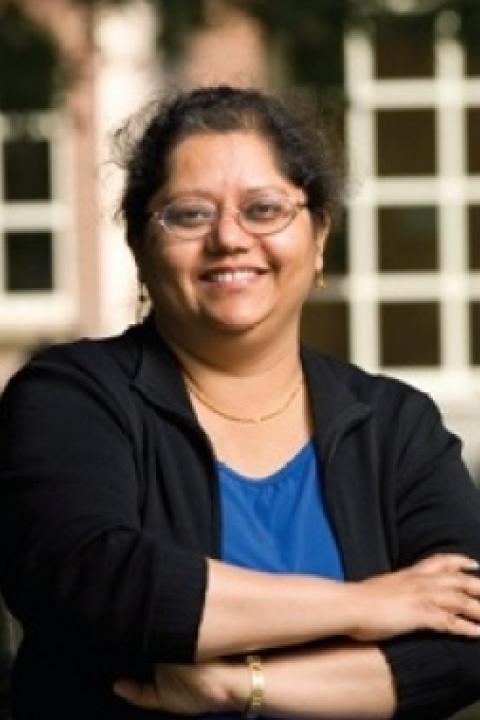
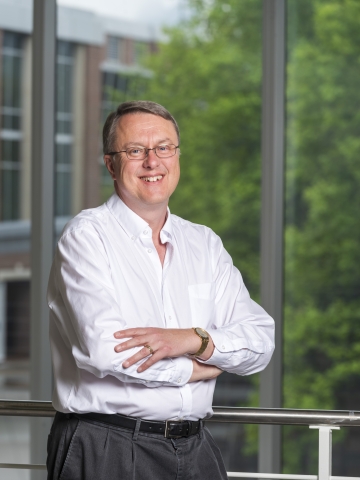
Alexander S. Bradley is an Associate Professor of Earth, Environmental, and Planetary Sciences at Washington University in St. Louis, serving as Director of Graduate Studies. He holds a PhD from MIT in a related field. His research focuses on the coevolution of life and Earth, integrating organic and isotope geochemistry with microbiology to decode Earth’s biogeochemical history. Key areas include molecular fossils preservation, microbial physiology, and extraterrestrial life detection strategies. Bradley’s work spans field investigations (e.g., sediment sampling, cave exploration) and laboratory experiments (e.g., sulfur isotope fractionation studies). He teaches foundational courses like Geology in the Field (EEPS 104) , emphasizing practical skills in challenging environments. His lab, part of the McDonnell Center for the Space Sciences, explores biogeochemical cycles through modern and ancient samples, with applications to astrobiology and planetary science. His recent research highlights include sulfur isotope dynamics in microbial systems, organic carbon burial mechanisms during anoxic events, and lipid biomarker responses to environmental changes. The Bradley lab’s projects often involve advanced analytical techniques like SIMS imaging and proteomic analysis.
Yves Joly is a Research Director at the CNRS (French National Center for Scientific Research) and a member of the SIN team (Surfaces, Interfaces and Nanostructures) at the Institut Néel in Grenoble, France. His primary research focuses on the theory and development of X-ray spectroscopies as probes for studying materials, with particular emphasis on the development and dissemination of the FDMNES ab initio computation code. His work bridges theoretical physics and experimental materials science, enabling detailed analysis of electronic, magnetic, and structural properties across diverse material systems. Dr. Joly received his education at the Institut National Polytechnique in Grenoble, where he earned his Physicist Engineer degree in 1982. He continued his studies at the Laboratoire de Spectrométrie-Physique, Université Joseph Fourier (UJF), Grenoble, where he obtained his PhD in Physics of Matter and Radiation in 1984. His doctoral thesis focused on 'Study of alloy surfaces using Low Energy Electron Diffraction.' Dr. Joly's research interests center on X-ray absorption, emission, and scattering spectroscopies, particularly at energies close to absorption edges (XANES, valence to core X-ray emission spectroscopy, resonant X-ray diffraction). He has dedicated significant effort to developing the FDMNES ab initio computation code, which simulates these spectroscopies and allows comparison with experimental data typically recorded at synchrotrons. His work has applications across various material classes, with a special focus on oxides. Throughout his career, he has also contributed to surface science, studying carbides, nitrides, and semiconductors using techniques like Low Energy Electron Diffraction and Low Energy Positron Diffraction. Analysis of Dr. Joly's recent publications reveals a consistent focus on advancing X-ray spectroscopic techniques and their applications to increasingly complex materials systems. His work spans fundamental theoretical developments, computational methodology improvements, and practical applications to diverse materials including quantum materials, battery cathodes, catalysts, and magnetic systems. A significant portion of his recent work continues to center on the FDMNES code and its applications, demonstrating his ongoing commitment to making advanced X-ray analysis tools accessible to the broader scientific community. Dr. Joly has held various academic positions throughout his career. After completing his PhD in 1984, he conducted postdoctoral research at the CHU of Sherbrooke, Department of Nuclear Medicine, in Canada. He joined CNRS as a Junior Researcher in 1986, first at the Laboratoire de Spectrométrie-Physique and later at the Laboratoire de Cristallographie. In 2006, he became a Senior Researcher at the Laboratoire de Cristallographie, which became part of the Institut Néel in 2007. From 2011 to 2015, he served as Deputy Director of the MCMF department of the Institut Néel, demonstrating his leadership within the research institution. At the Institut Néel, Dr. Joly is a key member of the SIN team within the QUEST department (Électronique QUantique, Surfaces et spinTronique). His work is closely connected to synchrotron radiation facilities, where experimental data for comparison with his computational models is typically collected. The FDMNES code he developed has become an important tool in the X-ray spectroscopy community, facilitating the interpretation of complex spectral data across numerous research fields. His research has significant implications for understanding quantum materials, energy storage systems, and catalytic processes.
José Antonio Del Río Fernández is a distinguished Professor and Group Leader at the Institute for Bioengineering of Catalonia (IBEC) , where he directs the Molecular and Cellular Neurobiotechnology group. His work bridges developmental neurobiology , neurodegeneration , and lab-on-chip technology , focusing on diseases like Alzheimer's and Parkinson's . He has been active in academic research for over 30 years, previously affiliated with institutions such as the University of Barcelona , Frankfurt University , and Imperial College London . Education : PhD , University of Barcelona (1994) Research Interests center on neurodegenerative disease mechanisms , particularly the spreading of tau and α-synuclein in conditions like Alzheimer's and Parkinson's, and axon regeneration after CNS injury. His group pioneers lab-on-chip devices to model neurobiological processes and test regenerative therapies. Collaborations span institutions such as Imperial College , i3A, Zaragoza , and Biodonostia Hospital . Scientific Contributions include over 170 publications, with a H-index of 48 (Web of Science) and 55 (Google Scholar), and significant advancements in understanding prion protein interactions in neurodegeneration. His recent work explores optogenetics for axon regeneration and multitarget compounds for Alzheimer's therapy. He has mentored 24 PhD students , 26 Master's students , and 15 postdoctoral fellows , reflecting a strong commitment to academic training. Scientific Awards : Fundación Francisco Cobos CSIC Award (2001) Generalitat of Catalunya Award of Young Researcher (2003) Research Trends demonstrate a focus on neurodegenerative disease mechanisms , lab-on-chip platforms , and axon regeneration strategies . His collaborations with institutions like Imperial College London and University of Zaragoza highlight interdisciplinary approaches integrating biomaterials , optogenetics , and computational modeling .
Christine Papadakis is a Professor of Experimental Physics - Soft Matter at the TUM School of Natural Sciences , Technical University of Munich. Her research focuses on polymer physics, block copolymers, responsive polymers, and thin films, with applications in medical materials. She employs advanced scattering techniques (light, X-rays, neutrons) to study self-assembly, phase behavior, and kinetics under environmental changes. Her recent work highlights include Comparative swelling dynamics of thermoresponsive thin films under water vapor exposure Pressure-dependent micellar aggregation in diblock copolymers pH and temperature-responsive micelle formation Photo-modulation of azo dye-functionalized polymers Her publications align with UN Sustainable Development Goals through innovations in polymer sustainability and medical applications. She serves as Editor-in-Chief of Colloid & Polymer Science since 2015.
Stephen E. Sallan, MD , is a Professor of Pediatrics at Harvard Medical School and a Physician at Dana-Farber Cancer Institute and Children's Hospital . His career spans over five decades in pediatric hematology/oncology , with a focus on acute lymphoblastic leukemia (ALL) and pediatric brain tumors . Education : MD, Wayne State University School of Medicine (1967) Residencies : Boston Floating Hospital (1968), Children's Hospital of Philadelphia (1969), Hospital for Sick Children, London (1970) Fellowship : Pediatric Oncology, Children's Hospital/DFCI (1972) Leadership Roles : Chief of Staff (1995), Chairman of Medical Staff Executive Committee (1995), Chief of Staff Emeritus (2012) Dr. Sallan's research integrates genetic heterogeneity , disease recurrence , and drug resistance in ALL, with efforts to develop targeted therapies like tumor vaccines and antiangiogenesis agents. His work addresses long-term treatment toxicities (cardiac, skeletal, neurocognitive), particularly in survivors of childhood cancers. His 15 most recent publications (2024–2018) demonstrate ongoing engagement with pharmacogenomics, thrombosis risk models, dietary interventions, and molecular markers in brain tumors. Key subfields include TRK-C in medulloblastoma , asparaginase complications , and DFCI ALL Consortium Protocols . Scientific Awards : Distinguished Alumni Award, Wayne State University School of Medicine (1997) James Carreras Prize for International Pediatrician of the Year (1987) As a leader in pediatric leukemia research , Dr. Sallan has shaped treatment protocols that minimize late effects while improving survival. He collaborates with multidisciplinary teams in neuro-oncology and pharmacogenomics, maintaining active roles in clinical trials and laboratory investigations.
Qingguo (Jack) Huang is a Professor in the Department of Crop and Soil Sciences at the University of Georgia's College of Agricultural & Environmental Sciences. His research focuses on catalysis for environmental remediation, electrochemical wastewater treatment, and nanotechnology applications. Specializes in enzyme-based and electrochemical methods for pollutant degradation Develops novel catalytic materials for PFAS removal and biofuel production Investigates environmental implications of nanomaterials and bioactive micropollutants Active in molecular modeling for reaction pathway elucidation His lab employs advanced analytical tools like UPLC-MS/MS, GC-MS, and FT-IR for environmental chemistry studies. Recent work includes optimizing titanium suboxide anodes for PFAS degradation and developing enzyme-catalyzed oxidative humification processes. Key contributions appear in electrochemical oxidation technologies and environmental catalysis, with over 110 peer-reviewed publications. Current projects focus on: Reactive electrochemical membrane systems Electrooxidation of pharmaceuticals and antibiotics PFAS treatment train strategies Environmental life cycle assessment of remediation technologies
Sinead Keaveney is currently a Lecturer in Chemistry at the University of Wollongong (2021-present) and holds an Honorary Lecturer position at Macquarie University's School of Natural Sciences. Previously, she was a Macquarie University Research Fellow (MQRF) from 2018 to 2021, a Postdoctoral Researcher at RWTH Aachen University in Germany (2016-2018) working with Prof. Franziska Schoenebeck, and completed her PhD at UNSW Australia (2013-2016) under the supervision of A/Prof. Jason Harper. Dr. Keaveney's educational background includes a PhD from UNSW Australia (2013-2016), followed by postdoctoral research at RWTH Aachen University in Germany (2016-2018). Dr. Keaveney's research focuses on applied organometallic catalysis to develop new synthetic methods. She is particularly interested in rationally designing new catalysts to facilitate challenging chemical transformations and developing long-lived, recyclable catalysts for industrial viability. Her work employs detailed mechanistic studies including kinetic analyses, computational studies, and X-ray based techniques to guide catalyst design and understand chemical reactivity. Her research spans sustainable chemistry, metal catalysis, ionic liquids, regioselectivity, and hydrosilylation, with applications in pharmaceutical, agrochemical, and materials chemistry industries. Analysis of Dr. Keaveney's recent publications reveals a strong focus on denitrogenative reactions of heterocyclic compounds, particularly 1,2,3-thiadiazoles and triazoles. Her work demonstrates expertise in transition metal catalysis (especially rhodium, nickel, and palladium), with significant contributions to understanding reaction mechanisms, regioselectivity, and catalyst design. Recent publications also show expanding interests in photochemistry, medicinal chemistry applications of sulfonyl fluorides, and analytical methods for monitoring chemical reactions. Dr. Keaveney has been involved in several research projects including 'Developing sustainable synthetic methodology using nickel and iron catalysis' (2020-2021), 'Rapid Isolation System' (2020), and 'Examining the properties and structure of Rh and Ir based hybrid catalysts to gain fundamental insight into their effects on catalysis' (2019). At both the University of Wollongong and Macquarie University, Dr. Keaveney supervises undergraduate and HDR student projects focused on developing new catalytic transformations that are efficient, sustainable, and practical. Students working with her gain experience in organic and organometallic synthesis, reaction development, analytical techniques (NMR, GC-MS, UV-Vis, IR), mechanistic and kinetic analyses, and potentially computational modeling and synchrotron-based techniques. Dr. Keaveney's research is supported by access to advanced facilities including the Australian Synchrotron, where she utilizes X-ray Scattering and Absorption measurements for her mechanistic studies.
Dr. Bernardino Virdis is a Senior Research Fellow at the Australian Centre for Water and Environmental Biotechnology (ACWEB), The University of Queensland, within the Faculty of Engineering, Architecture and Information Technology. His work integrates environmental microbiology, microbial ecology, chemical engineering, material science, spectroscopy, electrochemistry, and microbial catalysis to develop sustainable biotechnologies for waste stream treatment and reuse. Dr. Virdis completed his PhD in Chemical Engineering at The University of Queensland in 2010. His research interests span Environmental Biotechnology , Industrial Biotechnology , Circular Carbon Economy , Hydrogen Economy , and Microbial Catalysis , focusing on bioelectrochemical systems for energy and chemical production. His publications in top-tier journals like ISME Journal , Energy and Environmental Science , and Environmental Science & Technology highlight advancements in microbial fuel cells, electro-fermentation, and methane oxidation. Recent work explores extracellular electron transfer mechanisms, graphene oxide applications, and rusticyanin characterization. Dr. Virdis has received funding from the Australian Research Council (ARC) and University of Queensland (UQ) grants, including ARC Linkage Projects (2022–2025) and Discovery Projects (2016–2019). He supervises PhD students in projects related to microbial conversion of methanol, carbon dioxide utilization, and bioelectrochemical nutrient recovery.
Gabriela Ambrožić is an Associate Professor at the Department of Physics, Faculty of Physics, University of Rijeka, Croatia, where she leads the Laboratory for Synthesis of Functional Materials. With a PhD in Chemical Sciences from the University of Ljubljana, Slovenia, she has built an extensive research career spanning materials science, nanotechnology, and chemistry. Education: 2003-2004: Postdoctoral Fellow, European "EMMMA" Program, University of Trieste, Italy 1997-2002: PhD in Chemical Sciences, University of Ljubljana, Slovenia 1989-1997: University Degree in Chemistry, University of Ljubljana, Slovenia Professor Ambrožić's research focuses on the synthesis and characterization of advanced functional materials, particularly semiconductor thin films, hybrid materials, and zinc oxide nanoparticles. Her work combines experimental chemistry with materials engineering to develop innovative solutions for environmental and biomedical applications. She specializes in Atomic Layer Deposition (ALD) techniques, polymer/ZnO nanocomposites, and photocatalytic materials for water purification and antibacterial applications. Her recent publications demonstrate a strong focus on semiconductor thin films, particularly zinc oxide-based materials with enhanced photocatalytic properties. Her research shows consistent innovation in surface functionalization techniques, hybrid material synthesis, and the development of novel nanomaterials with specific structural and functional properties for environmental applications. Scientific Awards: 2023: Award for the Best Scientific Paper in 2022, University of Rijeka, Faculty of Physics 2020: Award for the Best Scientific Paper in 2020, University of Rijeka, Department of Physics Professor Ambrožić has mentored numerous undergraduate and graduate students across physics, biotechnology, and environmental science programs. She has secured significant research funding, including an HRZZ project worth 977,485.50 HRK for developing porous thin-film materials for water purification using ALD techniques, and has participated in multiple EU-funded research initiatives. She leads the Laboratory for Synthesis of Functional Materials at the University of Rijeka, where her team specializes in developing advanced nanomaterials using Atomic Layer Deposition and other thin-film techniques. Her research group collaborates extensively with international partners and has made significant contributions to the fields of photocatalysis, hybrid materials, and semiconductor thin films.
Nivedita Gupta serves as Professor and Chair of Chemical Engineering & Bioengineering at the University of New Hampshire (UNH), where she teaches core courses including CHBE 400 (ChE and BioE Lectures), CHBE 502 (Energy Balances), CHBE 601 (Fluid Mechanics and Unit Ops), CHBE 940 (Advanced Transport Phenomena), and CHBE 999 (Doctoral Research). Her office is located in Kingsbury Hall, Room W313, Durham, NH 03824, and she can be contacted at Nivedita.Gupta@unh.edu. Her academic credentials include: Ph.D. in Chemical Engineering from Pennsylvania State University B.S.E.T. from the Indian Institutes of Technology Dr. Gupta's research centers on fundamental fluid dynamics with emphasis on interfacial phenomena in multiphase systems. She investigates surfactant-laden bubble and drop dynamics, capsule hydrodynamics in confined flows, nanoparticle synthesis in microreactors, and thermocapillary convection in layered fluids. Her work bridges theoretical modeling with experimental validation, addressing challenges in transport phenomena relevant to chemical, biological, and materials engineering applications. Analysis of her 15 most recent publications (2007-2019) reveals consistent focus on multiphase flow mechanics, particularly surfactant effects on deformable interfaces in microscale and macroscale systems. Key trends include computational modeling of drop/bubble motion in confined geometries, synthesis of functional nanomaterials in continuous-flow reactors, and rheological characterization of nanowire suspensions for printable electronics. Her work appears predominantly in high-impact journals like Industrial & Engineering Chemistry Research , Physics of Fluids , and Chemical Engineering Science . No scientific awards were documented in the available sources. As Doctoral Research course instructor (CHBE 999), Dr. Gupta supervises Ph.D. candidates, though specific student names and grant funding details remain unreported in the provided materials. Her leadership as department chair indicates significant administrative responsibilities alongside research and teaching duties.
Michael G. Coleman serves as an Assistant Professor in the Department of Chemistry & Biochemistry at the State University of New York College at Brockport. His office is located in Smith Hall 228, with office hours held Mondays and Wednesdays from 10:00 am to 12:00 pm. He teaches Organic Chemistry I and II along with their laboratory components (CHM 305/306). His educational background includes a B.S. in Chemistry (1997) and Ph.D. in Medicinal/Organic Chemistry (2006), both from SUNY Buffalo. A Rochester City School District graduate, Coleman maintains strong local ties while advancing sustainable chemistry research. Research focuses on environmentally responsible synthesis of small organic compounds through mechanochemical strategies, organometallic catalysis, and classical methodologies aligned with Green Chemistry principles. His work targets pharmaceutical, materials science, and green manufacturing applications, emphasizing recyclable catalysts and solvent-free conditions. Recent publications demonstrate expertise in ionic liquid lubricants and catalytic cyclopropenation techniques. Analysis of his 13 most recent publications (2025-2007) reveals consistent contributions to sustainable organic synthesis, with increasing emphasis on tribology applications since 2022. Key themes include ionic liquid development for lubrication, mechanochemical cyclopropenation, and catalytic C-H activation – all prioritizing resource efficiency and reduced environmental impact. Dr. Coleman actively supports first-generation and low-income STEM students through teaching and outreach initiatives. His commitment to accessible science education complements research in green chemistry methodologies, though specific grant details remain unlisted in the current profile.
Jan Rossmeisl is a Professor in the Department of Chemistry at the University of Copenhagen, Denmark, conducting research at the intersection of catalysis, sustainable energy, and electrochemical processes. His work focuses on developing advanced materials for energy conversion applications including fuel cells and carbon dioxide reduction technologies. His research interests span catalysis , green chemistry , and energy conversion , with specific expertise in electrocatalytic reaction mechanisms, high-entropy alloy design, and sustainable pathways for chemical synthesis. Current investigations emphasize computational modeling of surface reactions and experimental validation of novel catalyst systems for renewable energy applications. Analysis of his 2024-2025 publications reveals a dominant focus on electrocatalytic $$\text{CO}_2$$ conversion and oxygen reduction processes. Key trends include the development of high-entropy alloys for catalytic coupling reactions, strain engineering in binary alloys, and non-aqueous electrolyte effects on $$\text{CO}_2$$ reduction. His work bridges theoretical computation with experimental validation to address challenges in sustainable energy conversion and chemical production.
Ganesh Acharya is a researcher affiliated with the Faculty of Natural Sciences and Technology at an unspecified university, working within the Department of Physics and Technology . His research focuses on advanced optical microscopy techniques for biomedical applications, including super-resolution imaging, quantitative phase microscopy (QPM), and structured illumination microscopy (SIM). Key research areas : Inflammation in macrophages/trophoblasts, male reproductive health, placental tissue analysis, and oxidative stress effects. Technical expertise : Chip-based microscopy systems, digital holography, and partially coherent illumination methods. The articles highlight his work on improving imaging resolution for clinical and histological studies, with applications in reproductive health and inflammatory disease research. Collaborative efforts with experts like Balpreet Singh Ahluwalia and Dalip Singh Mehta underscore interdisciplinary approaches combining optics, cell biology, and biomedical engineering. No formal awards or student advisement records were identified in the provided texts.
Angus Wilkinson serves as Professor and Associate Chair for Operations and Academic Programs at Georgia Institute of Technology, holding joint appointments in the School of Chemistry and Biochemistry (College of Sciences) and School of Materials Science and Engineering (College of Engineering). His research bridges inorganic chemistry and materials science with focus on functional materials. Education includes: B.A. in Chemistry from Oxford University (1988) D.Phil. in Chemistry from Oxford University (1992) Junior Research Fellowship at Christ Church, Oxford (1991-1993) Postdoctoral work at University of California Santa Barbara Wilkinson's research centers on low and negative thermal expansion materials , particularly fluorides and oxides with ReO 3 -type structures. His group develops synchrotron X-ray methods for in-situ studies under extreme conditions (high pressure/temperature), with applications in oil well cement hydration and gas-containing perovskites . Current work explores helium incorporation into crystal frameworks and thermal expansion control through structural modifications. The research combines materials synthesis at Georgia Tech with neutron scattering at HFIR/SNS facilities and X-ray studies at APS. Analysis of recent publications (2019-2025) reveals strong focus on gas-containing perovskites (particularly helium clathrates), thermal expansion engineering through anion interstitials, and high-pressure behavior of fluorides. Methodologically, the work integrates advanced scattering techniques with computational modeling and specialized sample environments. Awards include: NSF CAREER award (1996) Sigma Xi award for outstanding junior faculty research (1996) Linus Pauling Prize from American Crystallographic Association (1991) Wilkinson leads research utilizing major national facilities including Advanced Photon Source (APS), High Flux Isotope Reactor (HFIR), and Spallation Neutron Source (SNS). His group maintains active collaborations across materials characterization fields, with current projects examining cement hydration under oil well conditions and novel CO 2 adsorbents. As Associate Chair, he oversees academic operations while maintaining an active research program evidenced by consistent high-impact publications.
Katsuhiko Suzuki is a Professor at the Faculty of Sport Sciences, Waseda University and former Adjunct Professor at Institute of Biomedical Innovation, Queensland University of Technology . His research bridges preventive medicine, immunology, and sports nutrition , focusing on exercise-induced inflammation, muscle recovery, and nutritional interventions . PhD in Medicine (Hirosaki University) M.S. in Human Sciences (Waseda University) Research Highlights : • Enduromics and Resistomics for personalized training • Sulforaphane , flavonoids , and polyphenols in oxidative stress modulation • Neutrophil dynamics in post-exercise recovery and renal injury prevention • 85% dark chocolate for PMS-related performance optimization in female athletes Scientific Leadership : Editorial roles in Frontiers in Physiology and Nutrition President of International Society of Exercise and Immunology (2015-2017) Awards : • Incentive Award, Japanese Society of Physical Fitness and Sports Medicine (2023) • Young Investigators Award, International Society of Exercise and Immunology (2001) Recent Publication Trends : • 2025: 11 articles on nutraceuticals (probiotics, capsaicin, dark chocolate) for muscle recovery and inflammatory modulation • 2024: 7 papers on epigenetic aging , remote training for Alzheimer's , and Caveolin gene interactions • 2023: 4 studies on caffeine dosing , flavonoids in sarcopenia , and keto diet mechanisms