Prof. Wim Desmet is a full professor at the Faculty of Engineering Science and head of the Department of Mechanical Engineering at KU Leuven . His research focuses on advanced modeling techniques for mechanical systems, including: noise and vibration control in automotive and industrial systems computational acoustics and interval field uncertainty modeling metamaterials for broadband vibroacoustic performance AI-driven diagnostic systems in renewable energy and manufacturing Current research projects address challenges in electric vehicle drivetrains, wind turbine monitoring, and multi-physical digital twin development. He actively contributes to academic governance as: Managing Director of KU Leuven Head of Subdivision HIST Chair of multiple executive committees Member of 15+ academic and administrative councils
Dr. Fatemeh Azhari is a Lecturer in Structural Engineering at the Faculty of Engineering, Monash University, specializing in multi-scale computational tools for advanced materials and structures. She holds a Ph.D. from Monash University (2018), an M.Sc. and B.Sc. from Isfahan University of Technology (2012, 2010). Her research focuses on composite materials, additive manufacturing, and structural mechanics, with applications in sustainable construction and defense projects. Education: Ph.D. Structural Engineering, Monash University (2018) M.Sc. Structural Engineering, Isfahan University of Technology (2012) B.Sc. Civil Engineering, Isfahan University of Technology (2010) Research Interests: Multi-scale modeling, finite element analysis, composite materials (CFRP/GFRP), titanium alloys, fire dynamics, and structural stability. She leads projects funded by DST Group and collaborates with institutions like UNSW and the University of Melbourne. Research Trends: Her work emphasizes integrating computational models with experimental data to predict material behavior under extreme conditions, with recent studies focusing on pseudo-ductile composites, fire dynamics, and additive manufacturing. Awards: 2023 Advancing Women’s Success Grant 2023 ECA Seed Program Best Research Paper Award (2018, 2021) Supervision & Grants: Supervises multiple PhD candidates and co-leads projects on titanium alloys and dental implant mechanics. Active in teaching structural mechanics and materials courses at Monash. Teams/Labs: Collaborates on ICME projects and leads multi-institutional teams focusing on advanced materials and structural systems.
Camille Petit is a Professor of Materials Engineering at the Department of Chemical Engineering, Faculty of Engineering, Imperial College London. She leads the Petit Group, focusing on designing multifunctional porous materials for environmental and energy sustainability challenges. Her research integrates materials synthesis, characterization, and testing to address molecular separations and solar energy conversion. Key affiliations include the Centre for Processable Electronics, the Institute for Digital Molecular Design and Fabrication (DigiFAB), and the Institute for Molecular Science and Engineering. Education: BSc in Physics and Chemistry (2002-2005), Lycée Massena, Nice, France MSc in Chemistry and Diplôme d'ingénieur (2005-2007), Ecole Nationale Supérieure de Chimie de Montpellier, France PhD in Chemistry (2007-2011), The Graduate Center of The City University of New York, USA Research Interests: Her group develops porous materials like boron nitride, carbon nitride, metal-organic frameworks, and composites for CO₂ capture, photocatalytic applications, and energy-efficient processes. They emphasize multifunctional materials that combine sorption and catalytic properties to reduce energy consumption. Recent work includes enhancing hydrolytic stability of porous materials and scaling-up graphene production via fluidic exfoliation. Advancing Materials Innovation: Petit’s lab employs molecular engineering approaches to accelerate materials development, combining simulation, synthesis, and process modeling to bypass traditional trial-and-error methods. This approach targets faster innovation in sustainable technologies like DAC systems and photocatalytic reactors. Labs & Teams: The Petit Group operates within the Department of Chemical Engineering, collaborating with multidisciplinary teams across Imperial College’s institutes and centers. Their work bridges nanoscale material design with macro-scale industrial applications.
Carmen Moraru is a Professor in the Department of Food Science at Cornell University's College of Agriculture and Life Sciences (CALS). Her research focuses on enhancing food safety, quality, and shelf life through advanced processing methods such as membrane separation, light-based technologies, high-pressure processing (HPP), and microwave vacuum drying. She also studies intermolecular interactions in foods and nanoscale surface engineering to prevent microbial contamination. Dr. Moraru teaches courses like Food Processing and Engineering (FDSC 4250) and co-instructs Advanced Food and Bioprocessing Systems (FDSC 6650) . Her lab, the Moraru Lab, explores emerging technologies in food safety and processing, with recent projects addressing microbial inactivation, nanomaterials, and sustainable drying methods. She advises multiple graduate students and has supervised notable projects, including studies on pea protein functionality and antimicrobial surfaces. Education: Doctorate in Food Science (PhD details not explicitly stated in provided texts). Lab Affiliations: Moraru Lab at Cornell University. Her scientific awards include the Kosi Award in Food Science (2019) and recognition for student achievements like Andreea Beldie's 2019 ADSA Poster Competition win. Recent publications highlight innovations in UV-C light disinfection, microwave drying, and nanotopography-based antimicrobial surfaces. Research collaborations span industry and academia, addressing challenges in dairy processing, plant-based foods, and food packaging safety. Her work frequently integrates computational modeling, experimental validation, and interdisciplinary approaches to solve complex food engineering problems.
Dr. Mani Khezri is a Lecturer in the School of Civil Engineering at The University of Sydney since 2014, specializing in structural mechanics and innovative numerical methods. His research focuses on cold-formed steel structures, buckling behavior of plates and laminated assemblies, and functionalizing buckling for structural morphing. He holds a Ph.D. in Structural Engineering from UNSW, an M.Sc. from SUT, and a B.Sc. from IUT. Key research areas include extending cold-formed steel applications to mid-rise structures through built-up sections, analyzing buckling and post-buckling behaviors, and leveraging buckling for smart technologies like kinetic façades. He collaborates with industry to develop affordable, prefabricated structures and sustainable materials through additive manufacturing. His work bridges theoretical analysis (e.g., meshfree methods) with practical applications, such as optimizing ventilation systems via buckling-induced airflow control. He leads grants like 'Solid-State Additive Manufacturing For Recycled Aluminium Alloys' and 'Complete limit state analysis of steel structural framework.' Students include Pouya AFSHAR IMANI (additive manufacturing), Cynthia LIU (built-up columns), Emad TAYARANINAJJARAN (floor systems), and Ruilin ZHANG (serviceability analysis). His lab, the Centre for Advanced Structural Engineering, explores advanced structural systems and computational mechanics.
Kim Rasmussen is the Challis Professor of Civil Engineering at the University of Sydney's School of Civil Engineering. He holds a MScEng from the Technical University of Denmark and PhD/DEng from the University of Sydney. His roles include former Head of School (2005–2016), Deputy Dean (2016–2022), and Interim Dean (2018). His research focuses on structural mechanics, particularly steel/cold-formed/stainless-steel structures, 3D-printed metals, and fracture mechanics. Major projects include: midrise cold-formed steel structures, reliability of 3D-printed metal frameworks, and fracture analysis of steel connections. He collaborates internationally with institutions like Imperial College London and Stanford University. Awards include the 2016 Shortridge Hardesty Award and 2020 Lynn Beedle Award. His work advances sustainable and efficient structural designs, with over 20 years of ARC funding. Current students research topics like additive manufacturing and structural reliability.
Lesley W. Chow is an Associate Professor in Bioengineering and Materials Science & Engineering at Lehigh University. She leads the Chow Lab, focusing on designing biomaterials for regenerative medicine and tissue engineering, particularly musculoskeletal interfaces like the osteochondral junction. Her work integrates 3D printing, peptide-polymer conjugates, and self-assembly techniques to create hierarchical scaffolds mimicking native tissues. Chow holds a Ph.D. in Materials Science and Engineering from Northwestern University and a B.S. in Materials Science and Engineering from the University of Florida. Her research emphasizes understanding how tissue organization influences cell behavior and improving clinical translation of biomaterials. Key areas include osteochondral interface regeneration, immunomodulatory biomaterials, and spatially functionalized scaffolds using additive manufacturing. Her lab’s innovations address challenges in musculoskeletal repair, such as creating gradient scaffolds to replicate native tissue properties. Collaborations span biomaterials science, engineering, and clinical translation. She also advocates for diversity in engineering through frameworks promoting institutional accountability. Major grants include the NSF CAREER Award for spatially organized biomaterials. Her work is published in journals across biomaterials science and tissue engineering, with a focus on interdisciplinary solutions for complex tissue regeneration.
Cristobal Pagan Canovas is a Permanent Professor (tenure-track) at the Department of English Philology, University of Murcia, where he co-directs the Daedalus Lab and the Murcia Center for Cognition, Communication, and Creativity. He is also a member of the international consortium Red Hen Lab, focusing on multimodal communication research. Education includes: PhD in Ancient and Modern Greek Literature from University of Murcia BA+MA in Classics and BA+MA in English from University of Murcia MA in Classics from University College London His research explores human cognition and communication through interdisciplinary approaches combining humanities and sciences. Primary interests include: Conceptual integration networks in emotional expression Multimodal communication patterns across language, gesture, and prosody Temporal representation in creative artifacts Cognitive foundations of poetic metaphor and verbal art Cultural evolution of integrative patterns in social interactions Recent publications demonstrate consistent focus on temporal cognition, multimodal communication, and creativity across domains including poetry, music, and gesture. Research employs corpus analysis, big data approaches, and cognitive modeling to examine how humans integrate perceptions into meaningful wholes. Scientific awards and fellowships: Ramón y Cajal Grant (elite national scheme) Alexander von Humboldt Fellowship in Quantitative Linguistics EURIAS Fellowship at Netherlands Institute for Advanced Studies FBBVA Leonardo Fellowship Marie Curie Fellowship ENSAYA'10 Award for scientific essay He leads multiple research grants including ERASMUS PLUS KA220-HED (MULTIDATA) and national grants MULTIFLOW and CREATIME. Supervised trainees include postdoctoral researchers (Marie Curie, Juan de la Cierva), MA students, undergraduates, and data scientists. The Daedalus Lab develops interdisciplinary methods to study cognition and communication, while Red Hen Lab enables large-scale multimodal dataset analysis through international collaboration.
Xinliang Feng is a W3 Chair Professor at Dresden University of Technology, where he heads the Chair of Molecular Functional Materials. He also holds an Adjunct Chair Professorship at Shanghai Jiao Tong University, China. Previously, he served as a Distinguished Group Leader at the Max Planck Institute for Polymer Research in Mainz, Germany (2012-2014), and as a Group Leader at the same institute (2007-2012). His educational background includes a Bachelor's degree in Analytic Chemistry (2001), a Master's degree in Organic Chemistry (2004), and a PhD from the Max Planck Institute for Polymer Research (2008). Feng's research focuses on the frontier areas of nanomaterials science, particularly on 2D nanomaterials and low-dimensional nanostructures for energy applications. His work spans from fundamental organic synthesis to applied energy technologies. Key research areas include: Bottom-up synthesis of carbon nanostructures and graphene nanoribbons 2D polymers and supramolecular polymers with tailored properties Mesoporous covalent-bonding organic frameworks for energy storage Organic synthetic methodology in aromatic coupling reactions 2D carbon-rich conjugated polymers for electronic and optoelectronic applications His extensive publication record includes over 436 journal papers with significant impact, featuring publications in top-tier journals including Nature (3 papers), Science (1 paper), Nature Materials (2 papers), and numerous papers in Advanced Materials, Angewandte Chemie, and Journal of the American Chemical Society. His work has garnered over 34,797 citations in Web of Science (H-index ≥88) and over 44,959 citations in Google Scholar (H-index ≥101). Feng has received numerous prestigious awards recognizing his contributions to materials science and chemistry: Member of the German National Academy of Sciences (Leopoldina, 2024) Member of the Academia Europaea (2019) Fellow of the European Academy of Sciences (2019) EU-40 Materials Prize (2018) ERC Consolidator Grant Award (2018) Multiple years as a Highly Cited Researcher (2014-2018) ERC Starting Grant Award (2012) IUPAC Prize for Young Chemists (2009) He serves on the international/editorial advisory boards of 12 international journals and has organized or co-organized 30 symposia, workshops, and conferences. As the Head of the ESF Young Research Group "Graphene Center Dresden" and Working Package Leader for the EU GRAPHENE FLAGSHIP project, he plays a significant role in European materials research initiatives.
Elio Giamello is a Full Professor of Inorganic Chemistry at the University of Turin, Italy, where he has been a faculty member since 1986, first as Associate Professor (1986-1999) and then as Full Professor (1999-present). He has held significant administrative roles including Head of the Department of Chemistry (2005-2008), Head of the PhD School in Science and High Technology (2006-2012), and Member of the Board of Governors of the University of Turin (2013-present). Professor Giamello's research focuses on solid state and surface chemistry, particularly metal oxide-based materials. His work centers on the application of Electron Paramagnetic Resonance (EPR) spectroscopy to investigate paramagnetic and radical centers in bulk and surface materials. Since around 2000, he has expanded his research to include visible light-activated photocatalytic systems, developing novel doped oxide materials like zirconium dioxide for environmental applications. His extensive publication record includes 238 ISI-classified journal papers (as of March 2016) with 8,873 citations and an h-index of 49. His research spans fundamental surface chemistry to applied photocatalysis, with particular expertise in EPR characterization of defects and reactive intermediates in oxide materials. Professor Giamello has received significant recognition including membership in the prestigious Accademia delle Scienze di Torino (2013), the European Academy of Sciences (2012), and a Humboldt Research Award (2007): Nominated member of the ACCADEMIA DELLE SCIENZE DI TORINO (2013) Member of the European Academy of Sciences (2012), Discipline: Materials Science Winner of a Humboldt Research Award (2007) for work in Physical Chemistry of Surfaces He has supervised numerous undergraduate and PhD students throughout his career and maintains active collaborations with research groups across Italy, Europe, the United States, and Japan. Professor Giamello has also been active in teaching both at his home institution and as an Invited Professor abroad, including at Advanced Schools throughout Italy and internationally. Currently, he leads a research team at the University of Turin investigating paramagnetic centers in oxide materials and developing new photocatalytic systems activated by visible light.
M. Ishaque Khan is a Professor of Chemistry and Director of the Materials Chemistry Program at Illinois Institute of Technology's Lewis College of Science and Letters. His work bridges materials design, catalysis, and sustainable chemistry. Ph.D., Indian Institute of Technology, Kanpur M.S., Aligarh Muslim University His research focuses on creating functional materials like polyoxometalates (POMs), metal-organic frameworks (MOFs), and nanocomposites for catalysis, sensing, gas separation, energy storage, and biomedical applications. He emphasizes sustainable synthesis and atomic-level control of material architecture. Recent publications highlight advances in POM@MOF hybrids, organo-functionalized clusters, and NOx sensor development. Collaborations span Argonne National Laboratory, Northwestern University, and industry partners. Scientific Awards German Academic Exchange Fellowship Commonwealth Academic Staff Fellowship Editorial Board Member, Professional Journals As an educator, he designed interdisciplinary science-business programs and courses at Illinois Tech. His leadership roles include Department Chair and Associate Dean.
Horacio Castillo is an Associate Professor in the Department of Physics and Astronomy at Ohio University, affiliated with the Nanoscale Quantum Phenomena Institute (NQPI). His research focuses on condensed matter theory, particularly glassy dynamics, dynamical heterogeneities, and non-equilibrium systems. He explores topics such as fluctuating relaxation times, aging dynamics, and the interplay between structure and dynamics in supercooled liquids and amorphous solids. Key research areas include the study of glass transition phenomena using molecular simulations and theoretical models. His work addresses questions about spatial and temporal correlations in glass-forming systems, dynamic susceptibility, and the application of spin-glass concepts to biological reprogramming processes. Castillo’s contributions span experimental collaborations and computational studies, with a focus on advancing understanding of complex materials and their underlying physics. Publications highlight advancements in characterizing rotational/translational dynamics in supercooled liquids, modeling dynamic heterogeneity, and analyzing aging regimes in silica glasses. His research bridges traditional condensed matter physics with interdisciplinary topics such as biophysics, leveraging tools from statistical mechanics and nonlinear dynamics. Castillo has contributed to the Ohio University community through involvement in academic events like the NQPI-CMSS Joint Poster Session (2015) and mentoring student research projects, as evidenced by his presence in student research expos. His grants and collaborations reflect a commitment to advancing fundamental knowledge in nanoscale and quantum phenomena.
Prof. Dr. Olivia Merkel is the Chair of Drug Delivery at LMU Munich (since 2022) and holds a tenured professorship in the Faculty of Pharmacy. Her academic journey includes postdoctoral work at Philipps-Universität Marburg (2009), a PhD in Pharmaceutics (2009), and a tenure-track professorship at Wayne State University (2011–2017). She leads the Merkel Lab, focusing on advanced drug delivery systems, particularly siRNA and nanoparticle-based therapies. Research interests: Nanomedicine, targeted drug delivery, polymer engineering, and pulmonary delivery systems. Editorial roles: Molecular Pharmaceutics, Journal of Controlled Release, and European Journal of Pharmaceutics and Biopharmaceutics. Award: 2020 PHOENIX Pharma Science Award. Her lab combines experimental and computational approaches, with recent work on machine learning-driven polymer discovery and molecular dynamics simulations. Over 20 students and researchers collaborate in her group, addressing challenges in lung fibrosis treatment and T-cell targeting in asthma.
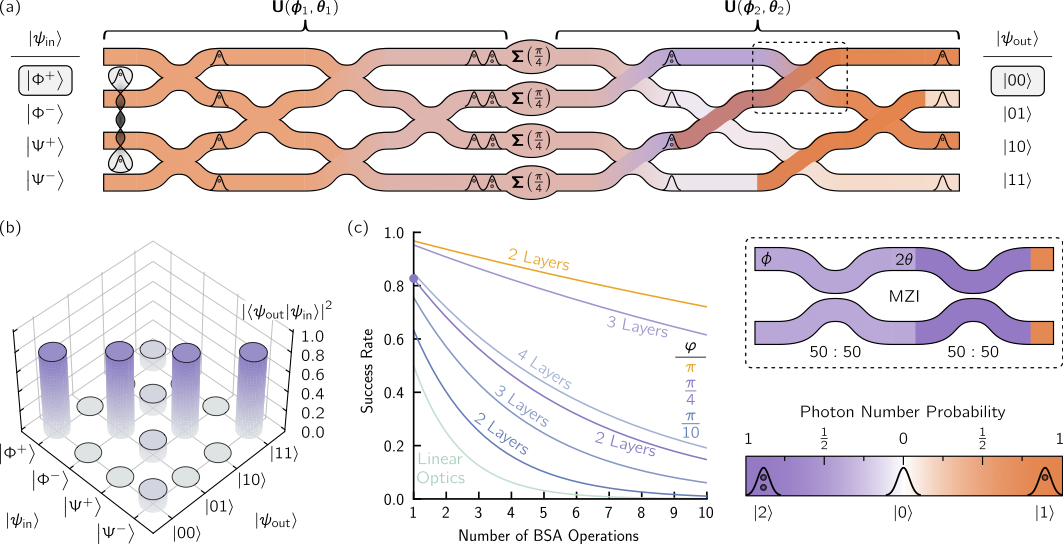
Bhavin J. Shastri is an Assistant Professor in the Department of Physics, Engineering Physics and Astronomy at Queen's University in Canada. His research explores the physics of light for computing , pushing frontiers in information and signal processing through photonic computing and quantum/neuromorphic photonics . He is affiliated with the Centre for Nanophotonics and NUCLEUS , a pan-Canadian photonic computing program funded by NSERC CREATE, bridging artificial intelligence and quantum information . Canada Research Chair & Principal Investigator Faculty Affiliate at Vector Institute (2020-) Editorial Board Member of JPhys Photonics (2019-) Member of IEEE Photonics Society Technical Affairs Council (2019-) Visiting Researcher Scholar at Princeton University (2018-) Shastri Lab members have access to world-class shared facilities, including the Centre for Nanophotonics (CFI-Innovation Fund), Nanofabrication Kingston , the Centre for Advanced Computing , and the Digital Research Alliance of Canada . The lab takes an interdisciplinary approach combining nanophotonics with complex systems on emerging substrates. His research focuses on silicon photonics , nanophonic processors , and photonic integrated circuits with applications to deep learning , nonlinear programming , and quantum information science . His articles show consistent exploration of quantum photonic neural networks , photonic memory systems , and optical signal processing for machine learning and quantum technologies . 2020 IUPAP Young Scientist Prize in Optics 2014 Banting Postdoctoral Fellowship 2012 D. W. Ambridge Prize 2011 IEEE Photonics Society Graduate Student Fellowship 2011 NSERC Postdoctoral Fellowship Multiple Best Student Paper Awards Shastri's lab supervises Ph.D. candidates and postdoctoral fellows working on quantum photonics , neuromorphic computing , and photonic AI systems . His recent work includes photonic tensor cores for scientific computing , quantum photonic neural networks , and all-optical memory systems. Shastri Lab designs programmable nanophotonic processors with potential to outperform microelectronic processors in energy efficiency and computational speeds by seven and four orders of magnitude respectively. Their work spans from device design to system-level implementations in optical computing for machine learning and quantum information processing .
Shahrzad Esmaeili is a Professor in the Department of Mechanical and Mechatronics Engineering at the University of Waterloo. She holds a PhD in Materials Engineering from the University of British Columbia (2002), and master’s and bachelor’s degrees in Materials Science and Engineering from Shiraz University (1988, 1980). Her research focuses on processing-structure-property relationships in light alloys, metallic biomaterials, and additive manufacturing. She has expertise in phase transformations, surface modifications, and multi-length scale characterization. Notably, she received an Early Researcher Award from the Ontario Ministry of Research and Innovation. Her work bridges experimental and computational methods to study microstructural phenomena in aluminum and magnesium alloys. Recent publications emphasize non-isothermal annealing, precipitation hardening, and bio-structure fabrication. Education: PhD, Materials Engineering, University of British Columbia (2002) MSc, Materials Science and Engineering, Shiraz University (1988) BSc, Materials Science and Engineering, Shiraz University (1980) Research Interests: Her work integrates experimental and modeling approaches to study nanostructured materials, including metallic biomaterials and light alloys. Key areas include: Precipitation hardening mechanisms in Al-Mg-Si and Mg-Zn alloys Surface functionalization via laser-assisted deposition Additive manufacturing of porous titanium bio-structures Thermal-mechanical processing of aluminum composites Publications: Over 100 peer-reviewed articles span microstructural analysis, alloy behavior under thermal treatments, and biomedical applications. Recent trends focus on non-isothermal processing effects, microalloying strategies, and advanced surface modification techniques. Awards: Early Researcher Award (Ontario Ministry of Research and Innovation) Grants & Collaboration: Her research involves interdisciplinary collaborations, though specific grants are not detailed here. She leads studies on novel processing routes for high-performance alloys and biomaterials. Labs/Teams: Active in materials characterization and computational modeling groups at the University of Waterloo, focusing on multi-scale material analysis.