Kathrin Lang is a Full Professor at the Department of Chemistry and Applied Biosciences, ETH Zurich, and Head of the Organic Chemistry Laboratory. Her research focuses on chemical biology, particularly the development of tools for genetic code expansion to incorporate non-canonical amino acids into proteins and advance bioorthogonal chemistries for studying biological processes. Keywords: Genetic Code Expansion, Bioorthogonal Chemistry, Protein Engineering, Ubiquitylation Networks, Post-Translational Modifications. Lang’s work emphasizes proximity-triggered crosslinking reactions, bioorthogonal labeling, and in vivo chemistries to address challenges in protein interaction mapping and structural elucidation. Her group’s recent publications highlight methodologies for dual protein labeling, deciphering ubiquitin code, and enhancing cycloaddition reactivity. Current projects include exploring cyclopropene-fused dibenzocyclooctynes for improved labeling and investigating methylated lysine as a conformational regulator in Hsp90. Funding sources include the ERC (Ubl-tool), DFG (SFB1035, SPP1926), and ETH Zurich. She contributes to education through courses like Genetic Code Expansion for Studying Posttranslational Modifications and Chemical Biology and Synthetic Biochemistry . Collaborative efforts span structural biology, microbiology, and synthetic biochemistry, with applications in ubiquitin research and cellular imaging.
Hang Lu is an Associate Professor in the Department of Communication and Media at the University of Michigan's College of Literature, Science, and the Arts. He specializes in science, health, environmental, and risk communication (ComSHER), with a focus on media psychology. His research explores audience responses to media messages about sensitive topics and strategies to enhance message effectiveness. Lu holds a Ph.D. in Communication from Cornell University (2018), along with advanced degrees from Cornell, Marquette University, and Central South University in China. He directs the Media and Risk (MaR) Lab and previously served as a postdoctoral fellow at the Annenberg Public Policy Center. His research spans four main areas: 1) emotion dynamics in media responses, 2) predictors of information behaviors, 3) media effects on stigmatization, and 4) AI applications in sensitive domains. He has published in journals like Journal of Communication , Risk Analysis , and Public Understanding of Science , earning multiple top paper awards. As Vice Chair of the Environmental Communication Division at the International Communication Association, Lu contributes to interdisciplinary dialogue. His work addresses critical societal issues such as climate change communication, vaccination hesitancy, and emerging technology ethics.
Nicholas Antipa is an Assistant Professor at the University of California San Diego's Jacobs School of Engineering, in the Electrical and Computer Engineering department. His research focuses on the co-design of optical systems and algorithms to develop advanced computational imaging systems, leveraging innovations in 3D printing, sensors, machine learning, and AI. He holds a PhD in Computational Imaging from UC Berkeley and previously worked at the Lawrence Livermore National Lab on optical metrology for the National Ignition Facility. His work includes pioneering projects like the DiffuserCam and Miniscope3D, which enable high-dimensional optical signal capture and 3D microscopy. Education: PhD in Computational Imaging, UC Berkeley (2020) MS in Optics, University of Rochester Institute of Optics BS in Optical Science and Engineering, UC Davis Research Interests: Computational imaging systems, single-shot high-dimensional optical capture, lensless imaging, and applications in neuroscience and marine science. His lab explores novel optical designs, compressed sensing, and AI-driven imaging techniques to push the boundaries of conventional systems. Scientific Awards: Best Paper at ICCP 2019, 2016 Best Demo at ICCP 2017 No. 2 in Optica 15 Top-Cited Articles (2020) Affiliations: Director of the Computational Imaging Systems Lab at UCSD. Collaborates with institutions like Lawrence Livermore National Lab and the Scripps Institution of Oceanography for projects in marine sediment mapping and underwater object detection. His lab emphasizes open-source tools, such as the DiffuserCam Raspberry Pi tutorial.
Dr. Vadim Backman is the Sachs Family Professor of Biomedical Engineering and Medicine at Northwestern University's McCormick School of Engineering and Applied Sciences and Feinberg School of Medicine. He holds additional roles as Professor of Medicine (Hematology/Oncology) and Biochemistry and Molecular Genetics, Associate Director of Research Technology and Infrastructure at the Robert H. Lurie Comprehensive Cancer Center, and Director of the Center for Physical Genomics and Engineering. He earned his Ph.D. in Medical Engineering from Harvard-MIT and M.S./B.S. in Physics from St. Petersburg Polytechnic Institute. His research focuses on physical and biological science intersections, developing nanoscale imaging and computational technologies to study chromatin dynamics and their role in disease. Key areas include cancer diagnostics/therapeutics, chromatin engineering, and genome nanoimaging. Dr. Backman has published over 230 papers, holds 20+ patents, and leads large-scale projects like NCI Bioengineering Research Partnerships. Education: Ph.D. (Harvard-MIT), M.S. (MIT), M.S./B.S. (St. Petersburg Polytechnic Institute) Affiliations: PhD Programs in Applied Physics and Interdisciplinary Biological Sciences Research emphasizes chromatin's role in disease, with clinical translation for diagnostics and therapy. His lab develops technologies like nano-CHIA and ChromSTEM, advancing understanding of genomic organization and epigenetic regulation. Awards include the Cozzarelli Prize and MIT Technology Review's Top 100 Innovators. Awards: Cozzarelli Prize (2017), AIMBE Fellowship (2009), NSF CAREER Award (2003) Grants and collaborations include managing multi-investigator projects and co-founding biotech companies. Courses taught: BME 302 (Quantitative Systems Physiology), BME 429 (Advanced Physical and Applied Optics).
Jessica Rosenholm is a Professor at the Faculty of Science and Engineering, Department of Pharmacy at Åbo Akademi University. Her research focuses on drug delivery systems, nanomedicine, and biomaterials engineering. She holds a D.Sc.(Tech.) and has authored over 200 publications. Key research areas include mesoporous silica nanoparticles, 3D bioprinting, and antimicrobial resistance solutions. Her work contributes to UN Sustainable Development Goals, particularly in advancing health technologies. Notable achievements include the Akzo Nobel Nordic Research Prize 2009 and the Knight, First Class, of the Order of the White Rose of Finland (2022). She leads projects like the MADNESS Centre of Excellence, exploring materials-driven solutions against antimicrobial resistance. Education: Doctor of Science (Technology) Research Interests: Nanoformulations, biomedical imaging, microfluidics, and tissue engineering. Recent articles highlight innovations in programmable nanocomposites for hearing loss treatment, microfluidic assembly of nanostructures, and 3D printing of drug delivery systems. Awards: ÅAU Chancellor’s Prize (2013), Forskarpriset ur Harry Elvings legat (2009) Grants: Projects funded by EU, Finnish Research Council, and Sigrid Jusélius Foundation. Labs/Teams: BioNanoMaterials group explores cutting-edge technologies like nanomedical agents and microfluidics. Current projects include the NAP4DIVE initiative for blood-brain barrier drug delivery.
Jianhua Xing is an Associate Professor in the Department of Physics & Astronomy at the University of Pittsburgh , affiliated with the Dietrich School of Arts and Sciences . His research focuses on applying physics-based approaches to study biological systems, particularly cell phenotypic transitions (CPTs) and their underlying dynamics. He integrates quantitative single-cell measurements with computational and theoretical analyses to understand how cells transition between stable states. Key research areas include: Nonequilibrium systems and rate theories for biological transitions Single-cell trajectory analysis and live-cell imaging Epithelial-mesenchymal transition (EMT) dynamics Gene regulatory networks and stochastic processes Biological applications of dynamical systems theory Recent work highlights the coupling between EMT and cell cycle arrest, leveraging machine learning frameworks (e.g., LivecellX ) for high-resolution imaging analysis. His lab also explores chromosomal dynamics and mechanotransduction in stem cell aging. Publications emphasize data-driven modeling and theoretical insights, with contributions to frameworks like GraphVelo and Graph-Dynamo for inferring cellular state transitions. Collaborative efforts bridge physics, biology, and computational science to address fundamental biological questions. No awards or grants are explicitly listed in the provided texts. His research group focuses on advancing systems biology through interdisciplinary methods, with a lab dedicated to quantitative analysis of cellular processes.
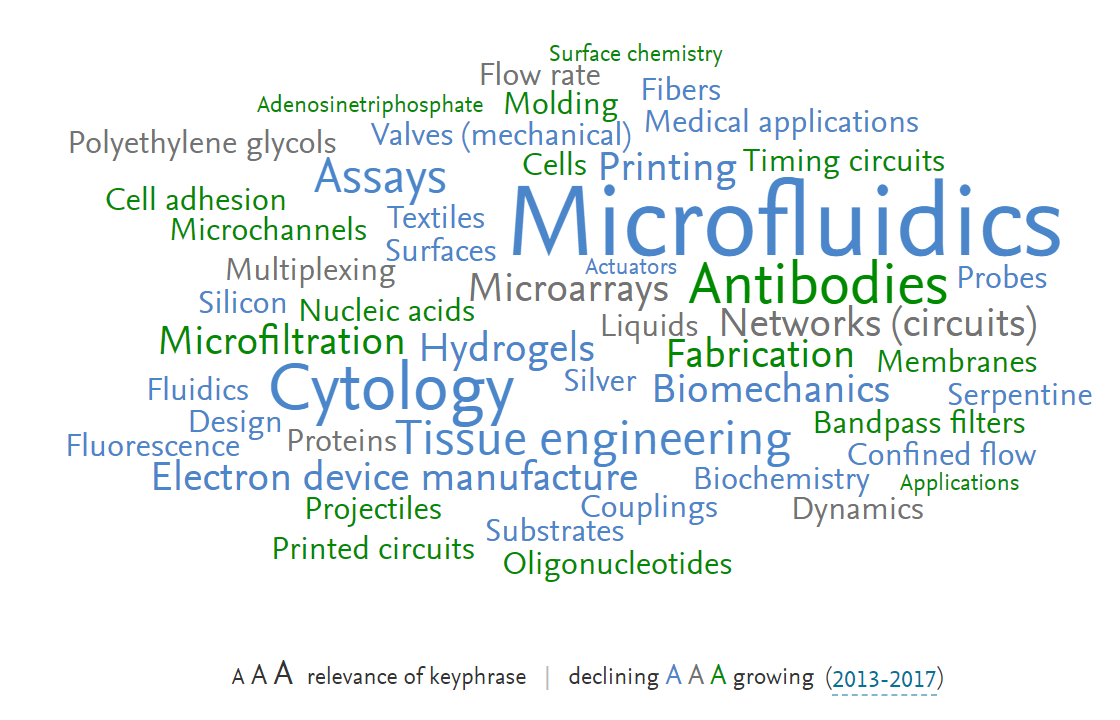
Mathieu Odijk is a Full Professor at the University of Twente's Faculty of Science and Technology, leading the Integrated Devices and Systems department. His research focuses on microfluidic systems, catalysis, and organ-on-chip platforms, with contributions to UN Sustainable Development Goals through advanced material characterization and biomedical engineering. He has authored over 120 publications and holds an h-index of 27 with 1,820 citations. Expertise: Microfluidics, catalyst particle diagnostics, SERS substrates, organ-on-chip systems, and spectroscopic techniques. Collaborations include Weckhuysen (catalysis), van den Berg (microfluidics), and Meirer (materials science). Key projects: Modular organ-on-chip platforms (STARTER), droplet-based catalyst screening, and real-time reaction monitoring via ATR-IR systems. His research combines nanotechnology and chemical engineering to develop tools for sustainable energy, environmental remediation, and biomedical applications. Recent work includes microreactors for catalyst particle analysis, light-driven urea oxidation for wearable kidney devices, and standardized platforms for organ-on-chip research.
Matthew R. Jones is an Associate Professor in the Department of Chemistry at Rice University and holds the Gene and Norman Hackerman Junior Chair and Norman Hackerman-Welch Young Investigator titles. He joined Rice in 2017 after postdoctoral research at UC Berkeley under Paul Alivisatos and a PhD at Northwestern University under Chad Mirkin. His research focuses on systems-level nanoparticle assembly, plasmonics, and metamaterials, with applications in energy storage and biomedicine. Jones has pioneered techniques like 4D-STEM for catalytic nanoparticles and developed adaptive materials via strain-controlled synthesis. Education: B.S. in Materials Science and Biomedical Engineering (Carnegie Mellon University), Ph.D. in Chemistry (Northwestern University as an NSF Fellow). Key awards include the Packard Fellowship (2018) and NSF CAREER Award (2022). His lab hosts over 20 graduate students and postdocs, with notable advisees including Bukky, Zhihua Cheng, and Saxton. Research emphasizes interdisciplinary approaches: combining in-situ microscopy, ligand engineering, and computational modeling to control nanoparticle behavior. Recent studies include strain-preserved nanocatalysts (2024) and chiral superlattices (2024). Collaborations span Rice’s Center for Nanoscale Imaging Sciences and the Electrochemical Society. Lab: Jones Research Group Grants: NSF CAREER, Packard Fellowship, Rice Seed Award Publications: Over 50 peer-reviewed articles, including Science Advances (2024) and Nature Communications (2023)
Chris B. Schaffer is a Professor in the Meinig School of Biomedical Engineering at Cornell University, specializing in developing advanced optical techniques to study neurovascular dynamics in neurological diseases. His lab focuses on Alzheimer’s disease mechanisms, leveraging multiphoton microscopy and in vivo imaging to explore capillary stalling, cerebral blood flow deficits, and their cognitive impacts. He holds a Ph.D. in Physics from Harvard University and postdoctoral training in neuroscience at UC San Diego. Research interests include biomedical imaging instrumentation, neurodegenerative disease modeling, and science education innovation. Awards include AAAS Fellowship (2021), AIMBE Fellowship (2019), and multiple teaching accolades. His work bridges engineering and medicine, with contributions to spinal cord injury studies, epilepsy, and vascular contributions to dementia (VCID). Notable discoveries include identifying neutrophil-induced capillary stalls as a key Alzheimer’s disease mechanism and demonstrating cerebral blood flow improvements can restore memory in mouse models. His lab also develops educational tools emphasizing science as a discovery process, used in K-12 and university settings.
Olof Mikael Lindgren is a Professor of Physics at the Norwegian University of Science and Technology (NTNU) , Department of Physics, Faculty of Natural Sciences. Since 2003, he has led research at the Applied Optics group and Biophysics group , focusing on advanced optical spectroscopy and imaging for biomedical applications. His research spans laser-based spectroscopy, time-resolved optical techniques, and nonlinear optics. He applies these methods to study biomolecular systems, particularly in the context of amyloid diseases like Parkinson’s and Alzheimer’s, and to develop photo-dynamic therapy approaches. He also investigates hybrid organic-inorganic nanomaterials and triplet state dynamics. Recent publications highlight his work on oligothiophenes for amyloid fibril detection, BODIPY-based photosensitizers for cancer therapy, and multimodal fluorescence microscopy of protein aggregates. These studies collectively advance optical diagnostics and therapeutic strategies in life sciences. He teaches the course TFY4195 - Optics and is actively involved in outreach and academic service. His contact email is mikael.lindgren@ntnu.no , and his office is located at Realfagbygget, D4-190, Gløshaugen .
Claus Hélix-Nielsen is a Professor and Head of Department at the Department of Environmental and Resource Engineering, DTU Sustain, Technical University of Denmark. His research focuses on lipid-protein interactions, biomimetic membranes, membrane transport, and membrane channel proteins, utilizing electrophysiology, fluorescence spectroscopy, and computational modeling. Current Position: Professor and Head of Department Institution: Technical University of Denmark Research Unit: DTU Sustain Department: Environmental and Resource Engineering Research Interests: Dr. Hélix-Nielsen investigates how the hydrophobic coupling between transmembrane proteins and lipid bilayers regulates protein function through bilayer mechanical properties. His work also explores how these properties influence membrane dynamics, including vesiculation. He develops biomimetic membranes for biosensor and separation technologies, employing advanced techniques like Raman spectroscopy and molecular dynamics simulations. Recent Publications Trends: His 15 most recent articles emphasize biomimetic membrane engineering, membrane biophysics, and applications in environmental and biomedical fields. Topics range from artificial ion channels and drug delivery systems to computational modeling of lipid-protein interactions and environmental monitoring sensors. Techniques: Key methodologies include electrophysiology, fluorescence spectroscopy, electron paramagnetic resonance, Raman spectroscopy, and molecular dynamics simulations.
Prof. Casper Hoogenraad is a full professor in Molecular Neuroscience at the Department of Cell Biology, Faculty of Science, Utrecht University. His research focuses on understanding how intracellular protein trafficking underlies neuronal development and function, with particular emphasis on the microtubule cytoskeleton, synaptic cargo trafficking, and synaptic plasticity. He leads an active research group within Utrecht University's Cell Biology department and collaborates extensively with other neuroscience research groups. Education: PhD, Erasmus University Rotterdam (1996-2001) Postdoc, Massachusetts Institute of Technology (2002-2005) Hoogenraad's research spans three main themes: cytoskeleton dynamics during neurodevelopment and synaptic plasticity, motor proteins and adaptors as regulators of synaptic transport, and psychiatric and neurologic disease disorders linked to intracellular transport. His work combines genetics, biochemistry, molecular, and cellular biology methods in in vitro (neuron cultures), ex vivo (brain slices), and in vivo (mice) systems, along with advanced microscopy techniques including immunofluorescent confocal microscopy, high-resolution live cell imaging, and photo-activated localization microscopy (PALM). Analysis of Hoogenraad's recent publications reveals a strong focus on microtubule organization, neuronal polarity, and the molecular mechanisms underlying synaptic function and dysfunction. His work frequently explores how disruptions in intracellular transport contribute to neurological disorders including Alzheimer's disease, schizophrenia, and autism spectrum disorders, with particular attention to the relationship between cytoskeletal organization and cargo transport in neuronal compartments. Scientific Awards and Memberships: ZonMW-VIDI (2004) European Young Investigators (EURYI) award (2005) NWO-ALW VICI (2011) ERC Consolidator grants (2013) FENS-Kavli Network of Excellence (2014) European Molecular Biology Organization (EMBO) (2015) Young Academy of Europe (YAE) (2015) IBRO Kemali Prize (2016) Hoogenraad leads a research group studying neuronal development and function, with a particular focus on how intracellular transport mechanisms contribute to both normal brain function and neurological disorders. His laboratory employs a multidisciplinary approach combining molecular, cellular, and systems neuroscience techniques to investigate the molecular basis of neuronal polarity, synaptic plasticity, and the pathogenesis of neurological disorders. He has secured significant research funding through prestigious grants including ERC Consolidator grants. The Hoogenraad lab operates within the Cell Biology department at Utrecht University, collaborating with other research groups focusing on cellular dynamics, biophysics, and neurobiology. The lab utilizes advanced microscopy techniques including immunofluorescent confocal microscopy, high-resolution live cell imaging (spinning disc microscopy and total internal reflection fluorescence microscopy), and quantitative analysis using advanced high-resolution microscopy (photo-activated localization microscopy). Current lab technicians include Phebe Wulf and Bart de Haan.
Parvin Mousavi is a Professor at the School of Computing, Queen's University, and holds prestigious chairs including the Canada CIFAR AI Chair and Canada Research Chair in Medical Informatics. She directs the Medical Informatics (Med-i) Laboratory, focusing on computational approaches for biological process prediction and explanation. Education: Ph.D., University of British Columbia (2001) Research interests span machine learning in computer-assisted diagnosis, ultrasound imaging, medical image computing, bioinformatics, systems biology, and quantitative modeling of gene regulatory networks. The lab emphasizes interdisciplinary collaboration with medical professionals and institutions. Affiliations & Collaborations: Kingston General Hospital, Human Mobility Research Centre (HMRC), and University of California, San Francisco. The Med-i Laboratory is equipped with advanced parallel computing servers, clusters, and imaging devices. Awards: Canada CIFAR AI Chair Canada Research Chair in Medical Informatics Contact: Office: Goodwin 720 | Phone: 613 533-6070
David Juncker is a Professor and Department Chair of the Department of Biomedical Engineering at McGill University. He serves as a Principal Investigator at the McGill University & Genome Quebec Innovation Centre and holds associate memberships in the Department of Neurology and Neurosurgery, Department of Electrical and Computer Engineering, Division of Experimental Medicine, Department of Surgery, and Goodman Cancer Research Centre. His research focuses on micro- and nano-bioengineering technologies for bioanalysis, precision medicine, and organs-on-chips. Key areas include microfluidics, lab-on-a-chip devices, biomedical sensors, medical diagnostics, biomaterials, tissue engineering, and cancer biomarker discovery. His lab develops scalable antibody microarrays, self-powered diagnostic platforms, microfluidic probes for brain tissue perfusion, and nanogradients for neuronal navigation, with applications in cancer diagnostics, global health, and neuroscience. Recent publications (2023-2025) reveal strong emphasis on extracellular vesicle analysis, single-cell proteomics, 3D-printed microfluidic/organ-on-a-chip systems, and capillary-driven circuits. Key trends include low-cost point-of-care diagnostics, advanced circulating tumor cell isolation methods, and biomimetic synthetic vesicles for drug delivery, demonstrating translational potential in early disease detection. Dr. Juncker leads a highly interdisciplinary team comprising undergraduate and graduate students, post-doctoral fellows, and staff from diverse scientific, engineering, and cultural backgrounds. His lab actively recruits Canadian/permanent resident graduate students for projects on single extracellular vesicle and protein detection in cancer and infectious diseases, leveraging microfluidics and wearables for biomarker discovery. The Juncker Lab operates from the McGill University & Genome Quebec Innovation Centre (740 Dr. Penfield Avenue, Room 6206). It maintains a collaborative, multicultural environment focused on developing transformative micro- and nano-bioengineering technologies with significant potential impact on human health diagnostics and treatment.
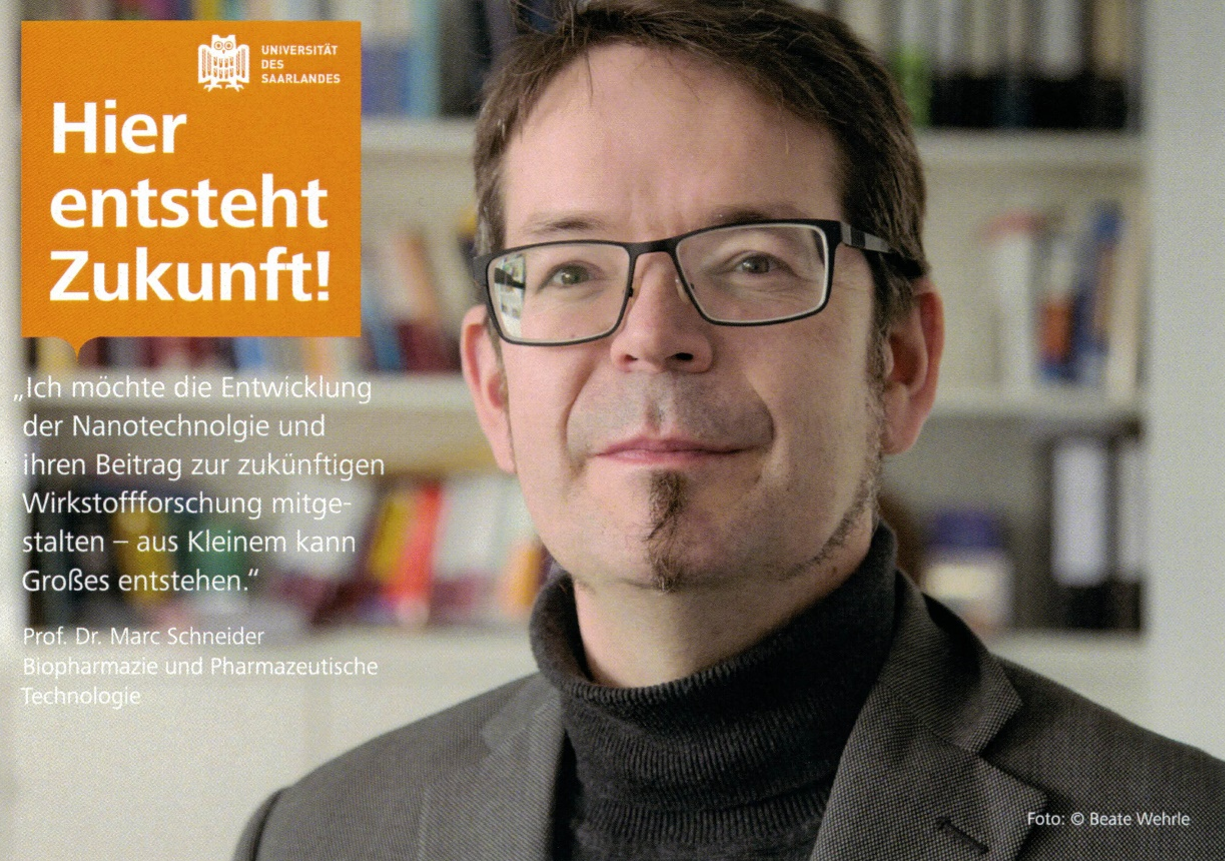
Prof. Dr. Marc Schneider holds a professorship in Biopharmaceutics and Pharmaceutical Technology at Saarland University's College of Pharmacy . His research focuses on colloidal drug delivery systems, particularly nanostructured and non-spherical particle engineering for overcoming biological barriers in pulmonary and transdermal applications. He leads an internationally recognized lab in Saarbrücken, collaborating with Helmholtz Institute for Pharmaceutical Research Saarland (HIPS) and trinational institutions. Research Highlights: Development of inhalable nano/microparticle systems Surface modification of gelatin nanoparticles Characterization of mucus-penetrating particles 3D printing for microneedle fabrication Atomic Force Microscopy (AFM) for nanoparticle analysis Selected Scientific Awards: European Journal of Pharmaceutics and Biopharmaceutics Best Paper Award (2018) for mucus-penetrating nanoparticles Recognized in 'Ausgezeichnete Orte im Land der Ideen' competition (2018) for 'Nano-Mais' drug delivery system Collaborative Networks: Co-editor for Advanced Drug Delivery Reviews special issue on biological barriers Key participant in trinational Master's program in Biomedicine with Strasbourg, Mainz, and Luxembourg Active in Controlled Release Society (CRS) conferences and local chapters