Michael S. Eberhart is an Assistant Professor in the Department of Chemistry and Environmental Science at New Jersey Institute of Technology (NJIT). His research focuses on solar energy conversion, specifically photoexcited charge transfer reactions and biomimetic strategies for artificial photosynthesis. He holds a Ph.D. in Chemistry from Columbia University (2016) and a B.S. in Chemistry from New Mexico State University (2010). His work integrates electrochemistry, electrocatalysis, and photoelectrocatalysis to develop sustainable solutions for energy and environmental challenges. Eberhart’s lab, eberhartlab.com , explores molecular functionalization of electrodes for water remediation and solar fuel generation. His recent studies highlight innovations in mesoporous metal oxide photoanodes and surface-bound molecular complexes for enhanced catalytic efficiency. Major research themes include stabilizing chromophores on nanostructured materials, designing bifunctional chromophore assemblies, and optimizing charge transport pathways. His articles from 2017–2021 emphasize advancements in photoelectrochemical systems, with a focus on water oxidation catalysis and plasmon-enhanced light utilization. The lab’s interdisciplinary approach bridges inorganic chemistry, materials science, and renewable energy applications.
Joseph S. Friedman is an Associate Professor of Electrical & Computer Engineering at the University of Texas at Dallas, leading the NeuroSpinCompute Laboratory within the Erik Jonsson School of Engineering and Computer Science. His research focuses on unconventional computing paradigms leveraging nanotechnology, including neuromorphic systems, spintronics, and memristive devices. He specializes in nanomagnet-based logic architectures, neuromorphic computing with domain walls and skyrmions, and hardware security for emerging technologies. His research explores energy-efficient computing through novel paradigms such as reversible skyrmion logic, neuromorphic networks using magnetic tunnel junctions, and stochastic Bayesian inference circuits. He has pioneered spintronic neurons demonstrating 94% accuracy in handwritten digit recognition and developed secure logic locking mechanisms using nanomagnet logic. His work integrates experimental fabrication with SPICE modeling, emphasizing scalable beyond-CMOS systems. Recent advancements include toggle SOT-MRAM architectures, quantum circuit design for neutral atom systems, and neuromorphic networks leveraging superconducting flux quanta. He advises over 20 graduate and undergraduate students, fostering innovation in AI hardware and unconventional computing. Notable projects include the NeuroSpinCompute Lab's domain wall neuromorphic networks, secure logic locking schemes, and collaborations with institutions like Sandia National Labs on neuromorphic reservoir computing. Current research trends emphasize low-energy spintronic architectures, hybrid quantum-classical systems, and neuromorphic applications in edge computing. His research is supported by NSF grants CCF-1910800 and CCF-2146439, focusing on neuromorphic and spintronic systems. He regularly contributes to conferences like IEEE Rebooting Computing and SPIE Spintronics, showcasing breakthroughs in nanomagnetic logic and neuromorphic inference.
Sang Bok Lee is a Professor of Chemistry & Biochemistry at the University of Maryland. His research focuses on electrochemistry of heterogeneous nanomaterials for energy storage systems, nanopore transport properties, and biosensor development. He specializes in advanced materials for high-power batteries and electrochromic devices, with a strong emphasis on solid-state electrolyte interfaces and protective coatings. Research Interests: Electrochemistry of nanomaterials for energy storage Transport properties of nanopores Solid-state battery interfaces Biosensor design and nanoparticle toxicology Targeted drug delivery systems Chemical and biochemical separation techniques Recent work highlights include developing aluminum nitride protective layers for solid electrolytes, optimizing hot-pressed argyrodite electrolytes, and advancing in situ Raman diagnostics for battery materials. His studies on magnesium anode protection and lithium metal anode engineering have significantly impacted rechargeable battery technologies. Publications reflect a focus on nanomaterial synthesis, electrochemical stability, and energy storage innovations. No academic awards or student advisement details were explicitly cited in the text.
Dr. Mercedes Taylor is an Assistant Professor in the Department of Chemistry and Biochemistry at the University of Maryland, College Park. She holds the Nathan Drake Faculty Fellowship. Previously, she was a Jill Hruby Fellow in National Security Science and Engineering at Sandia National Labs (2018–2021) and a Post-Baccalaureate Intramural Research Training Awardee at the NIH (2011–2013). She earned her Ph.D. in Chemistry from UC Berkeley (2018) and a B.A. in Chemistry from Amherst College (2011). Her research focuses on synthesizing novel materials like supramolecular cages, covalent organic frameworks, and porous polymers for applications in water purification and critical metal capture. Her lab emphasizes controlling material structure to achieve selectivity for target molecules and enhance aqueous stability. Key projects include ion separations, environmental remediation, and energy storage solutions. Dr. Taylor’s work has been recognized through awards such as the 2024 Doctoral New Investigator Award (ACS), 2023 DOE Separation Science Core Award, and the 2023 Moore Inventor Fellowship. She mentors a dynamic research group, including graduate students and post-baccalaureate researchers, and actively engages in interdisciplinary collaborations. Her lab is part of the Taylor Group at UMD, which develops advanced materials for ion capture and water treatment. Alumni of her group include researchers at Sandia National Labs and academic institutions, contributing to both industry and academia.
Inigo Flores Ituarte is a Research Professor at Tampere University's Faculty of Engineering and Natural Sciences, affiliated with the Automation Technology and Mechanical Engineering department. He leads the Digital Design and Manufacturing (D2M) research lab, focusing on sustainable manufacturing and twin-transition strategies integrating digital and green technologies. His work emphasizes optimization-driven design, additive manufacturing innovations, and AI-driven expert systems to enhance energy efficiency and reduce environmental impacts. Key research pillars include: Pillar 1: Twin-transition in Engineering Design and Manufacturing Processes, addressing sustainable manufacturing and intelligent systems Pillar 2: Development of open D2M systems and Process-Structure-Property-Performance (PSPP) linkages in advanced materials His research explores multi-disciplinary optimization combining model-based simulations and data-driven techniques. Notable contributions include generative AI integration in CAD systems, cognitive manufacturing systems, and cost-effective process monitoring using CNN-based methods. Inigo's work emphasizes environmental sustainability, with a focus on reducing manufacturing's energy consumption (54% of global use) and CO2 emissions. He advocates for interconnected material systems, smart manufacturing processes, and AI-assisted decision-making to achieve cognitive intelligence in industrial operations. His D2M lab's overarching goal is to maximize product/process performance while improving cost-effectiveness and minimizing environmental footprints. Recent projects include railway bogie demonstrators via multi-material deposition and sensor systems leveraging IoT and ChatGPT integration.
Jan Carmeliet is a Full Professor at the Department of Mechanical and Process Engineering at ETH Zürich , holding the Chair of Building Physics since 2008. He previously held academic positions at Katholieke Universiteit Leuven and Eindhoven University of Technology . His research focuses on multiscale modeling of porous and granular materials , urban heat-air-moisture flows , and energy-efficient urban systems . His work integrates advanced computational techniques (e.g., lattice Boltzmann methods , CFD , FEM ) with experimental approaches ( X-ray tomography , wind tunnel PIV ). He leads major projects such as the RePoDH and Urban Multiscale Energy Modelling initiatives, aiming to decarbonize urban energy systems and understand local heat islands. Current projects emphasize renewable-powered district heating networks and urban climate modeling . Key collaborations include institutions like Empa , University of Illinois , and Los Alamos National Laboratory . He has secured significant grants from the Swiss National Science Foundation (SNSF) and ETH Domain , focusing on urban energy resilience and material science. His leadership roles include directing the Energy Science Center ETH Zürich and coordinating the SCCER-efficiency program.
William Wadsworth is Professor of Physics at the University of Bath, affiliated with the Centre for Photonics and Photonic Materials. His research focuses on photonic crystal fibres (PCFs) and hollow-core fibre technologies, with applications spanning quantum information, medical imaging, and fundamental metrology. Research Expertise Professor Wadsworth designs and fabricates microstructured optical fibres enabling unprecedented light control. His work centers on: Development of hollow-core anti-resonant fibres for deep ultraviolet guidance Supercontinuum generation across UV-to-infrared spectra Medical applications including UV light therapies and malaria diagnostics Quantum optical systems using alkali-metal vapours in fibres Research Impact His recent publications (2024-2025) demonstrate cutting-edge advances in hollow-core fibre technology for deep-UV applications and medical diagnostics. Key trends include resonance-free supercontinuum generation, integration of AI with photonics for malaria detection, and novel fibre designs enabling quantum applications. These innovations directly support UN Sustainable Development Goals in health and clean energy. Grants and Supervision Professor Wadsworth leads 24 research projects including: U-Care (2021-2026): Deep Ultraviolet Light Therapies (EPSRC) International Collaboration Awards (2020-2023): Clean Air (Royal Society) Plasmon-Enhanced Alkali-metal Vapours (2017): Quantum optical applications He has supervised 18 doctoral students and currently accepts new PhD candidates in photonics and fibre optics. Research Environment As core faculty in Bath's Centre for Photonics and Photonic Materials, he collaborates internationally with institutions in quantum optics, air pollution analysis, and medical instrumentation, maintaining active partnerships across Europe and Asia.
Andrew J. Schuler is an Associate Professor in the Department of Civil Engineering at the University of New Mexico, where he has been since 2007. His research focuses on microbial processes in wastewater treatment and bioremediation, with particular emphasis on modeling distributed bacterial states, biofilm dynamics, and integrating molecular methods with environmental engineering. He teaches courses in water/wastewater treatment (CE 335) and biological wastewater treatment (CE 536). Ph.D., Civil and Environmental Engineering, University of California at Berkeley (1998) M.S., Civil and Environmental Engineering, UC Berkeley (1993) B.S., Civil Engineering, University of Colorado at Boulder (1987) Dr. Schuler's research addresses critical challenges in biological wastewater treatment , including: Microbial storage products and density effects on solids separation Agent-based modeling of bacterial state distributions Integrated fixed-film activated sludge (IFAS) systems Photolytic and microbial degradation of Superfund chemicals His recent publications explore biofilm surface chemistry , algae-based wastewater treatment , and computational modeling of microbial communities . Notable funded projects include NSF CAREER grants, NIEHS Superfund subprojects, and North Carolina Biotechnology Center collaborations. National Science Foundation CAREER Award (2004) Paul L. Busch Award (2008) AEESP/CH2M HILL Outstanding Doctoral Dissertation Award (1999) Japan Society for the Promotion of Science Postdoctoral Fellowship (1999) Dr. Schuler leads the Schuler Laboratory , which investigates microbial dynamics in wastewater treatment systems, develops the DisSimulator agent-based modeling tool, and provides practical solutions for activated sludge settling problems through density analysis. Current funding supports advanced research in biofilm optimization and sustainable water reuse technologies.
Professor Atilla Ansal is a distinguished academic in Civil Engineering at Özyeğin University's School of Engineering, where he has served as a full-time professor since March 2012 and previously as the Founding Chair of the Civil Engineering Department from 2012-2019. With an extensive career spanning over five decades, Professor Ansal has held prominent positions at Istanbul Technical University, Bogaziçi University's Kandilli Observatory and Earthquake Research Institute, and has served as a visiting professor at numerous international institutions including Northwestern University, University of California, and Tokyo University. Northwestern University, 1978 (Doctorate) Civil Engineering, Istanbul Technical University, 1969 (Master's) Civil Engineering, Istanbul Technical University, 1969 (Bachelor's) Professor Ansal's research focuses on Earthquake Geotechnical Engineering, Soil Dynamics, Seismic Hazard Analysis, Landslide hazard analysis, Seismic Microzonation, and Laboratory and In-Situ Testing of Soil Properties. His work has significantly advanced our understanding of soil behavior under seismic loading, site response analysis, and seismic microzonation methodologies. His research has direct applications in urban planning, earthquake risk mitigation, and performance-based seismic design. Professor Ansal has pioneered approaches to site-specific earthquake characterization and developed methodologies for seismic microzonation that have been implemented in numerous Turkish cities and adopted internationally. His extensive publication record demonstrates consistent contributions to earthquake engineering, with recent work focusing on probabilistic seismic microzonation, 2D basin effects, site-specific response analysis, and performance-based design approaches. His research shows a clear evolution from fundamental soil behavior studies to practical applications in urban risk assessment and mitigation. 7th Prof.N.Ambraseys Lecturer (2024), European Association for Earthquake Engineering 15th Nonveiller Lecturer (2017), Croatian Geotechnical Society Third Prof.Dr. Rıfat Yarar Lecturer (2015), Turkish Civil Engineers Association Third Ord.Prof.Dr. Hamdi Peynircioglu Lecturer (1988) Professor Ansal has advised 15 PhD students and 27 Master's students, shaping the next generation of earthquake engineers. His leadership extends to editorial roles as Editor-in-Chief of the Springer journal 'Bulletin of Earthquake Engineering' since 2002 and Editor-in-Chief for the Springer book series on 'Geotechnical, Geological and Earthquake Engineering'. He served as Secretary General (1994-2014), President (2014-2018), and Vice President (2018-2022) of the European Association for Earthquake Engineering, significantly influencing the field internationally. His work has been supported by numerous grants from Turkish government agencies, international organizations including UNESCO, and collaborative research projects across Europe. Professor Ansal has been instrumental in establishing geotechnical monitoring systems in Istanbul, including vertical arrays for site response analysis. His leadership in the 'Earthquake Master Plan for Istanbul' and 'Seismic Microzonation for Municipalities' projects has created critical infrastructure for earthquake risk management in Turkey's most populous city. His work with GeoIst, Geotechnical Earthquake Engineering and Consultancy Inc. has translated academic research into practical engineering solutions for seismic risk mitigation.
Professor Ali Yapar is a faculty member at Istanbul Technical University in the Electronics and Communication Engineering department. His research focuses on Electromagnetics , Microwave Engineering , and Antenna Technologies , with a particular emphasis on inverse scattering problems and microwave imaging for biomedical applications. He has supervised numerous graduate students and led projects related to breast cancer treatment and rough surface imaging. PhD in Electronics and Communication Engineering from Istanbul Technical University (1997) MSc in Electronics and Communication Engineering (1995) His recent publications analyze advanced techniques for microwave hyperthermia systems, reverse time migration methods, and Newton-based solutions for electromagnetic inverse scattering. Key projects include TUBITAK-funded initiatives on microwave tomography and brain stroke imaging. He serves as a project investigator and executive for electromagnetic research programs. Research areas span Electromagnetic Wave Propagation , Green's Function Applications , and Dielectric Material Analysis . Collaborations include IEEE members and international researchers in computational electromagnetics.
Massimo Canale is a Tenured Associate Professor at the Department of Electronics and Telecommunications (DET) of Politecnico di Torino , and a member of the CARS@PoliTO Interdepartmental Center for Automotive Research and Sustainable Mobility. His academic career spans over two decades, focusing on control systems engineering with applications in automotive technology. Scientific Branch: Systems and Control Engineering (IINF-04/A) ERC Sectors: Automotive Engineering, Control Engineering, Control Theory Dr. Canale's research bridges theoretical advancements in Model Predictive Control (MPC) with practical applications in autonomous vehicles , hybrid/electric propulsion , and active suspension systems . His work integrates reinforcement learning and dynamic programming for optimizing vehicle performance and energy efficiency. Recent publications demonstrate trends in autonomous driving architectures (2024), sliding mode control for highway scenarios (2024), and energy management for sustainable mobility (2023-2024). He has developed patented solutions for semi-active suspension control and autonomous vehicle guidance. Award: IEEE Transactions on Control Systems Technology Outstanding Paper Award (2011) Editorial Roles: Associate Editor, IEEE Open Journal of Control Systems (2022–present) Dr. Canale supervises PhD students like Francesco Cerrito and teaches courses on digital control technologies , automatic control , and reinforcement learning at Politecnico di Torino. His research is funded through competitive grants (e.g., MPC4AVP 2021-2022) and commercial contracts (AD Shuttle 2024).
Jesualdo Cerqueira Fernandes is an Assistant Professor at ISEG - Lisbon School of Economics and Management , part of the University of Lisbon. He also serves as a researcher at the ADVANCE Centre for Advanced Research in Management, contributing to studies in information systems and management. Education: PhD in Management (ISEG, 2018), Master’s in Information Management (University of Sheffield/Universidade Minho, 1994), and Bachelor’s in Computer Science (Faculty of Sciences, University of Lisbon, 1989) His research focuses on information systems strategy , agile methodologies , gamification , and benefits management . He has explored applications of these topics in environmental sustainability, banking, and insurance sectors. His work often bridges technical implementation with organizational impact. Recent publications highlight his interdisciplinary approach, with studies on gamification for sustainability and benefits management in insurance and banking sectors. Collaborative efforts span industries such as finance, energy, and education. Scientific Award: Commendation by ISEG Dean (2022) for advisory excellence in information systems He has supervised over 40 Master’s students and contributed to curriculum development, including coordination of the Master in Information Systems Management at ISEG.
Hamid Nazaripouya is an Assistant Professor at the School of Electrical and Computer Engineering, Oklahoma State University. His research focuses on modernizing power systems through interdisciplinary approaches combining control theory, power electronics, and AI for smart grid applications. Ph.D., Smart Grids, University of California, Los Angeles (2017) M.S., Manufacturing and Design, University of California, Los Angeles (2015) M.S., Power Systems, Louisiana State University (2013) M.S., Power Electronics, Sharif University of Technology (2010) B.S., Electrical and Computer Engineering, University of Tehran (2007) His research expertise spans cyber-physical power systems , power electronics , and smart grid optimization . Specific interests include mathematical modeling, control systems, and AI-driven solutions for grid resilience, renewable energy integration, and EV infrastructure. Hamid leads the Power Grid Modernization Lab (PGML) , focusing on projects like power system resilience, situational awareness, and power electronics control. He currently seeks PhD candidates with strong backgrounds in power systems, data science, and control theory. Scientific Awards: Distinguished Fellow of Electrical and Computer Engineering His lab offers funded PhD positions starting Spring 2025, emphasizing hands-on research and multidisciplinary collaboration.
Stuart Long is an associate dean of undergraduate research and faculty member at the Honors College of the University of Houston, where he serves as the academic adviser for all honors students majoring in Electrical and Computer Engineering. He teaches courses on electromagnetic waves and conducts research in antenna design and applied electromagnetics. Education: Received his doctorate from Harvard University. Stuart Long's research focuses on biomedical applications of electromagnetics, particularly MRI safety testing for implantable medical devices. His work addresses RF-induced heating, electromagnetic compatibility, and safety protocols for devices such as orthopaedic implants and active implantable systems. Recent publications emphasize computational modeling, machine learning, and historical advancements in antenna design. His scholarly contributions include the 2024 Distinguished Achievement Award, the 2018 Chen-To Tai Distinguished Educator Award, and the 2014 John Kraus Antenna Award. These honors reflect his leadership in electromagnetic safety research and engineering education. Stuart Long has actively contributed to improving pedagogy in engineering education, particularly through collaborative learning and retention workshops for diverse student populations. His academic advising role supports the integration of rigorous technical training and interdisciplinary research opportunities for honors students.
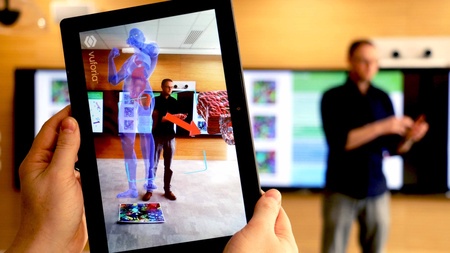
Professor John Barrow is a Professor of Biochemistry & Molecular Biology at the University of Aberdeen, where he also serves as Dean for Employability and Entrepreneurship since 2020. He is affiliated with the School of Medicine, Medical Sciences and Nutrition, based at the Institute of Medical Sciences on the Foresterhill Campus with office address at Ashgrove Road West, AB25 2ZD. Barrow earned his academic qualifications entirely from the University of Aberdeen: a BSc(Hons) in Biochemistry (2002), PhD in Molecular Biology (2005), and PGCert in Higher Education (2011). He was awarded Senior Fellow status with the Higher Education Academy in 2015. His academic career at Aberdeen has progressed from Postdoctoral research scientist (2005-2009), through Teaching Fellow (2009-2013) and Senior Teaching Fellow (2013-2015), to Senior Lecturer (Scholarship) (2015-2021), before becoming Professor in 2021. Professor Barrow's research primarily focuses on innovative approaches to biochemistry education, with particular emphasis on virtual reality and immersive learning technologies. His work bridges traditional biochemical knowledge with cutting-edge educational methodologies, creating engaging learning experiences for students. He has pioneered the use of virtual reality for teaching complex biochemical concepts such as the citric acid cycle and molecular structures. Additionally, his research extends to graduate attributes development, employability skills, and entrepreneurship education, reflecting his dual role as both educator and Dean for Employability and Entrepreneurship. Analysis of his recent publications reveals a strong trend toward educational technology and innovative teaching methods, particularly virtual and augmented reality applications in biochemistry education. His work spans molecular biology education, skills development, and the integration of enterprise and entrepreneurship into the academic curriculum. While his earlier career included more traditional molecular biology research on topics like gene promoters and receptor pathways, his recent focus has shifted predominantly toward educational innovation. His professional recognition includes: Senior Fellow of the Higher Education Academy (2015) As Dean for Employability and Entrepreneurship, Professor Barrow oversees initiatives that connect academic learning with real-world applications, including the ABDN Grad Challenge and Hack 2040 ideathon events. His work focuses on developing students' enterprise skills and preparing them for diverse career paths. He has been instrumental in creating programs like the Employability Boost Award, designed to enhance students' career readiness through structured skill development. Professor Barrow is actively involved in curriculum development at the University of Aberdeen, particularly in transforming and embedding graduate attributes across programs. His leadership extends to external examiner roles for institutions in Pakistan and reviewing for major academic publishers and journals. His innovative approach to education has positioned him as a leader in educational technology within the medical and biochemical sciences.