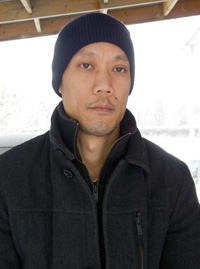
Matthew Louis Mauriello is an Assistant Professor in the Department of Computer and Information Sciences at the University of Delaware , where he directs the Sensify Lab . He holds a PhD in Computer Science from the University of Maryland (2018) and completed postdoctoral work at Stanford University (School of Medicine, 2020; School of Public Policy & Environmental Engineering Department, 2019). Research interests span Human-Computer Interaction (HCI), Ubiquitous Computing, and User-Centered Design with applications in: Sustainability Human-Building Interaction Wearable Technology Personal Informatics Educational Game Design Mental Health Interventions Recent publications highlight trends in stress monitoring (skin-like biosensors, workplace wellbeing), energy auditing (thermography systems), and educational technology (block-based programming tools for teachers). His work appears in ACM CHI, ACM Human-Computer Interaction, and Building and Environment. Scientific awards include: Best Paper Honorable Mention, CHI 2016 Best Paper Honorable Mention, CHI 2015 Best of WebSci'18 Teaching at University of Delaware encompasses courses like Educational Game Design Operating Systems Advanced Web Technologies Computing for Social Good with a focus on project-based learning and systems thinking.
Vineeth N Balasubramanian is a Professor in the Department of Computer Science & Engineering at the Indian Institute of Technology Hyderabad, with affiliate faculty status in the Department of Artificial Intelligence. His research focuses on the intersection of deep learning, machine learning, and computer vision, emphasizing explainability, robustness, and real-world applications. He leads Lab 1055, which investigates problems such as Explainable and robust AI/ML systems Lifelong learning in evolving environments Multimodal vision-language models Applications in agriculture, autonomous navigation, and human behavior analysis His recent work includes causal reasoning in transformers, vision-language model capabilities, and drone-based object detection. Funded by organizations like Google, Microsoft, Intel, and DST, he has received multiple awards including the World's Top 2% Scientists (2022-23), INSA/INAE Fellowships, and Best Paper recognitions. Lab 1055 collaborates with institutions like CMU, UBC, and Monash University, contributing to cutting-edge advancements in AI.
Anca Dragan is an Associate Professor in the Department of Electrical Engineering and Computer Sciences at the University of California, Berkeley, where she runs the InterACT Lab focused on algorithms for human-AI and human-robot interaction. Currently on leave from Berkeley, she leads AI Safety and Alignment at Google DeepMind, overseeing safety for Gemini models and preparing for future advancements. Dragan has been a co-PI of the Center for Human-Compatible AI and served on the steering committee for the Berkeley AI Research (BAIR) Lab. B.Sc. in Computer Science from Jacobs University Bremen, Germany Ph.D. from Carnegie Mellon University Dr. Dragan's research focuses on enabling AI agents to work effectively with, around, and in support of people. Her work bridges robotics, machine learning, and game theory to create systems that better understand human preferences and coordinate with users. Key areas include AI alignment (ensuring AI does what people actually want), learning reward functions from diverse human feedback forms, and developing algorithms for human-AI collaboration across domains like autonomous vehicles, brain-machine interfaces, and recommender systems. Her research emphasizes maintaining uncertainty about human preferences and accounting for the plurality of human values. Dr. Dragan's recent publications reveal a strong focus on addressing fundamental challenges in AI safety and alignment. Her work spans theoretical foundations of reward learning, practical implementations for human-AI coordination, and critical examinations of limitations in current approaches. There's a clear trajectory toward more robust, safe, and value-aligned AI systems that can handle complex human preferences while avoiding both present-day harms and potential catastrophic risks. IEEE RAS Early Academic Career Award in Robotics and Automation (2021) McEntyre Award for Excellence in Teaching (2020) PECASE (Presidential Early Career Award for Science and Engineering) (2019) Sloan Fellowship (2018) NSF CAREER Award (2017) Okawa Foundation Award (2017) MIT Tech Review 35 Innovators Under 35 (2017) Multiple best paper awards at top robotics and AI conferences Dr. Dragan has mentored numerous successful students who have gone on to faculty positions at MIT, Stanford, CMU, and Princeton, as well as industry roles at DeepMind, Waymo, and Meta. Her advising philosophy emphasizes both technical rigor and consideration of broader societal impacts. She has secured significant research funding including NSF CAREER, ONR Young Investigator, and Okawa Foundation awards, supporting work on human-AI interaction and alignment. Dragan has also consulted for Waymo for six years, helping develop roadmaps for deploying increasingly learning-based safety-critical systems. Dr. Dragan leads the InterACT Lab at UC Berkeley, which has produced influential work on Cooperative Inverse Reinforcement Learning, Inverse Reward Design, and other foundational concepts in human-AI interaction. The lab's research has significantly shaped the field of AI alignment, with applications spanning autonomous vehicles that coordinate with human drivers, brain-machine interfaces that adapt to user needs, and language models that better understand human preferences. Current work focuses on scaling safety approaches as AI capabilities advance, ensuring alignment keeps pace with technological progress.
Professor Mohammad FARD is a faculty member at RMIT University's School of Engineering, specializing in Mechanical Engineering and Intelligent Systems. He leads research in autonomous vehicles, crash safety, and driver monitoring using AI. His industry experience includes six years at Nissan Technical Centre, focusing on vehicle body design. He holds a PhD from Tohoku University and has collaborated across Engineering, Health, and Science disciplines, achieving international media coverage for work on driver drowsiness and road safety. Research Interests: Autonomous Vehicles Advanced Crash Safety Driver State Monitoring AI in Noise/Vibration Human Factors/Ergonomics Teaching & Projects: Teaches Advanced CAE, Vehicle NVH, and research supervision in areas like crash simulation and vibration control. Current projects include Formula One safety barriers and driver education for autonomous vehicles. Awards & Labs: No awards listed. Active in cross-disciplinary teams and labs addressing automotive innovation and safety.
Professor Winston Hsu is a distinguished faculty member in the Department of Computer Science and Information Engineering at National Taiwan University, where he has served as a full professor since 2015. He is the co-director of the Communications and Multimedia Laboratory (CMLab) and founder of the MiRA (Multimedia indexing, Retrieval, and Analysis) research group. Additionally, he serves as the Founding Director for NVIDIA AI Lab at NTU, the first such lab in Asia. Professor Hsu received his Ph.D. in Electrical Engineering from Columbia University in 2007 under the supervision of Professor Shih-Fu Chang. Prior to his academic career, he was a founding engineer and research manager at CyberLink Corp., now a public image/video software company. National Taiwan University (2007-Present): Professor (2015-Present), Assistant/Associate Professor (2007-2015) MobileDrive (2021-2024): CTO and Vice President (Joint Venture between Foxconn and Stellantis) IBM TJ Watson Research Center (2016-2017): Visiting Scientist Microsoft Research Redmond (2014): Visiting Researcher Columbia University (2007): Ph.D. in Electrical Engineering Professor Hsu's research focuses on machine learning, computer vision, large-scale image and video search and recognition, and embedded AI. His work spans from fundamental research in visual recognition to practical applications in automotive systems, medical imaging, and e-commerce. He has pioneered work in disguised face recognition, low-resolution face hallucination, 3D model search, and virtual try-on systems. His current research emphasizes Embodied AI, integrating perception, action, and learning technologies for applications in automotive and robotics domains. His research group has produced numerous influential publications, particularly in top computer vision and multimedia conferences like CVPR, where they won first place in the Disguised Face Recognition competition in 2018. Their work spans diverse application areas including security, medical diagnostics, automotive systems, and e-commerce solutions, demonstrating strong translation from academic research to real-world impact. IBM Research Pat Goldberg Memorial Best Paper Award (2018) First Place, IARPA Disguised Faces in the Wild Competition (CVPR 2018) Best Brave New Idea Paper Award, ACM Multimedia 2017 NVIDIA AI LAB Award (First in Asia, 2016) First Place, MSR-Bing Image Retrieval Challenge (2013) World's Top 2% Scientists (2023) Professor Hsu actively mentors students and researchers, with his group consistently recruiting PhD students, postdocs, and research assistants. He has successfully bridged academia and industry through multiple collaborations, including his role as CTO at MobileDrive (a joint venture between Foxconn and Stellantis) from 2021-2024. His research has been supported by significant industry partnerships with Microsoft, IBM, and NVIDIA, as well as government grants from Taiwan's Ministry of Science and Technology. His laboratory, the Communications and Multimedia Laboratory (CMLab), maintains strong industry connections and focuses on cutting-edge research in visual AI. The lab has produced numerous award-winning projects and maintains active collaborations with global technology companies, particularly in the automotive and consumer electronics sectors.
Dr. Mohammad Zulkernine is a Full Professor and Canada Research Chair in Cyber-Physical System Security at Queen’s University’s School of Computing (Faculty of Arts and Science). He leads the Queen’s Reliable Software Technology (QRST) research group and directs the Queen’s Centre for Security & Privacy. His research focuses on secure software systems for cyber-physical systems, including autonomous vehicles, IoT, and cloud computing. Dr. Zulkernine holds a cross-appointment in Electrical and Computer Engineering and is a licensed Professional Engineer in Ontario. Education: BSc (Bangladesh BUET), MEng (Japan), PhD (University of Waterloo). He joined Queen’s in 2003 and has held sabbaticals at University of Trento, Italy and Irdeto Canada. He has published over 250 papers, led 35+ research projects, and supervised 120+ students. Awards include Canada Research Chairs (Tier I and II), Queen’s Excellence in Graduate Supervision Award, and Distinguished Supervision Award from the School of Computing. Research Interests: Cyber-Physical System Security, Software Reliability, IoT Security, Vehicle Networks, Secure Software Engineering, and Cybersecurity Risk Assessment. Active industry collaborations include EU-funded projects and Canada-Africa initiatives.
Miyuki Hino is an Assistant Professor in the Department of City and Regional Planning and an Adjunct Assistant Professor in the Environment, Ecology, and Energy Program at the University of North Carolina at Chapel Hill. She holds a Ph.D. in Environment and Resources from Stanford University and a B.S. in Chemical Engineering from Yale University. Her research focuses on climate hazards, governance, and public policy , with emphasis on equitable adaptation to climate change. Key areas include sea level rise impacts, flood risk on property markets, and managed retreat strategies. She has conducted extensive work on floodplain development policies, household relocation programs, and community resilience frameworks. Dr. Hino's interdisciplinary approach integrates environmental science, urban planning, and social equity . She collaborates with academic and municipal partners, such as the Center for Urban and Regional Studies and Annapolis, MD local governments, to develop actionable solutions for climate adaptation. Her work bridges technical analyses (e.g., sensor networks, machine learning) with policy design to ensure both effectiveness and justice in climate responses. Recent projects emphasize preventing future 'trapped households' by analyzing zoning policies and market dynamics that drive risky development. She advocates for climate-smart growth strategies to balance economic needs with environmental safety, while addressing disparities in vulnerability across communities. Her research has been featured in Science Advances , Nature Climate Change , and interdisciplinary journals. She actively engages with policymakers to translate findings into practical measures, such as equitable buyout programs and floodplain management reforms.
Prof. Hans van Lint is a Professor of Traffic Simulation and Computing at Delft University of Technology (TU Delft), where he holds the Anthony van Leeuwenhoek Chair since 2013. He is affiliated with the Department of Transport & Planning within the Faculty of Civil Engineering and Geosciences. His research focuses on the intersection of traffic flow theory, data analytics, and traffic simulation, with applications in estimating and predicting traffic states in networks. He has supervised numerous PhD students and contributed to valorization projects translating research into practical solutions. Van Lint earned his MSc in Civil Engineering in 1997 and returned to TU Delft for his PhD, which he completed in 2004 on 'Freeway Travel Time Prediction.' He has held roles including Assistant Professor (until 2009), Associate Professor, and has served as Director of Education for the MSc Transport, Infrastructure and Logistics program from 2010–2016. His research interests include traffic simulation frameworks, data assimilation techniques, and the development of tools for traffic state estimation. He has authored influential papers on topics such as microscopic traffic modeling, congestion pattern analysis, and macroscopic fundamental diagrams. His work emphasizes bridging theoretical models with real-world applications, enhancing traffic management and infrastructure planning. Van Lint teaches courses like 'Transport & Planning' and 'Interdisciplinary Fundamentals,' reflecting his commitment to both research and education. He actively contributes to TU Delft's labs, including the Traffic Dynamics, Modelling and Control Lab, advancing interdisciplinary approaches to mobility challenges.
Federica De Stefano is an Associate Professor of Organisation Studies at Saïd Business School, University of Oxford, and a Research Fellow of Green Templeton College. She serves on editorial boards for Organization Science , Human Resource Management , and Human Resource Management Review , while holding roles in the Strategic Management Society (SMS). Previously, she was an Assistant Professor at HEC Paris and a Post-Doctoral Fellow at Wharton People Analytics. She earned a PhD from Bocconi University, with additional degrees from Fudan University and Bocconi. Her research focuses on people management's impact on organizational and individual outcomes, including employee mobility, workplace safety, and social sustainability. Using quantitative methods and large datasets, her work has been published in top journals like Academy of Management Journal and Strategic Management Journal . She has received the Marie Curie Individual Fellowship and recognition as a top 40-under-40 MBA professor. Teaching focuses on people analytics and management, with a 2023 completion of the International Teachers Program (ITP). Her research grants and collaborative work at Wharton People Analytics underscore her commitment to advancing strategic human capital practices. Federica's work bridges academic rigor with real-world organizational challenges, emphasizing ethical and sustainable workforce strategies.
Dr. Karim El-Basyouny is a Killam Laureate Professor and City of Edmonton Urban Traffic Safety Research Chair at the University of Alberta's Faculty of Engineering, where he serves as Associate Dean (Research Infrastructure and Innovation) in the Civil and Environmental Engineering Department. A licensed Professional Engineer in Alberta, he holds advanced degrees in Transportation Engineering from the University of British Columbia and has dedicated his career to advancing road safety through data-driven management frameworks. His academic credentials include: Doctor of Philosophy, Civil Engineering, University of British Columbia, 2011 Engineering Management Sub-specialization, Civil Engineering, University of British Columbia, 2010 Master of Applied Science, Civil Engineering, University of British Columbia, 2006 Bachelor's degree (ABET Equivalent), Civil & Environmental Engineering, United Arab Emirates University, 2003 El-Basyouny's research pioneers the integration of remote sensing, machine learning, and statistical modeling to enhance transportation safety. His work develops automated tools for infrastructure digitization, collision prediction, and speed management, treating safety as a systemic product requiring management frameworks. Key contributions include LiDAR-based road feature extraction, network-level safety evaluations, and frameworks for vision-zero outcomes that address both human-driven and autonomous vehicle contexts. His recent publications demonstrate a cohesive research trajectory centered on leveraging point cloud data and computational intelligence for safety management. Over 15 major publications since 2021 focus on automated infrastructure assessment (light pole detection, clear zone mapping, vertical clearance evaluation), weather-impact modeling, and enforcement resource optimization. This body of work bridges transportation engineering with computer vision and operations research to create scalable safety solutions. His scientific contributions have been recognized with prestigious honors including: 2024 Killam Annual Professorship Award 2024 Road Safety Achievement Award from TAC 2023 Donald Stanley Award for environmental engineering 2022 Faculty of Engineering Graduate Teaching Award 2021 Daniel B. Fambro Student Paper Award As an academic leader, El-Basyouny actively mentors graduate students and secures significant research funding through his endowed chair position. He currently recruits fully-funded PhD and postdoctoral candidates specializing in remote sensing applications, machine learning, and geomatics for road digitization projects. His research group collaborates with national safety committees and municipal agencies to translate findings into policy, while he serves on editorial boards for Transportation Research Record and Analytic Methods in Accident Research. The research group operates at the intersection of transportation engineering and computational science, developing automated frameworks that merge sensor technologies with data processing tools. Current projects focus on semantic segmentation of 3D point clouds, safety implications of infrastructure digitization, and machine learning applications for road feature extraction in both urban and rural environments.
Mathias Payer is an Associate Professor at EPFL's School of Computer and Communication Sciences (IC), leading the HexHive Laboratory . His work focuses on software security, particularly addressing memory corruption and type violations through binary analysis and compiler-based techniques. He contributes to research in secure system design, fault isolation, and fuzzing methodologies. Current PhD students : Di Bartolomeo Luca, Feng Zhiyao, Hofhammer Florian, Lyu Tao, Mao Philipp Yuxiang, Zhang Chibin, Zheng Han Past EPFL PhD students: Badoux Nicolas Daniel, Bhattacharyya Atri, Hazimeh Ahmad His research explores software security in areas like: Protecting applications from vulnerabilities Binary exploitation and mitigation Compiler-driven security hardening Strong sanitization and privilege separation Memory corruption detection The HexHive group develops tools and frameworks for: Automated fuzz driver generation Gradual compartmentalization State inference for feedback optimization Secure cell architectures Recent publications highlight advancements in: Fuzzing hybrid approaches (e.g., DUMPLING, MendelFuzz) Memory safety validation (QMSan, Pacmem) Compiler-assisted defenses (Gradient, Type++)
Ziran Wang is an Assistant Professor in the Department of Civil Engineering at Purdue University's College of Engineering, appointed as new faculty in 2022. His research bridges digital twin technologies, autonomous driving systems, and human-machine interaction to advance intelligent transportation solutions. Ph.D. in Mechanical Engineering, University of California, Riverside Prior role: Principal Researcher at Toyota North America His work focuses on creating personalized autonomous driving experiences through machine learning, emphasizing safety and efficiency in real-world applications. Key areas include multimodal large language model integration, federated learning for privacy-preserving data sharing, and cooperative perception frameworks. He develops novel approaches for digital twin-based traffic simulation, medical emergency detection in vehicles, and human behavior modeling in complex urban environments. Analysis of his 2024-2025 publications reveals a dominant trend toward generative AI applications in autonomous driving, particularly for perception-prediction-planning integration and real-world validation. His research increasingly incorporates digital twins for safety-critical testing and explores medical applications through in-vehicle health monitoring systems. Dr. Wang advises graduate students including Wenhui Huang and leads the Purdue Digital Twin Lab, which develops advanced simulation and testing platforms for autonomous systems. His lab maintains strong industry partnerships with Toyota for real-world deployment and validation of research成果.
Brian Leung is an Associate Professor at McGill University, jointly affiliated with the Department of Biology and the Bieler School of the Environment . He holds the prestigious UNESCO Chair for Dialogues on Sustainability and serves as Director of the McGill Neotropical Environment Option (NEO) , a collaborative program with the Smithsonian Tropical Research Institute. His work bridges ecological theory, computational modeling, and environmental policy. Dr. Leung earned his PhD in Biology from Carleton University and completed postdoctoral research at the University of Cambridge and the University of Notre Dame. His academic journey at McGill began in 2004 as an Assistant Professor, advancing to Associate Professor in 2010. His research centers on predictive ecology , particularly modeling biological invasions and sustainability challenges . He develops and applies mathematical, statistical, and computational models to understand invasion dynamics across terrestrial, aquatic, and marine systems. His recent work includes the Panama Research and Integrated Sustainability Model (PRISM) , a spatially explicit framework for sustainability science in the Global South. His research spans scales from local to global and integrates ecological, economic, and social factors. His recent publications show a strong focus on invasion risk assessment , species distribution modeling , economic costs of invasions , and ecological forecasting . He frequently publishes in top journals such as Nature , Ecology Letters , and Global Ecology and Biogeography , emphasizing data-driven decision-making and policy relevance. Dr. Leung has received significant recognition through invitations to contribute to major reports and has co-edited influential works on invasive species economics. While specific named awards are not listed, his leadership roles and publication record reflect high scientific esteem. He actively mentors a dynamic research group, supervising multiple Ph.D. and M.Sc. students on projects related to invasion modeling, mangrove conservation, forest pest dynamics, and urban ecology. His lab emphasizes quantitative skills and interdisciplinary collaboration. He has secured research funding to support these projects, though specific grants are not detailed in the text. He leads the Leung Lab , which focuses on predictive modeling in ecology and sustainability. The lab collaborates with institutions such as the Smithsonian Tropical Research Institute and environmental firms like Habitat. Current projects include multi-species connectivity modeling, mangrove ecosystem services, and forecasting forest pest outbreaks.
Ben Seiyon Lee is an Assistant Professor in the Department of Statistics at George Mason University's College of Science. His work bridges computational statistics, climate modeling, and environmental risk assessment. Education: PhD in Statistics, Pennsylvania State University (2020) Lee specializes in computational methods for high-dimensional spatiotemporal data and uncertainty quantification in climate models. His research explores climate change impacts on extreme hydrological events, wildfire emissions, and medical decision-making. Recent publications focus on Bayesian spatiotemporal frameworks for extreme precipitation analysis, zero-inflated spatial models, and multisector uncertainty quantification. His work addresses challenges in flood risk assessment, agricultural yield projections, and healthcare compliance metrics.
Min Chen is an Assistant Professor in the Department of Forest and Wildlife Ecology at the University of Wisconsin–Madison, affiliated with the Russell Labs. His research focuses on terrestrial ecosystem modeling, remote sensing applications, and human-Earth system interactions. He holds a PhD in Earth & Atmospheric Sciences from Purdue University, an MS in Remote Sensing and GIS from Beijing Normal University, and a BS in Computer Science from Beijing Normal University. His postdoctoral work included roles at the Carnegie Institution for Science and Harvard University. Research interests include forest carbon dynamics, methane emissions from wetlands, wildfire risk analysis, and the integration of remote sensing with Earth system models. His work emphasizes advancing methods for global-scale environmental monitoring using satellite and drone technologies. Notable contributions include studies on forest edge dynamics, vegetation-climate feedbacks, and the application of machine learning in ecological modeling. Recent publications highlight advancements in leaf trait prediction using transfer learning, global wetland methane flux modeling, and the impacts of climate change on land-use patterns. His lab develops innovative approaches to track terrestrial carbon cycles and assess human-driven environmental changes. Ongoing projects explore urban land expansion effects on carbon balances and phenological shifts under global change scenarios.