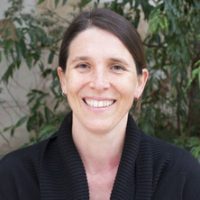
Kirsten Potter, PT, DPT, MS is a Professor and Director of Curriculum at Tufts University School of Medicine in Seattle. She holds expertise in adult neurologic rehabilitation and has over 30 years of experience as a physical therapist educator. Her research focuses on outcome measures for neurologic conditions, including studies on balance and gait assessments. She has contributed to clinical practice guidelines, notably the Core Set of Outcome Measures for Neurologic Physical Therapy. Potter has served leadership roles in the American Physical Therapy Association (APTA), including Co-Chair of the MS EDGE Task Force and Director of Professional Development for the Academy of Education. Her teaching spans movement science, neuromuscular practice management, and patient-centered care. Education DPT, MGH Institute of Health Professions, 2006 MS in Physical Therapy, Rosalind Franklin University, 1992 BS in Physical Therapy, University of Buffalo, 1985 Research Interests Dr. Potter’s work centers on improving clinical outcomes for neurologic patients through rigorous outcome measurement. She has pioneered studies on the psychometric properties of balance and gait measures (e.g., BESTest) and their application in multiple sclerosis and other neurologic conditions. Her scholarship also emphasizes interprofessional education, including innovative approaches to leadership development and curriculum design. Awards Healthcare Professional Champion Award (Mid America Chapter, National MS Society, 2020) Brenner Award of Scholarly Achievement (Rockhurst University, 2019) Founder’s Award (University of New England, 2007) Teaching & Leadership At Tufts, she teaches courses in neuromuscular practice and patient-centered care. Previously, she directed the Center for Excellence in Teaching & Learning at Rockhurst University. Her professional activities include mentoring faculty, designing educational workshops, and advancing interprofessional collaboration through initiatives like the Virtual AFRI-VIPE program. Labs & Teams Active in guideline development groups (e.g., S.O.S.MS consortium), she collaborates with interdisciplinary teams to translate research into clinical practice. Her work often bridges education, research, and clinical care to enhance patient outcomes.