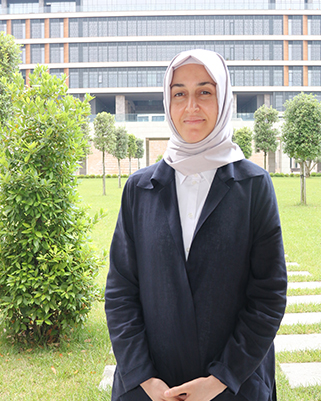
Gülnur UTKU serves as a Lecturer and reading/listening skills coordinator in the English Preparatory Unit at Istanbul 29 May University since 2020, with prior teaching experience spanning over 16 years across international institutions. Her educational foundation includes: Bachelor's degree in English Language and Literature from Istanbul University (2001) Ongoing advanced degree studies at Yeditepe University Professional expertise centers on English language pedagogy with specialized focus on receptive skills development. Her research interests manifest through: Curriculum innovation for reading comprehension Listening proficiency assessment methodologies Intercultural communication in ESL contexts Technology-enhanced language learning Adult second language acquisition patterns Preparatory program design for academic English As coordinator, she directs skill-based instructional strategy implementation across the preparatory program, developing standardized assessments and teacher training protocols for reading/listening modules while maintaining continuous classroom engagement with international student cohorts.
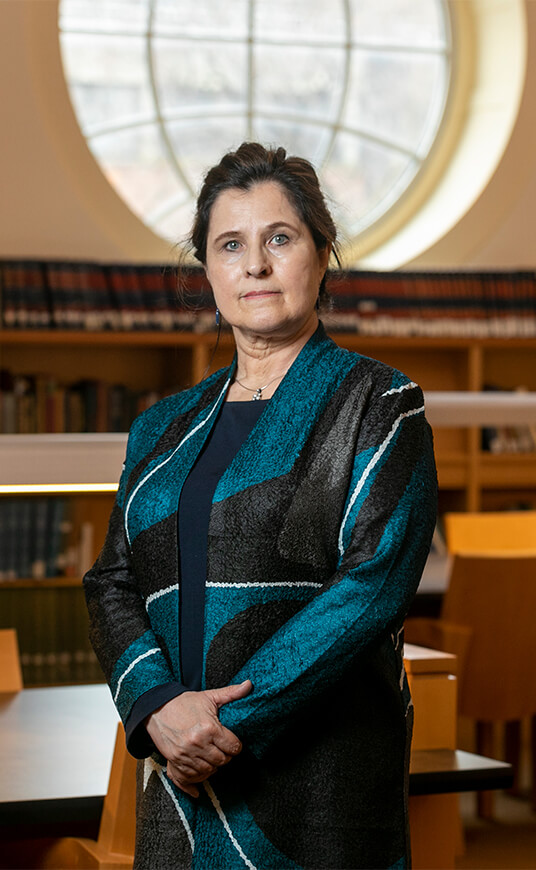
Ulrika Löfkvist serves as a Senior Lecturer at Uppsala University's Department of Public Health and Care Sciences; Speech Therapy, focusing on speech therapy interventions for children with hearing impairments and cochlear implants. Her research spans Speech Therapy , Hearing Impairment , Cochlear Implants , and Child Language Development , emphasizing longitudinal outcomes in language acquisition, literacy, and cognitive skills. She validates assessment tools like LENA and PEACH+ across cultural contexts and investigates public health initiatives including cytomegalovirus prevention and early hearing loss screening protocols. Analysis of her 2022-2025 publications reveals dominant themes in cochlear implant outcomes, particularly age-at-implantation effects on metaphor comprehension and reading development. Cross-cultural validation studies in Nordic/Brazilian populations and multidisciplinary approaches to hearing loss management form recurring methodological threads. Dr. Löfkvist collaborates with international teams across audiology, speech-language pathology, and public health, notably in Sweden, Norway, and Brazil. No scientific awards, student advising records, or grant details were documented in the source material.
Kristin Kibsgaard Sjøhelle is an Associate Professor in Norwegian Didactics at the Institute of Language and Literature, University College Volda, where she has been employed since 2012. Her teaching primarily focuses on the Master of Primary and Lower Secondary Teacher Education program, Nynorsk in Education, and Norwegian Didactics in Practical Pedagogical Education. She served as international coordinator at the Department of Humanities and Teacher Education from 2020 to 2022 and was a visiting scholar at Berkeley School of Education, University of California from 2017 to 2018. She earned her PhD in Norwegian Didactics from the University of Oslo in 2016 with the dissertation "Å skrive seg seg inn i språket. Ein intervensjonsstudie av nynorsk sidemålsopplæring for vidaregåande trinn" and completed her Master's degree in Nordic Language and Didactics at NTNU in 1999 with the thesis "Muntlige møter i nytt miljø. En undersøkelse av oppbygging av muntlig klasseromskultur i norskfaget i to videregående skoler". Dr. Sjøhelle's research centers on oral communication in Norwegian language education, writing instruction at secondary levels, Nynorsk as a second language variety in education, and digital competence in Norwegian with multimodal texts. She has pioneered the "språkdusj" (language shower) approach to Nynorsk education, moving beyond traditional grammar-focused instruction toward immersive language use. Her work explores how students develop writing strategies, oral skills, and digital literacy within the Norwegian language classroom, with particular attention to practical application in real teaching contexts. Her recent publications (2022-2025) demonstrate a strong emphasis on oral communication assessment, with multiple studies examining how to effectively teach and evaluate oral skills in Norwegian classrooms. She has developed comprehensive models for teaching and assessing oral proficiency, with particular attention to active listening as an assessment criterion. Her research on Nynorsk education explores innovative approaches that integrate digital tools and collaborative learning methods. Visiting Scholar at Berkeley School of Education, University of California (2017-2018) As an academic advisor, she supervises master's students and serves as co-supervisor for PhD candidate Ida Marie Jegteberg. She leads the PPU research group and participates in the ORACY research group at University College Volda. Her major research projects include "ORACY UP: Munnlege vurderingspraksisar i norsk på ungdomstrinnet" and "Nynorskopplæring Akademisk antologi". Dr. Sjøhelle's work bridges theoretical research with practical classroom applications, providing concrete tools for Norwegian language educators.
Klara Marton is a Professor and Chairperson of the Department of Communication Arts, Sciences, and Disorders at Brooklyn College, City University of New York, within the School of Humanities and Social Sciences. With a distinguished career spanning multiple decades, she has established herself as a leading researcher in the field of language-cognition interactions, particularly focusing on bilingual individuals and those with language impairments. Her educational background includes: B.A. in Special Education from Barczi Gusztav College of Special Education (1984) M.S. in Psychology from Eotvos Lorand University, Hungary (1991) Doctorate in Developmental Psychology from Eotvos Lorand University, Hungary (1992) Ph.D. in Speech and Hearing Sciences from the Graduate School and University Center (CUNY) (1998) As a neuropsychologist, Dr. Marton's primary research focuses on the interactions between language and cognition in both monolingual and bilingual individuals, with particular attention to those with and without language impairment. Her work bridges theoretical cognitive psychology with clinical applications in speech-language pathology. She has made significant contributions to understanding working memory, cognitive control mechanisms, and executive functions in children and adults with language disorders. Her research spans multiple populations including bilingual children, individuals with stuttering disorders, children with cochlear implants, and those with developmental language disorders. Dr. Marton's scientific contributions have been recognized with numerous awards including Fellowship of the American Speech, Language, and Hearing Association (ASHA fellow), the Szent-Gyorgyi Research Fellowship from the Hungarian Department of Education, and multiple "Salute to Scholars" certificates from the City University of New York recognizing her outstanding scholarly achievements. As an active researcher, Dr. Marton has secured substantial grant funding from prestigious organizations including the National Institutes of Health (NIH), National Science Foundation (NSF), and the European Union. Her current research includes projects funded by the Hungarian Academy of Sciences (2022-2026) and Brooklyn College grants supporting evidence-based practice training in Communication Sciences and Disorders. She has served as Principal Investigator on numerous grants totaling over $500,000 in funding, including NIH/NIDCD grants focusing on working memory and inhibition control in children with specific language impairment. Dr. Marton has also contributed significantly to academic leadership as Executive Officer of the Ph.D. Program in Speech-Language-Hearing Sciences at the CUNY Graduate Center (2009-2018) and serves on editorial boards for the Journal of Speech, Language, & Hearing Research and Hungarian journals related to disability and speech science.
Babi Kruchin serves as a Senior Lecturer at the American Language Program (ALP), where she has taught academic courses for international students at all proficiency levels since 1999. Her expertise centers on academic writing instruction for graduate and undergraduate international students, alongside comprehensive academic skills development. Her educational background includes: M.A. from Hunter College Certificate of Language Teaching to Adults (CELTA) from the University of Cambridge/Royal Society of Arts Her research profile emphasizes Teacher Education through NYS TESOL teacher development events and international training workshops; Academic Writing pedagogy tailored for non-native speakers; and Educational Technology integration for effective remote and collaborative learning environments, as evidenced by her work on remote writing courses and contributions to Pearson's Teacher Development Interactive. Professional contributions include conference presentations at TESOL events and organizing teacher development initiatives, though no scientific awards or grant activities are documented in the provided materials.
Debra McGinnis, Ph.D., serves as Associate Professor in the Department of Psychology at Oakland University, with her office located in Pryale Hall, Room 119. She can be contacted at (248) 370-2310 or mcginnis@oakland.edu, and her academic work is anchored in Rochester, Michigan-based research facilities. Her educational foundation includes: Ph.D. in Psychology & Aging from the University of Southern California B.A. in Human Development from California State University Long Beach Dr. McGinnis specializes in Geropsychology , Cognitive Aging , and Resilience in Adulthood , directing active research programs on resilience across middle-aged and older adult populations alongside investigations into ageism among undergraduates. Her interdisciplinary approach bridges cognitive science with lifespan developmental theory to examine psychological adaptation during aging. Publication trends (2000-2018) reveal consistent focus on cognitive aging mechanisms, with 75% of articles comparing young, young-old, and old-old adults in text comprehension and resilience contexts. Her work demonstrates increasing emphasis on psychological well-being determinants in midlife after 2012, while maintaining foundational research on lexical processing deficits throughout the aging spectrum. No scientific awards were documented in the source material. While specific student advising details remain unreported, her courses PSY 323 (Adulthood and Aging) and PSY 425 (Resilient Aging) directly cultivate next-generation researchers in geropsychology. Grant activity is not specified in available records. Dr. McGinnis maintains institutional ties through the Center for Evolutionary Psychological Science and contributes to the Evolutionary Psychology Interdisciplinary Conference Series, though her primary research remains centered on cognitive aging rather than evolutionary frameworks.