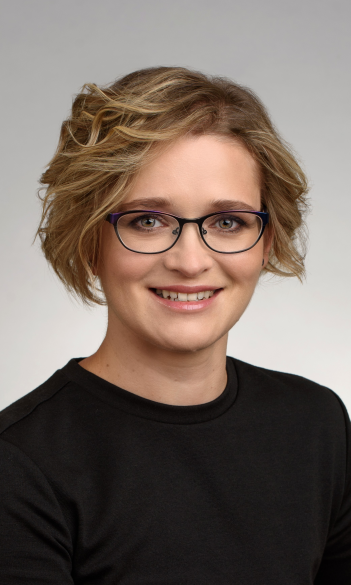
Zsuzsánna D. Babos is an Assistant Professor at the Institute of Research on Adult Education and Knowledge Management under Eötvös Loránd University. Her work focuses on adult education, labor market dynamics, and social participation mechanisms. She leads the New Challenges in the Labour Market Research Group , exploring contemporary workforce trends and skill development strategies. Research interests include analyzing volunteering behavior among youth, institutional program design for civic engagement, and the intersection of higher education with societal roles. Her publications span practical guides for program implementation to critical analyses of generational social participation patterns. Contact details include email babos.zsuzsanna@ppk.elte.hu and office location at Kazinczy u. 23-27 in Budapest. Office hours require appointment via email.
Ildikó Király is a Professor at the Institute of Psychology, Eötvös Loránd University, Budapest, currently serving as Head of the Department of Cognitive Psychology and lecturer. Her research focuses on developmental psychology, particularly social cognition, imitation behavior, and theory of mind in early childhood. Key areas: Social Cognition , Developmental Neuroscience , and Cognitive Development Recent work examines preschoolers' exploration tendencies, joint action observation effects, and linguistic group membership's role in perspective taking. She leads the Social Minds Research Group , investigating how cultural knowledge transmission shapes cognitive development. Her 2021-2025 publications reveal trends in: Imitative behavior's sensitivity to social norms and group identity Memory flexibility in adapting to changing contexts Interactions between semantic processing and mentalization in social situations Comparative studies on human and non-human primate cognition
Krisztián Széll is a Habil. Associate Professor at Eötvös Loránd University’s College of Education, specializing in educational inequality and school resilience. His research explores student achievement, school climate, Roma student integration, adaptive testing, and school dropout risk. He leads the Research Group on Innovation and Equality in Education and serves on the university’s Research Ethics Committee. Key Research Areas: Educational equity, resilience development, language policy, psychometric testing, and pandemic-era learning patterns. Publications: Focus on Hungary, cross-national comparisons, and methodological advancements in educational assessment. Affiliations: Eötvös Loránd University, Research Ethics Committee, Research Group on Innovation and Equality in Education. His recent work analyzes contextual factors in student belonging, adaptive testing formulas, and pandemic impacts on learning. He contributes to debates on reliability metrics like Cronbach’s alpha and institutional factors shaping educational outcomes.
Zsolt Tamás Murlasits is a Senior Research Fellow at the Institute of Sport Science and Physical Education, University of Physical Education, where he is affiliated with the Department of Sports Biology and Kinesiology. His office is located in room A/119, and he can be reached via email or phone for academic and research inquiries. His primary research interests lie in exercise physiology, particularly focusing on neuromuscular adaptations induced by various forms of physical activity. He investigates the effects of resistance training modalities—including high velocity/power training and proprioceptive training—as well as concurrent endurance and resistance training across different populations, ranging from elite athletes to older adults. His work bridges basic physiological mechanisms with practical applications in performance and health. The trends in his research, though specific publications are not listed, emphasize applied kinesiology and sports science, with a strong focus on optimizing training protocols for functional improvement and performance enhancement. His work spans the disciplines of exercise science, biomechanics, and human physiology. Senior Research Fellow, Department of Sports Biology and Kinesiology Research focus on neuromuscular adaptations and training methodologies Active contributor to sport science and physical education While no scientific awards are listed in the provided text, his ongoing research positions him as a key figure in contemporary exercise science. He does not appear to have formal advising roles listed, nor are any grants mentioned. There is no information provided about specific laboratories or research teams he leads or participates in.
Zoltán András Szabó is an Assistant Professor at the Institute of Educational Sciences, Faculty of Pedagogy and Psychology, Eötvös Loránd University (ELTE). His research focuses on modern and contemporary educational discourses in Central Europe, interdisciplinary methodologies (especially content analysis), and the history of educational science from the 19th to 21st centuries. He also explores network theoretical approaches in pedagogy and educational science discourse analysis. Educational Activities: Teaching: BA in Pedagogy, MA in Educational Science and Human Resources Consulting. Doctoral Supervision: Doctoral School of Education (Educational Sciences). Professional Training: Museum Pedagogical Consultant, vocational training at Illyés Sándor Vocational College. Research Projects: Co-leader of the CENTRAL Workshops 2020 project analyzing Central European urban education in the late 19th/early 20th centuries. Deputy leader of the NKFIH-funded study on Hungarian educational science's development (1970–2017). Publications: Recent works emphasize content analysis methodology, historical educational reforms, and comparative studies. Key themes include Klebelsberg's school reforms, interwar pedagogical discourses, and network theory applications in education. Professional Activities: Editorial roles: Pedagogical Quarterly , Pedagógiai Szemle . Reviewer for international and Hungarian educational journals. Member of the Hungarian Reform Pedagogy Association and MTA (Hungarian Academy of Sciences, corresponding member since 2021). Labs/Teams: Research Group on Historical, Theoretical, and Comparative Pedagogy at ELTE.
Orsolya Kálmán is an Associate Professor at the Institute of Education within the Faculty of Education at Eötvös Loránd University. Her research focuses on higher education policy, teacher training, professional development, and pedagogical practices. She is a member of the Quality Management Committee and leads the Higher Education and Innovation Research Group. Her work explores topics such as autonomy in education, distance learning challenges, and interdisciplinary professionalization. She has published extensively on educational policies, student-teacher dynamics, and the implementation of innovative teaching methodologies. Key research interests include learner-centered education, cross-cultural comparisons of learning strategies, and the impact of institutional culture on teaching practices. Her recent articles analyze the evolution of teacher certification programs, metacognitive skills in university students, and quantum protocols in theoretical physics. She advocates for adaptive educational frameworks and continuous professional growth for educators. Despite no listed awards, her contributions to Hungarian educational reform and academic governance are notable. No grants or specific lab affiliations are mentioned, though her research group indicates collaborative efforts in higher education innovation. Advising relationships are unlisted, but her publications reflect mentorship in pedagogical research.
Ákos Bodor is a Senior Research Fellow at the Institute of Research on Adult Education and Knowledge Management, affiliated with Eötvös Loránd University (ELTE). He holds the academic rank of Research Fellow and contributes to both research and teaching activities. His contact information includes an office at Room 428 in Budapest (1075 Budapest, Kazinczy u. 23-27). His research interests focus on adult education systems, knowledge management strategies in educational institutions, and policy analysis related to lifelong learning. While specific publications are listed on MTMT , detailed article metadata is not provided here. No awards or grants are explicitly mentioned in the available text. He maintains an active role in academic advising and institutional knowledge transfer initiatives, though specific student names or grant details are not documented in the provided materials.
László Horváth is an Assistant Professor at the Institute of Educational Sciences, Faculty of Education, Eötvös Loránd University (ELTE), Budapest. He is an active researcher and educator with a strong focus on digital transformation, innovation, and organizational learning in education. He serves as the Secretary of the Doctoral School of Educational Sciences and is a member of the Digital Transformation in Education Research Group. His work is supported by a nationally-funded research grant on AI in higher education. His research interests include: Digital Transformation in Education Artificial Intelligence in Education (AIED) Organizational Learning and Innovation in Higher Education Teacher Education and Digital Competence (DigCompEdu) ICT Integration and Educational Technology Psychological Contract in Higher Education Skills Ecosystems in Teaching Professions His recent publications (2023–2025) show a clear trend toward the integration of AI in educational settings, examining its opportunities, challenges, literacy, and anxiety among students. He also continues to explore broader themes of digital transformation, innovation diffusion, and organizational learning in both Hungarian and international contexts (e.g., Ethiopia, Ghana). His methodological expertise spans qualitative and quantitative research, including systematic literature reviews and empirical studies. His scientific awards include multiple New National Excellence Programme Scholarships (2016–2018) and the Scholarship of the Republic (2012, 2013). Horváth has been involved in significant research projects such as the Innova project, focusing on innovation in the Hungarian education sector. He has held consulting roles at the Educational Authority, supporting organizational development in low-performing schools, and served as an external evaluator for the Tempus Foundation. He actively contributes to academic discourse through co-editing journal sections and presenting at national and international forums. He leads and participates in research within the Digital Transformation in Education Research Group , fostering interdisciplinary collaboration on technology-enhanced learning and educational innovation.
Réka Kassai is a Lecturer in the Department of Clinical Psychology and Addiction at Eötvös Loránd University (ELTE), affiliated with the Institute of Education. Her research focuses on mindfulness interventions, executive function development in children, ADHD, stress management, and parenting behaviors. She is also a PhD student exploring these areas further. Her work frequently employs meta-analytic methods and randomized controlled trials to evaluate intervention efficacy. Key research interests include: Neurocognitive development in children and adolescents Mindfulness-based interventions for cognitive and emotional regulation Impact of socioeconomic factors on psychological outcomes Parenting behaviors and developmental disorders Her recent publications analyze the effects of mindfulness practices on cortisol levels, executive function disparities among preschoolers, and the relationship between ADHD symptoms and parenting styles. She leads the Cognitive Development and Education Research Group, focusing on bridging clinical psychology with educational practices. Professional activities include advising on doctoral research (as seen in her doktori.hu profile) and maintaining an active publication record across multiple disciplines. Contact details include kassai.reka@ppk.elte.hu and the Institute's Budapest office at Kazinczy u. 23-27.
Budapest University of Technology and EconomicsHungary
János Kata is a Senior Lecturer at the Department of Technical Pedagogy , Budapest University of Technology and Economics (BME), Faculty of Economics and Social Sciences. His work focuses on technical pedagogy, higher education assessment, and vocational training processes. With a background in mechanical engineering and engineering teacher education, he has contributed extensively to understanding student failure phenomena, group assessment methods, and lifelong learning frameworks. Research Trends: Analysis of student performance, technology integration in education, and optimization of vocational training using system engineering models. Key Publications: Books and conference papers on learning technology, brainstorming-based assessment, and cultural dimensions of education (2013-2000). Academic Affiliations: Active member of BME's Department of Technical Pedagogy since 1999. Holds degrees in mechanical engineering and engineering pedagogy from BME. Notable Contributions: Development of operation research teaching methods for technical educators and system engineering models for vocational training optimization. His 1999-2013 works bridge theoretical pedagogy with practical industrial education needs.
Judit Balázs is a Professor at Eötvös Loránd University's Institute of Psychology, where she leads the Department of Developmental and Clinical Child Psychology. Her research focuses on adolescent mental health, particularly suicide risk, ADHD, nonsuicidal self-injury, and subthreshold psychiatric disorders. She heads the Childhood Mental Disorders Research Group, emphasizing translational research in youth psychopathology. Her investigations span developmental psychopathology, cultural influences on mental health, and evidence-based interventions for at-risk adolescents. Research integrates clinical assessments, epidemiological methods, and cross-cultural validations across European populations. Recent publications demonstrate a strong focus on suicide prevention mechanisms in ADHD, pandemic mental health (COH-FIT project), and marginalized communities (Roma populations, Ukrainian refugees). Scholarly work consistently employs systematic reviews, meta-analyses, and validation studies to establish clinical guidelines. Dr. Balázs maintains office hours at ELTE's Budapest campus (Room 304, Izabella u. 46) and is contactable via institutional email. She contributes to international consortia addressing global mental health challenges and serves as a key resource in Hungarian academic psychiatry.
Azzurra Ruggeri is an Associate Professor at the Central European University (CEU) and Technical University of Munich (TUM), holding positions in the Department of Cognitive Science (CEU) and School of Education (TUM). Her research focuses on how individuals actively search for information during decision-making, causal inference, and categorization tasks, emphasizing adaptability and task sensitivity. Education: Ph.D. in Psychology, Humboldt University of Berlin Ph.D. in Cognitive Science, University of Siena M.A. in Philosophy, Decision Making and Philosophy of Science, University of Pisa Research Interests: Cognitive development of information search strategies Adaptive decision-making in children and adults Role of active learning in cognitive development Her work bridges developmental psychology and cognitive science, with contributions to understanding how search strategies adapt to task structures and enhance learning outcomes. Awards: Volkswagen Foundation Grant (€1.5M, 2020) DFG Focus Program Grant (€350K, 2018) Marie Curie Fellowship ($282K, 2013–2017) Labs/Teams: Leads the iSearch research group, exploring Information Search, Ecological, and Active Learning in children.
Zsuzsa Kovács is an Assistant Professor at the Institute of Research on Adult Education and Knowledge Management, Eötvös Loránd University. She holds roles in multiple committees, including Member of the International Relations and Projects Committee, Alternate Member of the Teacher Training Committee, and Alternate Member of the Research Ethics Committee. Her research focuses on adult education, vocational teacher development, and pedagogical knowledge frameworks. Her work explores how vocational educators access and utilize professional development resources, emphasizing practical strategies for enhancing teaching practices. She is reachable at kovacs.zsuzsa@ppk.elte.hu and located at Kazinczy u. 23-27, Budapest.
Helga Dorner is an Associate Professor and Director of the Institute of Research on Adult Education and Knowledge Management at Eötvös Loránd University (ELTE), Hungary. She previously served as a Senior Lecturer and Director of the Center for Teaching and Learning at the Central European University. Her roles include membership in the Faculty Council, Awards Committee, and Habilitation Committee at ELTE. She is a Fellow of the Higher Education Academy (UK) and coordinated the European Association for Research on Learning and Instruction's Higher Education Special Interest Group (2017-2023). She also served on the Board of EDEN Digital Learning Europe (2016-2024). Research Interests : Focuses on universities as sites of organizational and workplace learning, academic professionalism, teaching innovations, mentoring, and the integration of technology in education. Her work emphasizes digital learning spaces to transcend institutional and disciplinary boundaries. Labs/Groups : Leads the Organizational and Work-integrated Learning Research Group . Teaching & Mentorship : Specializes in discussion-based courses on higher education, adult education, and knowledge management. Actively mentors novice teachers and researchers, emphasizing collaborative and technology-driven pedagogies.
Luca Alexa Erdei is an Assistant Professor at the Institute of Research on Adult Education and Knowledge Management at Eötvös Loránd University (ELTE). He serves as Erasmus coordinator and is affiliated with the Organizational and Work-integrated Learning Research Group. His research focuses on internationalization in higher education, organizational learning processes, and cross-border educational cooperation. Key interests include student mobility programs, joint degree initiatives, and the impact of virtual exchange in emergency contexts like the pandemic. Erdei has contributed to comparative studies on Hungarian-Spanish educational systems and vocational training internationalization. He actively participates in EU-funded projects and policy analysis related to academic mobility frameworks. Education background and professional trajectory are not explicitly detailed in the provided texts, but his publications indicate specialization in adult education, organizational learning, and international educational policies. His work bridges theoretical research with practical applications in curriculum design and institutional development. Research outputs emphasize program evaluation, policy analysis, and cross-cultural collaboration mechanisms. While no specific grants are mentioned, his Erasmus coordination role suggests involvement in EU mobility programs. Advising records remain unspecified in the current data. His research group focuses on integrating workplace experiences into formal education systems, exploring how organizational structures facilitate continuous learning. This aligns with his broader interest in knowledge management within academic and professional environments.